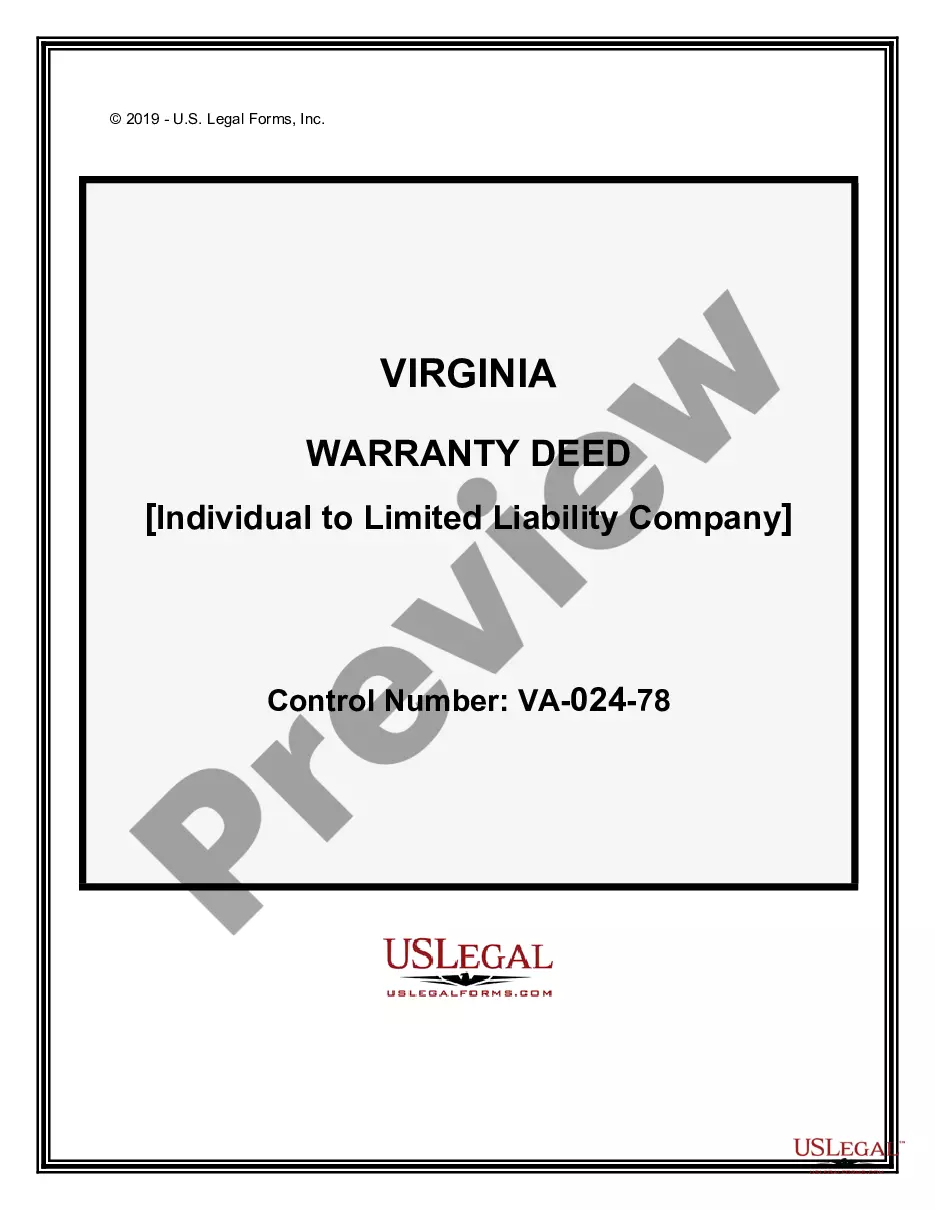
Virginia Warranty Deed from Individual to Limited Liability Company
What is this form?
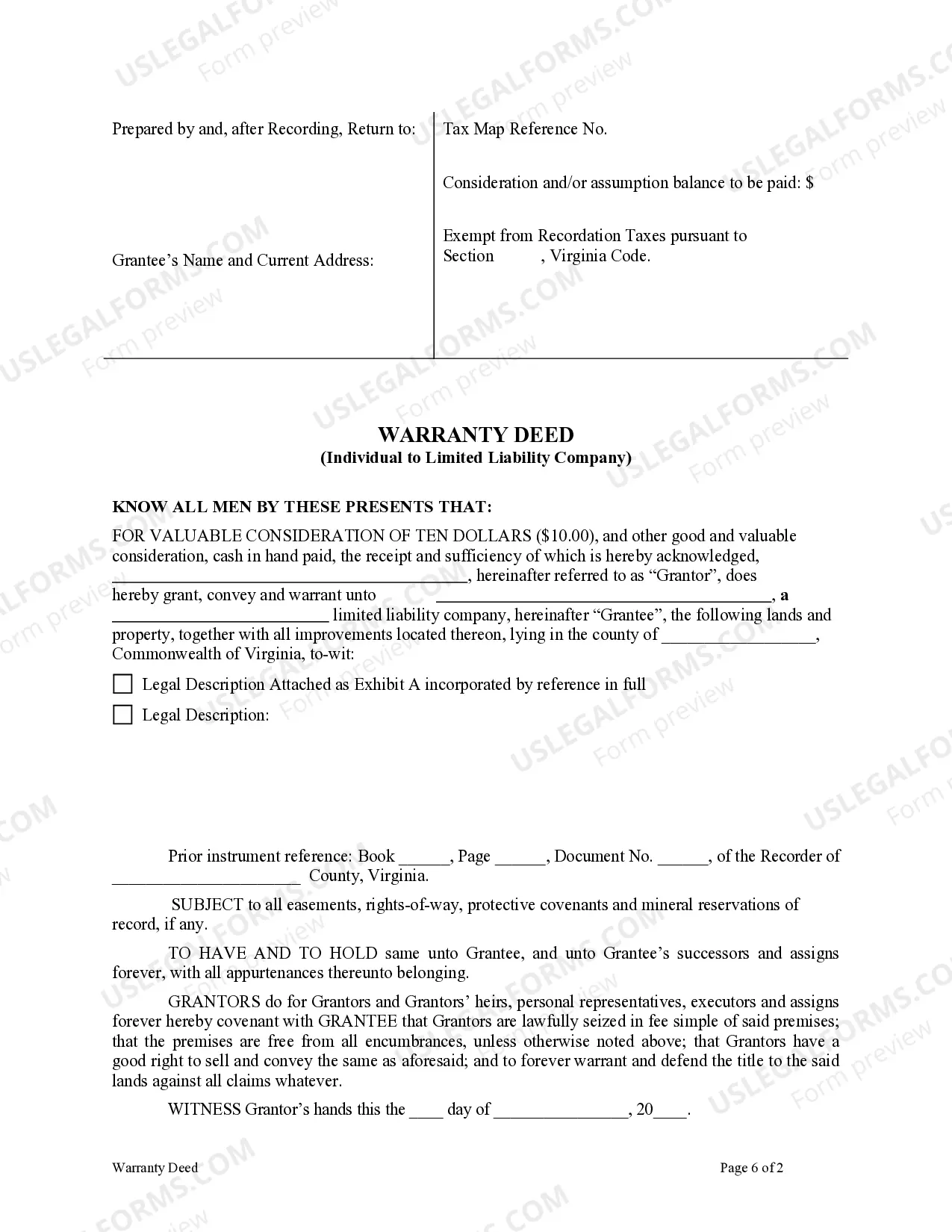
This form is a Warranty Deed from an individual to a Limited Liability Company (LLC) that legally conveys property ownership from the grantor (individual) to the grantee (LLC). This deed ensures that the grantor owns the property free of liens or other encumbrances, providing a guarantee of clear title to the grantee. It is important to use this type of deed when transferring property to an LLC, as it differs from other forms, like Quitclaim Deeds, which do not offer the same level of warranty and protection for the buyer.
Form components explained
- Parties involved: Identifies the grantor (individual) and grantee (Limited Liability Company).
- Property description: Details the specific real estate being conveyed.
- Conveyance clause: States the grantor's intent to transfer ownership and the rights to the property.
- Covenant of warranty: Guarantees that the property is free from encumbrances and that the grantor has the right to convey it.
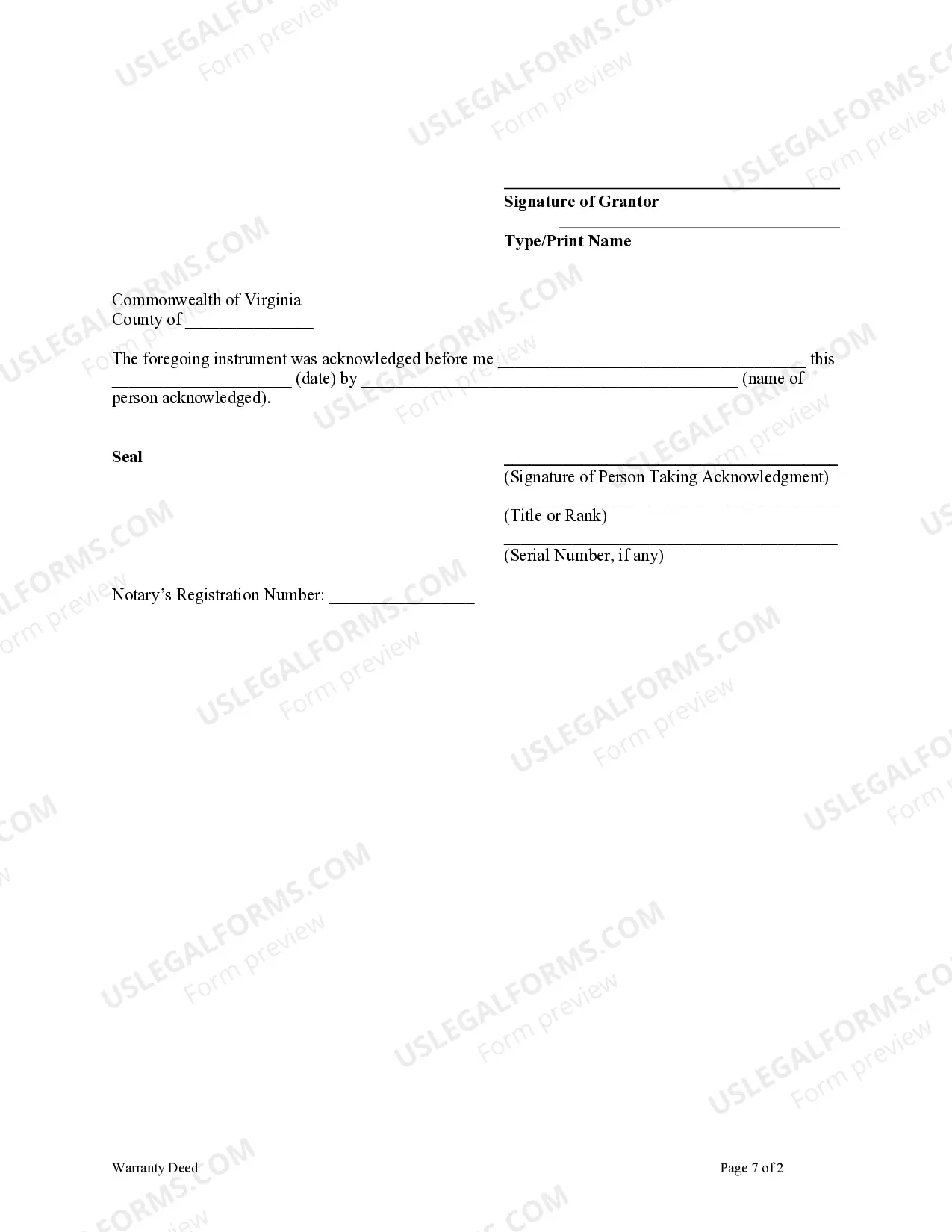
- Signature and notarization section: Requires the grantor's signature and potentially a notary for validation.
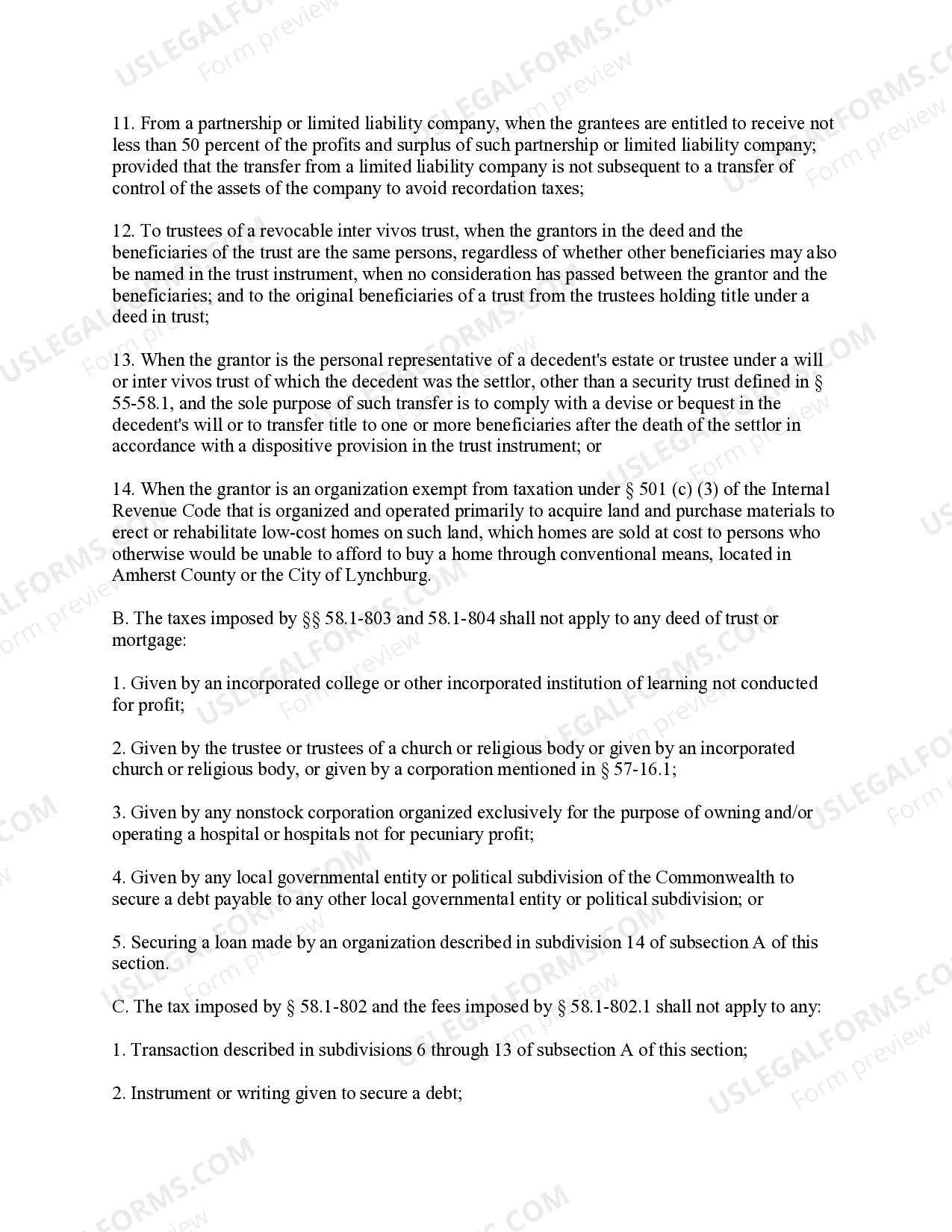
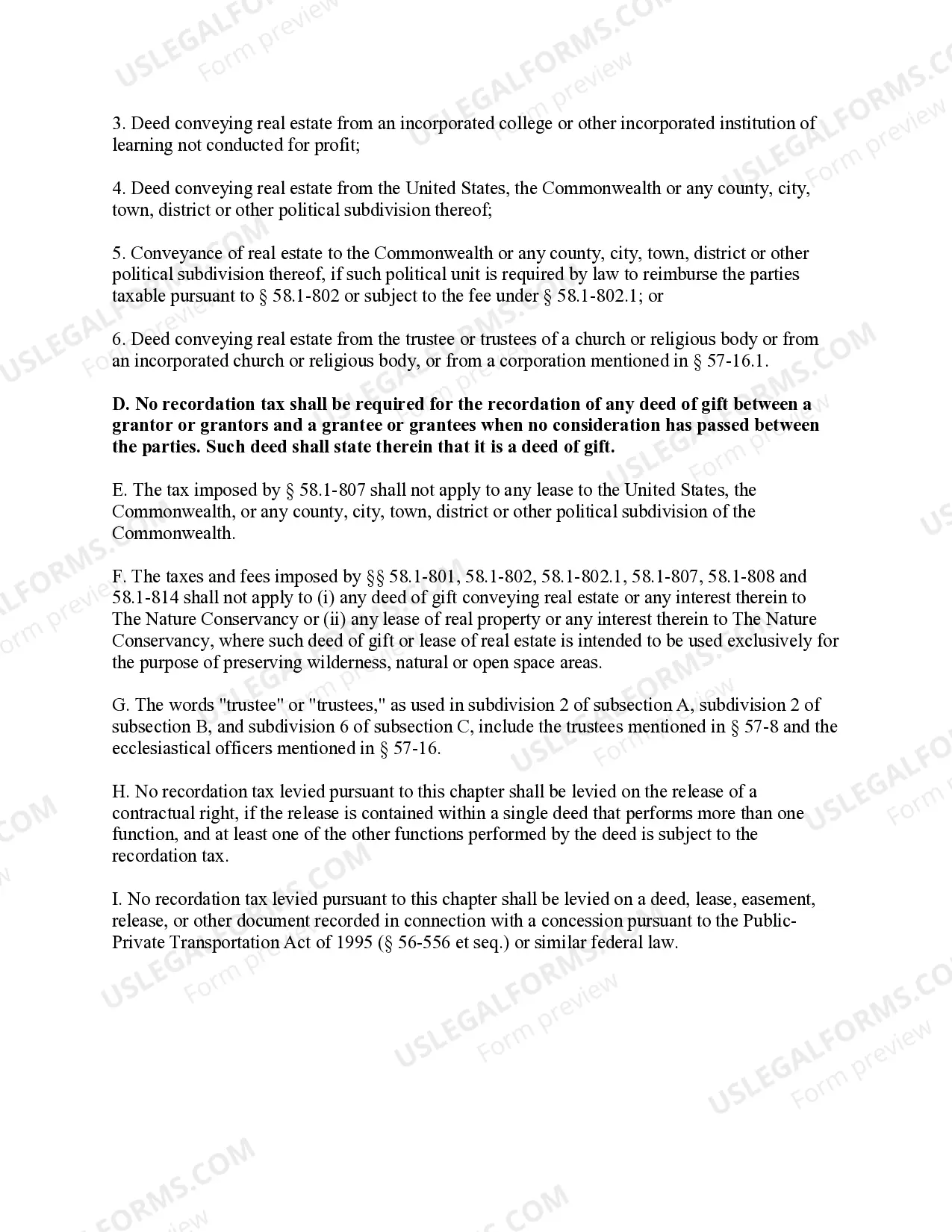



When to use this document
This form should be used when transferring real property from an individual to a Limited Liability Company. Common scenarios include when a business owner wants to place their personal property into a company structure for liability protection, when selling property to an LLC they have created, or when estate planning necessitates transferring ownership to a business entity. It is essential to ensure that the deed reflects the nature of this transaction to protect all parties involved.
Who can use this document
- Individuals transferring property they own to their own LLC.
- Business owners looking to formalize ownership structure.
- Estate planners wanting to transfer property as part of an asset management strategy.
- Any individual wishing to ensure legal protections associated with property held within an LLC.
Steps to complete this form
- Identify the parties involved: Clearly state the full legal names of the grantor and grantee.
- Specify the property: Provide a detailed description of the property being transferred, including any legal descriptions.
- Include dates: Enter the date of the transfer to establish the timing of the deed.
- Grantorâs signature: Ensure the grantor signs the deed in the presence of a notary, if required.
- Notarization: Have the deed notarized to affirm its authenticity if applicable as per local regulations.
Notarization guidance
This form must be notarized to be legally valid. Our online platforms offer integrated services that allow you to complete notarization securely via a video call, ensuring accessibility without the need for travel.
Get your form ready online
Our built-in tools help you complete, sign, share, and store your documents in one place.
Make edits, fill in missing information, and update formatting in US Legal Forms—just like you would in MS Word.
Download a copy, print it, send it by email, or mail it via USPS—whatever works best for your next step.
Sign and collect signatures with our SignNow integration. Send to multiple recipients, set reminders, and more. Go Premium to unlock E-Sign.
If this form requires notarization, complete it online through a secure video call—no need to meet a notary in person or wait for an appointment.
We protect your documents and personal data by following strict security and privacy standards.

Make edits, fill in missing information, and update formatting in US Legal Forms—just like you would in MS Word.

Download a copy, print it, send it by email, or mail it via USPS—whatever works best for your next step.

Sign and collect signatures with our SignNow integration. Send to multiple recipients, set reminders, and more. Go Premium to unlock E-Sign.

If this form requires notarization, complete it online through a secure video call—no need to meet a notary in person or wait for an appointment.

We protect your documents and personal data by following strict security and privacy standards.
Common mistakes
- Failing to provide a complete and accurate property description.
- Not obtaining the required notarization, which may lead to issues in property transfer.
- Leaving sections incomplete, especially regarding signatures and dates.
- Not verifying that the grantor has the legal authority to transfer the property.
Benefits of using this form online
- Convenience of completing the form at your own pace, from anywhere.
- Editability allows for easy corrections and modifications before finalizing.
- Access to templates created by licensed attorneys, ensuring legal compliance.
- Streamlined process saves time compared to traditional methods of obtaining legal forms.
Summary of main points
- The Warranty Deed enables the transfer of property from an individual to a limited liability company.
- Key elements include a clear property description and the grantor's warranties regarding the title.
- Proper notarization and completion of details are crucial for legal validity.
Looking for another form?
Form popularity
FAQ
Retrieve your original deed. Get the appropriate deed form. Draft the deed. Sign the deed before a notary. Record the deed with the county recorder. Obtain the new original deed.
A warranty deed guarantees that: The grantor is the rightful owner of the property and has the legal right to transfer the title.The title would withstand third-party claims to ownership of the property. The grantor will do anything to ensure the grantee's title to the property.
Limited Warranty Deeds In a Limited Warranty Deed, the seller usually gives two warranties. The seller only warrants to the buyer that: The seller personally has not done anything to the title that the seller received.
The only way to forcibly change the ownership status is through a legal action and the resultant court order. However, if an owner chooses to be removed from the deed, it is simply a matter of preparing a new deed transferring that owner's interest in the property.
In a Limited Warranty Deed, the seller usually gives two warranties. The seller only warrants to the buyer that:This is a very limited warranty in comparison to the broad warranty in a General Warranty Deed where the seller warrants that the seller not only owns the property, but also all rights in the property.
Locate the most recent deed to the property. Create the new deed. Sign and notarize the new deed. Record the deed in the land records of the clerk's office of the circuit court in the jurisdiction where the property is located.
The only way to change a recorded deed is to have a new deed prepared and recorded in the Clerk's Land Records Office. The deed on record cannot be changed. Once a document is recorded, it cannot be changed.
Locate the most recent deed to the property. Create the new deed. Sign and notarize the new deed. Record the deed in the land records of the clerk's office of the circuit court in the jurisdiction where the property is located.
A special warranty deed is a common form of conveyance in Virginia that is used to transfer title to real estate. Unless an exception is made in the deed, all appurtenances, buildings, and privileges belonging to the land being conveyed will be included in the conveyance (55.1-303).