Virginia Seller's Disclosure of Forfeiture Rights for Contract for Deed
Overview of this form
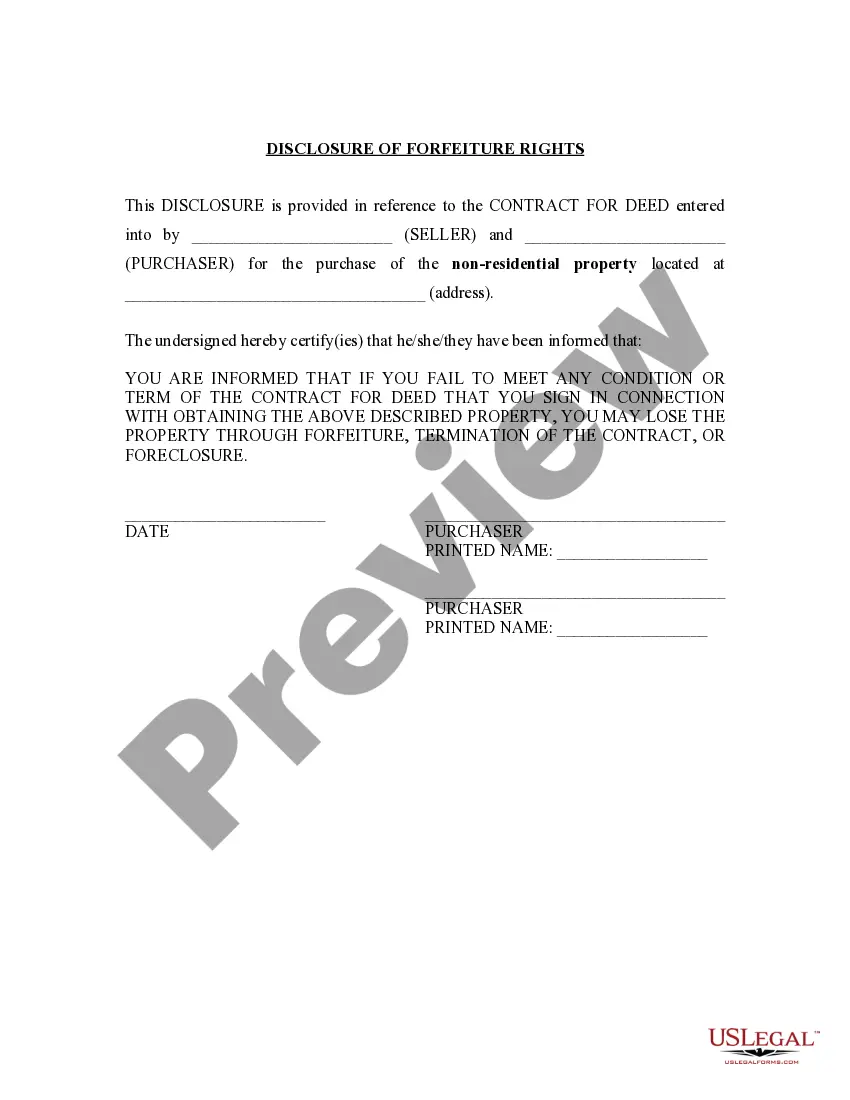
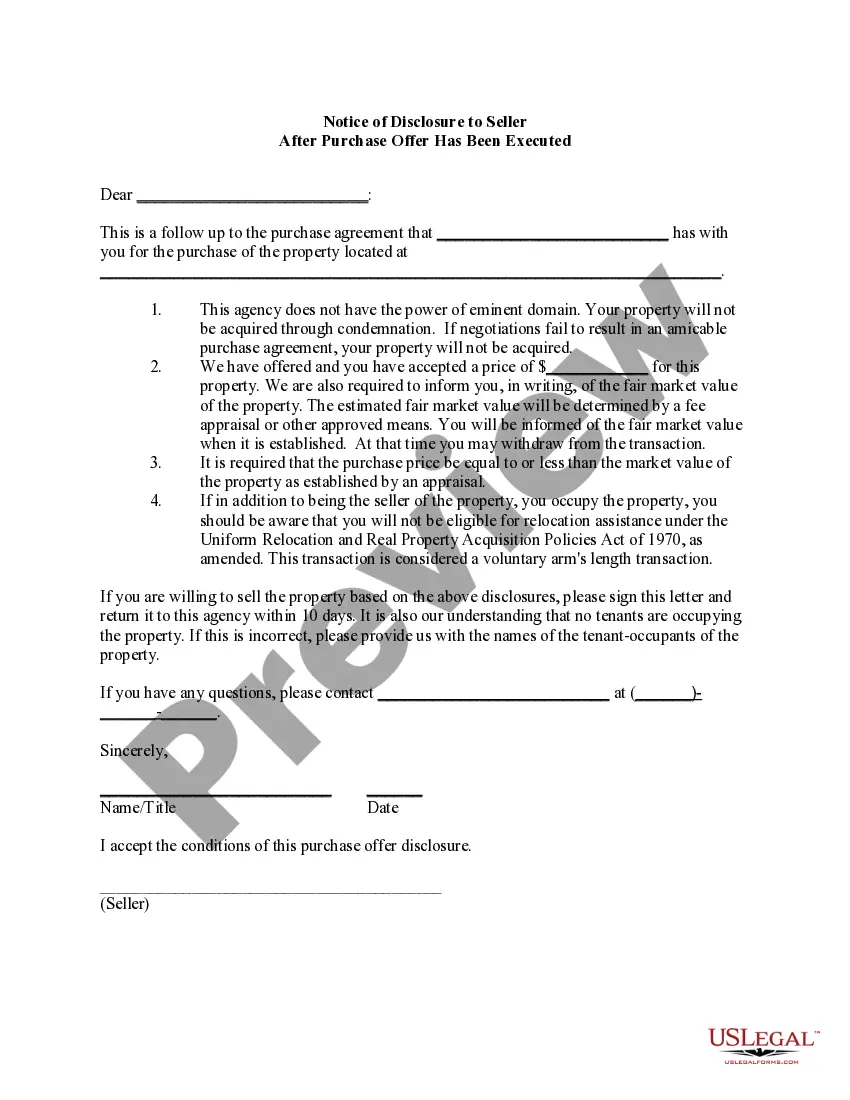
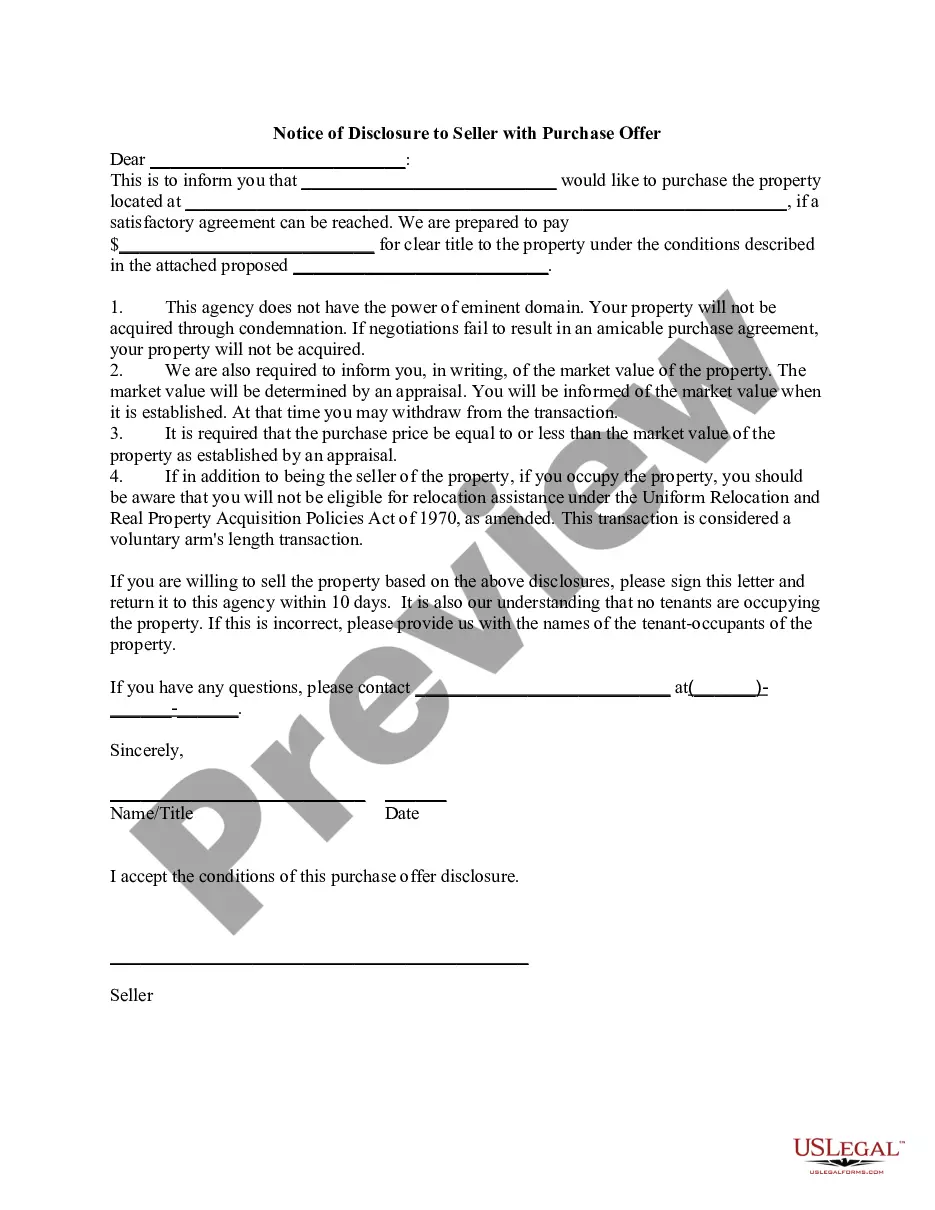
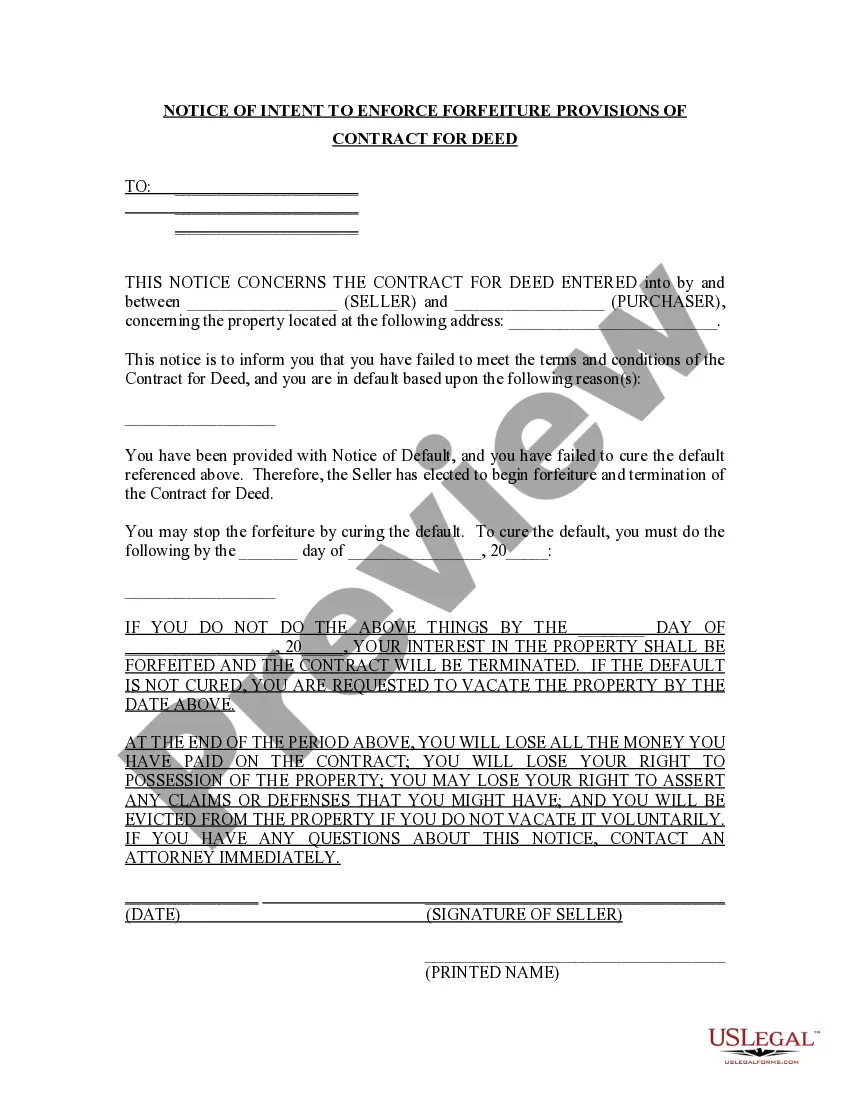
The Seller's Disclosure of Forfeiture Rights for Contract for Deed is a legal document provided by the seller to the purchaser during the signing of a contract for deed. This form outlines the potential forfeiture risks the purchaser may face if they default on the contract terms. While not always legally required, using this form helps clarify the purchaser's responsibilities and rights regarding forfeiture, providing both parties with essential information for a smoother transaction.
Key parts of this document
- Disclosure of forfeiture rights related to the contract for deed.
- Identification of the seller and purchaser.
- Property address associated with the contract.
- Statement informing the purchaser of potential loss of property due to default.
- Signatures and printed names of the purchasers with date of acknowledgment.
When this form is needed
This form should be used whenever a seller enters into a contract for deed with a purchaser. It is essential when the seller wants to ensure that the purchaser understands their forfeiture rights and responsibilities. Having this disclosure can help prevent misunderstandings and provide legal documentation of the information shared, especially in situations where default on payments or terms occurs.
Who can use this document
- Real estate sellers who are offering a property through a contract for deed.
- Purchasers who are entering into a contract for deed and need to understand their legal rights regarding forfeiture.
- Real estate professionals who facilitate contract for deed transactions and want to ensure compliance.
How to prepare this document
- Identify the seller and purchaser by entering their names in the designated fields.
- Specify the property address that is subject to the contract for deed.
- Clearly state the forfeiture rights and responsibilities associated with the contract.
- Have all purchasers sign and print their names, along with the date of signing.
Does this document require notarization?
This form does not typically require notarization unless specified by local law. It's advisable to check state-specific regulations concerning notary requirements for real estate documents to ensure compliance.
Get your form ready online
Our built-in tools help you complete, sign, share, and store your documents in one place.
Make edits, fill in missing information, and update formatting in US Legal Forms—just like you would in MS Word.
Download a copy, print it, send it by email, or mail it via USPS—whatever works best for your next step.
Sign and collect signatures with our SignNow integration. Send to multiple recipients, set reminders, and more. Go Premium to unlock E-Sign.
If this form requires notarization, complete it online through a secure video call—no need to meet a notary in person or wait for an appointment.
We protect your documents and personal data by following strict security and privacy standards.
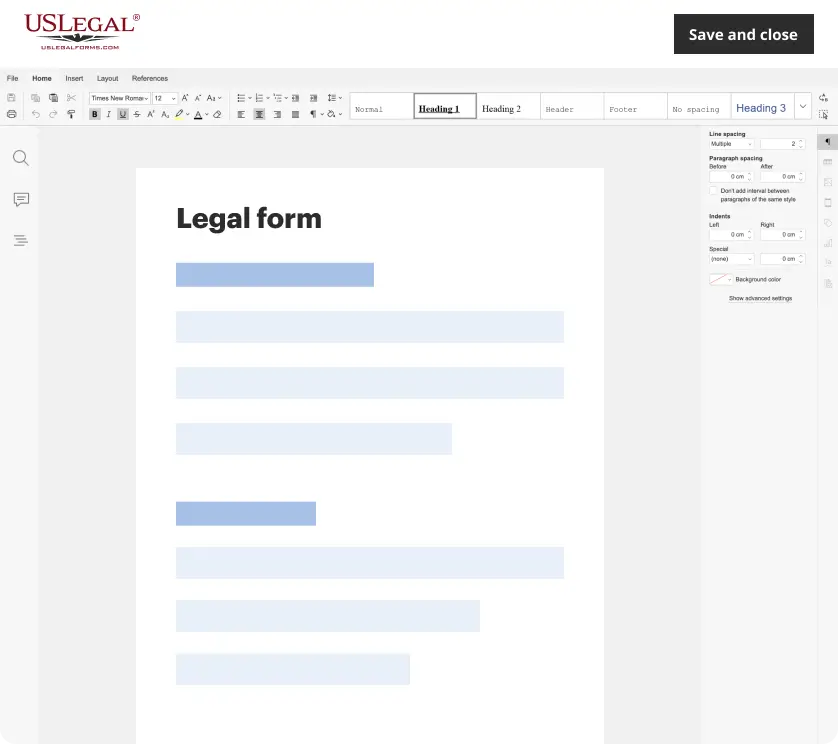
Make edits, fill in missing information, and update formatting in US Legal Forms—just like you would in MS Word.
Download a copy, print it, send it by email, or mail it via USPS—whatever works best for your next step.
Sign and collect signatures with our SignNow integration. Send to multiple recipients, set reminders, and more. Go Premium to unlock E-Sign.

If this form requires notarization, complete it online through a secure video call—no need to meet a notary in person or wait for an appointment.
We protect your documents and personal data by following strict security and privacy standards.
Common mistakes
- Failing to provide complete and accurate information regarding the property address.
- Not obtaining all necessary signatures from all purchasers involved.
- Neglecting to fully inform the purchaser of the forfeiture terms.
- Using outdated or incorrect versions of the form.
Benefits of using this form online
- Convenient access to downloadable legal templates, allowing users to fill out forms at their own pace.
- Editable fields enable customization specific to the transaction and involved parties.
- Ensures form reliability by using industry-standard templates drafted by licensed attorneys.
Looking for another form?
Form popularity
FAQ
The Virginia Residential Property Disclosure act is a statutory scheme enacted by the General Assembly of Virginia that requires a seller of real estate in Virginia to furnish to a purchaser a residential property disclosure statement for the buyer to beware of certain matters that may affect the buyer's decision to
Monetary Damages If the Seller decides to breach the contract and keep their home, they may do so, but the court may order the Buyer receive money for the resulting breach. Generally, the money owed to Buyer may include reimbursing the Buyer with: The buyer's temporary housing costs.
Although there are some basic disclosures required of sellers under federal law, Virginia law does not require sellers to disclose much information about their property at all.
If a seller defaults, he must return all deposits, plus added reasonable expenses, to the buyer. The other party may also seek to compel the erring party to complete the deal under specific performance. From a buyer's point of view, it is advisable to get the sale agreement registered.
You will need to include information about all appliances in the home, including which are included in the sale as well as whether they are operational. You will also need to disclose any room additions, damage, or neighborhood noise problems.
If the seller fails to disclose information about the house but you haven't yet signed on the dotted line, you may be able to cancel the purchase. Canceling the purchase could be a lot less costly and time-consuming than suing the seller.
This means that if you default and can?t make your payments, you lose the property and all of the money you have already paid into it (often including repairs and improvements). Unlike a traditional mortgage, a defaulting buyer in a contact for deed may only have 30-60 days to cure the default or move out.
Virginia is a caveat emptor (buyer beware) state. This essentially means that the responsibility for conducting a thorough inspection of the property that is contemplated to be purchased is on the Buyer.
In many states, the law requires a home seller to disclose to a potential buyer any problems or defects known about the home. In Virginia, however, the seller is obligated only to provide the buyer with a Residential Property Disclosure Statement, (Code of Virginia § 55-519), which contains minimal information.