Virginia Flooring Contract for Contractor
Overview of this form
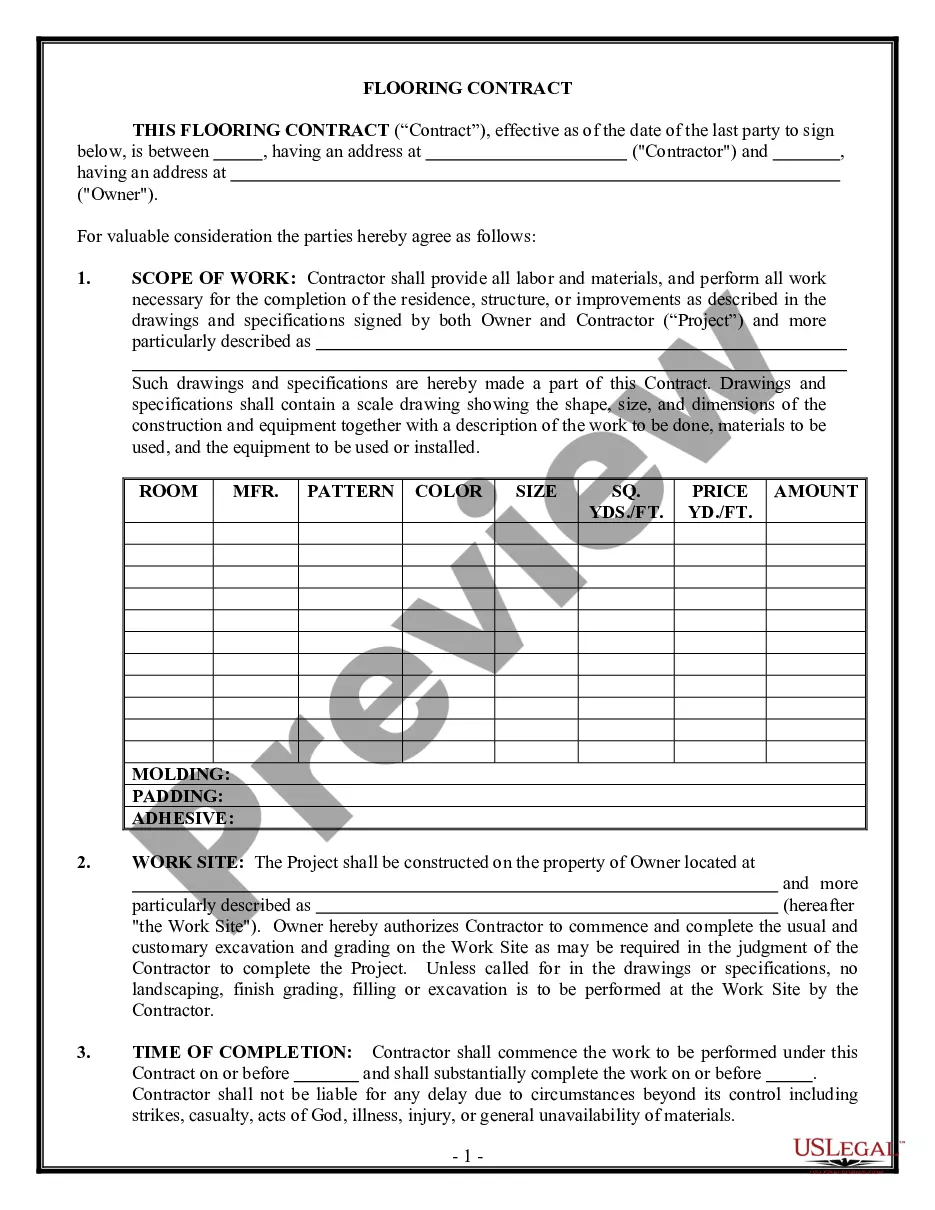
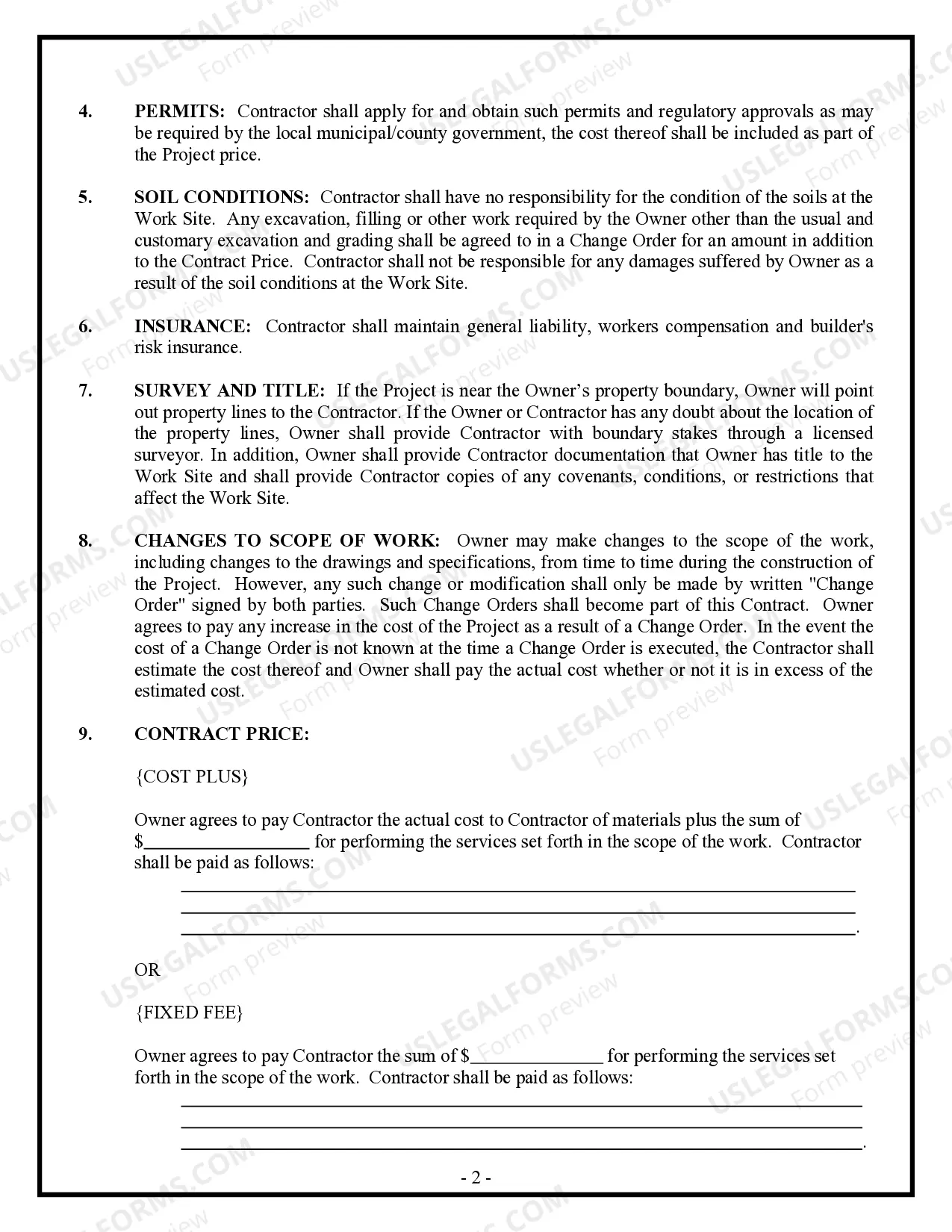
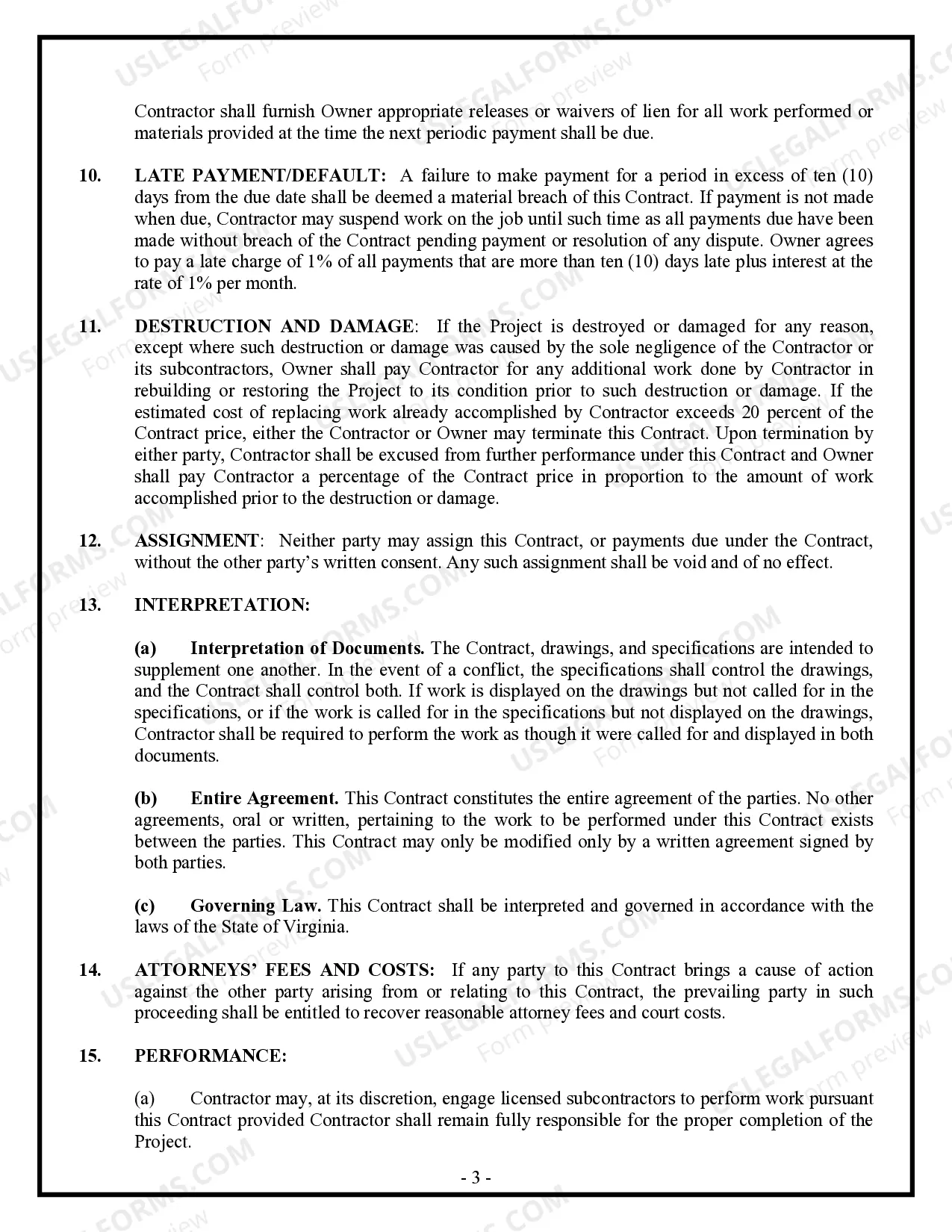
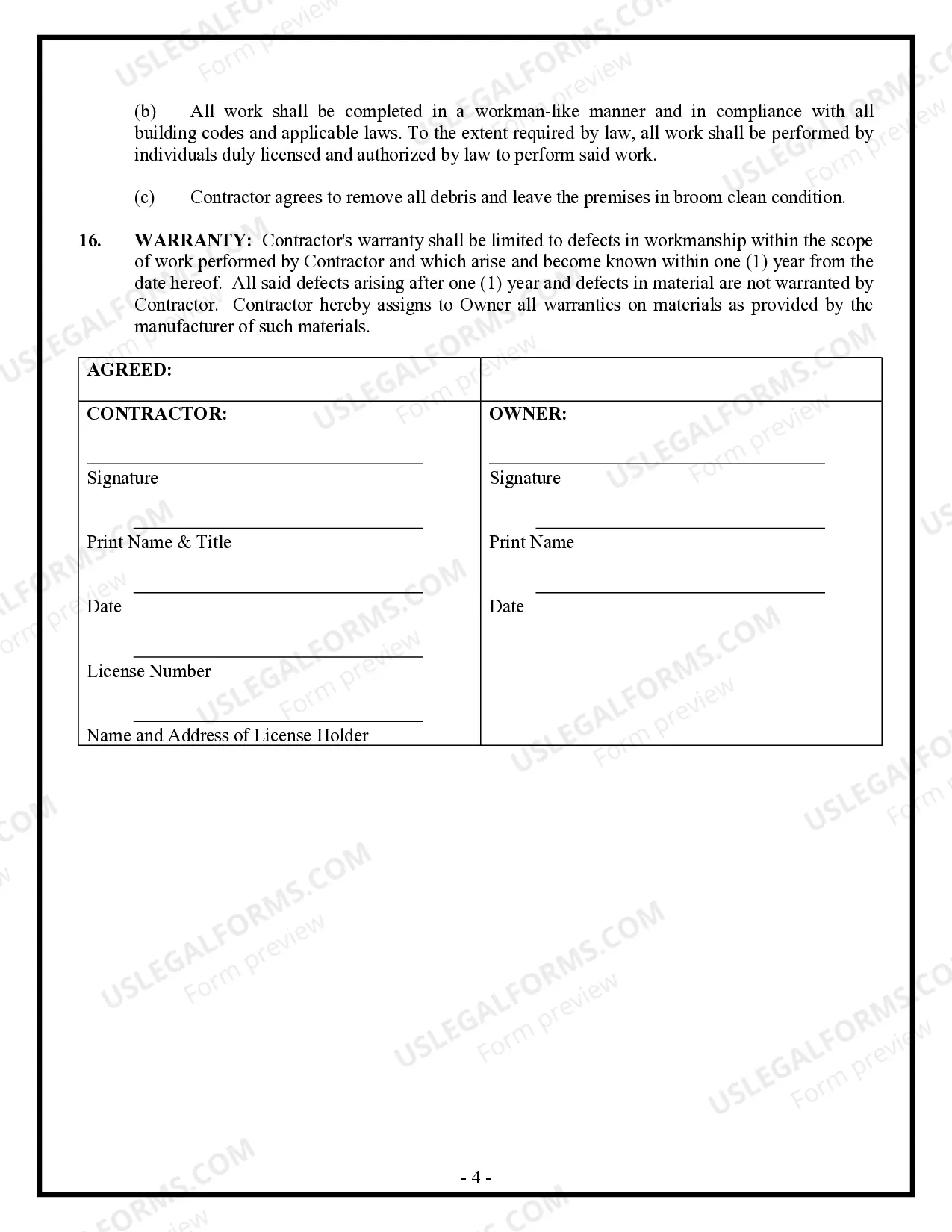
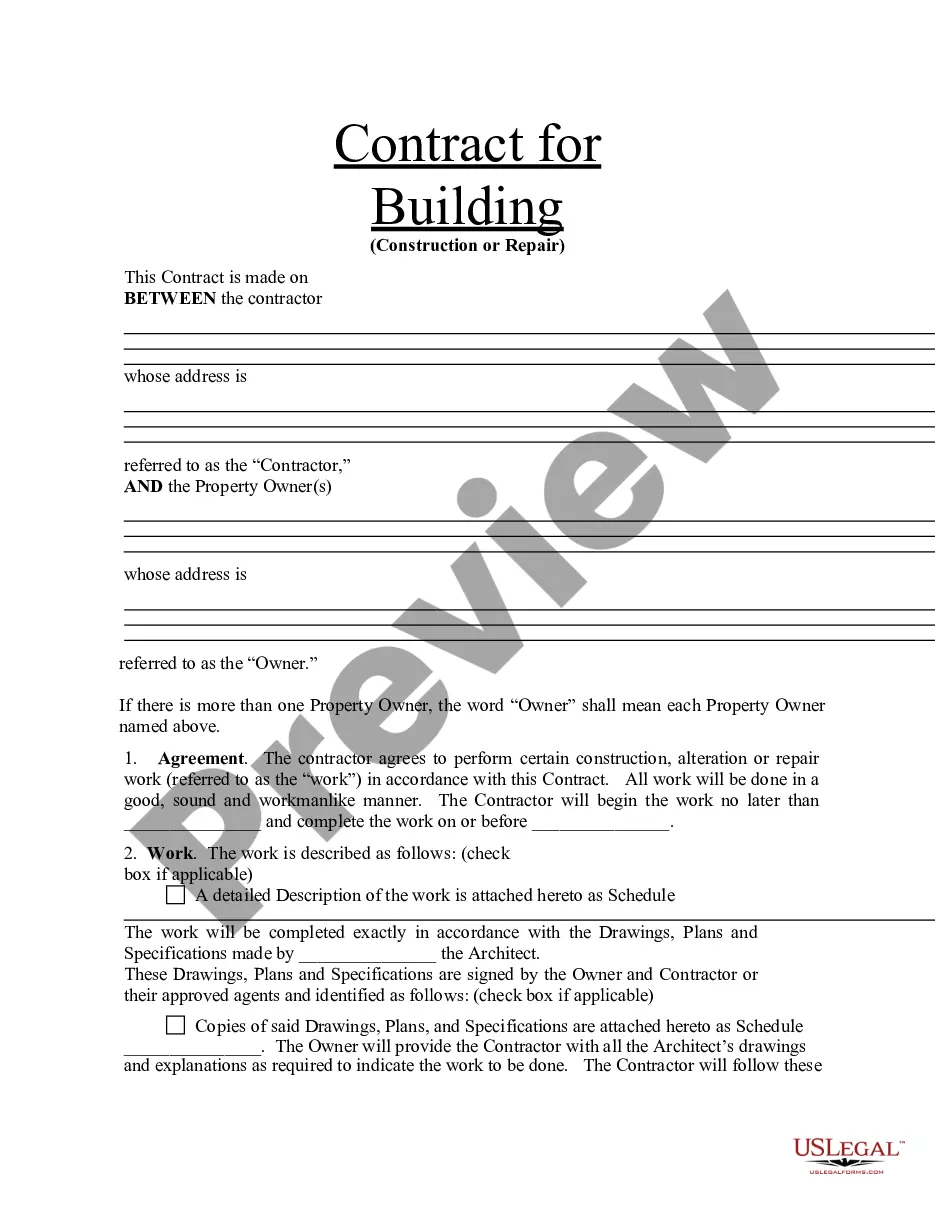
The Flooring Contract for Contractor is a legally binding agreement designed for use between flooring contractors and property owners. This form outlines the terms and conditions under which flooring services will be provided, including payment arrangements like cost plus or fixed fee. Unlike general contracts, this form specifically addresses aspects such as change orders, work site information, warranties, and insurance requirements, ensuring compliance with Virginia state laws.
Key components of this form
- Project pricing: option for cost plus or fixed fee payment arrangements.
- Change orders: guidelines for modifying the scope of work and associated costs.
- Insurance requirements: mandates for general liability, workers compensation, and builders risk insurance.
- Permits: contractor's responsibility for obtaining necessary permits.
- Warranty: limited warranty on workmanship for one year following completion.
Common use cases
This form should be used when hiring a flooring contractor for residential or commercial projects. Whether you are a property owner looking to install new flooring or replace existing flooring, this contract ensures that both parties have a clear understanding of the work to be done, payment terms, and responsibilities. It is especially essential when various conditions, such as warranty and insurance, need to be formalized to protect your investment.
Who this form is for
This form is intended for:
- Property owners seeking to hire a flooring contractor.
- Flooring contractors who need a formal agreement with clients.
- Individuals or businesses looking to outline detailed project specifications and payment terms.
Completing this form step by step
- Identify the parties involved: Enter the names and addresses of the property owner and contractor.
- Specify the project: Describe the flooring work to be completed, along with the total project price.
- Review insurance and permits: Confirm that the contractor will obtain necessary permits and maintain required insurance.
- Include change order terms: Clearly state how changes to the scope of work will be handled.
- Sign and date the contract: Both parties must sign and date the form to validate the agreement.
Does this form need to be notarized?
This form does not typically require notarization unless specified by local law. However, having the contract notarized can provide an extra layer of authenticity and may be beneficial in case of disputes.
Get your form ready online
Our built-in tools help you complete, sign, share, and store your documents in one place.
Make edits, fill in missing information, and update formatting in US Legal Forms—just like you would in MS Word.
Download a copy, print it, send it by email, or mail it via USPS—whatever works best for your next step.
Sign and collect signatures with our SignNow integration. Send to multiple recipients, set reminders, and more. Go Premium to unlock E-Sign.
If this form requires notarization, complete it online through a secure video call—no need to meet a notary in person or wait for an appointment.
We protect your documents and personal data by following strict security and privacy standards.

Make edits, fill in missing information, and update formatting in US Legal Forms—just like you would in MS Word.

Download a copy, print it, send it by email, or mail it via USPS—whatever works best for your next step.

Sign and collect signatures with our SignNow integration. Send to multiple recipients, set reminders, and more. Go Premium to unlock E-Sign.

If this form requires notarization, complete it online through a secure video call—no need to meet a notary in person or wait for an appointment.

We protect your documents and personal data by following strict security and privacy standards.
Common mistakes to avoid
- Failing to specify the project scope and details.
- Not understanding payment terms, which can lead to disputes.
- Ignoring local permit requirements.
- Not including adequate insurance information.
- Overlooking the need for change orders during the project.
Why use this form online
- Convenience: Download and complete the form at your own pace.
- Editability: Easily modify the contract to fit specific project needs.
- Reliability: Access professionally drafted legal forms created by licensed attorneys.
Legal use & context
- This form is enforceable in Virginia and must comply with state-specific regulations.
- Both parties are encouraged to understand their obligations and rights under the contract.
- Disputes arising from this contract can lead to legal action where attorneys' fees may be recoverable for the prevailing party.
Quick recap
- The Flooring Contract for Contractor is crucial for clearly defining the relationship between property owners and flooring contractors.
- It includes essential elements such as payment terms, change orders, and insurance requirements.
- Using this contract can help avoid disputes and ensure that projects proceed smoothly.
Looking for another form?

Form popularity
FAQ
Acquire 4 years of experience in the trade for which you plan to get the license for. After this, you will have to take two exams: the California Law and Business Exam and the Flooring & Floor Covering C-15 exam.
Who Needs a Contractors License? Anybody who is performing or managing construction, removal, repair, or improvements when the total value of a single project is over $1,000 must obtain a license from DPOR.
What are the costs involved in opening a carpet store? Your startup costs will be between $2,000 and $10,000, depending on your location. You can start from home, or you can use a small workshop with a monthly rent of about $1,000. Expect to pay additional money for high-grade insurance.
PSA: Performing Construction Work in Virginia Requires a Contractor's License.However, the risk is great for the unlicensed subcontractor or contractor even where they hold a license from another state. These risks run from non-payment due to a lack of license to the inability to record a mechanic's lien.
Operating without a required contractor's license is a criminal class one misdemeanor. There can be DPOR civil penalties. Operating without a required contractor license would be a violation of the Virginia Consumer Protection Act. This is a very legitimate police power by the state.
A Class C Contractor is any contractor that has single contracts from $1,000 or more but less than $10,000 or contracts totaling less than $150,000 over a one-year period. Virginia does not require Continuing Education for the Class C Contractor classification.
In the state of Virginia (VA), a contractor's license is legally required for any work that exceeds $1,000 in labor and materials.
STEP 1: Plan your business. STEP 2: Form a legal entity. STEP 3: Register for taxes. STEP 4: Open a business bank account & credit card. STEP 5: Set up business accounting. STEP 6: Obtain necessary permits and licenses. STEP 7: Get business insurance.
Do quality flooring work. Build a great website. Optimize your website for search engines. Take high-quality photographs of your work. Build a strong brand. Build relationships with local contractors. Purchase flooring job leads. Put an ad in the phonebook.