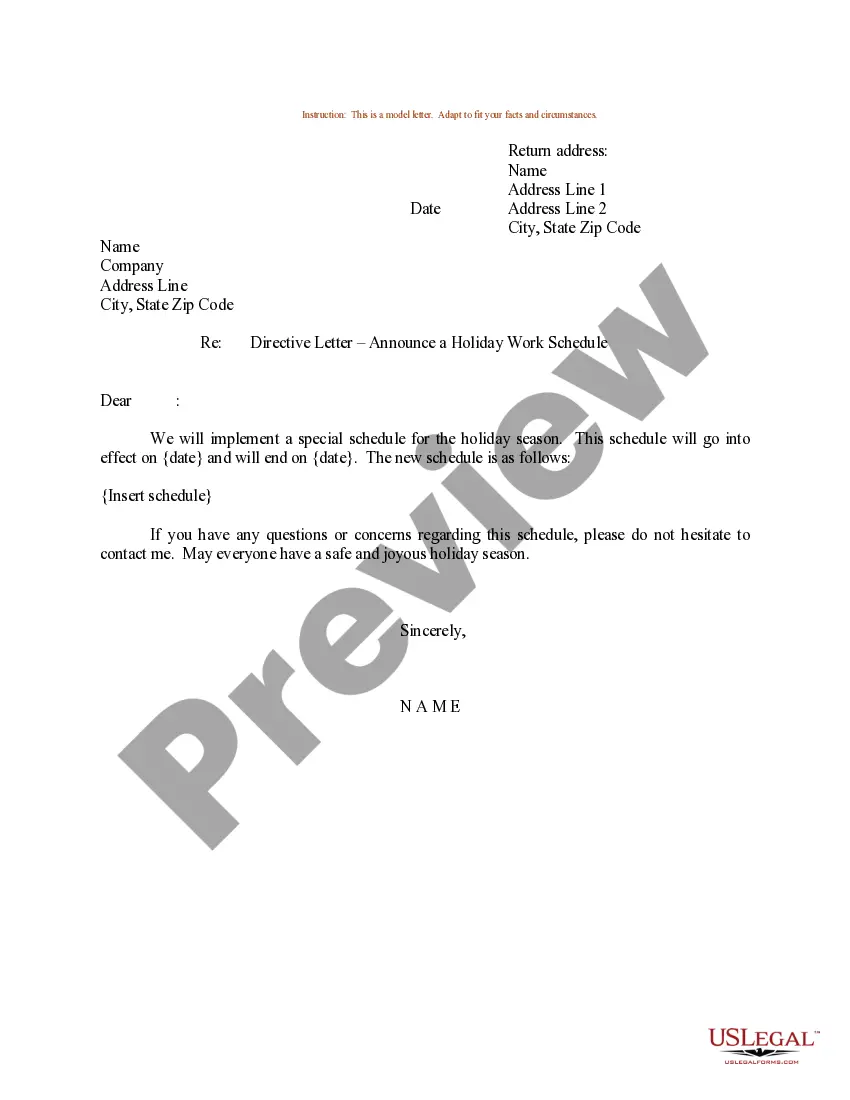
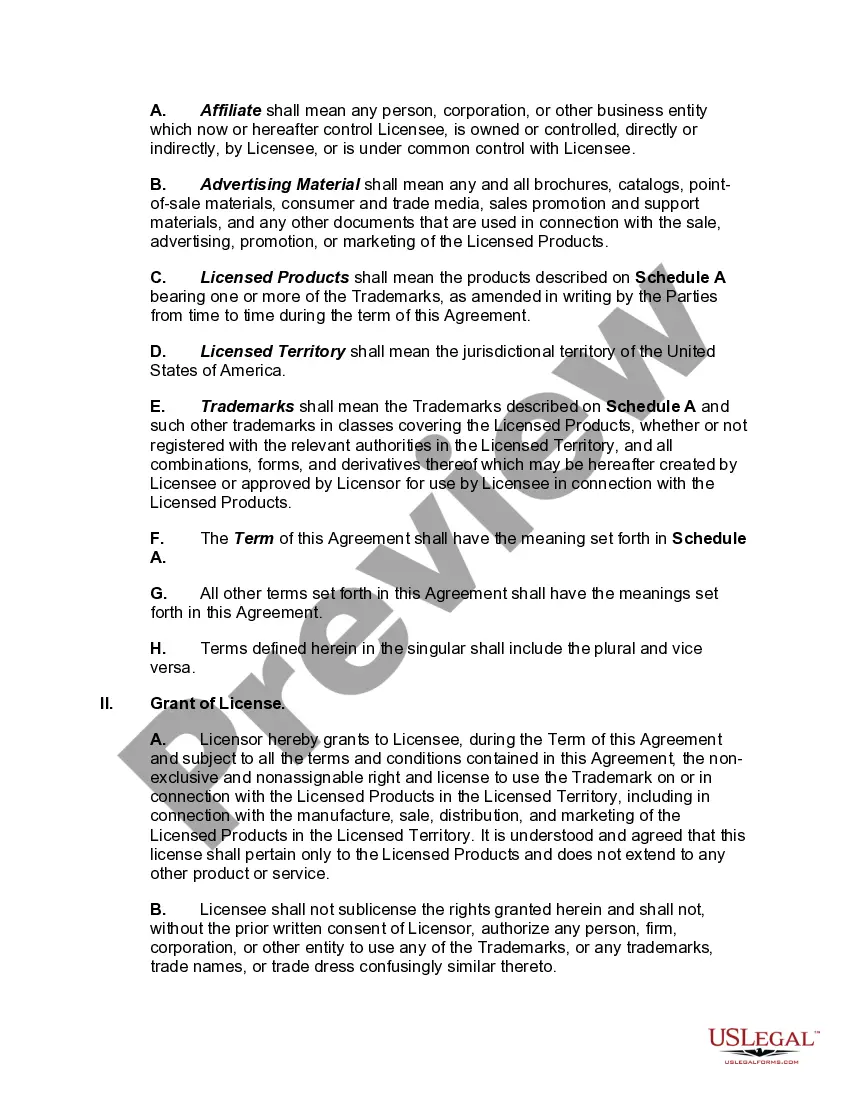
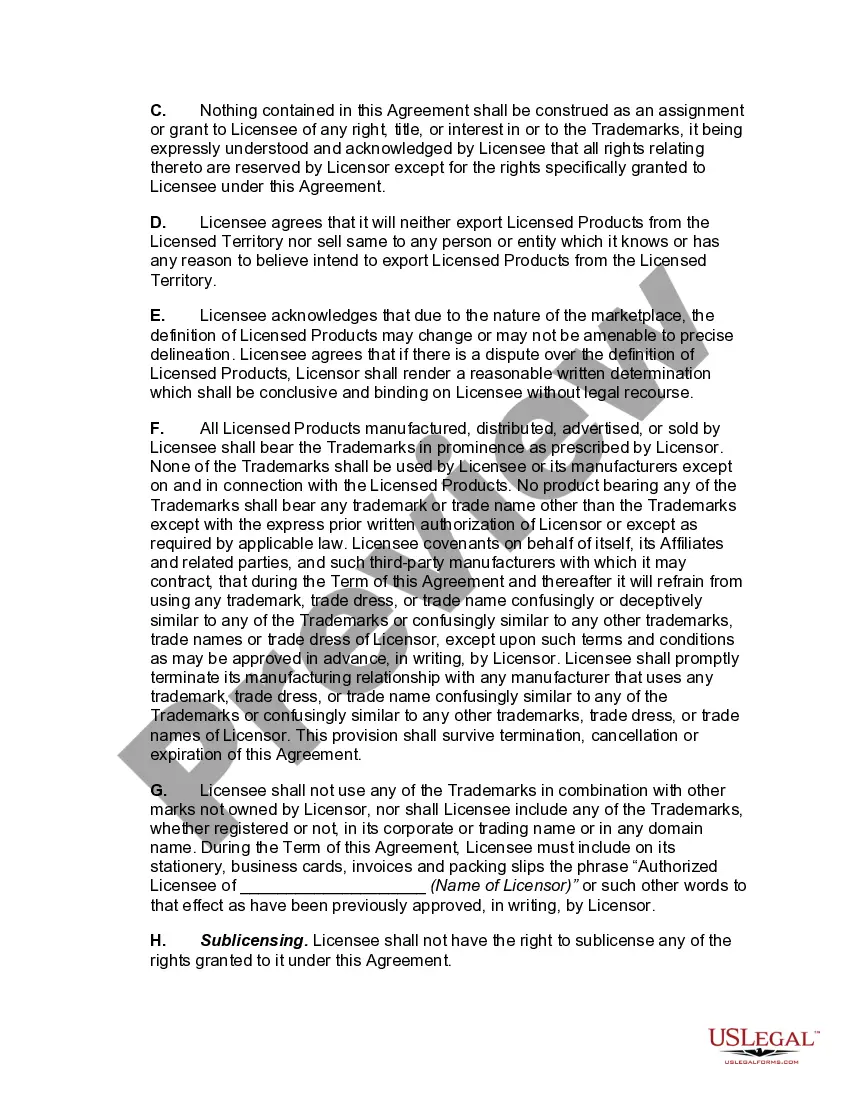
Utah Merchandising License Agreement
Description

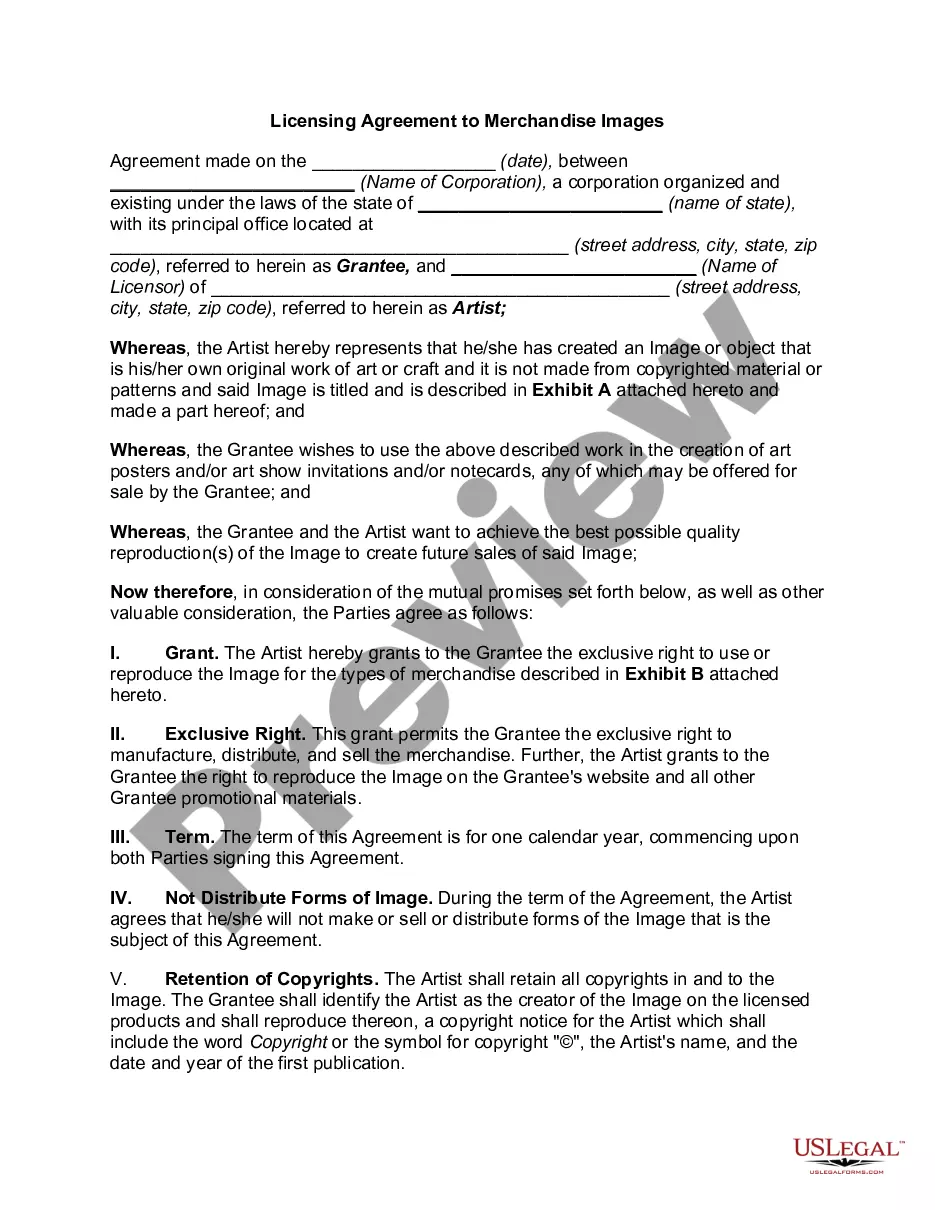
Get your form ready online
Our built-in tools help you complete, sign, share, and store your documents in one place.
Make edits, fill in missing information, and update formatting in US Legal Forms—just like you would in MS Word.
Download a copy, print it, send it by email, or mail it via USPS—whatever works best for your next step.
Sign and collect signatures with our SignNow integration. Send to multiple recipients, set reminders, and more. Go Premium to unlock E-Sign.
If this form requires notarization, complete it online through a secure video call—no need to meet a notary in person or wait for an appointment.
We protect your documents and personal data by following strict security and privacy standards.

Make edits, fill in missing information, and update formatting in US Legal Forms—just like you would in MS Word.

Download a copy, print it, send it by email, or mail it via USPS—whatever works best for your next step.

Sign and collect signatures with our SignNow integration. Send to multiple recipients, set reminders, and more. Go Premium to unlock E-Sign.

If this form requires notarization, complete it online through a secure video call—no need to meet a notary in person or wait for an appointment.

We protect your documents and personal data by following strict security and privacy standards.
Looking for another form?



How to fill out Merchandising License Agreement?
If you desire to finish, acquire, or produce legitimate document templates, utilize US Legal Forms, the premier selection of legal forms accessible online.
Utilize the website's intuitive and convenient search function to locate the documents you require.
Numerous templates for business and personal purposes are organized by categories and jurisdictions, or keywords.
Step 3. If you are not satisfied with the form, utilize the Search section at the top of the screen to find alternative versions of the legal form template.
Step 4. Once you have located the form you need, click the Get now button. Choose the payment plan you prefer and enter your credentials to register for an account.
- Utilize US Legal Forms to obtain the Utah Merchandising License Agreement with just a few clicks.
- If you are presently a US Legal Forms user, Log In to your account and then click the Download button to retrieve the Utah Merchandising License Agreement.
- You may also access forms you have previously downloaded within the My documents section of your account.
- If you are using US Legal Forms for the first time, follow the guidelines below.
- Step 1. Ensure you have chosen the form for your appropriate city/state.
- Step 2. Use the Review option to inspect the form's details. Remember to read the description.
Form popularity
FAQ
Types of licensing agreement The unique feature of this type of agreement is that even the licensor is excluded to use or exploit the licensed property during the term of the agreement. Copyright, trademark and patent licenses are the best examples of an exclusive license agreement.
. This is a form promotional license agreement prepared from the perspective of a licensor looking to promote its brand by granting a license to a licensee to use the brand on its own products and premiums (e.g., give-aways) in connection with the promotion thereof. Download.
Royalty rates vary per industry, but a good rule of thumb is between 2-3% on the low end, and 7-10% on the high end. I have licensed consumer products for as low as 3% and as high as 7%, with 5% being the most common and a generally fair number.
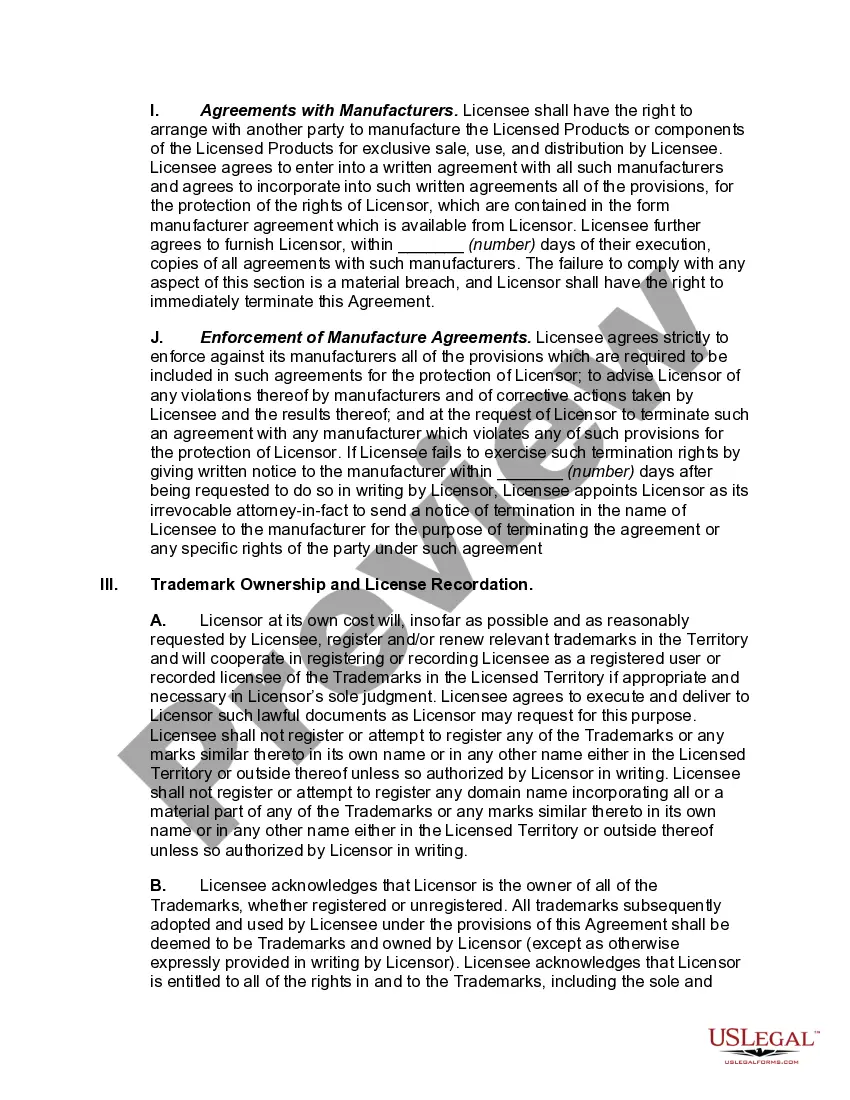
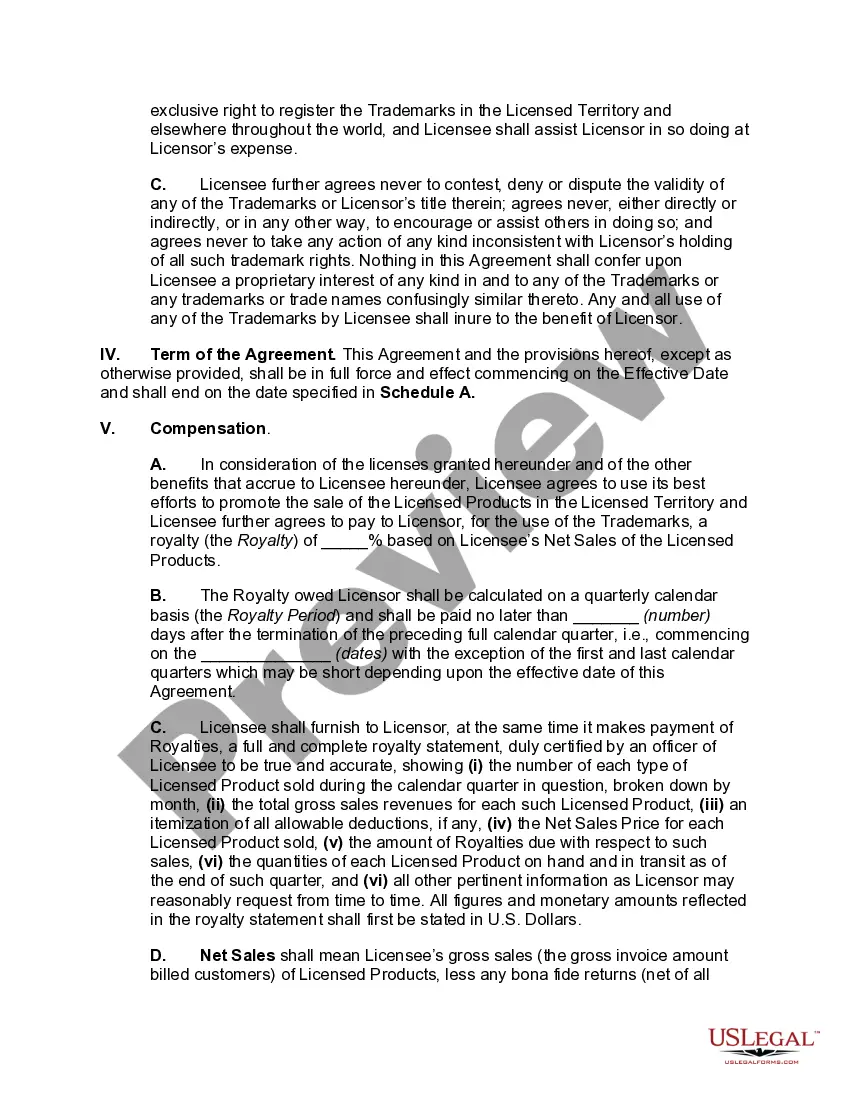
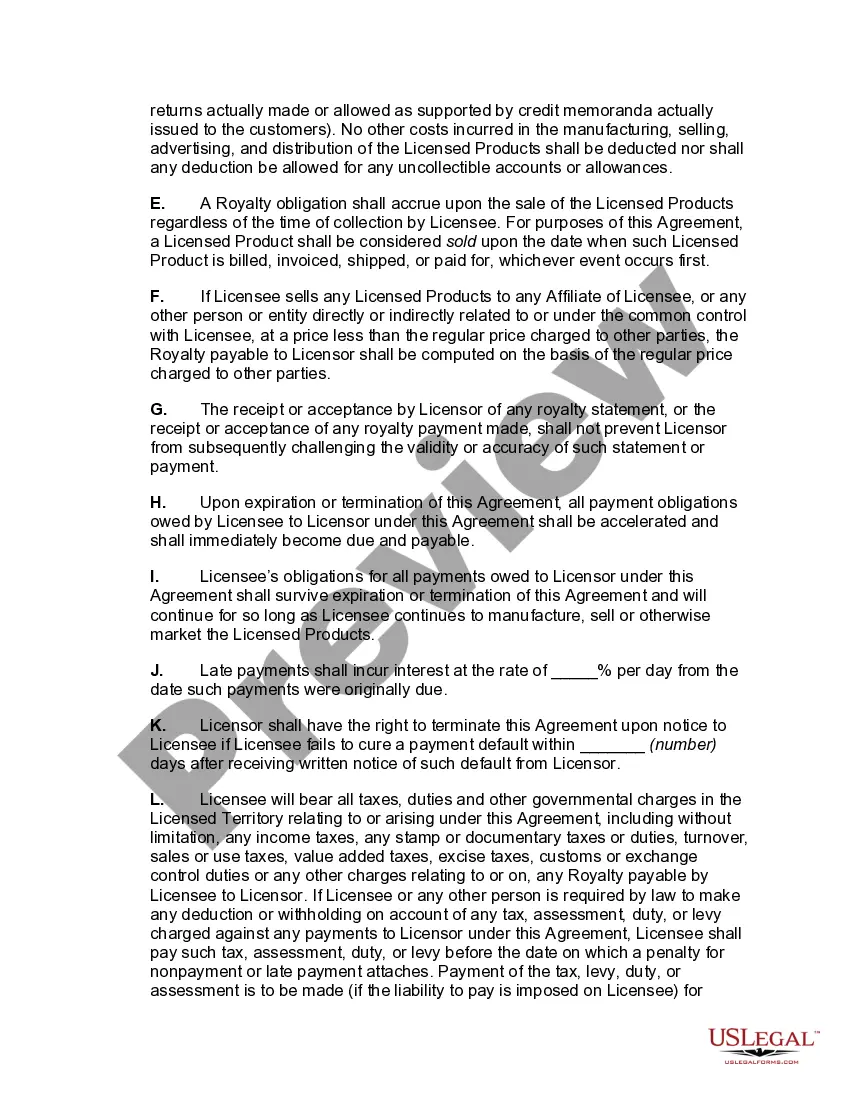
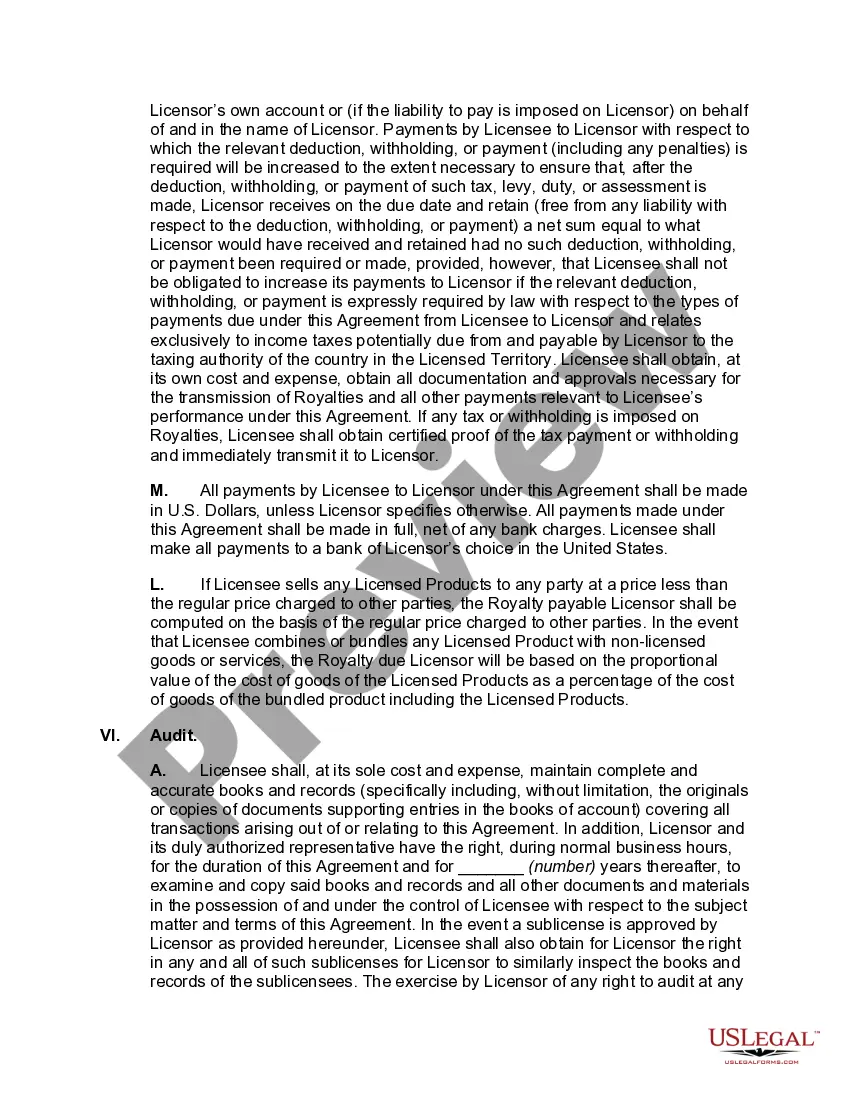
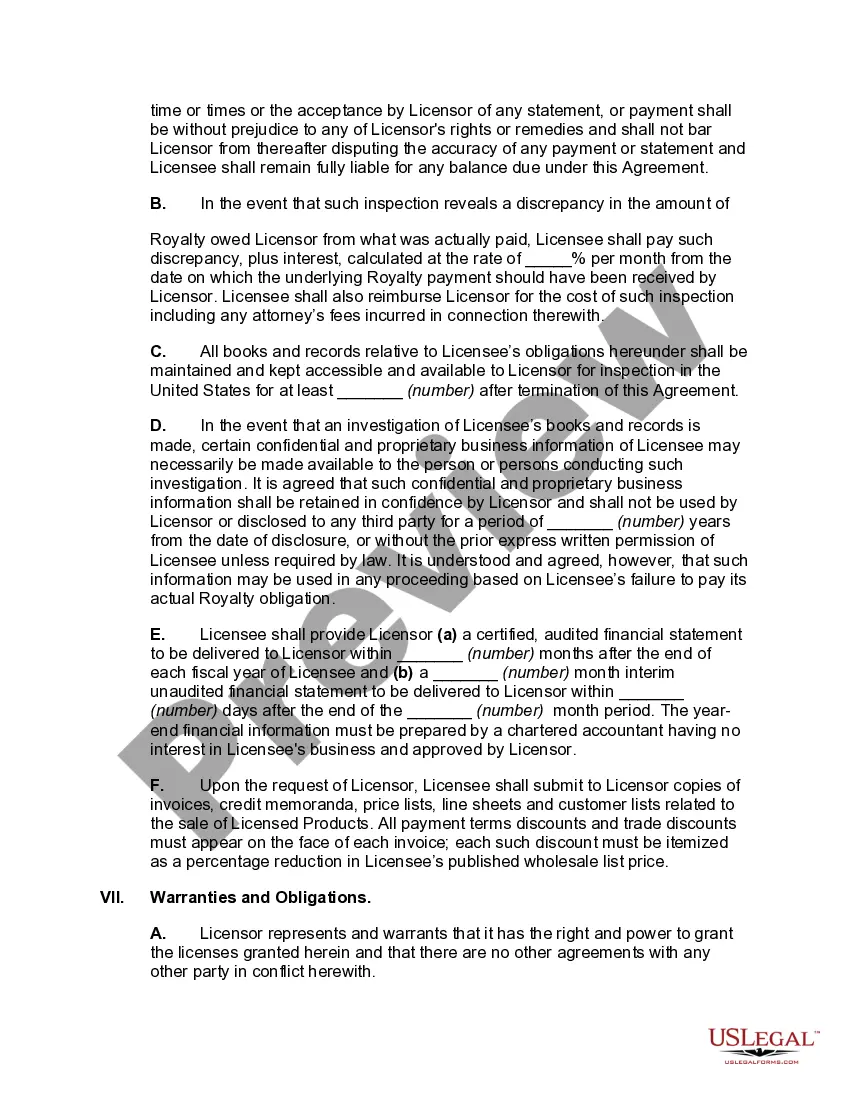
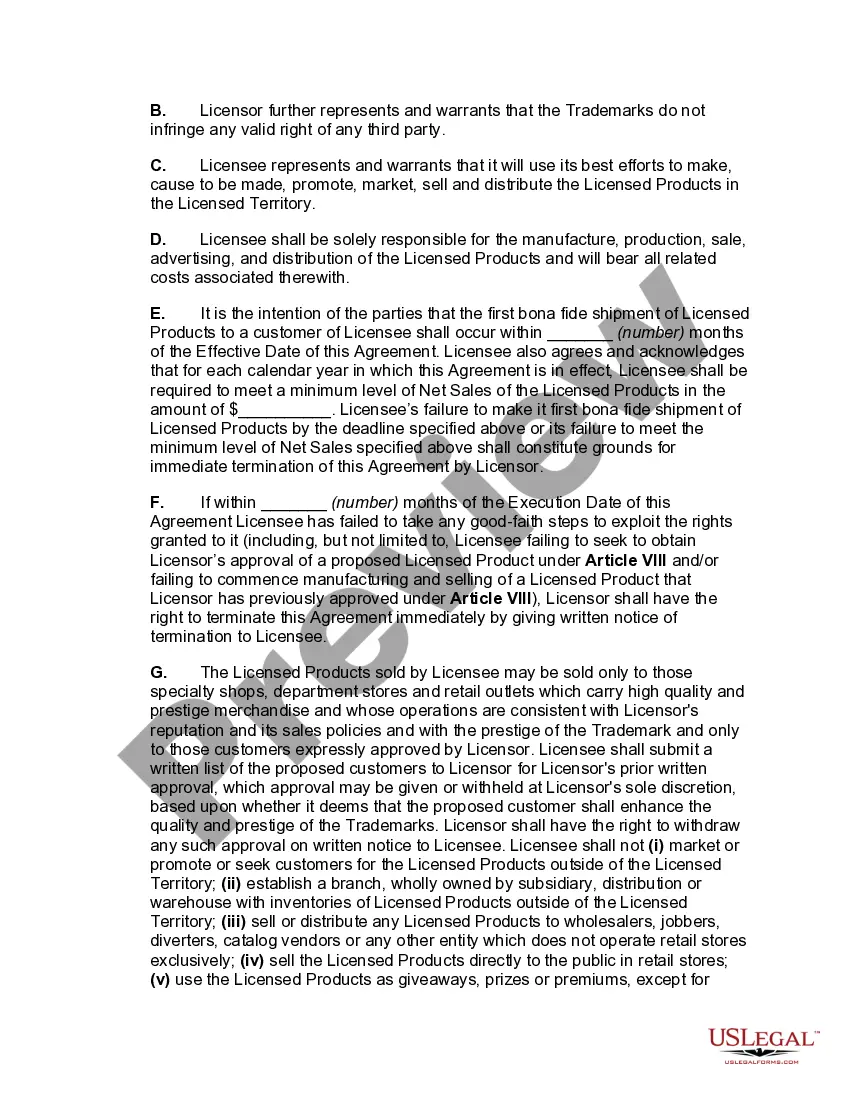
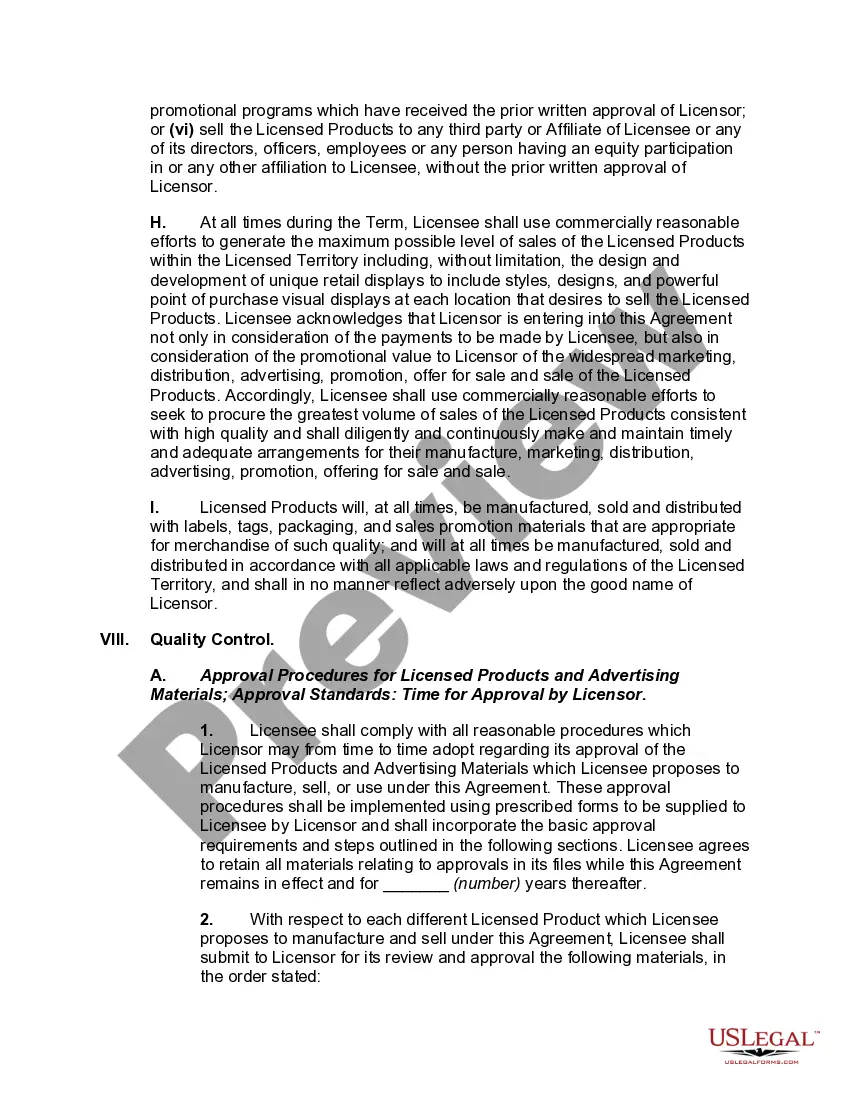
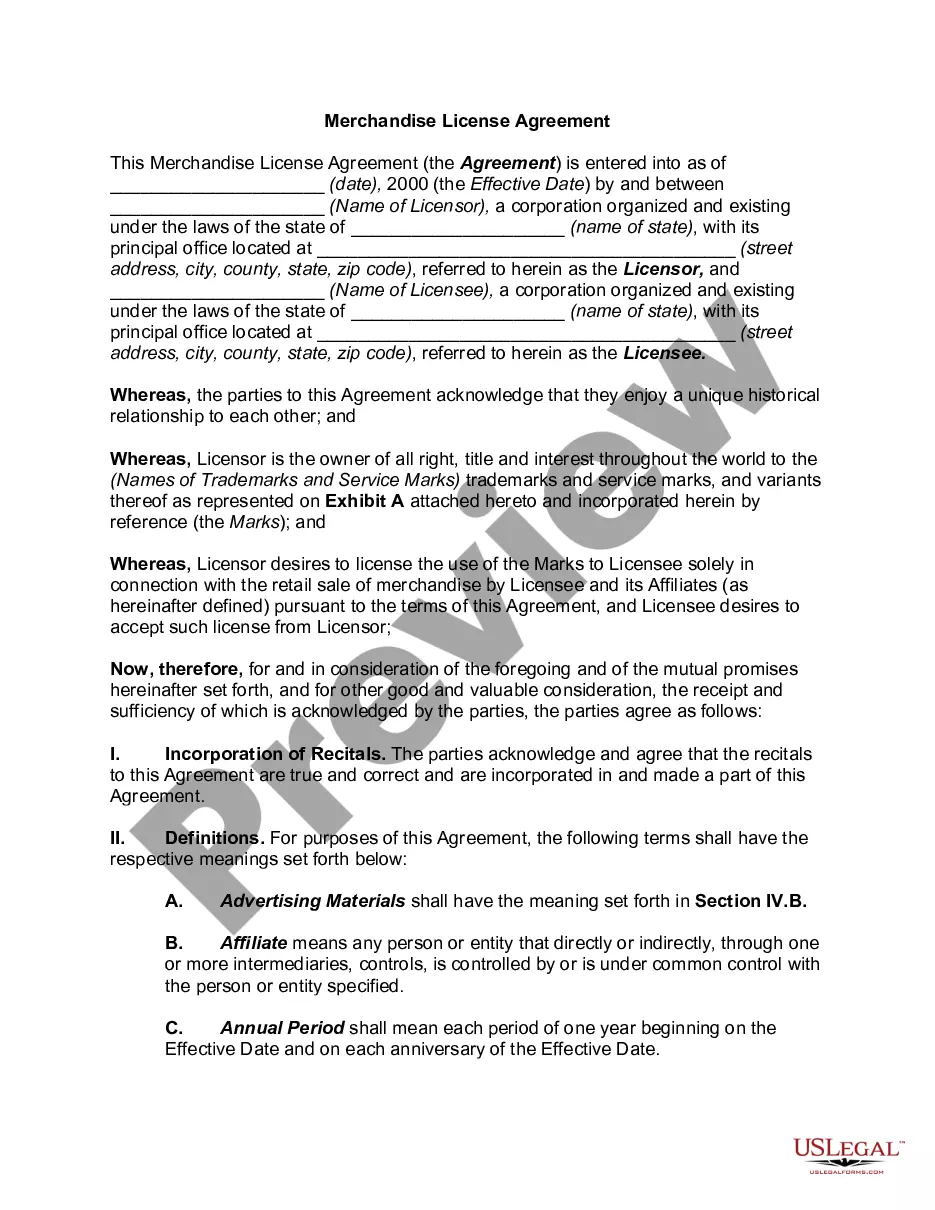
A merchandise license agreement describes the terms through which the owner of intellectual property, notably in the form of a trademark, service mark or copyright, grants a party, called the licensee, the right to use the property for distribution, marketing, and sale.
A merchandising agreement is a legal contract between two parties in which the first party agrees to sell specific goods or services to the second party. In this case, "merchandise" refers not only to physical items but also intangible products such as intellectual property.
Practitioners and licensing executives often refer to three basic types of voluntary licenses: non-exclusive, sole, and exclusive. A non-exclusive licence allows the licensor to retain the right to use the licensed property and the right to grant additional licenses to third parties.
Examples are Toyota2122, Ford2122, Intel2122, Apple2122, Sony2122, Canon2122, Budweiser2122, Kraft2122, and millions more of such brands.
Licensing involves obtaining permission from a company (licensor) to manufacture and sell one or more of its products within a defined market area. The company that obtains these rights (the licensee) usually agrees to pay a royalty fee to the original owner.
What Is Product Licensing? Licensing occurs when a licensee obtains permission from a licensor to produce and sell its product or products within a certain market. Referred to as the licensee, the party that obtains the rights to sell the product is usually required to pay the licensor a royalty fee.
Steps to License a ProductInvent an original product.Research your market.Do a patent search.Consider filing a provisional patent application.File a patent application.Search for licensees.Sign a licensing agreement.Collect royalties.