Utah Voting Trust Agreement
Description
Get your form ready online
Our built-in tools help you complete, sign, share, and store your documents in one place.
Make edits, fill in missing information, and update formatting in US Legal Forms—just like you would in MS Word.
Download a copy, print it, send it by email, or mail it via USPS—whatever works best for your next step.
Sign and collect signatures with our SignNow integration. Send to multiple recipients, set reminders, and more. Go Premium to unlock E-Sign.
If this form requires notarization, complete it online through a secure video call—no need to meet a notary in person or wait for an appointment.
We protect your documents and personal data by following strict security and privacy standards.

Make edits, fill in missing information, and update formatting in US Legal Forms—just like you would in MS Word.

Download a copy, print it, send it by email, or mail it via USPS—whatever works best for your next step.

Sign and collect signatures with our SignNow integration. Send to multiple recipients, set reminders, and more. Go Premium to unlock E-Sign.

If this form requires notarization, complete it online through a secure video call—no need to meet a notary in person or wait for an appointment.

We protect your documents and personal data by following strict security and privacy standards.
Looking for another form?



How to fill out Voting Trust Agreement?
If you need to compile, retrieve, or print legal document types, utilize US Legal Forms, the largest repository of legal forms available online.
Utilize the website's straightforward and user-friendly search feature to locate the documents you require.
Various categories for business and personal purposes are organized by groups and jurisdictions, or keywords.
Step 4. Once you have chosen the form you desire, click on the Buy now button. Select the pricing plan you prefer and provide your information to register for an account.
Step 5. Proceed with the payment. You can use your Visa, MasterCard, or PayPal account to complete the transaction.
- Use US Legal Forms to locate the Utah Voting Trust Agreement with just a few clicks.
- If you are already a US Legal Forms customer, Log In to your account and click the Purchase button to locate the Utah Voting Trust Agreement.
- You can also view forms you have downloaded previously in the My documents section of your account.
- If this is your first time using US Legal Forms, follow the instructions below.
- Step 1. Ensure you have selected the appropriate form for the correct city/state.
- Step 2. Utilize the Preview feature to review the form's content. Remember to read the description.
- Step 3. If you are not satisfied with the form, use the Search area at the top of the screen to find alternative versions of the legal form template.
Form popularity
FAQ
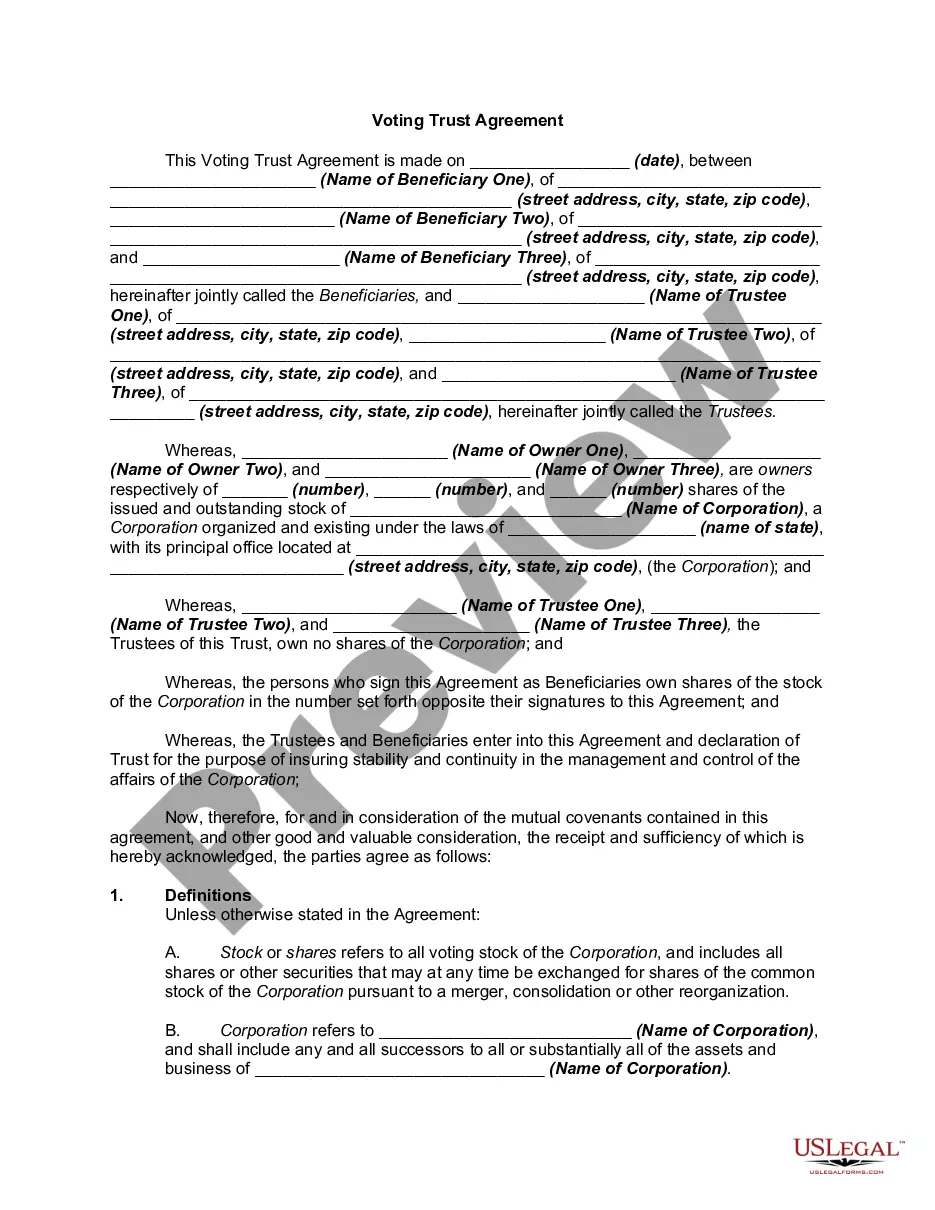
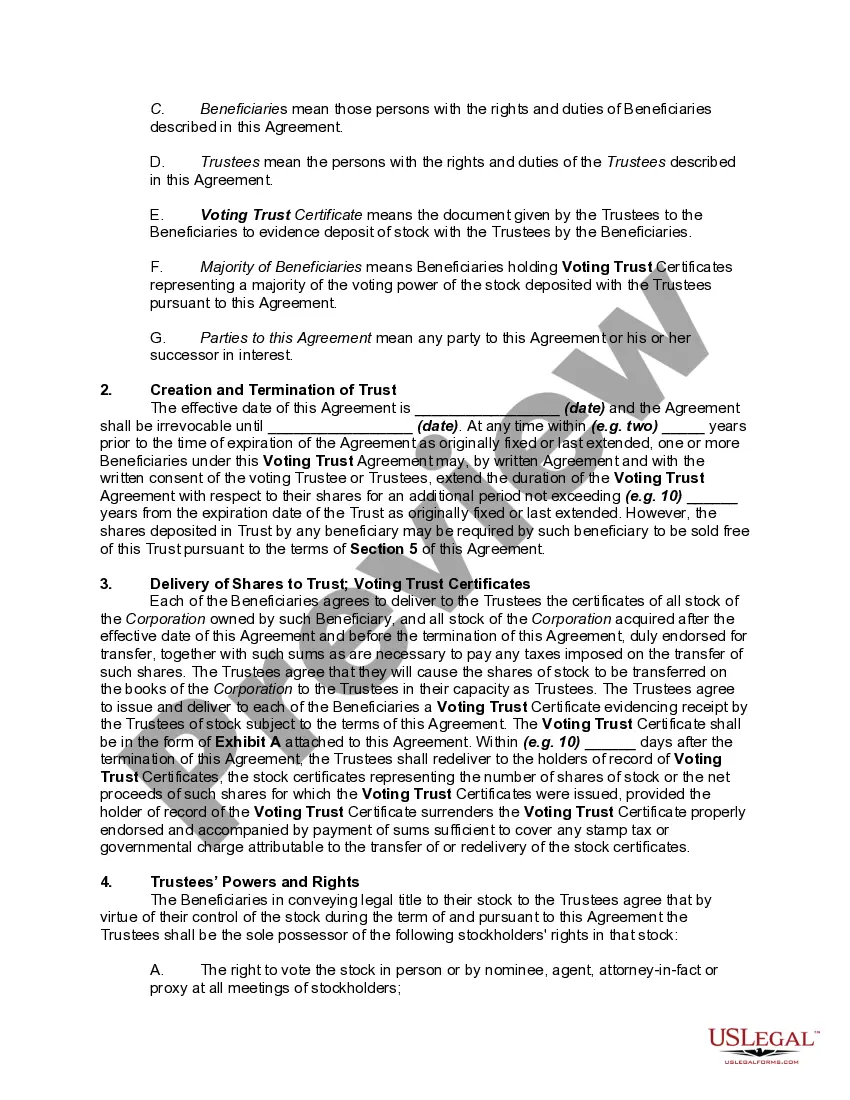
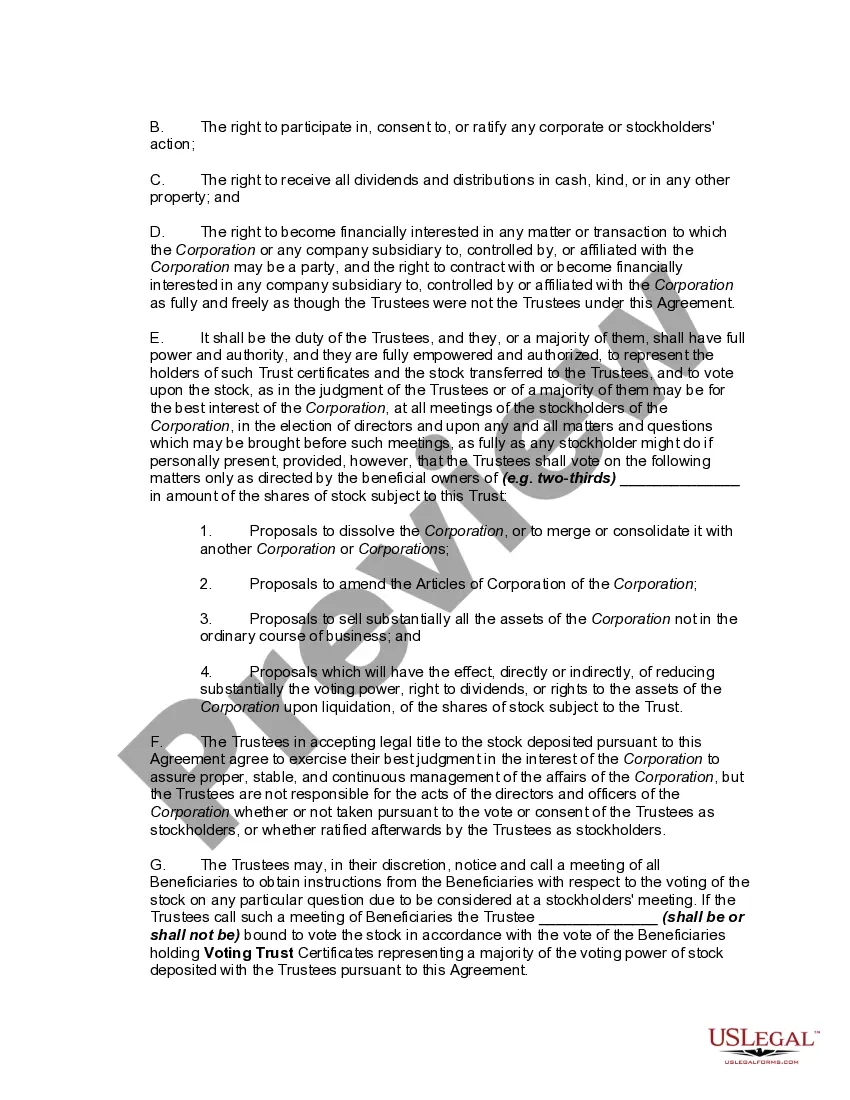
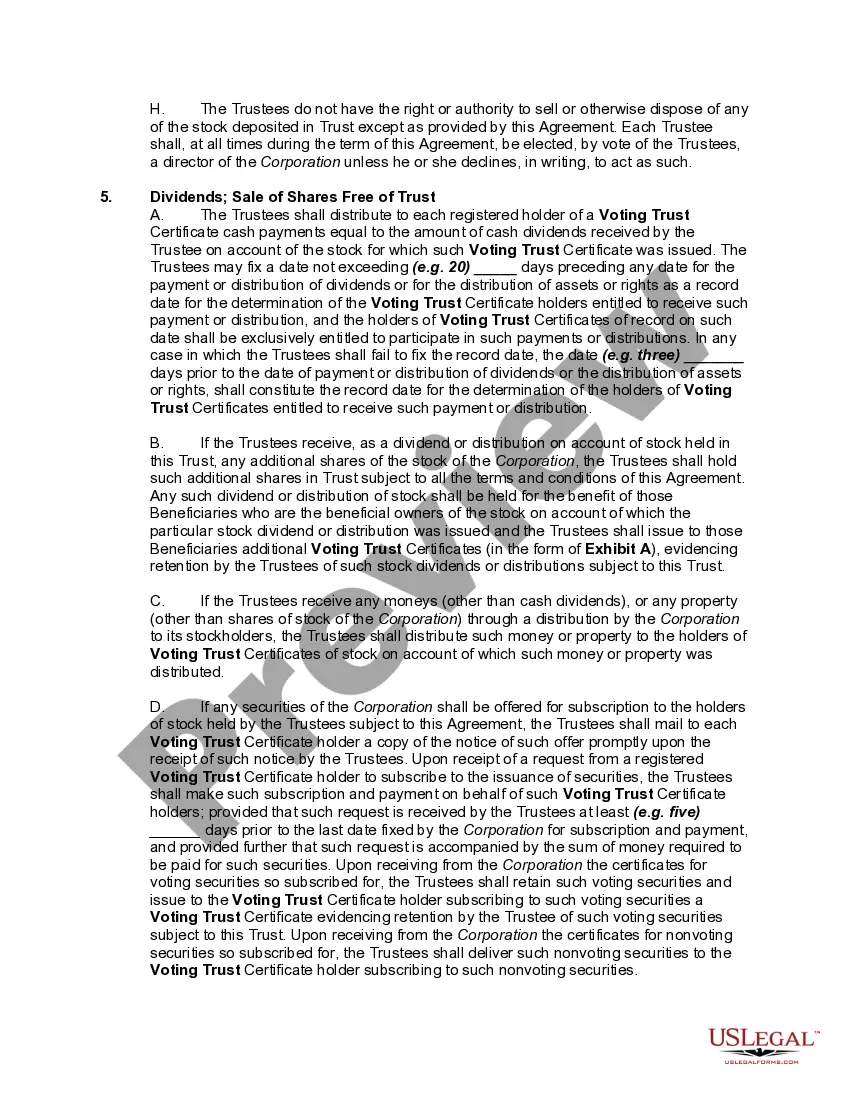
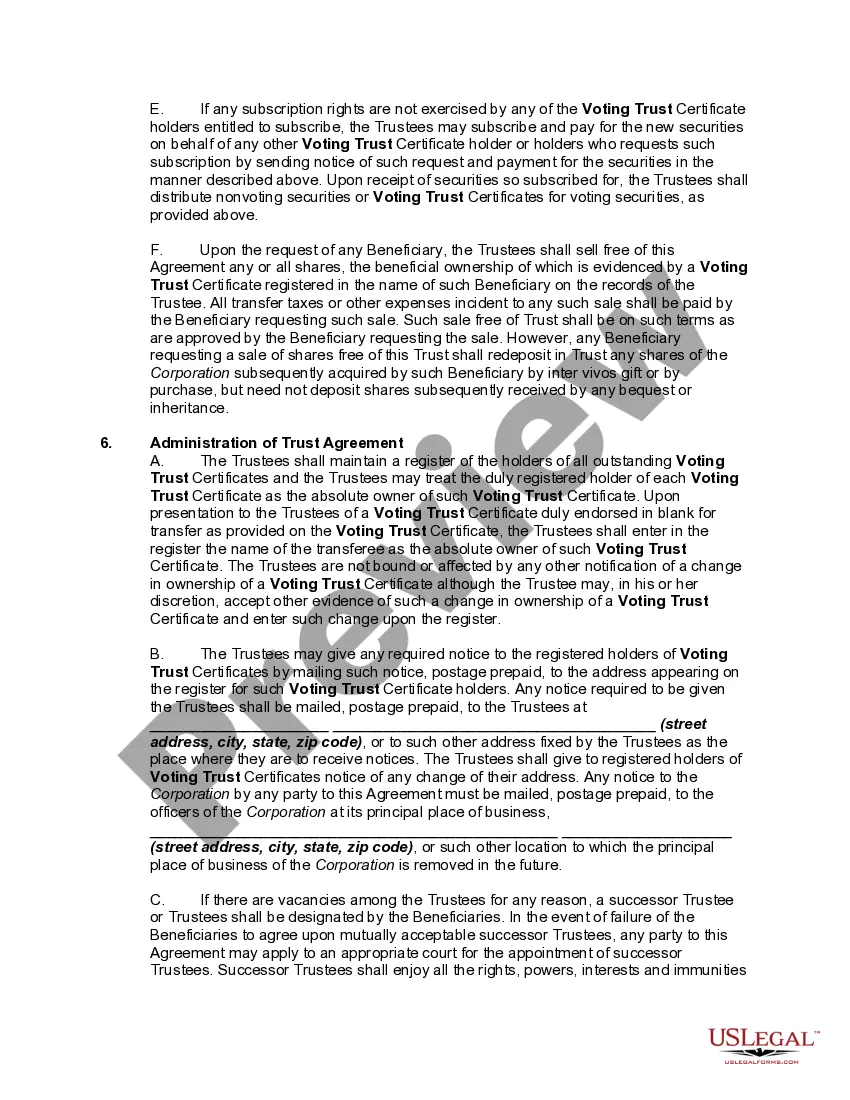
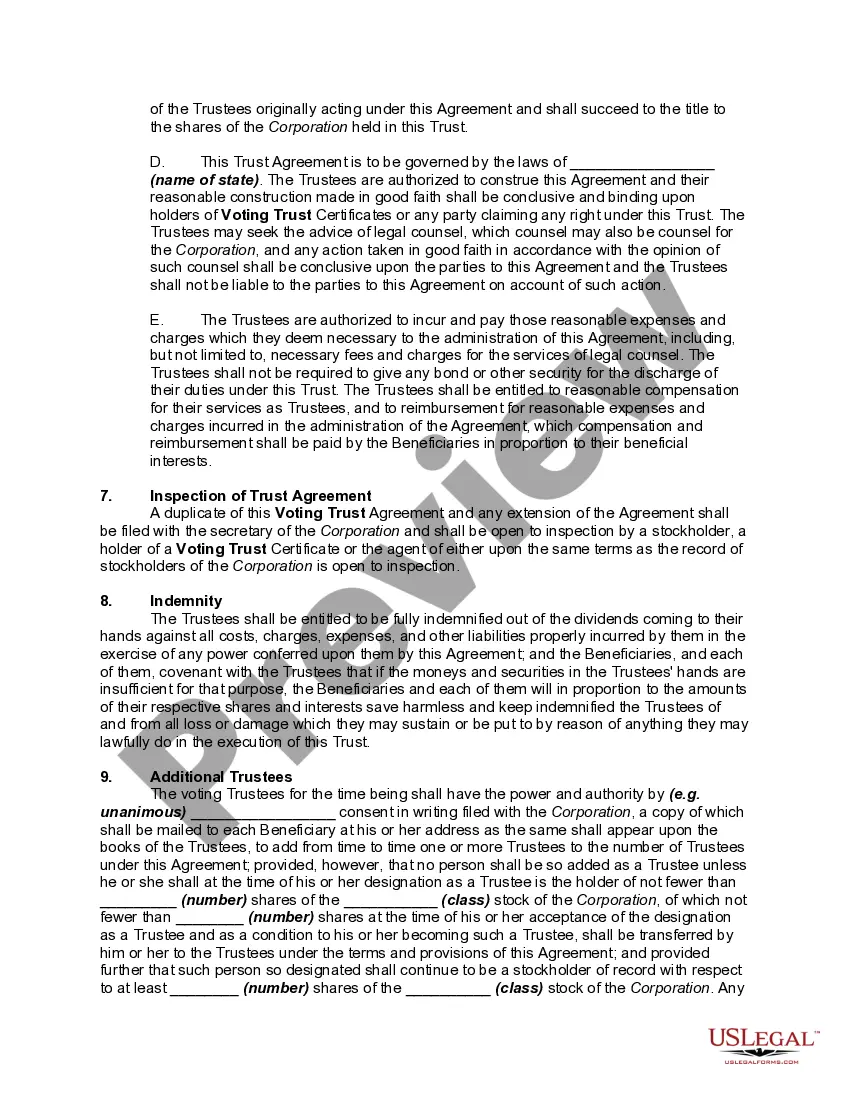
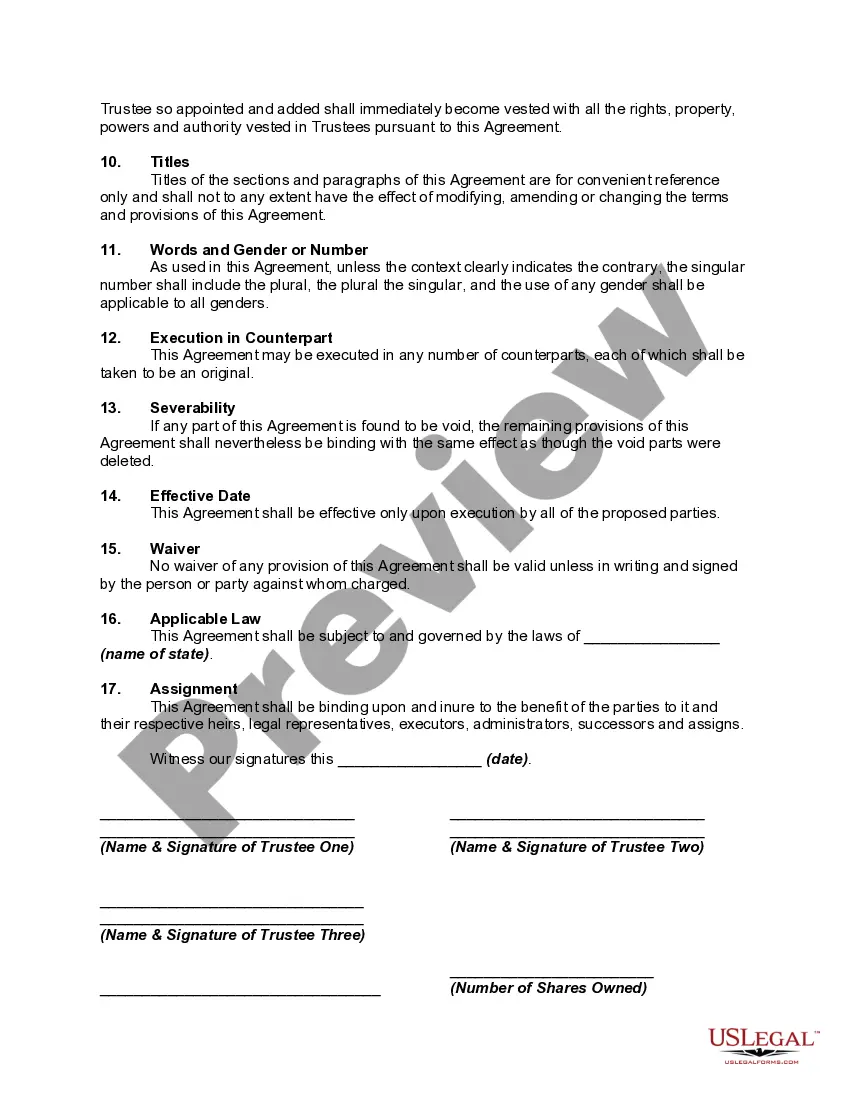
Definition. A trust formed when individual shareholders transfer both the legal title and voting rights in their shares to a trustee. The trustee then controls a unified voting block - with a stronger voice on matters of corporate governance than the individual shareholders could have on their own.
A voting trust certificate is a document issued by a limited-life trust of a corporation established to give temporary voting control of a corporation to one or a few individuals.
In fact, voting trusts are not expressly permitted under the LLC statutes of most states. Rather, the law governing voting trusts has been developed over time by court decisions (i.e., common law), mostly in the context of corporate (not LLC) governance.
A trust does not have legal personality and can therefore not vote as a shareholder, because it is only an accumulation of assets.
If the agreement is validly executed, any party to the agreement can sue for specific performance of the agreement if another party refuses to abide by the agreement. If a suit for specific performance is successful, the court will order the parties to vote the shares in accordance with the voting agreement.
The Voting Trust shall either be treated as a grantor trust under subpart E, part I of subchapter J of the Internal Revenue Code of 1986, as amended, or shall be treated as merely a custodial arrangement that is not an entity recognized for U.S. federal tax purposes, and the provisions of this Agreement shall be
A voting trust certificate is a document used to give temporary voting control over a corporation to one or several individuals. It is issued to a shareholder and represents the normal rights of any other stockholder, such as receiving quarterly dividends in exchange for their common shares.
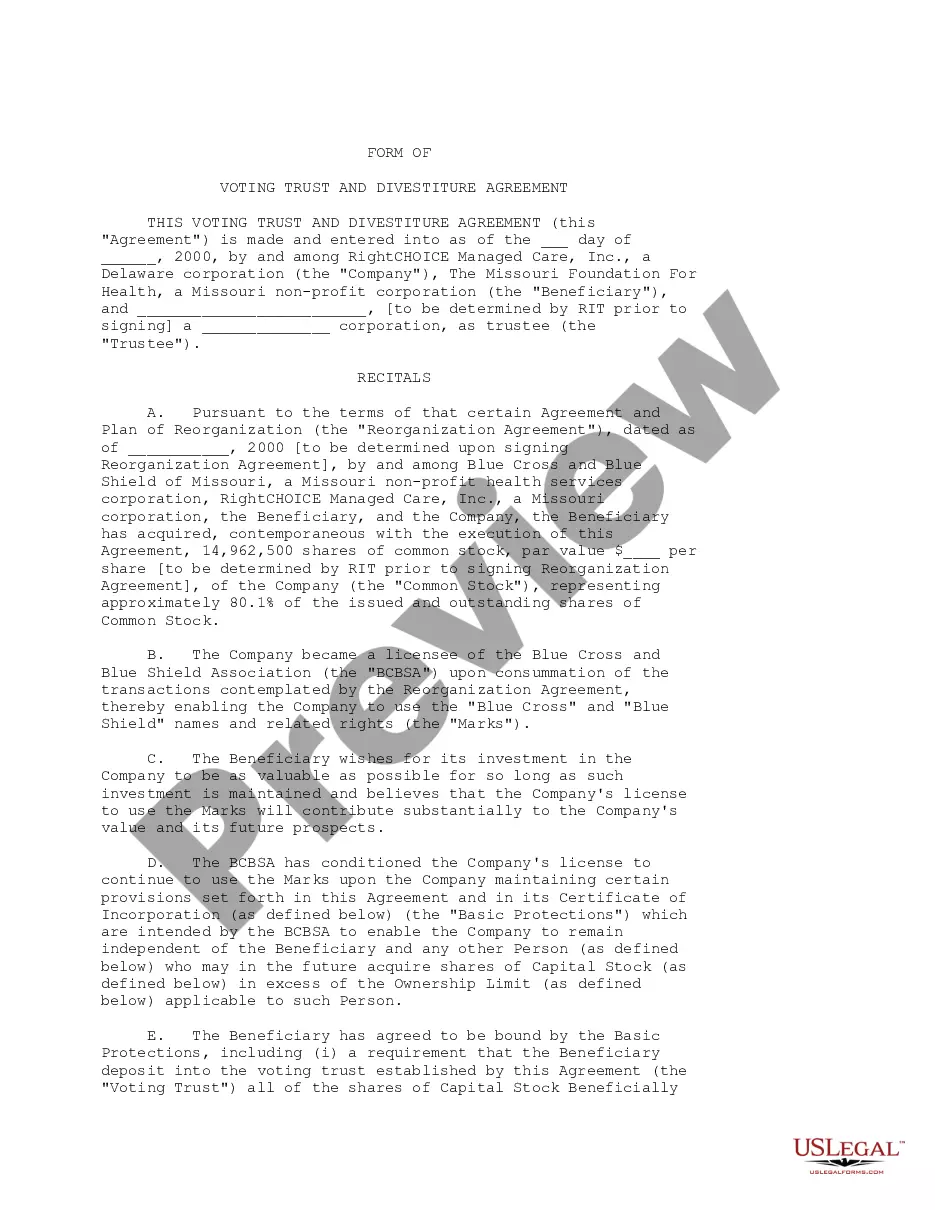
A voting trust is a contract between shareholders in which their shares and voting rights are temporarily transferred to a trustee. A voting agreement is a contract in which shareholders agree to vote a certain way on specific issues without giving up their shares or voting rights.
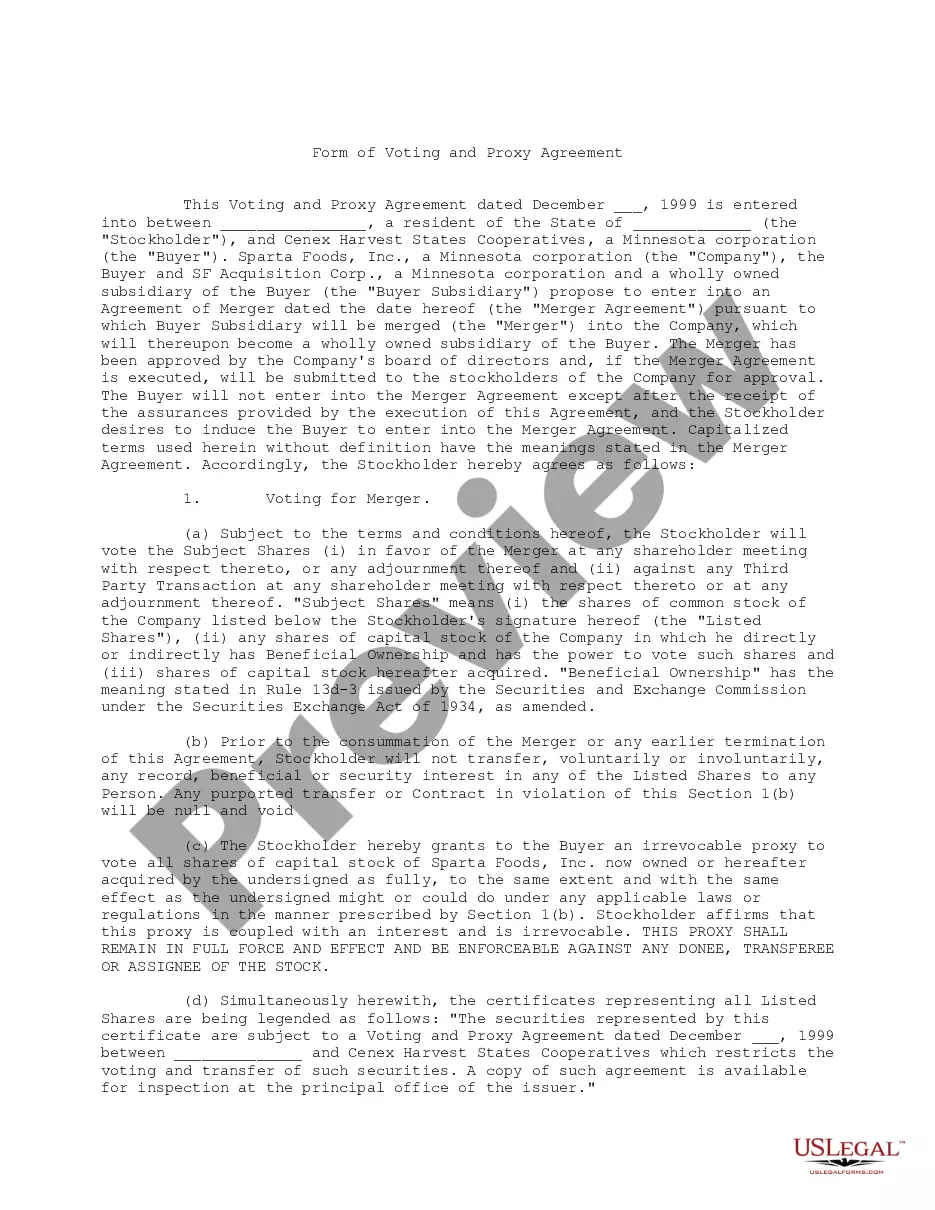
Voting agreements are commonly used in business combination transactions to ensure the buyer that significant equity holders will vote to approve the subject transaction. A voting agreement may also include an irrevocable proxy.