Utah Assignment of Lease Package
About this form package
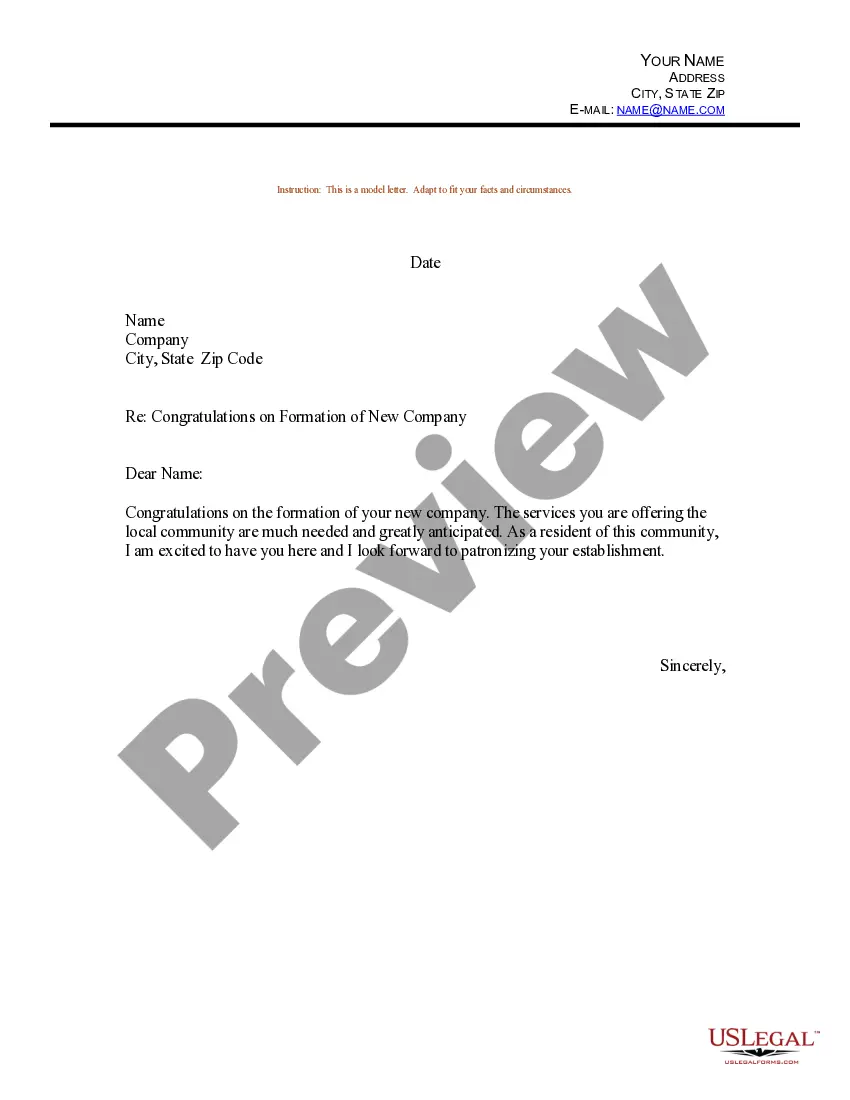
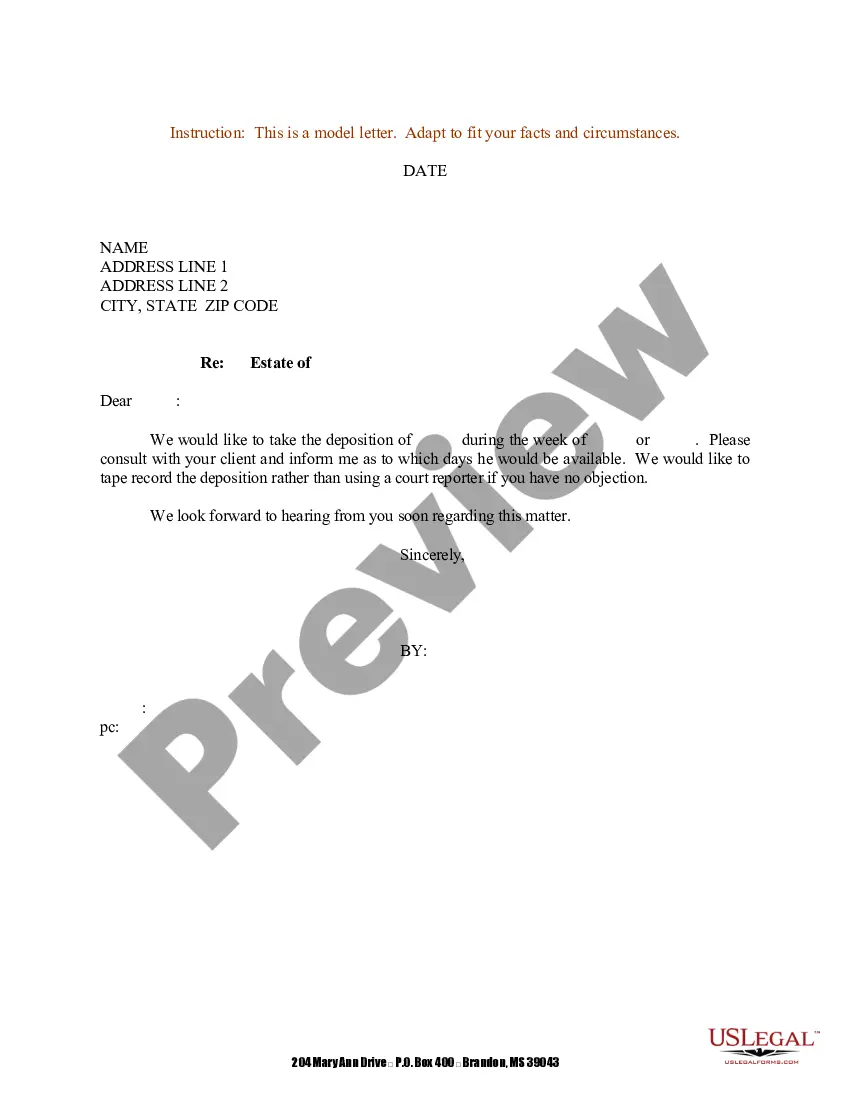
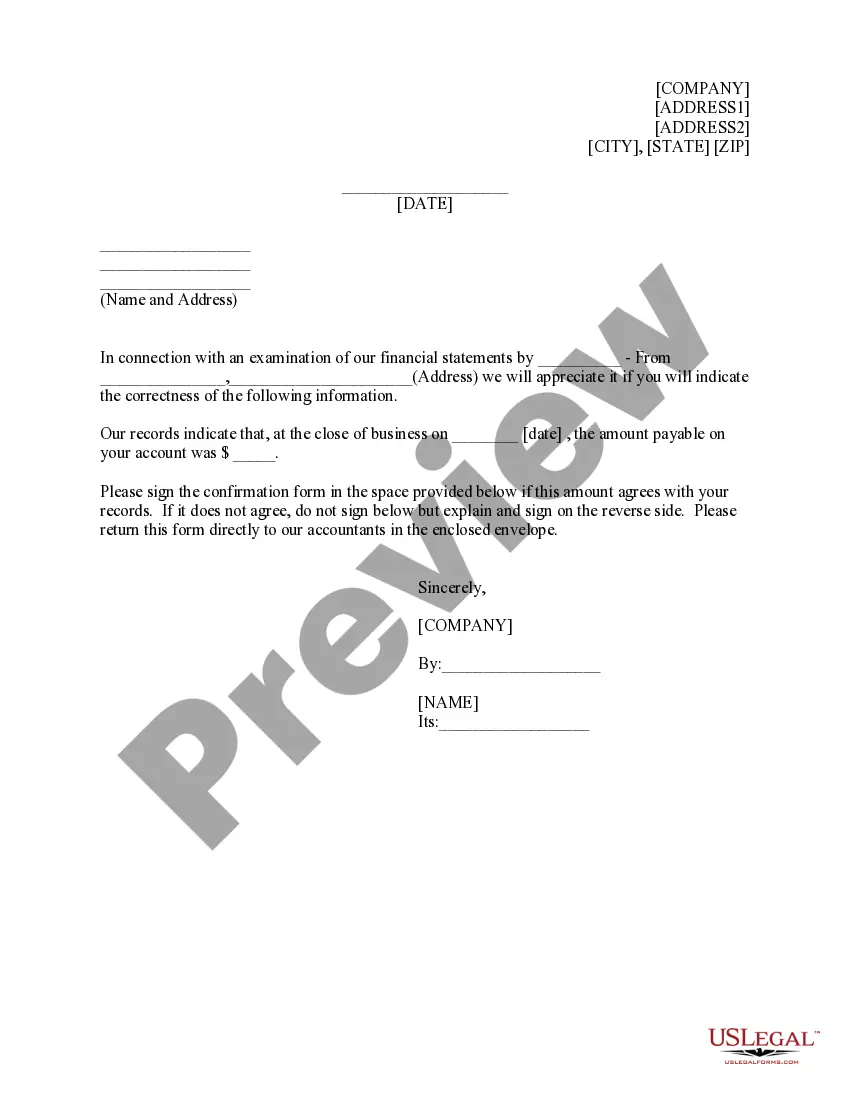
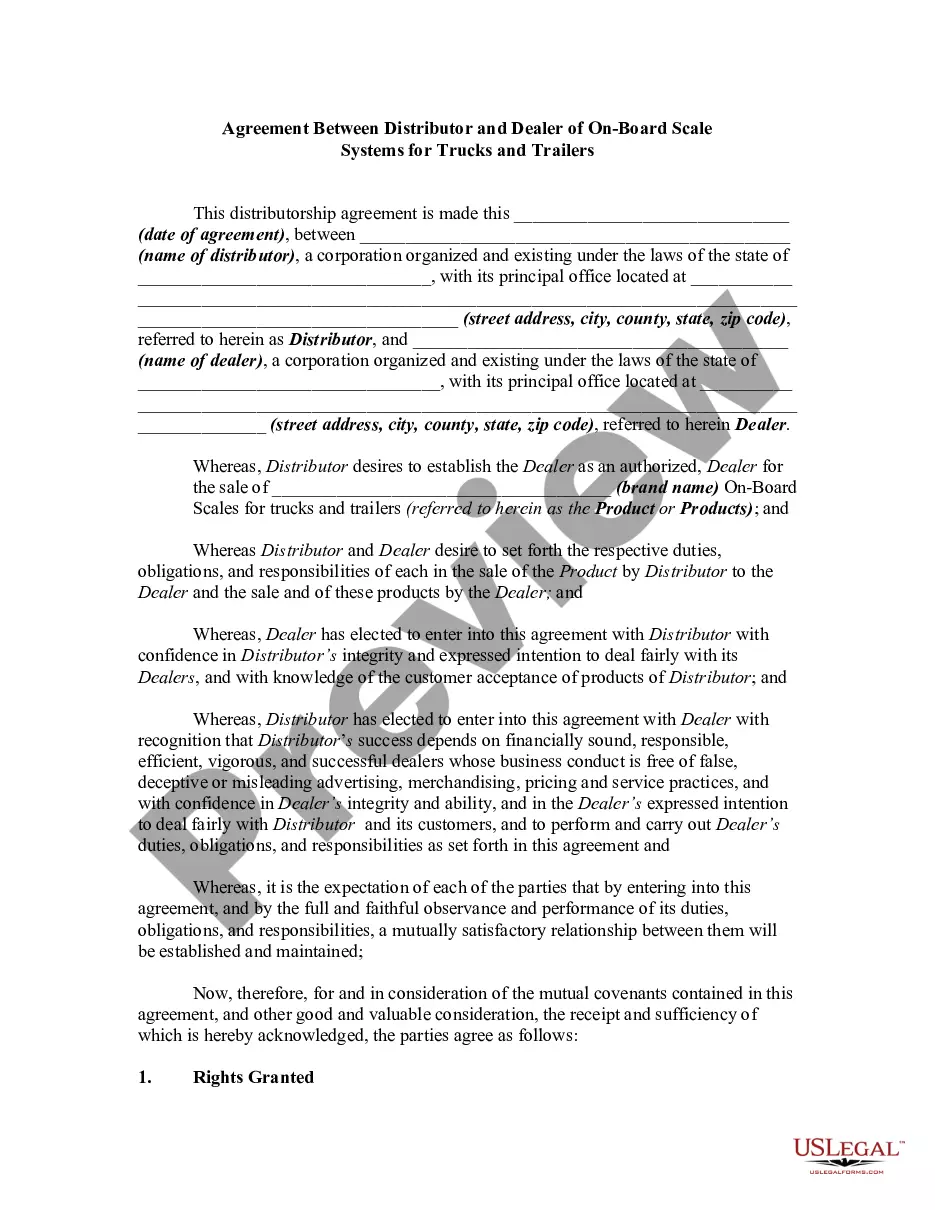
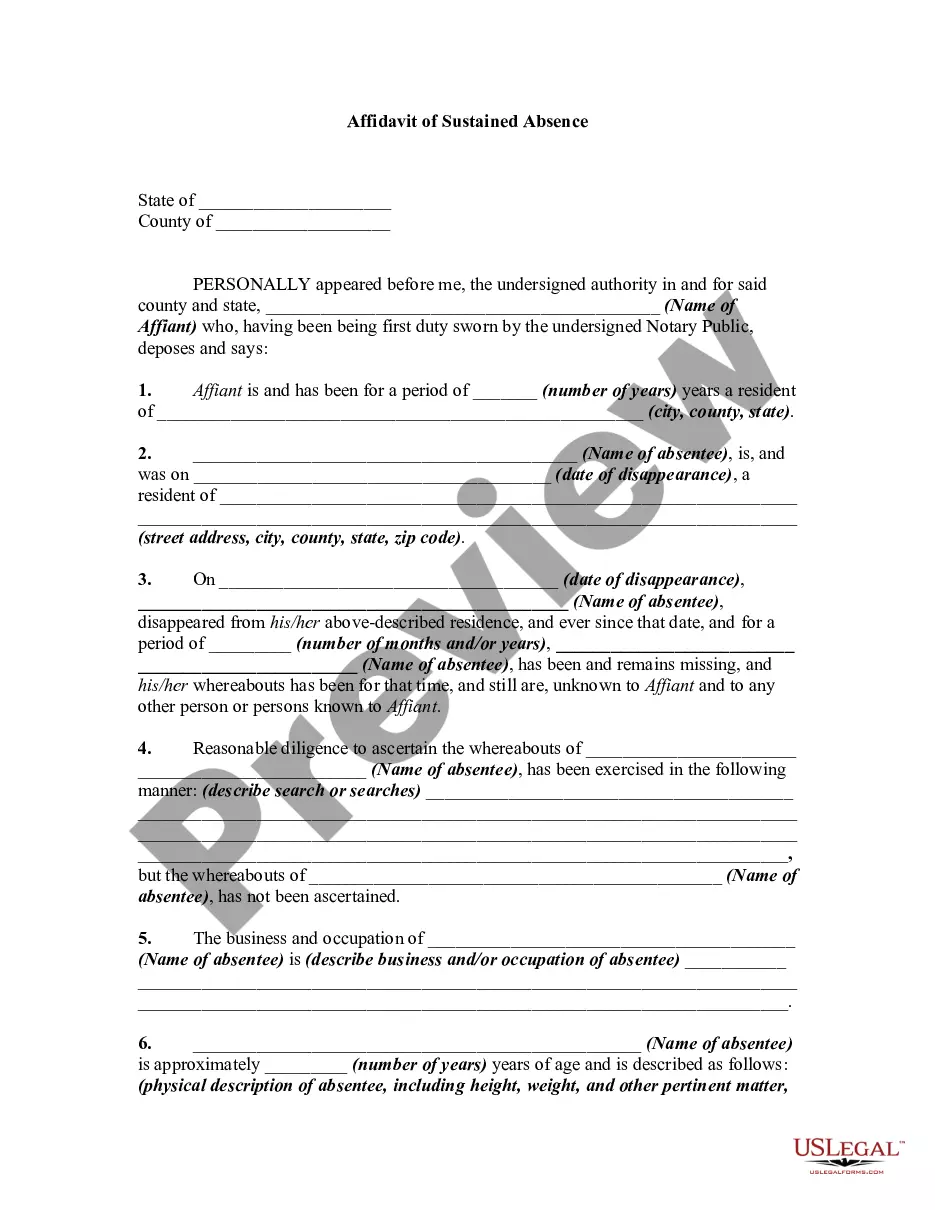
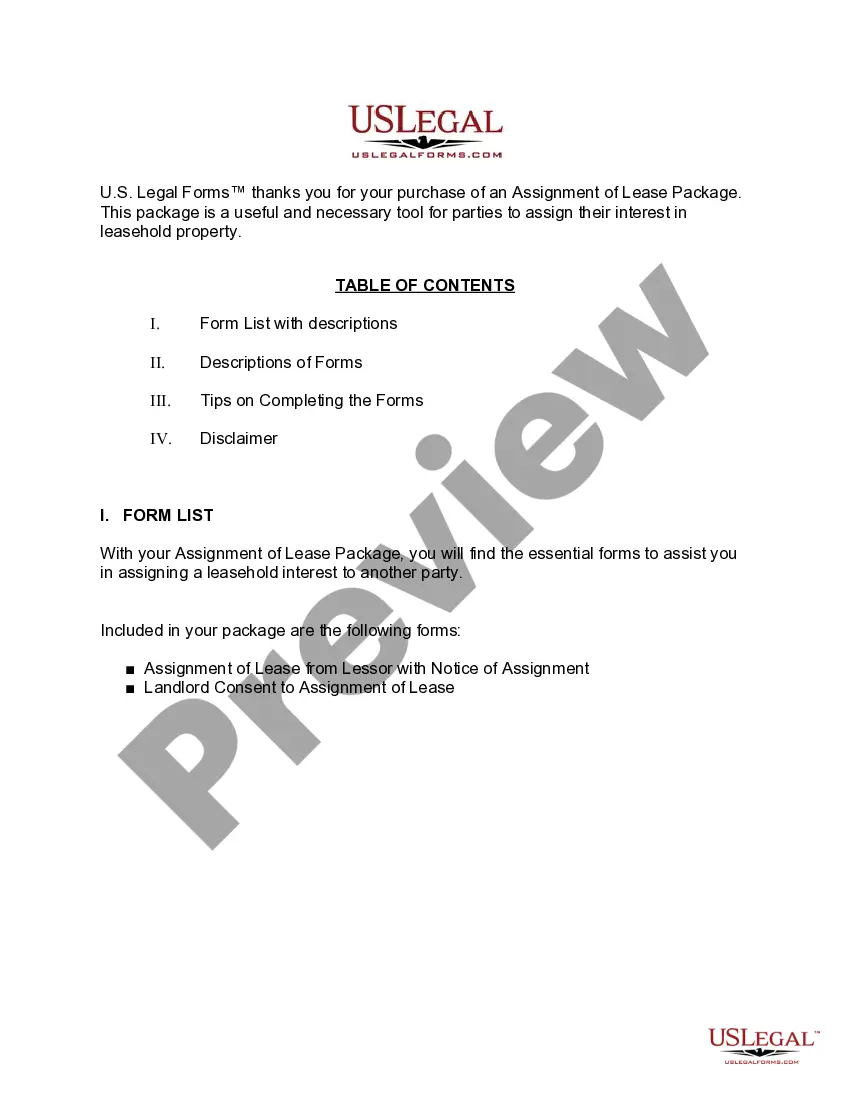
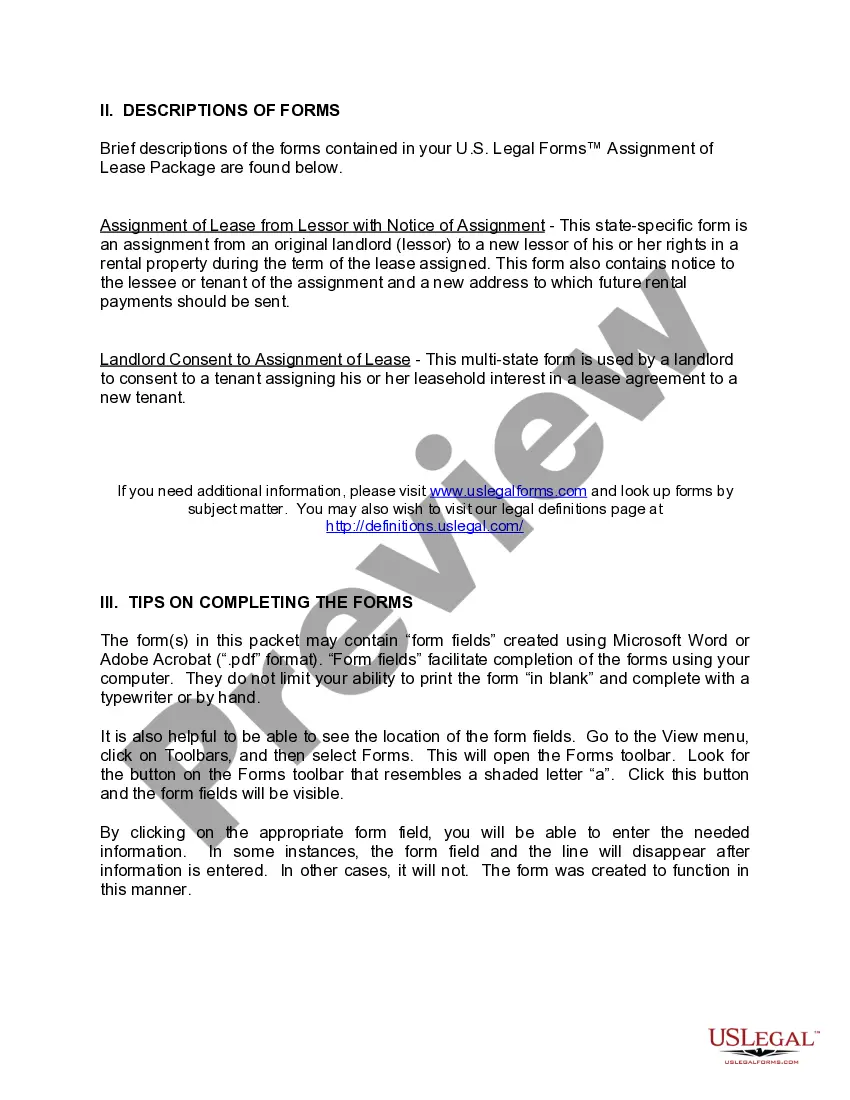
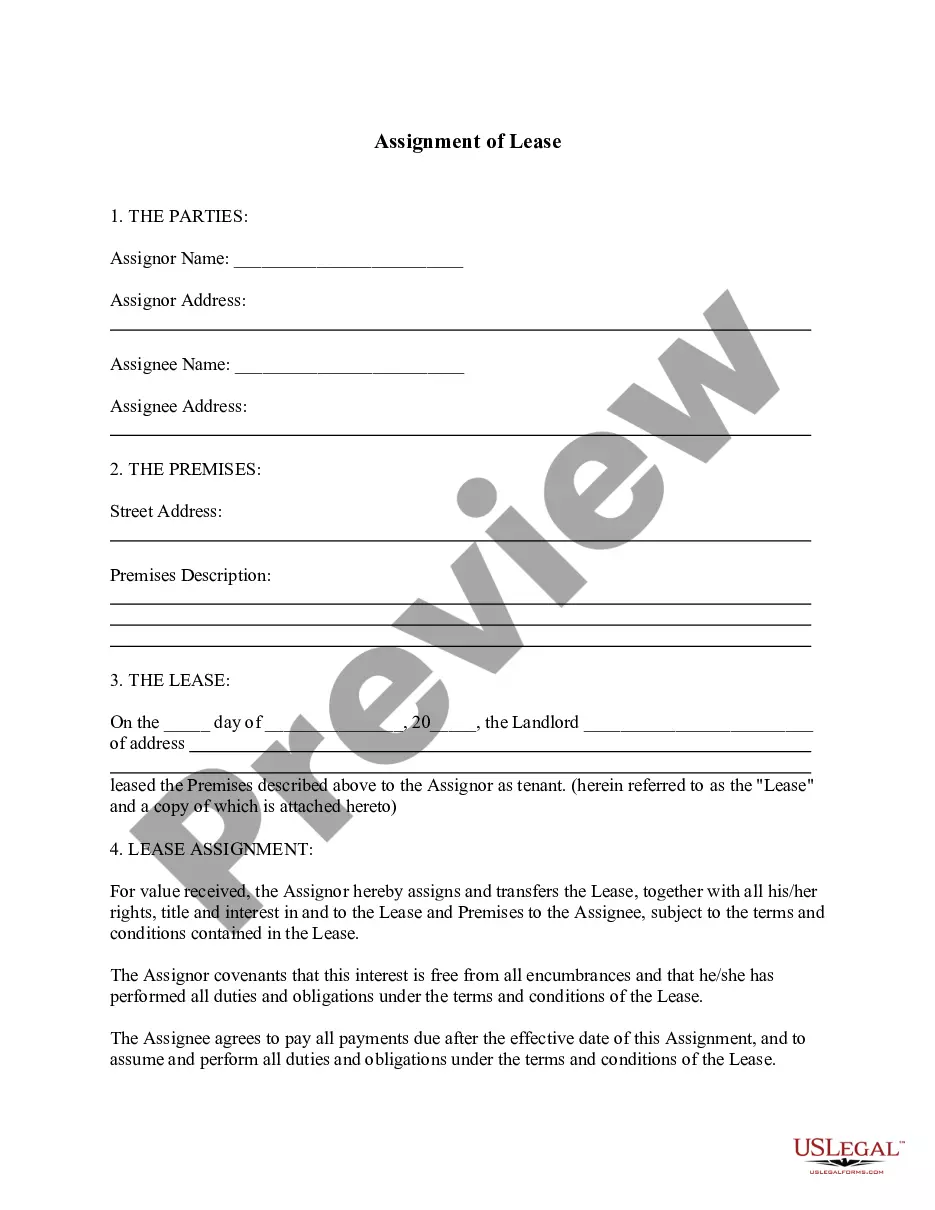
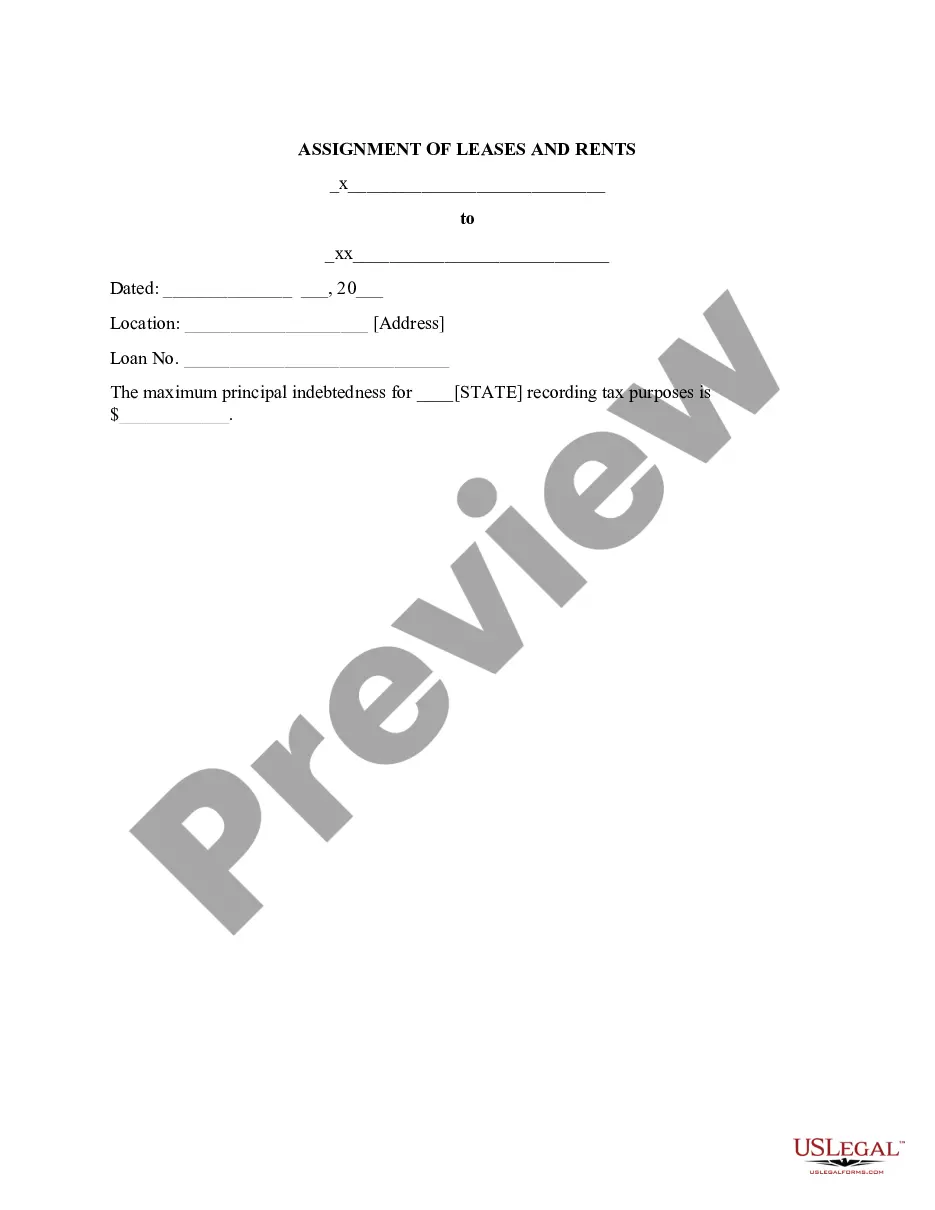
The Utah Assignment of Lease Package consists of essential forms that allow parties to assign their interest in a leasehold property to another individual or entity. This package includes forms such as the Assignment of Lease from Lessor with Notice of Assignment and the Landlord Consent to Assignment of Lease. These legally drafted documents ensure a smooth transfer of lease responsibilities and are specifically tailored to meet Utah's legal requirements, setting them apart from other generic leasing packages.
What’s included in this form package


When this form package is needed
This form package is valuable in scenarios such as:
- When a tenant wishes to transfer their lease obligations to a new tenant.
- When landlords need to provide formal consent for a lease assignment.
- When parties want to document the change in lease responsibility clearly and legally.
Intended users of this form package
- Current tenants looking to assign their lease to someone else.
- Landlords needing to formally consent to a lease assignment.
- Real estate professionals assisting clients with lease transfers.
- Lawyers preparing lease assignments for clients.
Steps to complete these forms
- Review the included forms to ensure they meet your needs.
- Identify the parties involved in the lease assignment.
- Complete the fields in the Assignment of Lease and the Landlord Consent form.
- Ensure all required signatures are obtained from both the tenant and the landlord.
- Keep copies of all completed documents for your records.
Do forms in this package need to be notarized?
Forms in this package typically do not require notarization unless required by local law. For most lease assignments in Utah, notarization is not necessary, but it's advisable to confirm specific requirements if there are any unique conditions or circumstances.
Get your form ready online
Our built-in tools help you complete, sign, share, and store your documents in one place.
Make edits, fill in missing information, and update formatting in US Legal Forms—just like you would in MS Word.
Download a copy, print it, send it by email, or mail it via USPS—whatever works best for your next step.
Sign and collect signatures with our SignNow integration. Send to multiple recipients, set reminders, and more. Go Premium to unlock E-Sign.
If this form requires notarization, complete it online through a secure video call—no need to meet a notary in person or wait for an appointment.
We protect your documents and personal data by following strict security and privacy standards.

Make edits, fill in missing information, and update formatting in US Legal Forms—just like you would in MS Word.

Download a copy, print it, send it by email, or mail it via USPS—whatever works best for your next step.

Sign and collect signatures with our SignNow integration. Send to multiple recipients, set reminders, and more. Go Premium to unlock E-Sign.

If this form requires notarization, complete it online through a secure video call—no need to meet a notary in person or wait for an appointment.

We protect your documents and personal data by following strict security and privacy standards.
Avoid these common issues
- Failing to obtain the landlord's proper consent before assigning a lease.
- Not keeping copies of the signed agreement for future reference.
- Omitting necessary details such as lease dates or payment terms in the forms.
- Not providing the new tenant with the lease terms before assignment.
Why complete this package online
- Convenience of completing forms from home at any time.
- Editability of documents ensures accurate input of information.
- Reliability of attorney-drafted forms tailored to Utah law.
- Immediate access to downloadable forms saves time compared to traditional methods.
What to keep in mind
- The Utah Assignment of Lease Package includes all necessary forms for lease assignments.
- Users must ensure landlord consent is obtained for a valid lease assignment.
- Correctly completing and retaining copies of forms is crucial for legal compliance.
Looking for another form?

Form popularity
FAQ
An assignment is when the tenant transfers their lease interest to a new tenant using a Lease Assignment. The assignee takes the assignor's place in the landlord-tenant relationship, although the assignor may remain liable for damages, missed rent payments, and other lease violations.
This might include financial statements, business history and professional references; and. there is an agreement about who is liable for the costs of the deed of assignment. The landlord's lawyer usually prepares the agreement. However, the outgoing tenant or the incoming tenant pays these costs, not the landlord.
If the lease is silent on the point, an assignment of part will be permitted.
The landlord's lawyer usually prepares the agreement. However, the outgoing tenant or the incoming tenant pays these costs, not the landlord.
An assignment is the transfer of the a party's entire interest in a lease. When a tenant assigns its lease, the assignee takes over the tenant's obligations under the lease and deals directly with the landlord.A sublease is the transfer of all or a portion of the premises for less than the entire term of the lease.
An assignment is when the tenant transfers their lease interest to a new tenant using a Lease Assignment. The assignee takes the assignor's place in the landlord-tenant relationship, although the assignor may remain liable for damages, missed rent payments, and other lease violations.
The assignor normally remains liable unless there is an agreement to the contrary by the other party to the contract.No specific language is required to create an assignment so long as the assignor makes clear his/her intent to assign identified contractual rights to the assignee.
Simply put, it is a transfer of an existing lease by the current tenant to a new tenant with the consent of the landlord.The Assignee is the crucial factor that makes Assignment work. He or it is the newcomer to whom the existing lease will be assigned or passed or transferred to.
An assignment of a lease is a complete transfer of the right to be the tenant under the lease.This means that the tenant remains liable for monthly rent under the original lease, while collecting rent from the subtenant under the sublease, which may be more, less or the same as the rent due under the main lease.