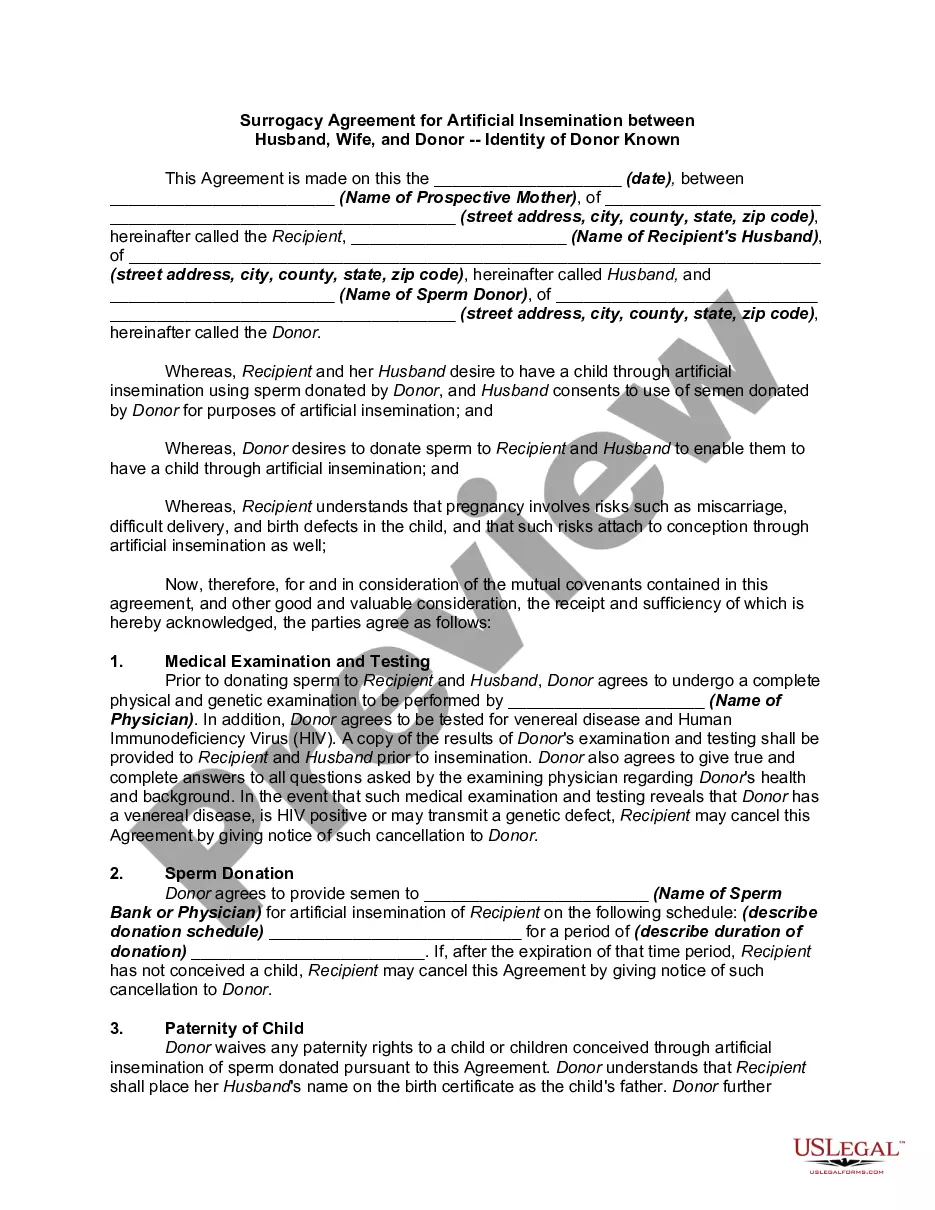
Utah Order for Name Change for Family
Overview of this form
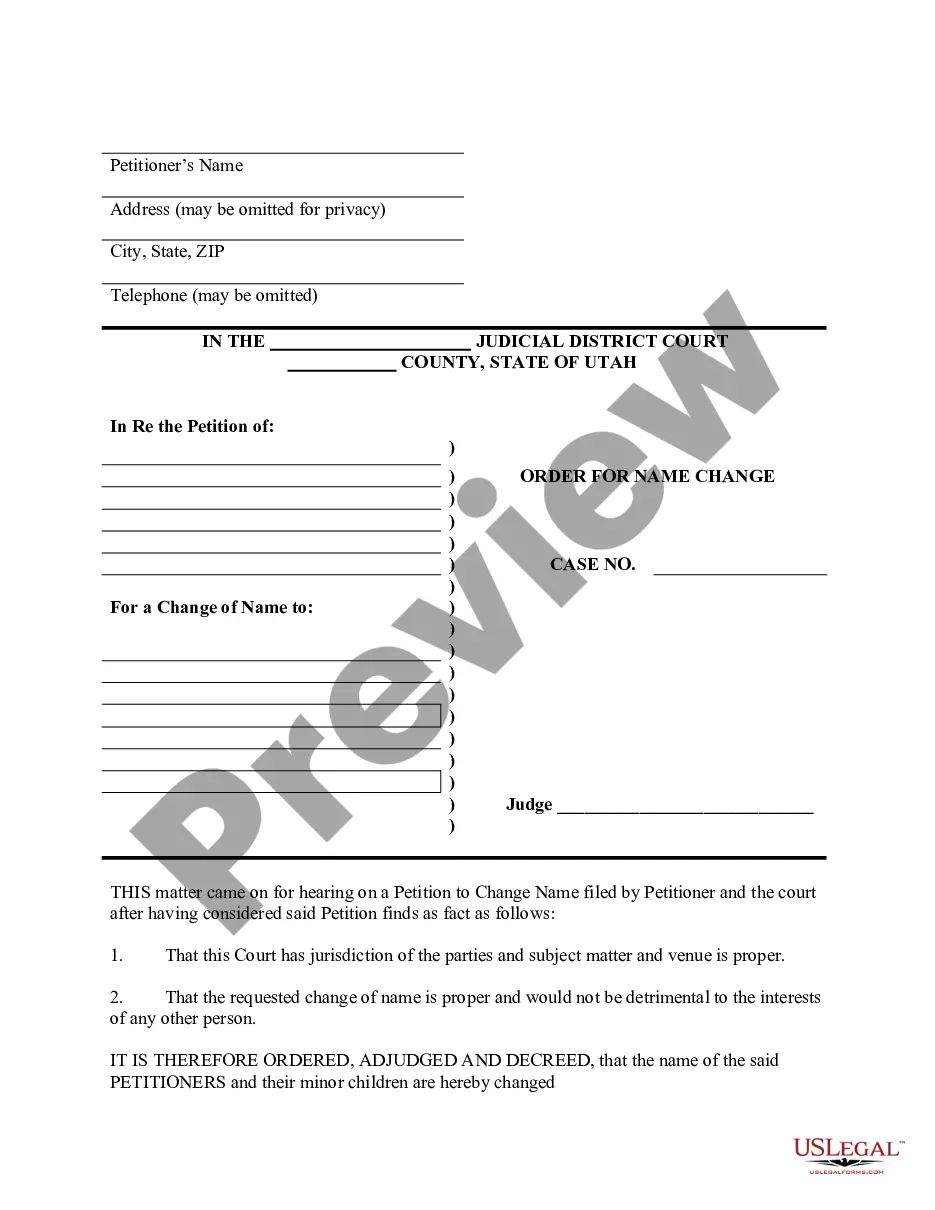
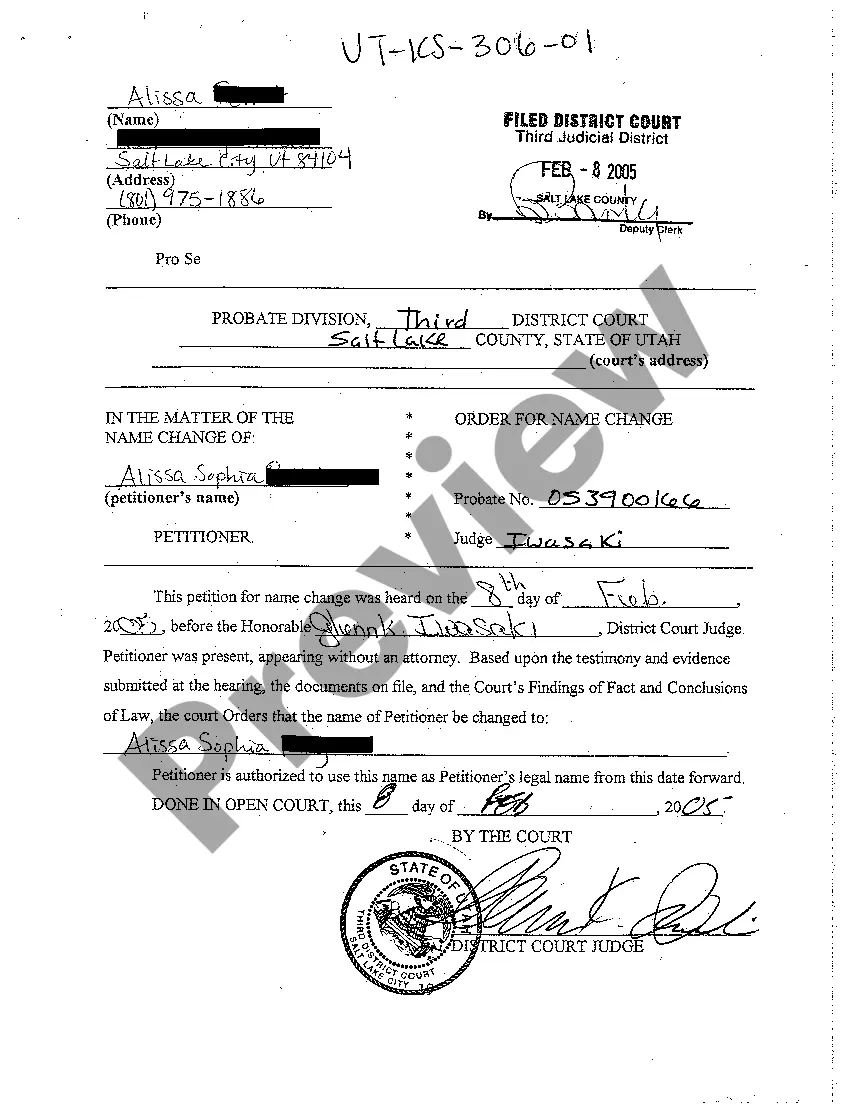
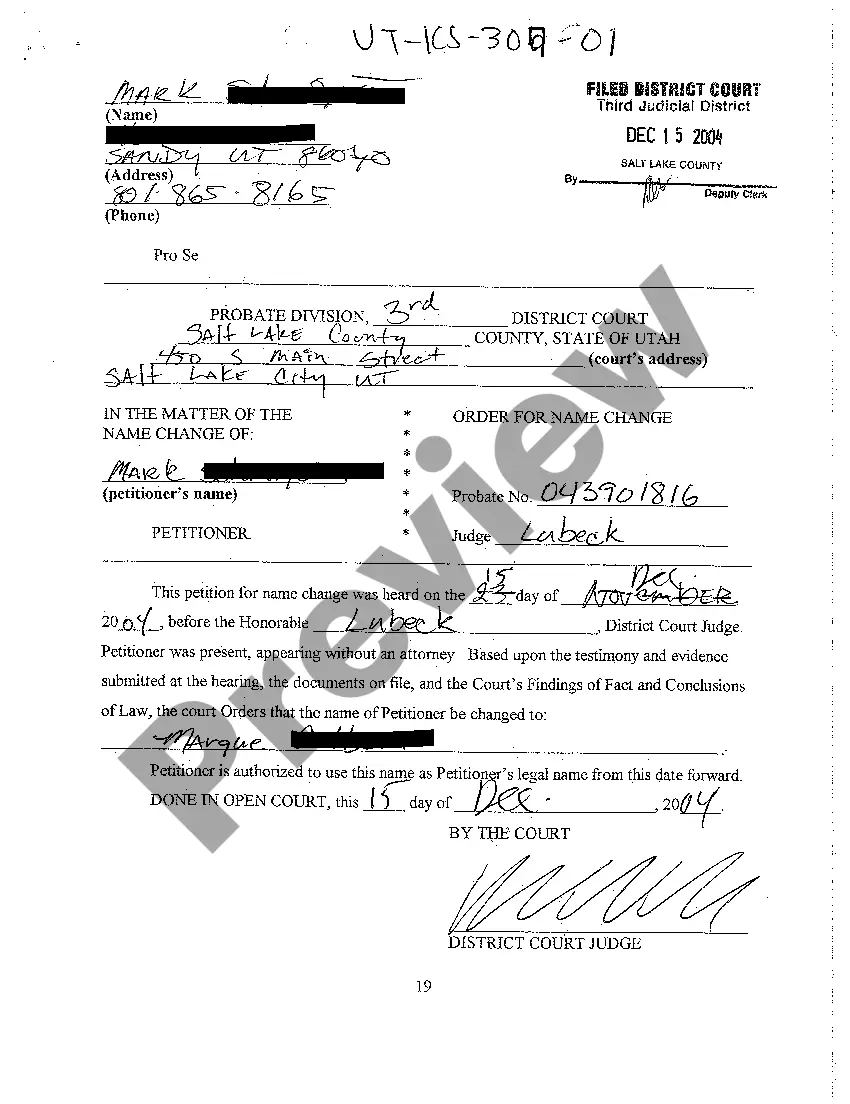
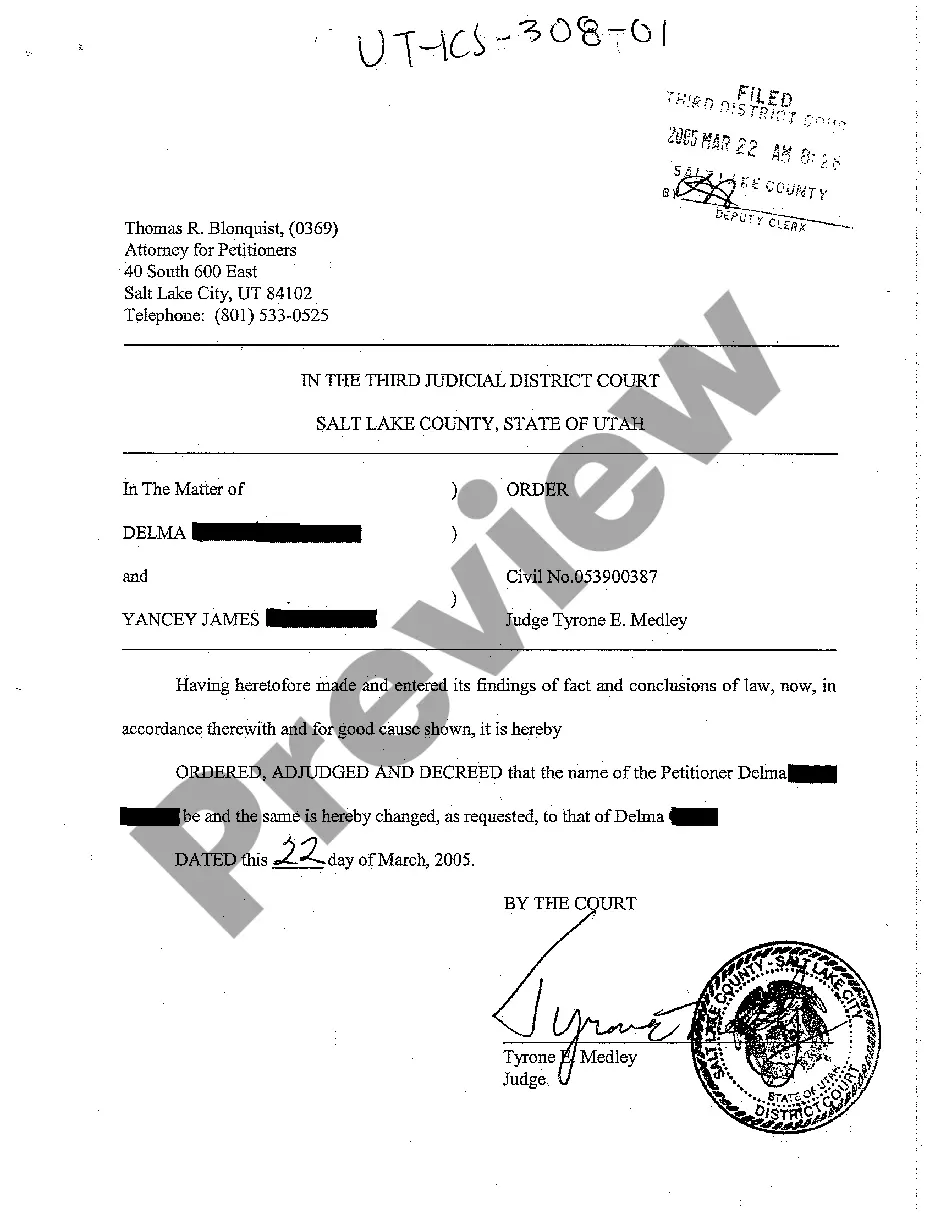
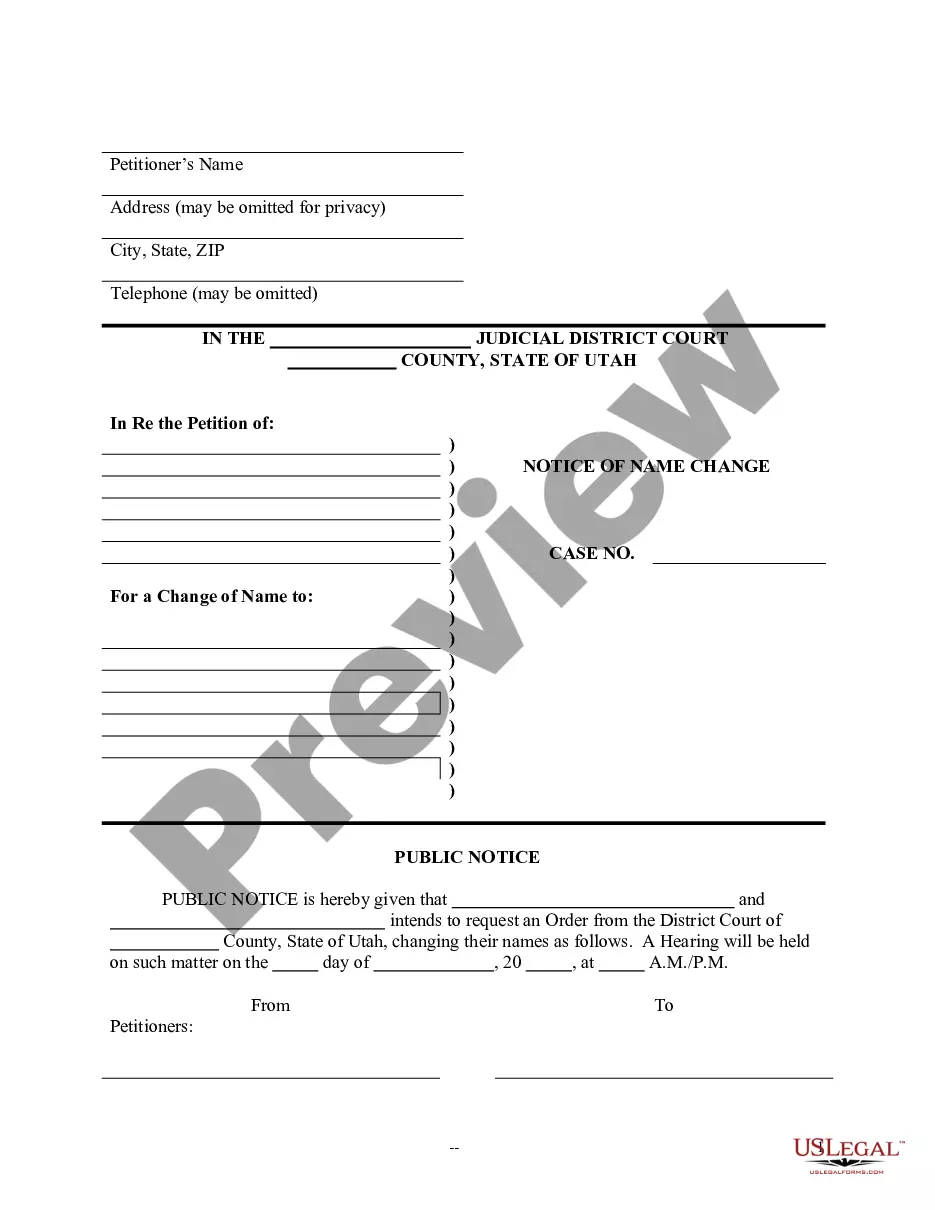
The Order for Name Change for Family is a legal document that finalizes the process of changing the names of individuals, particularly petitioners and their minor children. This order is issued by a court and, once signed by a judge, grants legal recognition to the requested name change. Unlike other name change forms, this particular order serves as the official decree once filed with the court, making the name change effective immediately.
Form components explained
- Jurisdiction clause confirming the court's authority over the matter.
- Statement regarding the appropriateness of the name change and its impact on others.
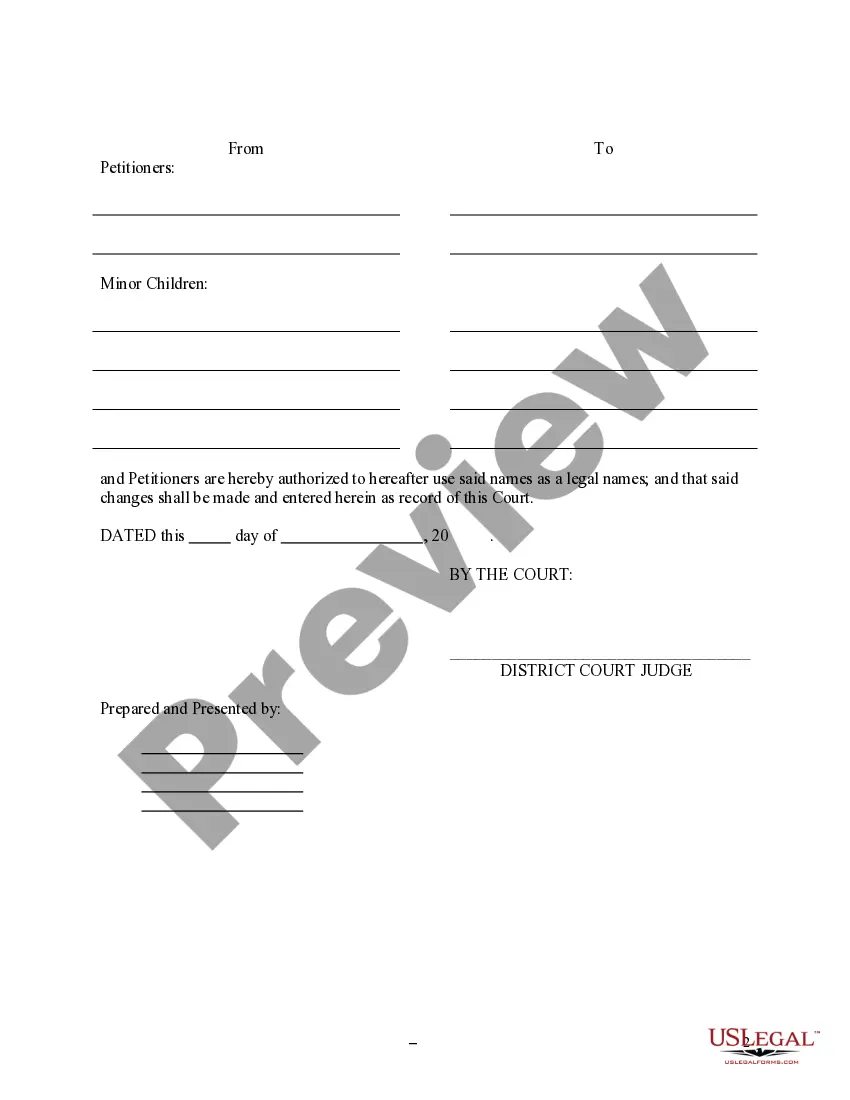
- Official order declaring the new names of the petitioners and their minor children.
When to use this form
This form is necessary when individuals, particularly parents, wish to legally change their names and the names of their minor children. It may be used in situations such as marriage, divorce, personal preference, or adopting a new identity. Once the form is filed and approved, the name change becomes legally binding.
Who can use this document
- Parents or legal guardians seeking to change their names.
- Families looking to change the names of their minor children.
- Individuals undergoing a personal name change that affects their family.
Instructions for completing this form
- Identify the parties involved, including the petitioners and their minor children.
- Confirm the court's jurisdiction and ensure proper venue.
- State the reasons for the requested name change, ensuring they do not harm others.
- Enter the new names as they will be recognized legally.
- Sign the document in the presence of the judge to finalize the request.
Is notarization required?
This form typically does not require notarization unless specified by local law. Ensure to check the requirements for your specific jurisdiction, as some states may have different rules regarding notarization for name change orders.
Get your form ready online
Our built-in tools help you complete, sign, share, and store your documents in one place.
Make edits, fill in missing information, and update formatting in US Legal Forms—just like you would in MS Word.
Download a copy, print it, send it by email, or mail it via USPS—whatever works best for your next step.
Sign and collect signatures with our SignNow integration. Send to multiple recipients, set reminders, and more. Go Premium to unlock E-Sign.
If this form requires notarization, complete it online through a secure video call—no need to meet a notary in person or wait for an appointment.
We protect your documents and personal data by following strict security and privacy standards.

Make edits, fill in missing information, and update formatting in US Legal Forms—just like you would in MS Word.

Download a copy, print it, send it by email, or mail it via USPS—whatever works best for your next step.

Sign and collect signatures with our SignNow integration. Send to multiple recipients, set reminders, and more. Go Premium to unlock E-Sign.

If this form requires notarization, complete it online through a secure video call—no need to meet a notary in person or wait for an appointment.

We protect your documents and personal data by following strict security and privacy standards.
Common mistakes to avoid
- Failing to properly identify all parties involved in the name change.
- Not providing a valid reason for the name change.
- Omitting signatures or necessary court information.
Benefits of using this form online
- Convenience of downloading and completing the form at your own pace.
- Access to templates that are drafted by licensed attorneys, ensuring legal compliance.
- Editability, allowing you to customize the form specifics for your situation.
Key takeaways
- The Order for Name Change for Family is essential for collective name changes.
- Filling out the form accurately is crucial to avoid delays or rejections.
- Always verify state-specific requirements before submitting the form.
Looking for another form?
Form popularity
FAQ
First, you file the Petition for Change of Name for your child. Then, you will get a court date between 6 and 12 weeks away. If the court approves your request, you will get a court order called a "decree" changing your child's name. The court process can take up to 3 months, though in busier courts it may take longer.
Visit your local Utah DPS office in person and present the appropriate document proving your legal name change; i.e., marriage certificate, divorce decree, or court order. You must also bring your current driver's license, proof of identity, proof of residency, and proof of SSN.
Utah Legal Clinic Pricing for Name Changes: DIY Adult Name Change: $250.00 Flat Fee + $360.00 filing fee paid directly to the Court = $610.00 total cost. Attorney Assisted Adult Name Change: $685.00 Flat Fee (this includes the $360.00 filing fee paid to the Court by our office as your counsel)
In most states, men and women can legally change their last name to their new spouse's surname, hyphenate their two surnames, or create a new amalgamation of their surnames (like when actors Alexa Vega and Carlos Pena got married in 2014, and changed both of their last names to PenaVega).
Step 1 - Fill out the required forms. Step 2 - File the papers with the court. Step 3 - Get the other parent's consent or have them served. Step 4 - Attend the hearing. Step 5 - Change the minor's birth certificate.
Both legal parents have the right to name a child or to request a name change. However, one parent can't change a child's name without the approval of the other parent. Thus, if the mother doesn't approve, then the father requesting the name change must file a petition with the court for a decision.
Contact the Utah Office of Vital Records and Statistics to make the change. You can do this in person, or by mail. The mail process usually takes several weeks. You will need to provide a certified copy of the court order.
Step 1 - Fill out the required forms. Step 2 - File the papers with the court. Step 3 - Get the other parent's consent or have them served. Step 4 - Attend the hearing. Step 5 - Change the minor's birth certificate.