Utah Decease Trustee Affidavit
Overview of this form
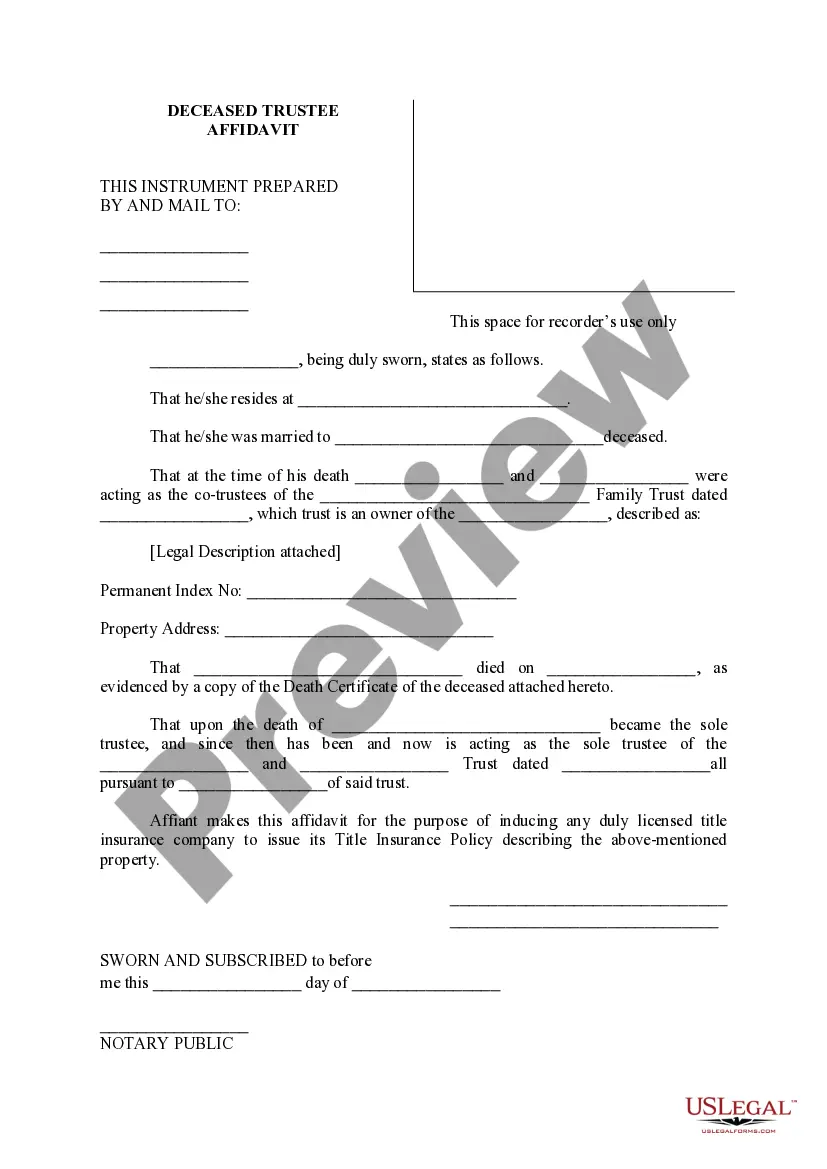
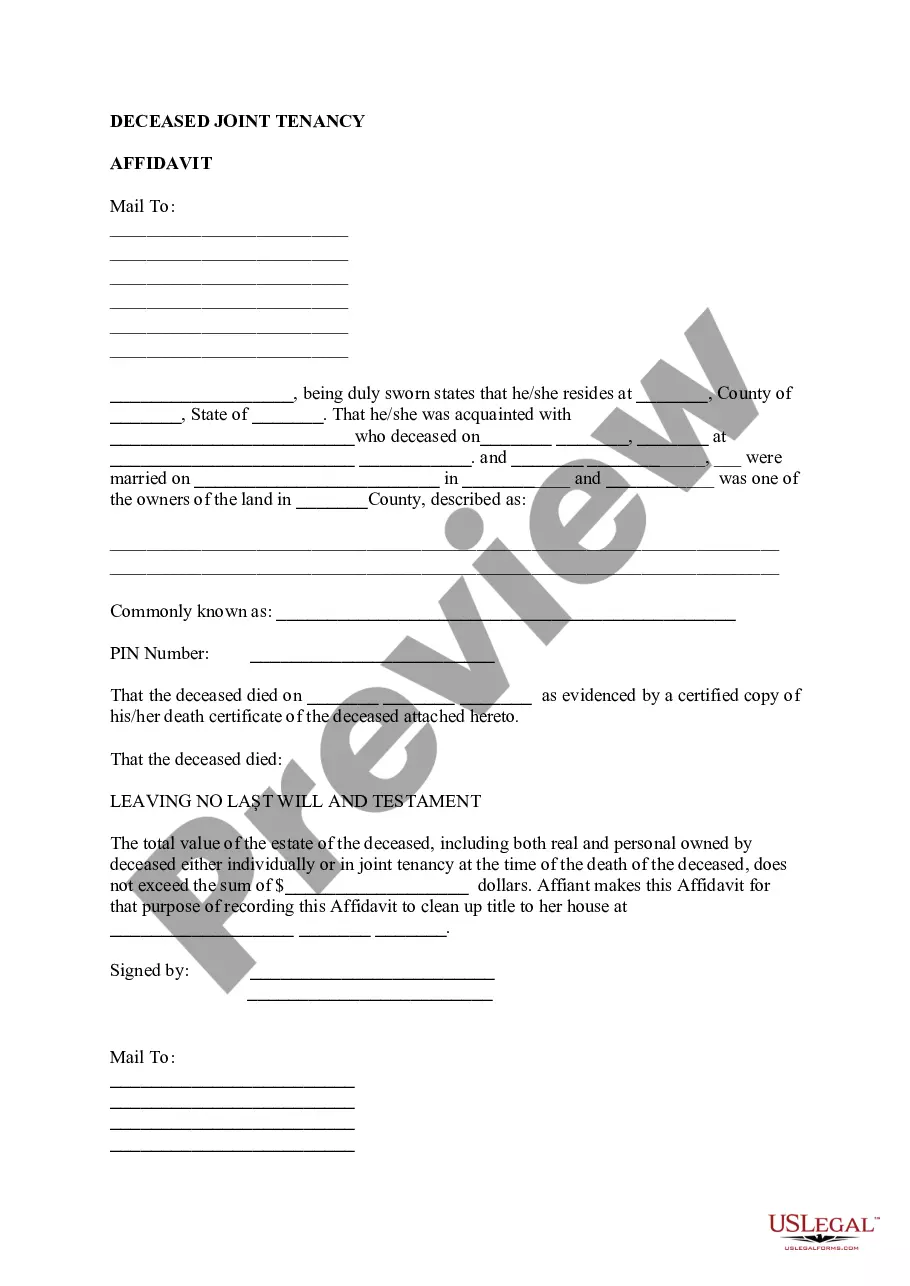
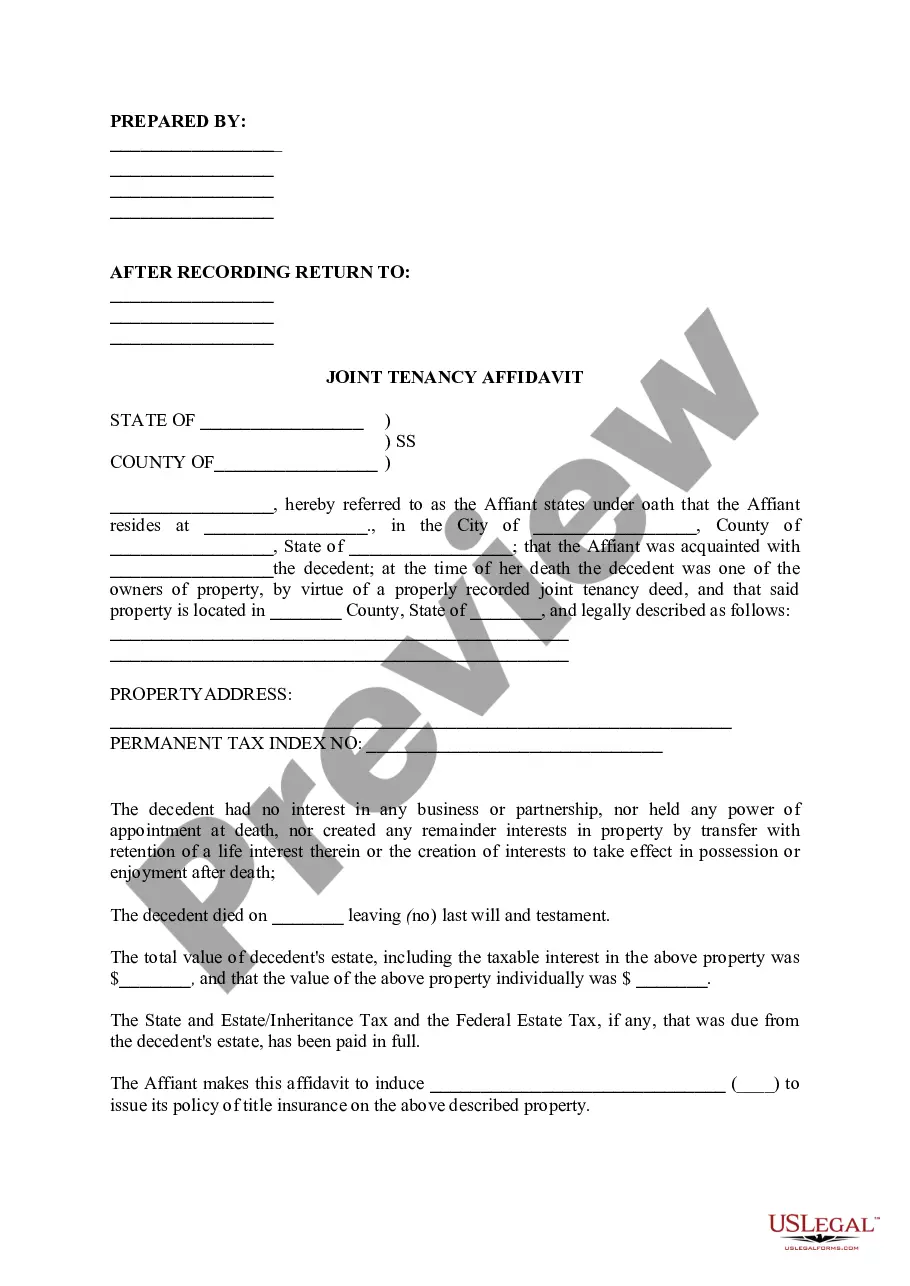
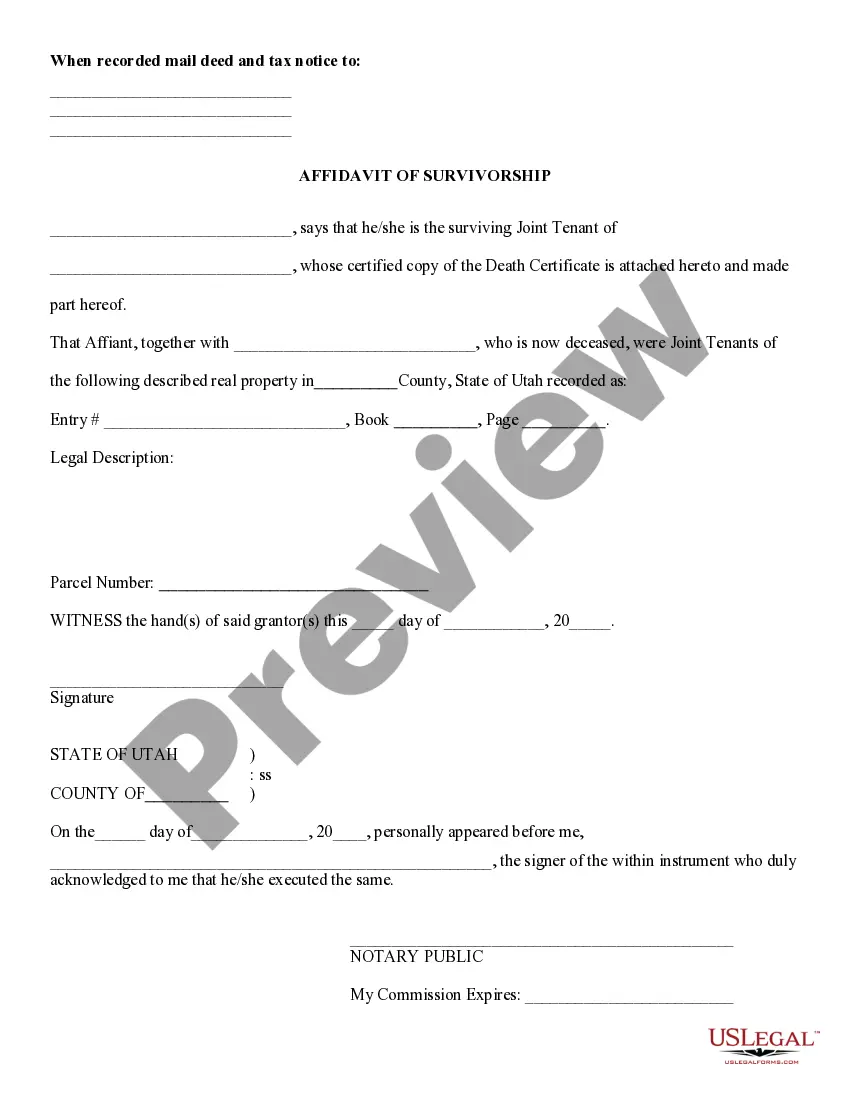
The Deceased Trustee Affidavit is a legal document that facilitates the removal of a deceased spouse from land title. This form is particularly useful for individuals who were co-trustees of a trust and need to verify their status as the sole trustee following the death of a co-trustee. This affidavit provides necessary information to title insurance companies, ensuring that the ownership of property is accurately reflected in official records.
Key parts of this document
- Identification of the affiant and their marital relationship to the deceased.
- Details regarding the Family Trust and the property involved, including legal descriptions.
- Confirmation of the death of the co-trustee and the affiant's status as the sole trustee.
- A statement providing authority for title insurance companies to issue a Title Insurance Policy.
- Notary acknowledgment to validate the affidavit.
When this form is needed
This affidavit should be used when a co-trustee of a family trust has passed away, and the surviving trustee needs to remove the deceased from property titles. It is essential when seeking to update land records and ensure the proper transfer of property rights, especially for real estate transactions or inheritance matters.
Who needs this form
- Surviving trustees of a family trust.
- Spouses or partners of the deceased co-trustee.
- Individuals involved in estate planning or property management.
- Anyone needing to convey property ownership following a co-trustee's death.
Steps to complete this form
- Provide the name and address of the affiant, as well as their residence.
- Specify the deceased individualâs name and the date of their death.
- Include details about the family trust, including its name and date.
- Attach the legal description of the property involved.
- Ensure the affidavit is signed in front of a notary public.
Does this document require notarization?
Yes, this form must be notarized to be legally valid. Notarization ensures that the affidavit cannot be challenged on the basis of authenticity. US Legal Forms provides integrated online notarization services for convenient access, available 24/7 through secure video calls.
Get your form ready online
Our built-in tools help you complete, sign, share, and store your documents in one place.
Make edits, fill in missing information, and update formatting in US Legal Forms—just like you would in MS Word.
Download a copy, print it, send it by email, or mail it via USPS—whatever works best for your next step.
Sign and collect signatures with our SignNow integration. Send to multiple recipients, set reminders, and more. Go Premium to unlock E-Sign.
If this form requires notarization, complete it online through a secure video call—no need to meet a notary in person or wait for an appointment.
We protect your documents and personal data by following strict security and privacy standards.

Make edits, fill in missing information, and update formatting in US Legal Forms—just like you would in MS Word.

Download a copy, print it, send it by email, or mail it via USPS—whatever works best for your next step.

Sign and collect signatures with our SignNow integration. Send to multiple recipients, set reminders, and more. Go Premium to unlock E-Sign.

If this form requires notarization, complete it online through a secure video call—no need to meet a notary in person or wait for an appointment.

We protect your documents and personal data by following strict security and privacy standards.
Common mistakes to avoid
- Failing to include all required details about the deceased and the trust.
- Not attaching a copy of the death certificate.
- Omitting the necessary notary signature and seal.
- Incorrect legal descriptions of the property.
Why use this form online
- Convenience of instant downloading and editing.
- Access to attorney-drafted templates to ensure legal accuracy.
- Time-saving process without needing to visit a lawyer in person.
Looking for another form?

Form popularity
FAQ
Write a Living Trust. The most straightforward way to avoid probate is simply to create a living trust. Name Beneficiaries on Your Retirement and Bank Accounts. For some, a last will is often a better fit than a trust because it is a more straightforward estate planning document. Hold Property Jointly.
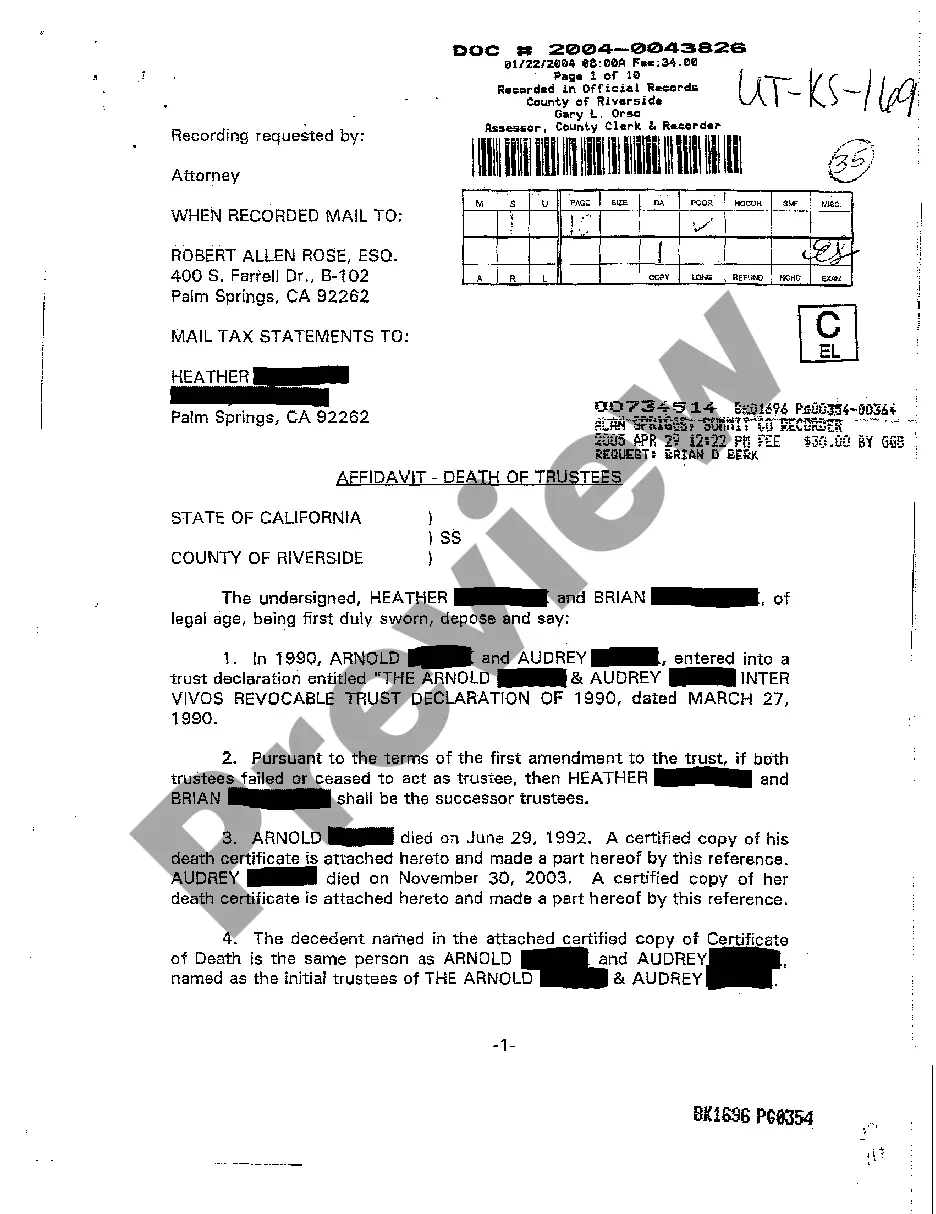
Affidavit-death forms are used to change the title on rea200bl property after the death of a joint tenant, trustee or trustor. Information and forms are available from the Sacramento County Public Law Library. Blank forms may also be available at office supply stores.
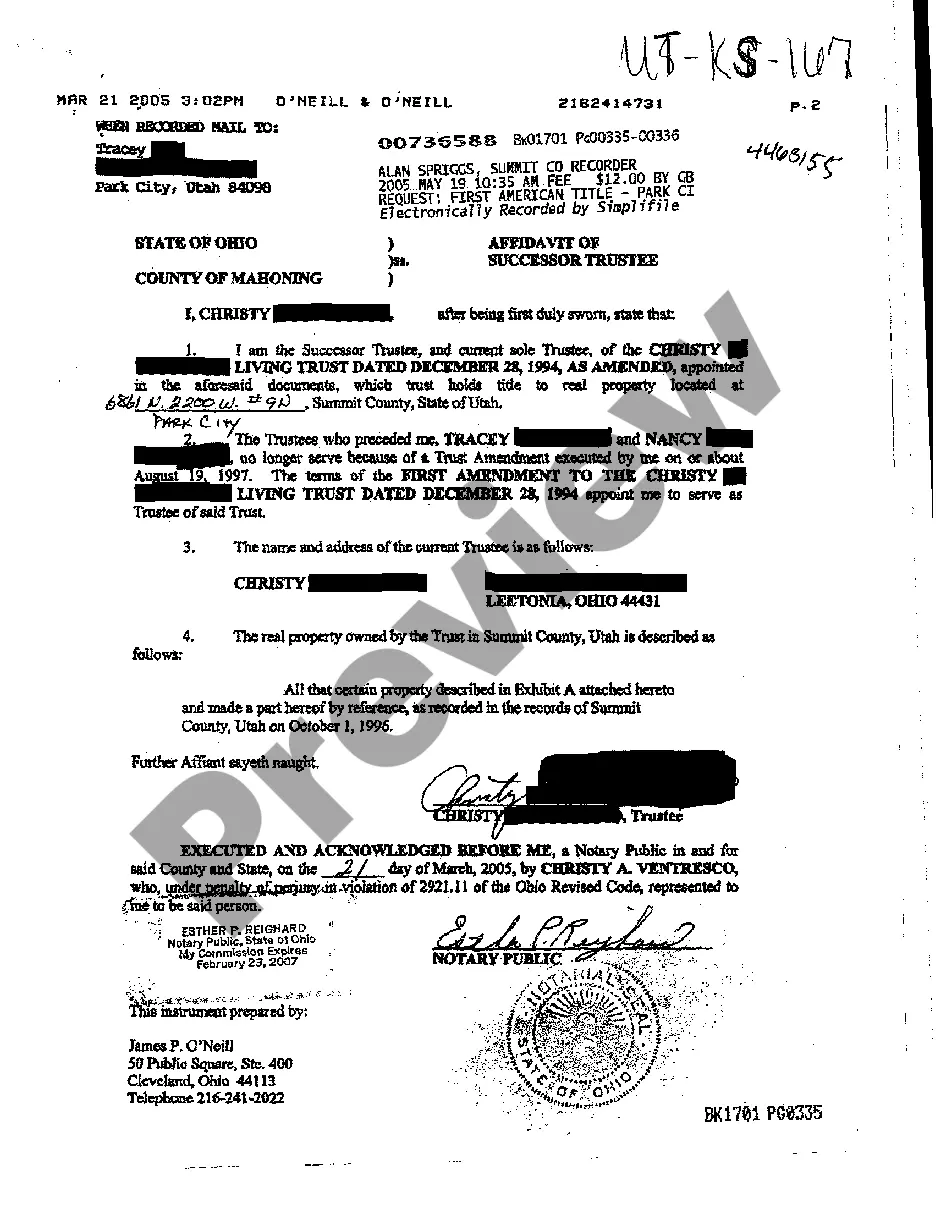
After the grantor's passing, the successor trustee assumes the trustee's duties and must transfer documents to themselves so they can legally transfer trust property to the beneficiaries.
An Affidavit of Death is used to notify businesses, courts, and other places of someone's death. This legal document is a sworn statement that legally states someone has passed away. This form is typically used in conjunction with a certified death certificate.
In Utah, you can make a living trust to avoid probate for virtually any asset you ownreal estate, bank accounts, vehicles, and so on. You need to create a trust document (it's similar to a will), naming someone to take over as trustee after your death (called a successor trustee).
Under Utah law, a will must be filed with the court with reasonable promptness after the death of the testator. Utah Code § 75-2-902. So, after you pass away, your will should be filed in your local probate court by the person named to be your personal representative (also called an executor or administrator).
Probate is required if: the estate includes real property (land, house, condominium, mineral rights) of any value, and/or. the estate has assets (other than land, and not including cars) whose net worth is more than $100,000.
The California small estate affidavit, called a Petition to Determine Succession to Real Property, is used by successors in interest to a person who died to collect real and personal property totaling $166,250 or less in California. It cannot be filed until 40 days have elapsed since the person died.
Retirement accountsIRAs or 401(k)s, for examplefor which a beneficiary was named. Life insurance proceeds (unless the estate is named as beneficiary, which is rare) Property held in a living trust. Funds in a payable-on-death (POD) bank account.