Utah Complex Will with Credit Shelter Marital Trust for Large Estates
About this form
This Complex Will with Credit Shelter Marital Trust for Large Estates allows individuals to maximize the transfer of property to heirs without incurring estate taxes. This form is specifically designed for couples with substantial estates, ensuring that the surviving spouse can inherit a large portion of the estate tax-free, while simultaneously establishing a trust that can benefit children without tax liabilities. This distinguishes it from simpler wills, as it incorporates advanced estate planning features aimed at minimizing tax liability.
Form components explained
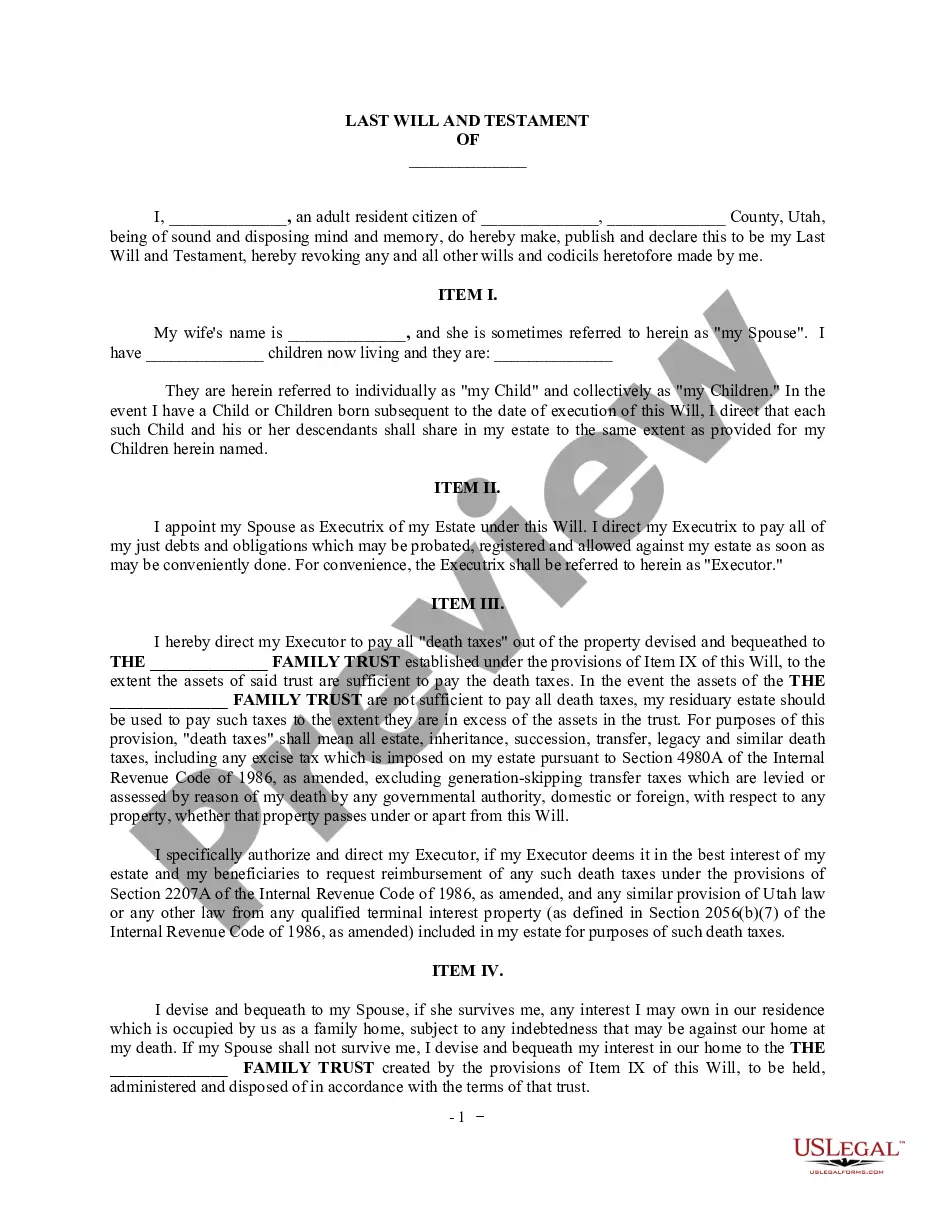
- Identification of the testator and beneficiaries, including spouse and children.
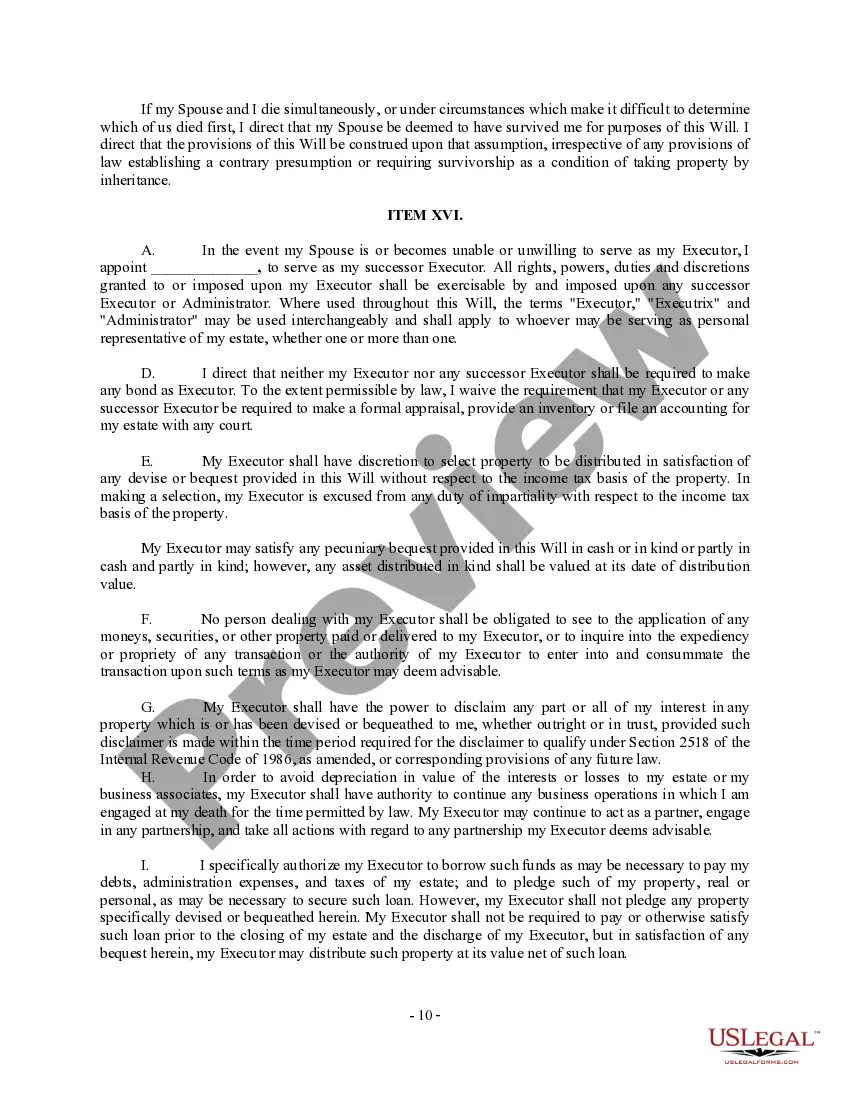
- Appointment of an executor or executrix who will handle the estate's affairs.
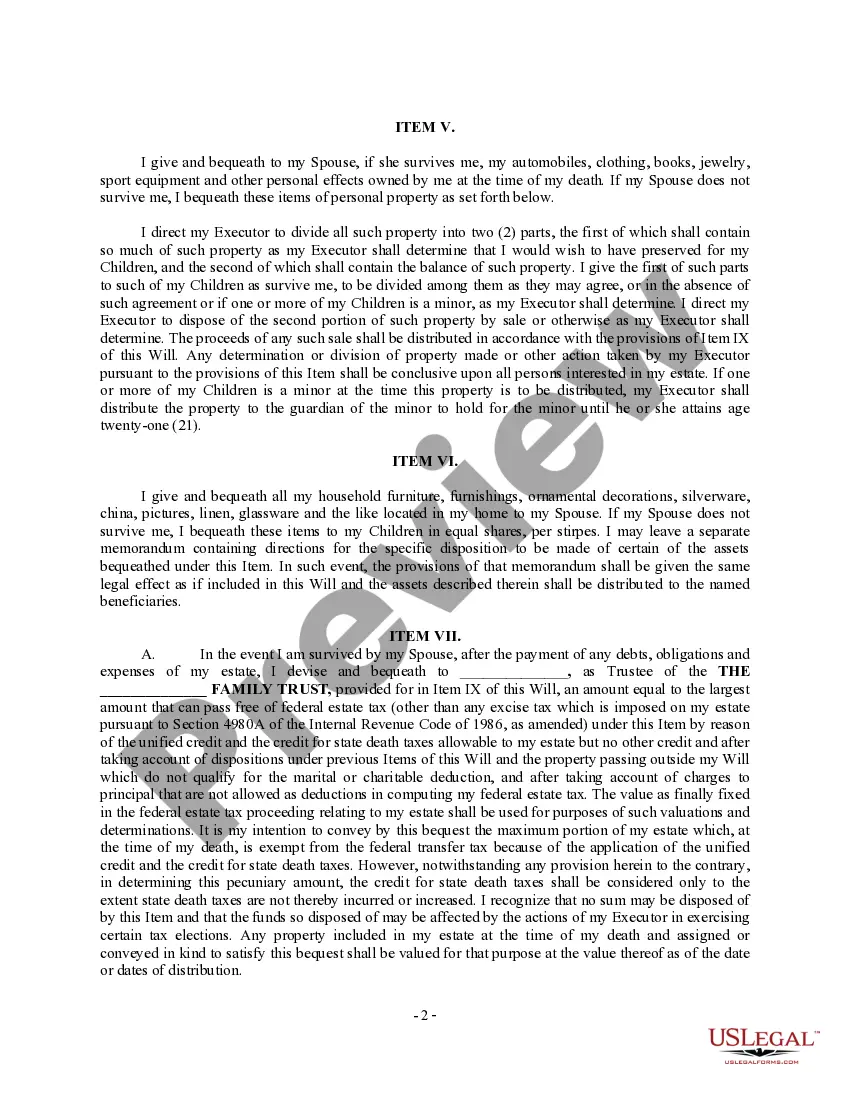
- Specification of how debts, taxes, and expenses will be paid from the estate.
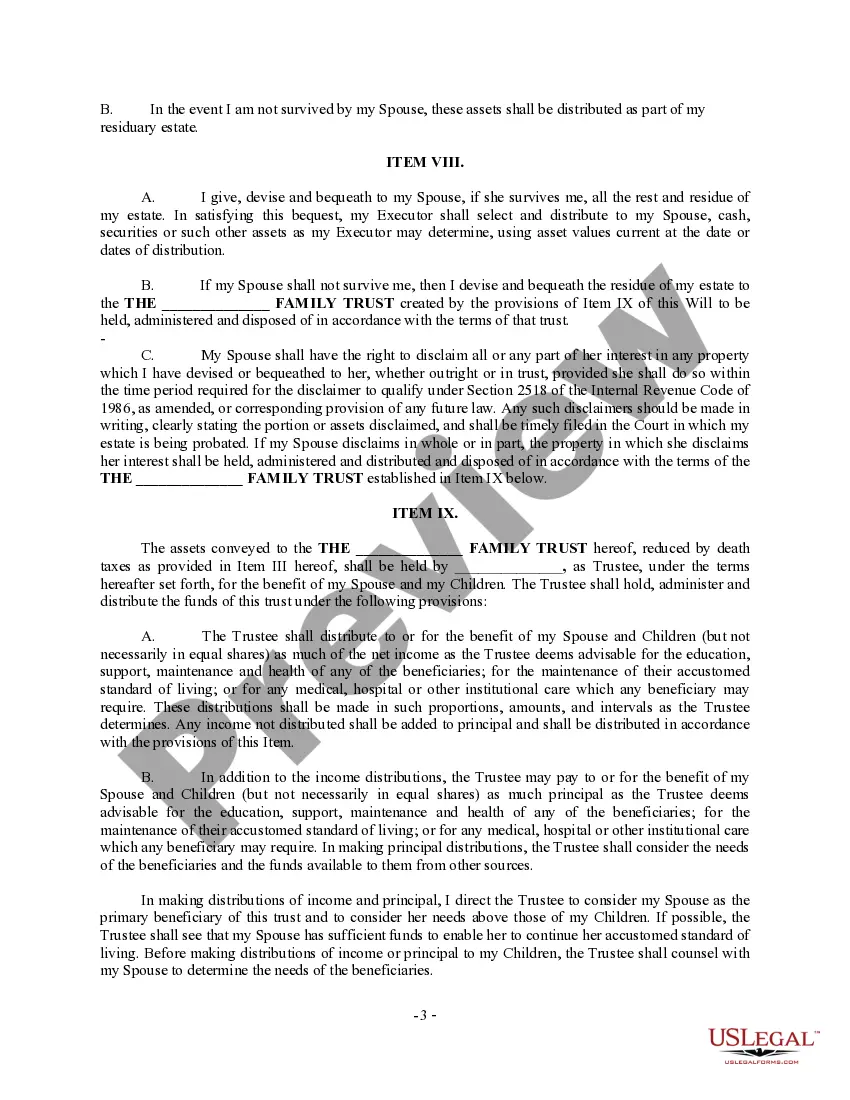
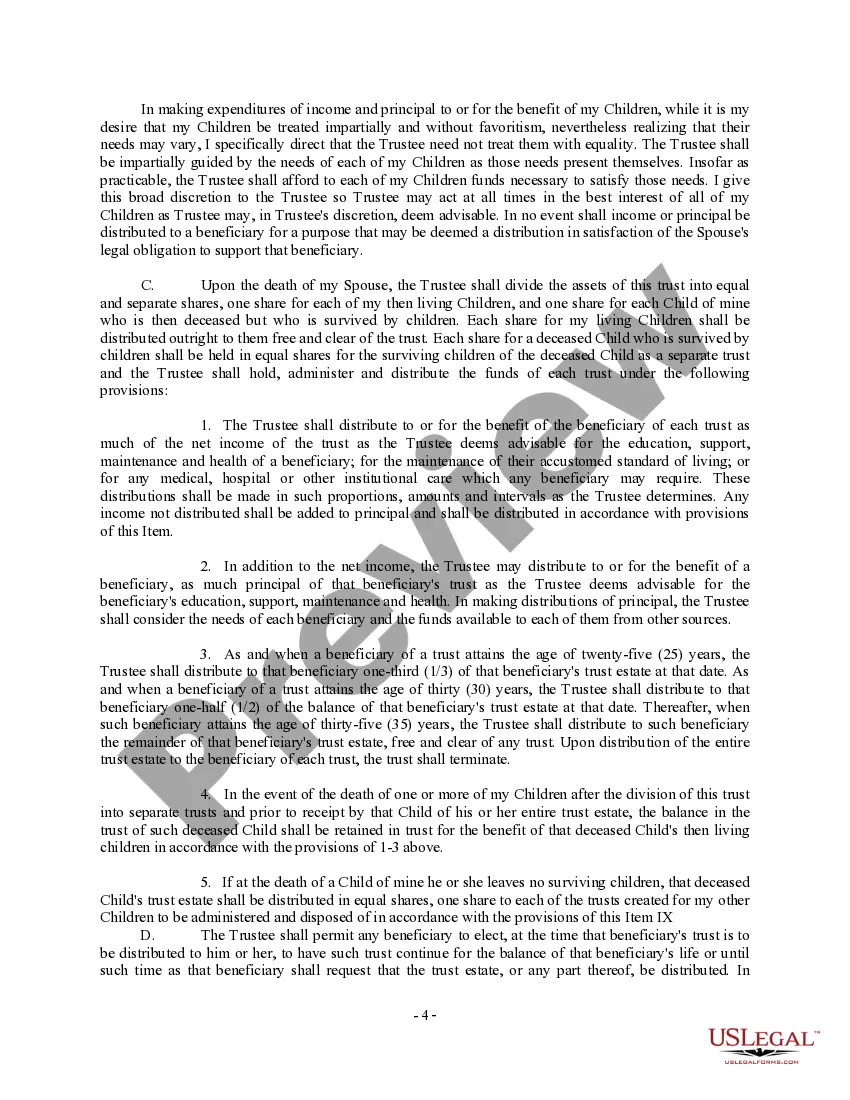
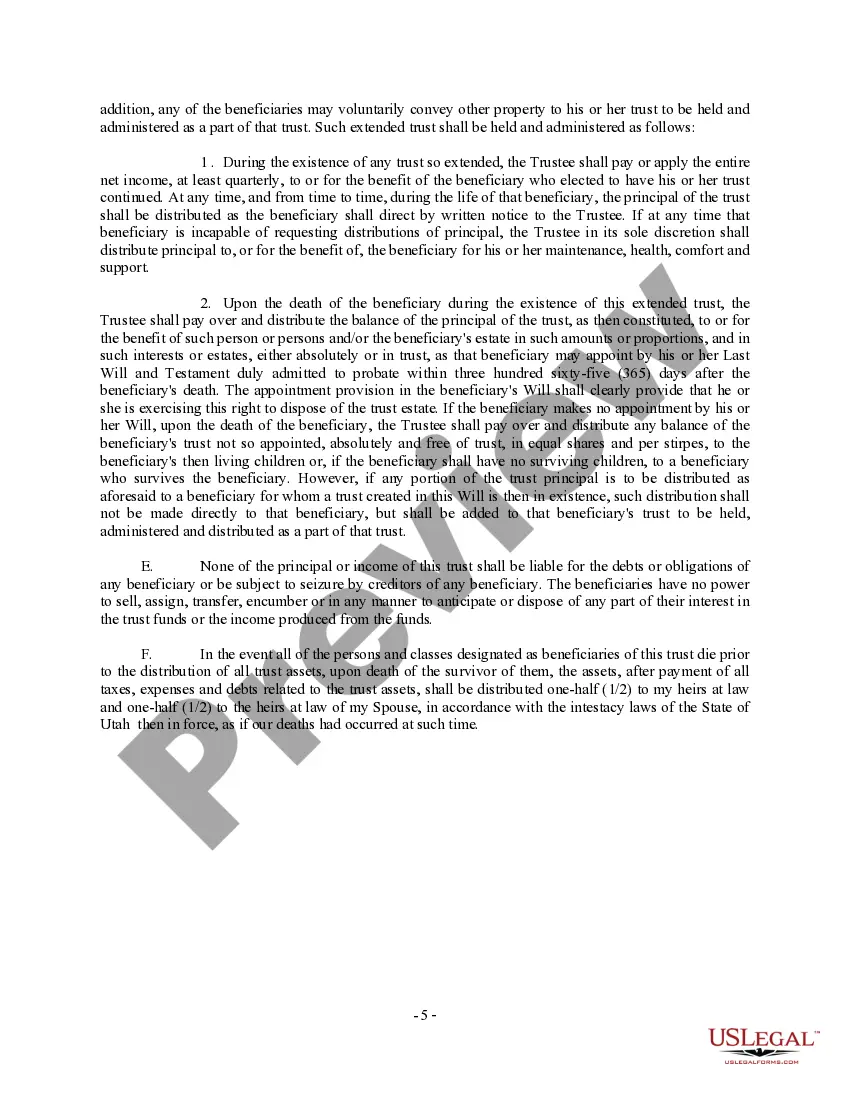
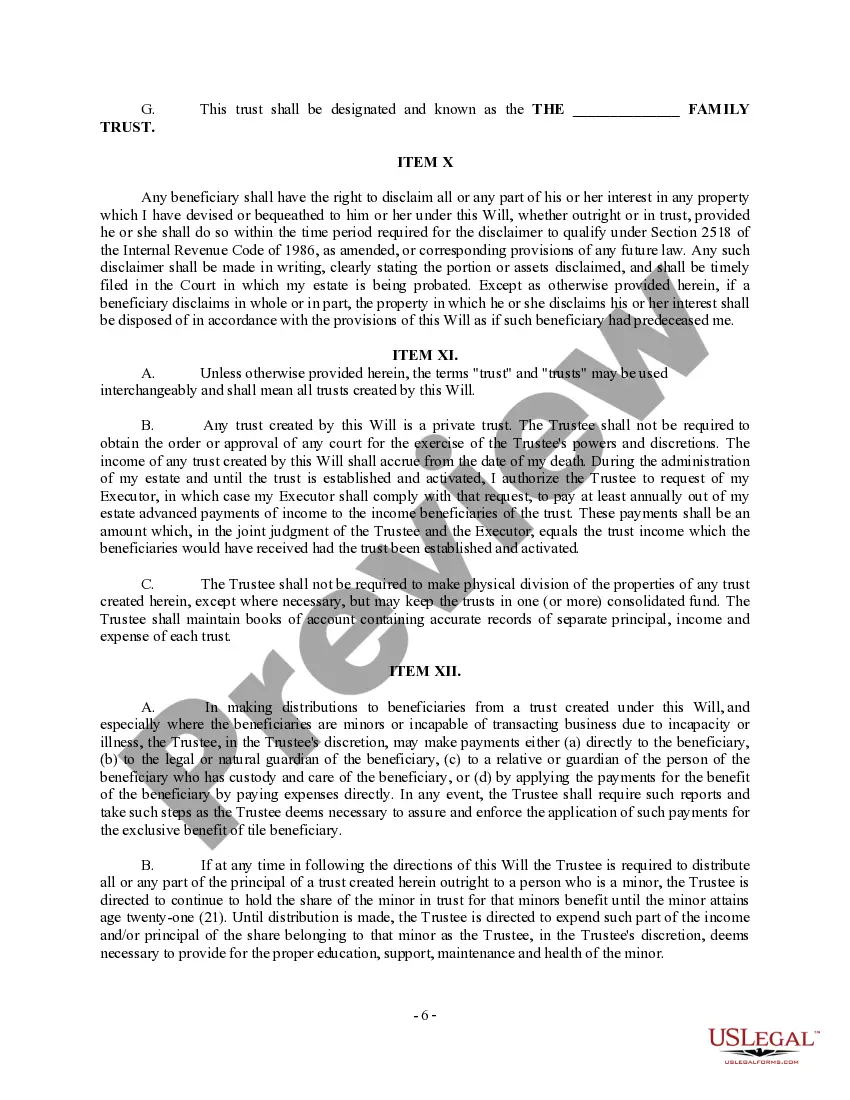
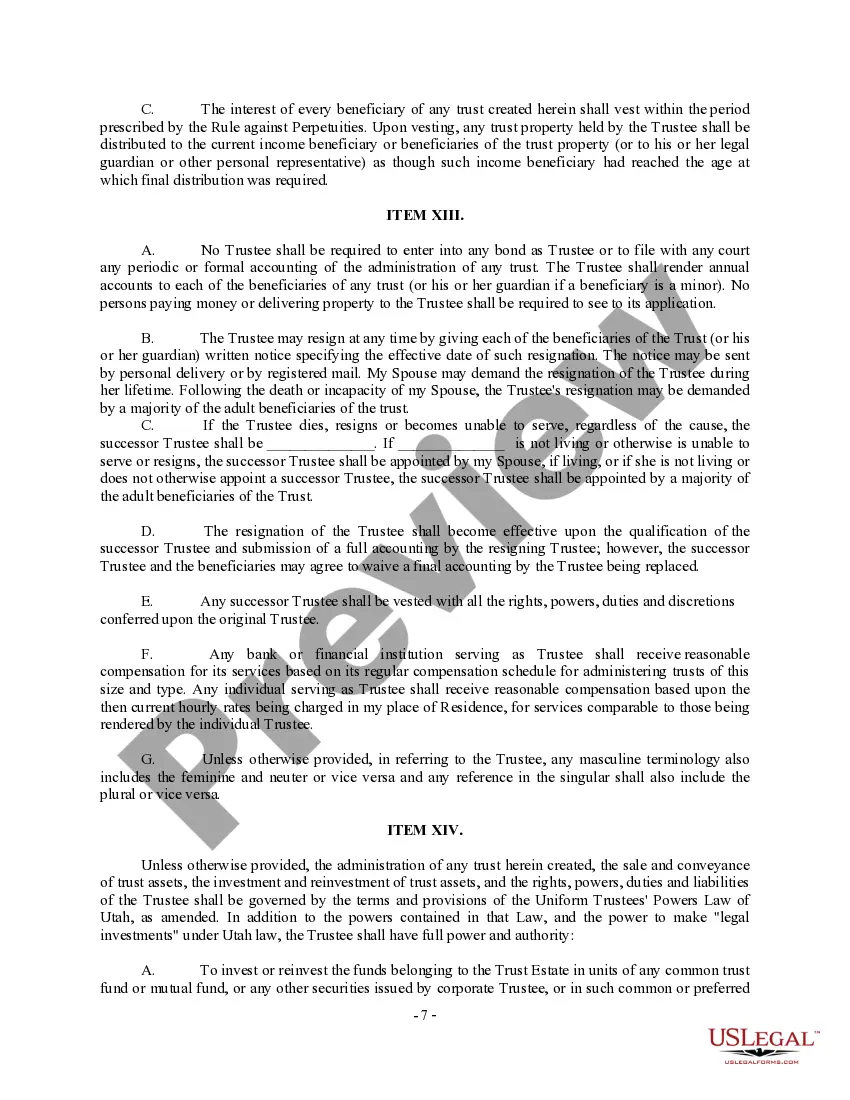
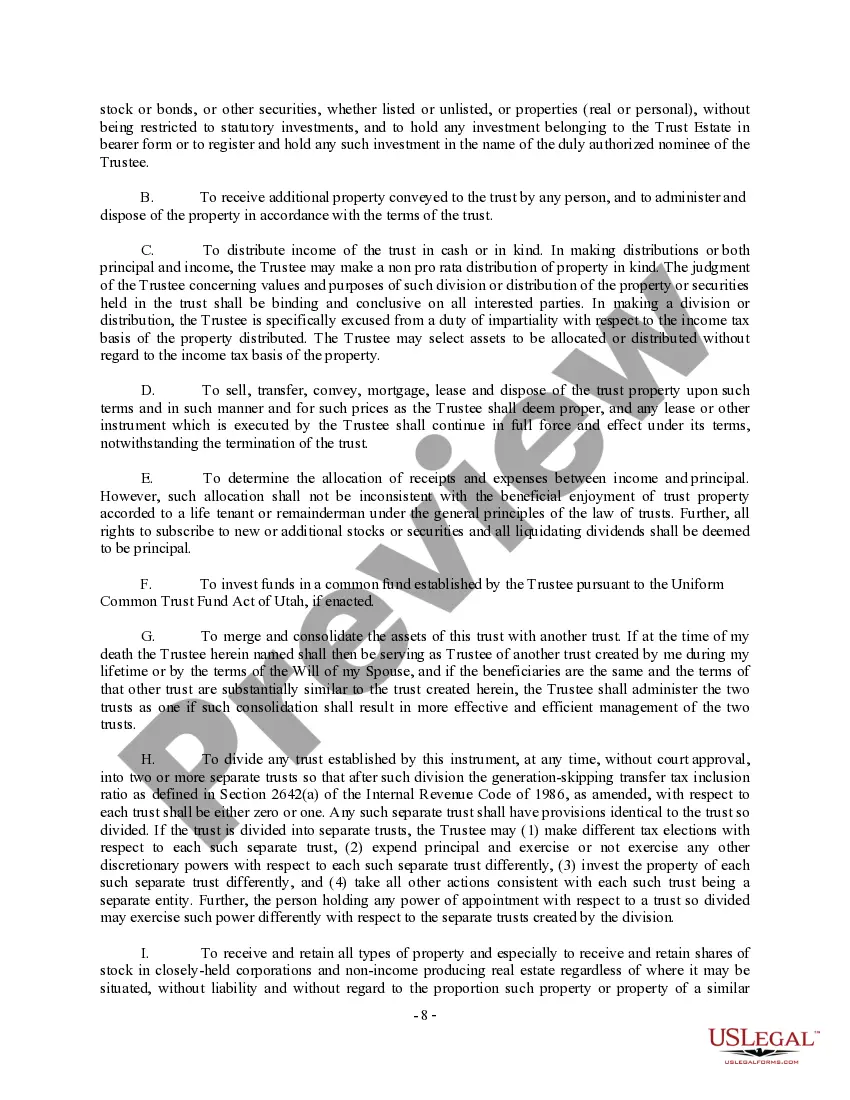
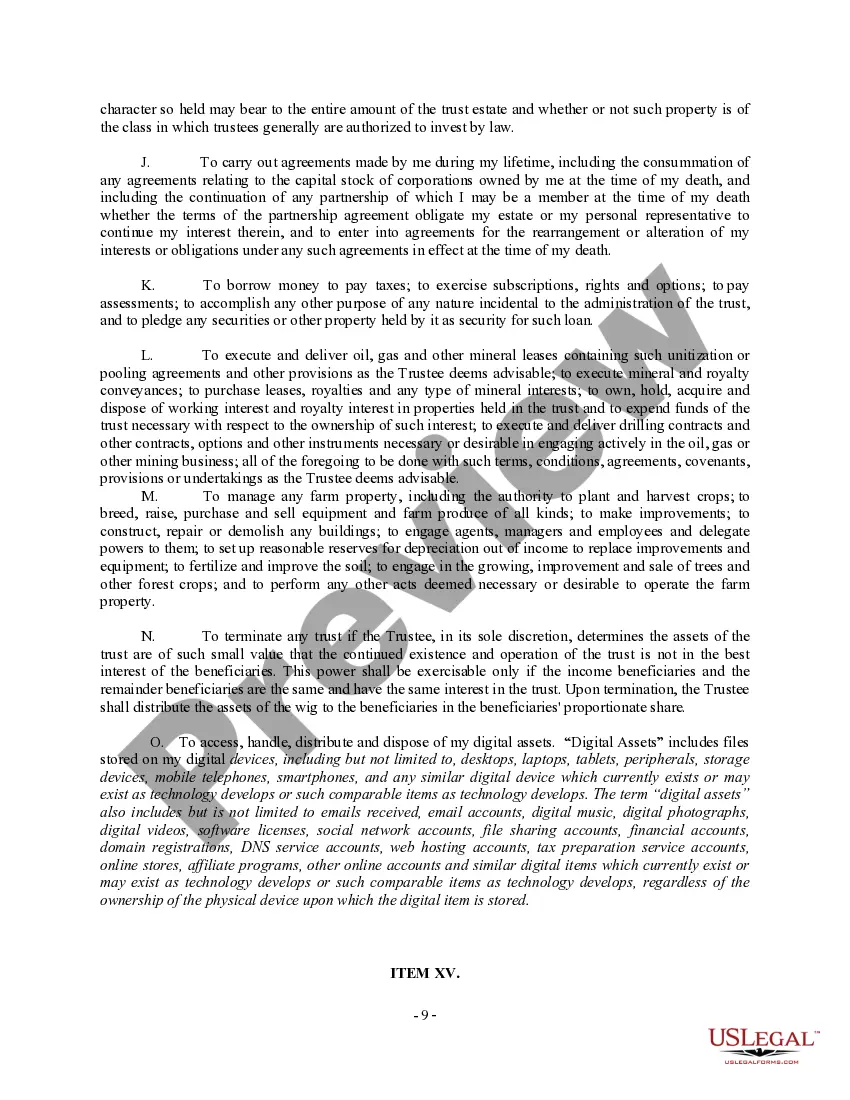
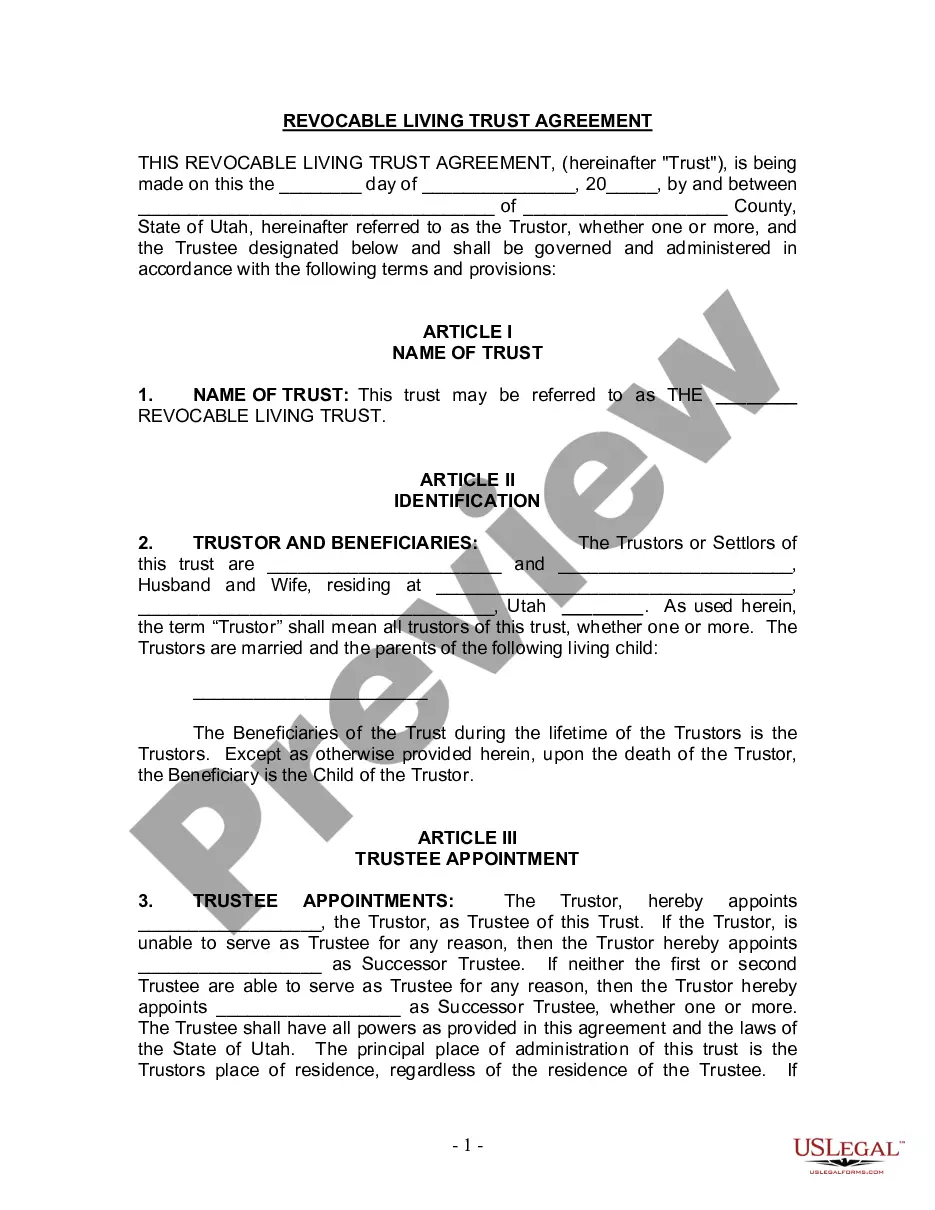
- Creation of the marital trust, with detailed instructions for asset distribution.
- Provisions for the handling of property and other personal effects.
- Instructions for the treatment of children born after the will is executed.


When to use this form
This form is beneficial for married couples with significant assets who want to ensure that their estate is managed efficiently and minimizes tax exposure upon their passing. It is particularly relevant when one spouse wishes to establish provisions for their children while still providing for their surviving spouse. Situations include planning for large estates, avoiding probate complexities, or ensuring equitable treatment of heirs while maintaining tax efficiencies.
Who this form is for
- Married individuals with substantial estates that may exceed the estate tax exemption limits.
- Couples who want to provide for each other and their children through trusts.
- Individuals seeking to minimize tax implications associated with estate transfers.
- Those who desire detailed control over the distribution of their assets after death.
How to complete this form
- Identify the testator, providing names, addresses, and relationships to heirs.
- Designate an executor responsible for managing the estate according to the will.
- Clearly specify the distribution of assets, including setting up the family trust fund.
- Include provisions about debts and taxes, ensuring that they are addressed prior to asset distribution.
- Review and sign the document in the presence of witnesses, as required by Utah law.
Is notarization required?
This form does not typically require notarization unless specified by local law. However, having the will notarized can add an extra layer of validity and help avoid potential disputes regarding its authenticity.
Get your form ready online
Our built-in tools help you complete, sign, share, and store your documents in one place.
Make edits, fill in missing information, and update formatting in US Legal Forms—just like you would in MS Word.
Download a copy, print it, send it by email, or mail it via USPS—whatever works best for your next step.
Sign and collect signatures with our SignNow integration. Send to multiple recipients, set reminders, and more. Go Premium to unlock E-Sign.
If this form requires notarization, complete it online through a secure video call—no need to meet a notary in person or wait for an appointment.
We protect your documents and personal data by following strict security and privacy standards.

Make edits, fill in missing information, and update formatting in US Legal Forms—just like you would in MS Word.

Download a copy, print it, send it by email, or mail it via USPS—whatever works best for your next step.

Sign and collect signatures with our SignNow integration. Send to multiple recipients, set reminders, and more. Go Premium to unlock E-Sign.

If this form requires notarization, complete it online through a secure video call—no need to meet a notary in person or wait for an appointment.

We protect your documents and personal data by following strict security and privacy standards.
Common mistakes
- Failing to properly identify all beneficiaries, leading to disputes.
- Not updating the will after major life events (e.g., birth, divorce).
- Overlooking the need for witnesses when signing the document.
- Neglecting to communicate the existence of the will to family members.
Benefits of completing this form online
- Convenient access to legally binding documents from the comfort of your home.
- Editability allows you to tailor the document to your specific estate planning needs.
- Reliable and up-to-date legal templates drafted by licensed attorneys.
- Immediate downloads, ensuring you can act quickly in your estate planning.
Legal use & context
- This form is legally recognized in Utah, tailored to meet estate planning laws.
- It is crucial to store the completed will in a safe but accessible place.
- Regular reviews and updates should be performed to reflect any changes in personal circumstances or laws.
Quick recap
- This will allows for effective estate planning for married couples with significant assets.
- The structure provides benefits to both spouses and children, particularly concerning tax implications.
- Ensuring accuracy and legal compliance is essential for the will's enforceability.
- Regular updates and discussions about the will with beneficiaries can help prevent issues later.
Looking for another form?
Form popularity
FAQ
A marital trust starts as a revocable living trust. A surviving spouse can be its trustee.
An estate trust is a type of marital deduction trust requiring that when the surviving spouse dies, all remaining trust principal must go into his/her estate. This means the surviving spouse gets to choose the final beneficiaries, by will or within a living trust.
The trust qualifies for the marital deduction. In a QTIP trust, the surviving spouse must receive all income generated by the trust property for life, paid at least annually.After the surviving spouse's death, the property passes to the remainder beneficiaries of the trust, who usually are the children of the couple.
Yes, the surviving spouse may serve as trustee of the credit shelter trust.All of the assets in the credit shelter trust, including any appreciation in value during the surviving spouse's lifetime, pass free of estate tax to the beneficiaries.
First, in a standard credit shelter trust, there is no step-up in basis at the death of the surviving spouse.Second, the credit shelter trust is a separate taxpayer and requires its own tax return, Form 1041.
In the case of a marital trust, the IRS subjects the remaining trust assets to federal estate taxes when the surviving spouse passes. However, a couple can take advantage of the federal gift and estate tax exemption. This is the amount that you can pass on to heirs before you'd ever owe an actual estate tax.
The effect of the marital deduction trust is that it shields both spouse's assets and estates from federal estate taxes because when the first spouse dies, the assets indicated by the settlor (the spouse who created the trust) pass to the marital trust free and clear of any and all federal estate taxes.
A credit shelter trust (CST) is a trust created after the death of the first spouse in a married couple. Assets placed in the trust are generally held apart from the estate of the surviving spouse, so they may pass tax-free to the remaining beneficiaries at the death of the surviving spouse.
Separate trusts provide more flexibility in the event of a death in the marriage. Since the trust property is already divided, separate trusts preserve the surviving spouse's ability to amend or revoke assets held within their own trust, while ensuring that the deceased spouse's trust cannot be amended after death.