OEM Software License Agreement
What this document covers
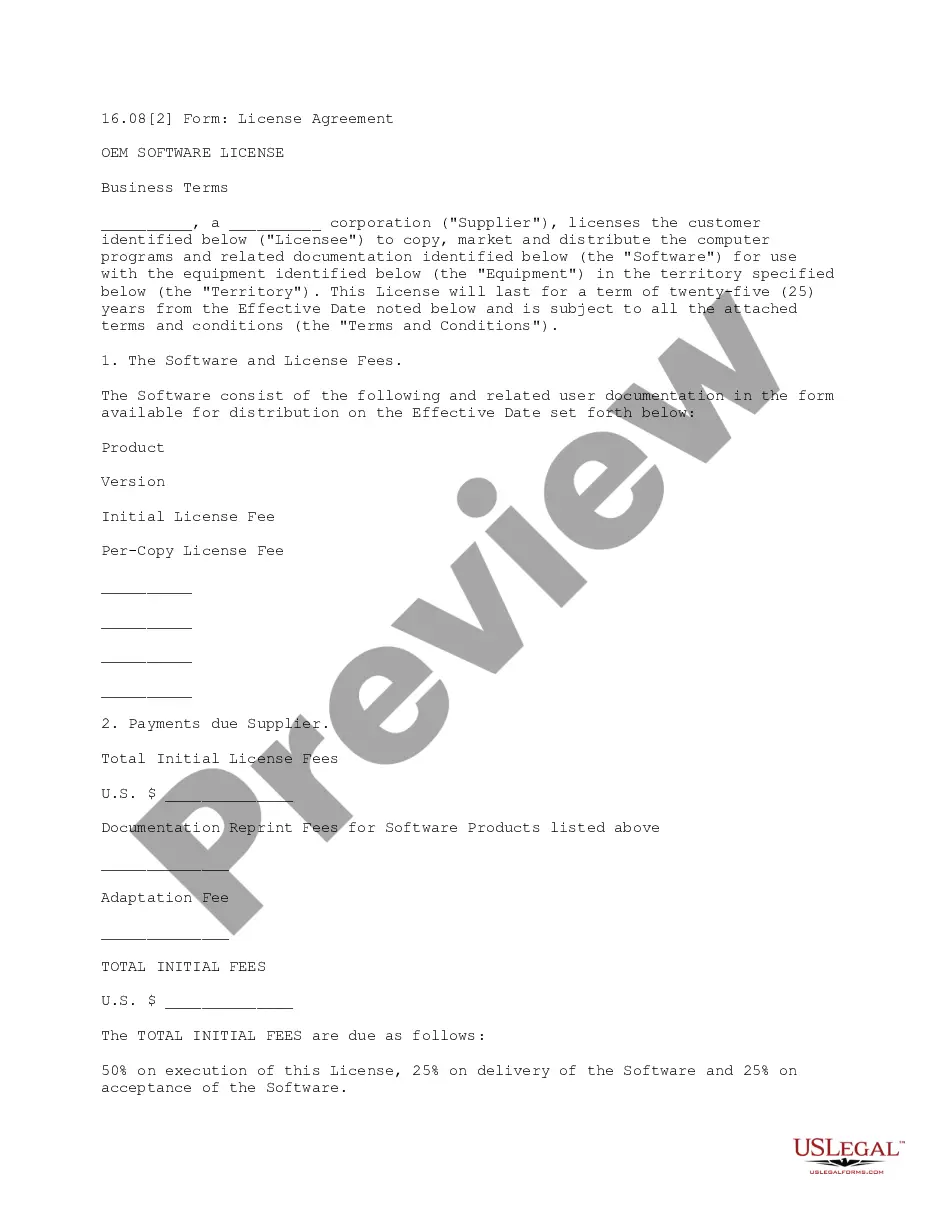
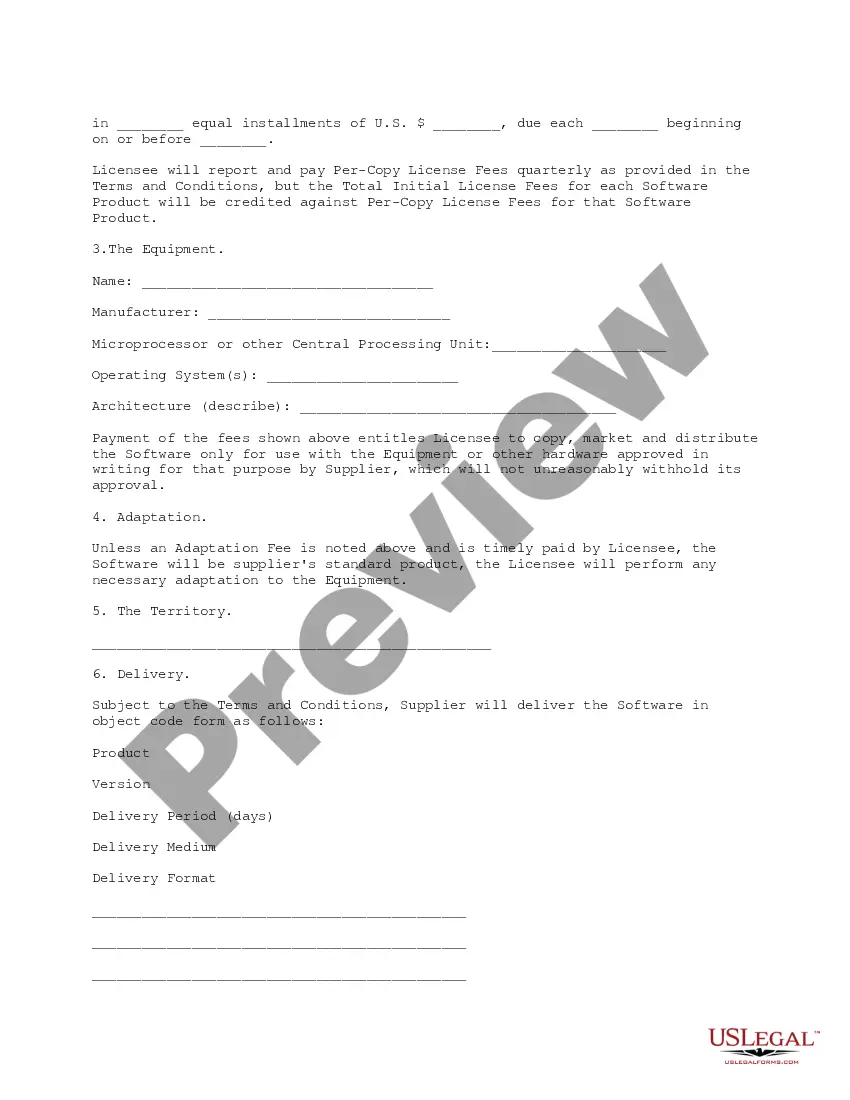
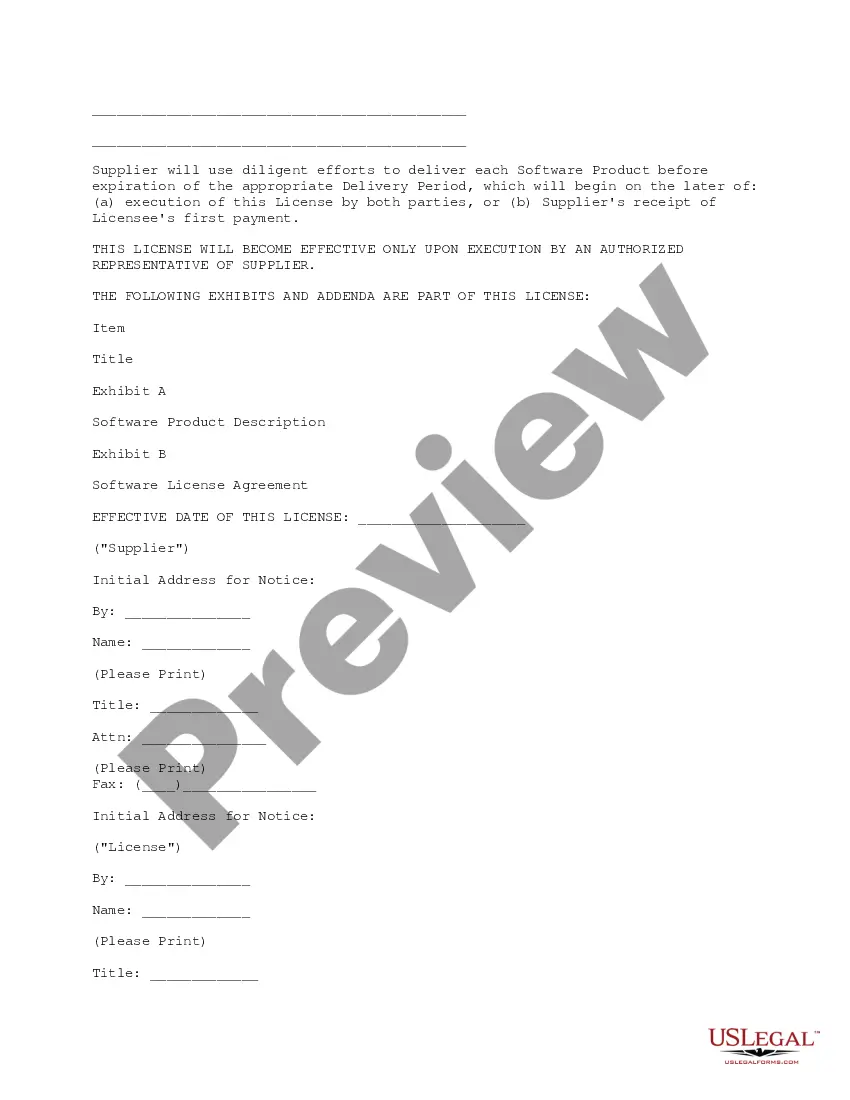
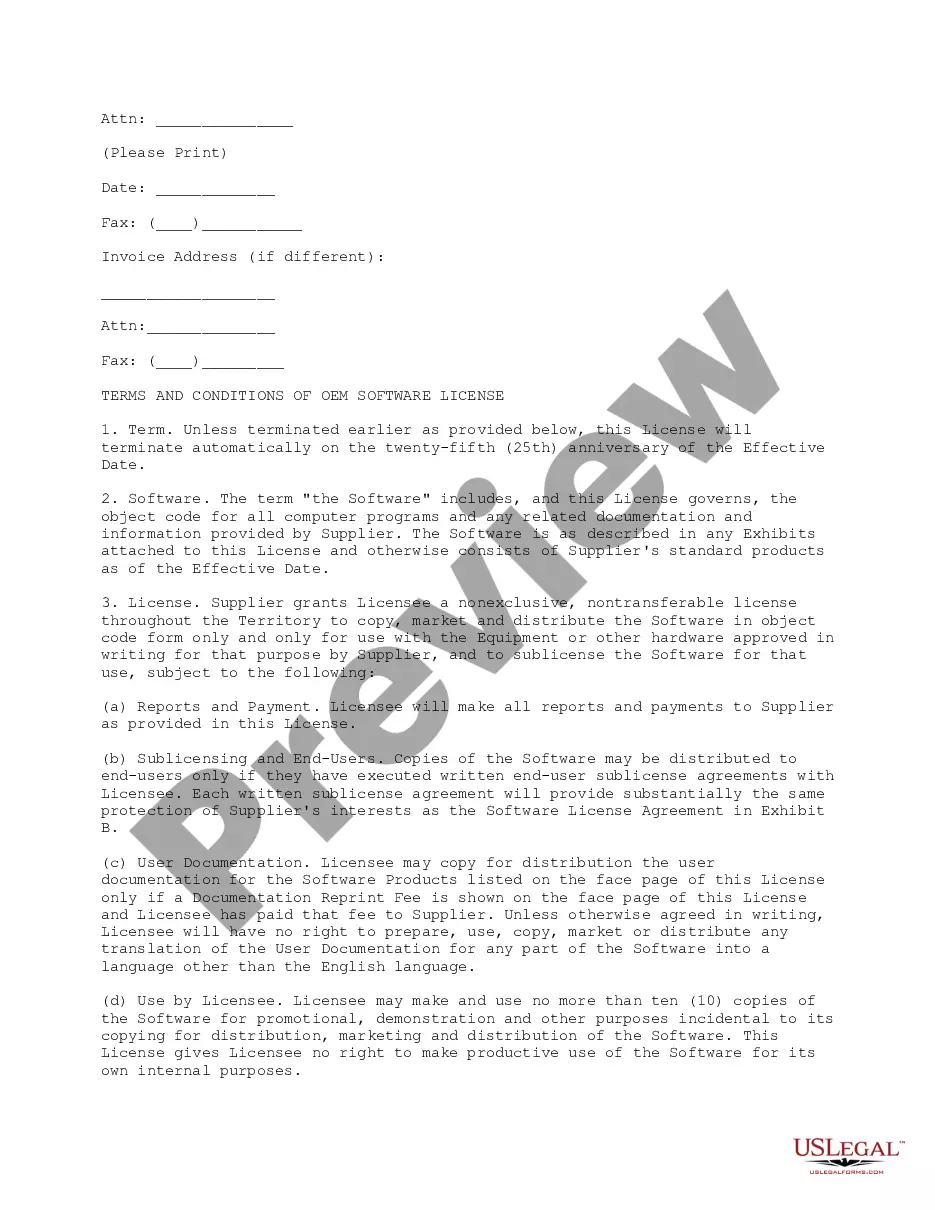
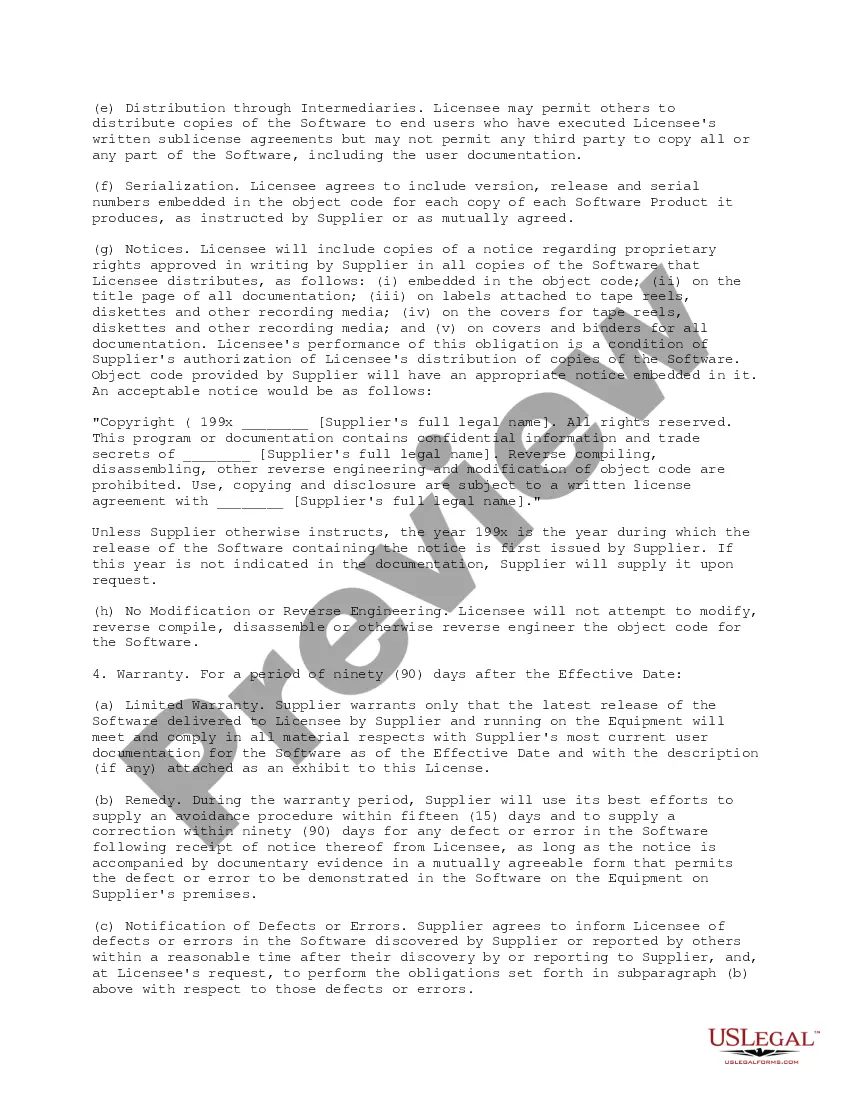
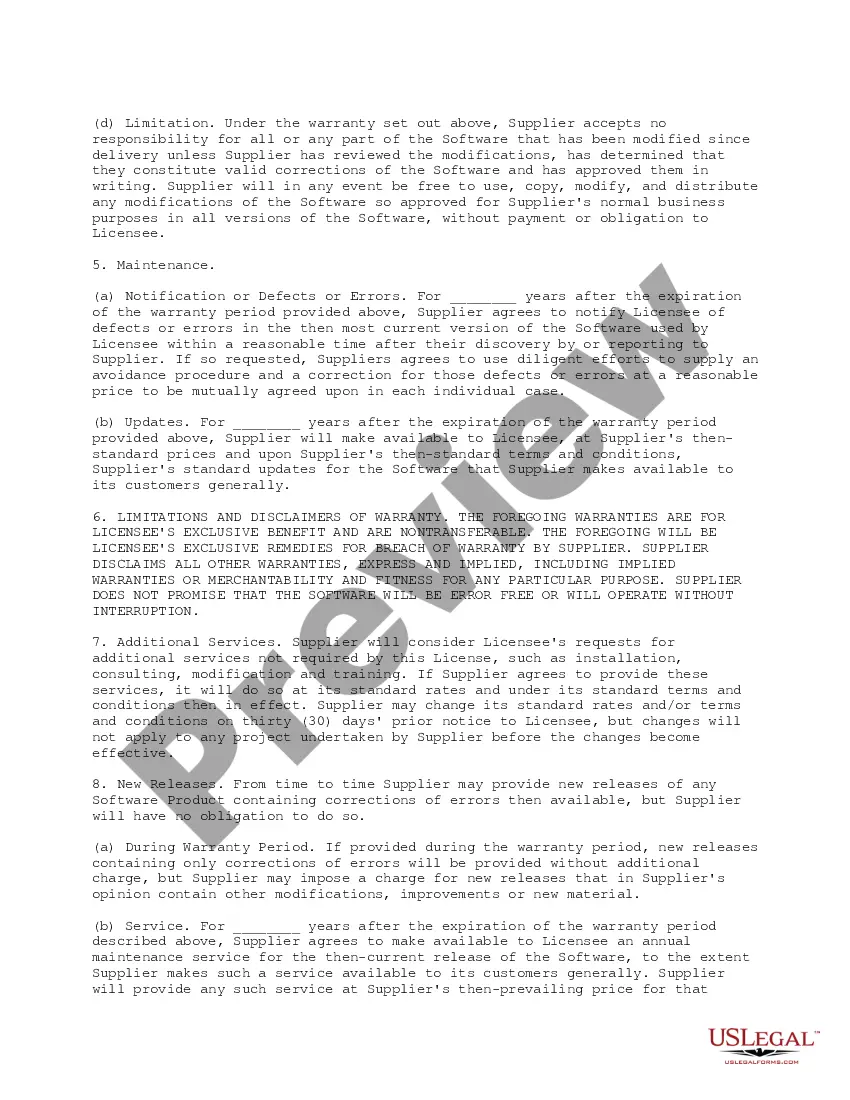
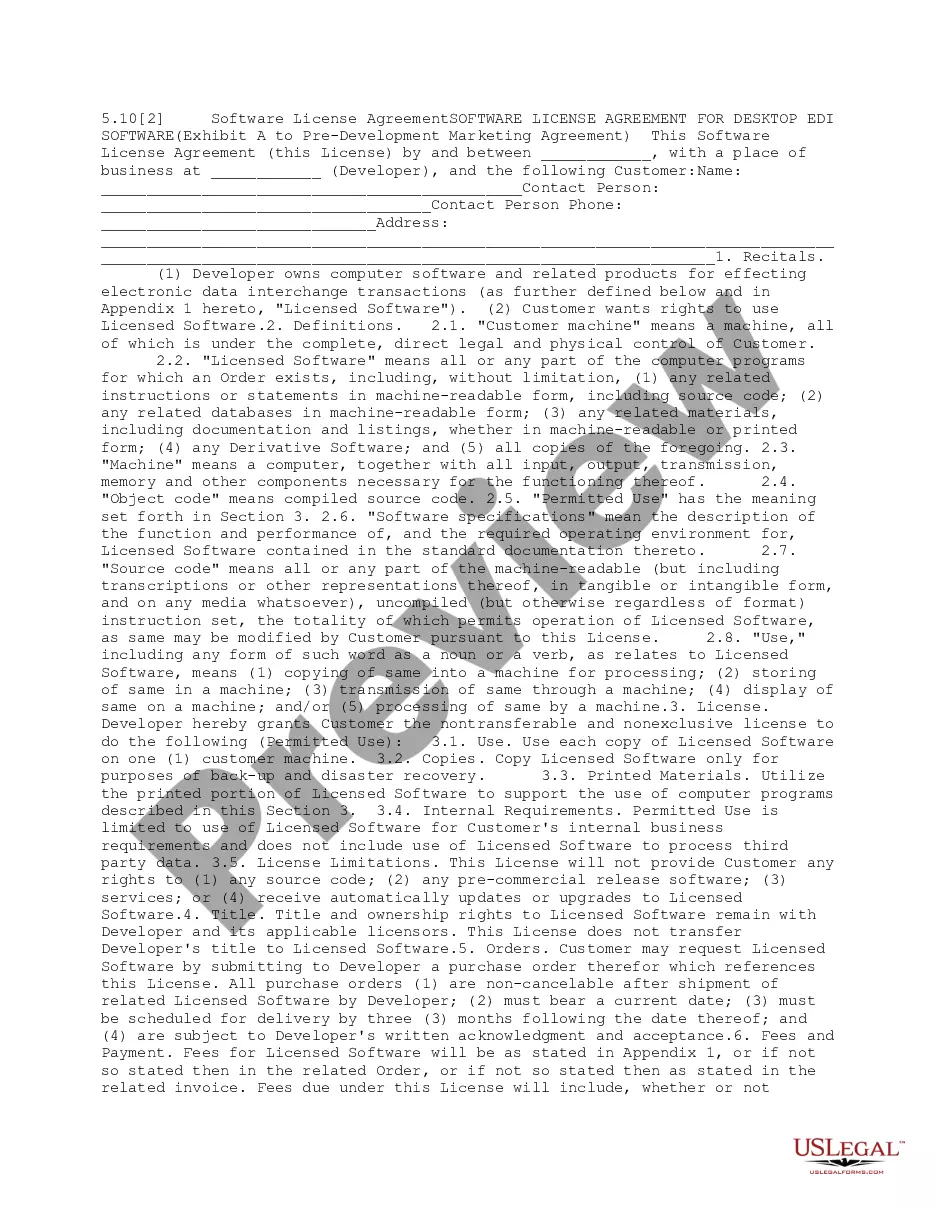
The OEM Software License Agreement is a legal document that allows a corporation (Supplier) to license software to a customer (Licensee) for use with specific equipment. Unlike standard software licenses, this agreement enables the Licensee to copy, market, and distribute the software solely for designated equipment within specified territories. It is tailored for corporate or business contexts, ensuring clarity in software ownership, licensing terms, and usage rights.
Key components of this form
- License Duration: Specifies a term of 25 years from the effective date.
- Software Details: Lists the software and documentation covered, including product versions and associated fees.
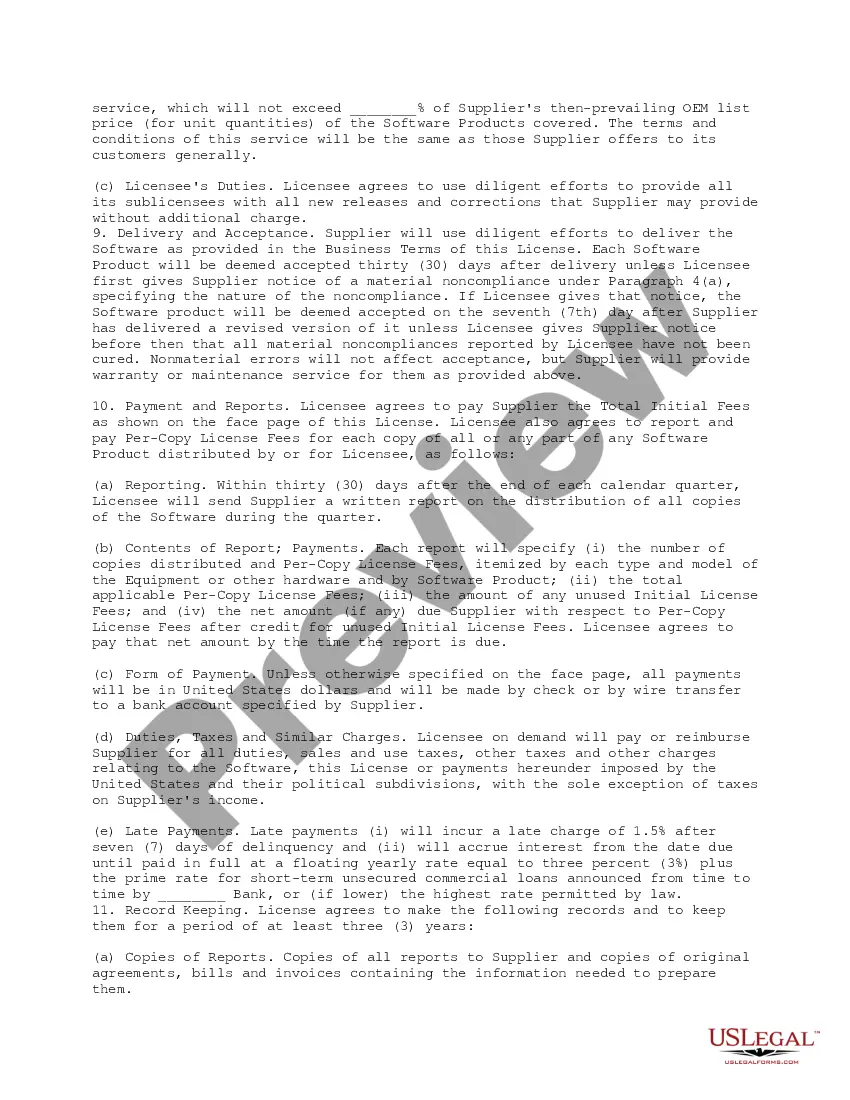
- Payment Structure: Outlines initial license fees and payment schedule, including per-copy fees.
- Adaptation Clause: Indicates whether the Licensee is responsible for adapting the software for the equipment.
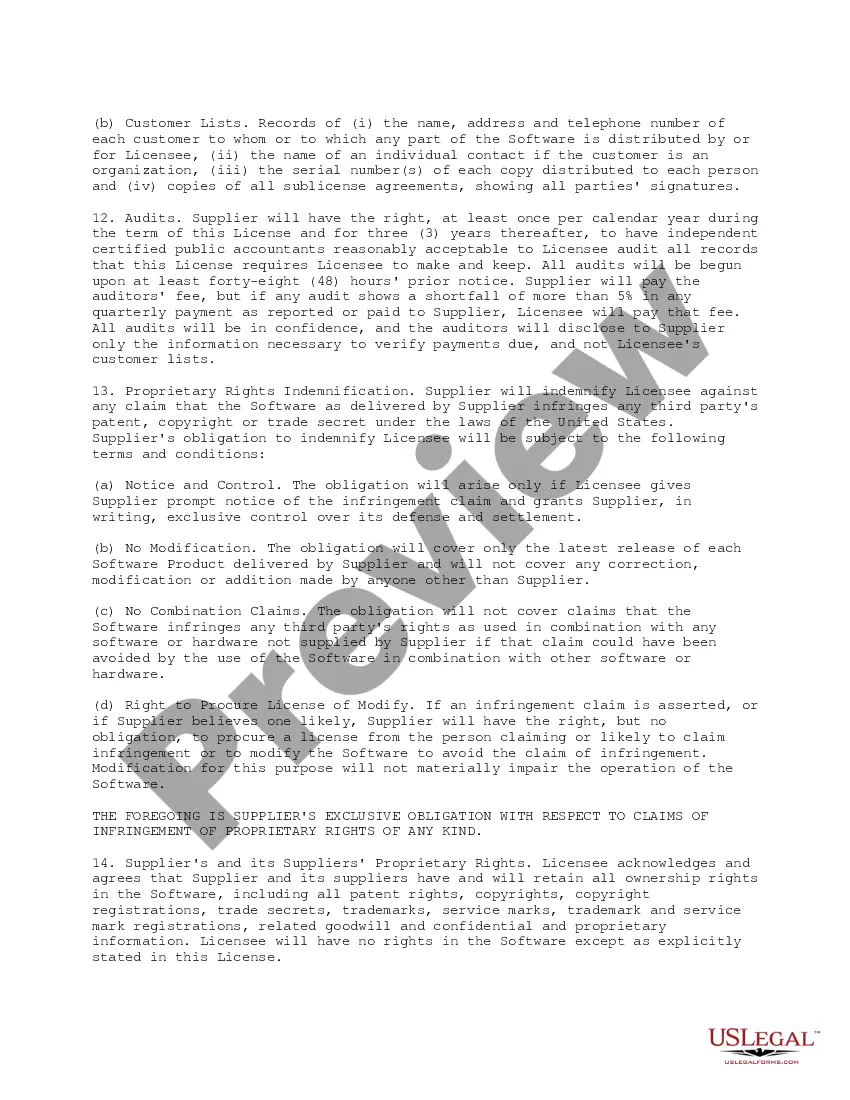
- Proprietary Rights: Clarifies ownership rights and obligations regarding the software.
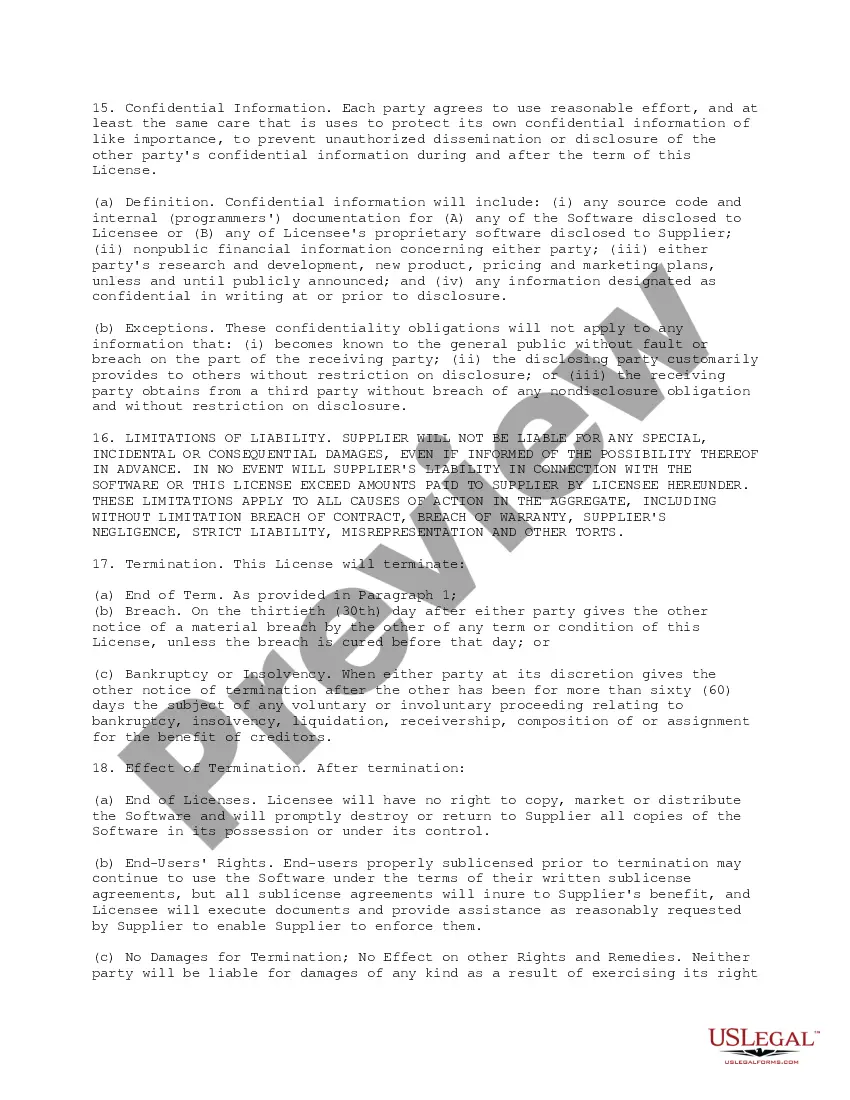
- Termination Conditions: Details the circumstances under which the agreement can be terminated.

When this form is needed
You should use the OEM Software License Agreement when your business is involved in licensing software designed to work with specific hardware. This agreement is crucial for software developers or distributors looking to allow clients to copy and distribute their software products legally. It outlines the terms for payment, usage rights, and restrictions, protecting both supplier and licensee interests throughout the collaboration.
Who needs this form
- Software developers and companies looking to license their software products.
- Businesses that require tailored software solutions for proprietary equipment.
- Legal professionals drafting agreements for clients engaging in software licensing.
- Corporate entities that need clarity in software usage rights and responsibilities.
Instructions for completing this form
- Identify the parties involved: Enter the names and details of the Supplier and Licensee.
- Specify the software products: Fill in the product names, versions, and associated fees.
- Detail the equipment: Provide information about the equipment that the software will be used with.
- Set payment terms: Outline initial and ongoing license fees, including due dates and payment structure.
- Review all sections: Ensure all clauses are understood and accepted by both parties before signing.
- Execute the agreement: Obtain signatures from authorized representatives of both Supplier and Licensee.
Does this document require notarization?
Notarization is not commonly needed for this form. However, certain documents or local rules may make it necessary. Our notarization service, powered by Notarize, allows you to finalize it securely online anytime, day or night.
Get your form ready online
Our built-in tools help you complete, sign, share, and store your documents in one place.
Make edits, fill in missing information, and update formatting in US Legal Forms—just like you would in MS Word.
Download a copy, print it, send it by email, or mail it via USPS—whatever works best for your next step.
Sign and collect signatures with our SignNow integration. Send to multiple recipients, set reminders, and more. Go Premium to unlock E-Sign.
If this form requires notarization, complete it online through a secure video call—no need to meet a notary in person or wait for an appointment.
We protect your documents and personal data by following strict security and privacy standards.

Make edits, fill in missing information, and update formatting in US Legal Forms—just like you would in MS Word.

Download a copy, print it, send it by email, or mail it via USPS—whatever works best for your next step.

Sign and collect signatures with our SignNow integration. Send to multiple recipients, set reminders, and more. Go Premium to unlock E-Sign.

If this form requires notarization, complete it online through a secure video call—no need to meet a notary in person or wait for an appointment.

We protect your documents and personal data by following strict security and privacy standards.
Typical mistakes to avoid
- Failing to specify the correct software version or product details.
- Overlooking the adaptation requirements, assuming the software will be compatible without adjustments.
- Not detailing the payment schedule accurately, leading to confusion later.
- Neglecting to establish clear terms for termination, which can lead to disputes.
Why use this form online
- Convenience of downloading and completing the form at your own pace.
- Editable format allows for easy customization to meet specific business needs.
- Access to professionally drafted content ensures legal compliance and clarity.
Legal use & context
- The agreement is enforceable under commercial law governing software licensing.
- Licenses must comply with local regulations regarding software distribution and usage.
- Parties should retain copies of the agreement for their records and future reference.
Looking for another form?
Form popularity
FAQ
What is a Licensing Agreement? A licensing agreement is a contract between two parties (the licensor and licensee) in which the licensor grants the licensee the right to use the brand name, trademark, patented technology, or ability to produce and sell goods owned by the licensor.
A license agreement is a business contract between two parties. The licensor (the seller of the license) owns the asset being licensed and the licensee (the buyer) pays for the right to use the license. The licensee pays royalties to the owner in exchange for the right to sell the product or use the technology.
An original equipment manufacturer, OEM, agreement is used by a company that takes components of products from one or more companies in order to build one product which it then sells under its own brand and company name.
Exclusive or non-exclusive. In an exclusive license, the intellectual property holder is licensing the work only to one person, for that particular use/territory. Territory. Use. Attribution. Derivative works. Confidentiality. Time frame. Termination.
The OEM license agreement exists between the various parties to address issues of branding, confidentiality, payment, quality assurance, and timeframes. An original equipment manufacturer (OEM) is a company that makes parts that may then be marketed to another manufacturer.
The 3 P's of collegiate licensing are protection, promotion, and profit.
An example of a licensing agreement is a contract between the copyright holders of software and another company, allowing the latter to use the computer software for their daily business operations.
An OEM license refers to the license that a manufacturer installs on new devices. If this is your case, the product key isn't transferable, and you can't use it to activate another installation.Usually, a Volume license allows organizations to use one master product key to activate any installation of Windows 10.
Download a template for a licensing agreement. Choose your role as the licensor or licensee. Define the license(s) in the agreement. Decide whether the license is exclusive or not. Settle the matter of fees and payment schedule. Add a renewal date and rules.