Affidavit of Understanding & Addendum to Purchase Agreement
What this document covers
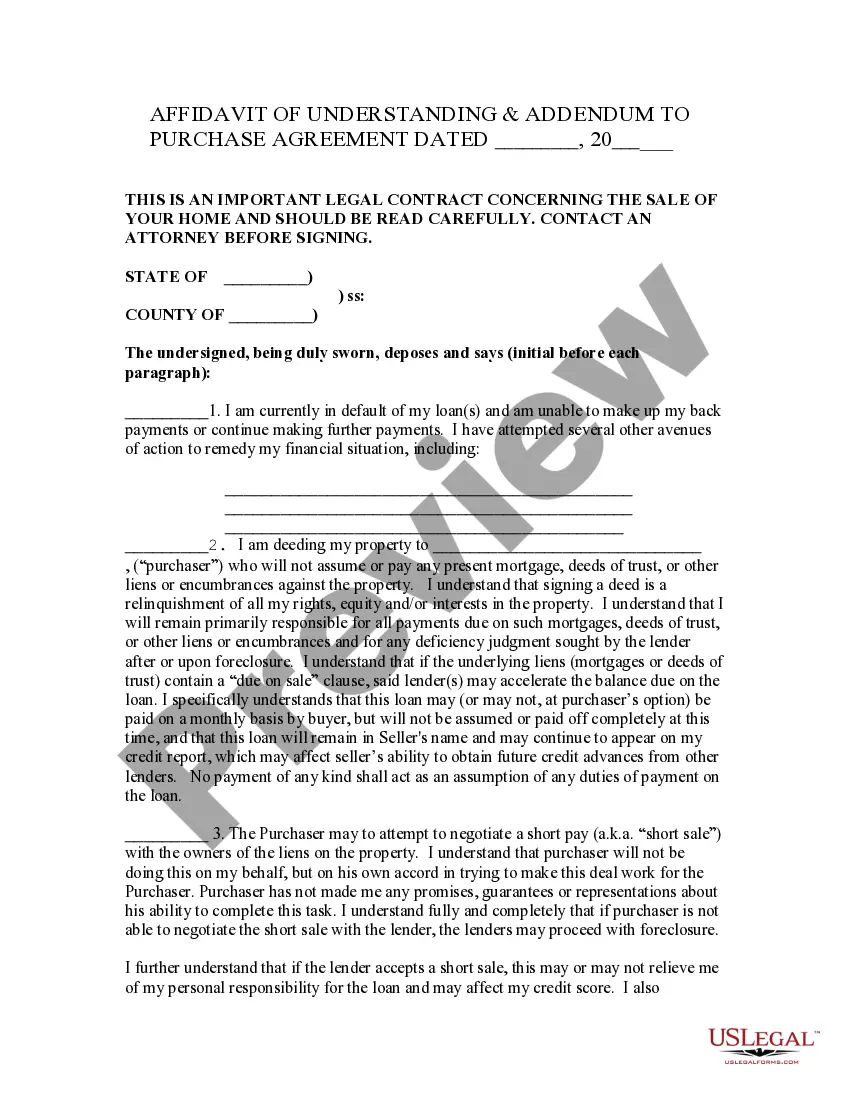
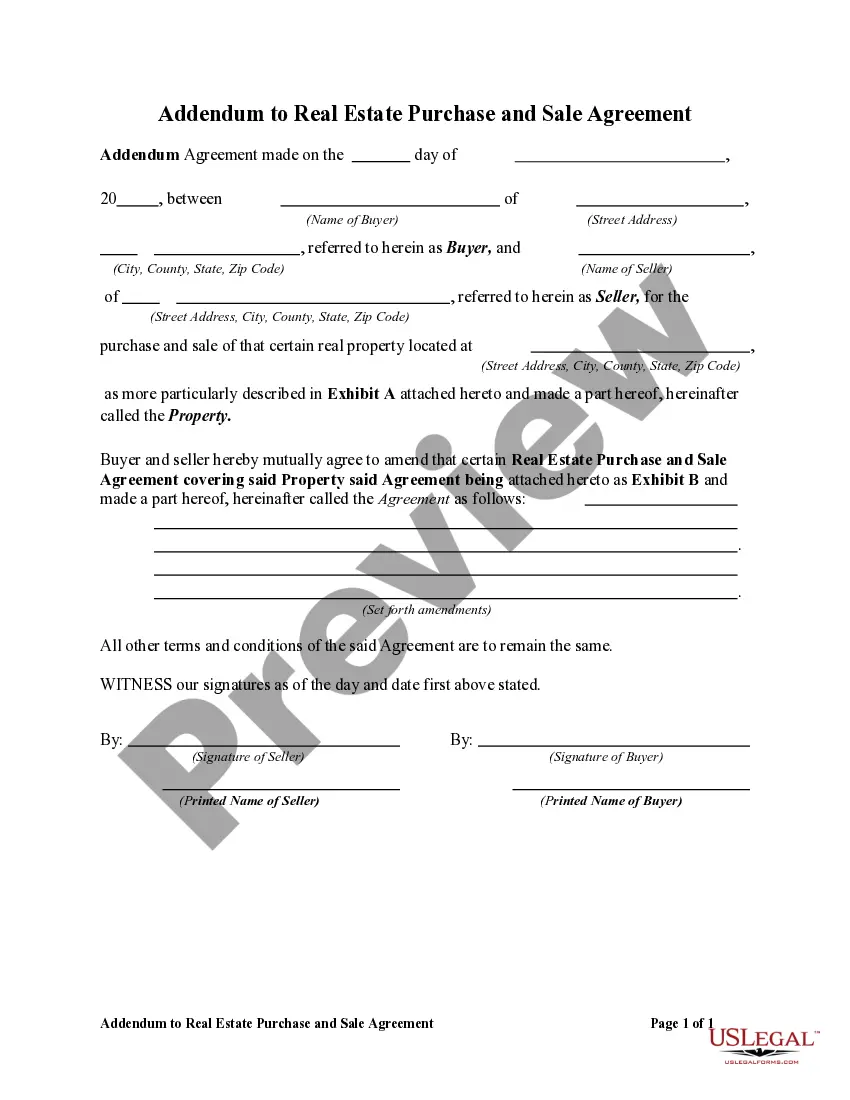
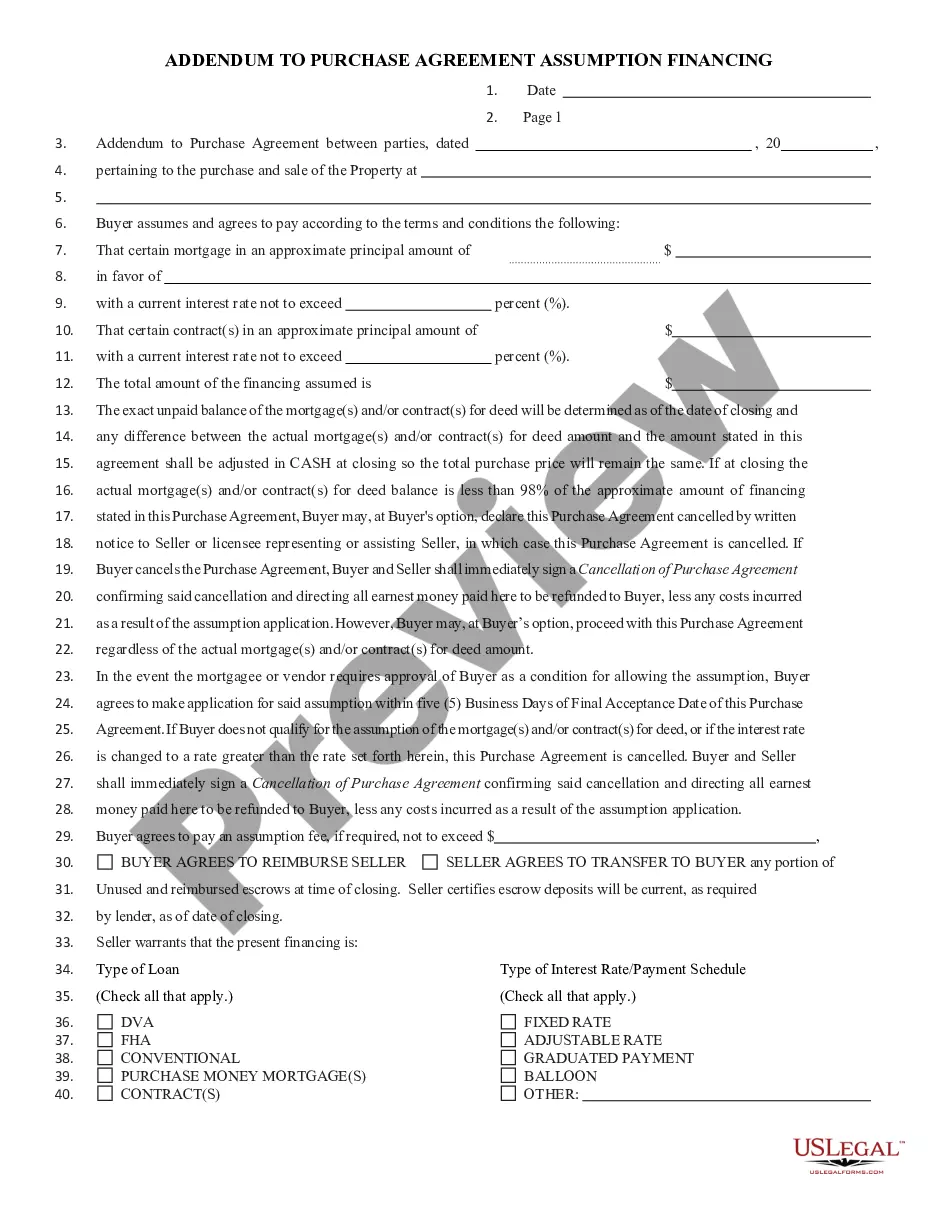
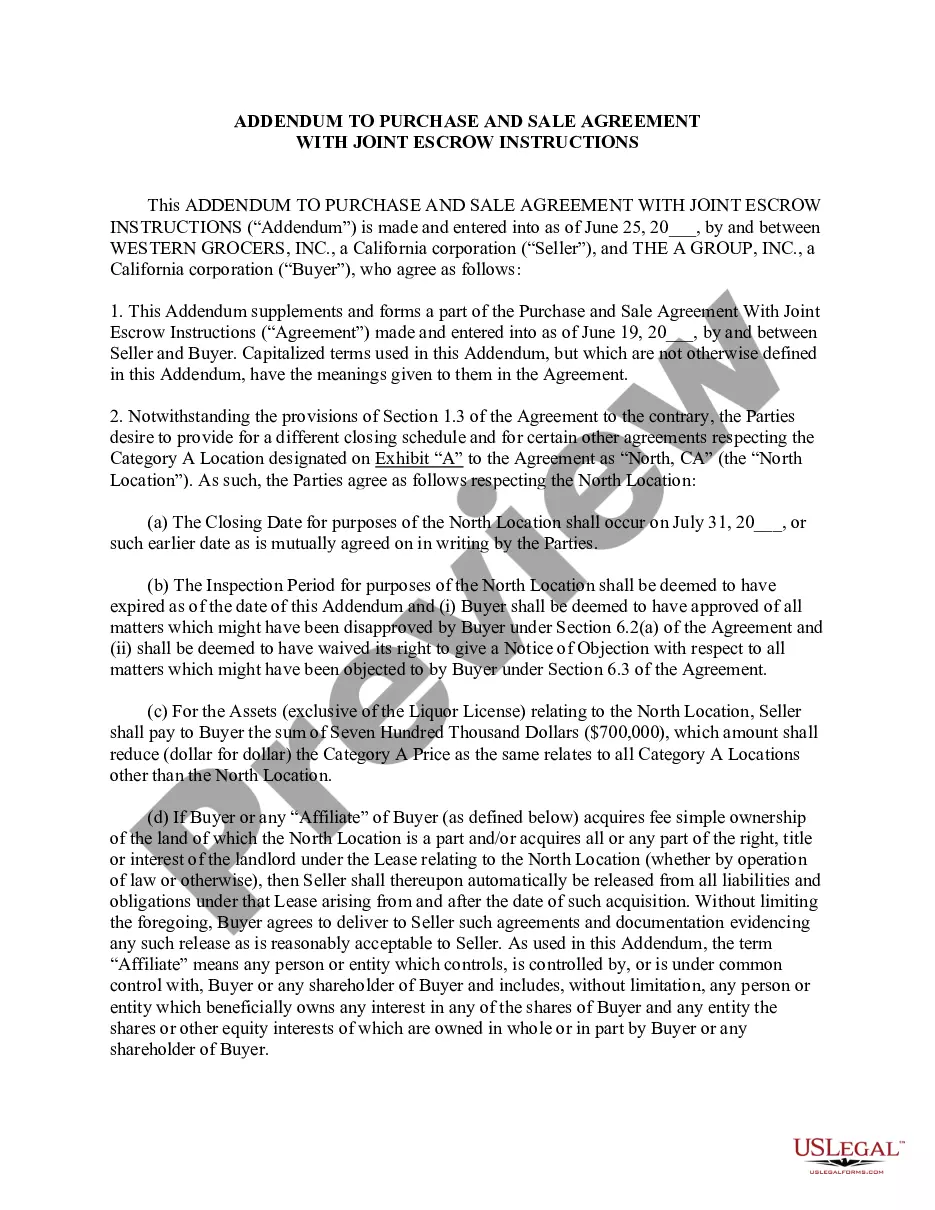
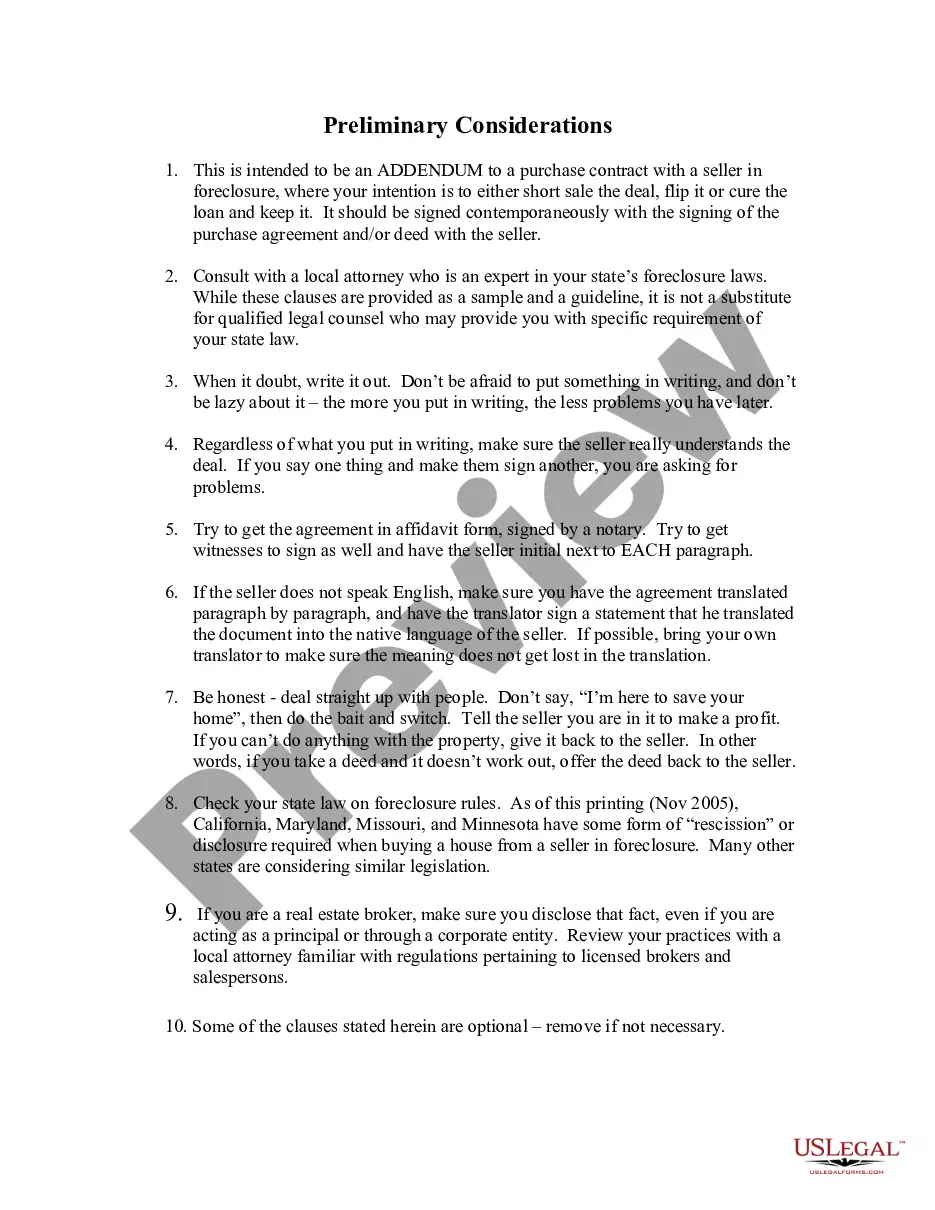
The Affidavit of Understanding & Addendum to Purchase Agreement is a legal document that serves as an addendum to a purchase contract involving a seller in foreclosure. This form clarifies the terms of the agreement between the seller and the purchaser, whether the intention is to pursue a short sale, flip the property, or cure the loan. It is crucial for ensuring that both parties have a clear understanding of their rights and obligations in the transaction.
What’s included in this form
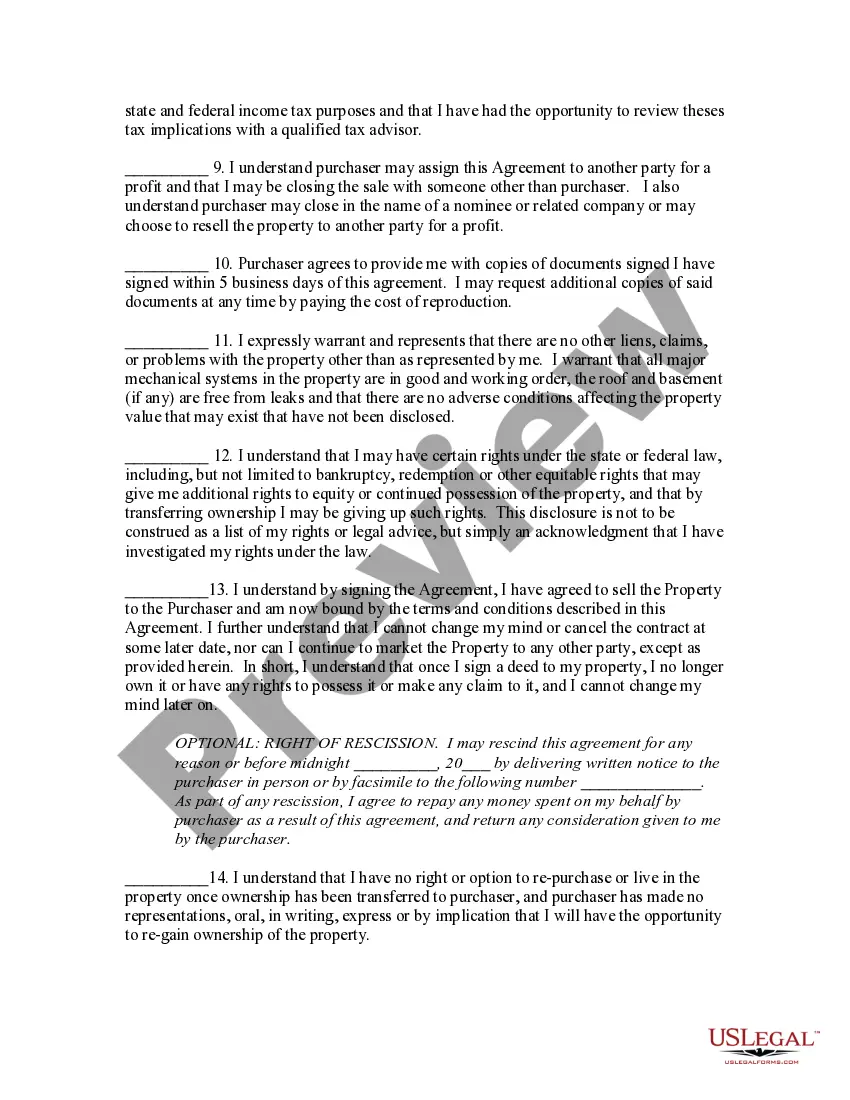
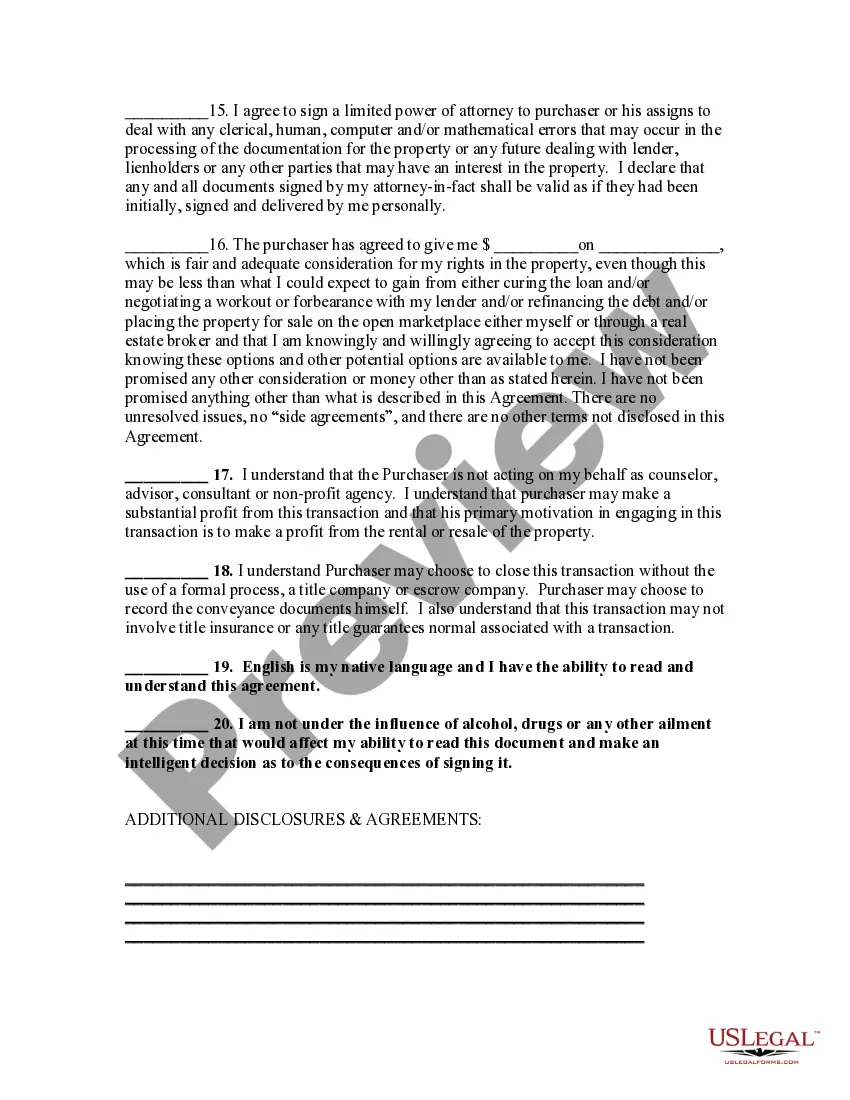
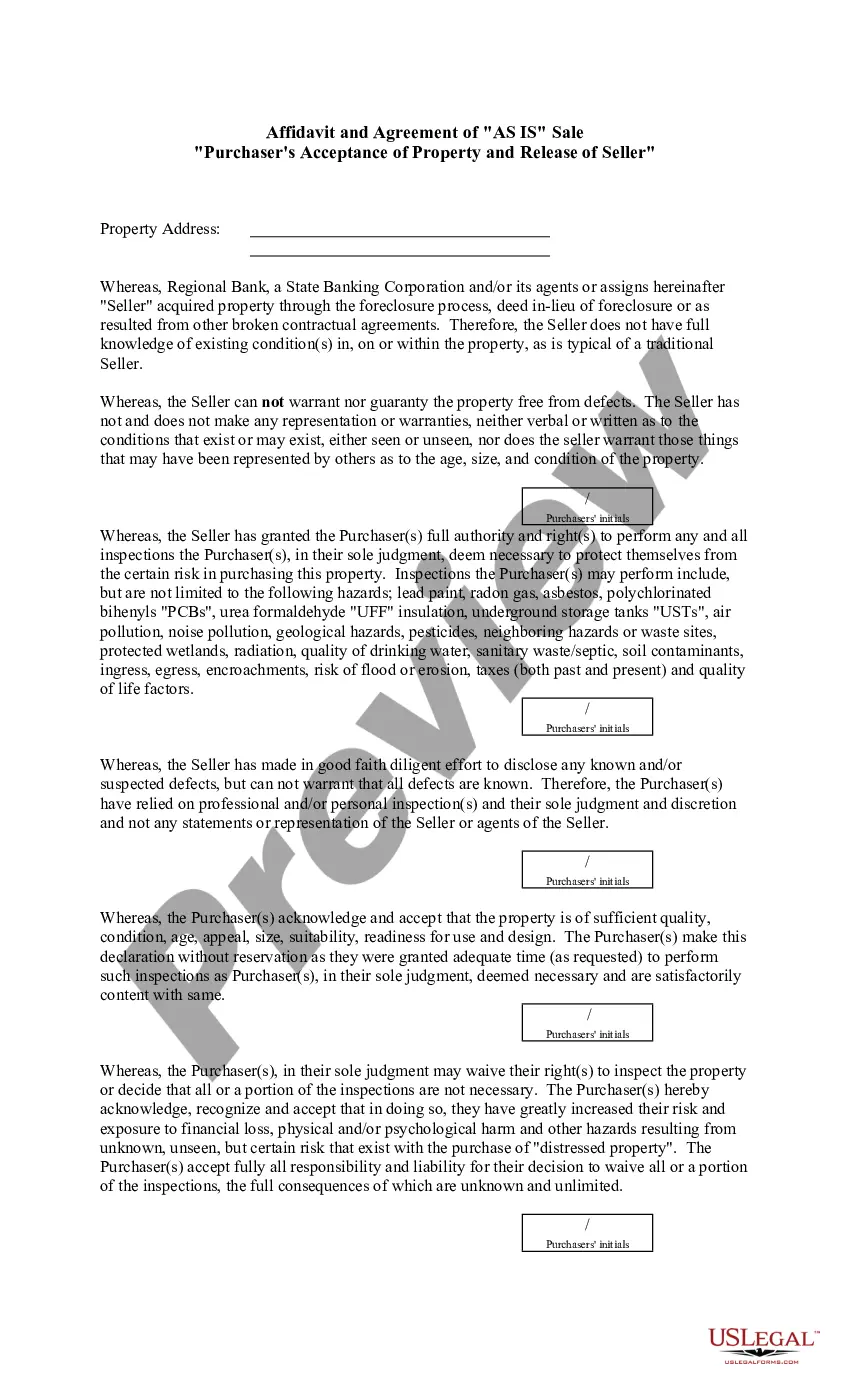
- Affidavit sections requiring initials from the seller before each paragraph, confirming understanding of the contract terms.
- Clauses outlining the seller's current loan status and intentions regarding the sale of the property.
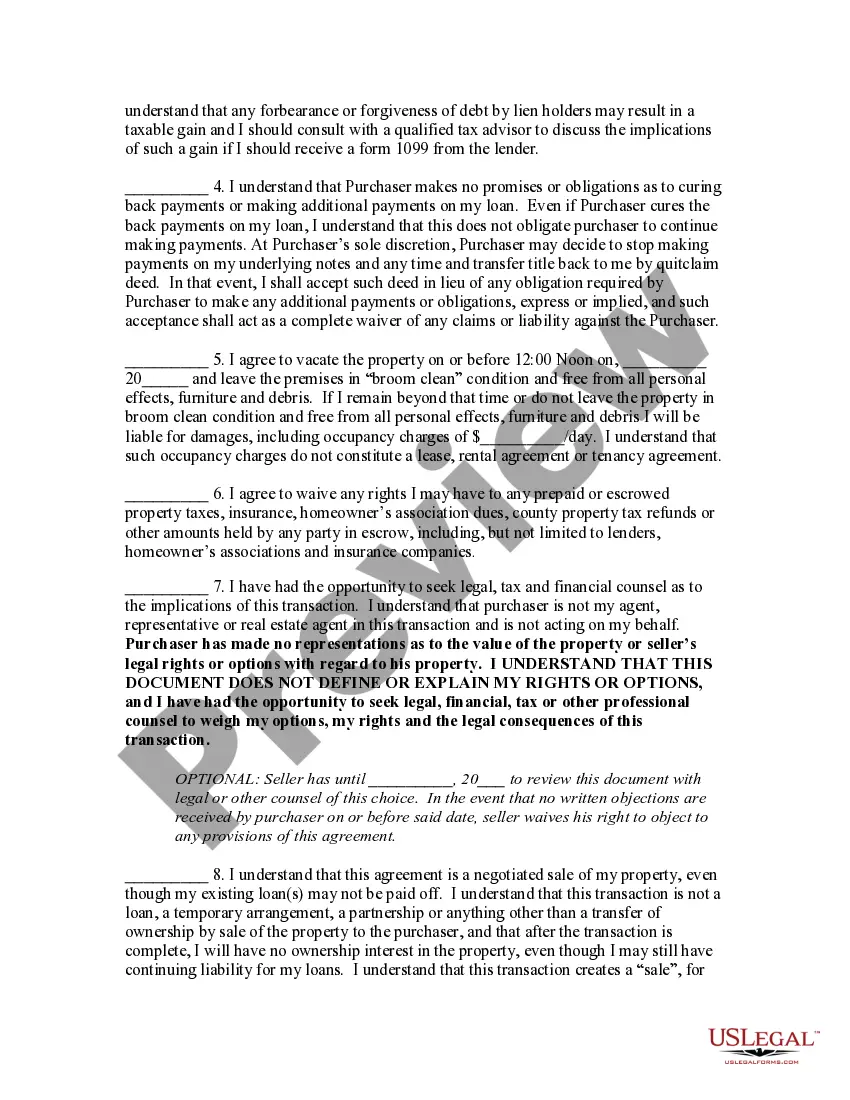
- Disclosure statements about potential tax implications and personal liabilities post-sale.
- Details regarding the condition of the property and the seller's responsibilities, including vacating the property.
- Additional agreements, such as waivers and representations about liens or claims against the property.
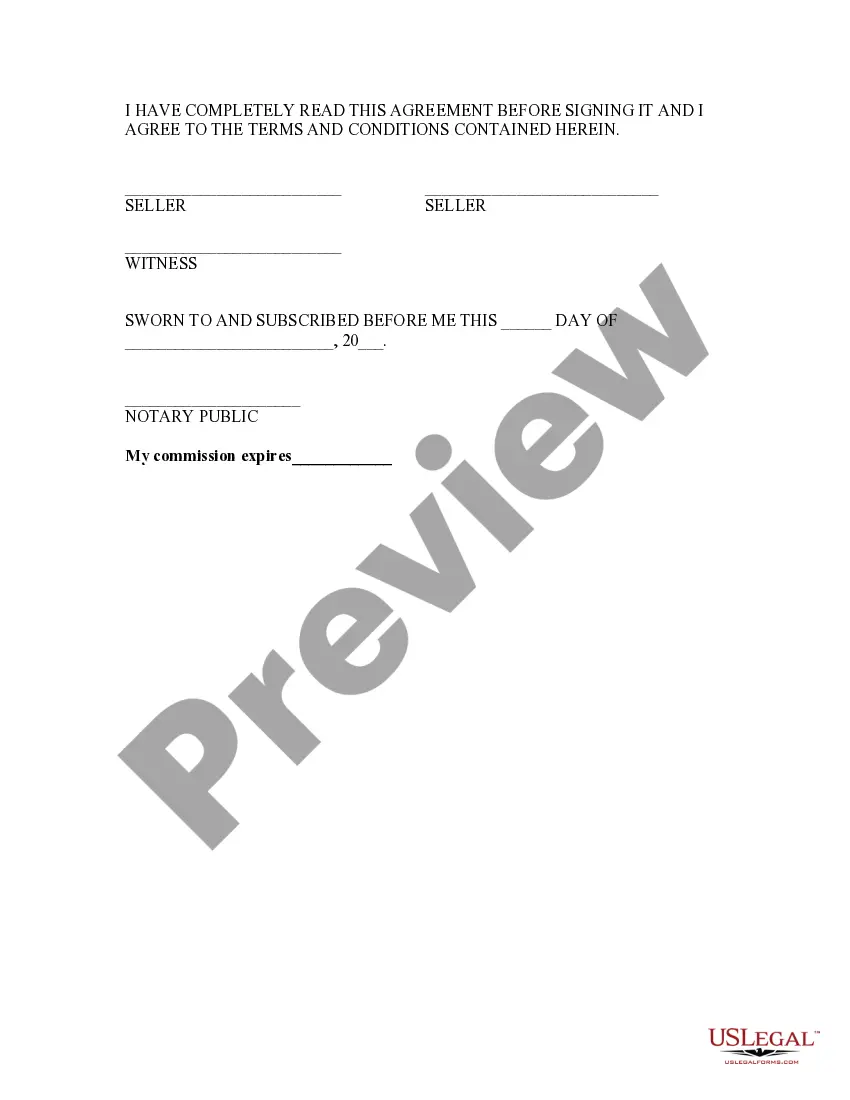
- Signature and notary sections to validate the document legally.
Situations where this form applies
This form is used when a seller in foreclosure intends to sell their property directly to a purchaser, especially in cases where the buyer is not assuming any existing mortgage obligations. It is important when the seller is exploring options such as short sales or flipping properties. Legal advice should be sought to ensure compliance with relevant state laws and to address any complex circumstances surrounding the foreclosure.
Who should use this form
- Sellers facing foreclosure who wish to transfer their property rights to a purchaser.
- Real estate investors looking to buy properties from sellers in financial distress.
- Individuals seeking to clarify and document the terms of a real estate transaction involving a foreclosure.
- Real estate agents and brokers acting on behalf of sellers in foreclosure situations.
Instructions for completing this form
- Identify the parties involved by entering the names of the seller and purchaser.
- Specify the property details and any associated liens or debts clearly.
- Read each affidavit clause carefully and have the seller initial next to each clause to confirm understanding.
- Include necessary dates, particularly for vacating the property and any deadlines for legal review.
- Sign and date the affidavit in the presence of a notary public, ensuring all required witnesses are present as well.
Does this form need to be notarized?
Yes, this form must be notarized to be legally valid. It is essential for confirming the identities of the parties involved and the authenticity of their signatures. US Legal Forms provides integrated online notarization services, allowing for secure video calls with notaries available twenty-four hours a day, ensuring convenience and compliance without the need for travel.
Get your form ready online
Our built-in tools help you complete, sign, share, and store your documents in one place.
Make edits, fill in missing information, and update formatting in US Legal Forms—just like you would in MS Word.
Download a copy, print it, send it by email, or mail it via USPS—whatever works best for your next step.
Sign and collect signatures with our SignNow integration. Send to multiple recipients, set reminders, and more. Go Premium to unlock E-Sign.
If this form requires notarization, complete it online through a secure video call—no need to meet a notary in person or wait for an appointment.
We protect your documents and personal data by following strict security and privacy standards.

Make edits, fill in missing information, and update formatting in US Legal Forms—just like you would in MS Word.

Download a copy, print it, send it by email, or mail it via USPS—whatever works best for your next step.

Sign and collect signatures with our SignNow integration. Send to multiple recipients, set reminders, and more. Go Premium to unlock E-Sign.

If this form requires notarization, complete it online through a secure video call—no need to meet a notary in person or wait for an appointment.

We protect your documents and personal data by following strict security and privacy standards.
Mistakes to watch out for
- Failing to have the seller initial each paragraph, which can lead to misunderstandings about the contract terms.
- Not seeking legal advice, which may result in non-compliance with state-specific foreclosure laws.
- Overlooking necessary disclosures to the seller, potentially leading to disputes later on.
- Moving forward without notarization, which can affect the legal validity of the document.
Benefits of completing this form online
- Immediate access to legally vetted templates that save time and reduce the risk of errors.
- Editability to customize the form according to specific details of the transaction.
- Convenience of downloading and printing the form at any time, facilitating quicker transactions.
- Secure storage and retrieval options for your legal documents, ensuring they are always available when needed.
Key takeaways
- The Affidavit of Understanding & Addendum to Purchase Agreement is essential for buyers and sellers in foreclosure situations.
- Clear documentation of terms, responsibilities, and acknowledgments can prevent disputes in the future.
- Consultation with a legal professional ensures compliance with state laws and adds an extra layer of protection.
- Notarization of the document is crucial for its legal effectiveness.
Looking for another form?
Form popularity
FAQ
What information should an affidavit of one and the same person include? Your full legal name. How your name is spelled on your documents. Include the document type, number, place of issue and date of issue. A statement that the different spellings of your name refer to one and the same person, being yourself.
The last name change after marriage is considered 'other name' and you should create a 'multiple name affidavit' to prove both names belong to the same person. Some people add a middle name after marriage to add in-laws' last name to their full name. This new name is also considered a name that people know you with.
Drafting an Affidavit Appearances are important.Introduce yourself.Write in the first person about facts you know.Keep it as simple as possible.Stick to what is relevant.Don't guess.Be specific about conversations.Be specific about timing and frequency, to the extent this is relevant.
An affidavit is a statement on oath duly witnessed by an Oath Commissioner or a Notary Public.
The affidavit includes identifying information of the Affiant, including their name, age, citizenship, civil status and their address. If the Affiant is a minor, the user will be asked the name of the guardian who will accompany the Affiant to the notary public and sign the affidavit.
I state that maiden name and the present name is the name of one and the same person and that is myself. I am executing this declaration to be submitted to the concerned authorities for the change of my name in membership database.
Example: I, Jane Smith, swear that the information in my sworn statement is truthful to the best of my knowledge and understanding. Your statement of truth must be in the first person and you need to identify yourself in it. Keep it short and sweet.
6 steps to writing an affidavit Title the affidavit. First, you'll need to title your affidavit.Craft a statement of identity. The very next section of your affidavit is what's known as a statement of identity.Write a statement of truth.State the facts.Reiterate your statement of truth.Sign and notarize.