Consumer Price Index
Overview of this form
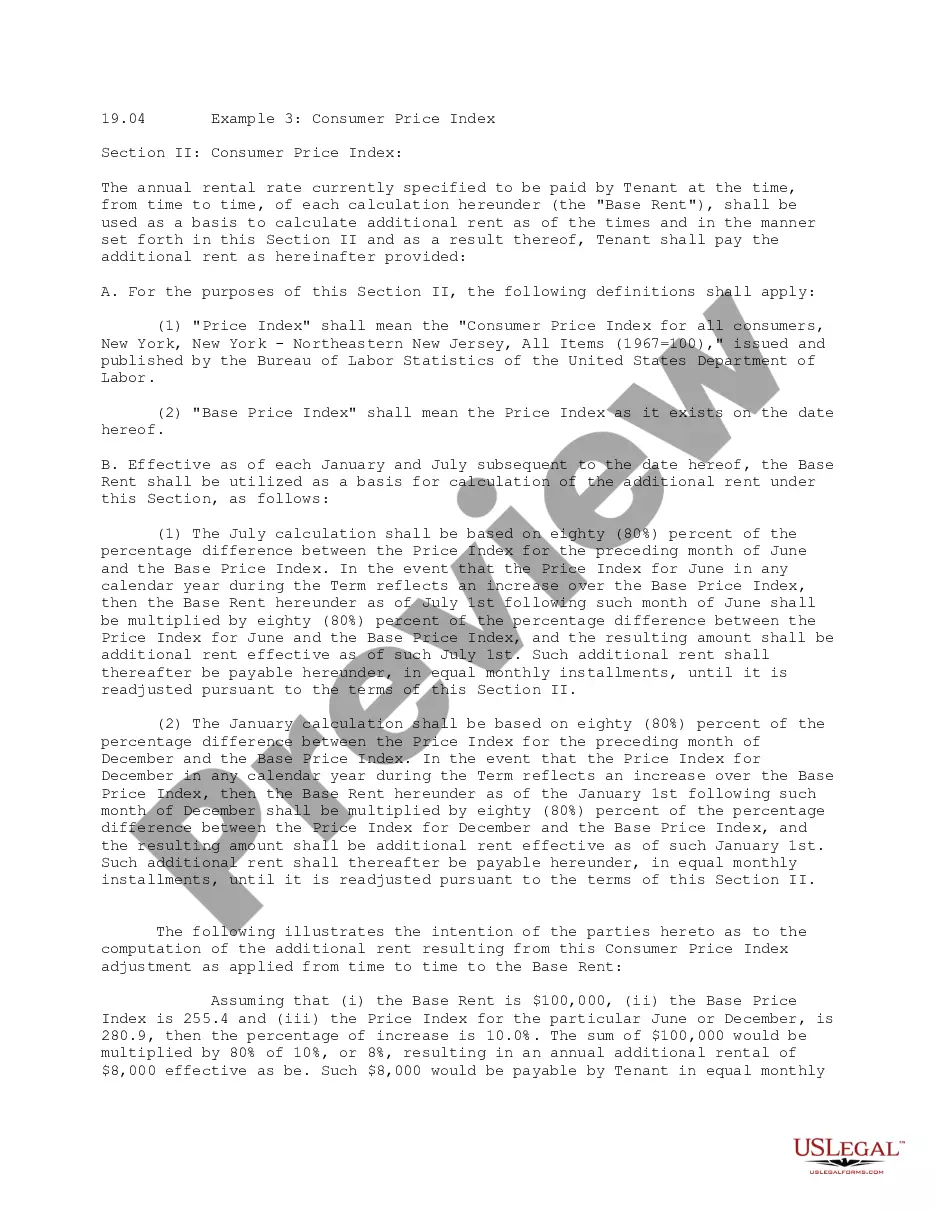
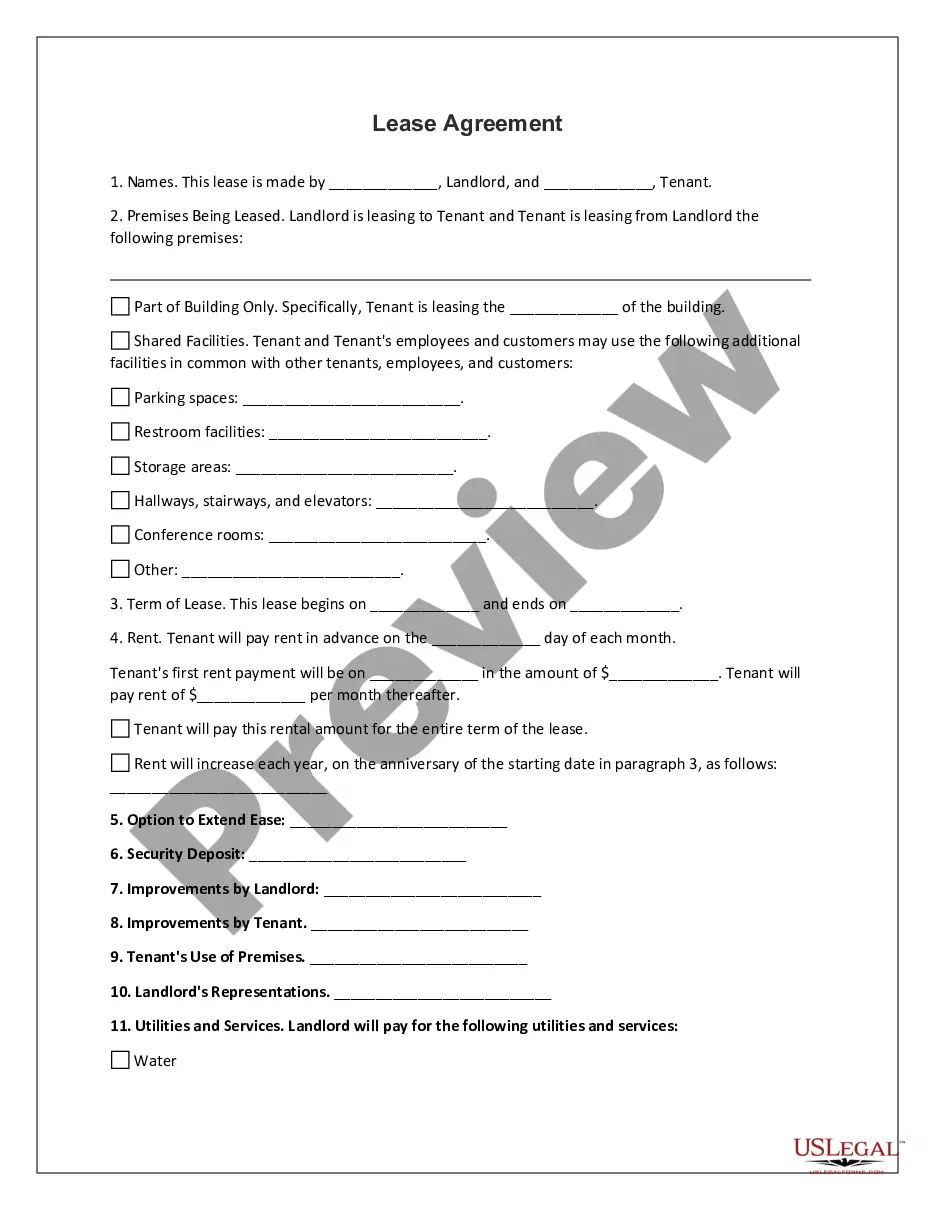
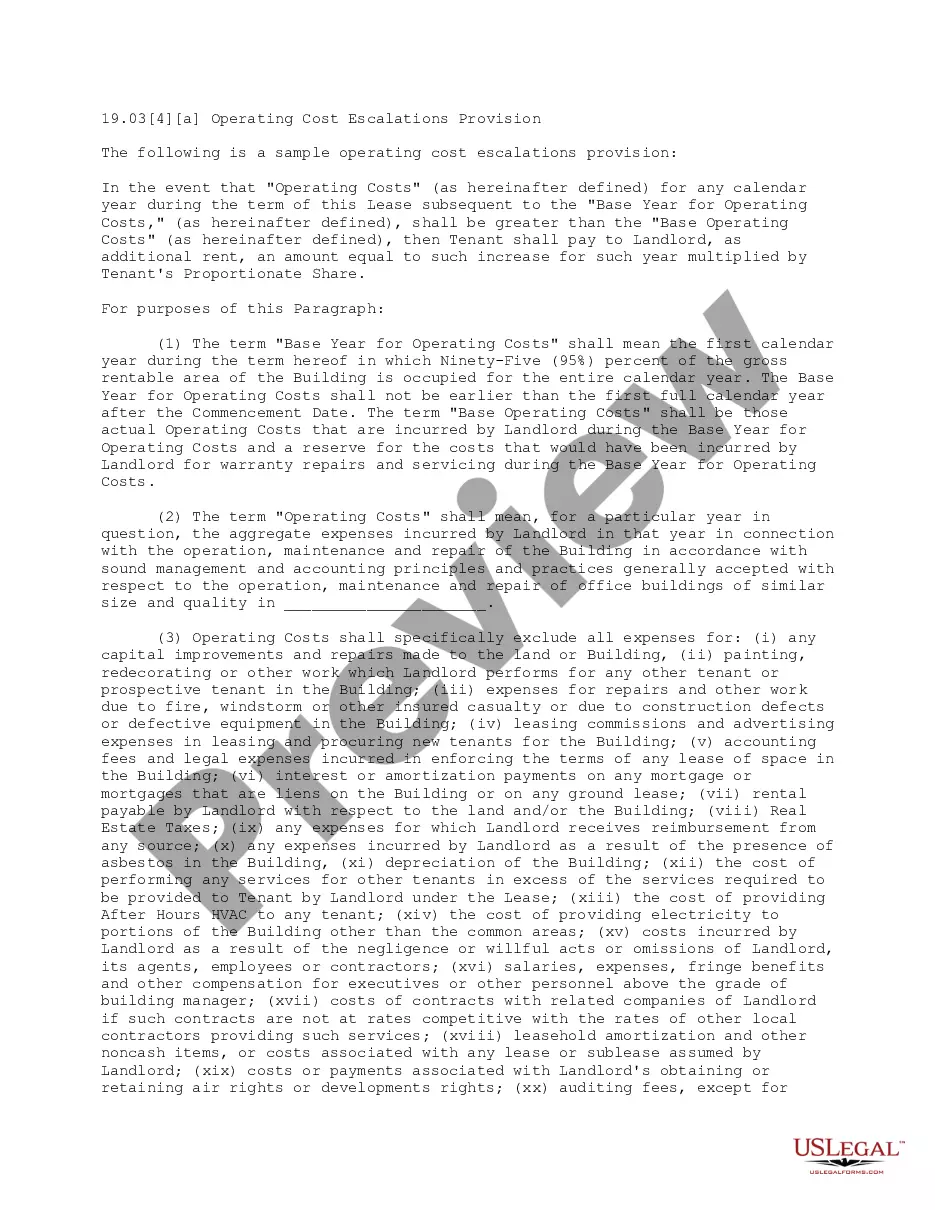
The Consumer Price Index form is a legal document that outlines the calculation of additional rent based on changes in the Consumer Price Index (CPI). It primarily serves as a basis for adjusting the annual rental rate to reflect inflation, ensuring that the rent remains fair and adequate for the landlord as market conditions change. This form differs from standard lease agreements by explicitly linking rent adjustments to the CPI, providing both tenants and landlords a clear mechanism for understanding how rent may increase over time.
Key parts of this document
- Definition of the Base Rent that establishes the starting point for future adjustments.
- Clarification of the Price Index used for calculations, specifically the Consumer Price Index for New York, New York - Northeastern New Jersey.
- Methodology for calculating additional rent adjustments in July and January based on CPI fluctuations.
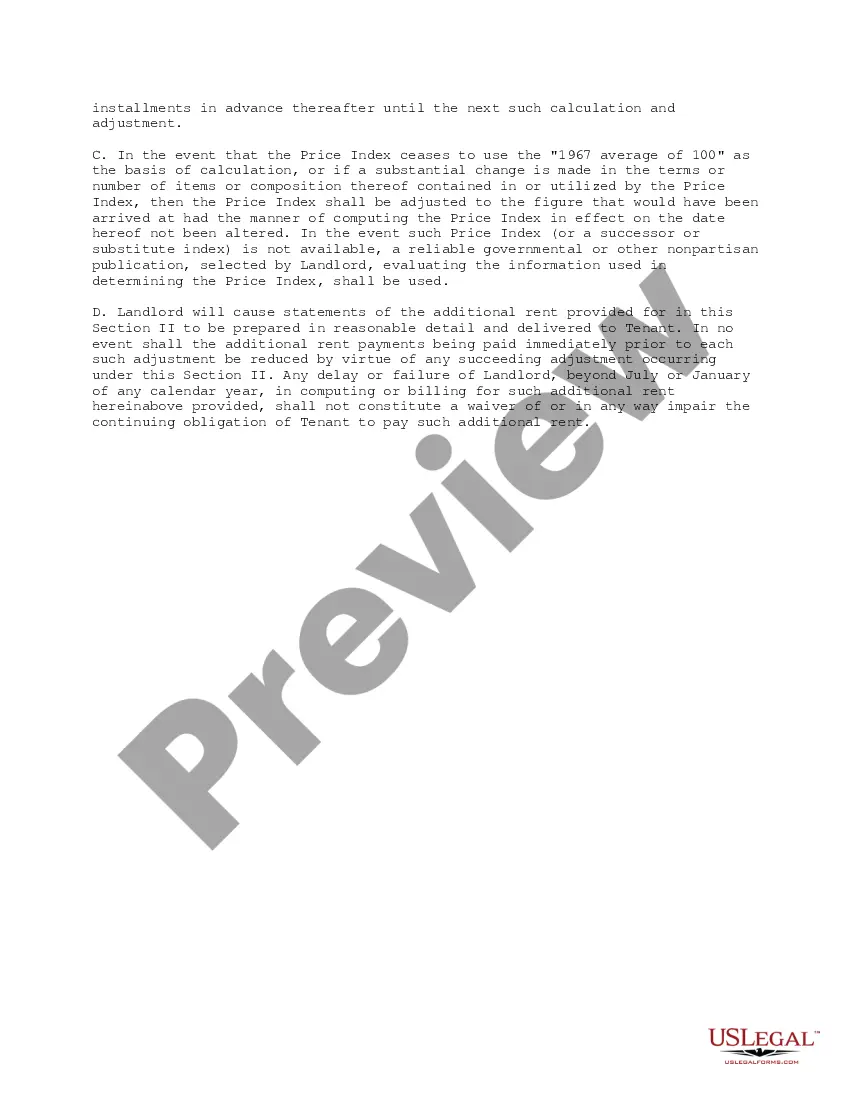
- Process for addressing changes in the Price Index and possible recalibrations of the Base Rent.
- Provision for landlord statements detailing any changes in additional rent.

When to use this form
This form is used when entering into an office lease agreement that will have rent adjustments based on the Consumer Price Index. It is particularly relevant for landlords and tenants looking for a fair method to calculate rent increases over time, typically in commercial lease agreements where long-term occupancy is expected. If you anticipate economic changes affecting rental costs or want to protect against inflation, this form is essential.
Who needs this form
This form is intended for:
- Landlords seeking to protect their investment against inflation.
- Commercial tenants who want clarity on how their rent may change over time.
- Real estate professionals involved in drafting or negotiating lease agreements.
- Property managers who oversee office leases and need a consistent adjustment mechanism.
Completing this form step by step
- Identify the parties involved in the lease: landlord and tenant.
- Determine and enter the Base Rent that will serve as the starting point for rent adjustments.
- Specify the applicable Price Index to be used for calculations.
- Calculate and note the percentage increase based on the CPI for the relevant months.
- Outline the method for how additional rent will be paid following each adjustment.
Does this form need to be notarized?
This form does not typically require notarization unless specified by local law. However, if any parties wish to add an extra layer of authenticity, they may choose to have the document notarized.
Get your form ready online
Our built-in tools help you complete, sign, share, and store your documents in one place.
Make edits, fill in missing information, and update formatting in US Legal Forms—just like you would in MS Word.
Download a copy, print it, send it by email, or mail it via USPS—whatever works best for your next step.
Sign and collect signatures with our SignNow integration. Send to multiple recipients, set reminders, and more. Go Premium to unlock E-Sign.
If this form requires notarization, complete it online through a secure video call—no need to meet a notary in person or wait for an appointment.
We protect your documents and personal data by following strict security and privacy standards.

Make edits, fill in missing information, and update formatting in US Legal Forms—just like you would in MS Word.

Download a copy, print it, send it by email, or mail it via USPS—whatever works best for your next step.

Sign and collect signatures with our SignNow integration. Send to multiple recipients, set reminders, and more. Go Premium to unlock E-Sign.

If this form requires notarization, complete it online through a secure video call—no need to meet a notary in person or wait for an appointment.

We protect your documents and personal data by following strict security and privacy standards.
Typical mistakes to avoid
- Failing to clearly define the Base Rent at the start of the lease.
- Using outdated or incorrect data from the Consumer Price Index for calculations.
- Not specifying how additional rent payments will be communicated to tenants.
- Neglecting to consider adjustments that may arise from changes in CPI calculations.
Advantages of online completion
- Convenience of downloading and filling out the form at any time.
- Editability allows you to customize the form to fit your specific needs easily.
- Access to legal forms drafted by licensed attorneys, ensuring reliability and compliance.
Summary of main points
- The Consumer Price Index form enables flexible rent adjustments tied to economic changes.
- Properly completing this form prevents misunderstandings between landlords and tenants.
- Both parties should remain aware of any local regulations that may affect the use of this form.
Looking for another form?

Form popularity
FAQ
The CPI represents changes in prices of all goods and services purchased for consumption by urban households. User fees (such as water and sewer service) and sales and excise taxes paid by the consumer are also included. Income taxes and investment items (like stocks, bonds, and life insurance) are not included.
The all items CPI-U rose 1.4 percent in 2020. This was smaller than the 2019 increase of 2.3 percent and the smallest December-to-December increase since the 0.7-percent rise in 2015. The index rose at a 1.7- percent average annual rate over the last 10 years.
The Consumer Price Index (CPI) is a measure that examines the weighted average of prices of a basket of consumer goods and services, such as transportation, food, and medical care. It is calculated by taking price changes for each item in the predetermined basket of goods and averaging them.
The Consumer Price Index (CPI) is a measure of the average change over time in the prices paid by urban consumers for a market basket of consumer goods and services. Indexes are available for the U.S. and various geographic areas.
The all items CPI-U rose 1.4 percent in 2020. This was smaller than the 2019 increase of 2.3 percent and the smallest December-to-December increase since the 0.7-percent rise in 2015. The index rose at a 1.7- percent average annual rate over the last 10 years.
Annual average headline consumer price index for 2020 Average annual consumer price inflation was 3,3% in 2020 (i.e. the average CPI for all urban areas for 2020 compared with that for 2019). This was 0,8 of a percentage point lower than the corresponding average of 4,1% in 2019 (Table B2 on page 5).
The Consumer Price Index (CPI) rose 1.6% this quarter. Over the twelve months to the September 2020 quarter the CPI rose 0.7%. Child care was the most significant rise (contributing 0.9 percentage points to the headline CPI quarterly movement), following the end of free child care on 13 July.
Consumer Food Price Index (CFPI) is a component of all-items Consumer Price Index.A Consumer Price Index (CPI) is designed to measure the changes over time in general level of retail prices of selected goods and services that households purchase for the purpose of consumption.