Rights of Operator Against A Defaulting Party Pre 1989 Agreements
What this document covers
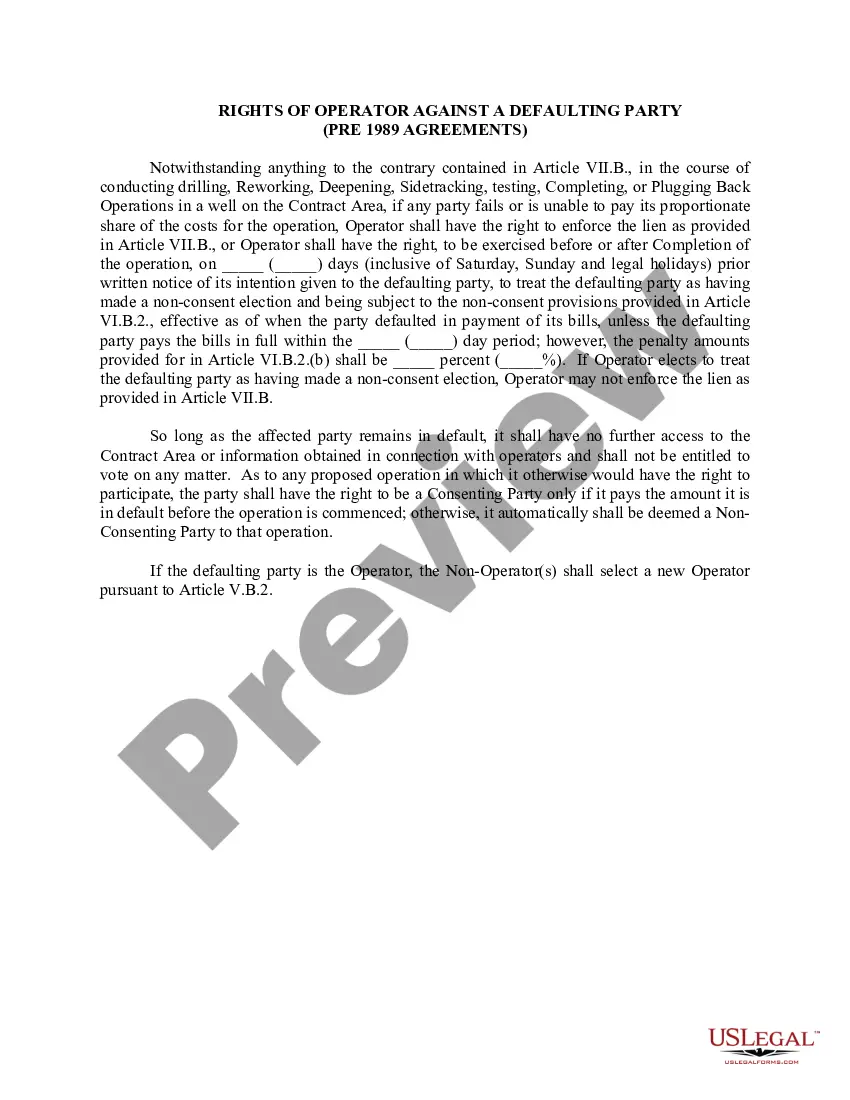
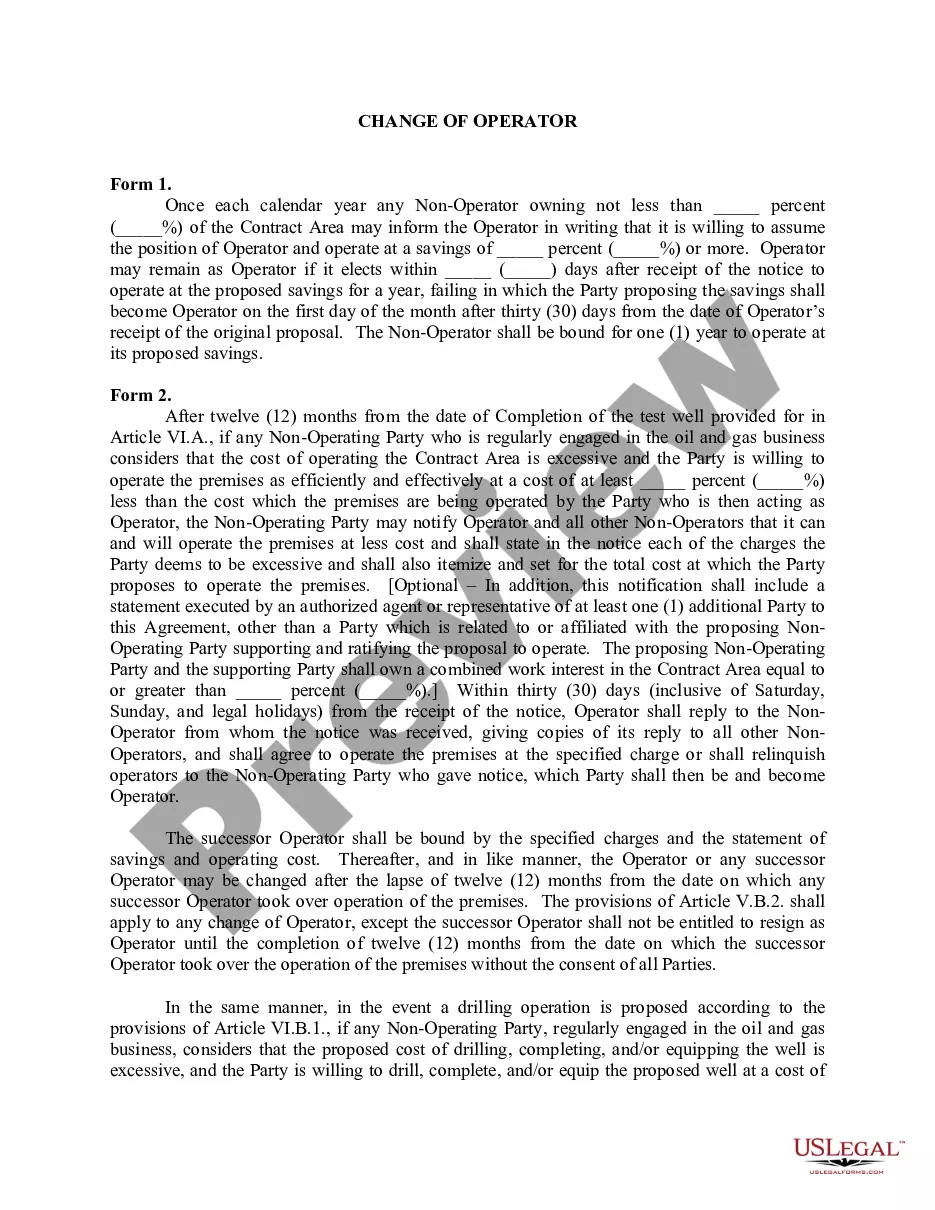
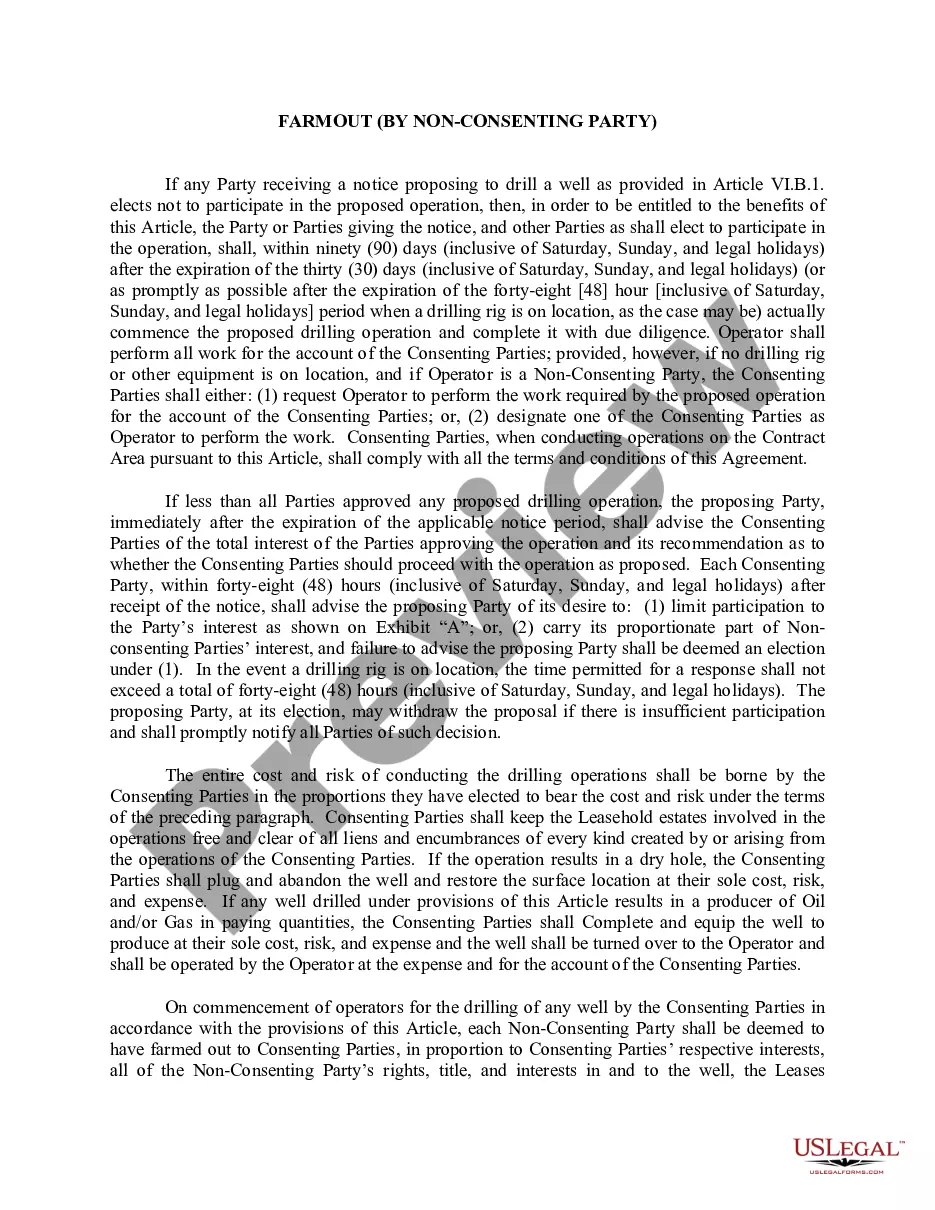
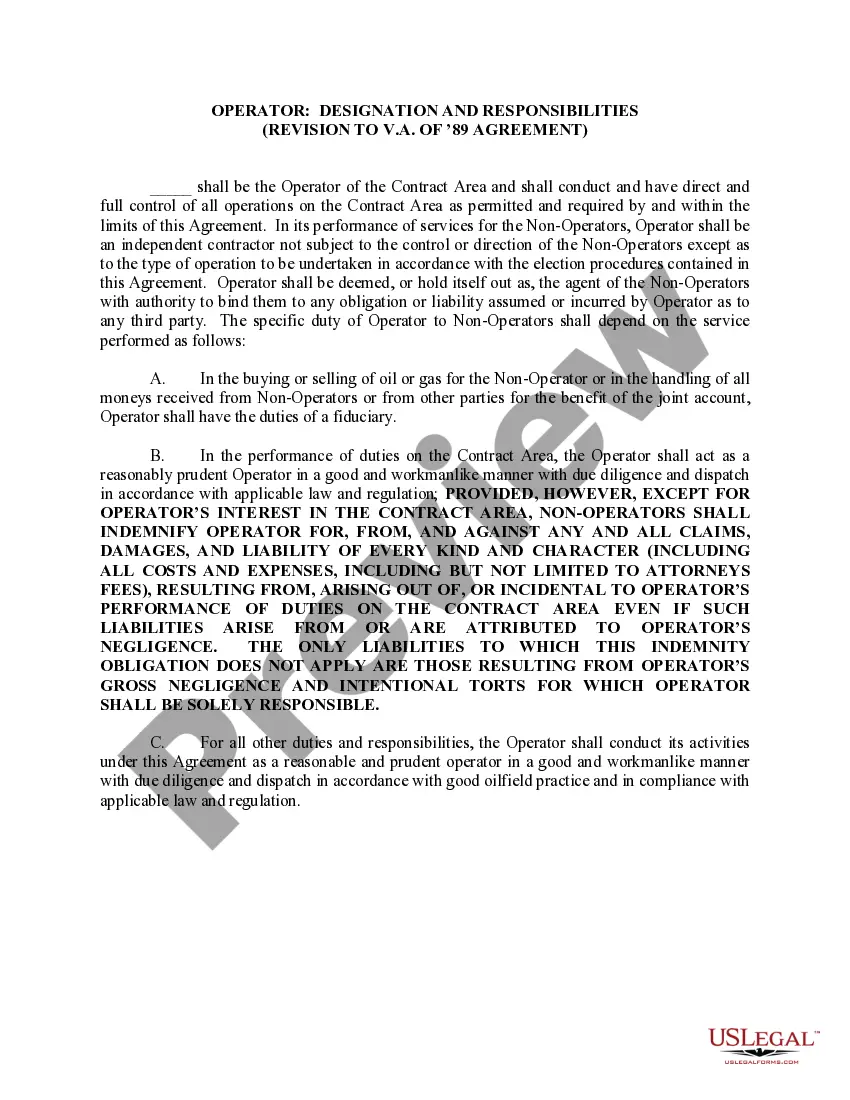
The Rights of Operator Against A Defaulting Party Pre 1989 Agreements form is designed for operators in the oil and gas sector dealing with parties who fail to meet their financial obligations during operations. This legal document provides operators with the right to enforce liens and manage defaults efficiently, differentiating it from other forms that may not cover historical agreements predating 1989.
Form components explained
- Details on the operator's rights to enforce a lien against defaulting parties.
- Provisions for notifying the defaulting party of their non-compliance.
- Terms defining the consequences of non-payment, including loss of participation rights.
- Options for treating the defaulting party as non-consenting for future operations.
- Procedures if the operator defaults, including selecting a new operator.
Common use cases
This form is applicable in scenarios where a party involved in drilling or related operations fails to pay their proportional share of costs. It is especially useful when the operator needs to take action against a defaulting party to protect their financial interests and maintain operational integrity.
Who this form is for
- Operators in oil and gas agreements concerning Pre 1989 contracts.
- Parties who are involved in joint operations and need to address financial defaults.
- Legal professionals seeking to advise clients on handling defaults in such agreements.
Steps to complete this form
- Identify the parties involved in the agreement clearly, including the operator and any defaulting parties.
- Provide specific details regarding the operational costs and the share that each party is responsible for.
- Fill in the notice period required before taking enforcement actions and specify any penalties for default.
- Ensure all parties have the opportunity to settle the default before final actions are implemented.
- Sign and date the document to make it legally binding.
Is notarization required?
This form does not typically require notarization to be legally valid. However, some jurisdictions or document types may still require it. US Legal Forms provides secure online notarization powered by Notarize, available 24/7 for added convenience.
Get your form ready online
Our built-in tools help you complete, sign, share, and store your documents in one place.
Make edits, fill in missing information, and update formatting in US Legal Forms—just like you would in MS Word.
Download a copy, print it, send it by email, or mail it via USPS—whatever works best for your next step.
Sign and collect signatures with our SignNow integration. Send to multiple recipients, set reminders, and more. Go Premium to unlock E-Sign.
If this form requires notarization, complete it online through a secure video call—no need to meet a notary in person or wait for an appointment.
We protect your documents and personal data by following strict security and privacy standards.

Make edits, fill in missing information, and update formatting in US Legal Forms—just like you would in MS Word.

Download a copy, print it, send it by email, or mail it via USPS—whatever works best for your next step.

Sign and collect signatures with our SignNow integration. Send to multiple recipients, set reminders, and more. Go Premium to unlock E-Sign.

If this form requires notarization, complete it online through a secure video call—no need to meet a notary in person or wait for an appointment.

We protect your documents and personal data by following strict security and privacy standards.
Avoid these common issues
- Failing to specify the correct notice period for defaulting parties.
- Not detailing the penalties in cases of default clearly.
- Neglecting to include all parties who are involved in the operation.
- Omitting signatures or dates, which are essential for legality.
Benefits of completing this form online
- Convenient access to legal documents at any time.
- Edit and customize the form easily to fit specific situations.
- Reliability of professionally drafted templates, ensuring legality and compliance.
Legal use & context
- This form is designed to support operators in managing defaults effectively under Pre 1989 agreements.
- Utilization of this form can help clarify the rights and duties of parties in joint operations.
- Enforcing a lien may vary by state, so it is crucial to refer to local regulations during use.
Looking for another form?
Form popularity
FAQ
One important factor you must keep in mind is that if real estate contains mineral rights, simply buying the property doesn't make you the owner of them. Since mineral rights can be sold separately from the land itself, even if you own the land, someone else may hold ownership of what's below it.
Mineral rights are often sold separately from the land they are on. You may have title to the mineral rights on a property you own, or a previous owner may have sold or leased them in which case, they may not be yours to sell. But there is no need to abandon the idea of monetizing your mineral reserves!
One important factor you must keep in mind is that if real estate contains mineral rights, simply buying the property doesn't make you the owner of them. Since mineral rights can be sold separately from the land itself, even if you own the land, someone else may hold ownership of what's below it.
Mineral rights don't come into effect until you begin to dig below the surface of the property. But the bottom line is: if you do not have the mineral rights to a parcel of land, then you do not have the legal ability to explore, extract, or sell the naturally occurring deposits below.
Mineral rights are the ownership rights to underground resources such as fossil fuels (oil, natural gas, coal, etc.), metals and ores, and mineable rocks such as limestone and salt. In the United States, mineral rights are legally distinct from surface rights.