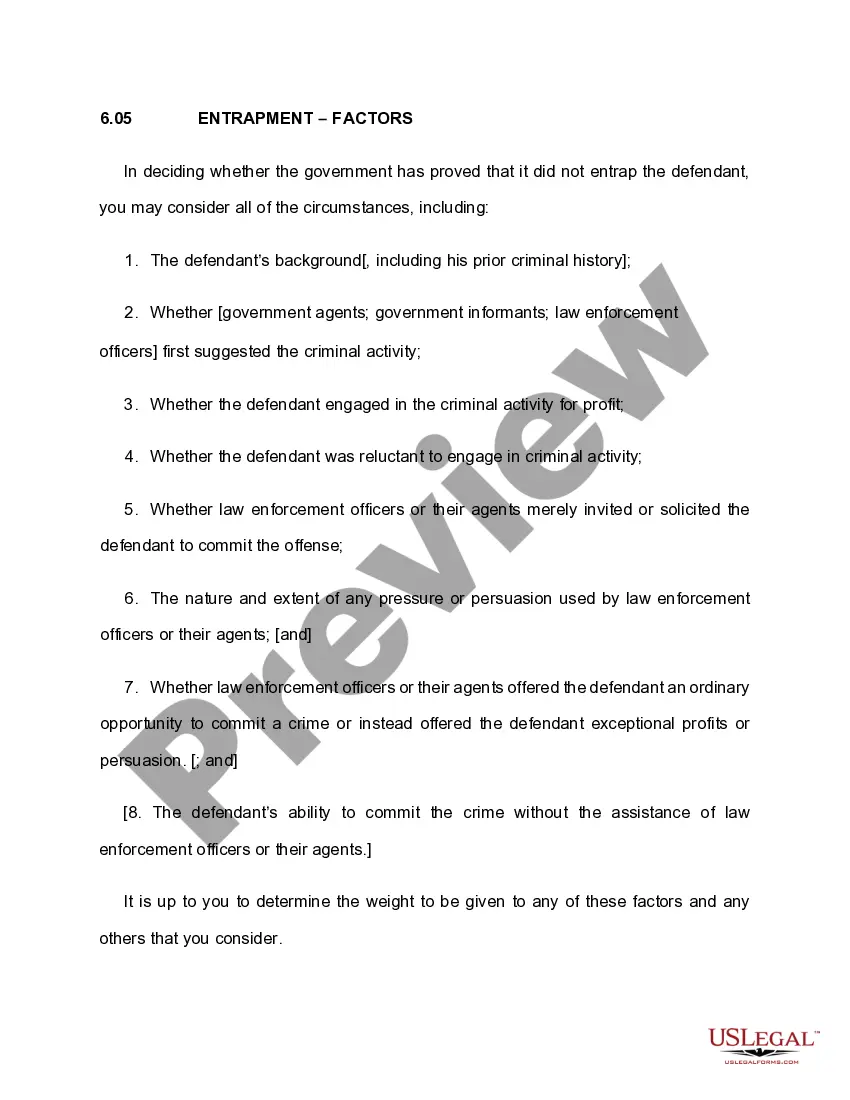
6.05 ENTRAPMENT - FACTORS
Understanding this form
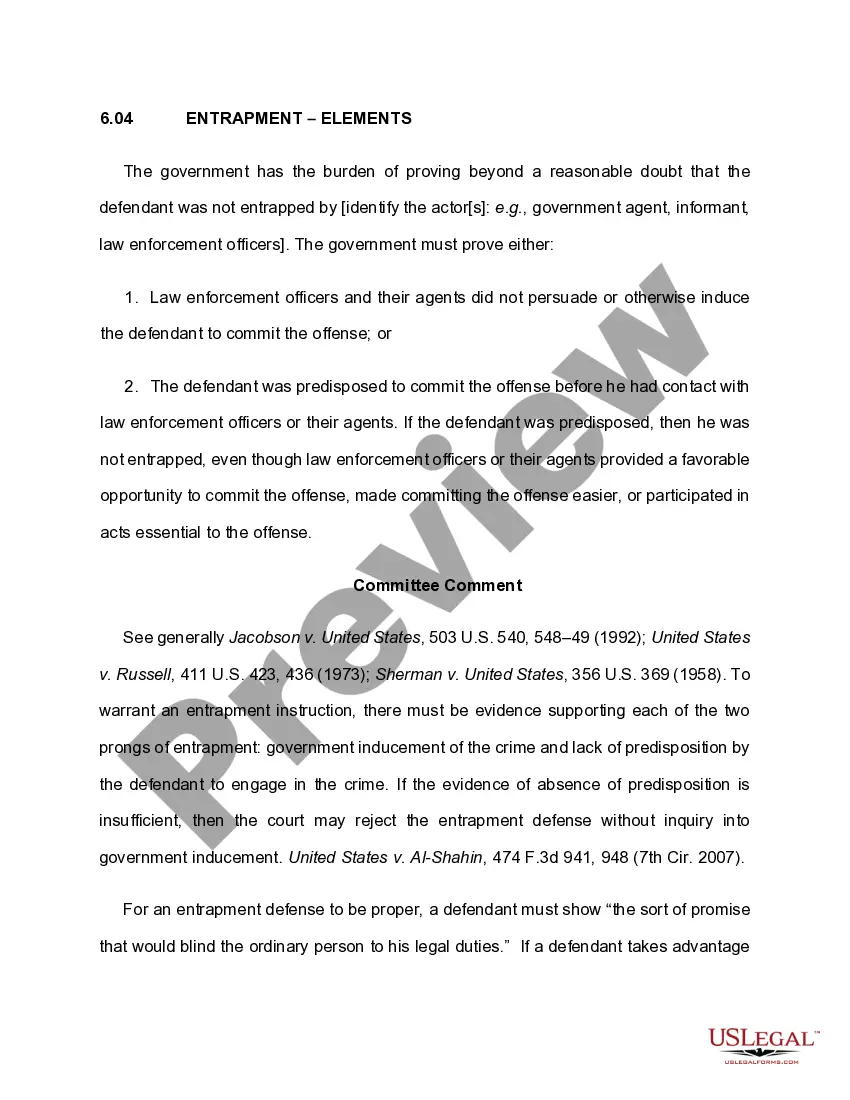
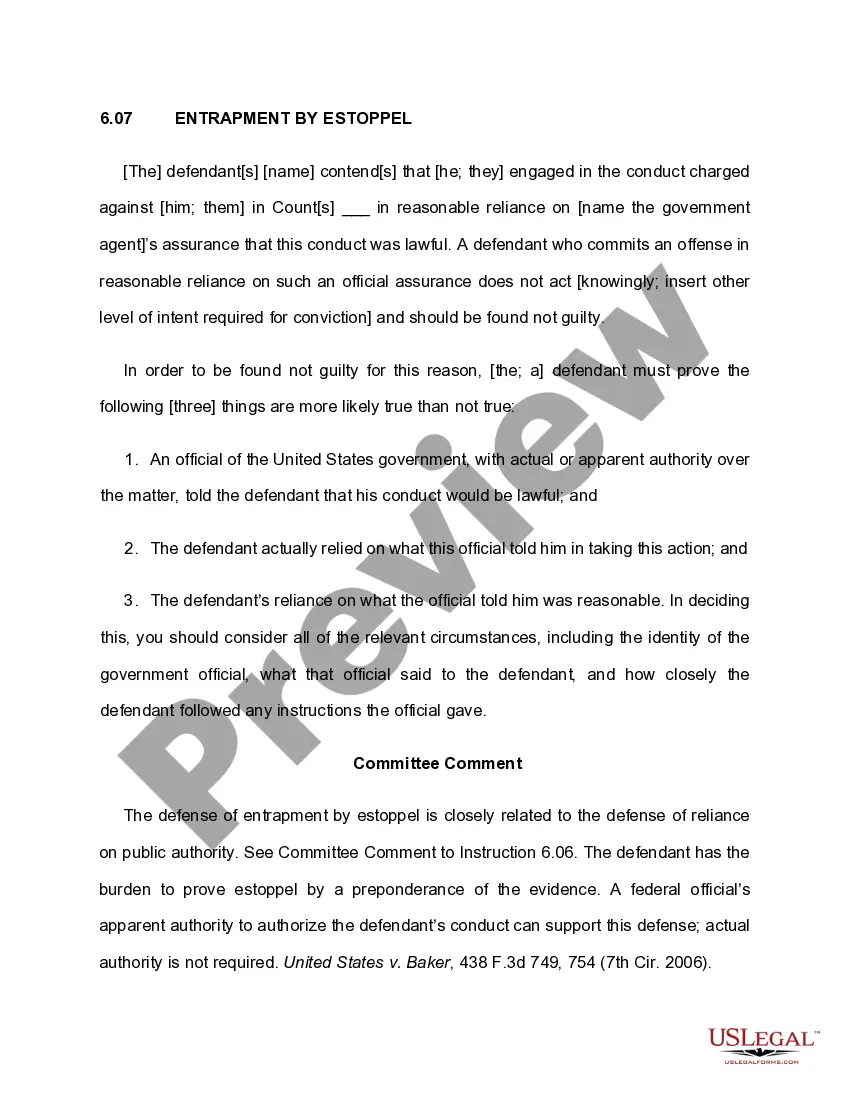
The 6.05 Entrapment - Factors form provides guidelines for jurors to evaluate entrapment claims during a criminal trial. This legal instruction is officially adopted by the Federal 7th Circuit Court and outlines the various factors to consider when determining if the government has successfully proven that it did not entrap a defendant. This form is crucial for legal proceedings involving entrapment defenses and differs from other jury instructions by focusing specifically on the nuances of entrapment and governmental involvement in facilitating a crime.
Key components of this form
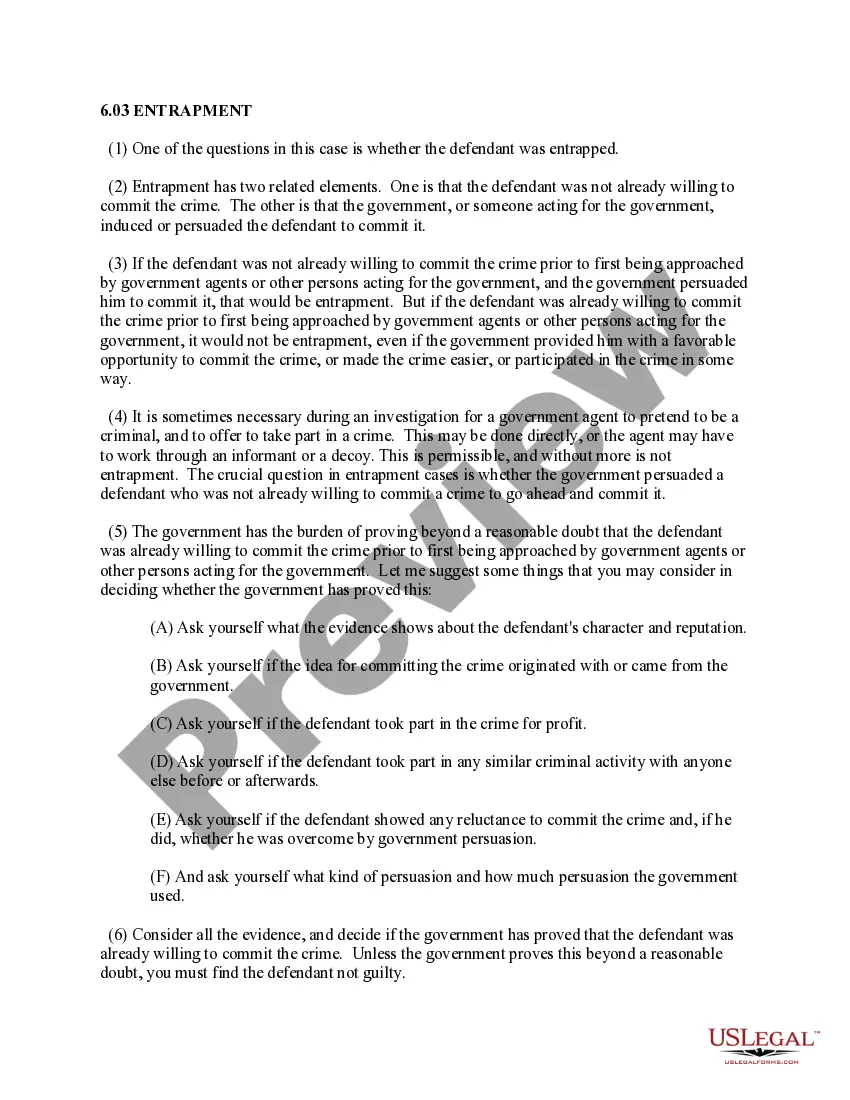
- Factors to consider regarding the defendant's background and criminal history.
- Evaluation of who suggested the criminal activityâgovernment or the defendant.
- Consideration of whether the defendant engaged in the criminal activity for profit.
- Assessment of the defendant's reluctance to commit the crime.
- Analysis of the methods of pressure or persuasion used by law enforcement.
- Discussion on whether law enforcement provided ordinary opportunities or exceptional incentives to commit a crime.
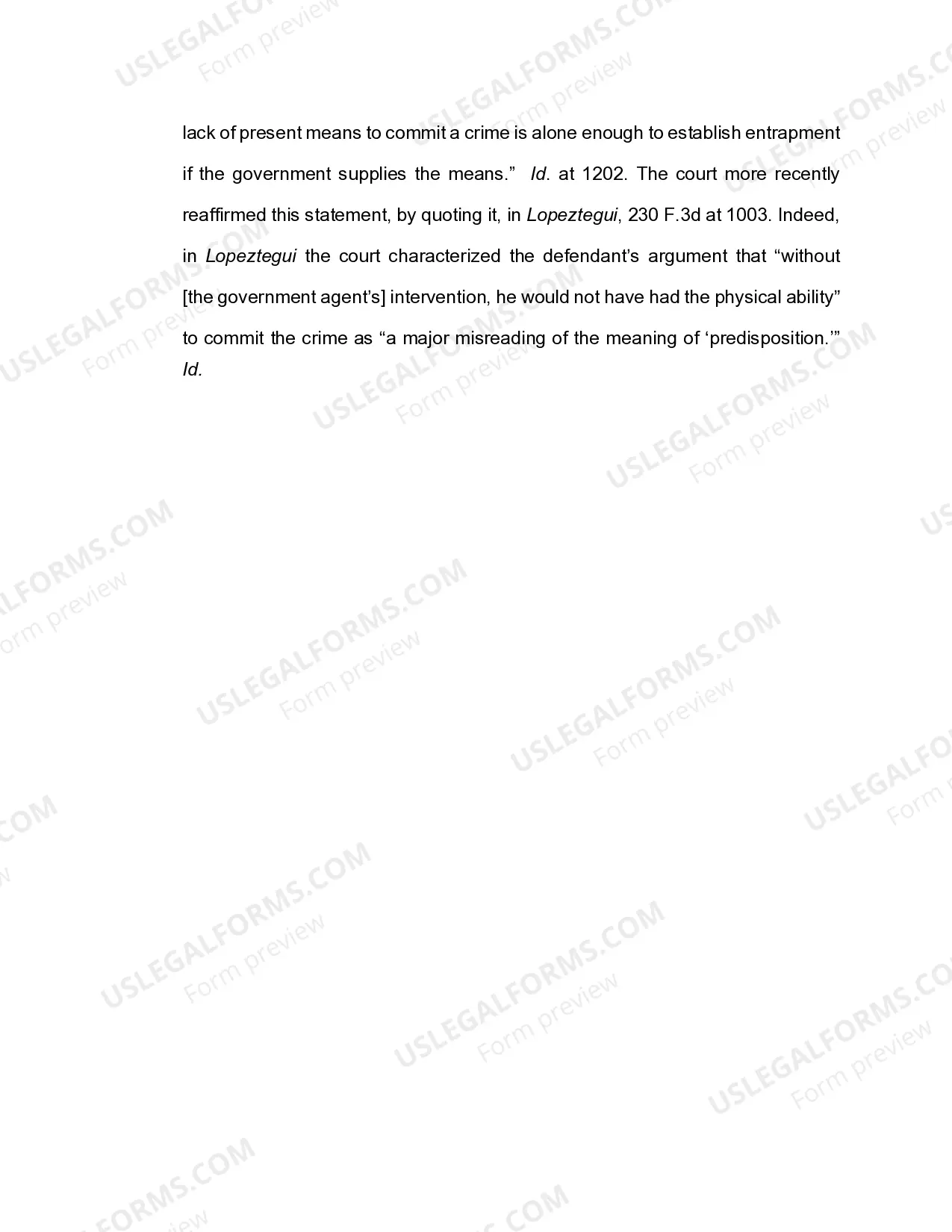
- Determination of the defendant's ability to commit the crime without assistance.
Common use cases
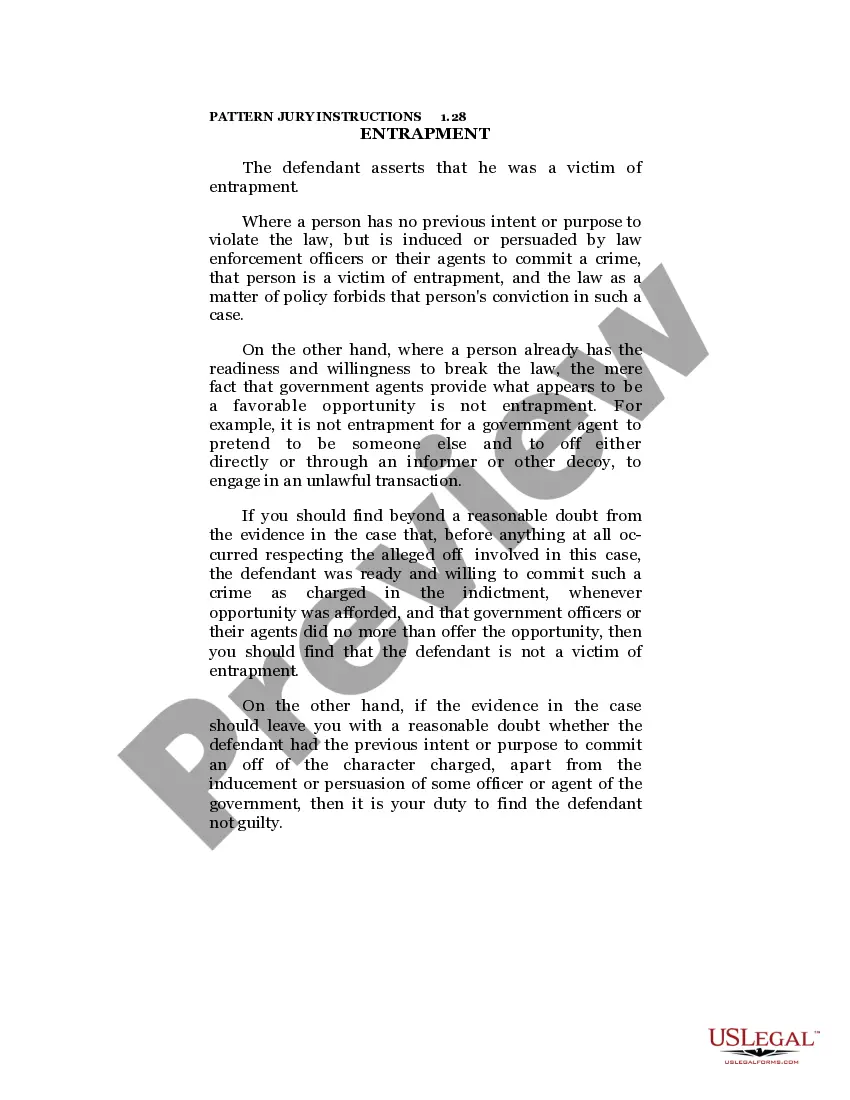
This form is used during criminal trials when a defendant raises an entrapment defense. It is relevant in cases where the defendant claims they were induced or coerced into committing a crime by government agents, informants, or law enforcement officers. Each factor outlined in the instructions will help jurors assess the legitimacy of the entrapment claim based on the circumstances surrounding the case.
Who this form is for
- Judges presiding over criminal trials involving entrapment defenses.
- Jurors assigned to evaluate the merits of an entrapment claim.
- Defense attorneys looking to guide jurors in understanding the concept of entrapment.
- Prosecutors needing to articulate why a defendant's claim of entrapment should be rejected.
How to prepare this document
- Identify the case number and the parties involved in the trial.
- Review the factors listed to understand what evidence and circumstances to consider.
- Decide on the weight to give each factor based on the evidence presented.
- Instruct jurors on how to evaluate the credibility of law enforcement actions.
- Summarize findings and prepare to deliver a verdict based on these guidelines.
Does this document require notarization?
Notarization is generally not required for this form. However, certain states or situations might demand it. You can complete notarization online through US Legal Forms, powered by Notarize, using a verified video call available anytime.
Get your form ready online
Our built-in tools help you complete, sign, share, and store your documents in one place.
Make edits, fill in missing information, and update formatting in US Legal Forms—just like you would in MS Word.
Download a copy, print it, send it by email, or mail it via USPS—whatever works best for your next step.
Sign and collect signatures with our SignNow integration. Send to multiple recipients, set reminders, and more. Go Premium to unlock E-Sign.
If this form requires notarization, complete it online through a secure video call—no need to meet a notary in person or wait for an appointment.
We protect your documents and personal data by following strict security and privacy standards.

Make edits, fill in missing information, and update formatting in US Legal Forms—just like you would in MS Word.

Download a copy, print it, send it by email, or mail it via USPS—whatever works best for your next step.

Sign and collect signatures with our SignNow integration. Send to multiple recipients, set reminders, and more. Go Premium to unlock E-Sign.

If this form requires notarization, complete it online through a secure video call—no need to meet a notary in person or wait for an appointment.

We protect your documents and personal data by following strict security and privacy standards.
Typical mistakes to avoid
- Failing to properly weigh the significance of the defendant's prior criminal history.
- Overlooking the role of coercive tactics employed by law enforcement.
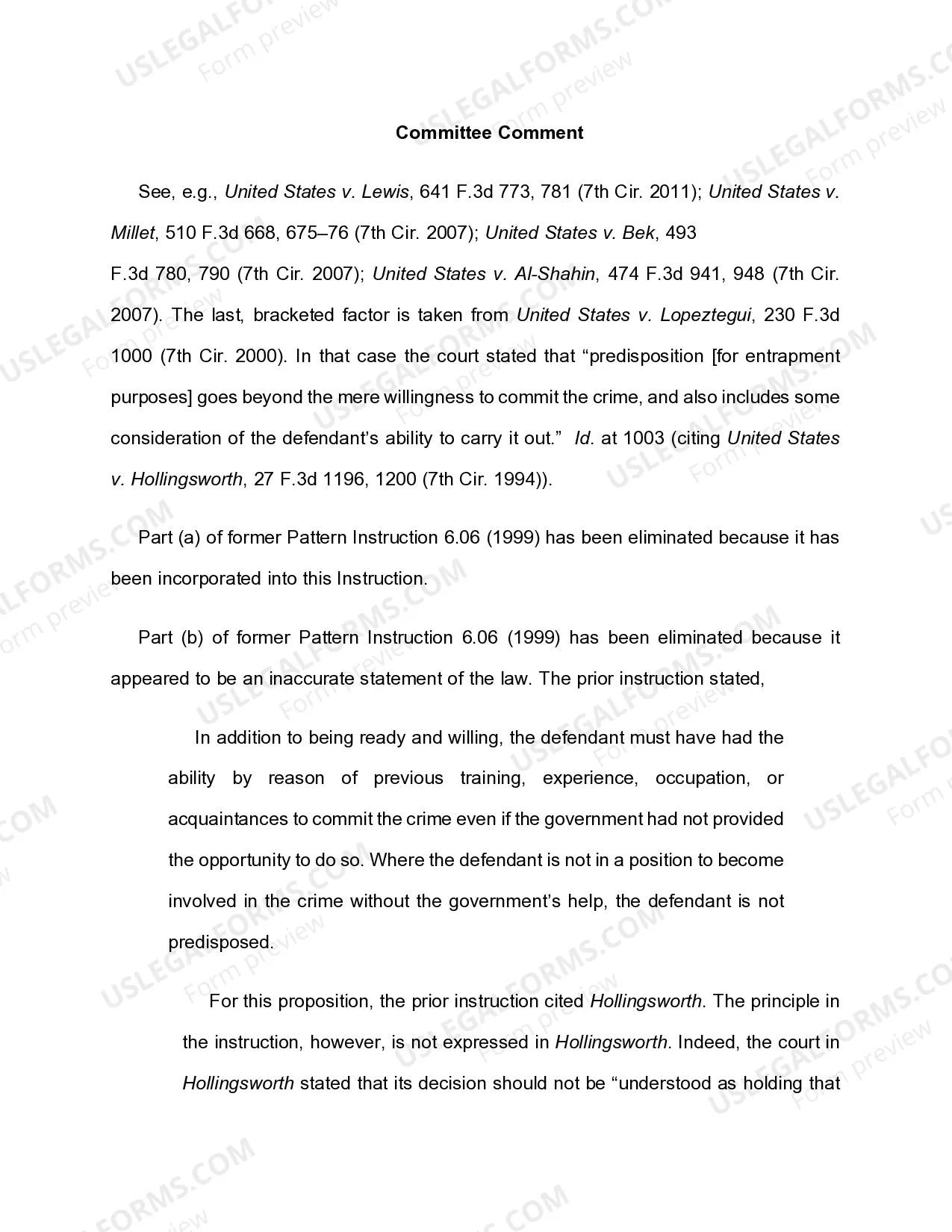
- Misinterpreting the definition of predisposition in the context of entrapment.
Why use this form online
- Convenient access to legal instructions at any time.
- Edit and adapt the form easily to meet specific case requirements.
- Ensures reliability by using standardized, court-approved legal language.
Legal use & context
- This legal form is recognized in federal court for jury trials involving entrapment defenses.
- The instructions help clarify the burden of proof concerning entrapment claims.
- Failure to adhere to these guidelines could affect the outcome of the trial.
Main things to remember
- The 6.05 Entrapment - Factors form aids in clarifying complex legal principles surrounding entrapment in criminal cases.
- It is important for defendants and legal professionals to understand the various factors that can affect entrapment claims.
- This form facilitates the jury's understanding of their role in evaluating entrapment defenses.
Looking for another form?


Form popularity
FAQ
A valid entrapment defense has two related elements: (1) government inducement of the crime, and (2) the defendant's lack of predisposition to engage in the criminal conduct. Mathews v. United States, 485 U.S. 58, 63 (1988). Of the two elements, predisposition is by far the more important.
It depends on the jury's ability to assess the defendant's criminal predisposition. Specifically, the jury must decide if the defendant is predisposed to commit the crime, thus making them responsible for it regardless of what the police officer or government agent does to induce the time.
Official conduct that constitutes entrapment under California law 4? pressure (examples include appealing to your sense of friendship/compassion or offering an enormous amount of compensation for committing the crime) harassment or threats (repeated and unwavering solicitation of the activity)
The two tests of entrapment are subjective entrapment and objective entrapment. The federal government and the majority of the states recognize the subjective entrapment defense (Connecticut Jury Instruction on Entrapment, 2010).
What Constitutes Entrapment in California? Pressure an Individual Into Committing a Crime.Threaten Someone Into Committing a Crime.Make False Promises.Drug Crimes: An Example of Entrapment.Prostitution: An Example of Entrapment.
Exceptions to Entrapment So, a person would not be a victim of entrapment if the person was ready, willing, and able to commit the crime charged in the indictment whenever opportunity was afforded, and that government officers or their agents did no more than offer an opportunity.
Entrapment can be a difficult defense to assert because it requires the defendant to establish that the idea and impetus for the crime was introduced by government officials, and the defendant was not already willing or predisposed to commit the crime.
Entrapment is defined as a situation in which a normally law-abiding individual is induced into committing a criminal act they otherwise would not have committed because of overbearing harassment, fraud, flattery or threats made by an official police source.