6.07 ENTRAPMENT BY ESTOPPEL
About this form
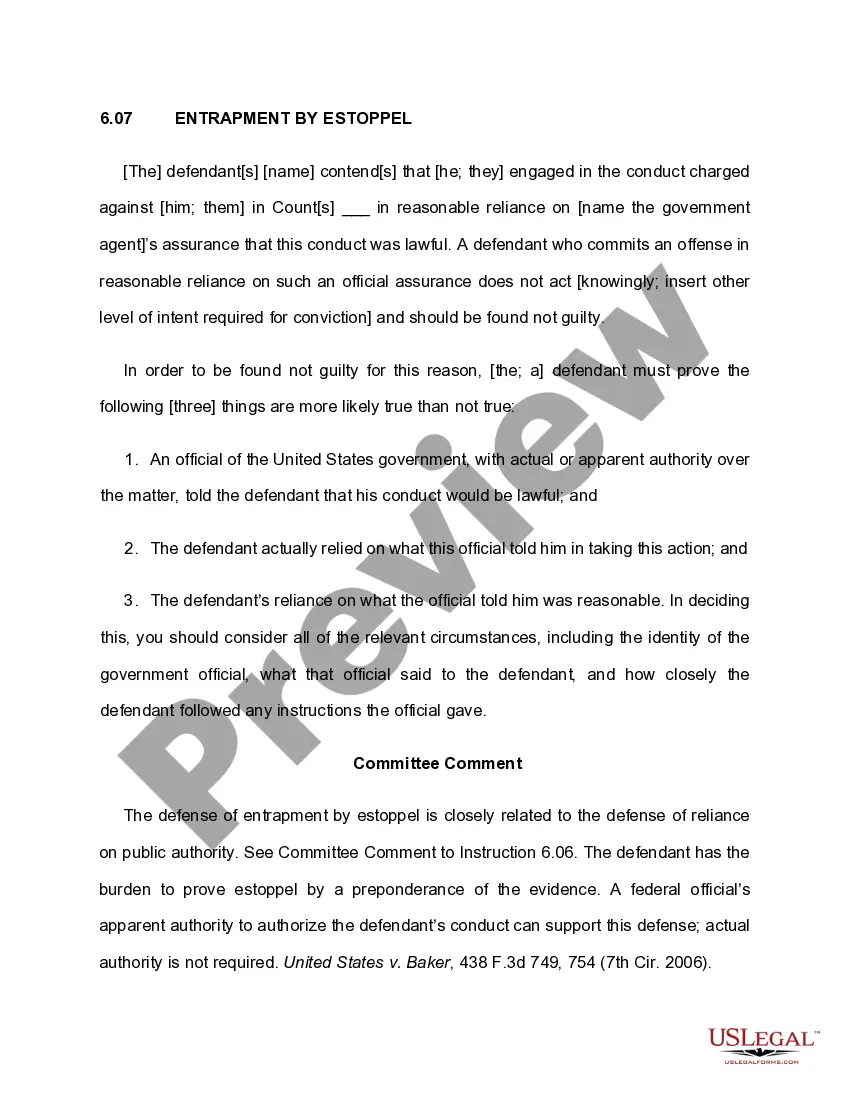
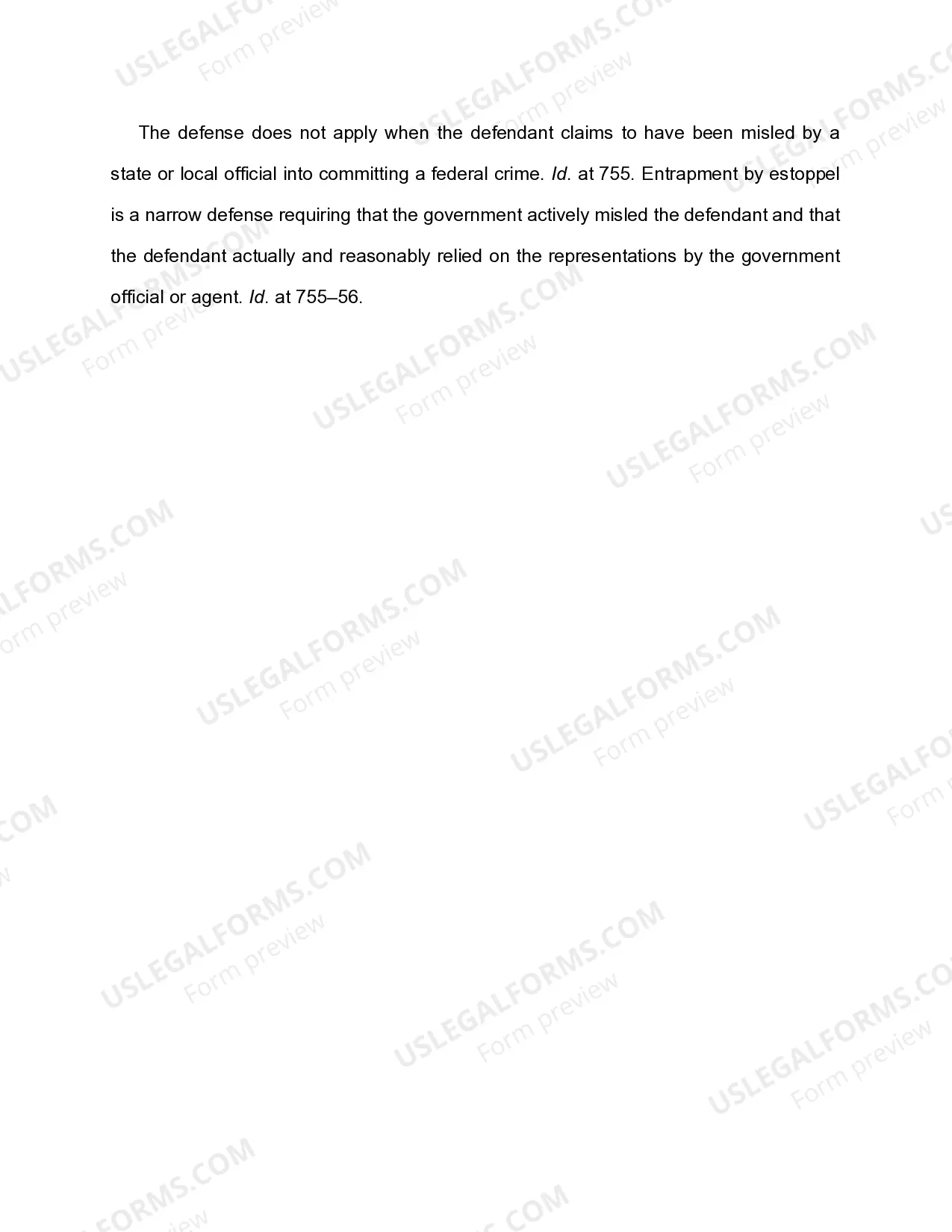
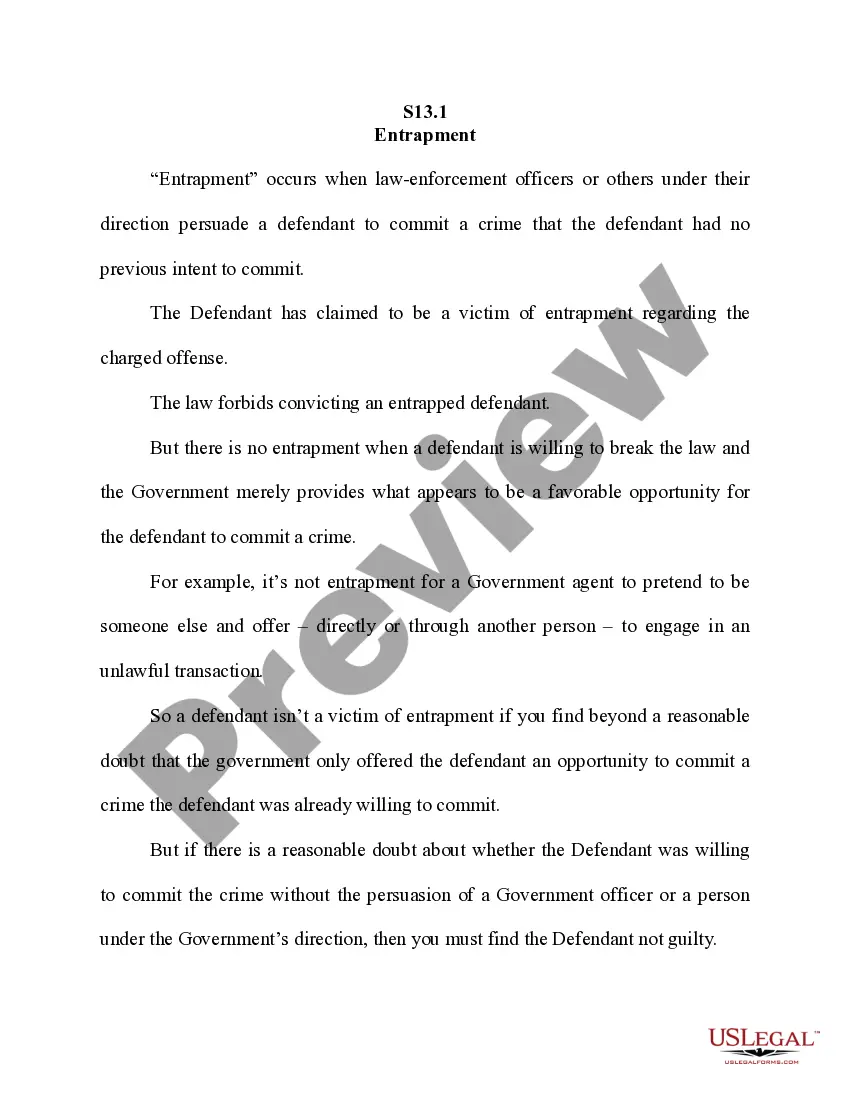
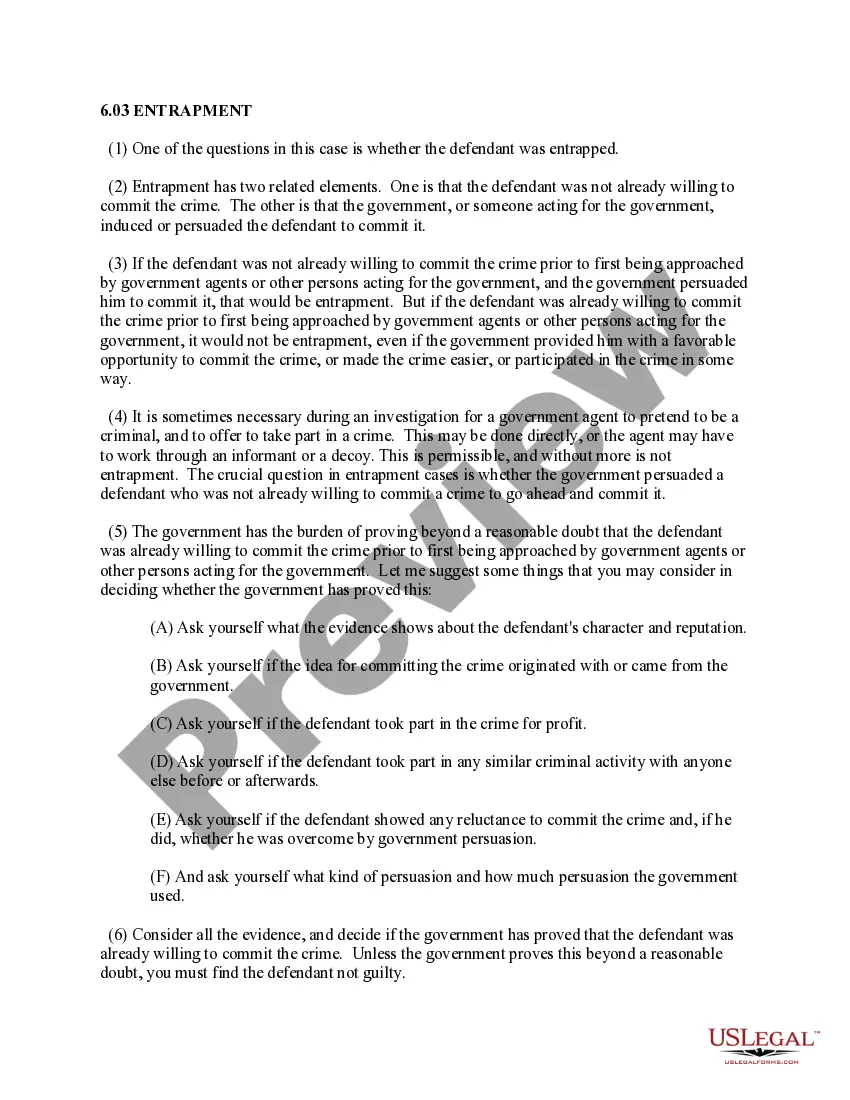
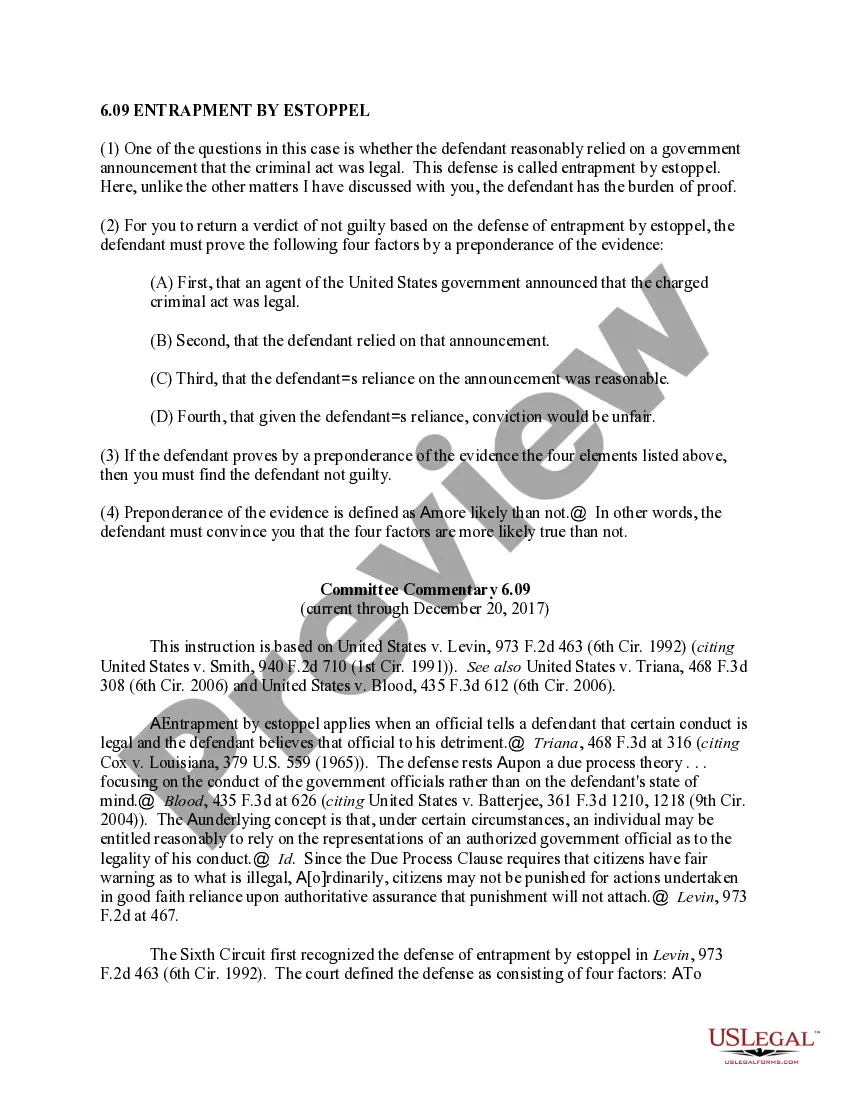
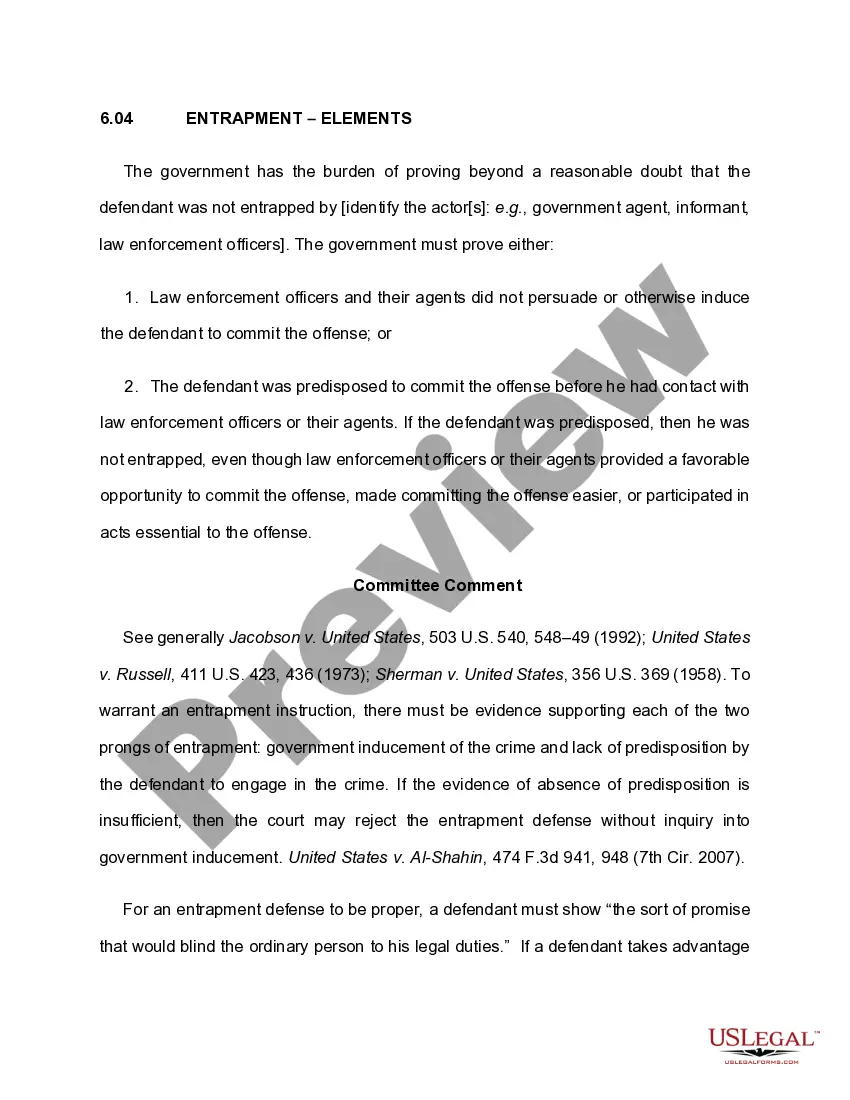
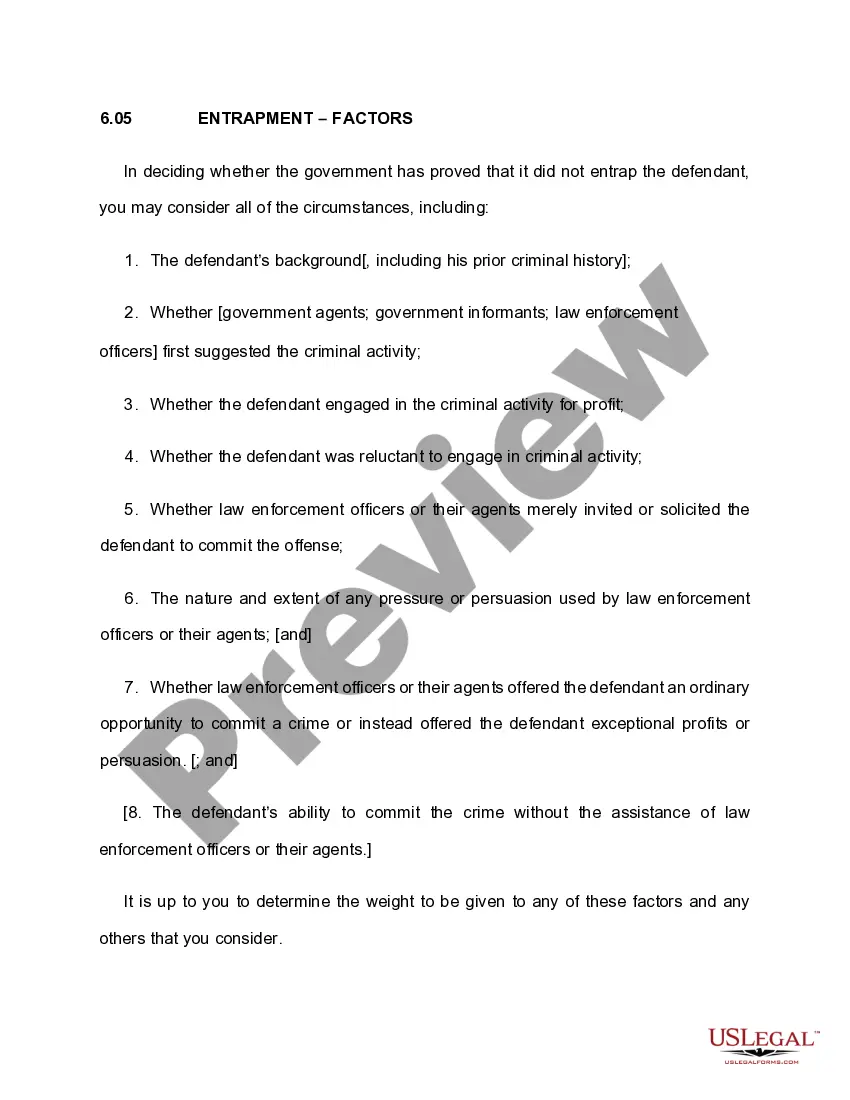
This form is known as Entrapment by Estoppel, which serves as a legal defense for defendants claiming that they engaged in prohibited conduct based on erroneous assurances from a government official. It outlines the conditions under which a defendant can argue that they were misled into believing their actions were lawful, differentiating it from other defenses focused on public authority and entrapment. This form is essential for those aiming to present evidence of reasonable reliance on an official's assurance regarding the legality of their conduct.
Key components of this form
- Defendant's assertion of engaging in conduct based on a government agent's assurance of legality.
- Criteria for proving the defense, including reliance on an official's statements.
- Requirements for proving reasonable reliance on the information provided by the government official.
Situations where this form applies
This form is used in scenarios where a defendant has committed an offense but argues that they did so in good faith based on incorrect guidance from a government official. It can be particularly relevant in cases where individuals believe they are following legal instructions but are later prosecuted for their actions. Examples may include interactions with law enforcement or regulatory agencies that lead to misunderstandings about the legality of certain conduct.
Who should use this form
- Defendants in federal criminal cases who received advice from government officials.
- Individuals seeking to assert a defense of entrapment by estoppel in court.
- Legal representatives assisting clients in presenting evidence of their reliance on governmental advice.
Steps to complete this form
- Identify the defendant and the specific conduct in question.
- Clearly state the name and role of the government official whose assurance was relied upon.
- Provide evidence or details demonstrating how the defendant relied on this assurance.
- Include supporting facts that establish the reasonableness of the defendant's reliance.
Notarization requirements for this form
This form does not typically require notarization unless specified by local law. Always check your jurisdiction to confirm if notarization is necessary for your defense.
Get your form ready online
Our built-in tools help you complete, sign, share, and store your documents in one place.
Make edits, fill in missing information, and update formatting in US Legal Forms—just like you would in MS Word.
Download a copy, print it, send it by email, or mail it via USPS—whatever works best for your next step.
Sign and collect signatures with our SignNow integration. Send to multiple recipients, set reminders, and more. Go Premium to unlock E-Sign.
If this form requires notarization, complete it online through a secure video call—no need to meet a notary in person or wait for an appointment.
We protect your documents and personal data by following strict security and privacy standards.

Make edits, fill in missing information, and update formatting in US Legal Forms—just like you would in MS Word.

Download a copy, print it, send it by email, or mail it via USPS—whatever works best for your next step.

Sign and collect signatures with our SignNow integration. Send to multiple recipients, set reminders, and more. Go Premium to unlock E-Sign.

If this form requires notarization, complete it online through a secure video call—no need to meet a notary in person or wait for an appointment.

We protect your documents and personal data by following strict security and privacy standards.
Common mistakes to avoid
- Failing to specify the exact statements made by the government official.
- Not providing compelling evidence of reliance on the official's assurance.
- Misunderstanding the legal threshold for proving reasonable reliance.
Why complete this form online
- Convenience of downloading the form immediately after purchase.
- Editability to fit specific legal circumstances or requirements.
- Access to templates drafted by licensed attorneys, ensuring legal validity.
Looking for another form?
Form popularity
FAQ
Generally, state laws will have either an objective entrapment law or a subjective entrapment law. When following the objective standard law, the court must determine whether a reasonable law-abiding person would commit the crime in light of the police officer's behavior.
Examples of entrapment include: Pressuring a person to illegally sell their prescription drugs by claiming you have no money and will die without the drugs. Repeatedly harassing someone via phone, mail, etc. to shoplift a laptop for your ?school studies?
Entrapment by estoppel applies when an official tells a defendant that certain conduct is legal and the defendant believes that official. This defense applies even in cases of strict liability, because entrapment does not negate the intent element of an offense, it relies on the principle of fairness.
Generally, state laws will have either an objective entrapment law or a subjective entrapment law. When following the objective standard law, the court must determine whether a reasonable law-abiding person would commit the crime in light of the police officer's behavior.
Entrapment may result from the use of threats, intimidation, extended fraud, or any other means where the defendant was essentially forced to commit a crime. For example, law enforcement officers could set up a sting operation for a suspected criminal to commit a burglary.
Objective entrapment bars prosecution of a crime when government action or conduct so offends decency or a sense of justice such that it amounts to a denial of due process. Subjective entrapment focuses on the inducement of the accused based on a lack of predisposition to commit the offense.
A valid entrapment defense has two related elements: (1) government inducement of the crime, and (2) the defendant's lack of predisposition to engage in the criminal conduct. Mathews v. United States, 485 U.S. 58, 63 (1988). Of the two elements, predisposition is by far the more important.
What Constitutes Entrapment in California? Pressure an Individual Into Committing a Crime.Threaten Someone Into Committing a Crime.Make False Promises.Drug Crimes: An Example of Entrapment.Prostitution: An Example of Entrapment.