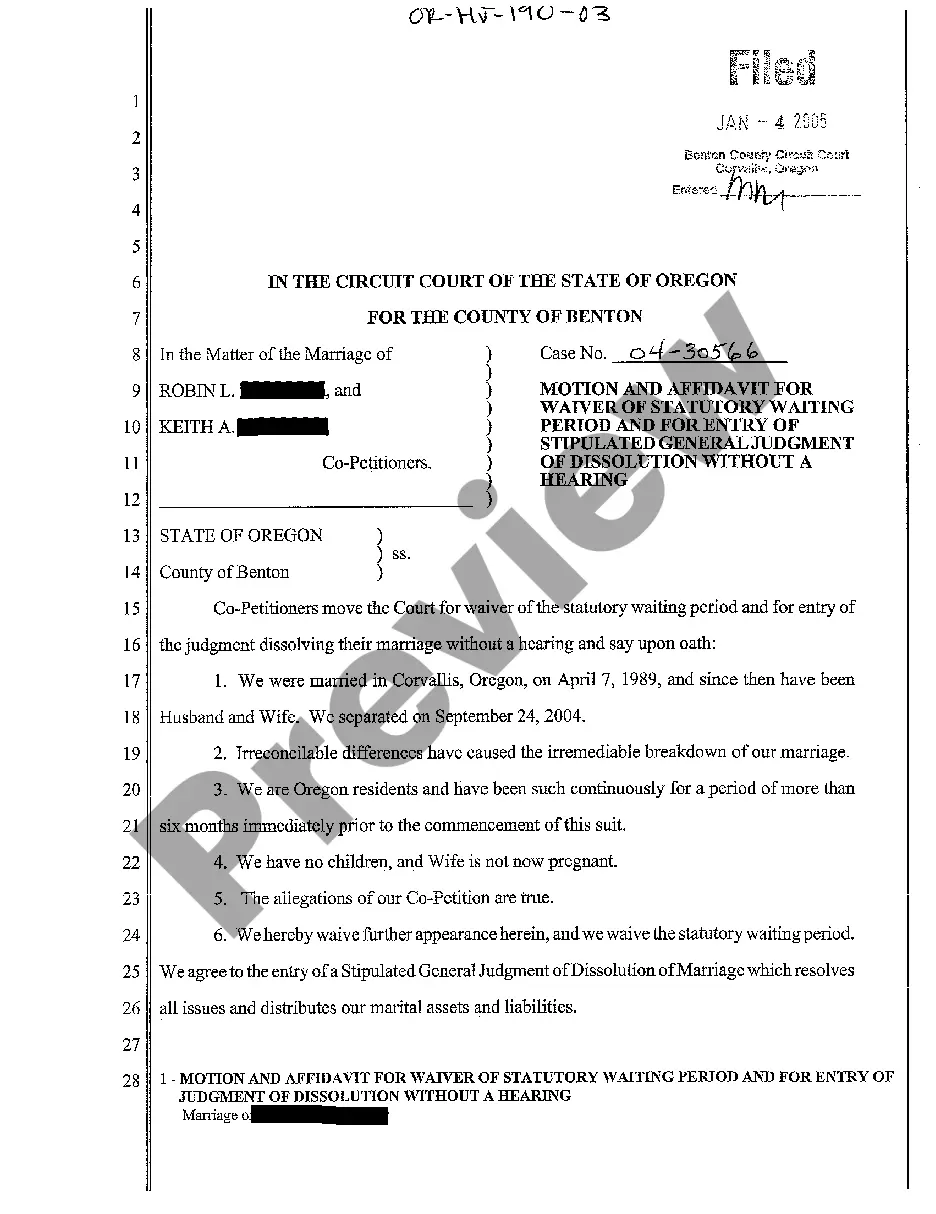
Partial Assignment of Production Payment Interests, Reversionary Interests, Option Rights, Leasehold Interests, and Rights Under Management Agreement
What this document covers
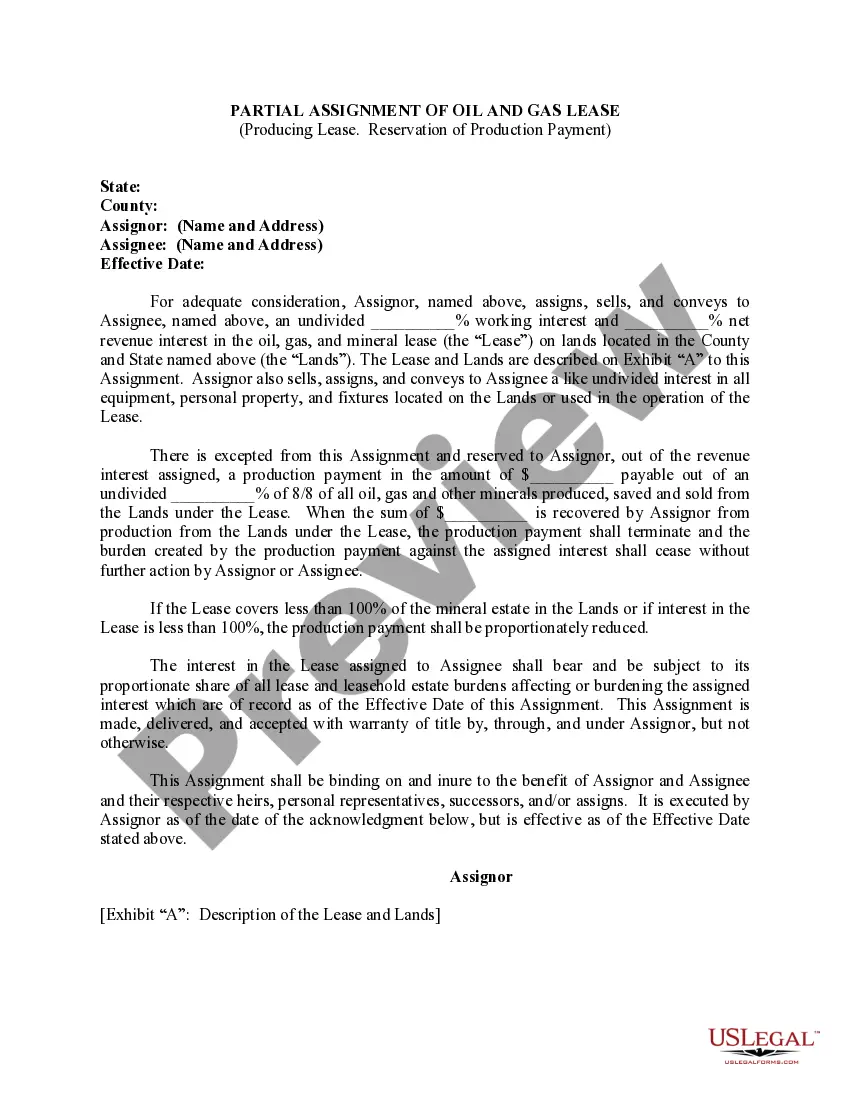
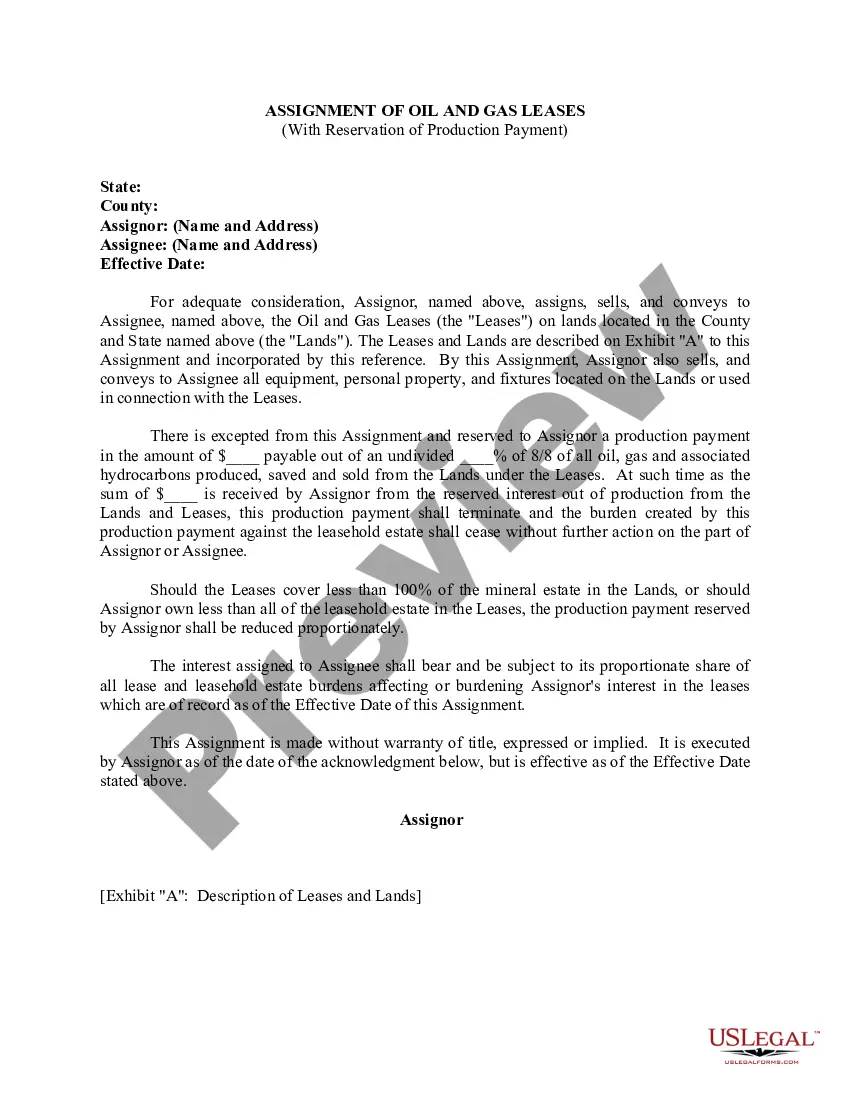
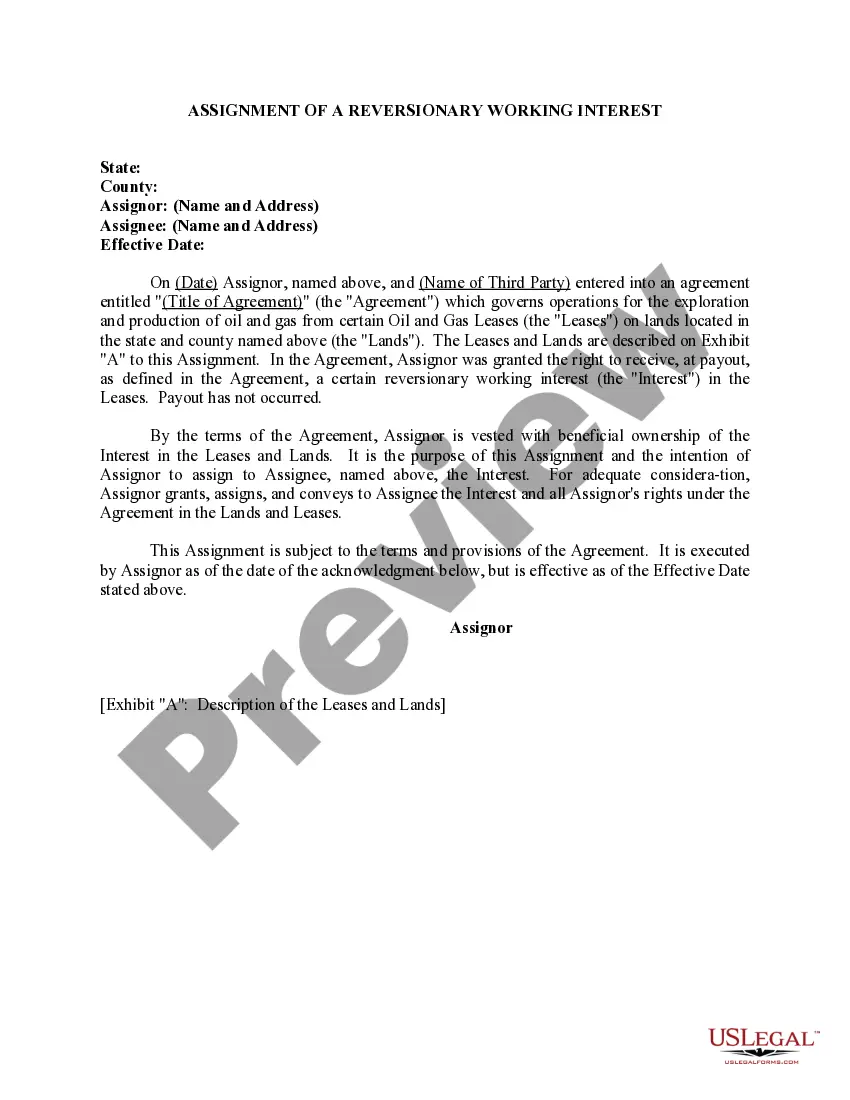
The Partial Assignment of Production Payment Interests, Reversionary Interests, Option Rights, Leasehold Interests, and Rights Under Management Agreement is a legal document that allows an assignor to transfer specific rights and interests related to oil and gas leases to an assignee. This form is essential for parties involved in oil, gas, and mineral rights transactions. Unlike a full assignment, this form focuses on specific interests and rights while maintaining some reservations from a prior assignment.
Key components of this form
- Names and addresses of the assignor and assignee
- Description of prior assignments and reservation of interests
- Effective date of the assignment
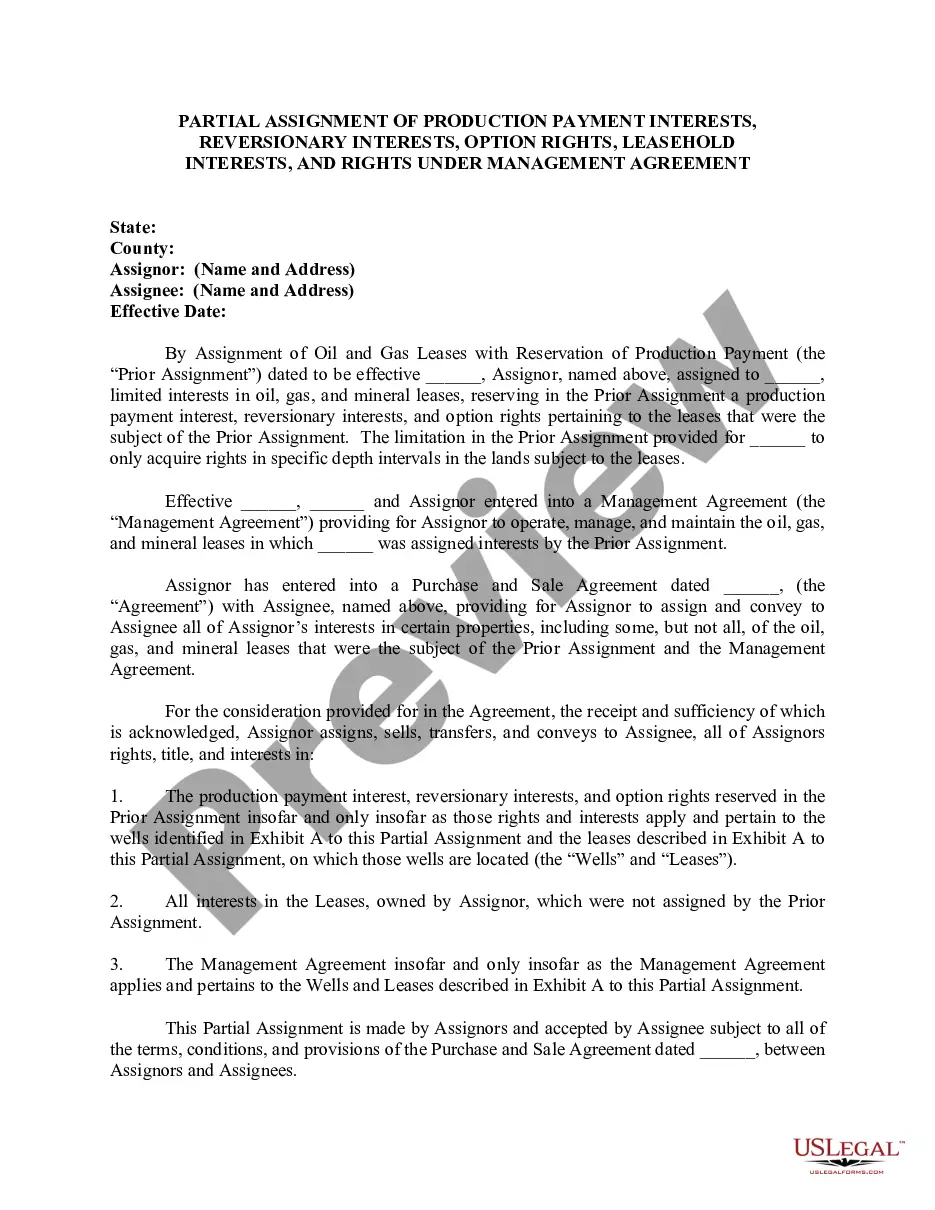
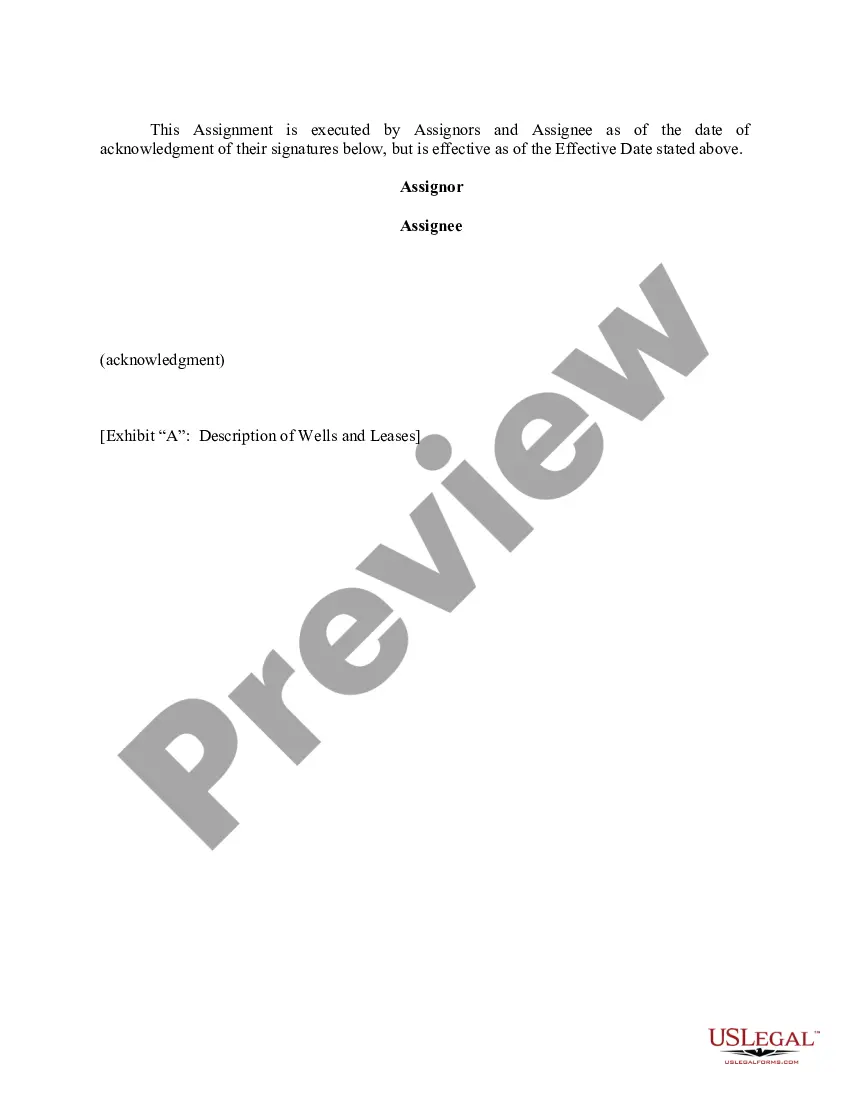
- Details of properties included in the assignment (Exhibit A)
- Management Agreement conditions and responsibilities

Common use cases
This form should be used when an individual or entity (assignor) wants to partially assign their interests in oil and gas leases to another party (assignee) while retaining some rights. Common scenarios include selling interests in specific wells as part of a larger portfolio while maintaining management responsibilities or other reserved interests.
Who needs this form
This form is intended for:
- Individuals or businesses involved in oil and gas production
- Investors looking to acquire partial interests in energy leases
- Landowners wishing to transfer specific obligations or rights
- Legal representatives managing oil and gas leases for clients
How to complete this form
- Identify the parties involved by filling out the names and addresses of the assignor and assignee.
- Enter the effective date for the assignment.
- Detail any prior assignments and the interests being reserved from previous agreements.
- Complete Exhibit A by describing the specific wells and leases included in the assignment.
- Ensure both parties sign and date the form for authenticity.
Notarization requirements for this form
This form does not typically require notarization unless specified by local law. However, it is recommended to check if your state has specific requirements that necessitate notarization to ensure the validity of the assignment.
Get your form ready online
Our built-in tools help you complete, sign, share, and store your documents in one place.
Make edits, fill in missing information, and update formatting in US Legal Forms—just like you would in MS Word.
Download a copy, print it, send it by email, or mail it via USPS—whatever works best for your next step.
Sign and collect signatures with our SignNow integration. Send to multiple recipients, set reminders, and more. Go Premium to unlock E-Sign.
If this form requires notarization, complete it online through a secure video call—no need to meet a notary in person or wait for an appointment.
We protect your documents and personal data by following strict security and privacy standards.

Make edits, fill in missing information, and update formatting in US Legal Forms—just like you would in MS Word.

Download a copy, print it, send it by email, or mail it via USPS—whatever works best for your next step.

Sign and collect signatures with our SignNow integration. Send to multiple recipients, set reminders, and more. Go Premium to unlock E-Sign.

If this form requires notarization, complete it online through a secure video call—no need to meet a notary in person or wait for an appointment.

We protect your documents and personal data by following strict security and privacy standards.
Avoid these common issues
- Failing to accurately fill in the effective date.
- Omitting details in Exhibit A, leading to confusion about which leases are included.
- Not obtaining all necessary signatures before submitting the form.
- Ignoring state-specific regulations that may impact the validity of the assignment.
Advantages of online completion
- Convenience of downloading and completing the form at your own pace.
- Editable templates allow for easy customization to fit your specific transaction.
- Access to legally vetted forms drafted by licensed attorneys ensures reliability and accuracy.
Looking for another form?


Form popularity
FAQ
The key difference between a reversion and a remainder is that a reversion is held by the grantor of the original conveyance, whereas "remainder" is used to refer to an interest that would be a reversion, but is instead transferred to someone other than the grantor.
The key difference between a reversion and a remainder is that a reversion is held by the grantor of the original conveyance, whereas "remainder" is used to refer to an interest that would be a reversion, but is instead transferred to someone other than the grantor.
A 'reversion' is a future interest that an individual has in a piece of property even after he or she has conveyed that property, in a lesser estate, to another individual.When the estate reverts back to the owner, they may enjoy possession once again if they so desire.
A landowner who is concerned about the future use of his land can donate or sell the land on a conditional rather than absolute basis. A reversionary interest is created by a deed that reserves to the grantor a future ownership right upon the occurrence of some condition.
In trust law terms, a reversionary interest is an interest that reverts back to the settlor of a trust once a beneficiary's interest has come to an end. For example, Bob gives a life interest in Rose Cottage to his mother Judy, and on Judy's death the cottage is to revert back to Bob.
A reversionary right is a registered condition embodied in a Deed of Transfer that on the happening of a particular event, or the non-happening thereof, ownership of the property concerned reverts to the enforcer.
1a : the part of a simple estate remaining in the control of its owner after the owner has granted therefrom a lesser particular estate. b : a future interest in property left in the control of a grantor or the grantor's successor.
Reversionary Interest is an amount of money that is calculated, which reflects what a Freeholder should receive now, rather than having to wait until a lease expires to have the property (and ALL its value) returned to his ownership.
A reversion in property law is a future interest that is retained by the grantor after the conveyance of an estate of a lesser quantum that he has (such as the owner of a fee simple granting a life estate or a leasehold estate).The testator may retain the reversion in the estate or give it to another individual.