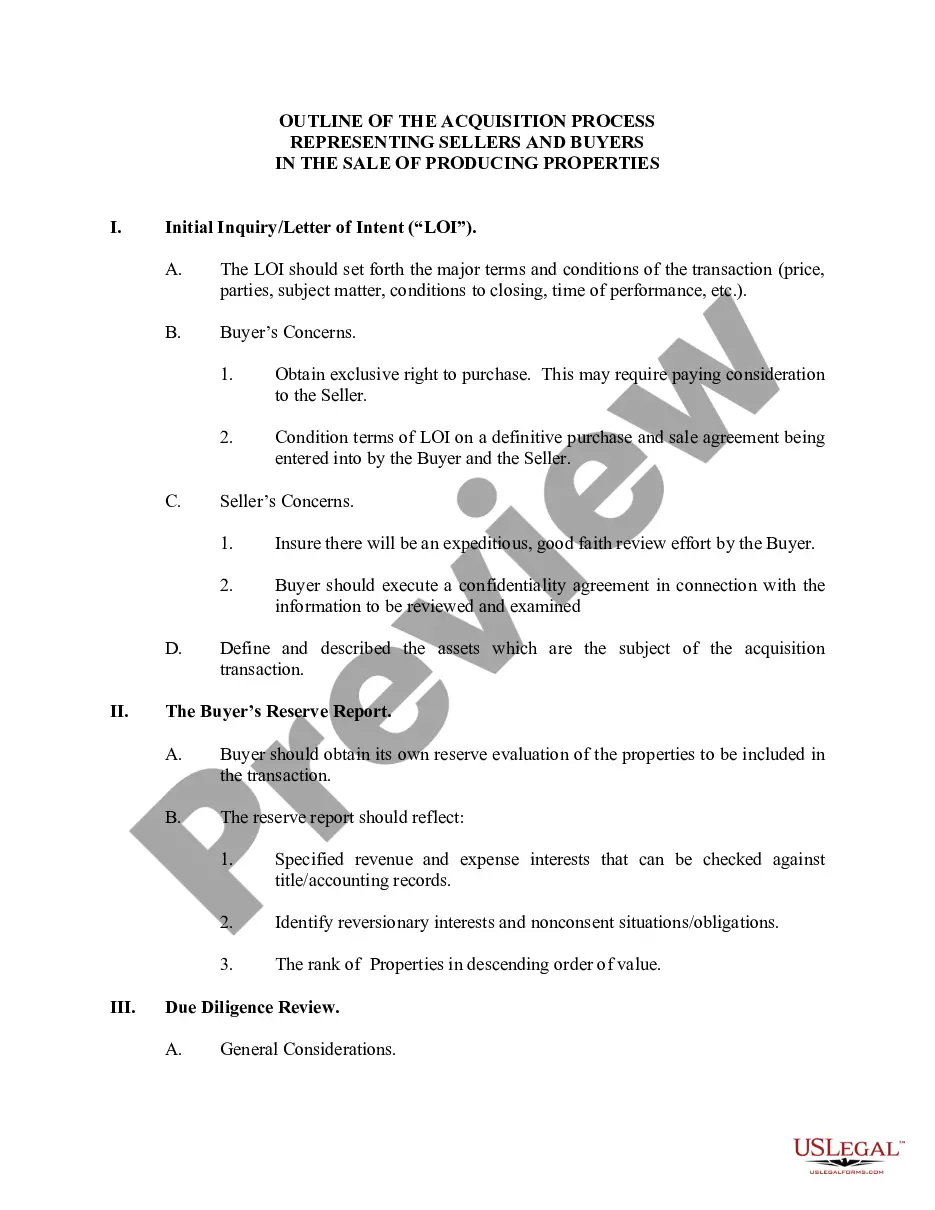
Outline of the Acquisition Process Representing Sellers and Buyers in the Sale of Producing Properties
Overview of this form
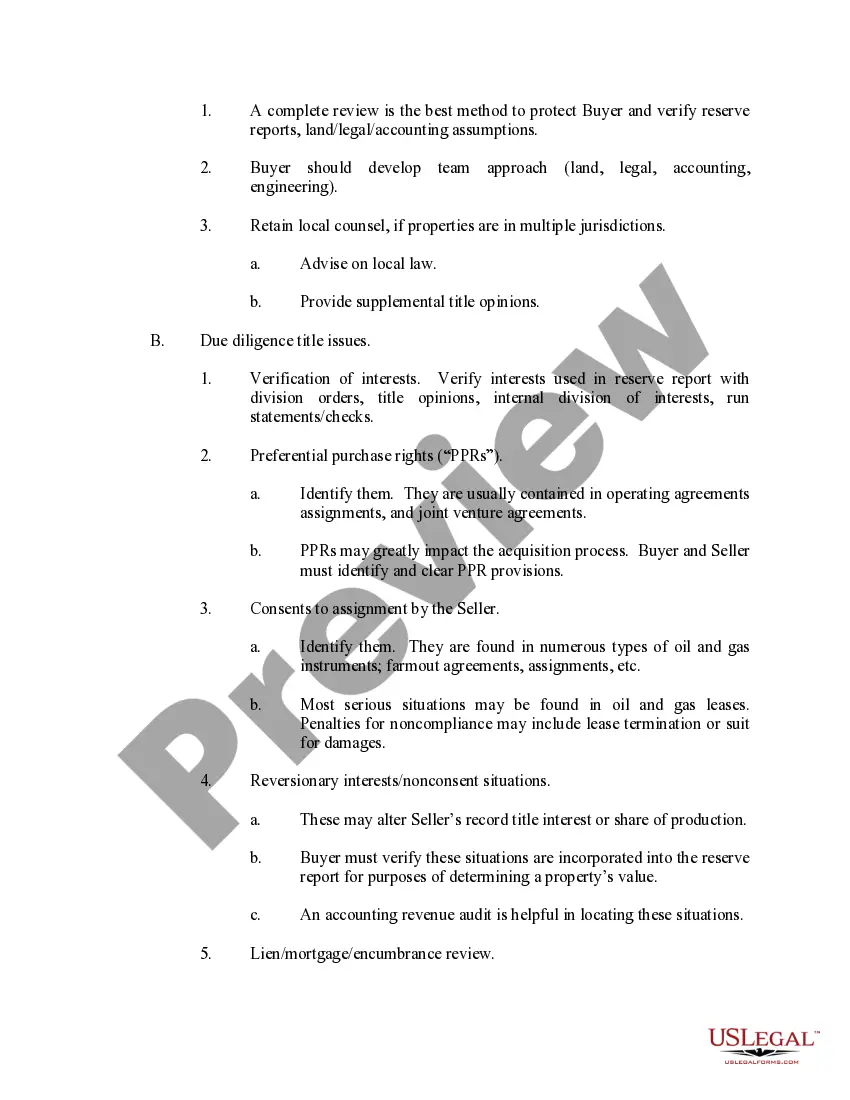
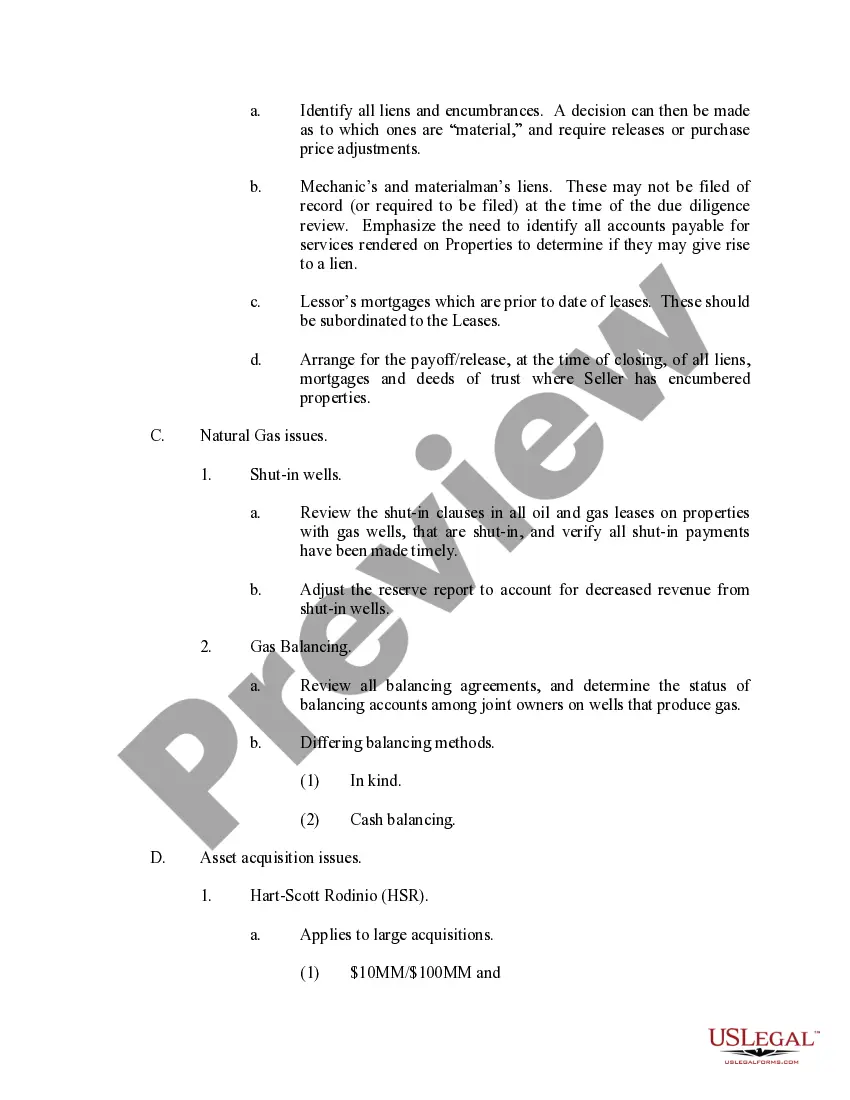
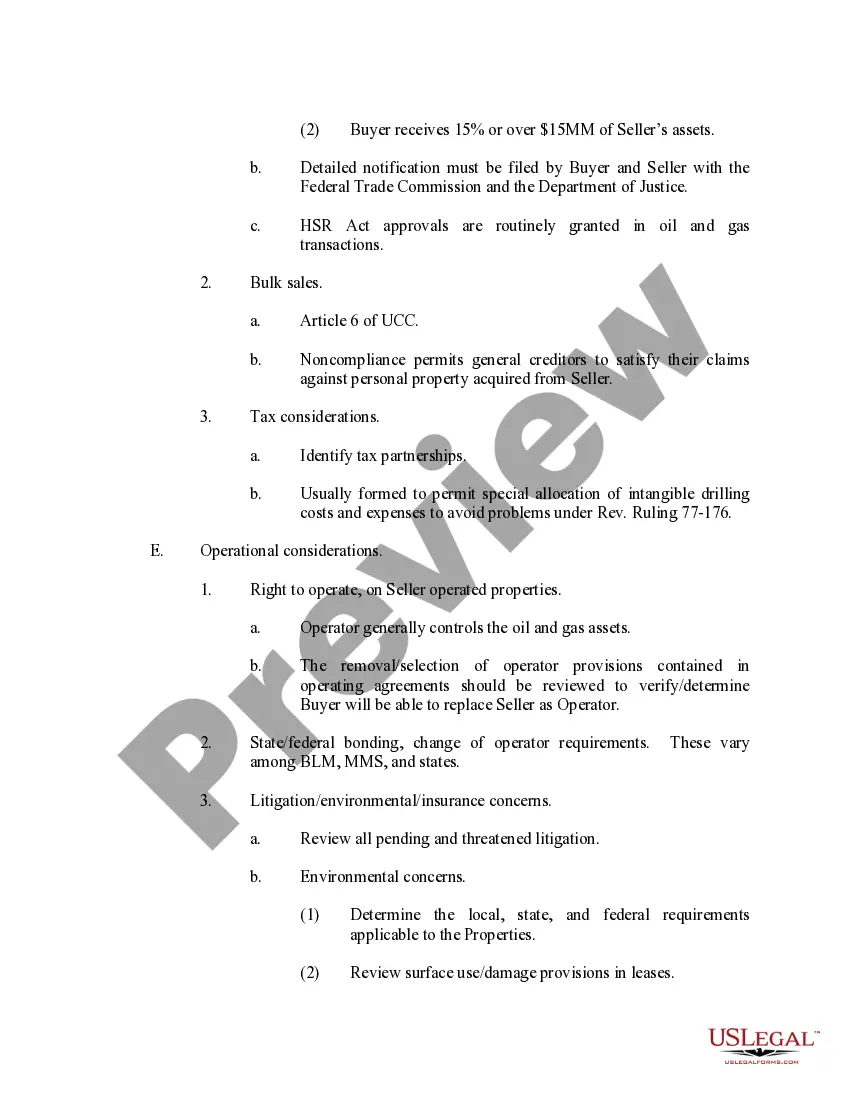
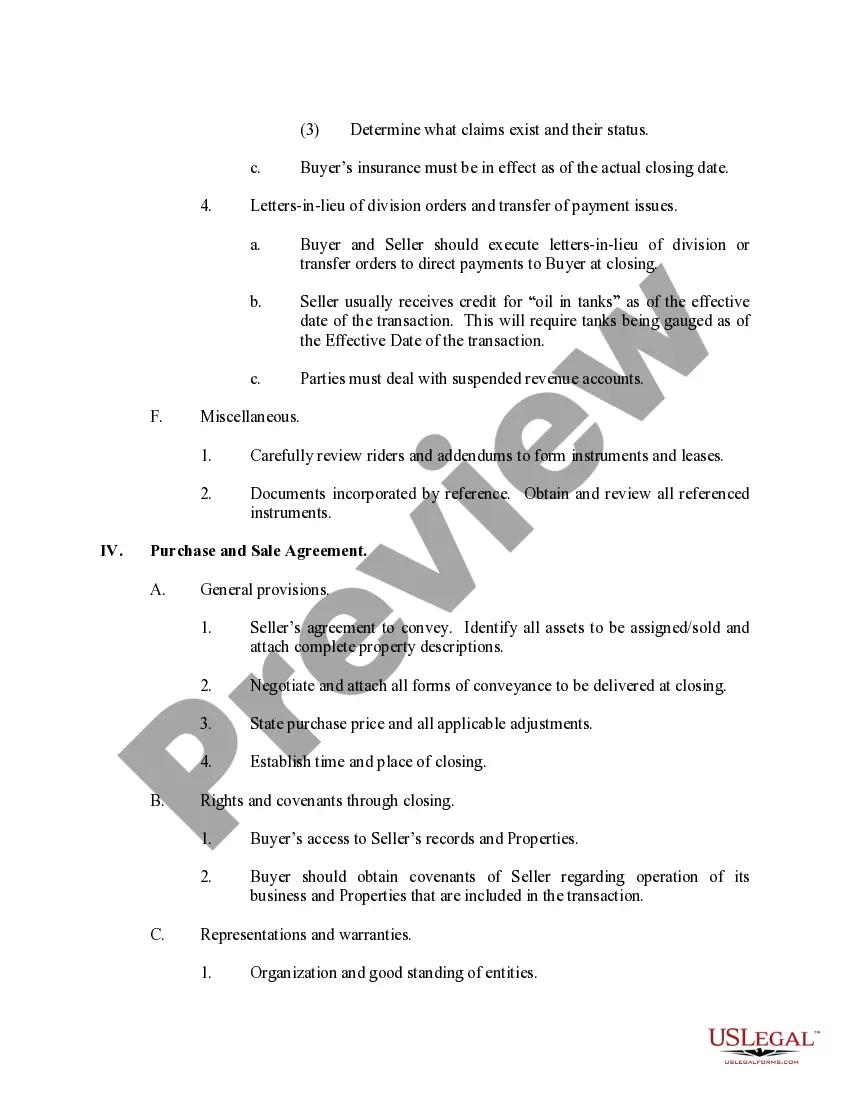
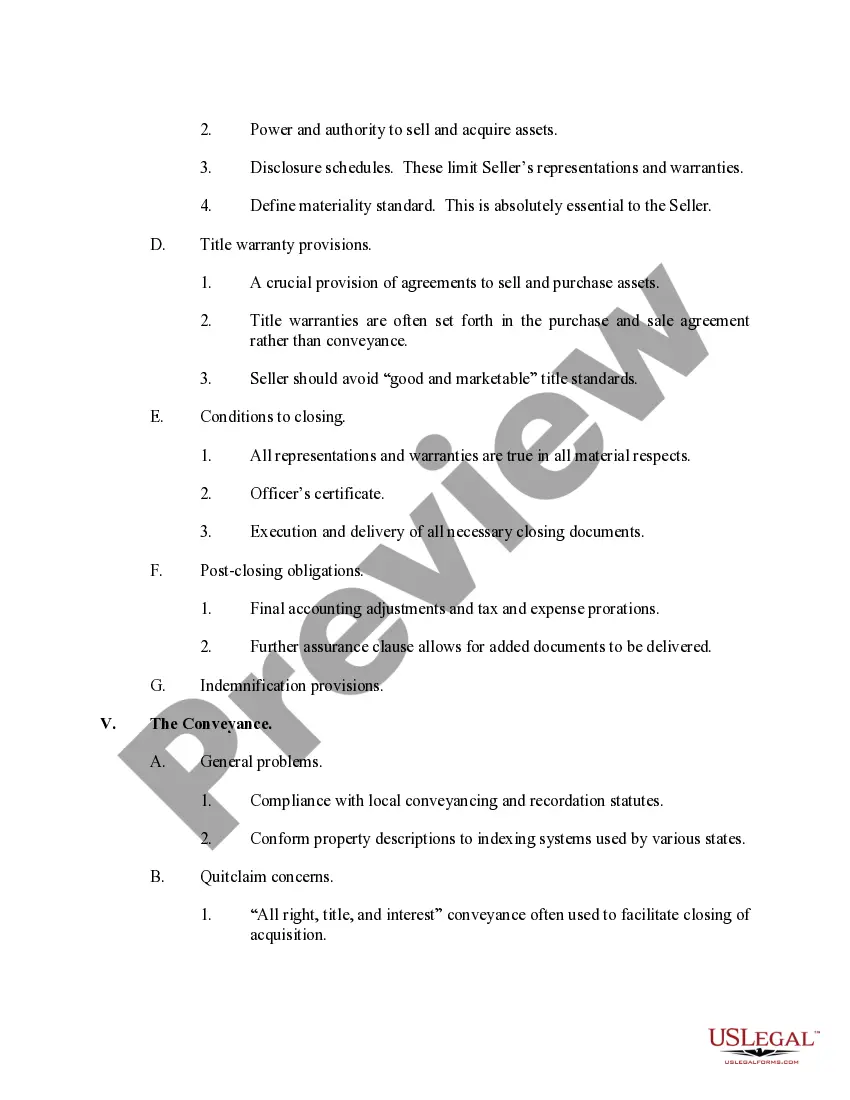
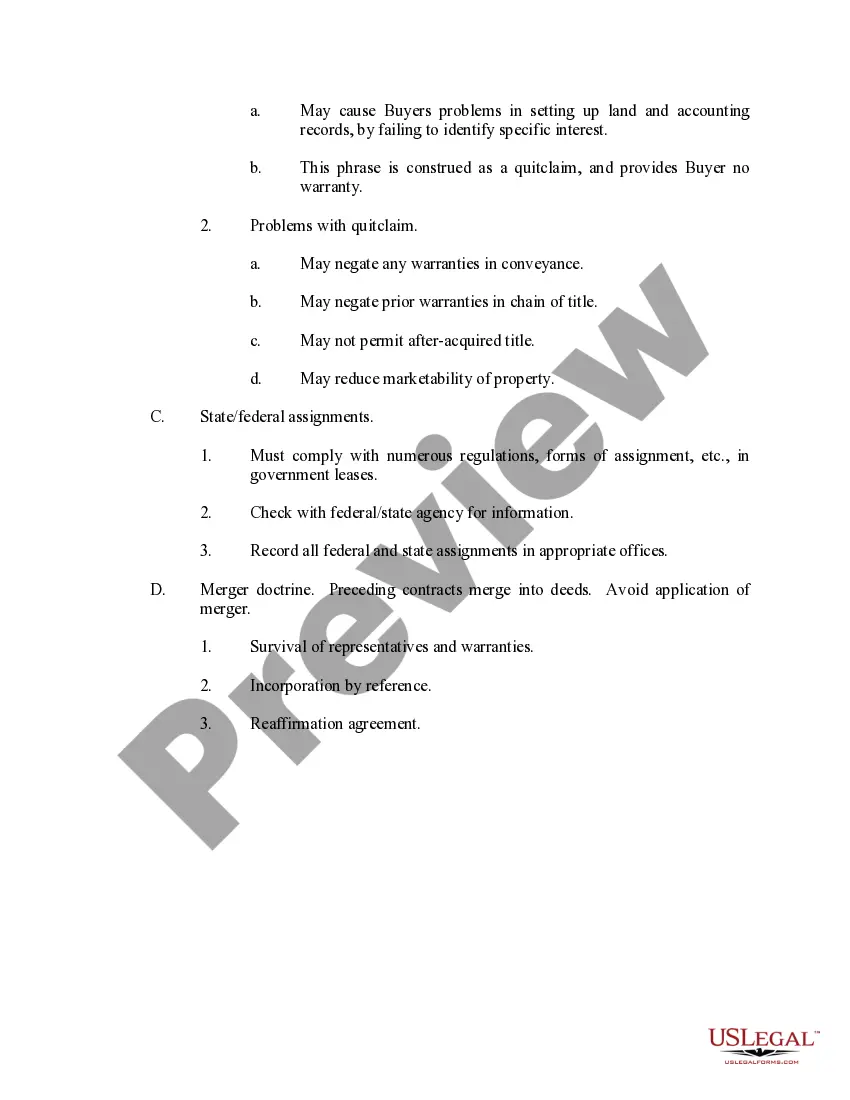
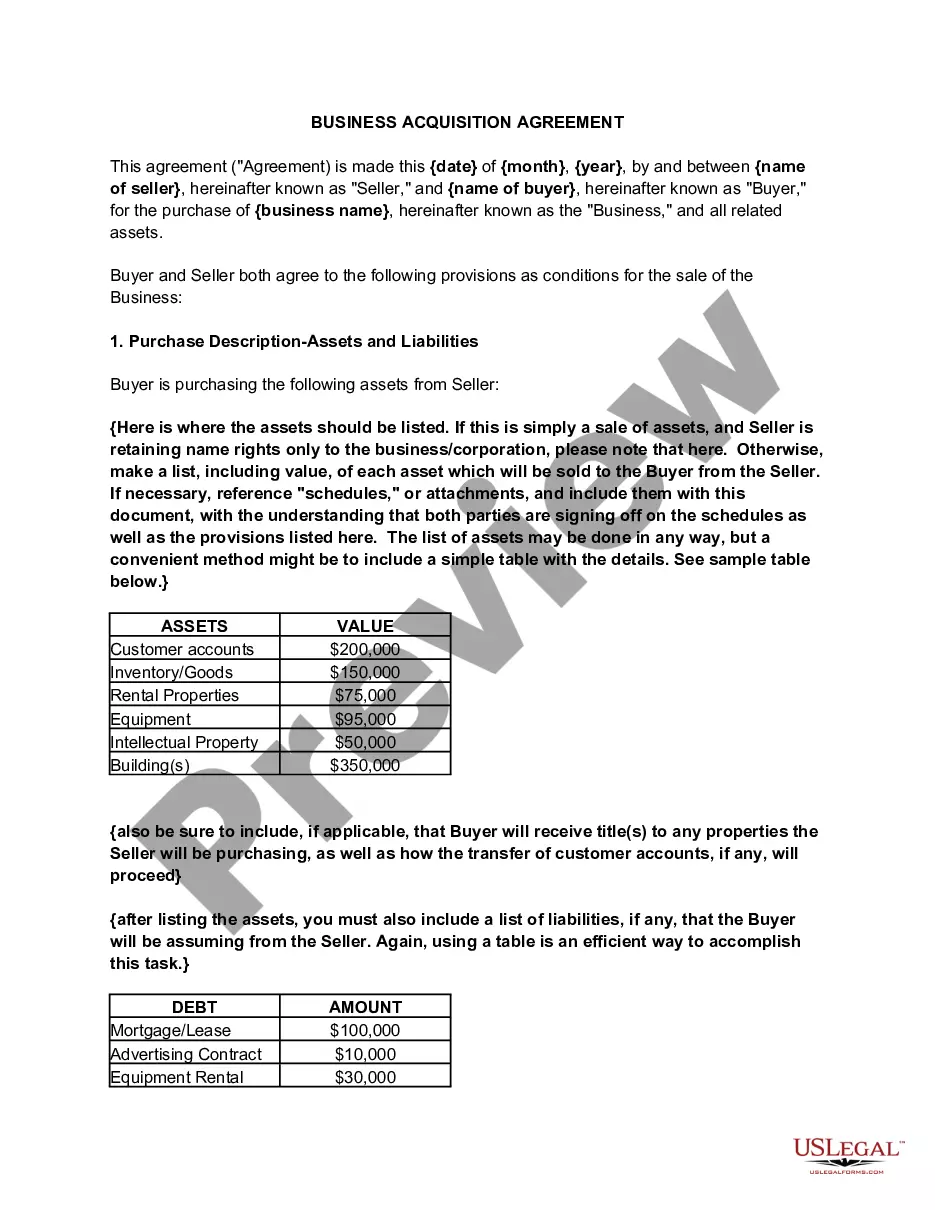
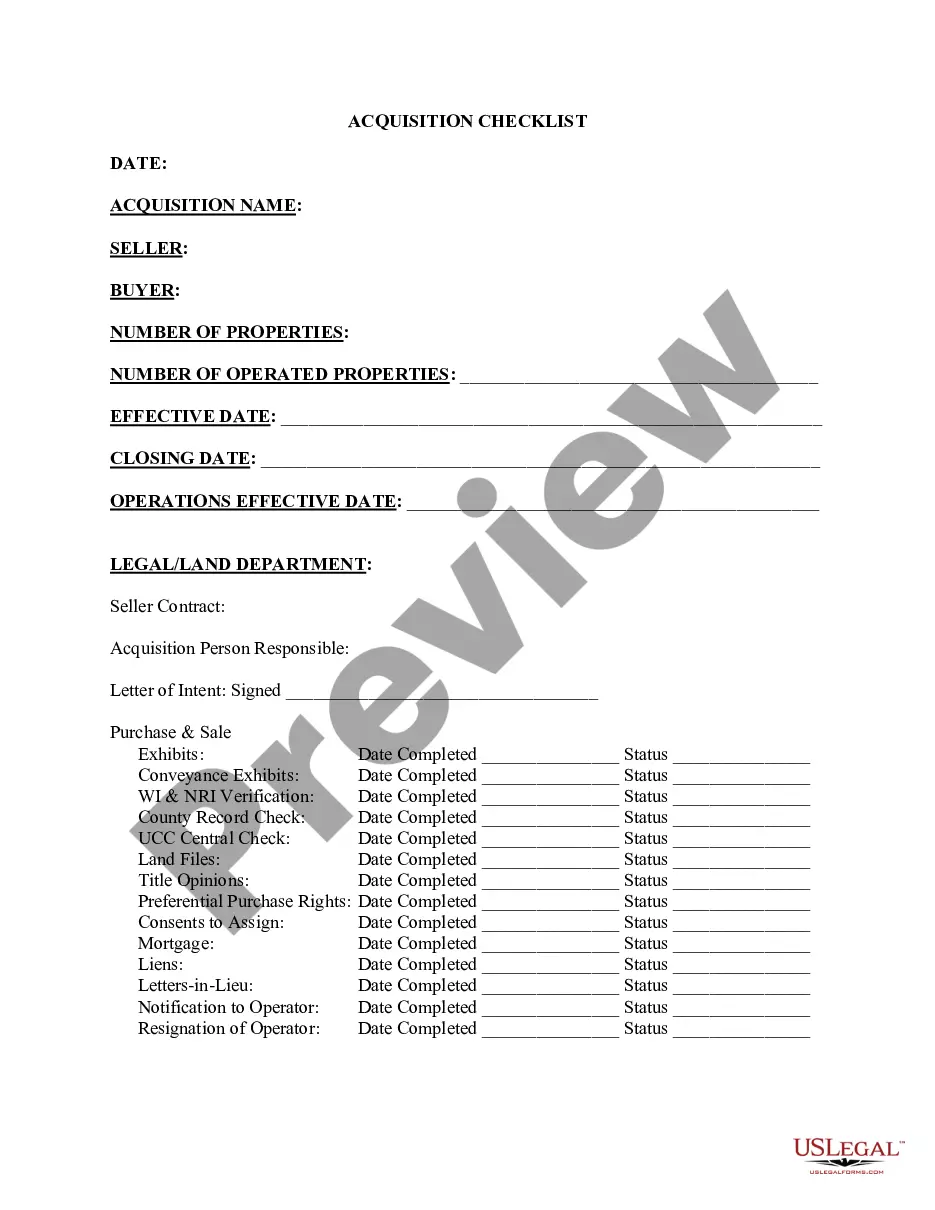
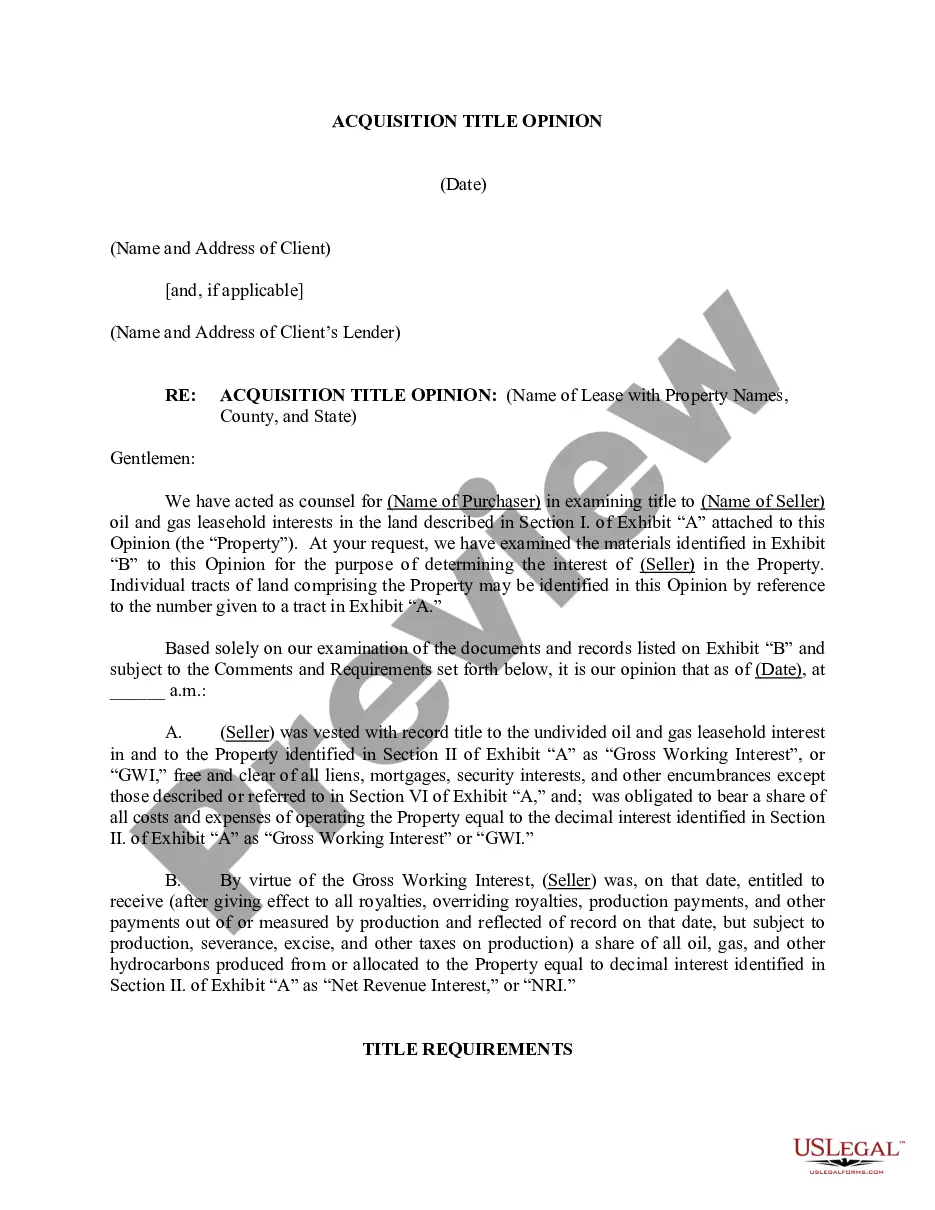
The Outline of the Acquisition Process Representing Sellers and Buyers in the Sale of Producing Properties is a comprehensive guide designed to facilitate the transaction of oil, gas, or mineral properties. This form provides a structured approach to ensure that both sellers and buyers understand their rights, obligations, and the necessary steps to complete a sale effectively. Unlike standard sale agreements, this outline emphasizes the unique aspects of acquiring producing properties and includes insights into due diligence, regulatory considerations, and post-closing requirements.
Main sections of this form
- Initial inquiry and letter of intent (LOI), outlining major transaction terms.
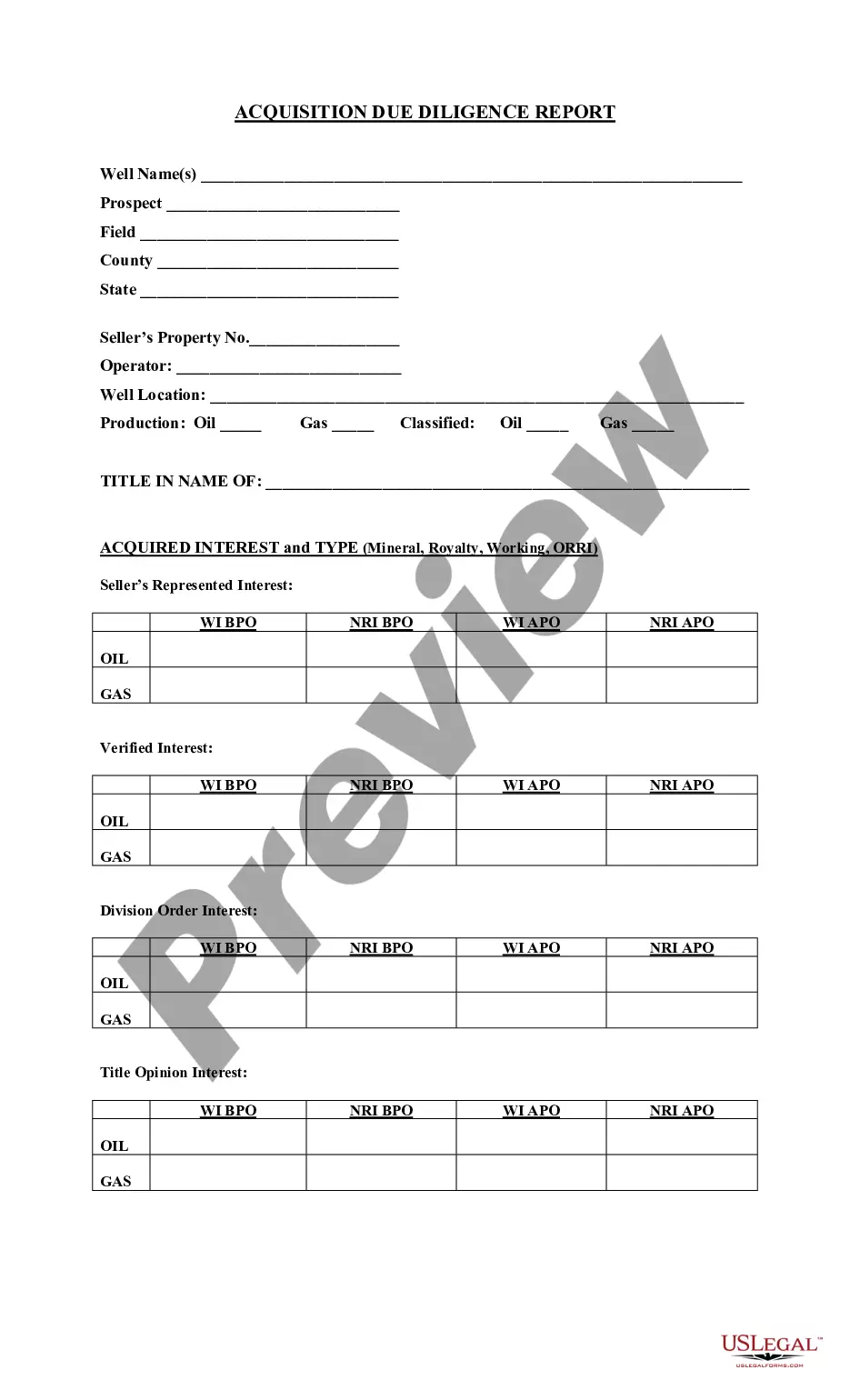
- Buyers reserve report, detailing property evaluations and revenue interests.
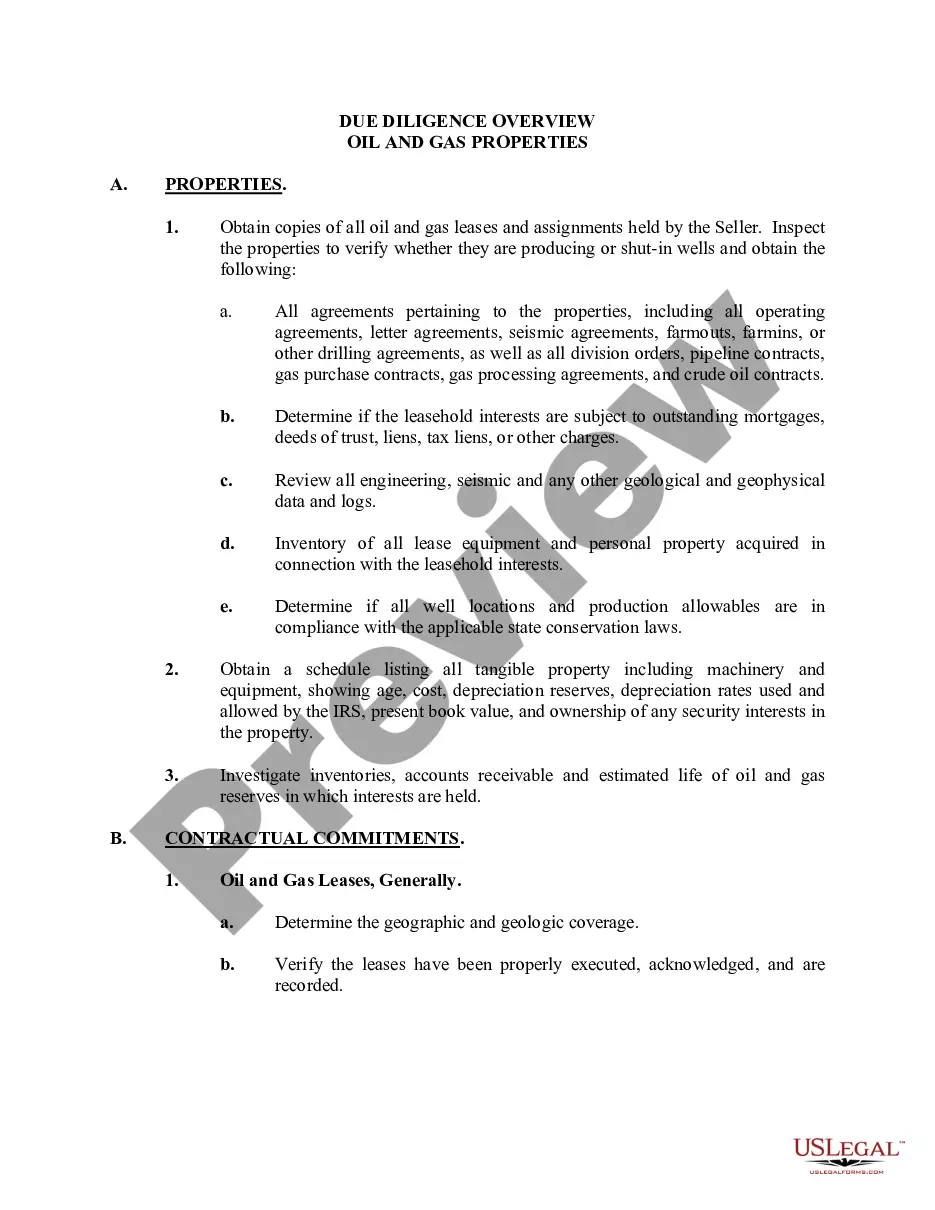
- Due diligence review, addressing title issues, land evaluation, and legal compliance.
- Purchase and sale agreement, including essential provisions and representations.
- The conveyance process, focusing on compliance with local laws and property descriptions.
Situations where this form applies
This form is essential when engaging in the sale or acquisition of producing properties, particularly in the oil, gas, or mineral sectors. Use this outline when negotiating terms, preparing for due diligence, or executing legal agreements. It helps ensure that both parties are aware of their responsibilities and the critical components of the transaction, making it a valuable resource for buyers and sellers alike.
Who should use this form
- Sellers looking to transfer ownership of oil, gas, or mineral properties.
- Buyers interested in acquiring producing properties with a clear understanding of the process.
- Attorneys representing clients in real estate and natural resources transactions.
- Investors and companies exploring opportunities in the oil and gas market.
Completing this form step by step
- Identify the parties involved, including the seller and buyer details.
- Outline the key terms of the transaction in the letter of intent.
- Conduct a due diligence review of the property, including title verification.
- Draft the purchase and sale agreement, incorporating essential terms and conditions.
- Finalize the conveyance documents and ensure compliance with local regulations.
Notarization guidance
Notarization is not commonly needed for this form. However, certain documents or local rules may make it necessary. Our notarization service, powered by Notarize, allows you to finalize it securely online anytime, day or night.
Get your form ready online
Our built-in tools help you complete, sign, share, and store your documents in one place.
Make edits, fill in missing information, and update formatting in US Legal Forms—just like you would in MS Word.
Download a copy, print it, send it by email, or mail it via USPS—whatever works best for your next step.
Sign and collect signatures with our SignNow integration. Send to multiple recipients, set reminders, and more. Go Premium to unlock E-Sign.
If this form requires notarization, complete it online through a secure video call—no need to meet a notary in person or wait for an appointment.
We protect your documents and personal data by following strict security and privacy standards.

Make edits, fill in missing information, and update formatting in US Legal Forms—just like you would in MS Word.

Download a copy, print it, send it by email, or mail it via USPS—whatever works best for your next step.

Sign and collect signatures with our SignNow integration. Send to multiple recipients, set reminders, and more. Go Premium to unlock E-Sign.

If this form requires notarization, complete it online through a secure video call—no need to meet a notary in person or wait for an appointment.

We protect your documents and personal data by following strict security and privacy standards.
Common mistakes
- Not conducting thorough due diligence, leading to unexpected liabilities.
- Failing to clearly define the terms in the letter of intent.
- Overlooking state-specific regulations that govern property transactions.
- Neglecting to obtain necessary approvals or consents from third parties.
Benefits of using this form online
- Convenient access to a legally vetted outline whenever needed.
- Editable format allows users to tailor the form to their specific transaction.
- Reliable and easy to navigate, reducing the complexity of legal processes.
- Streamlined workflow with guidance at each step of the acquisition process.
Legal use & context
- This form serves as a guideline for legally binding real estate transactions involving producing properties.
- It ensures that all parties are informed of their rights and duties throughout the acquisition process.
- Proper use of this form helps protect against later disputes or misunderstandings regarding the sale.
Main things to remember
- This outline is an essential tool for transactions involving producing properties in the oil and gas industry.
- Understanding the acquisition process can minimize risks and enhance negotiation outcomes.
- Consulting legal professionals can provide additional insights and ensure proper compliance.
Looking for another form?









Form popularity
FAQ
Step 1: Apply For A Mortgage. Step 2: Research The Neighborhood. Step 3: Find A Property. Step 4: Ask For A Seller's Disclosure. Step 5: Make An Offer. Step 6: Hire A Lawyer And Home Inspector. Step 7: Negotiate. Step 8: Finalize Home Financing And Closing.
1 Stating Basic Information in Your Contract. 2 Setting Forth the Payment Terms. 3 Disclosing Important Information to the Buyer. 4 Advising Parties About Closing Procedures.
With dual agency, the Realtor takes on the role of buyer's agent and seller's agent simultaneously in a specific transaction. A home is for sale. The Realtor offers to sell the home for the seller while also offering to represent a buyer interested in the home. If the situation seems confusing, that's because it is.
A real estate deal can take a turn for the worst if the contract is not carefully written to include all the legal stipulations for both the buyer and seller.You can write your own real estate purchase agreement without paying any money as long as you include certain specifics about your home.
Make your opener as personal as possible. Tell them about yourself. Point out the home's attributes. Find a connection. Explain your bid, even if it's low. Close with lots of thanks.
Step 1: Assess The Market For Your Current And Prospective Home. Step 2: Decide If Now Is The Right Time To Make A Move. Step 3: Prepare Your Home To Show Well. Step 4: List Your Home With A Local Real Estate Agent. Step 5: Start Looking For Your New Home.
The identity of the buyer and seller. A description of the property being purchased. The purchase price. The terms as to how and when payment is to be made. The terms as to how, when, and where the goods will be delivered to the purchaser.
Build a Connection. Keep It Short. Stay Positive. Show, Don't Tell. Leave Out Remodeling Plans. Finish Strong. Proofread It.
INTRODUCTION. Introduce yourself and thank them for the opportunity you had to previously view their home. YOUR MOTIVATION FOR BUYING. Tell the seller why you are looking for a new home. COMPLIMENT FEATURES OF THE HOME. REASSURE THE SELLER. EXPLAIN YOUR OFFER. CLOSE.