Affidavit As to Termination of Production Payment
What is this form?
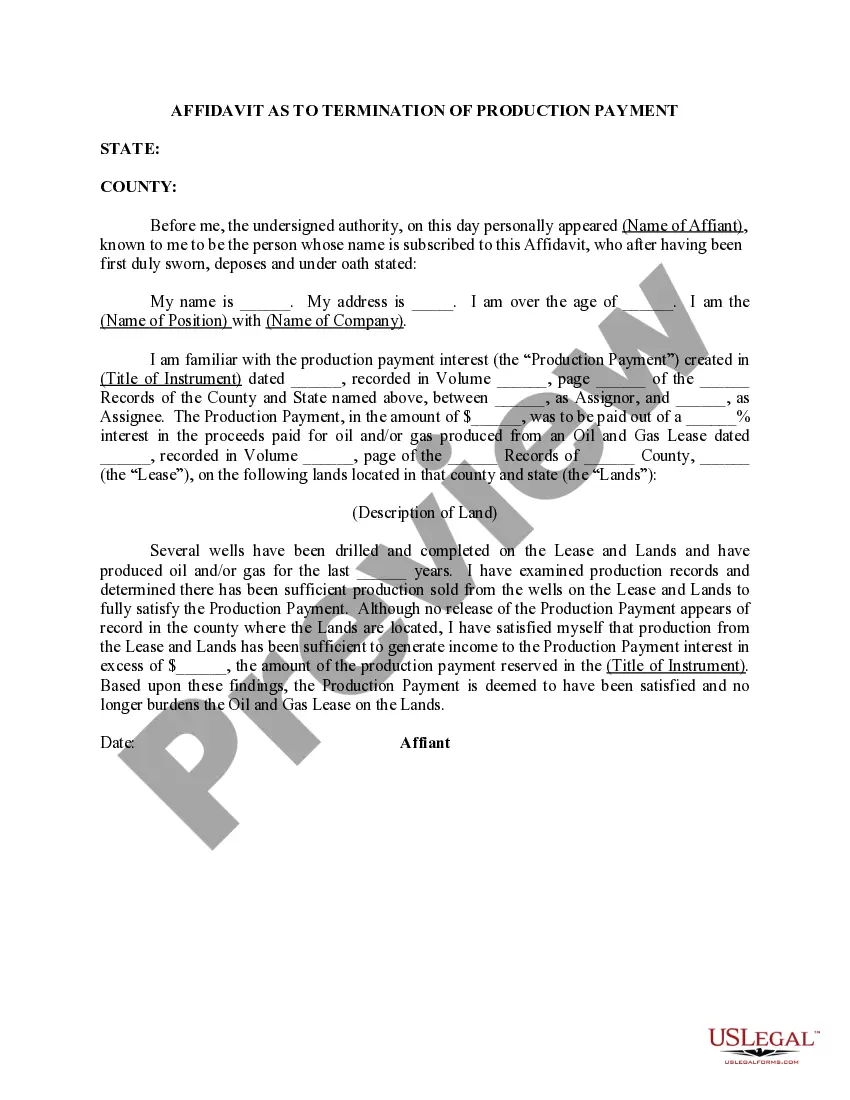
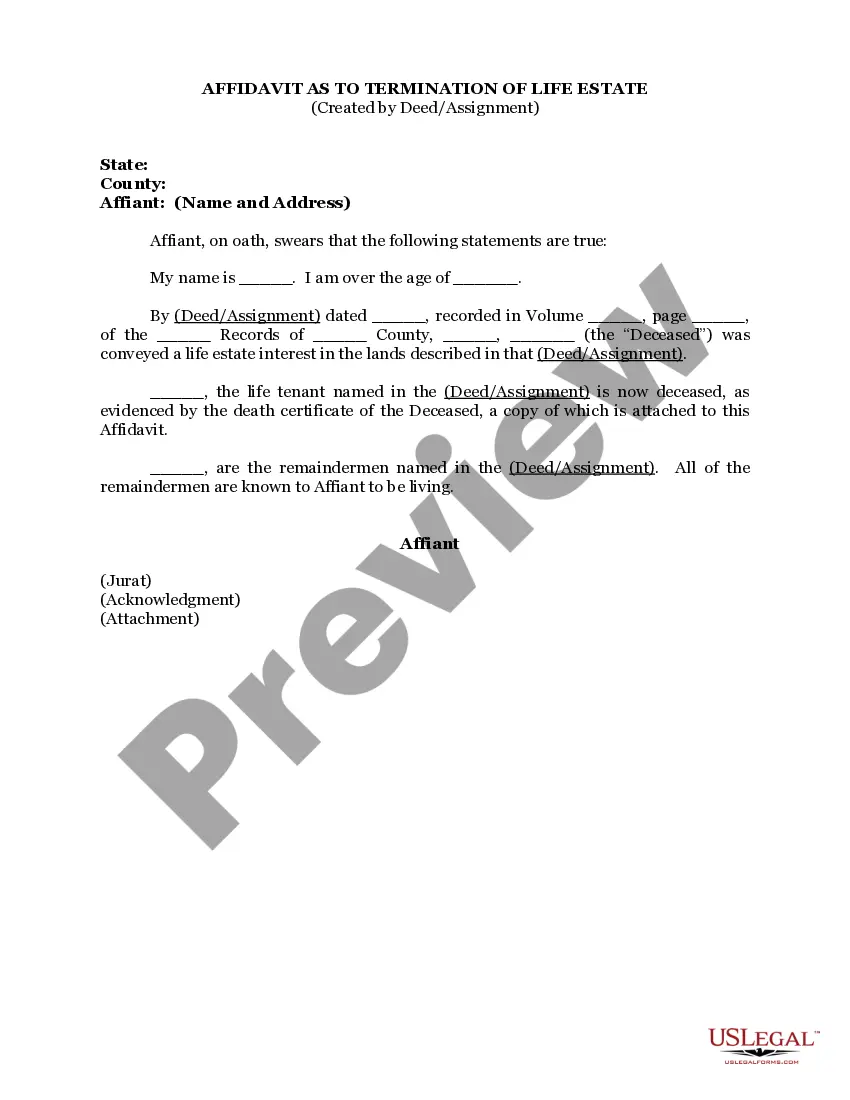
The Affidavit As to Termination of Production Payment is a legal document used to formally declare that a production payment associated with oil and gas leases has been satisfied. This affidavit is sworn before a notary public or another authorized officer, ensuring its legal validity. It serves a specific purpose by relieving the oil and gas leases from any further financial obligations related to the production payment, differing from other affidavits by focusing specifically on production payments in the oil and gas industry.
Main sections of this form
- Identification of the affiant, including name and position.
- Details about the production payment, including related instruments and dates.
- Statement confirming sufficient production to satisfy the payment.
- Declaration of the specific lands and oil and gas leases affected.
- Signature and notary acknowledgment for legal verification.
Common use cases
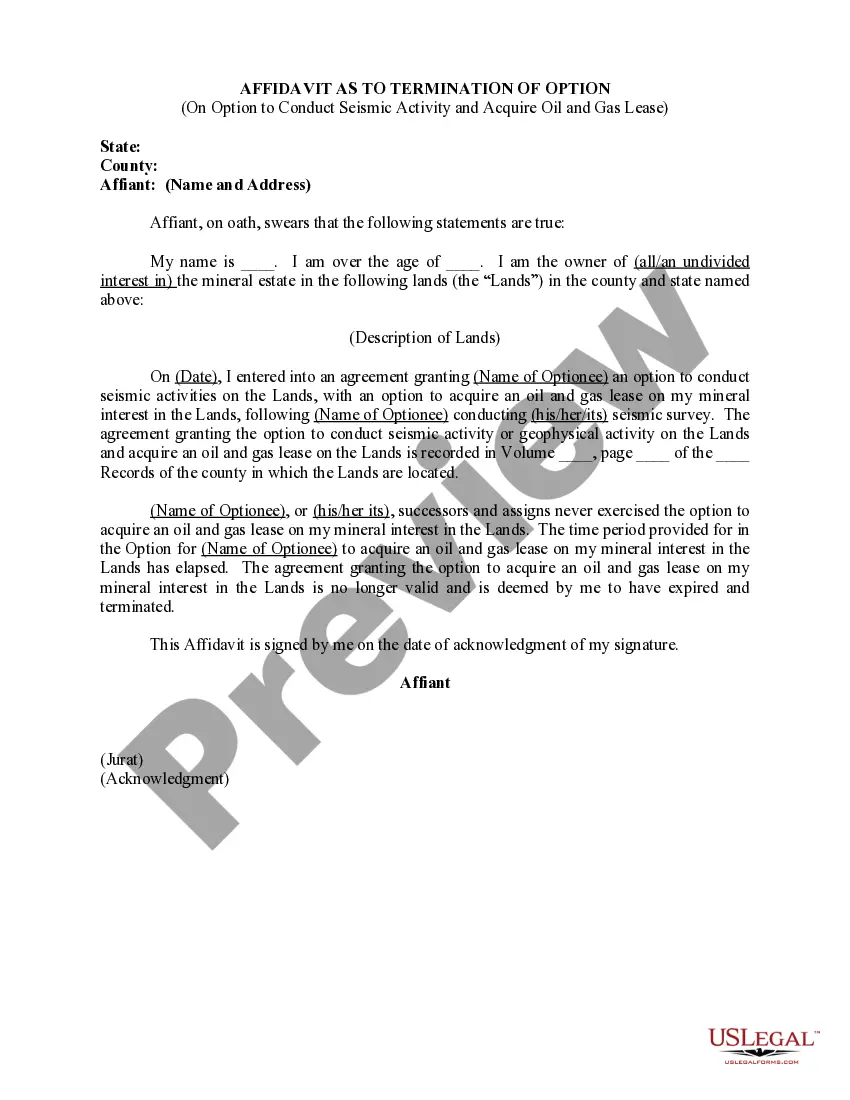
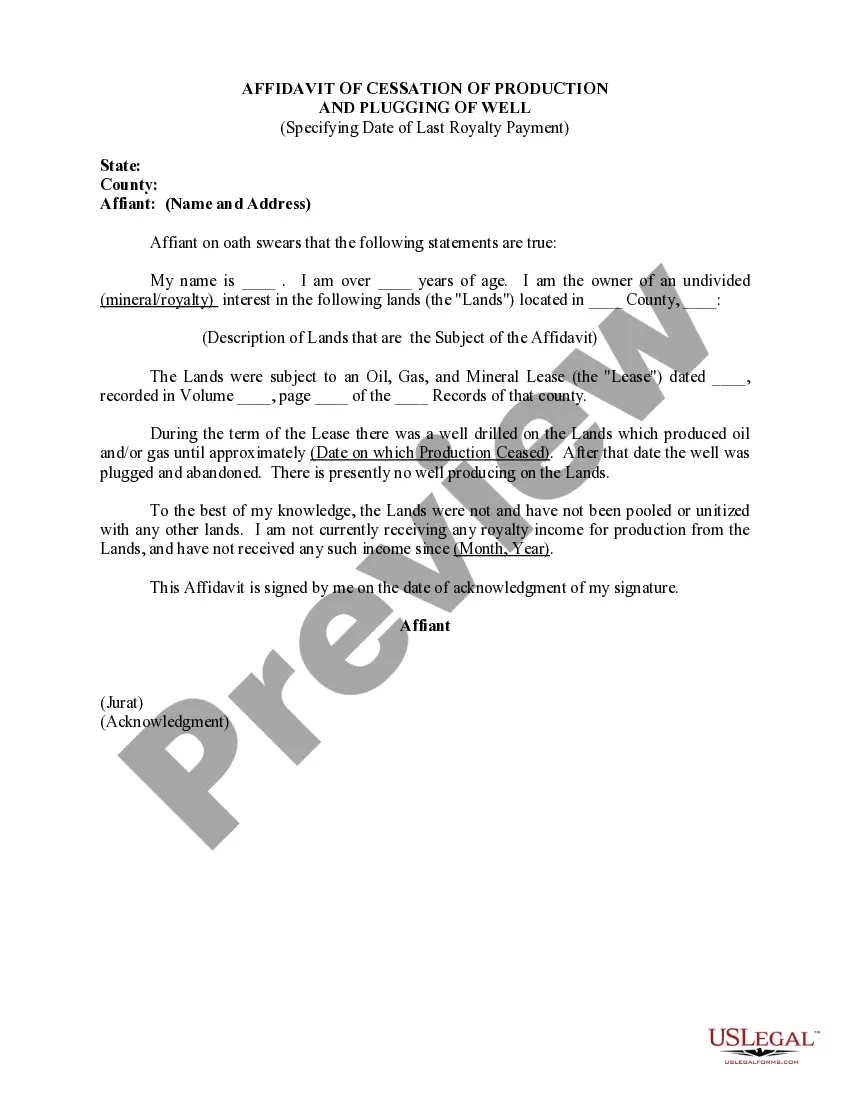
This affidavit should be used when a production payment linked to oil and gas leases has been fulfilled, and there is a need to formally document this conclusion. You'll need this form when there is a dispute over the continuation of production payments, when transferring lease rights, or when you simply want to clarify the legal standing of the lease regarding financial obligations.
Who this form is for
- Oil and gas leaseholders who have satisfied their production payment obligations.
- Assignors and assignees involved in the transfer or management of oil and gas leases.
- Attorneys or legal representatives working with clients in the oil and gas sector.
- Individuals or businesses seeking to clear title on property impacted by production payments.
Completing this form step by step
- Identify the affiant by entering their full name and address.
- Provide details about the production payment, including relevant instrument titles and dates.
- Clarify the lands associated with the oil and gas lease by including a detailed description.
- Confirm sufficient production by stating the duration and confirming the amounts produced.
- Have the affiant sign the document in the presence of a notary public to validate the affidavit.
Notarization requirements for this form
This form needs to be notarized to ensure legal validity. US Legal Forms provides secure online notarization powered by Notarize, allowing you to complete the process through a verified video call, available anytime.
Get your form ready online
Our built-in tools help you complete, sign, share, and store your documents in one place.
Make edits, fill in missing information, and update formatting in US Legal Forms—just like you would in MS Word.
Download a copy, print it, send it by email, or mail it via USPS—whatever works best for your next step.
Sign and collect signatures with our SignNow integration. Send to multiple recipients, set reminders, and more. Go Premium to unlock E-Sign.
If this form requires notarization, complete it online through a secure video call—no need to meet a notary in person or wait for an appointment.
We protect your documents and personal data by following strict security and privacy standards.

Make edits, fill in missing information, and update formatting in US Legal Forms—just like you would in MS Word.

Download a copy, print it, send it by email, or mail it via USPS—whatever works best for your next step.

Sign and collect signatures with our SignNow integration. Send to multiple recipients, set reminders, and more. Go Premium to unlock E-Sign.

If this form requires notarization, complete it online through a secure video call—no need to meet a notary in person or wait for an appointment.

We protect your documents and personal data by following strict security and privacy standards.
Avoid these common issues
- Failing to accurately detail the production payment, including the correct amounts and dates.
- Omitting the legal description of the affected lands.
- Not securing a proper notarization, which may invalidate the form.
- Providing false information about the production records.
Why complete this form online
- Convenient access to the form at any time, eliminating the need for in-person visits.
- Editability allows users to customize the affidavit as needed before printing.
- Reliability, with templates drafted by licensed attorneys ensuring compliance with legal standards.
Looking for another form?
Form popularity
FAQ
A volumetric production payment (VPP) deal is a means of financing that has been used in the oil and gas industry for several decades. A VPP involves the owner of an oil and gas property selling a percentage of their production in exchange for an upfront cash payment.
The royalty mineral owner retains ownership of the interest after production stops. Holders of overriding royalty interests have no ownership rights to the minerals under the ground but a non-possessory undivided interest.
An overriding royalty interest is the right to receive revenue from the production of oil and gas from a well. The overriding royalty is carved out of the lessee's (operator's) working interest and entitles its owner to a fraction of production.
A royalty interest is a non-possessory real property interest in oil and gas production free of production and operating expenses, which may be created by grant or by reservation or exception.
Production payments are commonly defined as a. share of oil or gas as produced, free of costs of. development, operations, and production, that. terminates when a given volume of production has. been paid to, or a specified sum from the sale of such.
A Volumetric Production Payment (VPP) is a type of structured investment that involves the owner of an oil or gas interest selling or borrowing money against a specific volume of production associated with that field or property.
An overriding royalty interest generally entitles the owner of the interest to a specified share of the oil and gas produced under the terms of the lease. In Texas and in many other oil-producing states, overriding royalty interests are generally treated as interests in real estate.