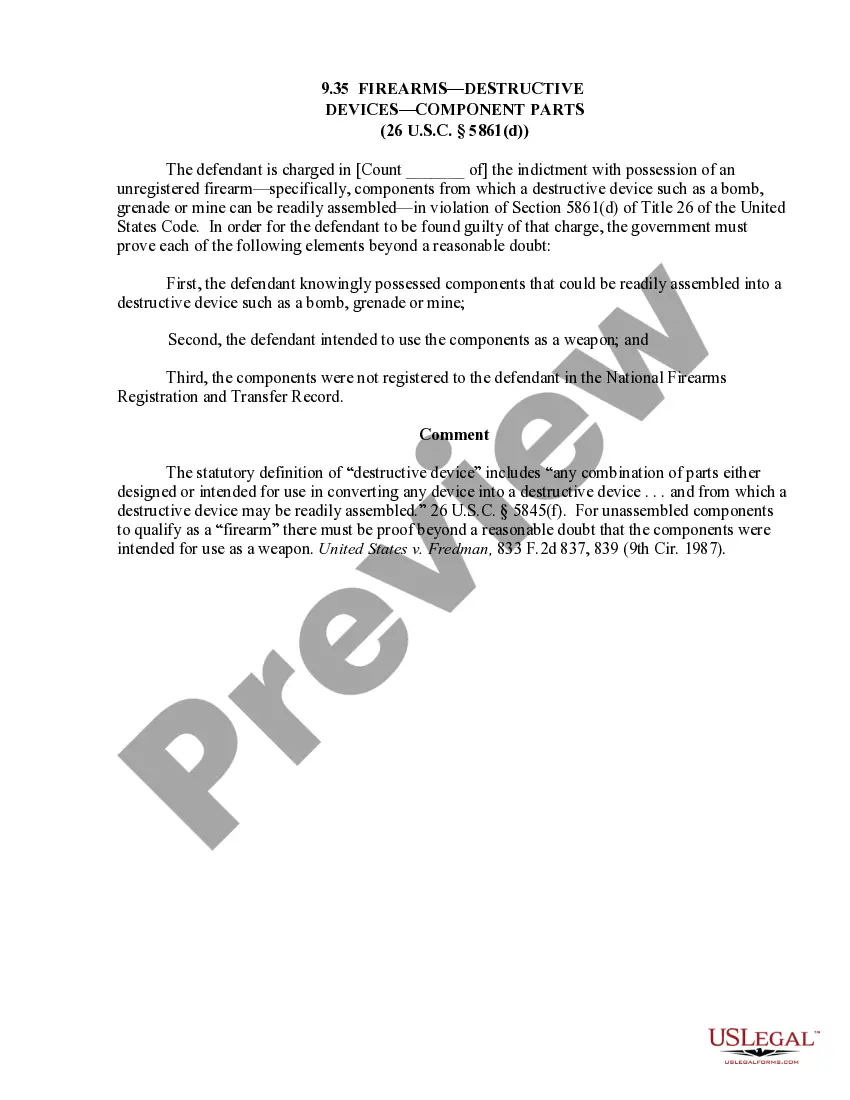
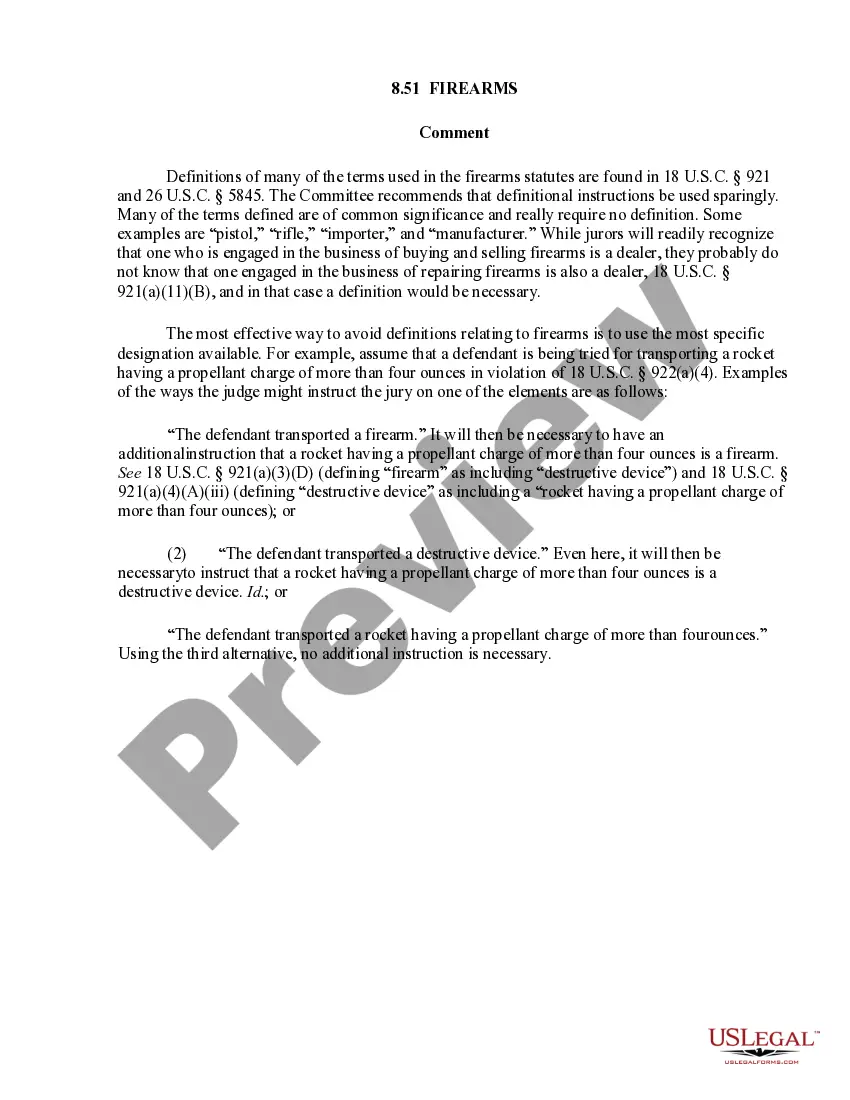
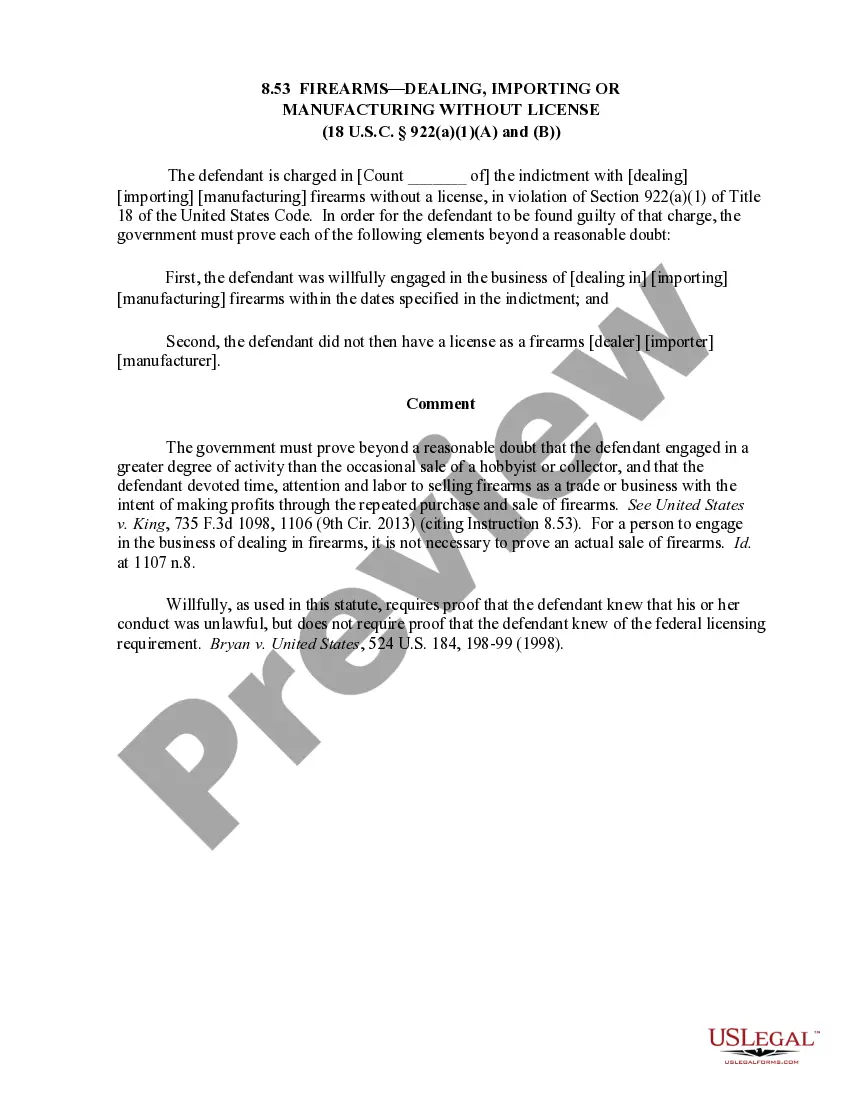
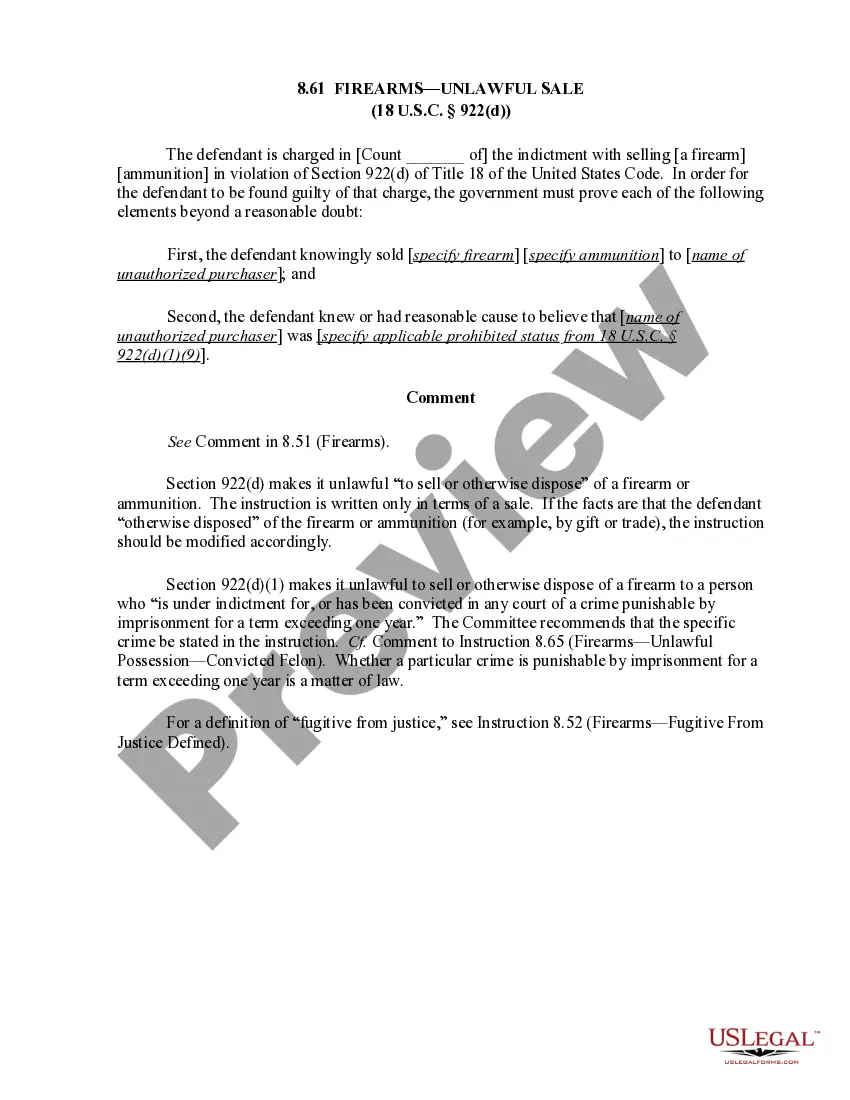
9.35 Firearms-Destructive Devices-Component Parts
Notarization guidance
Notarization is not commonly needed for this form. However, certain documents or local rules may make it necessary. Our notarization service, powered by Notarize, allows you to finalize it securely online anytime, day or night.
Get your form ready online
Our built-in tools help you complete, sign, share, and store your documents in one place.
Make edits, fill in missing information, and update formatting in US Legal Forms—just like you would in MS Word.
Download a copy, print it, send it by email, or mail it via USPS—whatever works best for your next step.
Sign and collect signatures with our SignNow integration. Send to multiple recipients, set reminders, and more. Go Premium to unlock E-Sign.
If this form requires notarization, complete it online through a secure video call—no need to meet a notary in person or wait for an appointment.
We protect your documents and personal data by following strict security and privacy standards.

Make edits, fill in missing information, and update formatting in US Legal Forms—just like you would in MS Word.

Download a copy, print it, send it by email, or mail it via USPS—whatever works best for your next step.

Sign and collect signatures with our SignNow integration. Send to multiple recipients, set reminders, and more. Go Premium to unlock E-Sign.

If this form requires notarization, complete it online through a secure video call—no need to meet a notary in person or wait for an appointment.

We protect your documents and personal data by following strict security and privacy standards.
Looking for another form?
Form popularity
FAQ
Any type of weapon by whatever name known which will, or which may readily be converted to expel a projectile, by the action of an explosive or other propellant, the barrel or barrels of which have a bore greater than one-half inch in diameter.
Other 20mm HE and HEI projectiles do not contain more than one-quarter ounce of explosive and are not destructive devices.
The USAS-12 shotgun has a bore of more than one-half inch in diameter and is not generally recognized as particularly suitable for sporting purposes. Therefore, it is classified as a destructive device for purposes of the National Firearms Act, 26 U.S.C.
§ 4-501(b)(2) ?Destructive device? includes a bomb, grenade, mine, shell, missile, flamethrower, poison gas, Molotov cocktail, pipe bomb, and petroleum-soaked ammonium nitrate.
The term ?destructive device? means (1) any explosive, incendiary, or poison gas (A) bomb, (B) grenade, (C) rocket having a propellent charge of more than four ounces, (D) missile having an explosive or incendiary charge of more than one-quarter ounce, (E) mine, or (F) similar device; (2) any type of weapon by whatever
The term ?destructive device? means (1) any explosive, incendiary, or poison gas (A) bomb, (B) grenade, (C) rocket having a propellent charge of more than four ounces, (D) missile having an explosive or incendiary charge of more than one-quarter ounce, (E) mine, or (F) similar device; (2) any type of weapon by whatever
While current federal laws allow destructive devices, some states have banned them from transfer to civilians. In states where banned, only law enforcement officers and military personnel are allowed to possess them.
Examples of destructive devices include grenades, grenade launchers, artillery weapons, and firearms with a bore over one half of an inch (. 50 inches or 12.7 mm), excluding some rifles and most shotguns, both semi automatic and manually operated.