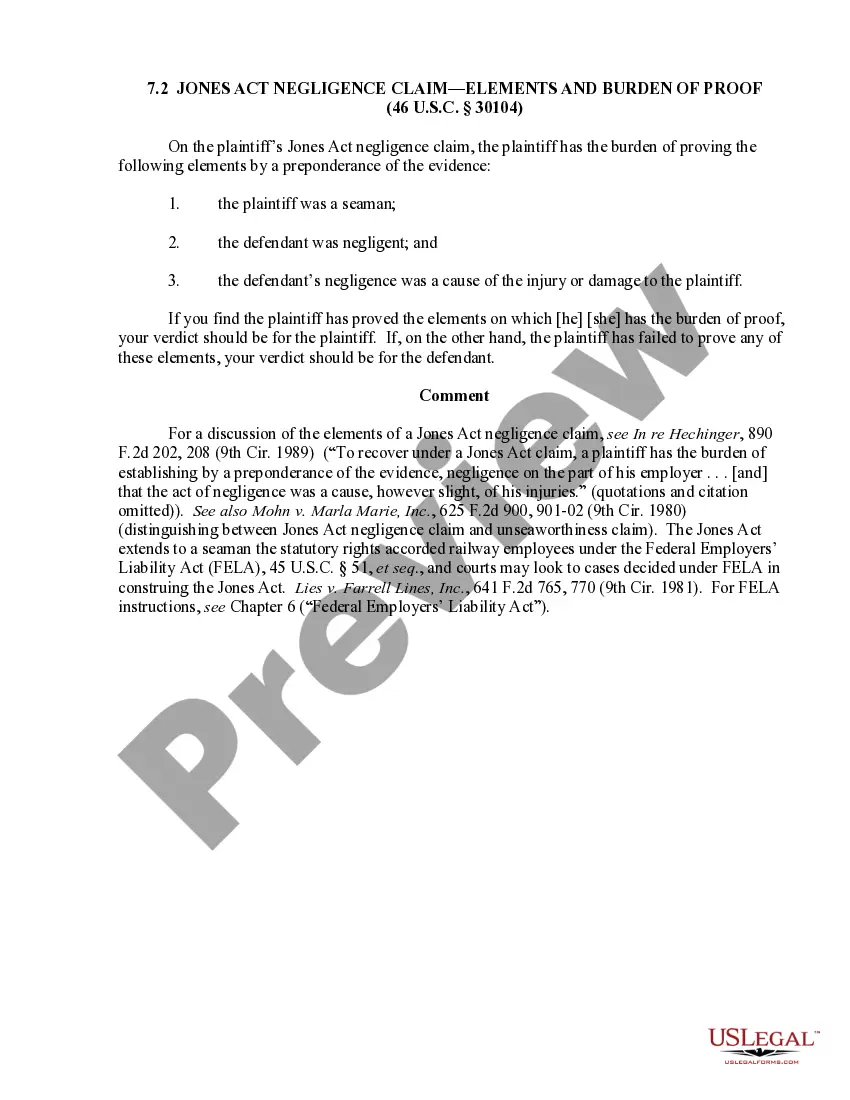
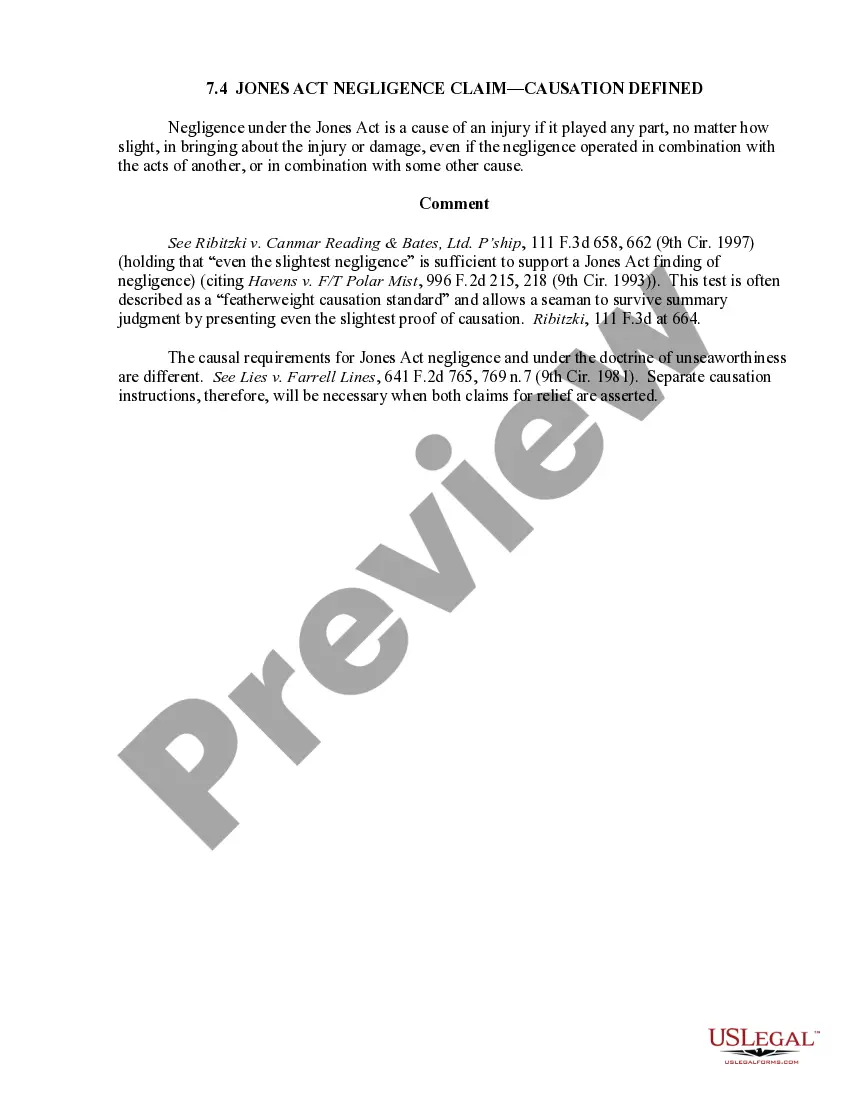
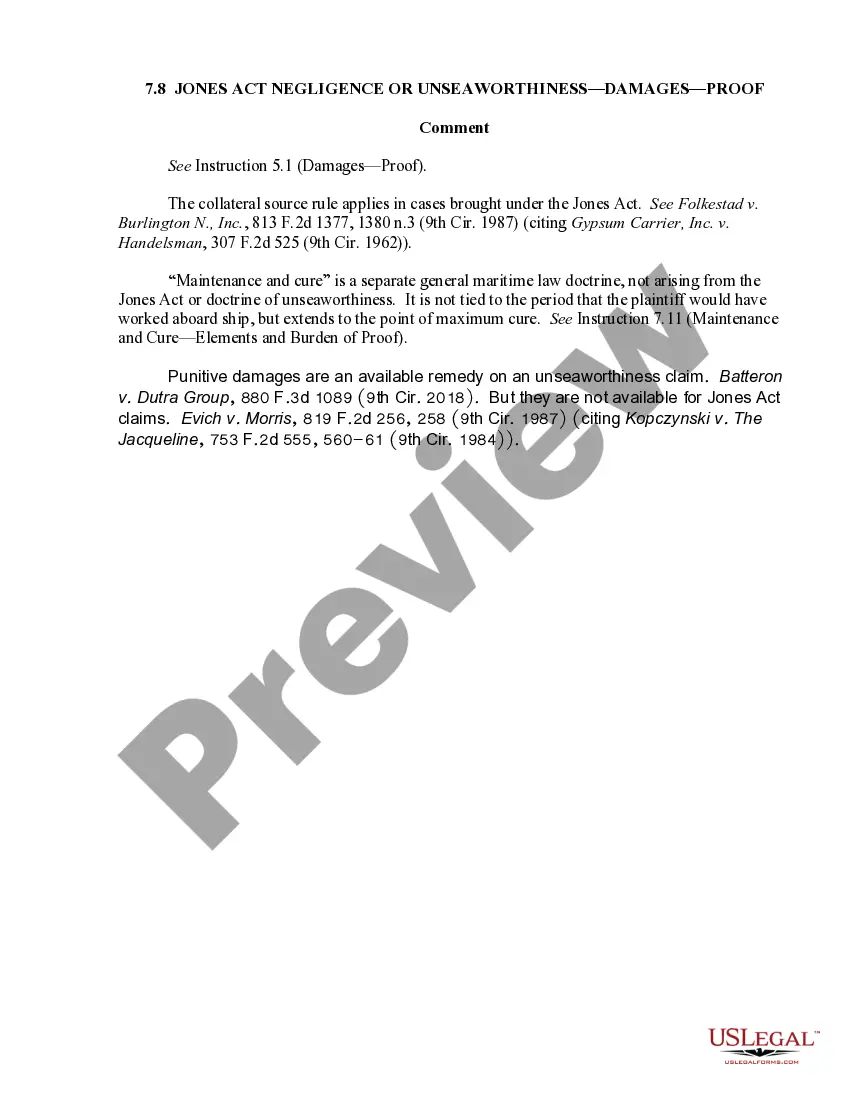
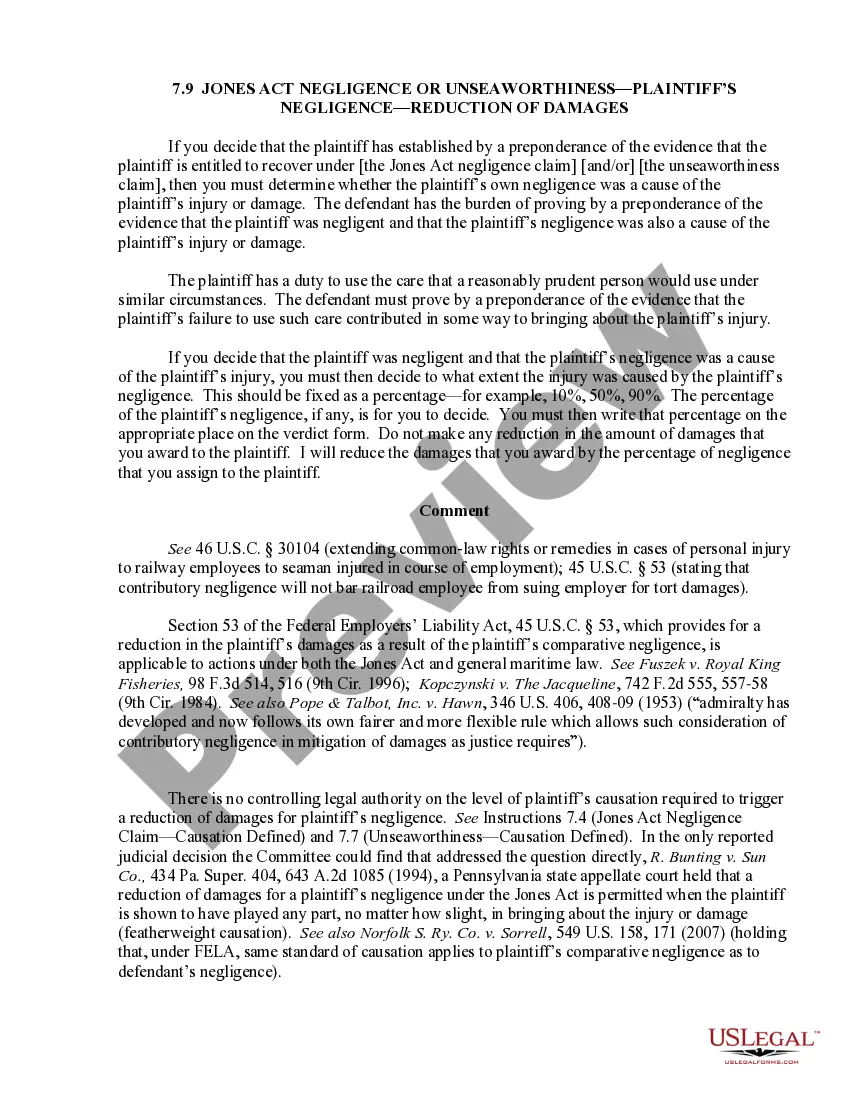
7.2 Jones Act Negligence Claim-Elements and Burden of Proof (46 U.S.C. Sec. 30104)
Is notarization required?
Notarization is not commonly needed for this form. However, certain documents or local rules may make it necessary. Our notarization service, powered by Notarize, allows you to finalize it securely online anytime, day or night.
Get your form ready online
Our built-in tools help you complete, sign, share, and store your documents in one place.
Make edits, fill in missing information, and update formatting in US Legal Forms—just like you would in MS Word.
Download a copy, print it, send it by email, or mail it via USPS—whatever works best for your next step.
Sign and collect signatures with our SignNow integration. Send to multiple recipients, set reminders, and more. Go Premium to unlock E-Sign.
If this form requires notarization, complete it online through a secure video call—no need to meet a notary in person or wait for an appointment.
We protect your documents and personal data by following strict security and privacy standards.

Make edits, fill in missing information, and update formatting in US Legal Forms—just like you would in MS Word.

Download a copy, print it, send it by email, or mail it via USPS—whatever works best for your next step.

Sign and collect signatures with our SignNow integration. Send to multiple recipients, set reminders, and more. Go Premium to unlock E-Sign.

If this form requires notarization, complete it online through a secure video call—no need to meet a notary in person or wait for an appointment.

We protect your documents and personal data by following strict security and privacy standards.
Looking for another form?
Form popularity
FAQ
Unlike other types of personal injury claims, however, Jones Act claims have what is considered to be a "featherweight" burden of proof. This means that a judge or jury only has to be convinced that the employer's action or lack of action played a role?no matter how small?in causing the plaintiff's injury.
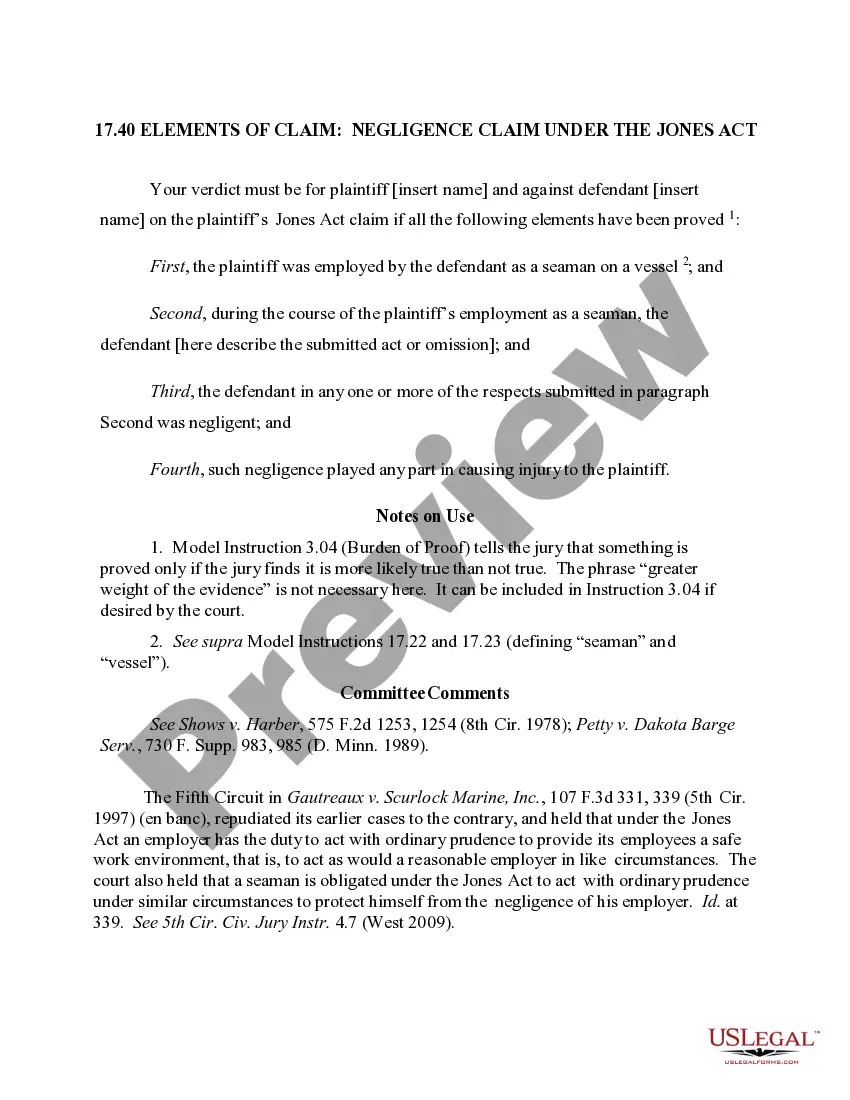
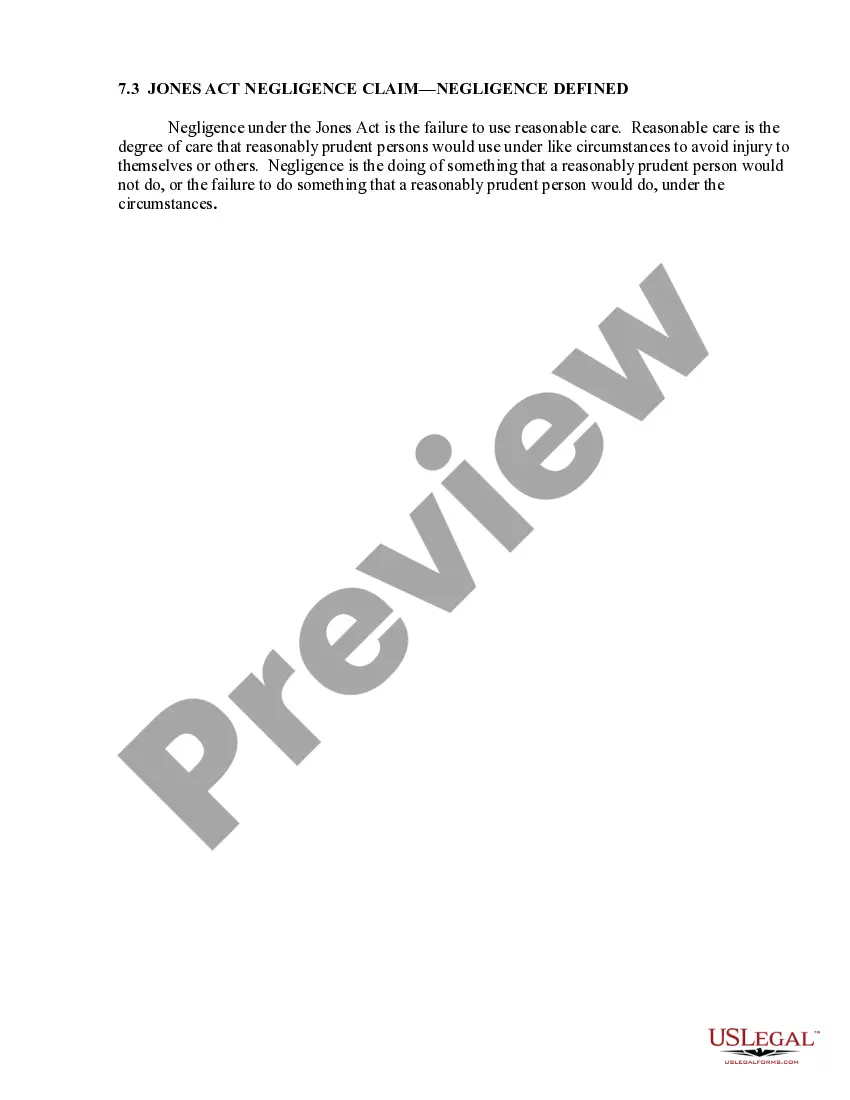
Negligence claims must prove four things in court: duty, breach, causation, and damages/harm. Generally speaking, when someone acts in a careless way and causes an injury to another person, under the legal principle of "negligence" the careless person will be legally liable for any resulting harm.
A negligence claim requires that the person bringing the claim (the plaintiff) establish four distinct elements: duty of care, breach, causation, and damages.
These five elements of a negligence case are explained in greater detail below. Duty of Care.Breach of Duty of Care.Cause in Fact of the Injury.Proximate Cause of Harm.Damages and Harm.Attorney To Help Prove the Elements of Your Negligence Case.
To win a negligence case, a plaintiff must prove four elements: (1) duty, (2) breach of duty, (3) causation, and (4) damages.
The U.S. legal system generally recognizes a system of proof known as "The Five Elements of Negligence." In a trial where negligence is a factor the courtroom is instructed to assess if the following elements have been established before reaching a verdict: Duty, Breach of Duty, Cause in Fact, Proximate Cause and
The claimant only needs to prove that on the balance of probabilities the defendant that owed a duty of care failed to exercise reasonable care. The claimant needs to show that the defendant has caused the claimant to suffer loss.