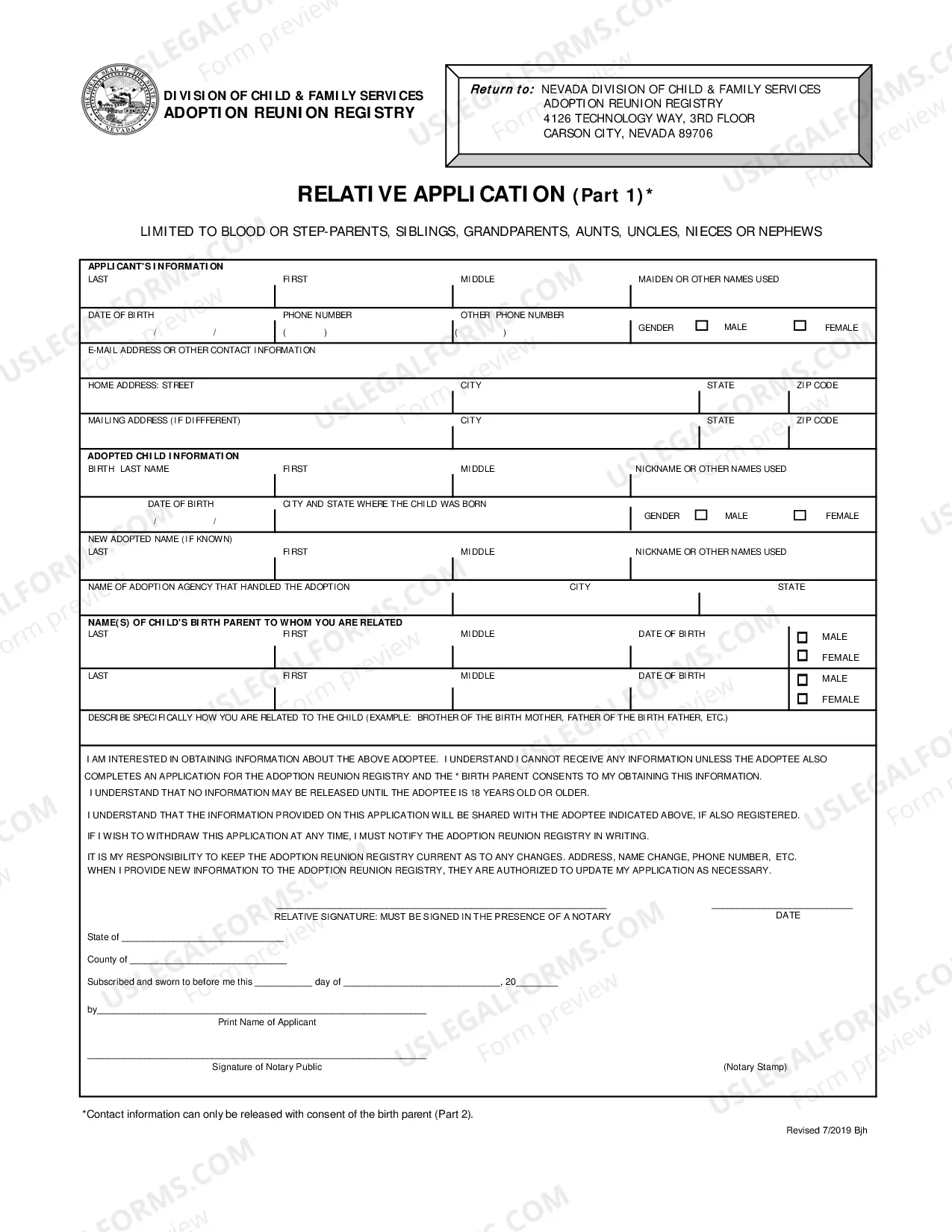
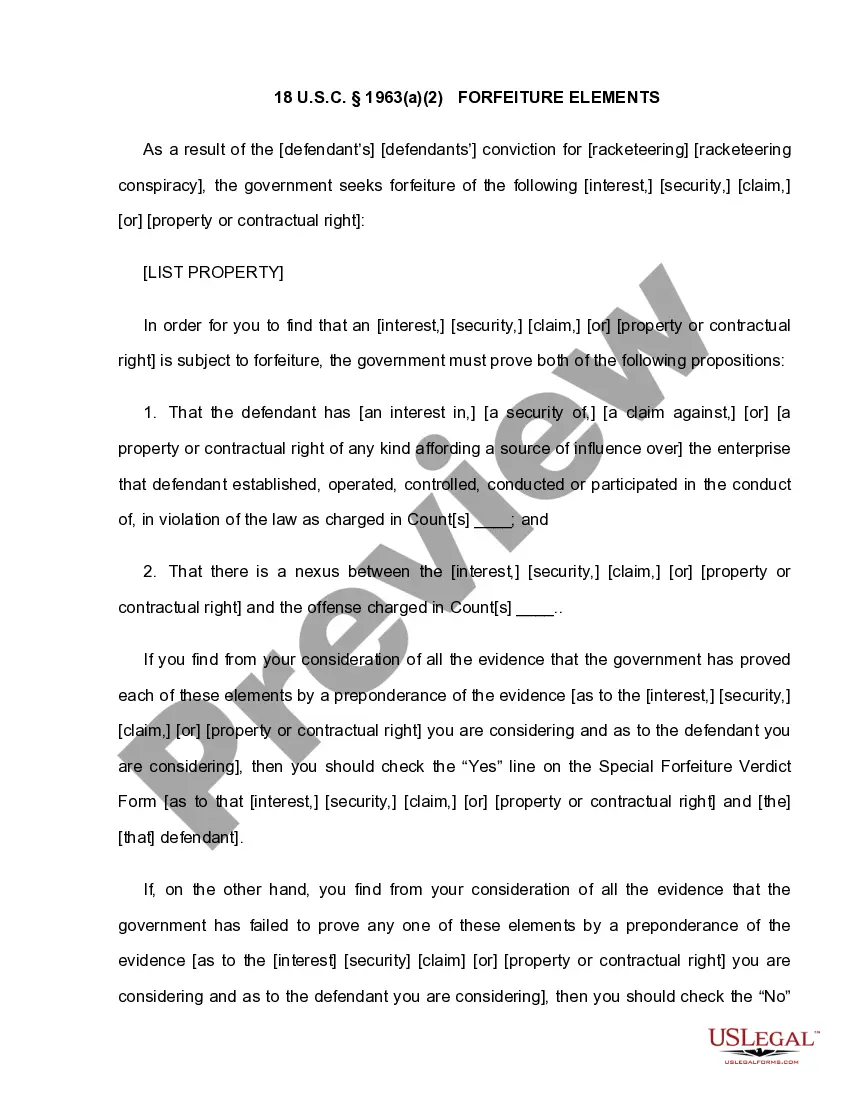
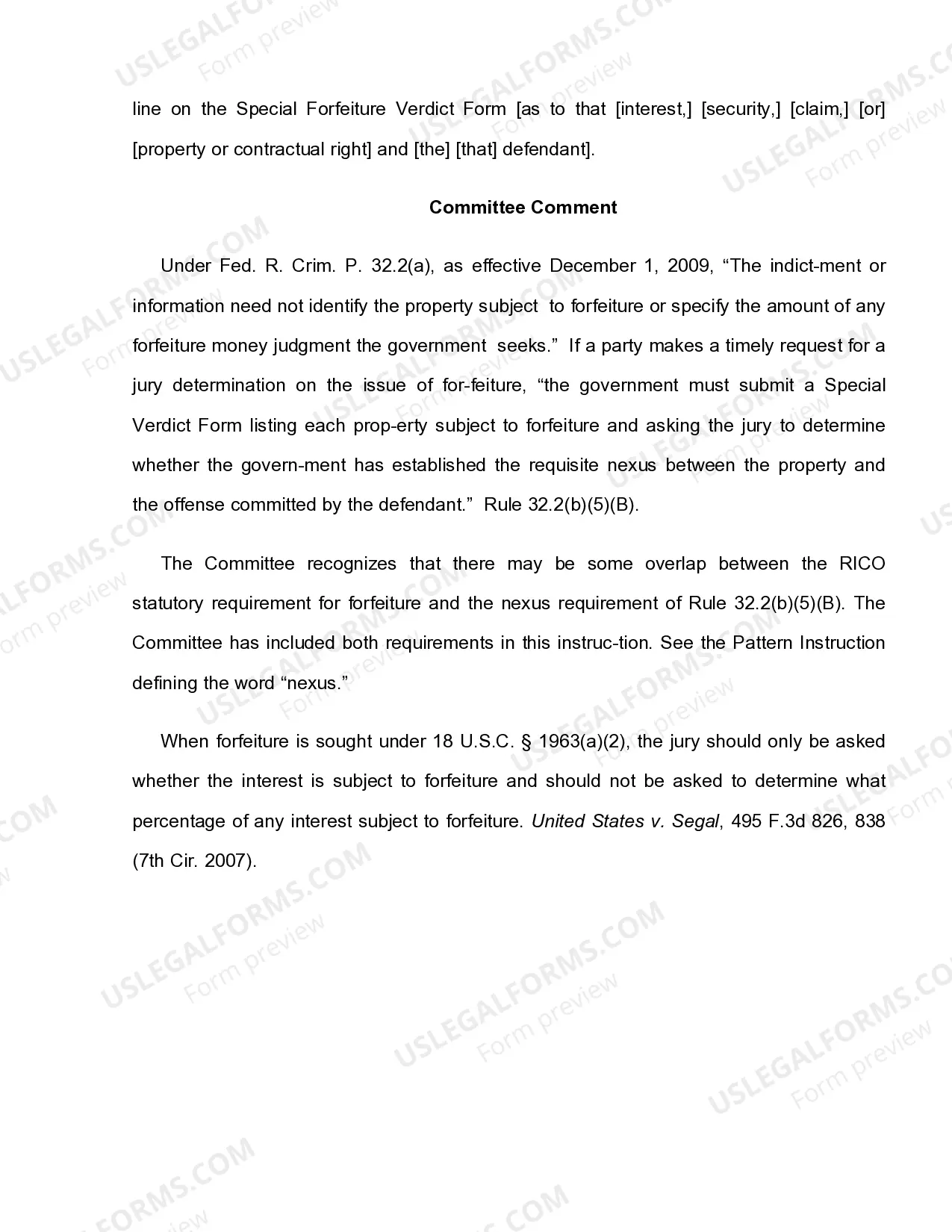
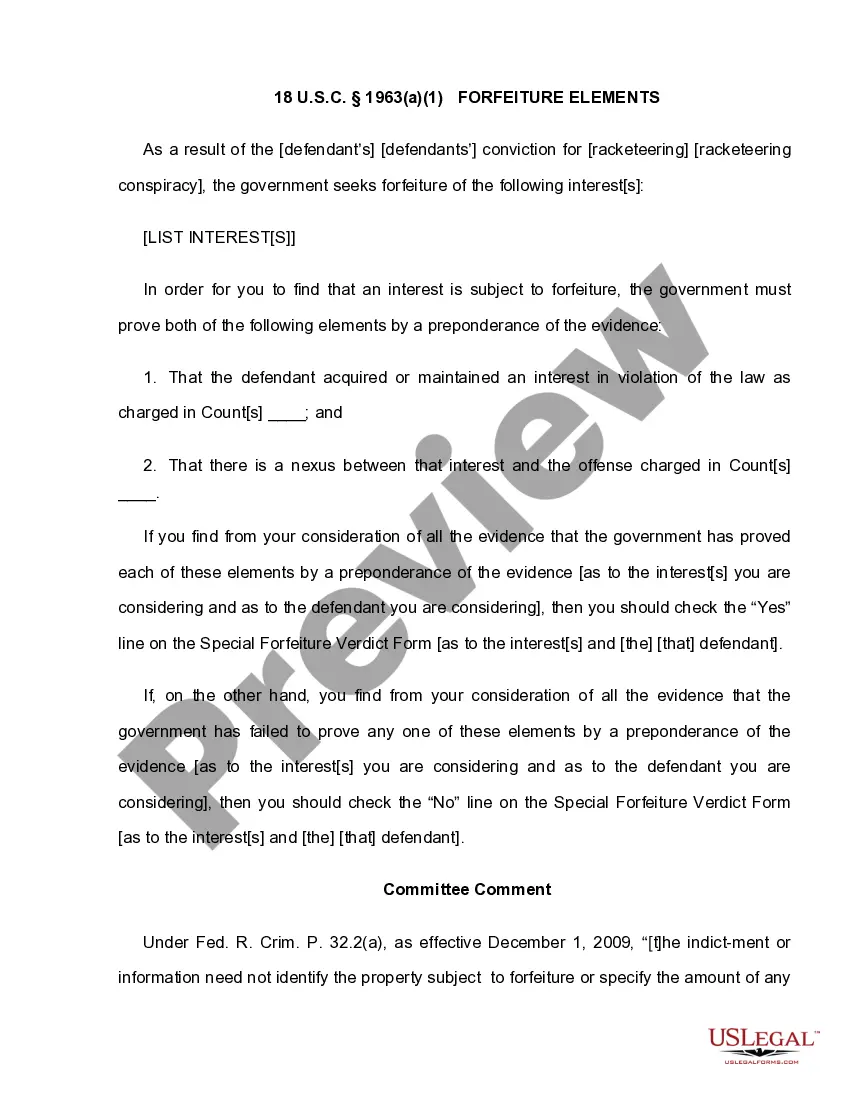
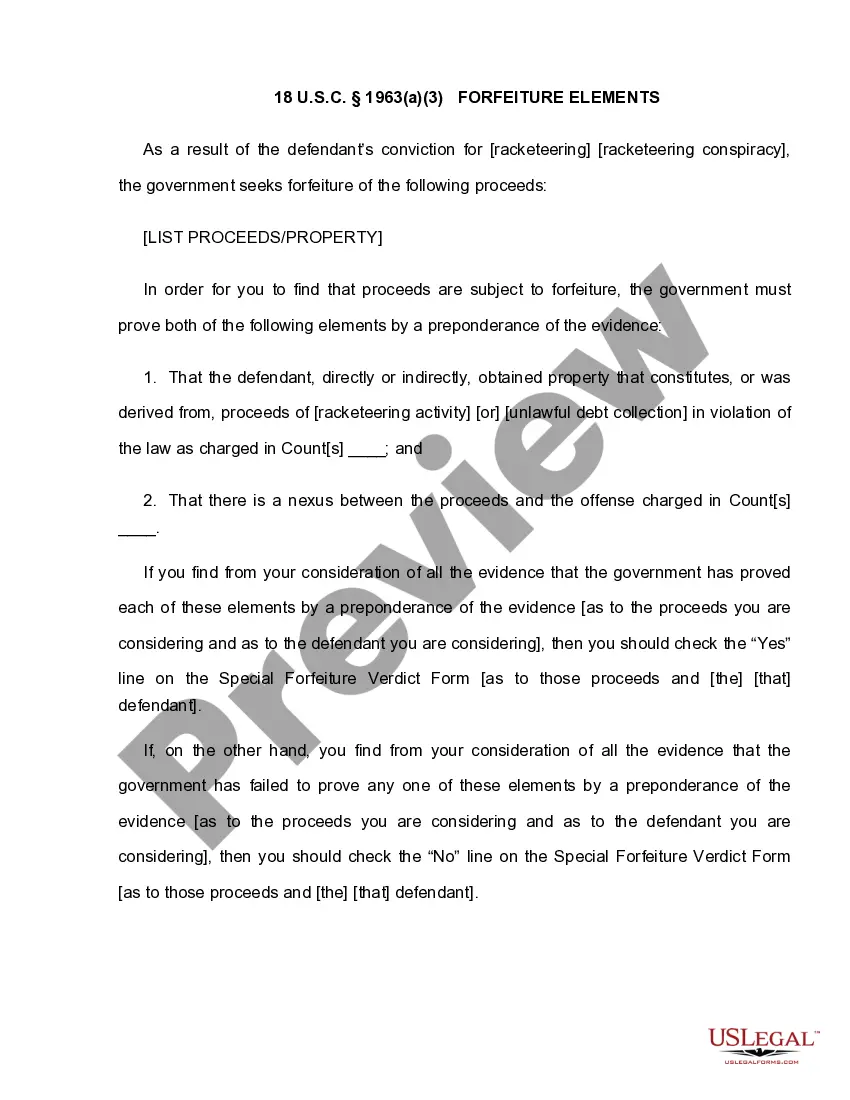
18 U.S.C. Sec. 1963(A)(2) FORFEITURE ELEMENTS
Is notarization required?
Notarization is not commonly needed for this form. However, certain documents or local rules may make it necessary. Our notarization service, powered by Notarize, allows you to finalize it securely online anytime, day or night.
Get your form ready online
Our built-in tools help you complete, sign, share, and store your documents in one place.
Make edits, fill in missing information, and update formatting in US Legal Forms—just like you would in MS Word.
Download a copy, print it, send it by email, or mail it via USPS—whatever works best for your next step.
Sign and collect signatures with our SignNow integration. Send to multiple recipients, set reminders, and more. Go Premium to unlock E-Sign.
If this form requires notarization, complete it online through a secure video call—no need to meet a notary in person or wait for an appointment.
We protect your documents and personal data by following strict security and privacy standards.

Make edits, fill in missing information, and update formatting in US Legal Forms—just like you would in MS Word.

Download a copy, print it, send it by email, or mail it via USPS—whatever works best for your next step.

Sign and collect signatures with our SignNow integration. Send to multiple recipients, set reminders, and more. Go Premium to unlock E-Sign.

If this form requires notarization, complete it online through a secure video call—no need to meet a notary in person or wait for an appointment.

We protect your documents and personal data by following strict security and privacy standards.
Looking for another form?

Form popularity
FAQ
While aiding and abetting might commonly be thought of as an offense in itself, it is not an independent crime under 18 U.S.C. § 2. That statute provides no penalty, and only abolishes the distinction between common law notions of "principal" and "accessory." United States v.
At the state level, racketeering includes crimes such as murder, kidnapping, gambling, arson, robbery, bribery, extortion, dealing in obscene matters, and drug crimes.
Title 18, United States Code § 2 now provides: (a) Whoever commits an offense against the United States or aids, abets, counsels, commands, induces or procures its commission, is punishable as a principal.
Set of illegal activities aimed at commercial profit that may be disguised as legitimate business deals. Common examples include fraud, extortion, bribery, and actual or threatened violence. criminal law.
? (1) ''racketeering activity'' means (A) any act or threat. involving murder, kidnapping, gambling, arson, robbery, bribery, extortion, dealing in obscene matter, or dealing in a controlled. substance or listed chemical (as defined in section 102 of the. Controlled Substances Act), which is chargeable under State law.
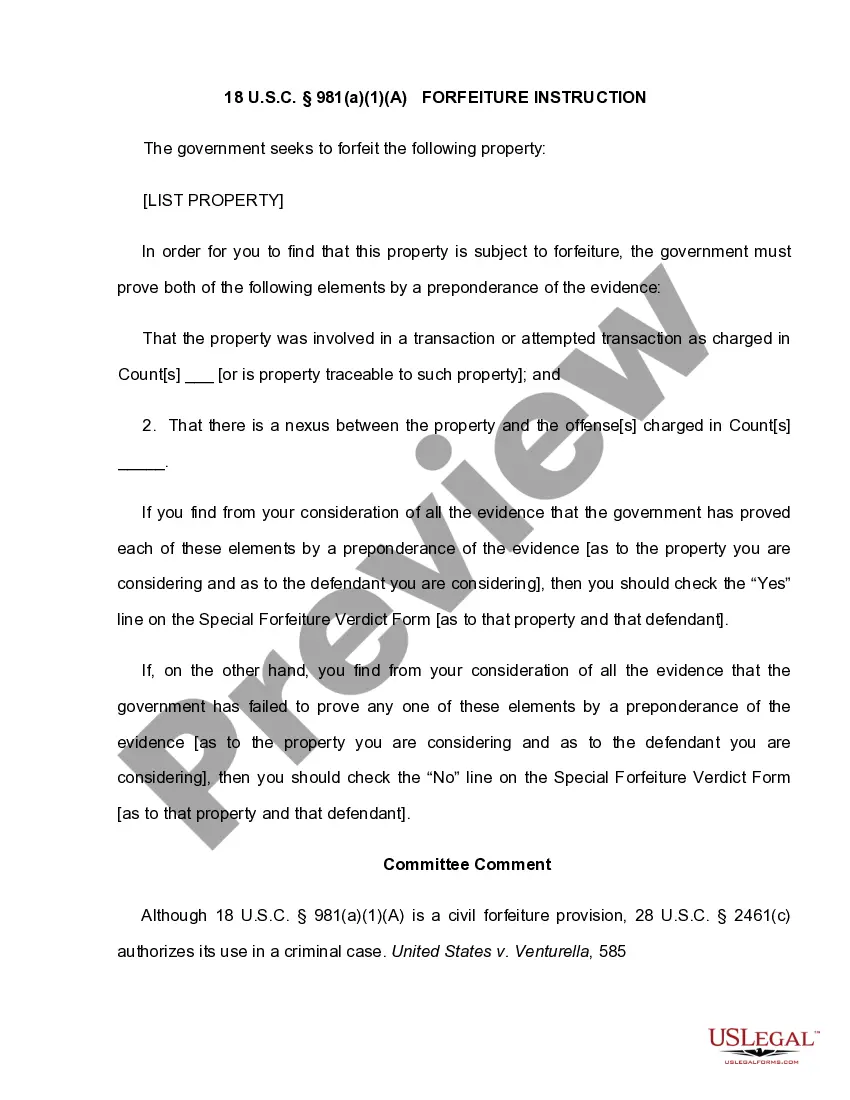
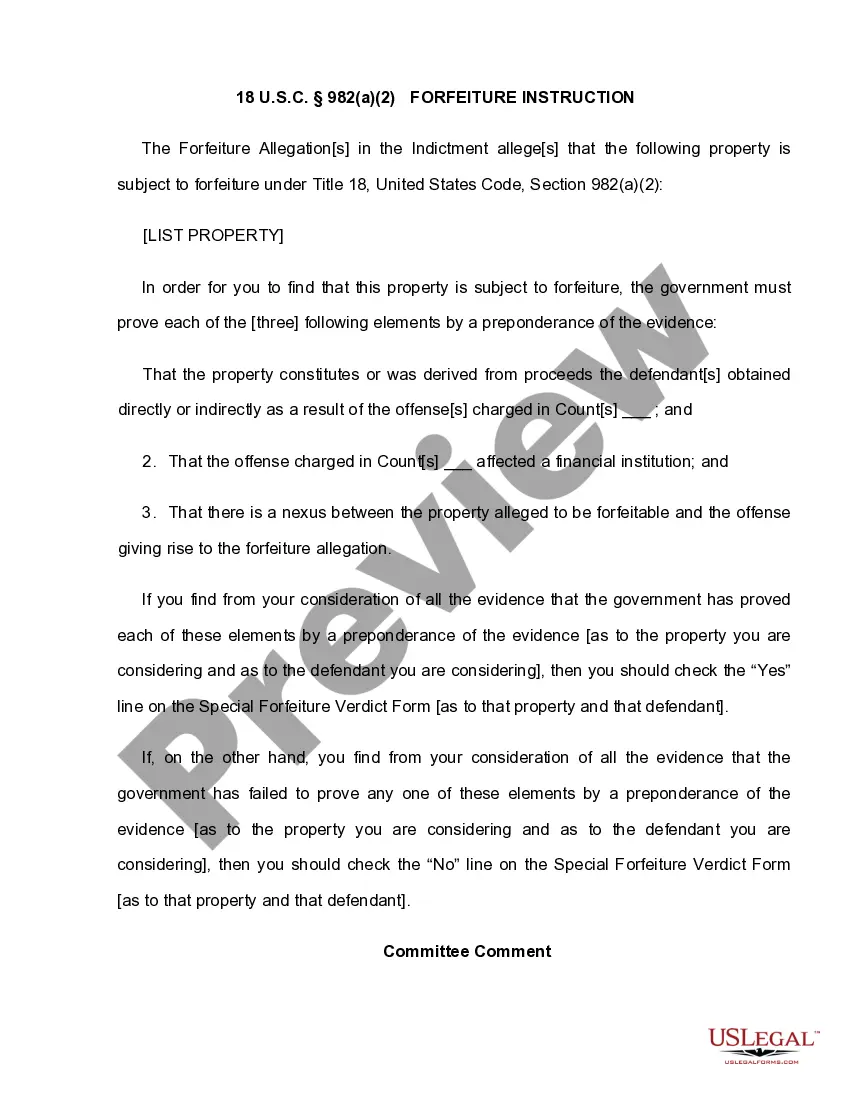
§982. Criminal forfeiture. (a)(1) The court, in imposing sentence on a person convicted of an offense in violation of section 1956, 1957, or 1960 of this title, shall order that the person forfeit to the United States any property, real or personal, involved in such offense, or any property traceable to such property.
Modern racketeering crimes include credit card frauds, data theft, and cybercrimes. They belong to the category of white-collar crimes.
The law defines 35 offenses as constituting racketeering, including gambling, murder, kidnapping, arson, drug dealing, bribery. Significantly, mail and wire fraud are included on the list. These crimes are known as "predicate" offenses.