Impeding Internal Revenue Service
What this document covers
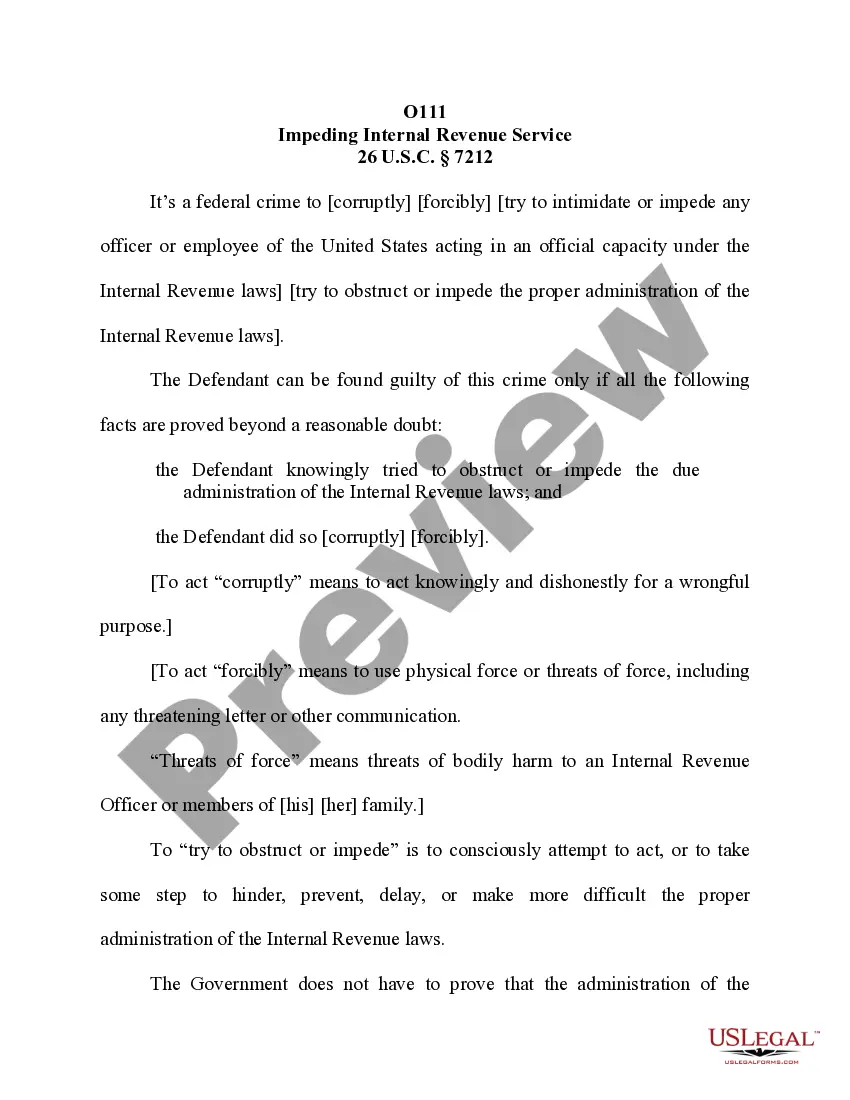
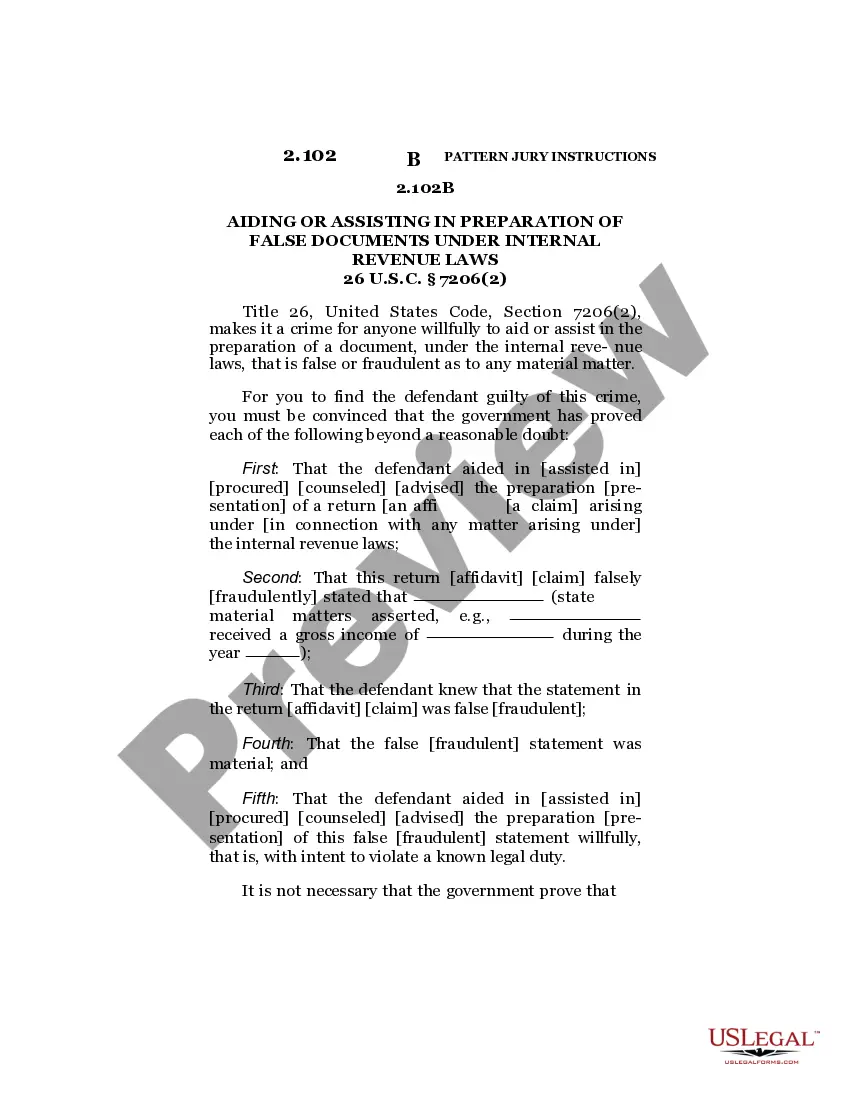
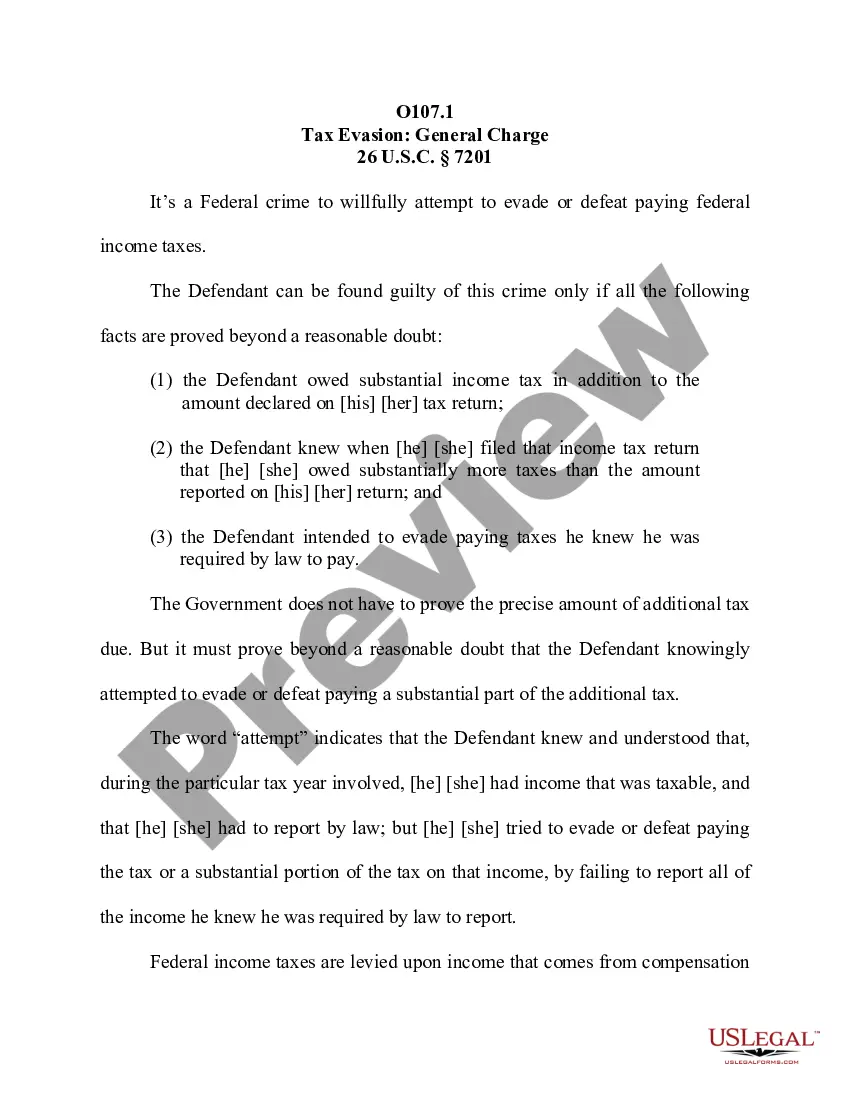
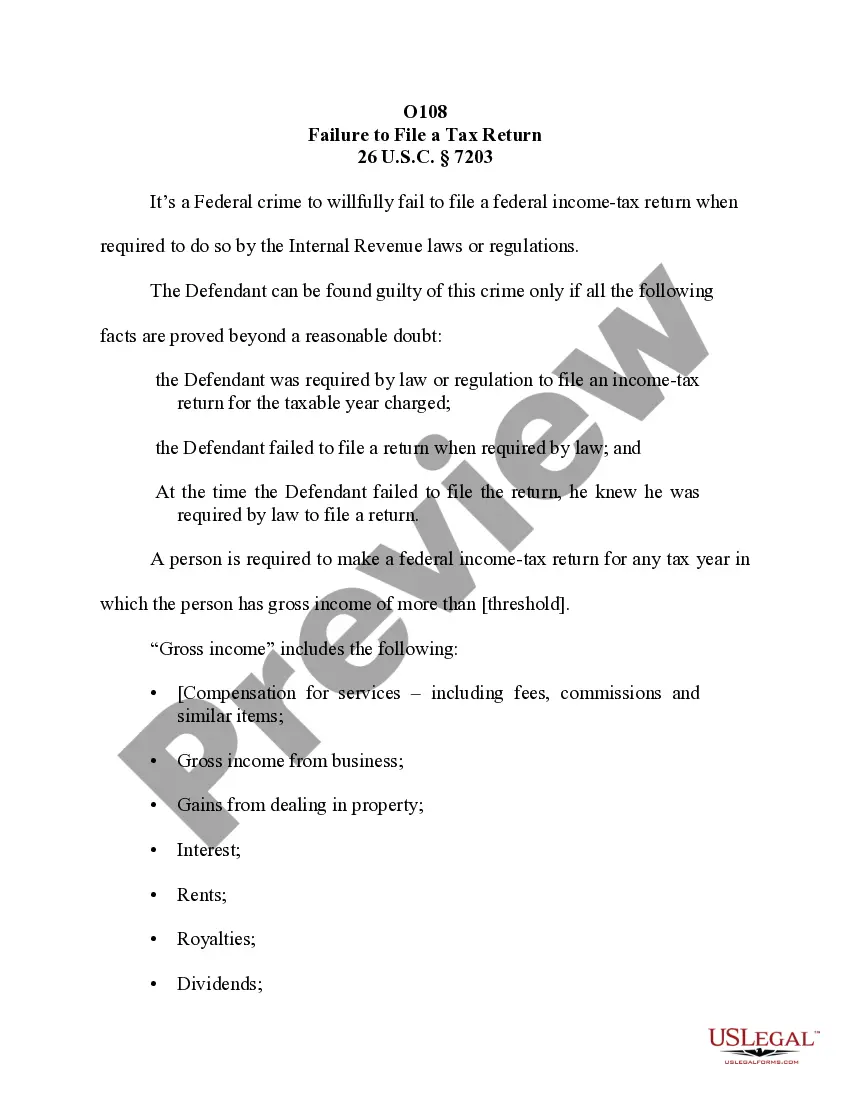
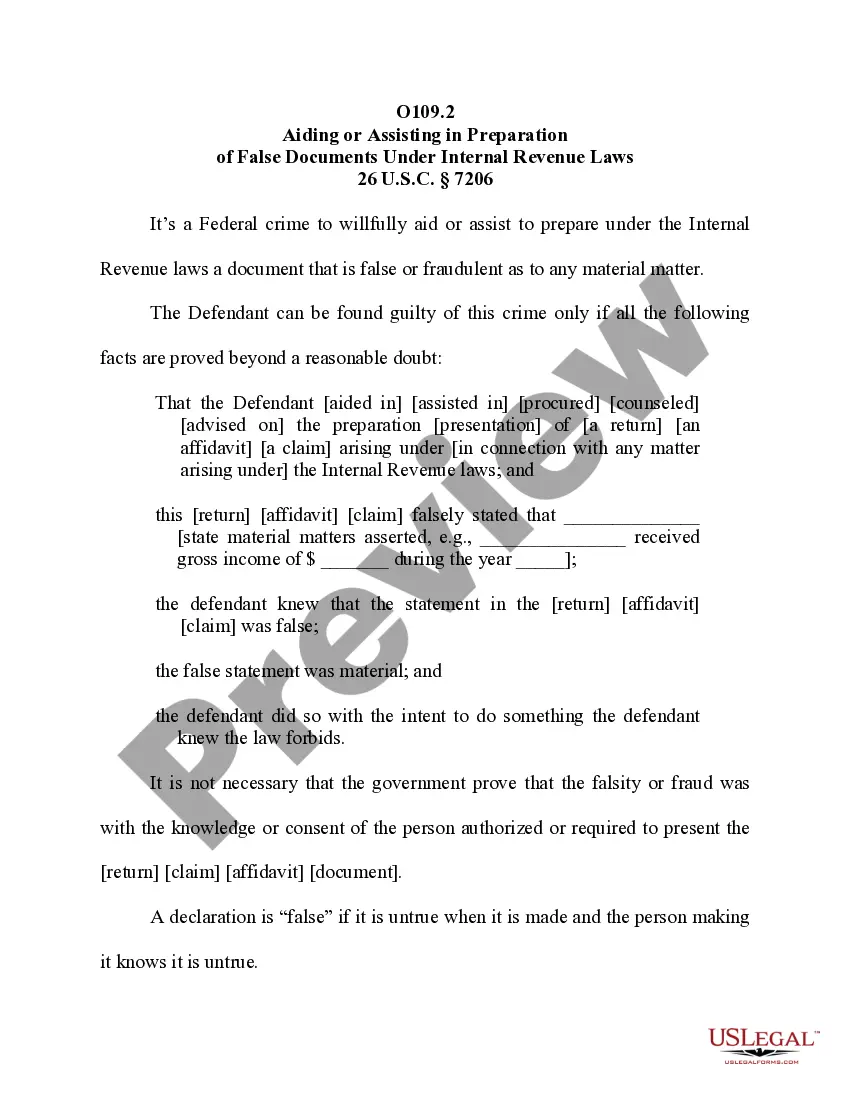
The "Impeding Internal Revenue Service" form serves as a template for legal actions involving attempts to obstruct or impede the proper administration of Internal Revenue laws. This form is intended for use in situations where someone may have acted with corrupt intent against the officials managing tax laws. Unlike other legal forms, this template specifically addresses federal criminal statutes related to tax law enforcement.
Key parts of this document
- Description of what constitutes corrupt or forcible action against IRS officials.
- Criteria for proving guilt, requiring evidence of intent to obstruct the administration of IRS laws.
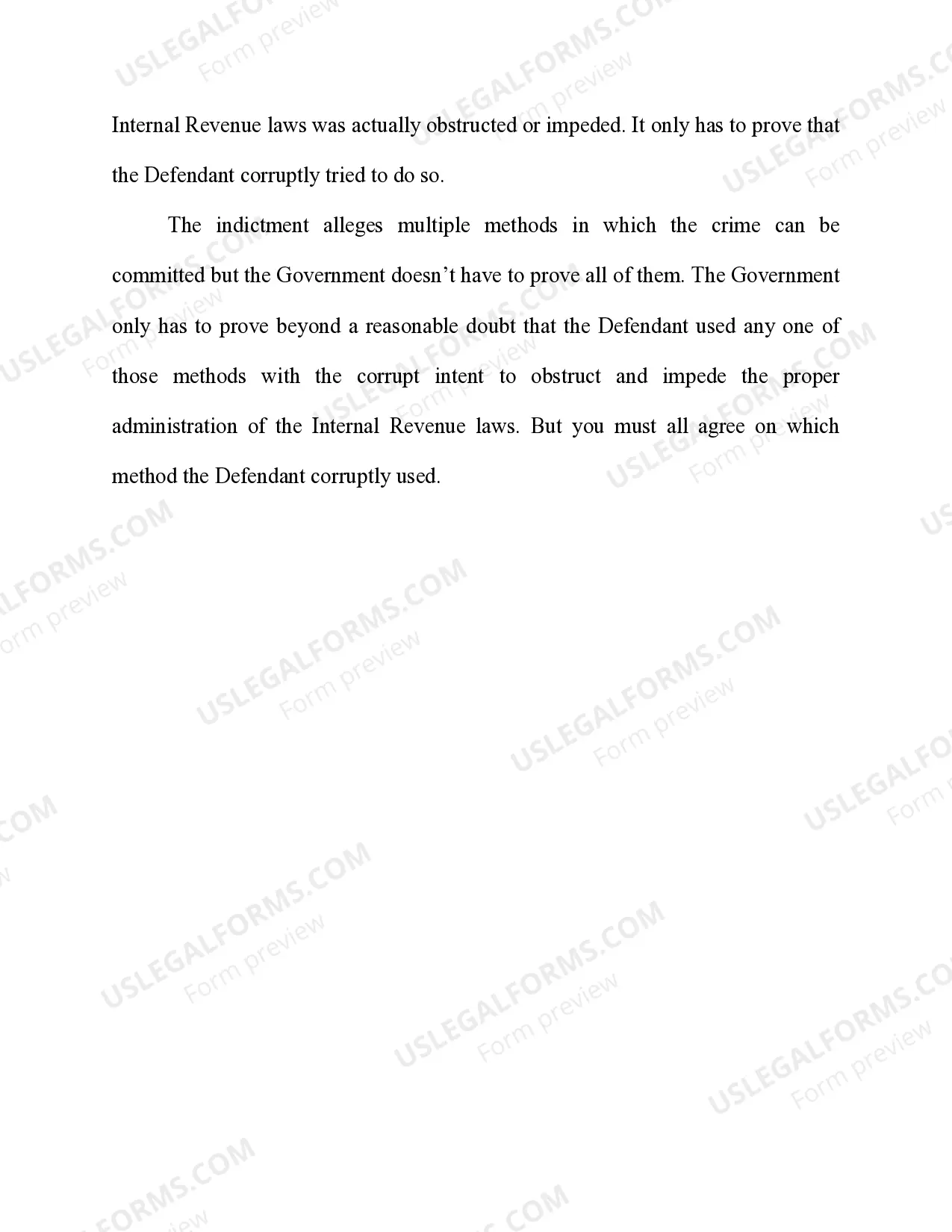
- Clarification of what it means to "try to obstruct or impede" the IRS.
- Details about the government's burden of proof regarding various methods of obstruction.
Situations where this form applies
This form should be used in cases where an individual is accused of attempting to interfere with or obstruct the Internal Revenue Service (IRS) officers in the performance of their official duties. It is relevant in situations involving threats, coercion, or any actions deemed corrupt or forcible against IRS representatives during their enforcement of tax laws.
Intended users of this form
This form is suitable for:
- Individuals accused of attempting to obstruct IRS officials.
- Legal professionals representing clients in tax-related criminal cases.
- Anyone involved in legal proceedings where IRS law enforcement is a focal point.
How to complete this form
- Identify the defendant by providing their full name and relevant details.
- Specify the actions taken by the defendant that allegedly obstruct the IRS.
- Include evidence or descriptions highlighting the corrupt or forcible nature of the actions.
- Ensure all parties understand the methods of perceived obstruction listed in the indictment.
- Obtain necessary signatures to validate the form.
Notarization requirements for this form
This form usually doesn’t need to be notarized. However, local laws or specific transactions may require it. Our online notarization service, powered by Notarize, lets you complete it remotely through a secure video session, available 24/7.
Get your form ready online
Our built-in tools help you complete, sign, share, and store your documents in one place.
Make edits, fill in missing information, and update formatting in US Legal Forms—just like you would in MS Word.
Download a copy, print it, send it by email, or mail it via USPS—whatever works best for your next step.
Sign and collect signatures with our SignNow integration. Send to multiple recipients, set reminders, and more. Go Premium to unlock E-Sign.
If this form requires notarization, complete it online through a secure video call—no need to meet a notary in person or wait for an appointment.
We protect your documents and personal data by following strict security and privacy standards.

Make edits, fill in missing information, and update formatting in US Legal Forms—just like you would in MS Word.

Download a copy, print it, send it by email, or mail it via USPS—whatever works best for your next step.

Sign and collect signatures with our SignNow integration. Send to multiple recipients, set reminders, and more. Go Premium to unlock E-Sign.

If this form requires notarization, complete it online through a secure video call—no need to meet a notary in person or wait for an appointment.

We protect your documents and personal data by following strict security and privacy standards.
Mistakes to watch out for
- Failing to define what constitutes "corruptly" or "forcibly" in relation to the actions taken.
- Leaving out critical details regarding the methods of obstruction used.
- Not understanding the burden of proof required by the government.
Why use this form online
- Convenience of completing the form from anywhere at any time.
- Editability for tailoring the content to specific cases or scenarios.
- Access to templates created by licensed attorneys to ensure legal compliance.
Looking for another form?
Form popularity
FAQ
Report Suspected Tax Law Violations We will keep your identity confidential when you file a tax fraud report. You won't receive a status or progress update due to tax return confidentiality under IRC 6103.
The IRS usually starts these audits within a year after you file the return, and wraps them up within three to six months. But expect a delay if you don't provide complete information or if the auditor finds issues and wants to expand the audit into other areas or years.
Use the Form 3949-A, Information Referral if you suspect an individual or a business is not complying with the tax laws. You can submit Form 3949-A online or by mail. We don't take tax law violation referrals over the phone. We will keep your identity confidential when you file a tax fraud report.
An award worth between 15 and 30 percent of the total proceeds that IRS collects could be paid, if the IRS moves ahead based on the information provided. Under the law, these awards will be paid when the amount identified by the whistleblower (including taxes, penalties and interest) is more than $2 million.
You can avoid a levy by filing returns on time and paying your taxes when due. If you need more time to file, you can request an extension. If you can't pay what you owe, you should pay as much as you can and work with the IRS to resolve the remaining balance.
The IRS Whistleblower Office pays monetary awards to eligible individuals whose information is used by the IRS. The award percentage depends on several factors, but generally falls between 15 and 30 percent of the proceeds collected and attributable to the whistleblower's information.
Failure to file penalty You can face criminal tax evasion charges for failing to file a tax return if it was due no more than six years ago. If convicted, you could be sent to jail for up to one year.
You should report fraudulent or abusive returns, including those with questionable Forms W-2, to the IRS by submitting Form 3949-A, Information ReferralPDF. You can also report fraudulent or abusive returns without using the IRS form but you must still send the information to the address shown on Form 3949-A.