Bank-Deposits Method
What this document covers
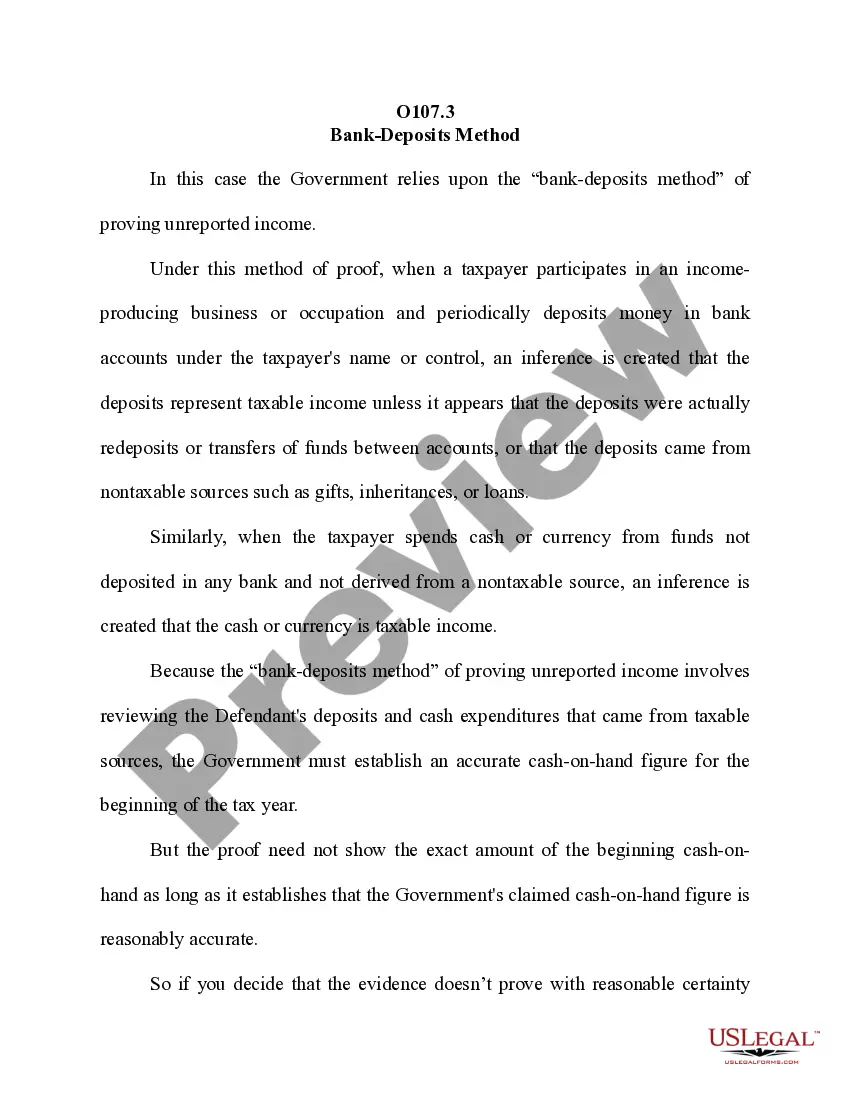
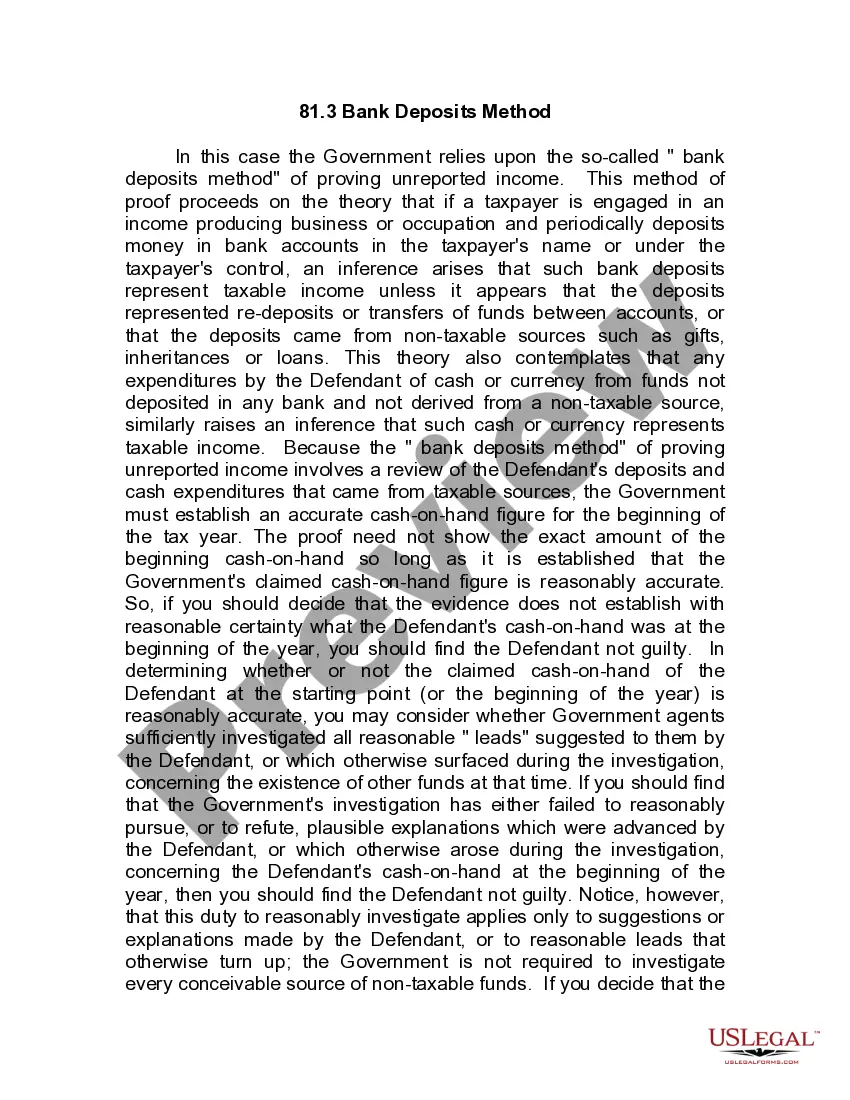
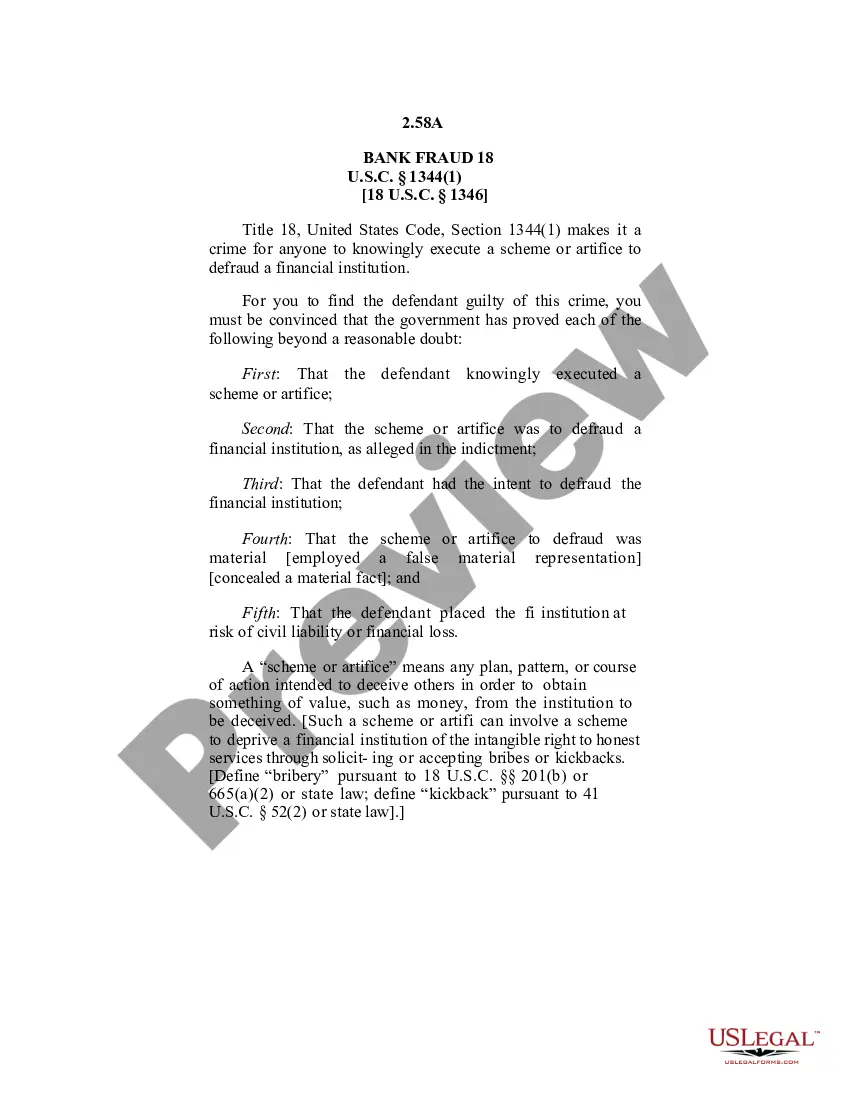
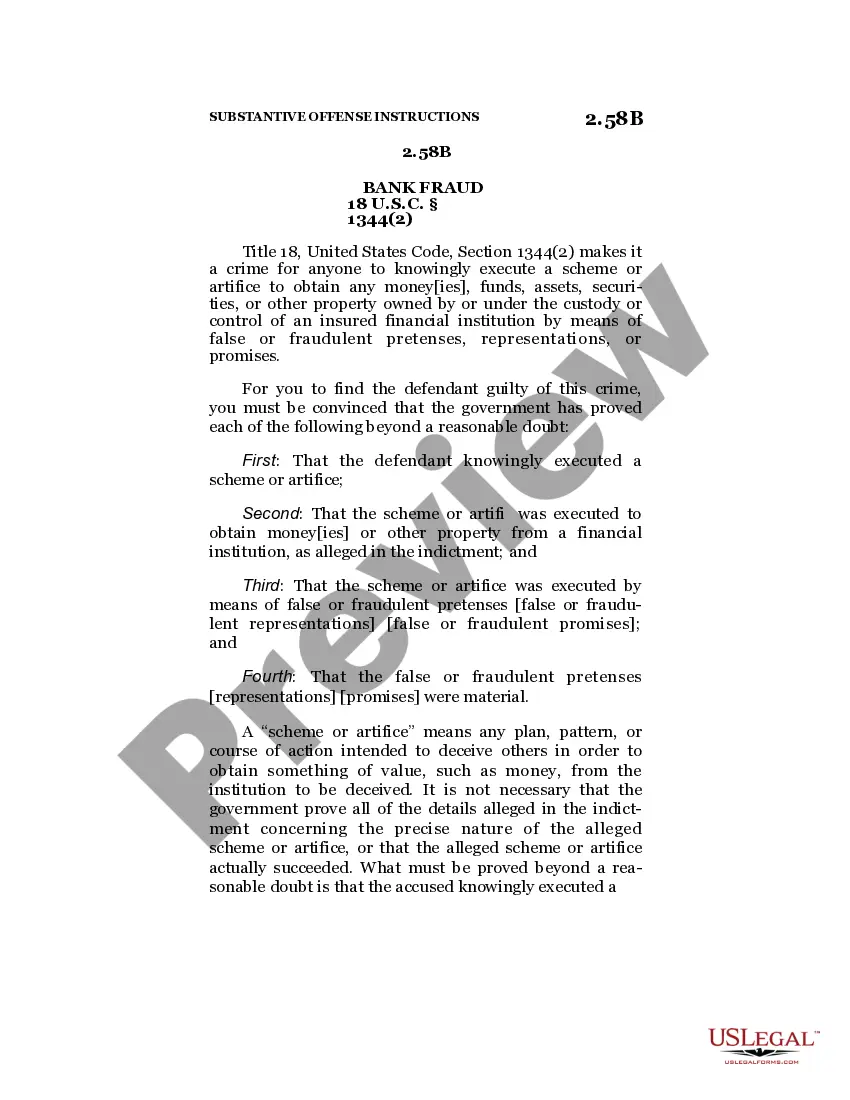
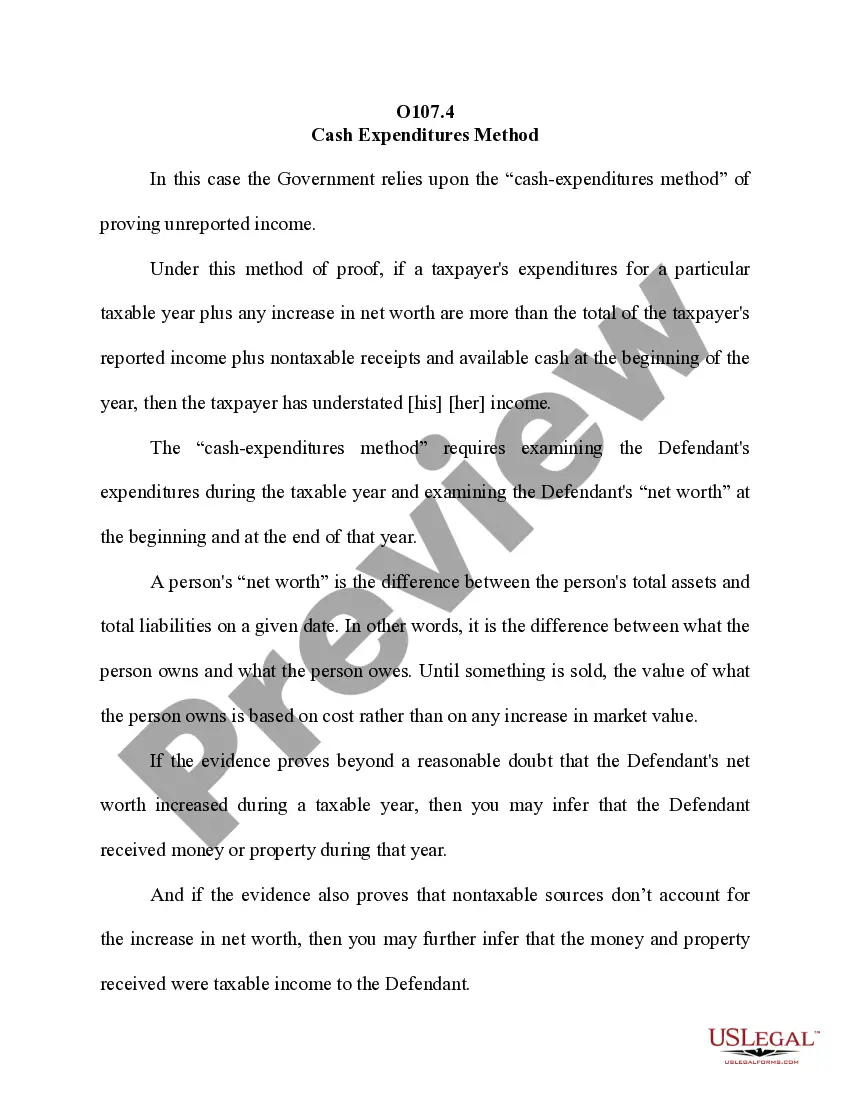
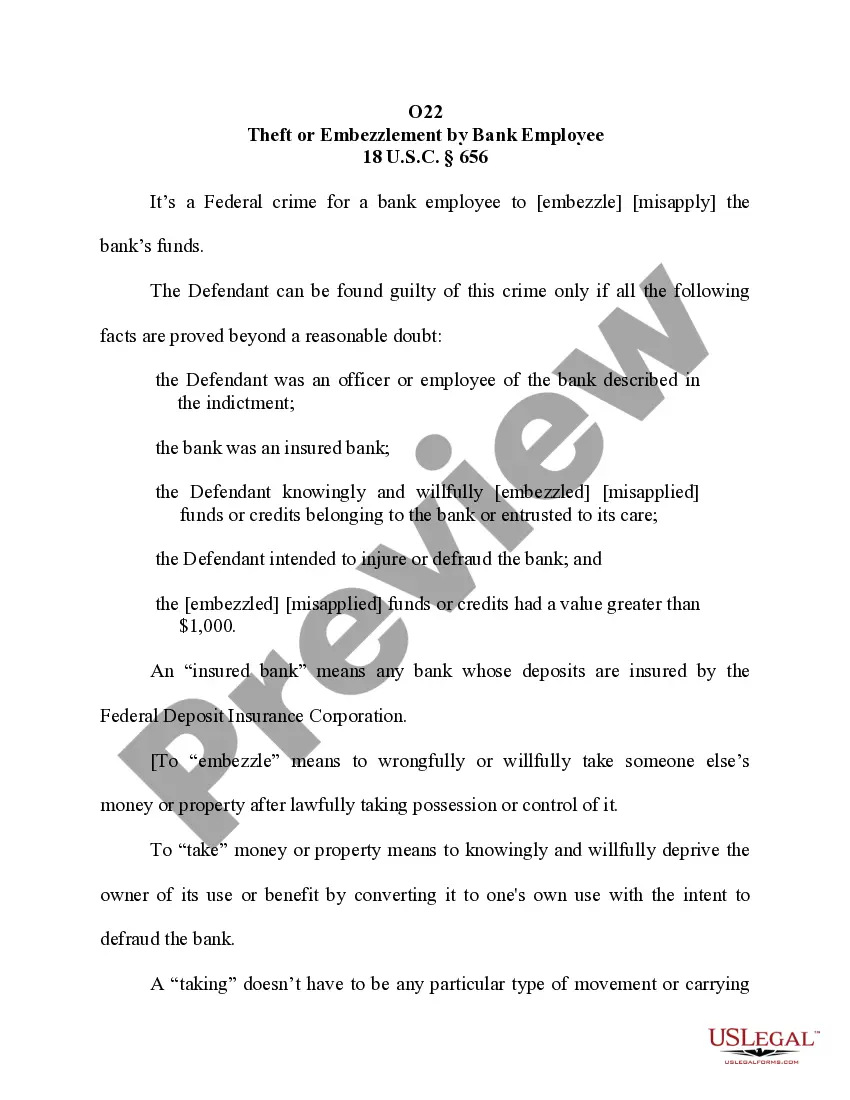
The Bank-Deposits Method form outlines how the government proves unreported income using a taxpayer's bank deposits as evidence. Unlike other income verification methods, this approach creates an inference that funds deposited in a taxpayer's bank account reflect taxable income unless proven otherwise. It is a crucial tool in cases where income is underreported, providing a structured process for evaluating financial activities over a specified period.
Main sections of this form
- Definition of the bank-deposits method and its application in legal cases.
- Criteria for establishing an inference of taxable income based on bank deposits.
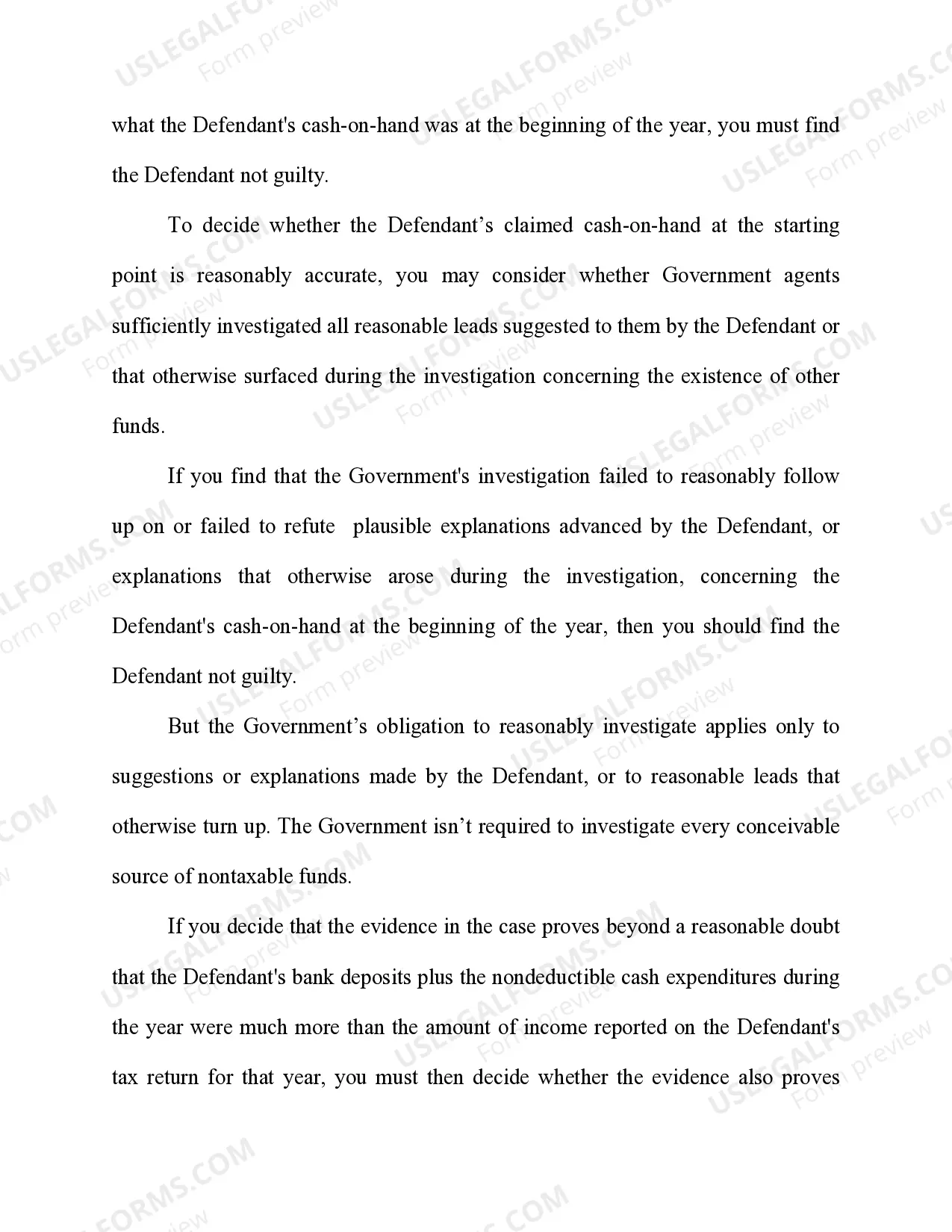
- Guidelines for determining beginning cash-on-hand figures and their impact on case outcomes.
- Roles of the government and defendant during investigations and the importance of reasonable follow-ups.
- Standards for proving willful tax evasion beyond a reasonable doubt.

Common use cases
This form is used in legal scenarios where an individual or business is implicated in unreported income, particularly in tax evasion cases. It is relevant when financial records raise questions about the origin of funds deposited into bank accounts. If there are discrepancies between reported income and actual bank deposits, this method serves as a basis for the government to establish tax liability.
Intended users of this form
- Taxpayers facing income reporting discrepancies investigated by the government.
- Legal professionals representing clients in tax evasion cases.
- Government entities working to substantiate claims of unreported income.
- Accountants and tax advisors involved in preparing defense strategies for clients.
How to prepare this document
- Identify and gather all relevant bank statements for the specified tax year.
- Document all cash expenditures that were not derived from reported income.
- Calculate the total deposits made into your bank accounts during the tax year.
- Establish a cash-on-hand figure at the beginning of the year; ensure it is accurately supported by evidence.
- Review all findings and ensure that evidence supports your claims regarding taxable income or nontaxable sources.
Does this document require notarization?
In most cases, this form does not require notarization. However, some jurisdictions or signing circumstances might. US Legal Forms offers online notarization powered by Notarize, accessible 24/7 for a quick, remote process.
Get your form ready online
Our built-in tools help you complete, sign, share, and store your documents in one place.
Make edits, fill in missing information, and update formatting in US Legal Forms—just like you would in MS Word.
Download a copy, print it, send it by email, or mail it via USPS—whatever works best for your next step.
Sign and collect signatures with our SignNow integration. Send to multiple recipients, set reminders, and more. Go Premium to unlock E-Sign.
If this form requires notarization, complete it online through a secure video call—no need to meet a notary in person or wait for an appointment.
We protect your documents and personal data by following strict security and privacy standards.

Make edits, fill in missing information, and update formatting in US Legal Forms—just like you would in MS Word.

Download a copy, print it, send it by email, or mail it via USPS—whatever works best for your next step.

Sign and collect signatures with our SignNow integration. Send to multiple recipients, set reminders, and more. Go Premium to unlock E-Sign.

If this form requires notarization, complete it online through a secure video call—no need to meet a notary in person or wait for an appointment.

We protect your documents and personal data by following strict security and privacy standards.
Common mistakes
- Failing to accurately document cash-on-hand at the beginning of the tax year.
- Neglecting to consider nontaxable sources when evaluating deposits.
- Overlooking the need for thorough investigation by the government on the defendant's explanations.
- Assuming all bank deposits are taxable without sufficient evidence to back claims.
Benefits of completing this form online
- Convenience of downloading and filling out the form at your own pace.
- Easy access to legal templates created by licensed attorneys.
- Editability to ensure all relevant information is correctly captured.
- Reliable guidelines to help understand complex legal terminology.
Looking for another form?
Form popularity
FAQ
Depending on the situation, deposits smaller than $10,000 can also get the attention of the IRS. For example, if you usually have less than $1,000 in a checking account or savings account, and all of a sudden, you make bank deposits worth $5,000, the bank will likely file a suspicious activity report on your deposit.
Bank Deposit and Cash Expenditures Method The bank deposit and cash expenditures (BD&CE) method compares the total deposits plus cash expenses minus nontaxable sources of income to the total receipts shown on the return.
The bank deposit method has not been approved by the U.S. Supreme Court. What is the focus of the bank deposit method? When is this technique appropriate? it is appropriate when most of the income is deposited in banks and most of the expenses are paid by check.
Bank deposits are of two types - demand deposit and time deposit. Under a demand deposit, which is for a conventional savings account, the depositor can withdraw money at any time. On the other hand, Time deposits come with fixed tenure and pay a fixed rate of interest which you cannot withdraw at any time.
Cash deposits of this amount will probably have your account flagged by the bank, your account will be seized by the IRS, no questions asked. If you get pulled over and a cop finds $3,000.00 in cash on you or inside your vehicle, it to can be seized, no questions asked.
Say, for example, your bank's ATMs only accepts a maximum of 40 bills ? the cash deposit limit then ranges anywhere between $40 and $4,000, depending on the bills you insert into the machine.
The $10,000 Rule Ever wondered how much cash deposit is suspicious? The Rule, as created by the Bank Secrecy Act, declares that any individual or business receiving more than $10 000 in a single or multiple cash transactions is legally obligated to report this to the Internal Revenue Service (IRS).
Banks must report cash deposits totaling $10,000 or more When banks receive cash deposits of more than $10,000, they're required to report it by electronically filing a Currency Transaction Report (CTR). This federal requirement is outlined in the Bank Secrecy Act (BSA).