IMPEACHMENT BY PRIOR INCONSISTENCIES
What is this form?
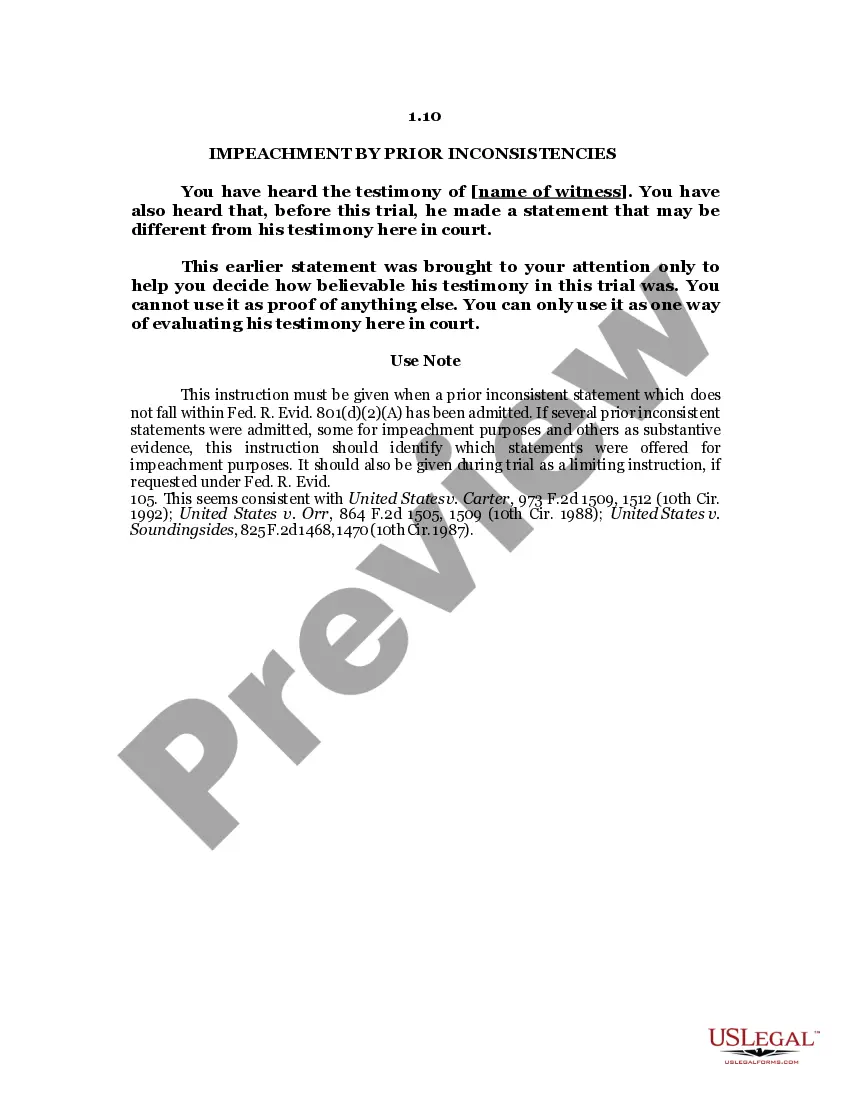
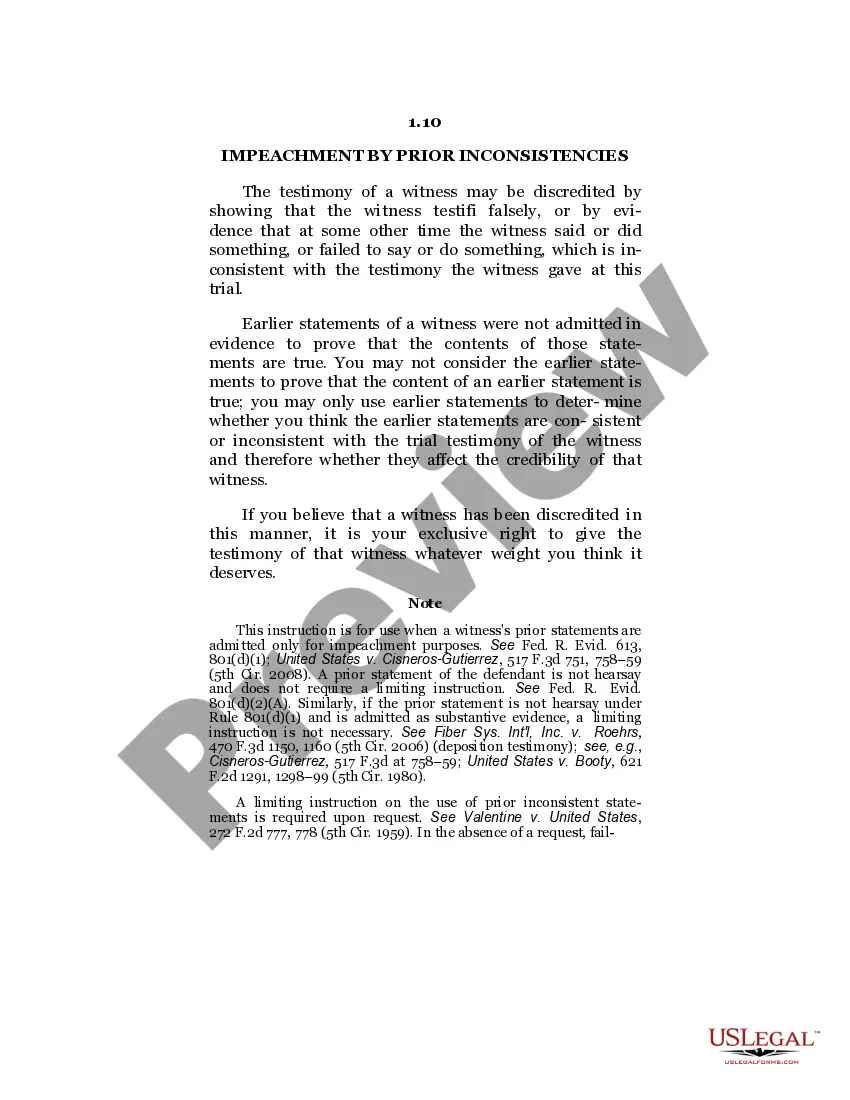
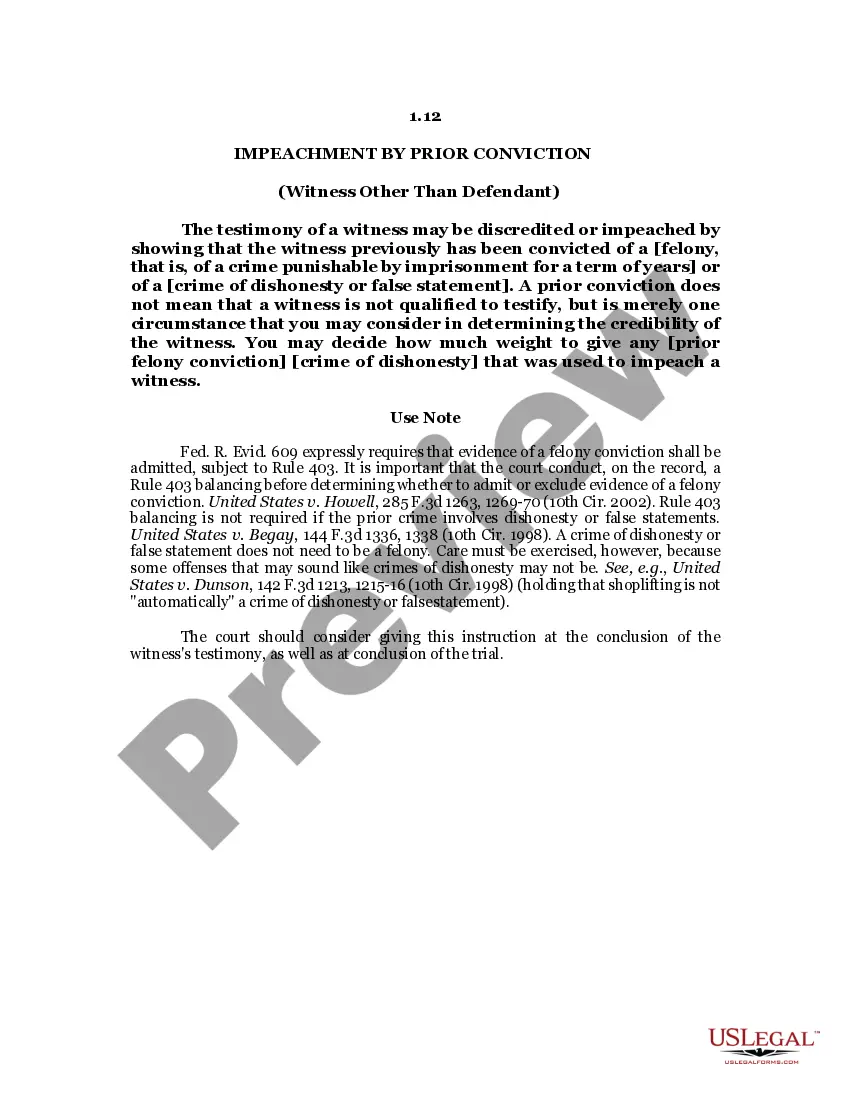
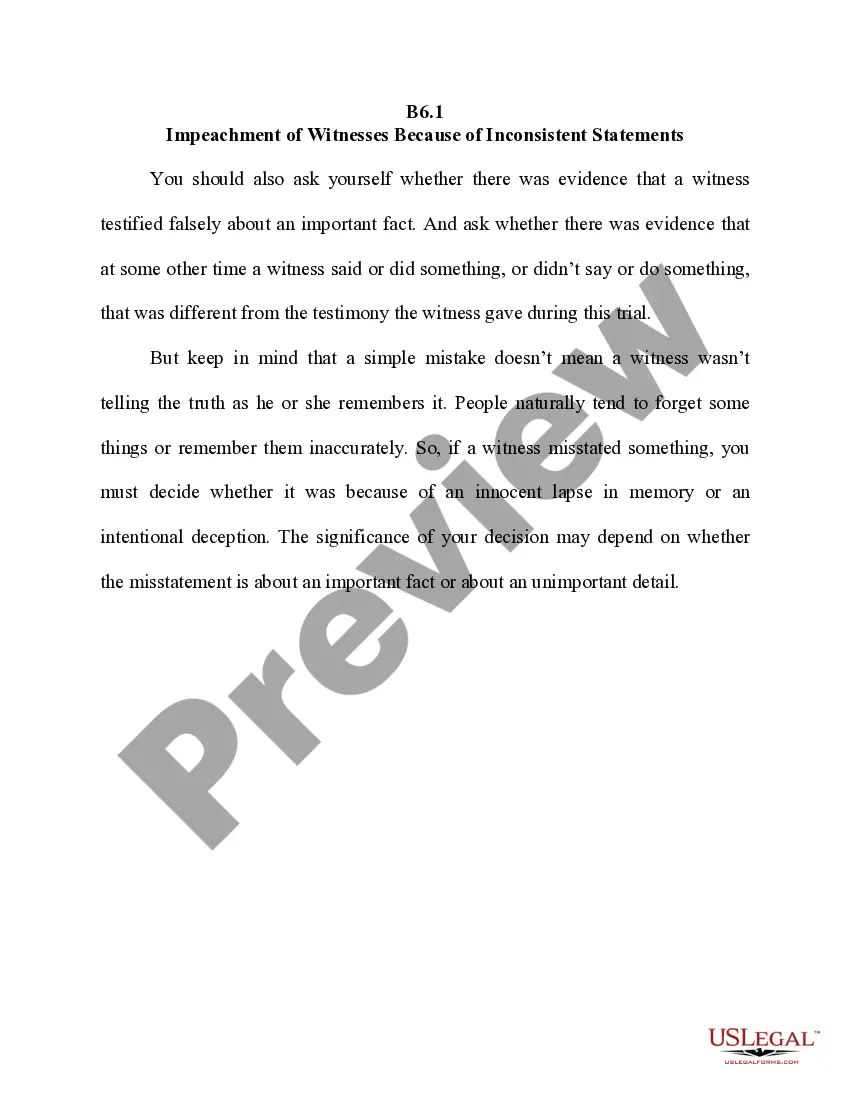
The Impeachment by Prior Inconsistencies form is used in a legal context to address discrepancies between a witness's trial testimony and prior statements they made. This form serves as a foundational tool for evaluating the credibility of witness testimony by allowing attorneys to highlight inconsistencies. It differs from other forms in its specific focus on impeachment through past statements rather than presenting new evidence.
What’s included in this form
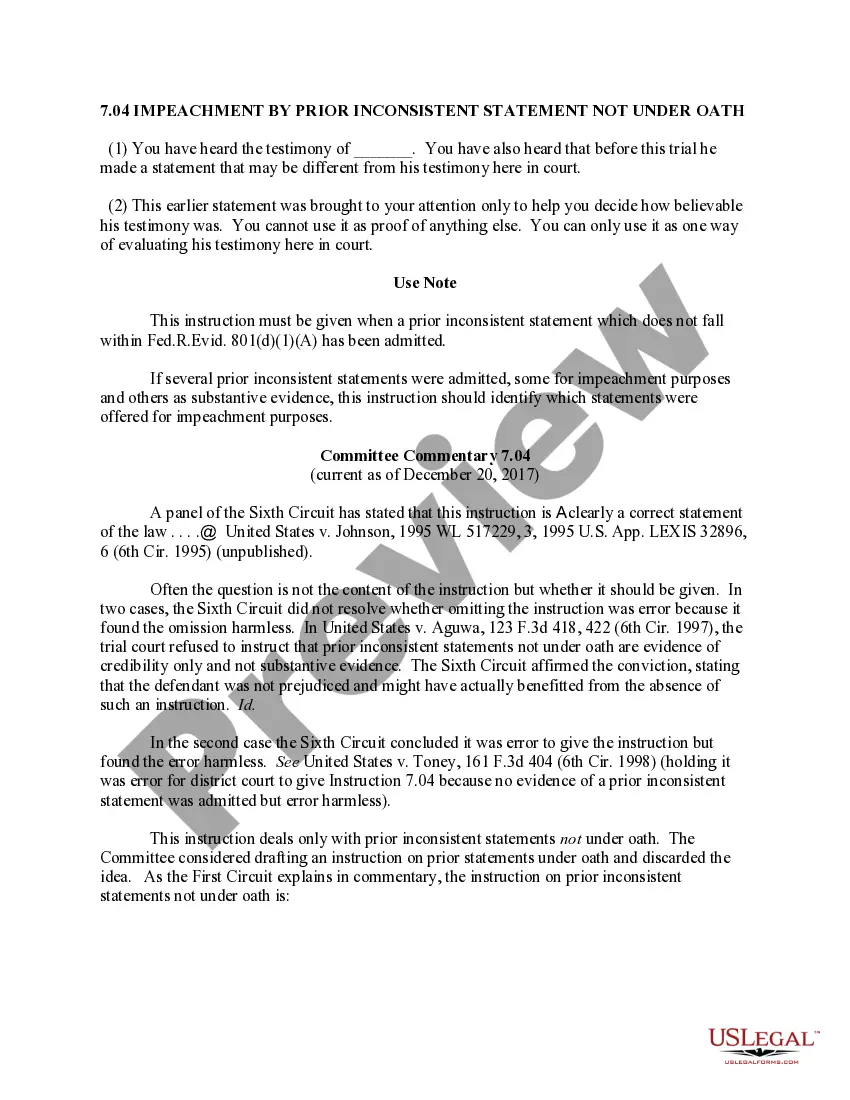
- Introduction of witness name for context.
- Explanation of prior statements that may contradict current courtroom testimony.
- Clarification on the limited use of prior statements solely for credibility evaluation.
- Instruction for differentiating between statements used for impeachment vs. substantive evidence.
Situations where this form applies
This form is essential when prior inconsistent statements of a witness have been admitted during a trial. It is particularly useful in trials where the credibility of witness testimony is being challenged. Lawyers commonly use this type of instruction to guide juries regarding how to interpret conflicting statements and ensure that they do not use such statements for broader conclusions than intended.
Who can use this document
- Attorneys representing clients in legal proceedings.
- Judges requiring clear instructions for jury deliberation.
- Legal practitioners involved in litigation that includes witness testimony.
How to complete this form
- Identify and fill in the name of the witness in question.
- Provide details of the prior inconsistent statements to be highlighted.
- Clearly state how these statements are relevant to credibility and not for other purposes.
- Specify any additional instructions needed for the jury regarding the distinction of statements.
Does this form need to be notarized?
This form does not typically require notarization to be legally valid. However, some jurisdictions or document types may still require it. US Legal Forms provides secure online notarization powered by Notarize, available 24/7 for added convenience.
Get your form ready online
Our built-in tools help you complete, sign, share, and store your documents in one place.
Make edits, fill in missing information, and update formatting in US Legal Forms—just like you would in MS Word.
Download a copy, print it, send it by email, or mail it via USPS—whatever works best for your next step.
Sign and collect signatures with our SignNow integration. Send to multiple recipients, set reminders, and more. Go Premium to unlock E-Sign.
If this form requires notarization, complete it online through a secure video call—no need to meet a notary in person or wait for an appointment.
We protect your documents and personal data by following strict security and privacy standards.

Make edits, fill in missing information, and update formatting in US Legal Forms—just like you would in MS Word.

Download a copy, print it, send it by email, or mail it via USPS—whatever works best for your next step.

Sign and collect signatures with our SignNow integration. Send to multiple recipients, set reminders, and more. Go Premium to unlock E-Sign.

If this form requires notarization, complete it online through a secure video call—no need to meet a notary in person or wait for an appointment.

We protect your documents and personal data by following strict security and privacy standards.
Mistakes to watch out for
- Failing to specify which statements are for impeachment versus substantive evidence.
- Not providing adequate context for the witness's prior statement.
- Using the prior statements for purposes other than credibility assessment.
Legal use & context
The Impeachment by Prior Inconsistencies form is grounded in legal precedent which emphasizes the importance of witness credibility. Misunderstandings about using prior statements can lead to legal challenges. This form ensures that parties only utilize statements as intended within the confines of established legal standards and practices.
Main things to remember
- The form focuses on the evaluation of witness credibility through prior statements.
- Use it to prepare juries for the complexities of witness testimony.
- Ensure clarification on the limited scope of how prior inconsistent statements can be used.
Looking for another form?
Form popularity
FAQ
Impeachment by prior inconsistent statement is used when a witness remembers a fact, but previously made a different statement about that fact.
Coleman, 72 M.J. 184 (a prior consistent statement is not hearsay if it is offered to rebut an express or implied charge against the declarant of recent fabrication or improper influence or motive; the rule requires that a prior statement, admitted as substantive evidence, precede any motive to fabricate or improper
(b) Extrinsic Evidence of a Prior Inconsistent Statement. Extrinsic evidence of a witness's prior inconsistent statement is admissible only if the witness is given an opportunity to explain or deny the statement and an adverse party is given an opportunity to examine the witness about it, or if justice so requires.
613(b) in that extrinsic evidence of a prior inconsistent statement is not admissible unless the statement is shown or disclosed to the witness during the witness's examination. Paragraph (b) is intended to give the witness and the party a fair opportunity to explain or deny the allegation.
Rule 613(b) allows a party to use a prior inconsistent statement to impeach a witness, but if the witness is called to the stand for sole purpose of impeaching him, the ?impeachment? is really a subterfuge for admitting the hearsay.
In the majority of U.S. jurisdictions, prior inconsistent statements may not be introduced to prove the truth of the prior statement itself, as this constitutes hearsay, but only to impeach the credibility of the witness.
Under common law, a witness may be impeached by proof the witness has contradicted him- or herself through evidence of prior acts or statements that are inconsistent with testimony given on direct examination.
Rule 801 defines what is and what is not hearsay for the purpose of admitting a prior statement as substantive evidence. A prior statement of a witness at a trial or hearing which is inconsistent with his testimony is, of course, always admissible for the purpose of impeaching the witness' credibility.