IMPEACHMENT BY PRIOR INCONSISTENT STATEMENT NOT UNDER OATH
About this form
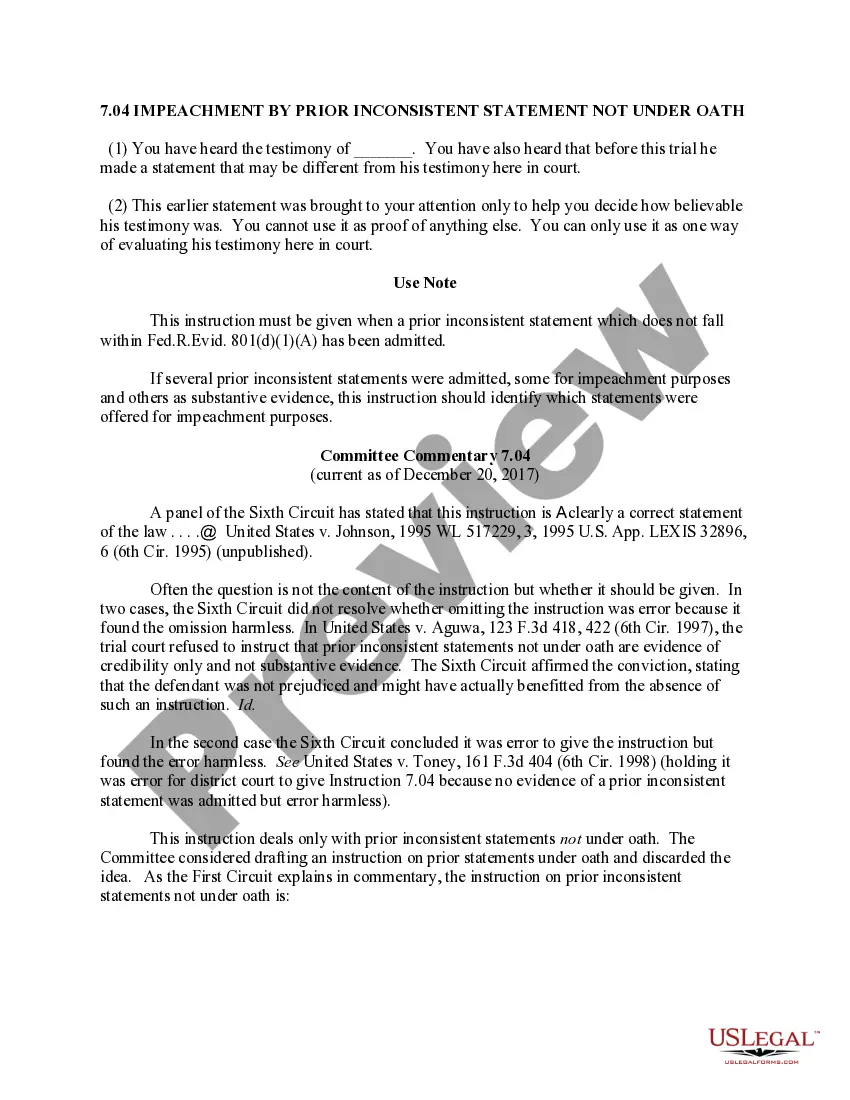
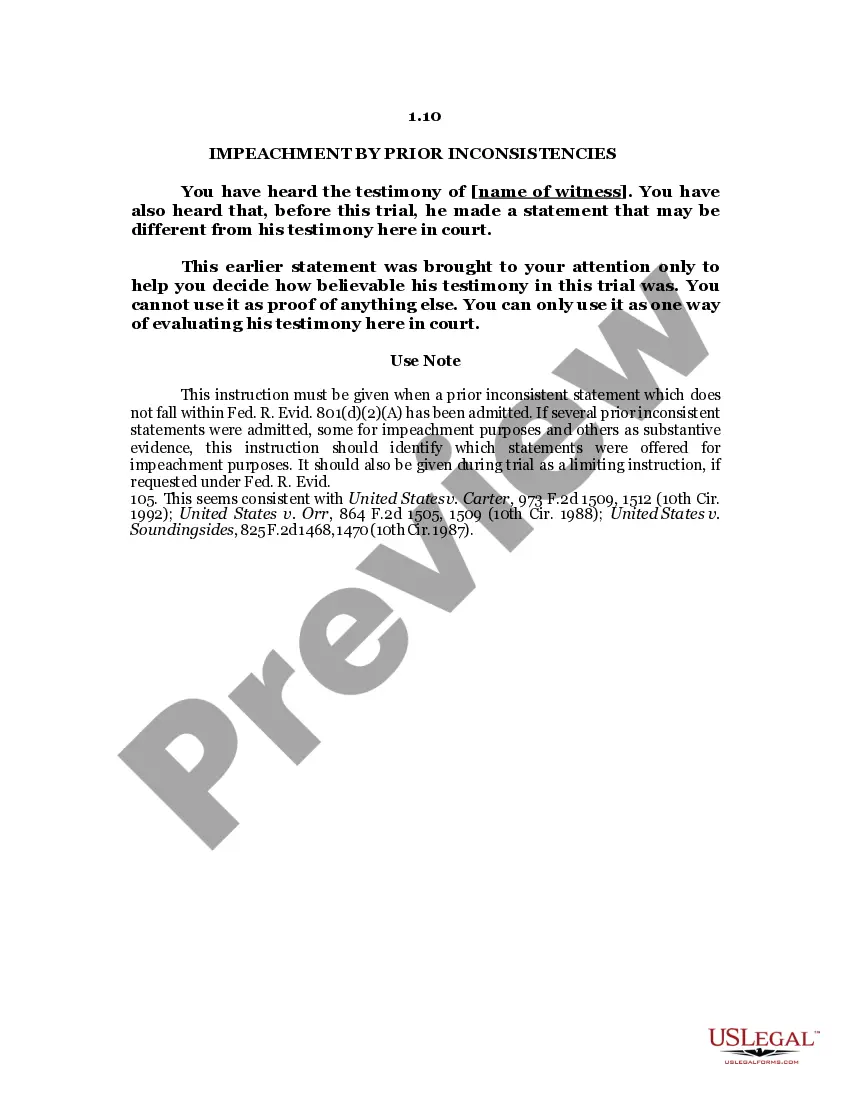
The Impeachment by Prior Inconsistent Statement Not Under Oath form is a legal document used in court proceedings to challenge the credibility of a witness's testimony. This form is specifically intended to address situations where a witness has made a prior statement that contradicts their testimony in court, but that prior statement was not made under oath. Unlike forms that pertain to consistent statements or those made under oath, this form is carefully designed to guide juries in evaluating the believability of a witness based solely on their inconsistent statements.
Main sections of this form
- The witness's name, whose testimony is being impeached.
- A section detailing the prior statement and how it differs from current testimony.
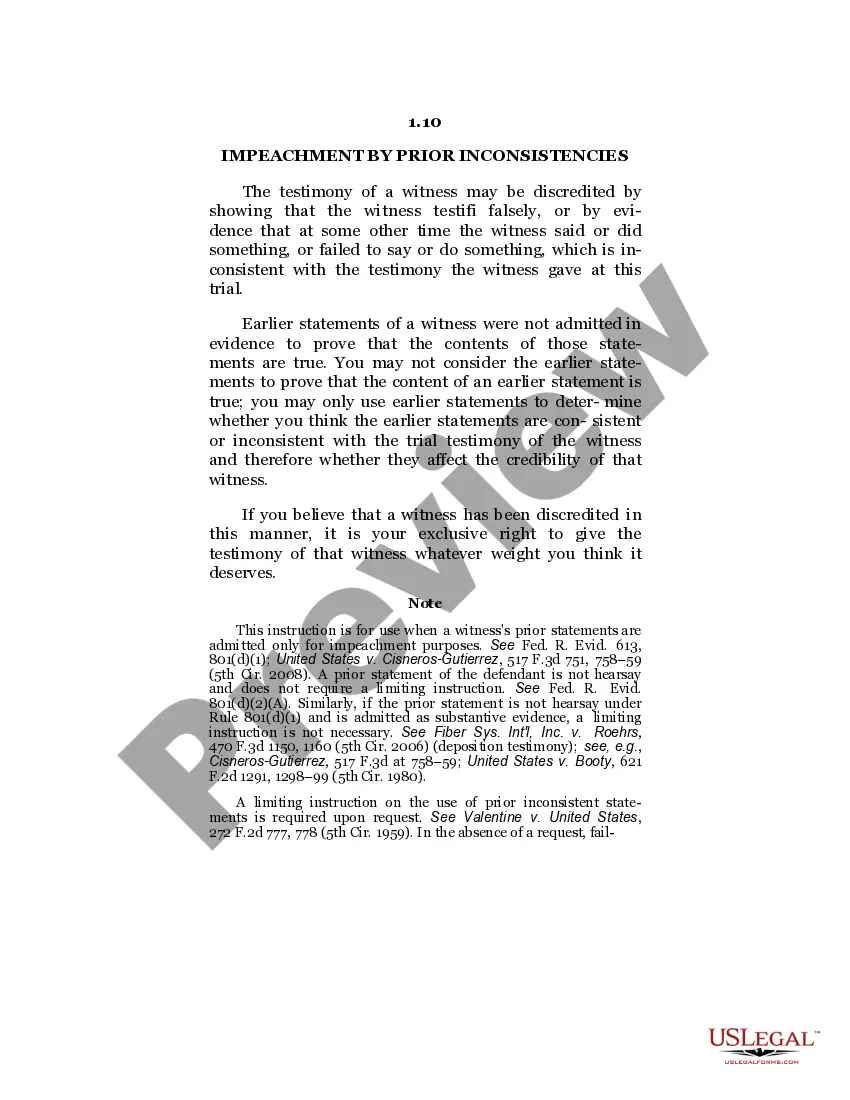
- Instructions on the limited use of the prior statement solely for judging the credibility of the witness.
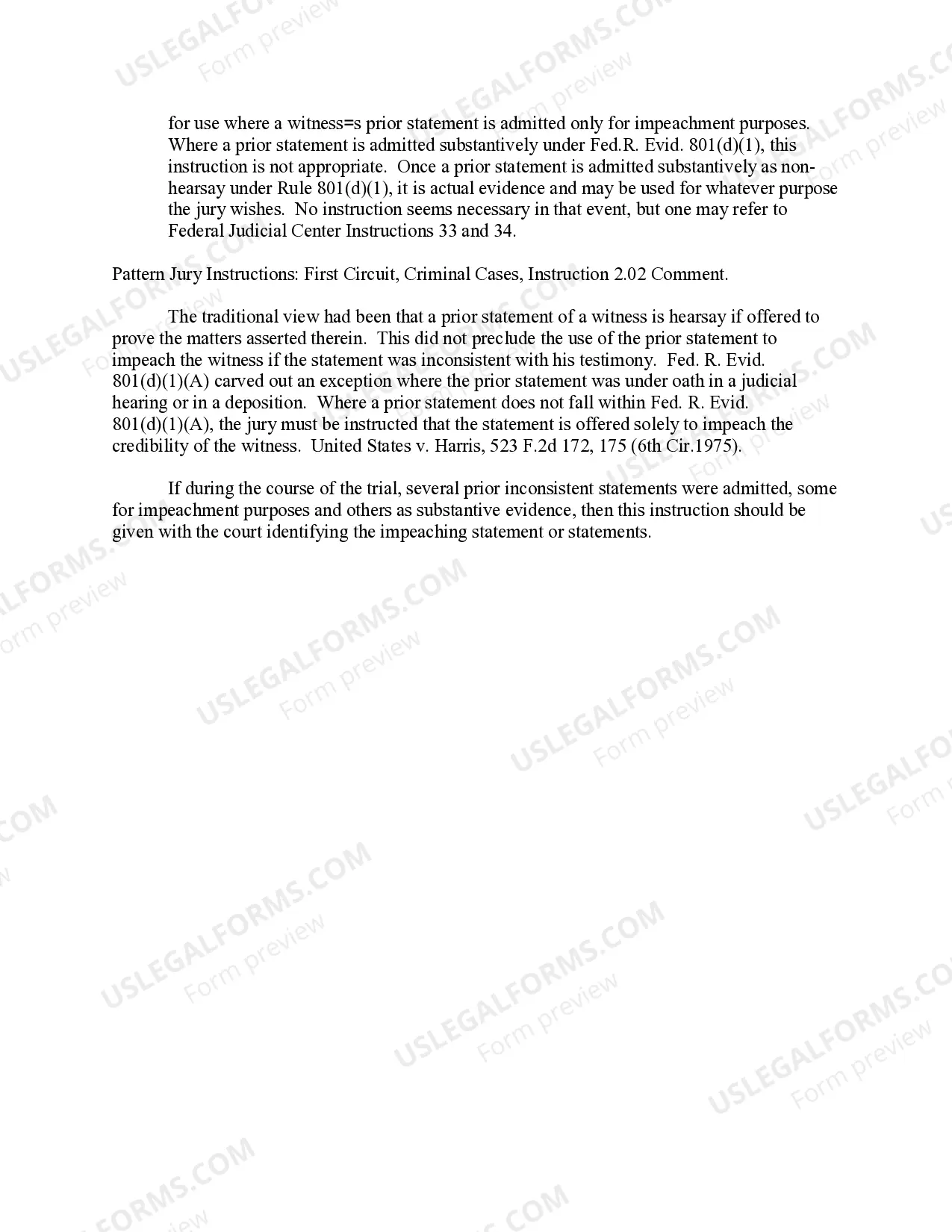
- Guidance on specific scenarios where the instruction applies, particularly relating to inconsistent statements not under oath.
- Information on the court's requirement to clarify which statements are to be used for impeachment purposes.

Common use cases
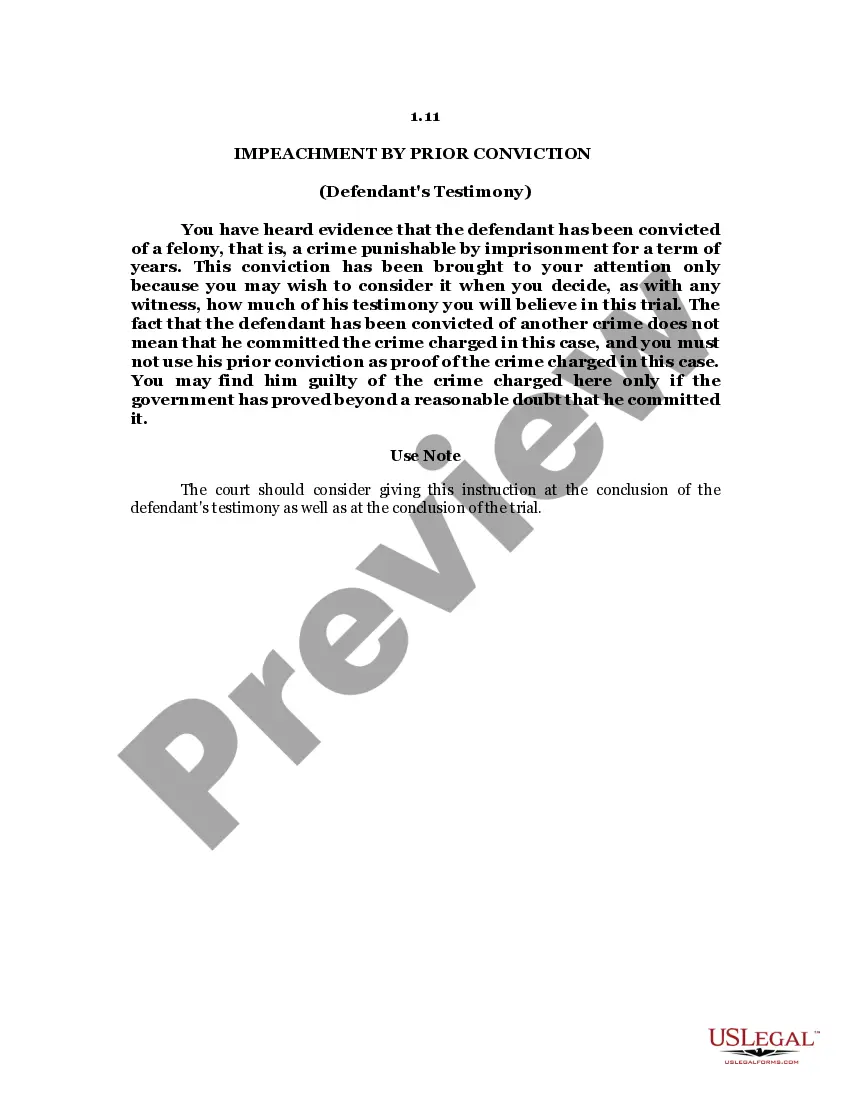
This form is used in legal situations where a witness provides testimony that conflicts with an earlier statement they made that is not under oath. It is particularly useful in criminal trials or civil litigations where witness credibility is crucial to the outcome of the case. Legal practitioners may employ this form to ensure that jurors understand the limitations of using inconsistent statements as mere reflections of credibility rather than substantive evidence.
Intended users of this form
This form is ideal for:
- Attorneys representing clients in trials where witness testimony is critical.
- Judges needing to provide clear instructions to juries on how to evaluate witness testimony.
- Litigants wishing to challenge or support the credibility of a witness in court proceedings.
Completing this form step by step
To complete the Impeachment by Prior Inconsistent Statement Not Under Oath form, follow these steps:
- Identify the witness whose testimony you wish to challenge.
- Clearly state the prior inconsistent statement made by the witness, specifying when and where it was made.
- Provide context regarding how this statement differs from the witness's current testimony in court.
- Include instructions to the jury, indicating that the prior statement should only be considered for evaluating credibility, not as evidence of the facts in question.
- Ensure the court clarifies which statements are being used for impeachment purposes if multiple statements are admitted.
Notarization guidance
In most cases, this form does not require notarization. However, some jurisdictions or signing circumstances might. US Legal Forms offers online notarization powered by Notarize, accessible 24/7 for a quick, remote process.
Get your form ready online
Our built-in tools help you complete, sign, share, and store your documents in one place.
Make edits, fill in missing information, and update formatting in US Legal Forms—just like you would in MS Word.
Download a copy, print it, send it by email, or mail it via USPS—whatever works best for your next step.
Sign and collect signatures with our SignNow integration. Send to multiple recipients, set reminders, and more. Go Premium to unlock E-Sign.
If this form requires notarization, complete it online through a secure video call—no need to meet a notary in person or wait for an appointment.
We protect your documents and personal data by following strict security and privacy standards.

Make edits, fill in missing information, and update formatting in US Legal Forms—just like you would in MS Word.

Download a copy, print it, send it by email, or mail it via USPS—whatever works best for your next step.

Sign and collect signatures with our SignNow integration. Send to multiple recipients, set reminders, and more. Go Premium to unlock E-Sign.

If this form requires notarization, complete it online through a secure video call—no need to meet a notary in person or wait for an appointment.

We protect your documents and personal data by following strict security and privacy standards.
Common mistakes to avoid
- Failing to clearly distinguish between statements used for impeachment and those presented as substantive evidence.
- Inadequately explaining the context of the prior statement, leading to confusion about its relevance.
- Omitting the specific instructions necessary for juries to limit their use of the prior statement correctly.
Benefits of using this form online
- Convenience: Download the form instantly and access it anywhere, anytime.
- Editability: Easily customize the form to suit specific case details and requirements.
- Reliability: Forms are drafted by licensed attorneys, ensuring compliance with legal standards.
Looking for another form?
Form popularity
FAQ
Coleman, 72 M.J. 184 (a prior consistent statement is not hearsay if it is offered to rebut an express or implied charge against the declarant of recent fabrication or improper influence or motive; the rule requires that a prior statement, admitted as substantive evidence, precede any motive to fabricate or improper
?In order to lay the proper predicate for impeachment by prior inconsistent statement, the witness must be advised of the substance of the prior inconsistent statement, the time and place the statement was made, and the person to whom the statement was made.? See Kimble v. State, 537 So.
Rule 613(b) allows a party to use a prior inconsistent statement to impeach a witness, but if the witness is called to the stand for sole purpose of impeaching him, the ?impeachment? is really a subterfuge for admitting the hearsay.
?In order to lay the proper predicate for impeachment by prior inconsistent statement, the witness must be advised of the substance of the prior inconsistent statement, the time and place the statement was made, and the person to whom the statement was made.? See Kimble v. State, 537 So.
Rule 613 states that when a party examines a witness about a prior statement made by the witness (written or otherwise), the party is not required to show the statement to the witness while asking questions about it.
Terminology. Impeachment by prior inconsistent statement is used when a witness remembers a fact, but previously made a different statement about that fact.
Rule 801 defines what is and what is not hearsay for the purpose of admitting a prior statement as substantive evidence. A prior statement of a witness at a trial or hearing which is inconsistent with his testimony is, of course, always admissible for the purpose of impeaching the witness' credibility.
613(b) in that extrinsic evidence of a prior inconsistent statement is not admissible unless the statement is shown or disclosed to the witness during the witness's examination. Paragraph (b) is intended to give the witness and the party a fair opportunity to explain or deny the allegation.