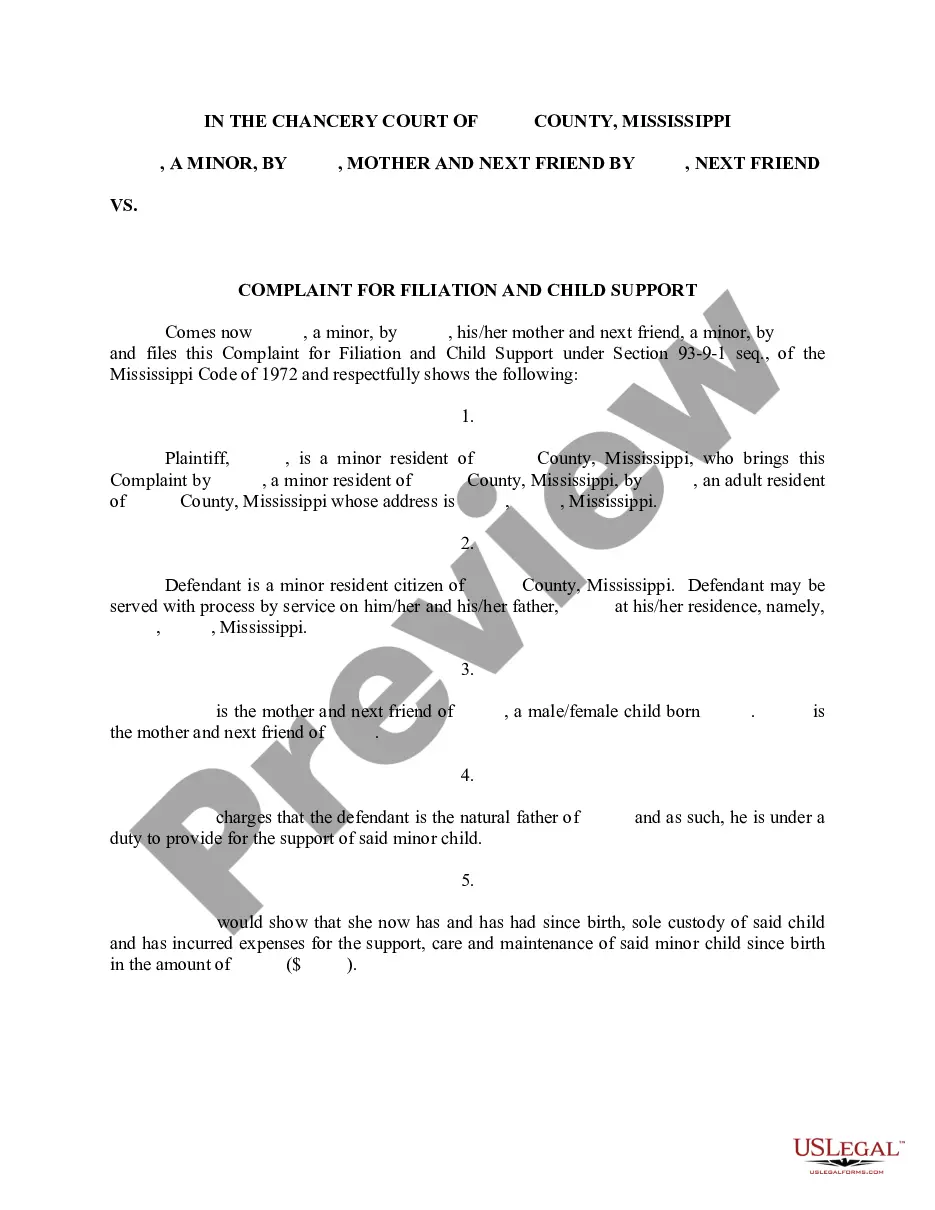
Trustee's motion to prevent termination of automatic stay - passive notice
What is this form?
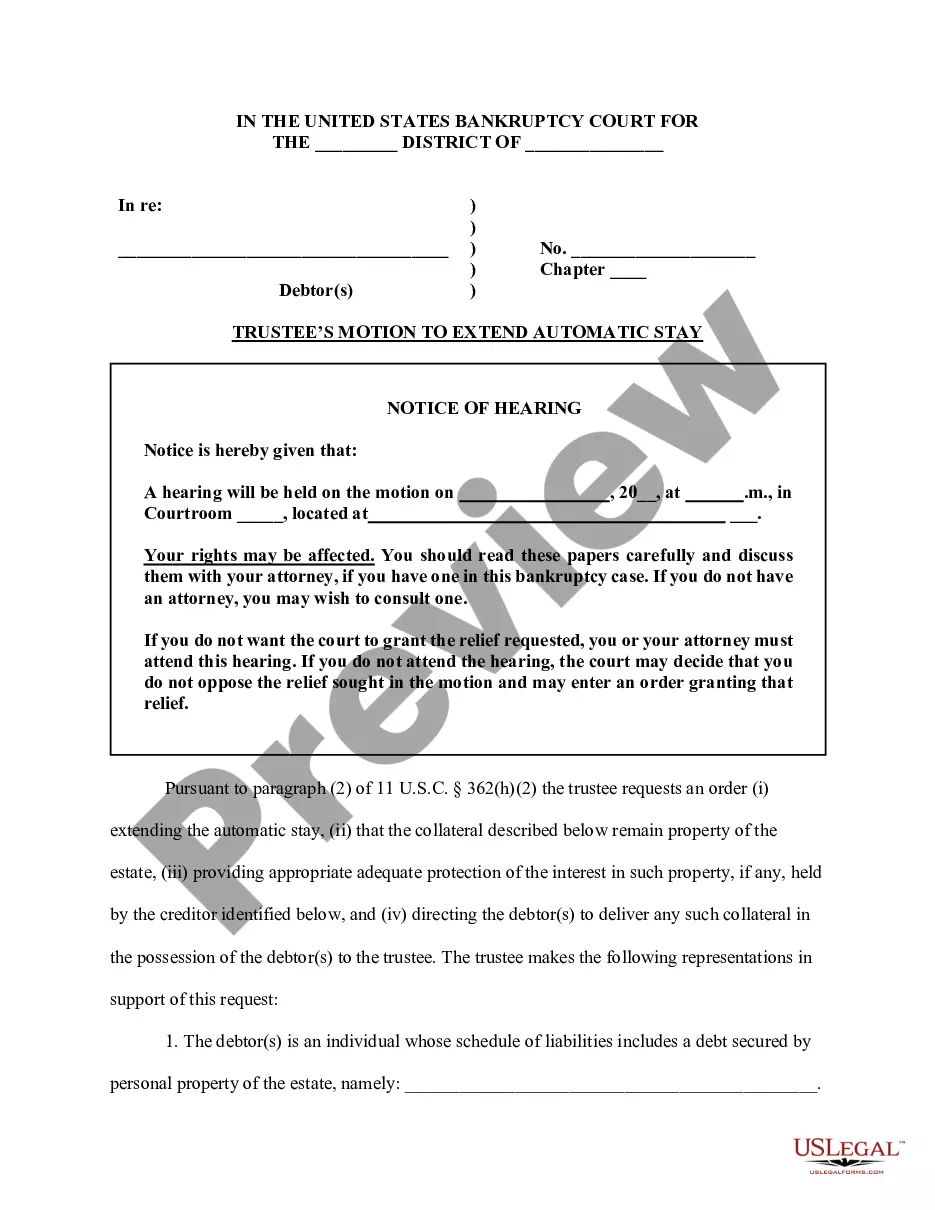
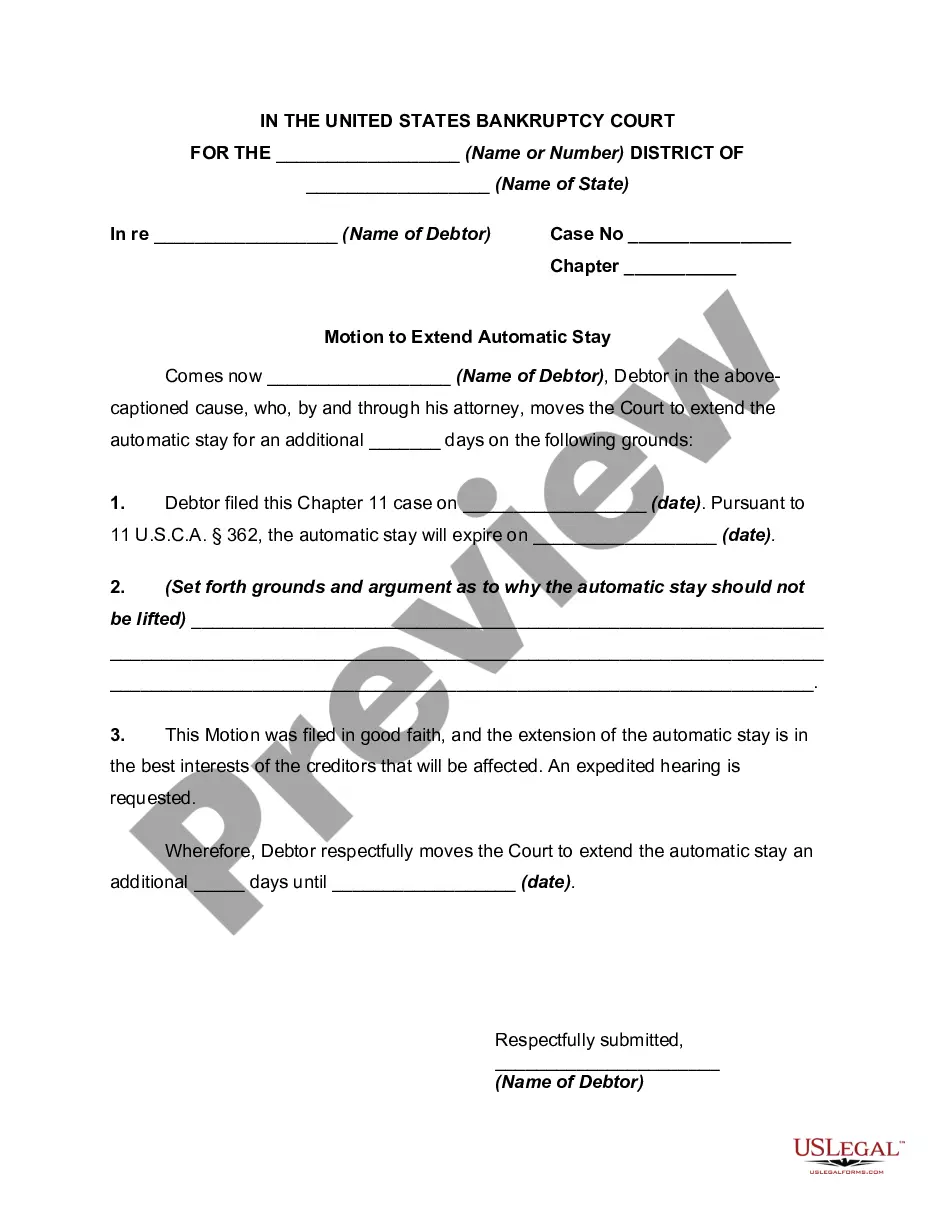
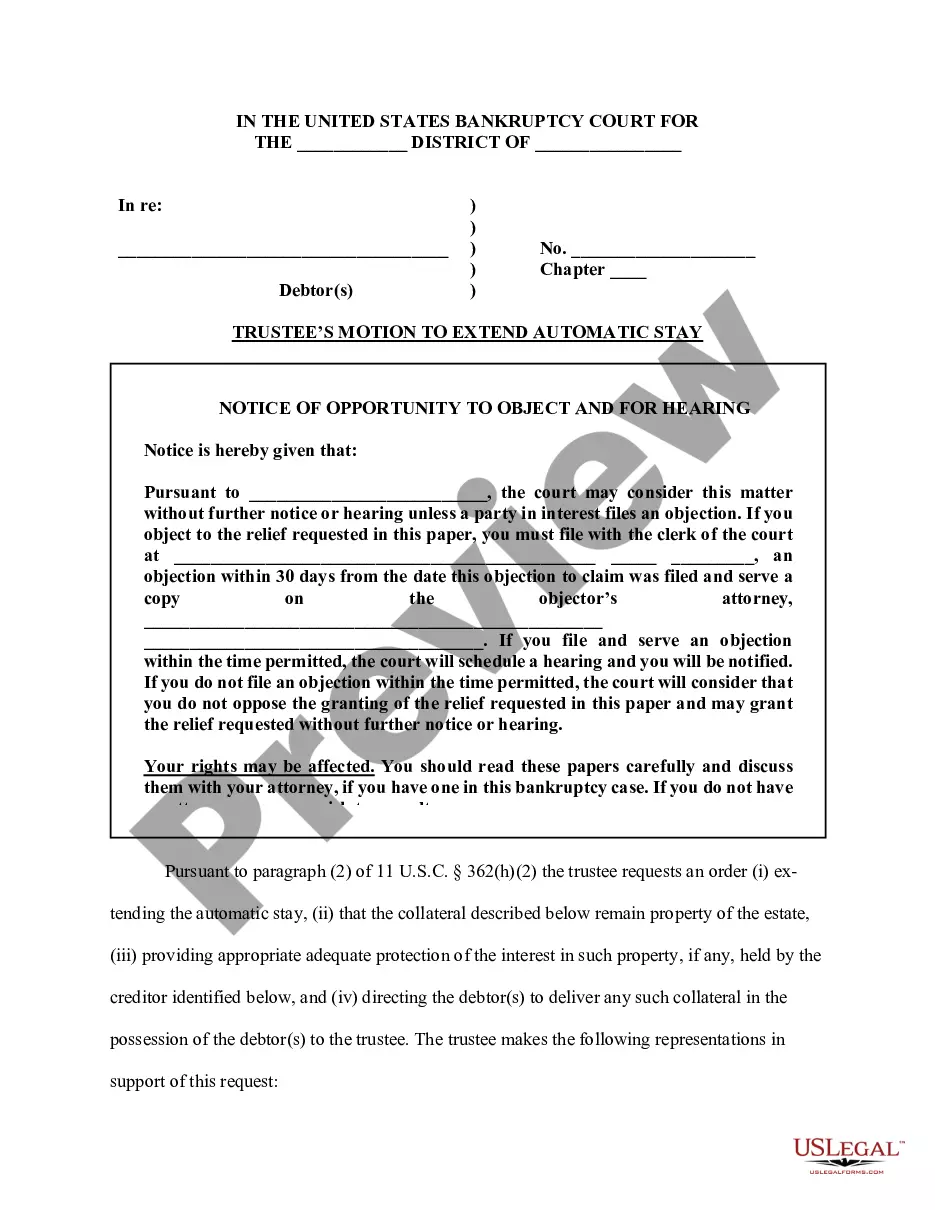
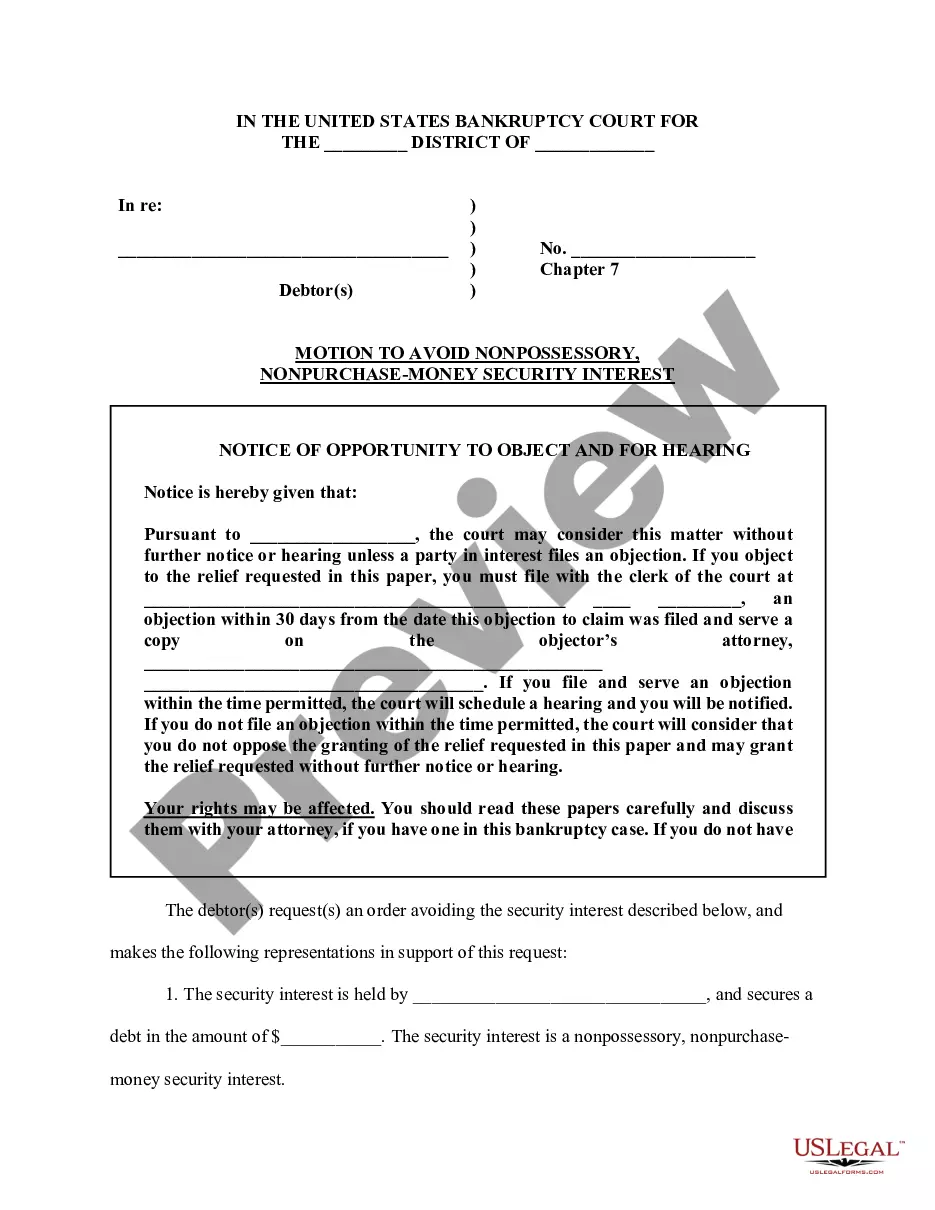
The Trustee's motion to prevent termination of automatic stay - passive notice is a legal document used in bankruptcy cases. This form allows a trustee to request the court to extend the automatic stay, which protects a debtor's assets from being seized by creditors. This form differs from similar motions by specifically addressing situations where the automatic stay may be at risk of termination, ensuring that the interests of the bankrupt estate are safeguarded during the legal process.
Key parts of this document
- Case information, including the district and chapter of bankruptcy.
- Notice of hearing details, including date, time, and courtroom.
- Requests for the court to extend the automatic stay and related protections.
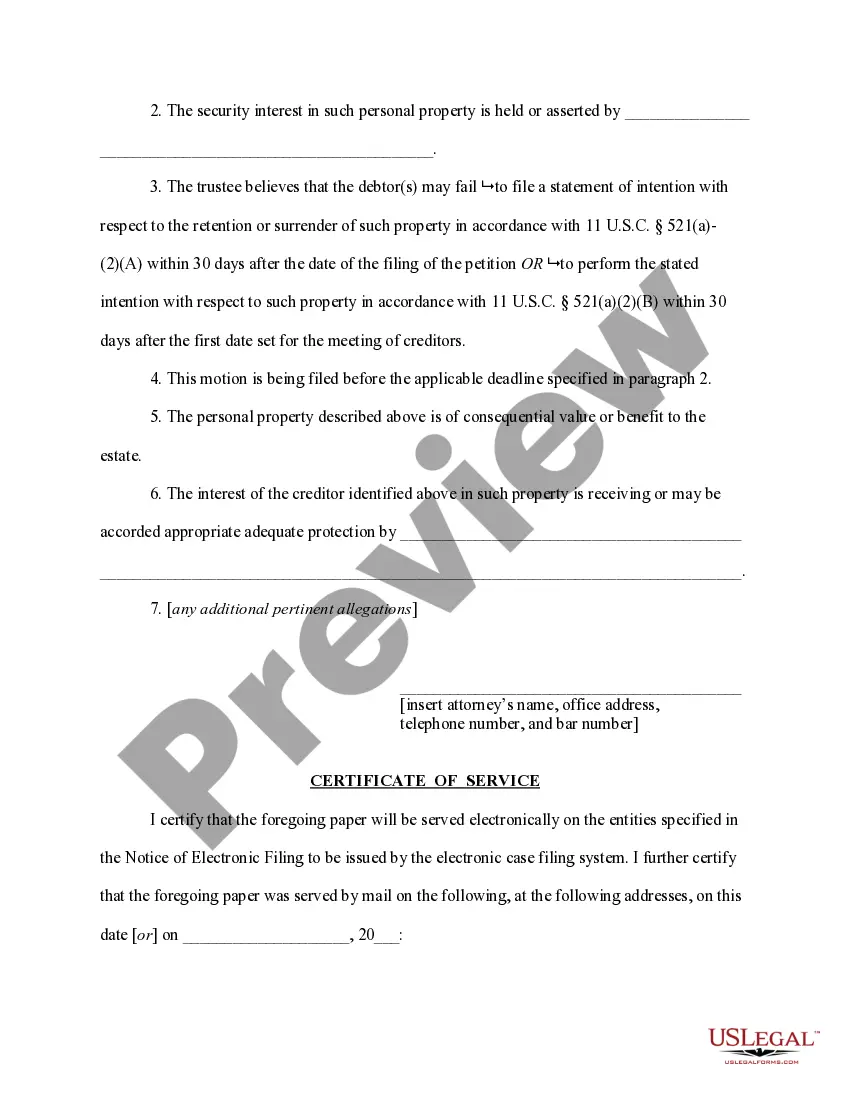
- Specific creditor information and property details.
- Statement of potential debtor actions or failures related to property.
- Certificate of service to confirm notification of involved parties.
When to use this document
This form should be used when a trustee believes that the automatic stay on a debtor's property may be terminated due to specific actions or failures related to the property. It is essential in scenarios where the trustee wants to prevent creditors from seizing assets until the bankruptcy process concludes. Situations may include when a debtor has not filed a statement of intention or has failed to follow through with their stated intentions regarding secured property.
Who can use this document
- Bankruptcy trustees representing debtors in court.
- Debtors who are facing potential termination of their automatic stay.
- Creditors seeking to understand their rights and the implications of the stay.
- Legal representatives assisting with bankruptcy cases.
How to prepare this document
- Fill in the case information, including the bankruptcy chapter and district.
- Specify the date and time of the hearing, along with courtroom details.
- Detail the debtor's property and the creditor's secured interest.
- State any concerns regarding the debtor's compliance with filing requirements.
- Sign and date the document, including your contact information and attorney details.
- Prepare the certificate of service, ensuring all parties receive notice.
Is notarization required?
Notarization is not commonly needed for this form. However, certain documents or local rules may make it necessary. Our notarization service, powered by Notarize, allows you to finalize it securely online anytime, day or night.
Get your form ready online
Our built-in tools help you complete, sign, share, and store your documents in one place.
Make edits, fill in missing information, and update formatting in US Legal Forms—just like you would in MS Word.
Download a copy, print it, send it by email, or mail it via USPS—whatever works best for your next step.
Sign and collect signatures with our SignNow integration. Send to multiple recipients, set reminders, and more. Go Premium to unlock E-Sign.
If this form requires notarization, complete it online through a secure video call—no need to meet a notary in person or wait for an appointment.
We protect your documents and personal data by following strict security and privacy standards.

Make edits, fill in missing information, and update formatting in US Legal Forms—just like you would in MS Word.

Download a copy, print it, send it by email, or mail it via USPS—whatever works best for your next step.

Sign and collect signatures with our SignNow integration. Send to multiple recipients, set reminders, and more. Go Premium to unlock E-Sign.

If this form requires notarization, complete it online through a secure video call—no need to meet a notary in person or wait for an appointment.

We protect your documents and personal data by following strict security and privacy standards.
Mistakes to watch out for
- Failing to include complete case information.
- Not specifying the hearing date and time correctly.
- Omitting signatures or necessary attorney contact details.
- Not serving the document to all relevant parties as required.
Advantages of online completion
- Quick and easy access to the form from anywhere.
- Editable fields allow for customization to fit your specific situation.
- Utilize reliable templates drafted by licensed attorneys.
- Reduced risk of errors compared to manually created documents.
Looking for another form?
Form popularity
FAQ
Civil cases involving family or domestic issues - Most family court proceedings cannot be halted by the automatic stay, including child custody and paternity cases, as well as divorce cases addressing issues other than the division of marital property.
The most commonly sought exceptions are actions by parties to securities contracts to close out open positions; eviction of a debtor by a landlord where the lease has been fully terminated prior to the bankruptcy filing; actions by taxing authorities to conduct tax audits, issue deficiency notices, demand tax returns
The automatic stay is one of the fundamental debtor protections provided by the bankruptcy laws. It gives the debtor a breathing spell from his creditors. It stops all collection efforts, all harassment, and all foreclosure actions.
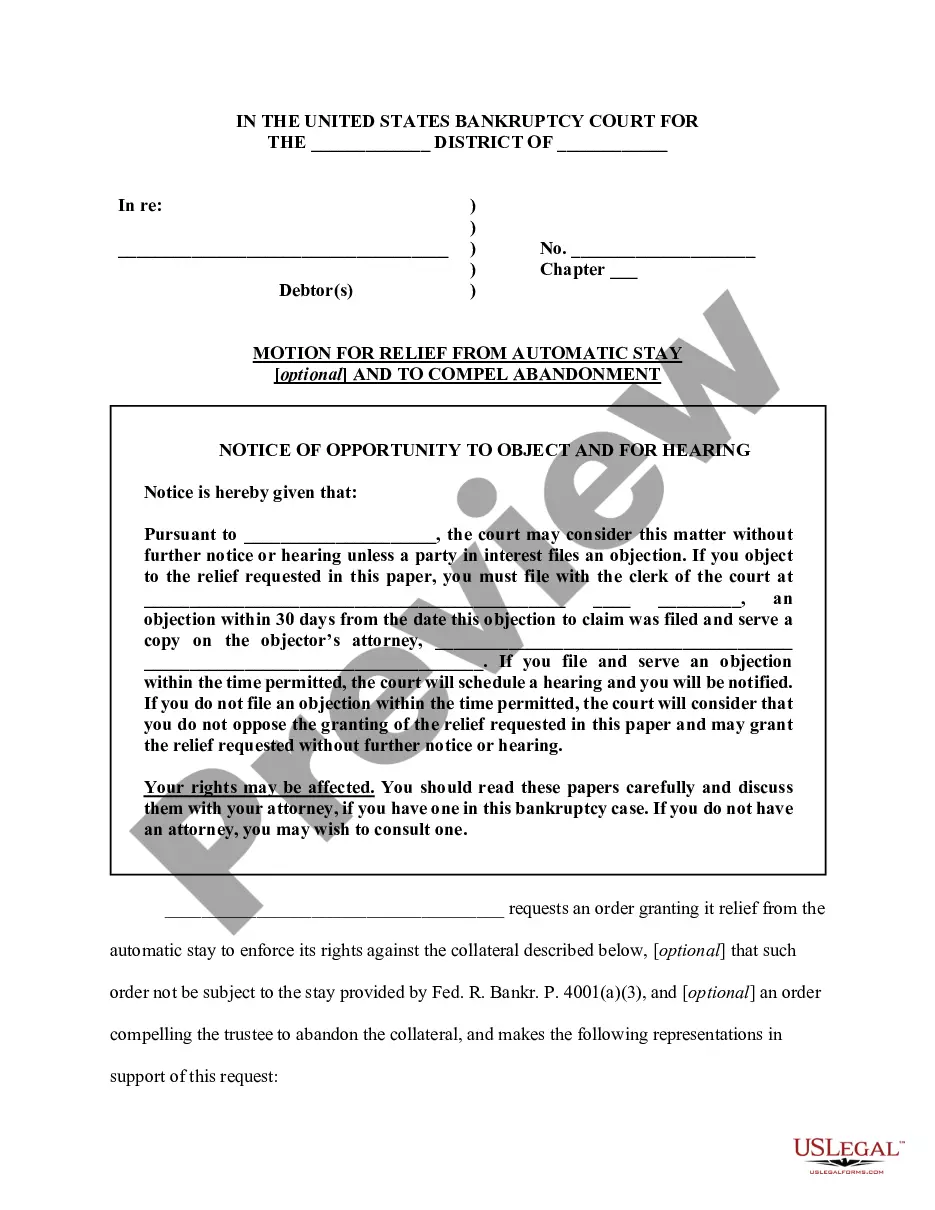
Motion for Relief from the Automatic Stay is a request by a creditor to allow the creditor to take action against the debtor or the debtor's property that would otherwise be prohibited by the automatic stay.
This Standard Clause for use in a forbearance or restructuring agreement provides for a defaulting borrower to waive its right to assert the automatic stay against a lender if it later files for bankruptcy. This Standard Clause has integrated notes with important explanations and drafting tips.
A court may grant relief from an automatic stay "for cause, including the lack of adequate protection of an interest in property."1 That refers to circumstances in which the value of a property or secured collateral may decrease while the bankruptcy case is being resolved.
Question: Which of the following is true regarding actions that may be taken while an automatic stay is in effect in a Chapter 7 proceeding? Creditors can attempt to repossess property.
Because of the duration of the court case, a Chapter 7 automatic stay often lasts for three to four months. In contrast, the automatic stay remains effective on Chapter 13 bankruptcy cases throughout the duration of the debtor's repayment plan, assuming they comply with the terms.