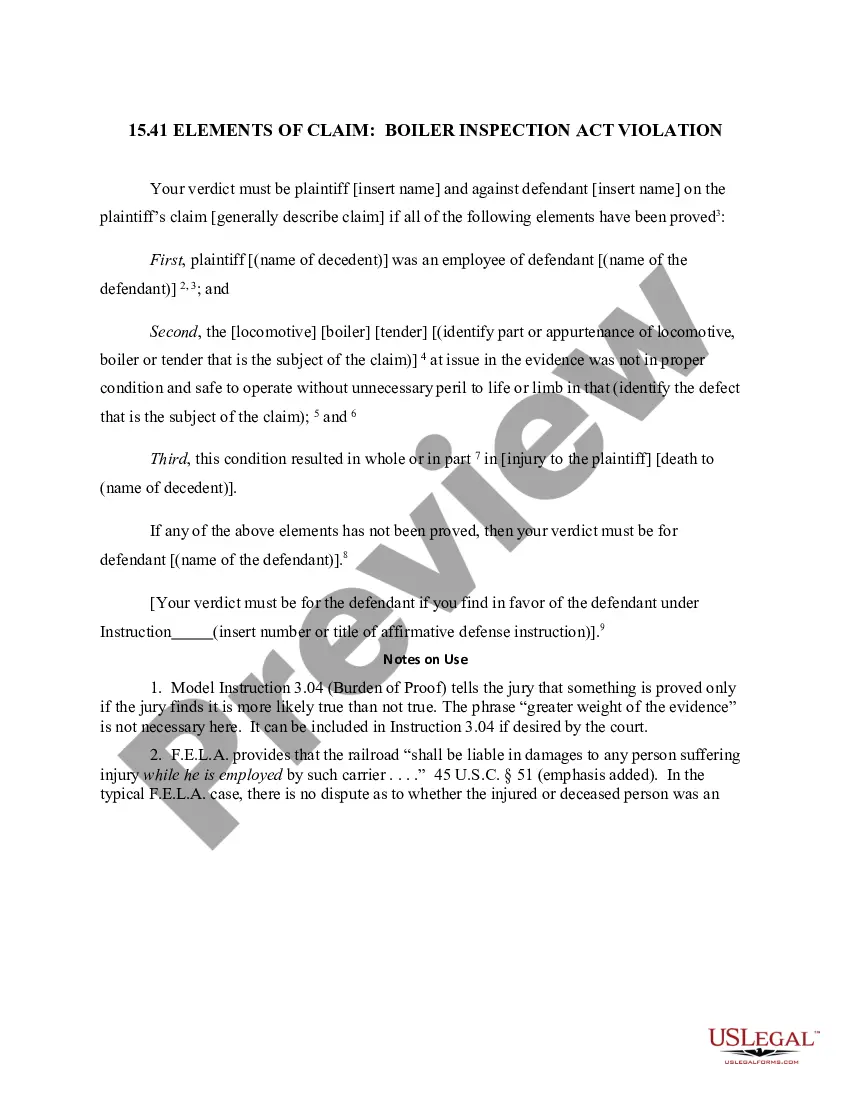
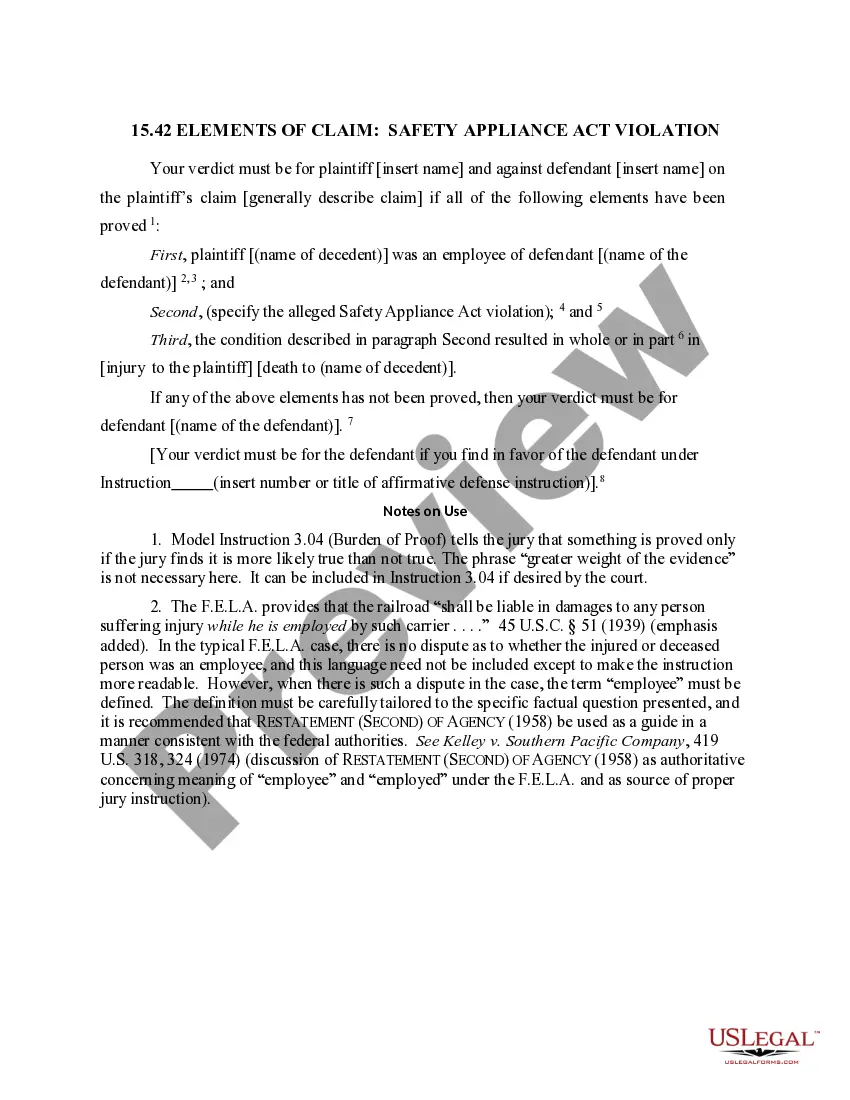
15.40 ELEMENTS OF CLAIM: GENERAL F.E.L.A. NEGLIGENCE is a legal term used in the Federal Employers' Liability Act (FELL) to describe a specific type of negligence claim that can be brought against a railroad employer. The 15.40 Elements are the necessary elements of a FELL negligence claim which must be proven by a plaintiff in order for the claim to be successful. Generally, the 15.40 Elements of Claim: General FELL Negligence include demonstrating that the defendant was negligent in their duty to provide a safe working environment, that they were aware of any potential hazards, and that the plaintiff’s injury was a result of their negligence. The 15.40 Elements of Claim: General FELL Negligence can be broken down into three distinct parts: Duty, Breach, and Injury. The Duty element requires that the plaintiff demonstrate that the defendant had a duty to provide a safe working environment. The plaintiff must show that the defendant was aware of any potential hazards, and that they failed to take reasonable steps to protect workers from those hazards. The Breach element requires that the plaintiff demonstrate that the defendant failed to fulfill their duty of providing a safe working environment. The plaintiff must show that the defendant was negligent in their duty to provide a safe working environment, and that the negligence was the actual and proximate cause of the plaintiff’s injury. The Injury element requires that the plaintiff demonstrate that they suffered an injury as a result of the defendant’s negligence. The plaintiff must show that they were injured as a result of the defendant’s negligence, and that the injury was a foreseeable consequence of their negligence. The 15.40 Elements of Claim: General FELL Negligence are the necessary elements that must be proven by a plaintiff in order for a claim of negligence to be successful under the FELL.
15.40 ELEMENTS OF CLAIM: GENERAL F.E.L.A. NEGLIGENCE
Description
How to fill out 15.40 ELEMENTS OF CLAIM: GENERAL F.E.L.A. NEGLIGENCE?
Preparing legal paperwork can be a real burden if you don’t have ready-to-use fillable templates. With the US Legal Forms online library of formal documentation, you can be certain in the blanks you find, as all of them comply with federal and state regulations and are examined by our experts. So if you need to fill out 15.40 ELEMENTS OF CLAIM: GENERAL F.E.L.A. NEGLIGENCE, our service is the perfect place to download it.
Obtaining your 15.40 ELEMENTS OF CLAIM: GENERAL F.E.L.A. NEGLIGENCE from our library is as easy as ABC. Previously registered users with a valid subscription need only sign in and click the Download button after they locate the proper template. Afterwards, if they need to, users can take the same document from the My Forms tab of their profile. However, even if you are new to our service, registering with a valid subscription will take only a few minutes. Here’s a brief guideline for you:
- Document compliance check. You should attentively review the content of the form you want and ensure whether it suits your needs and complies with your state law regulations. Previewing your document and reviewing its general description will help you do just that.
- Alternative search (optional). Should there be any inconsistencies, browse the library using the Search tab above until you find an appropriate template, and click Buy Now when you see the one you want.
- Account registration and form purchase. Sign up for an account with US Legal Forms. After account verification, log in and select your most suitable subscription plan. Make a payment to proceed (PayPal and credit card options are available).
- Template download and further usage. Choose the file format for your 15.40 ELEMENTS OF CLAIM: GENERAL F.E.L.A. NEGLIGENCE and click Download to save it on your device. Print it to complete your paperwork manually, or take advantage of a multi-featured online editor to prepare an electronic version faster and more effectively.
Haven’t you tried US Legal Forms yet? Subscribe to our service now to obtain any formal document quickly and easily whenever you need to, and keep your paperwork in order!
Form popularity
FAQ
Negligence occurs when someone fails to act with a reasonable level of care and someone is injured. There are many types of negligence claims, but they require the plaintiff to prove the same three elements: negligence, causation, and damages.
A negligence claim requires that the person bringing the claim (the plaintiff) establish four distinct elements: duty of care, breach, causation, and damages.
Unlike other types of personal injury claims, however, Jones Act claims have what is considered to be a "featherweight" burden of proof. This means that a judge or jury only has to be convinced that the employer's action or lack of action played a role?no matter how small?in causing the plaintiff's injury.
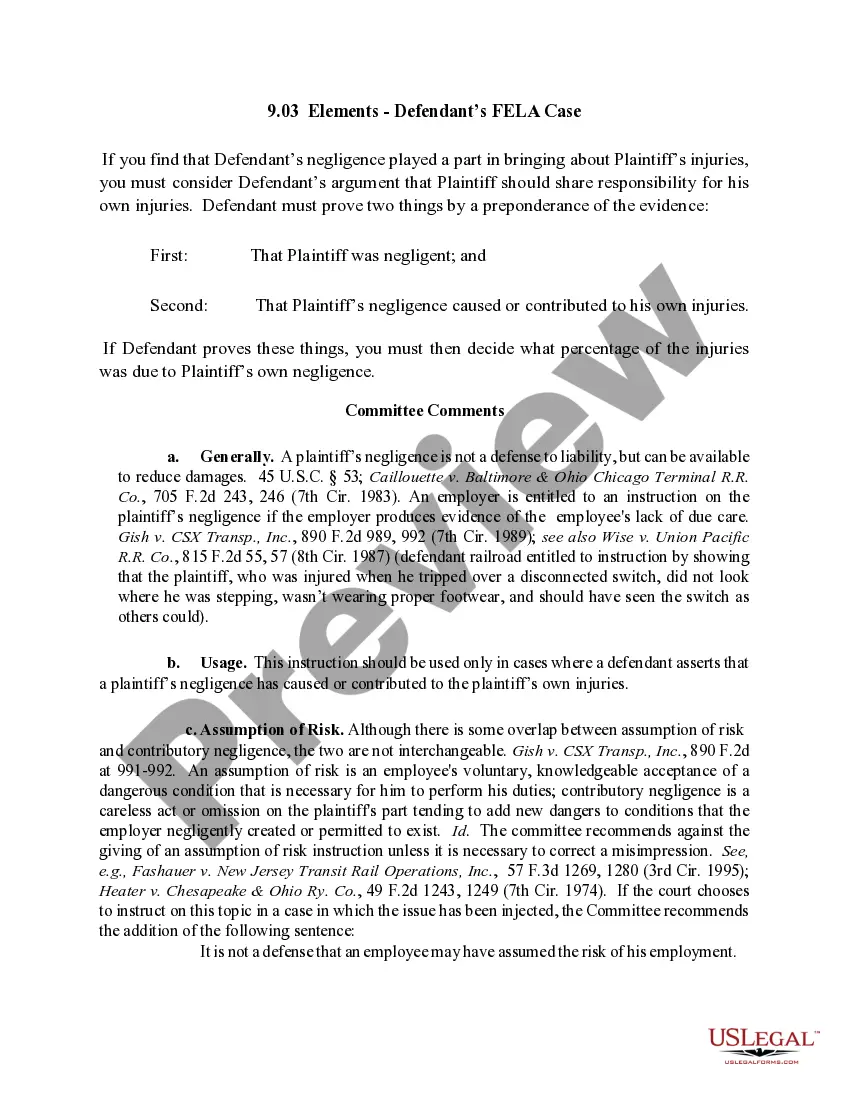
"An FELA claim has four elements, requiring that: (1) the employee was injured in the scope of employment; (2) the employee's employment was in furtherance of the railroad's interstate transportation business; (3) the railroad was negligent; and (4) the railroad's negligence 'played some part in causing the injury for
Duty: A person owed you a legal duty of care; Breach: That person breached their duty of care; Causation: Their breach caused you injuries; and. Damages: The injuries resulted in financial losses.
Cause of Action?General Negligence (PLD-PI-001(2)) Tells the court and the other side that you contend the other side was negligent in some way, and that you were harmed as a result. Must be attached to a Complaint form to use.
Difference Between a Claim & Cause of Action In some cases, there can be many causes of action. These will all factor into your case. If there is no cause of action, this means the facts presented won't support a lawsuit. Your claim is the section of your lawsuit where you state the damages you wish to recover.