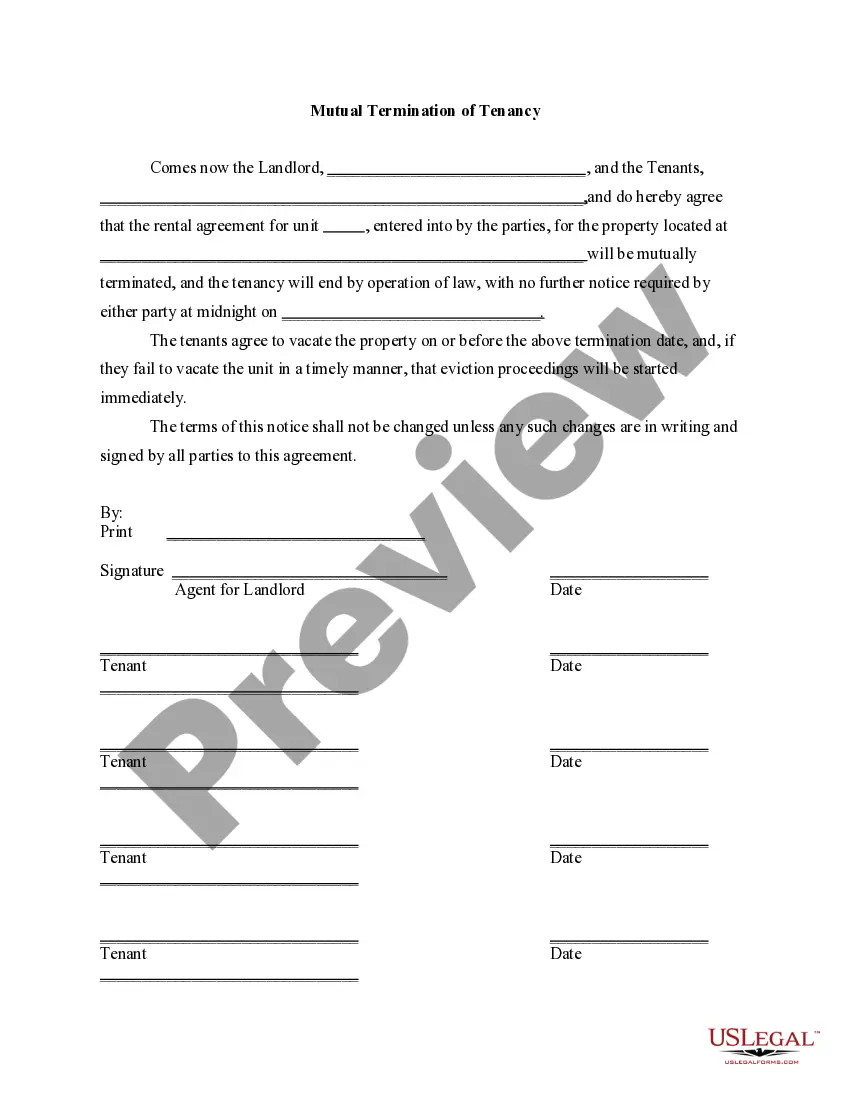
Mutual Termination of Tenancy
Understanding this form
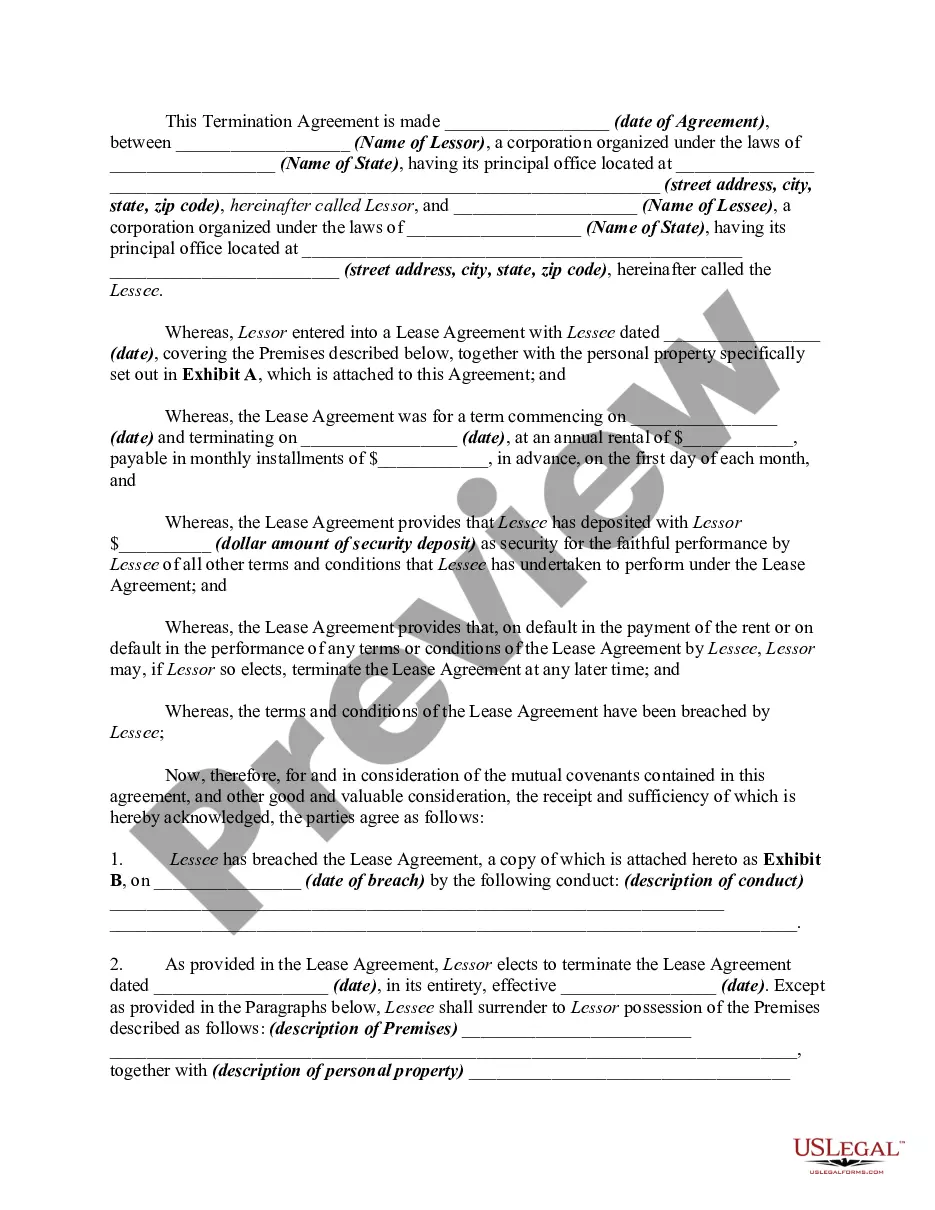
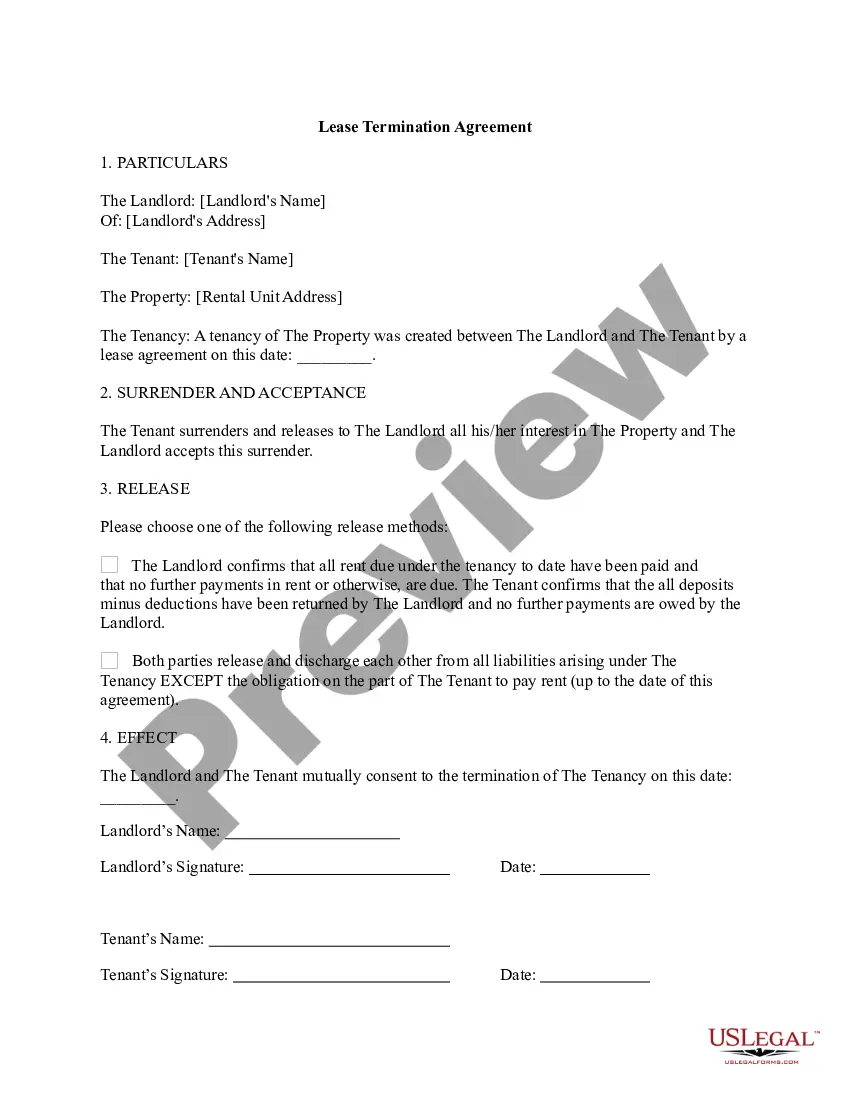
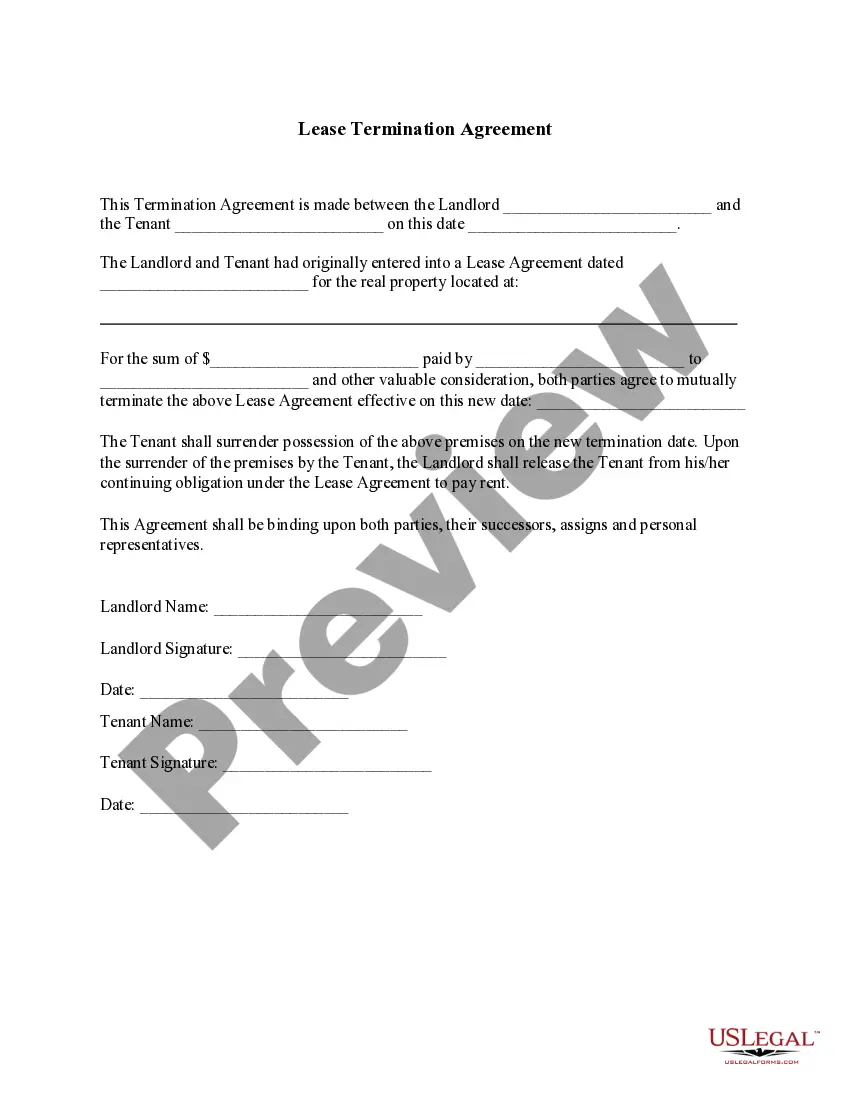
A mutual termination of tenancy is a legal agreement between a landlord and tenant to end a lease early by their mutual consent. This form clearly outlines the terms under which the rental agreement will be terminated, emphasizing the negotiated nature of the agreement. Unlike a unilateral notice of termination, this document requires consent from both parties, ensuring a clear understanding of the end date and related responsibilities.
Key parts of this document
- Names of the landlord and tenants involved in the agreement.
- Description of the rental unit and property location.
- Specific termination date when the tenancy will end.
- Agreement on eviction procedures if tenants do not vacate on time.
- Provisions for any changes to the agreement requiring written consent.
- Signature lines for all parties, providing legal acknowledgment of the agreement.
When to use this form
This form is useful when both the landlord and tenant agree to terminate the lease before its expiration date. Common situations include circumstances where the tenant needs to relocate for work, the landlord wants to regain possession of the property, or both parties find it beneficial to end their rental relationship amicably.
Who needs this form
- Landlords looking to terminate a tenancy with their tenantâs agreement.
- Tenants wishing to exit a lease early that they have mutually agreed to terminate.
- Real estate professionals facilitating lease terminations on behalf of landlords.
- Individuals with basic knowledge of rental agreements.
Steps to complete this form
- Identify the names of the landlord and tenants involved in the agreement.
- Specify the rental unit and its address clearly.
- Enter the agreed termination date for the tenancy.
- Ensure all tenants sign and date the agreement to acknowledge their consent.
- Keep a copy for your records after all parties have signed.
Does this document require notarization?
This form does not typically require notarization unless specified by local law. Users should verify their stateâs requirements to ensure compliance with any applicable regulations.
Get your form ready online
Our built-in tools help you complete, sign, share, and store your documents in one place.
Make edits, fill in missing information, and update formatting in US Legal Forms—just like you would in MS Word.
Download a copy, print it, send it by email, or mail it via USPS—whatever works best for your next step.
Sign and collect signatures with our SignNow integration. Send to multiple recipients, set reminders, and more. Go Premium to unlock E-Sign.
If this form requires notarization, complete it online through a secure video call—no need to meet a notary in person or wait for an appointment.
We protect your documents and personal data by following strict security and privacy standards.

Make edits, fill in missing information, and update formatting in US Legal Forms—just like you would in MS Word.

Download a copy, print it, send it by email, or mail it via USPS—whatever works best for your next step.

Sign and collect signatures with our SignNow integration. Send to multiple recipients, set reminders, and more. Go Premium to unlock E-Sign.

If this form requires notarization, complete it online through a secure video call—no need to meet a notary in person or wait for an appointment.

We protect your documents and personal data by following strict security and privacy standards.
Mistakes to watch out for
- Failing to have all parties sign the document, which can lead to disputes.
- Not specifying the termination date clearly, causing confusion.
- Changing any terms without obtaining written consent from all parties.
Why complete this form online
- Convenient access to legally vetted templates, saving time and reducing stress.
- Editability allows users to customize the agreement according to their specific needs.
- Reliable and trustworthy forms drafted by licensed attorneys ensure legal compliance.
Legal use & context
- This form provides a structured way to handle the early termination of a lease agreement.
- Legally binds both parties to the agreed terms of lease termination, reducing ambiguity and potential legal disputes.
Looking for another form?
Form popularity
FAQ
The landlord and tenant can mutually agree to end the lease at any point. This agreement is called a mutual termination. The mutual termination is a negotiated agreement, and it can end the lease on whatever terms are agreeable to both parties.
The tenant must give a 30 day notice in order to terminate the lease. The rent must be pro-rated up until the date of the lease termination. (New Jersey Safe Housing Act, N.J.S.A.
In certain situations, the employment relationship may come to an end through what is called a mutual termination agreement. As the name suggests, this agreement comes about when both parties, being the employer and the employee, collectively decide that the employment relationship will cease to exist.
Yes. Not paying rent is a valid reason for landlords to end a lease. However, they must provide proper notice to their tenant so that they pay the remaining rent before moving out. If the tenant refuses or fails to pay rent within the specified period, the landlord may have the legal right to file a lawsuit.
Sample Mutual Termination Agreement 1. I/we, the undersigned, herby agree to terminate the tenancy at insert address by Mutual Agreement and the tenants will have no further liability for rent after the agreement ends. 2. The tenancy will terminate on insert date.
5. Termination by Mutual Agreement. This Agreement may be terminated at any time by mutual consent of the parties hereto, provided that such consent to terminate is in writing and is signed by all of the parties hereto.