Agreement for Exhibition
What is this form?
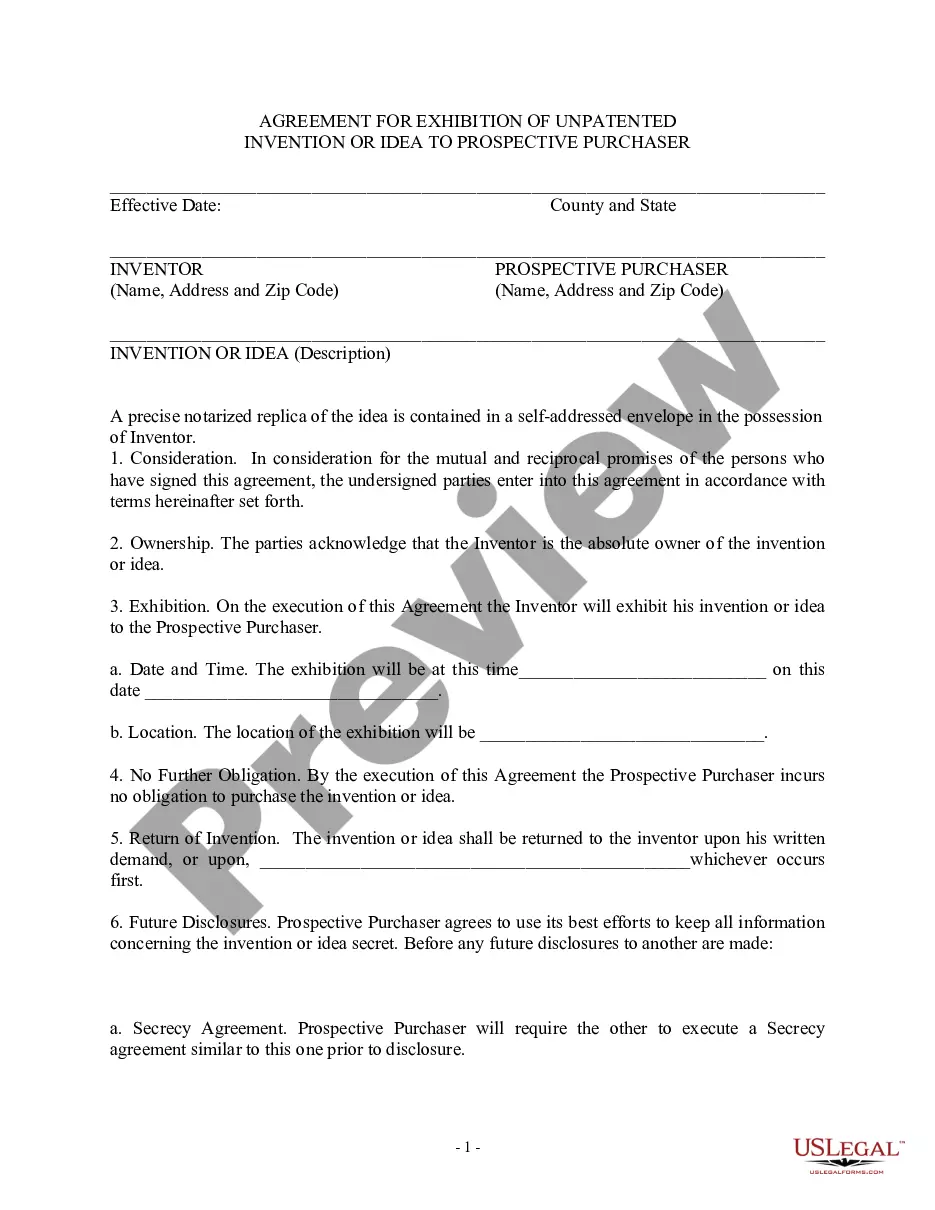
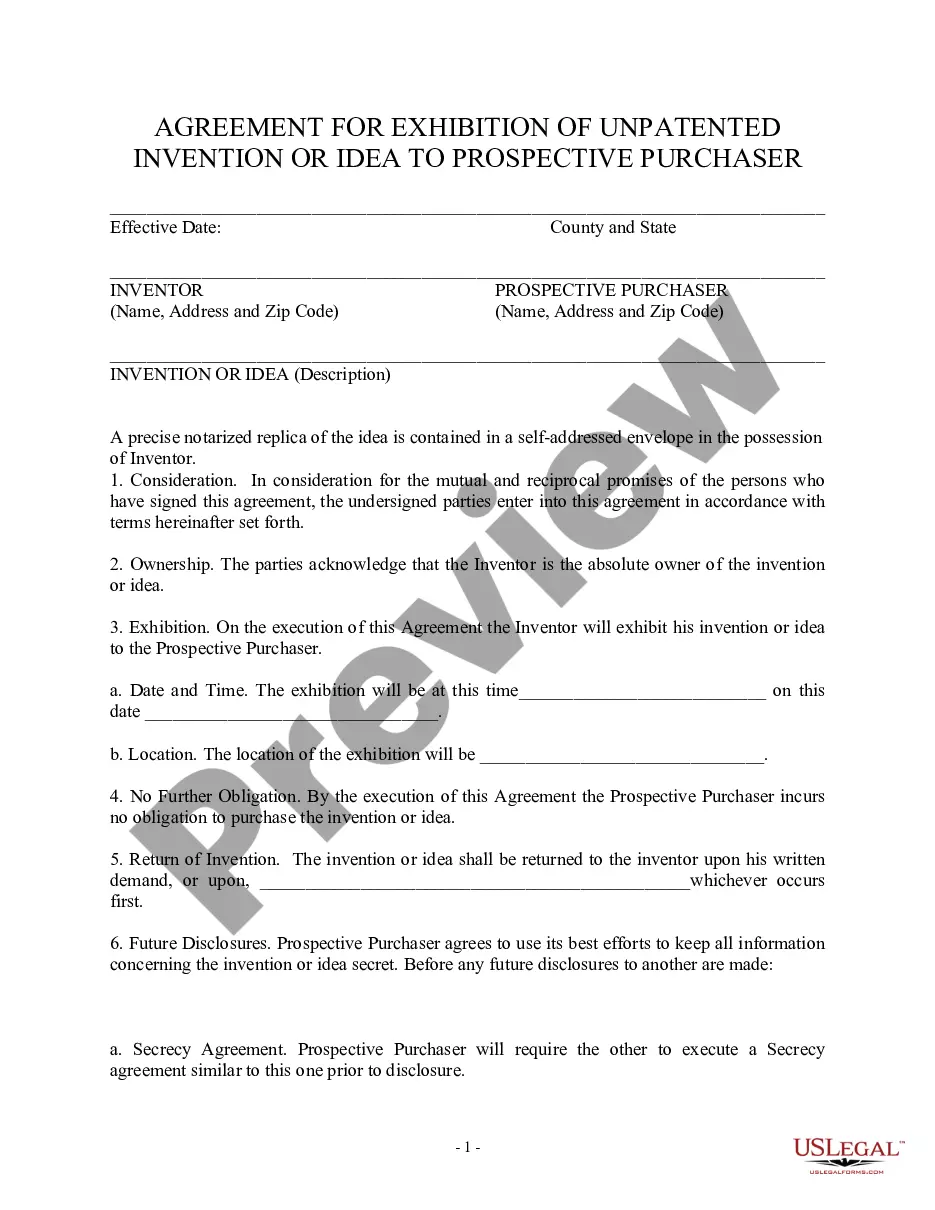
The Agreement for Exhibition is a legal document designed for inventors who wish to present their unpatented inventions to potential buyers. This form ensures the inventor's rights are safeguarded during the exhibition process and includes provisions for confidentiality. Unlike general non-disclosure agreements, this form specifically caters to the context of showcasing an invention, making it particularly useful for inventors seeking to negotiate with prospective purchasers.
What’s included in this form
- Effective date: The starting date of the agreement.
- Parties involved: Identification of the inventor and prospective purchaser.
- Description of invention: A detailed account of the invention or idea being exhibited.
- Exhibition details: Specifics regarding the date, time, and location of the exhibition.
- Secrecy provision: Commitment from the prospective purchaser to keep the invention confidential.
- Return of invention: Terms outlining how and when the invention should be returned post-exhibition.

Situations where this form applies
This form is ideal when an inventor plans to present their unpatented invention to potential buyers. Use this agreement to protect your rights and ensure that your invention remains confidential during discussions. It is particularly useful in scenarios where the inventor is seeking to assess interest in their invention without risking disclosure of sensitive information.
Who can use this document
This form is suitable for:
- Individual inventors looking to promote their unpatented ideas.
- Businesses that specialize in developing or acquiring new inventions.
- Anyone needing to present their invention under secure terms to a prospective purchaser.
Instructions for completing this form
- Identify the parties involved by filling in the names and addresses of both the inventor and the prospective purchaser.
- Enter the effective date of the agreement at the top of the form.
- Provide a detailed description of the invention or idea being presented.
- Specify the date, time, and location for the exhibition of the invention.
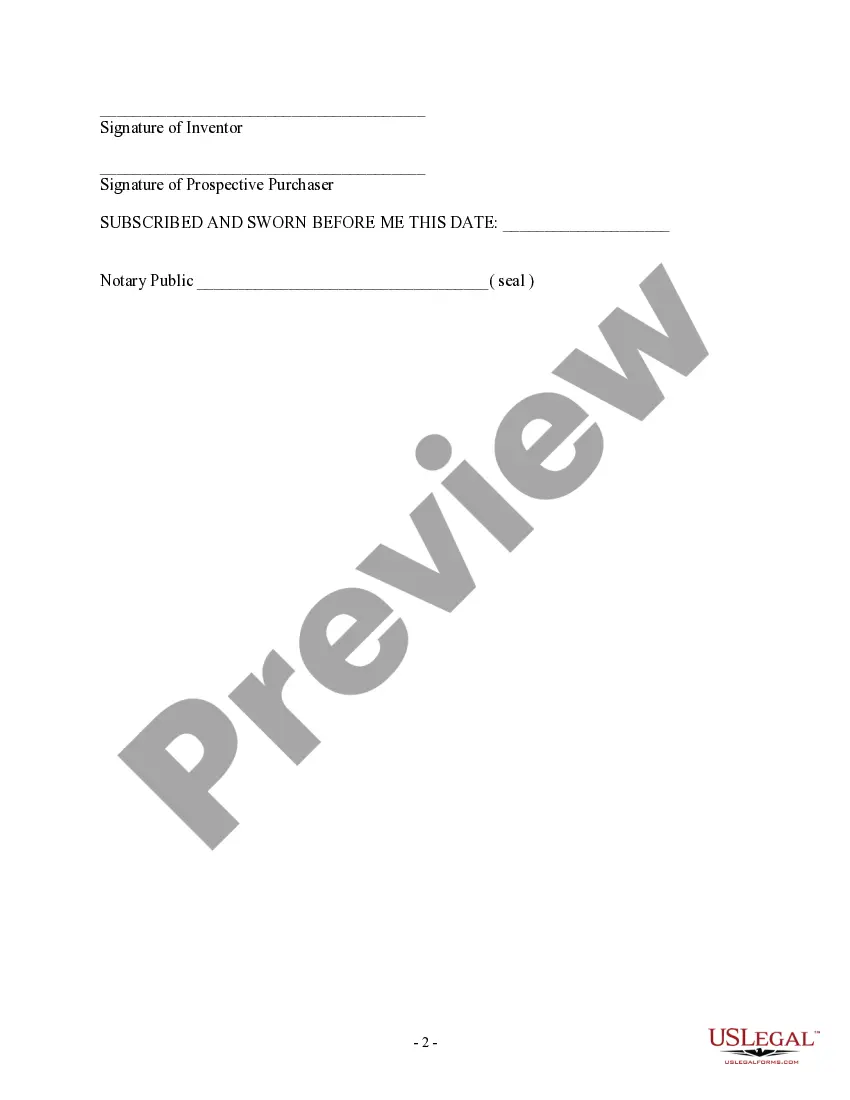
- Sign and date the agreement to ensure both parties are bound by its terms.
Notarization guidance
This form must be notarized to be legally valid. US Legal Forms provides secure online notarization powered by Notarize, allowing you to complete the process through a verified video call.
Get your form ready online
Our built-in tools help you complete, sign, share, and store your documents in one place.
Make edits, fill in missing information, and update formatting in US Legal Forms—just like you would in MS Word.
Download a copy, print it, send it by email, or mail it via USPS—whatever works best for your next step.
Sign and collect signatures with our SignNow integration. Send to multiple recipients, set reminders, and more. Go Premium to unlock E-Sign.
If this form requires notarization, complete it online through a secure video call—no need to meet a notary in person or wait for an appointment.
We protect your documents and personal data by following strict security and privacy standards.

Make edits, fill in missing information, and update formatting in US Legal Forms—just like you would in MS Word.

Download a copy, print it, send it by email, or mail it via USPS—whatever works best for your next step.

Sign and collect signatures with our SignNow integration. Send to multiple recipients, set reminders, and more. Go Premium to unlock E-Sign.

If this form requires notarization, complete it online through a secure video call—no need to meet a notary in person or wait for an appointment.

We protect your documents and personal data by following strict security and privacy standards.
Common mistakes
- Failing to provide an accurate description of the invention.
- Not including the specific details for the exhibition date and location.
- Leaving out signatures, which may invalidate the agreement.
- Not clearly outlining the terms of the secrecy provision.
Advantages of online completion
- Convenient access to legal forms anytime, anywhere.
- Easy to fill out and customize for your specific needs.
- Instant downloads allow for quick use and implementation.
- Templates are drafted by licensed attorneys for peace of mind.
Looking for another form?
Form popularity
FAQ
There are different kinds of art exhibitions, in particular there is a distinction between commercial and non-commercial exhibitions. A commercial exhibition or trade fair is often referred to as an art fair that shows the work of artists or art dealers where participants generally have to pay a fee.
How to plan a trade show exhibition Create measurable goal outcomes from the event. Find out what competitors will be present. Create a visual concept for your exhibition stand. Make sure your branding is unique. Decide which products you want to exhibit. Make sure exhibit staff are familiar with every product.
An exhibition proposal is a proposal to persuade the Client to exhibit or sponsor artwork. If the gallery or sponsor has proposal guidelines, follow them closely for the best chance of being accepted.
Documentation of Exhibition Picture selection (how many art pieces are in the exhibition) The concept behind the exhibition (positioning, and presentation in the room) Wall texts (wall texts upon request) The lighting (images taken with room lighting)
Some points you may want to cover include: What type of works will be exhibited?Do the materials used to create the work reflect themes of the exhibition?How many works will be shown?Who are the works by?Is the exhibition a solo exhibition?Is the exhibition a group exhibition?