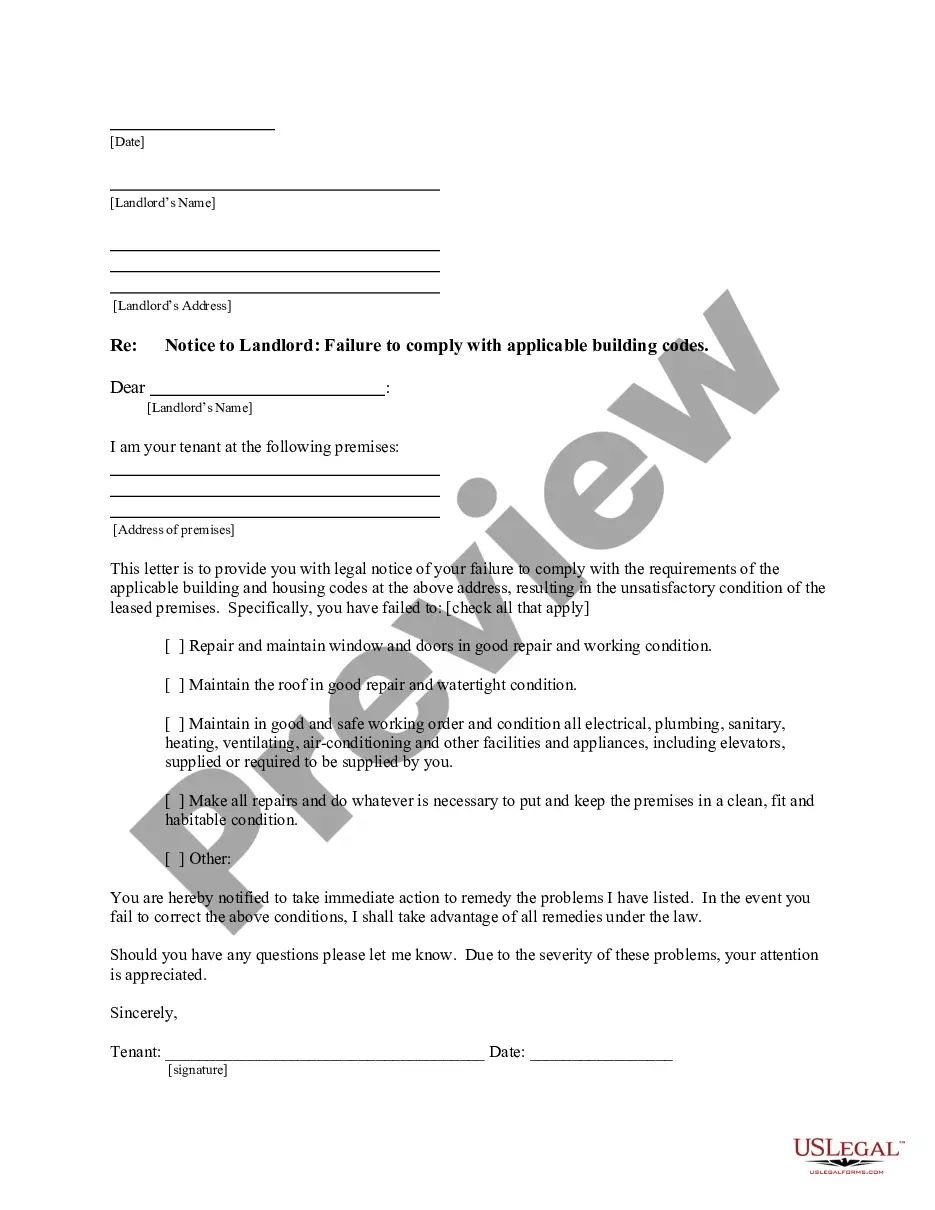
Assignment of Literary Property
Understanding this form
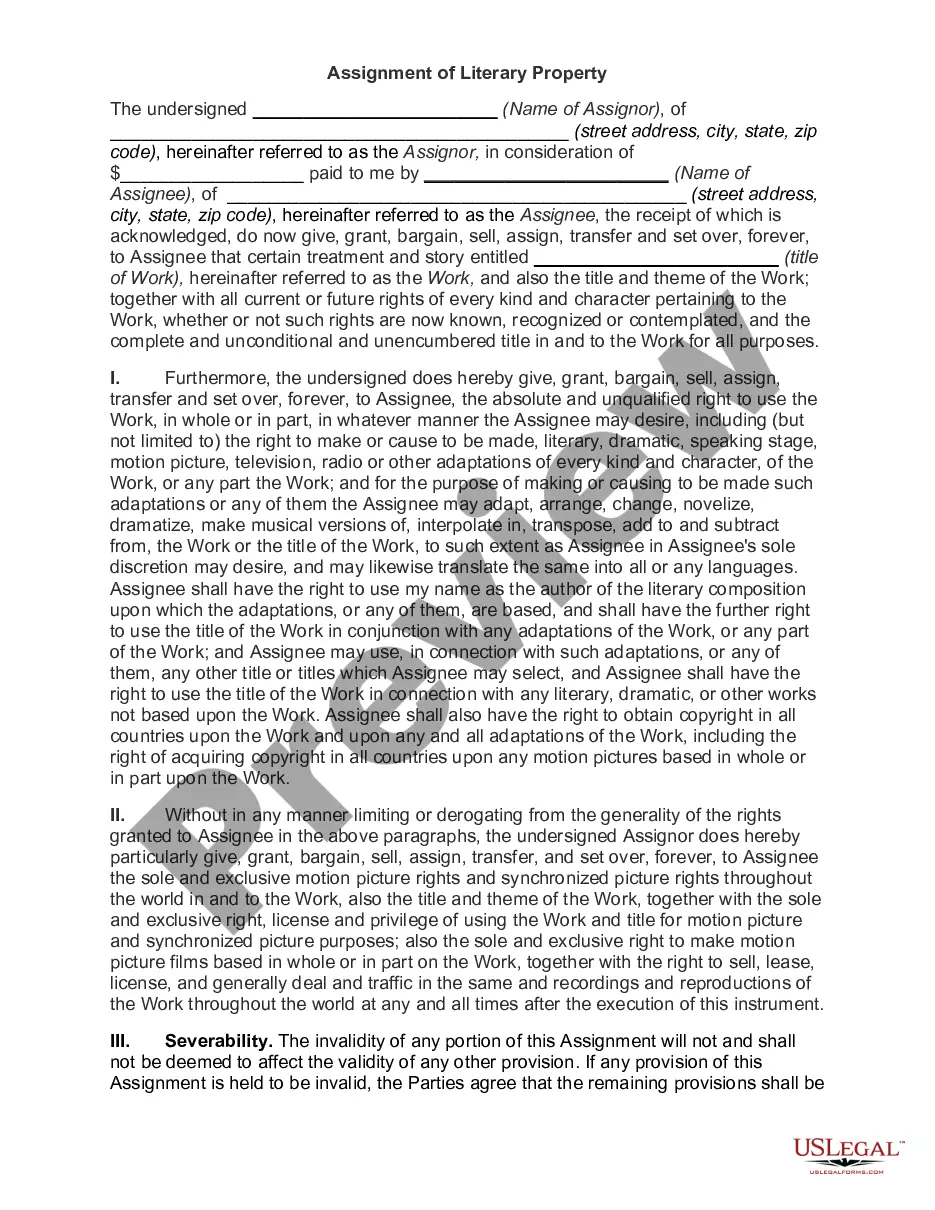
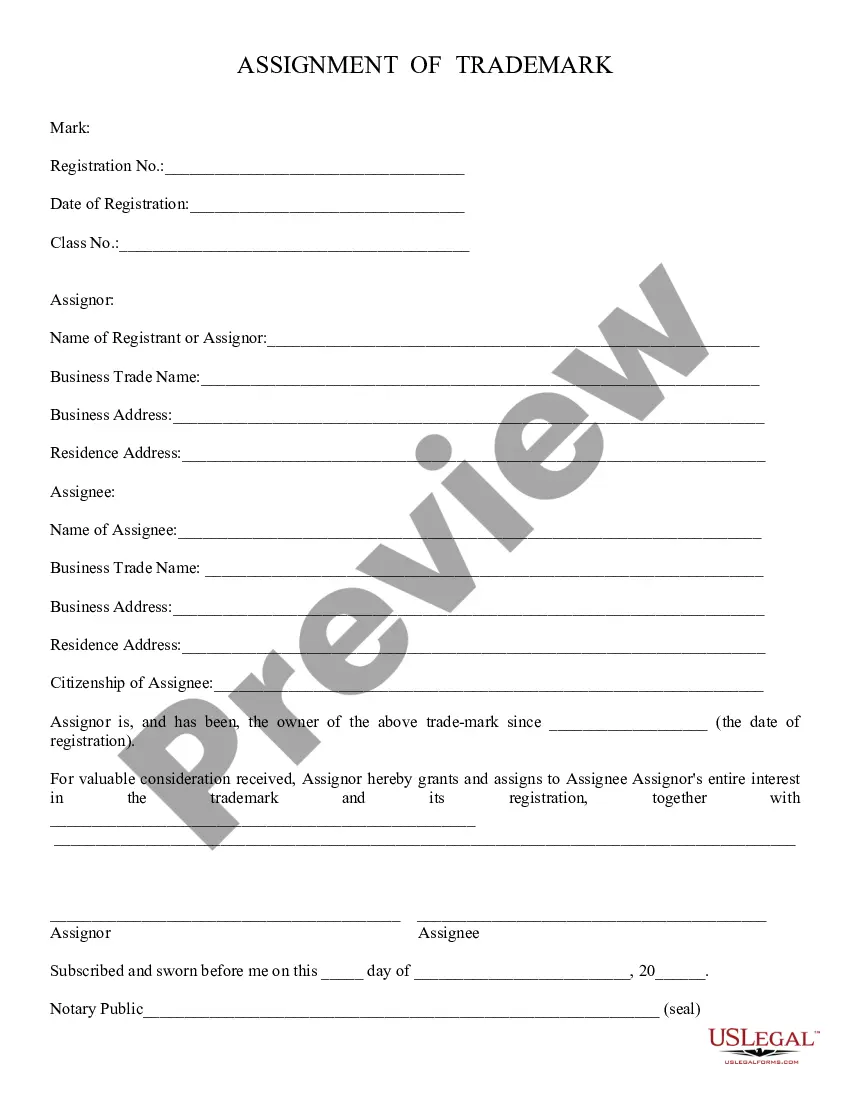
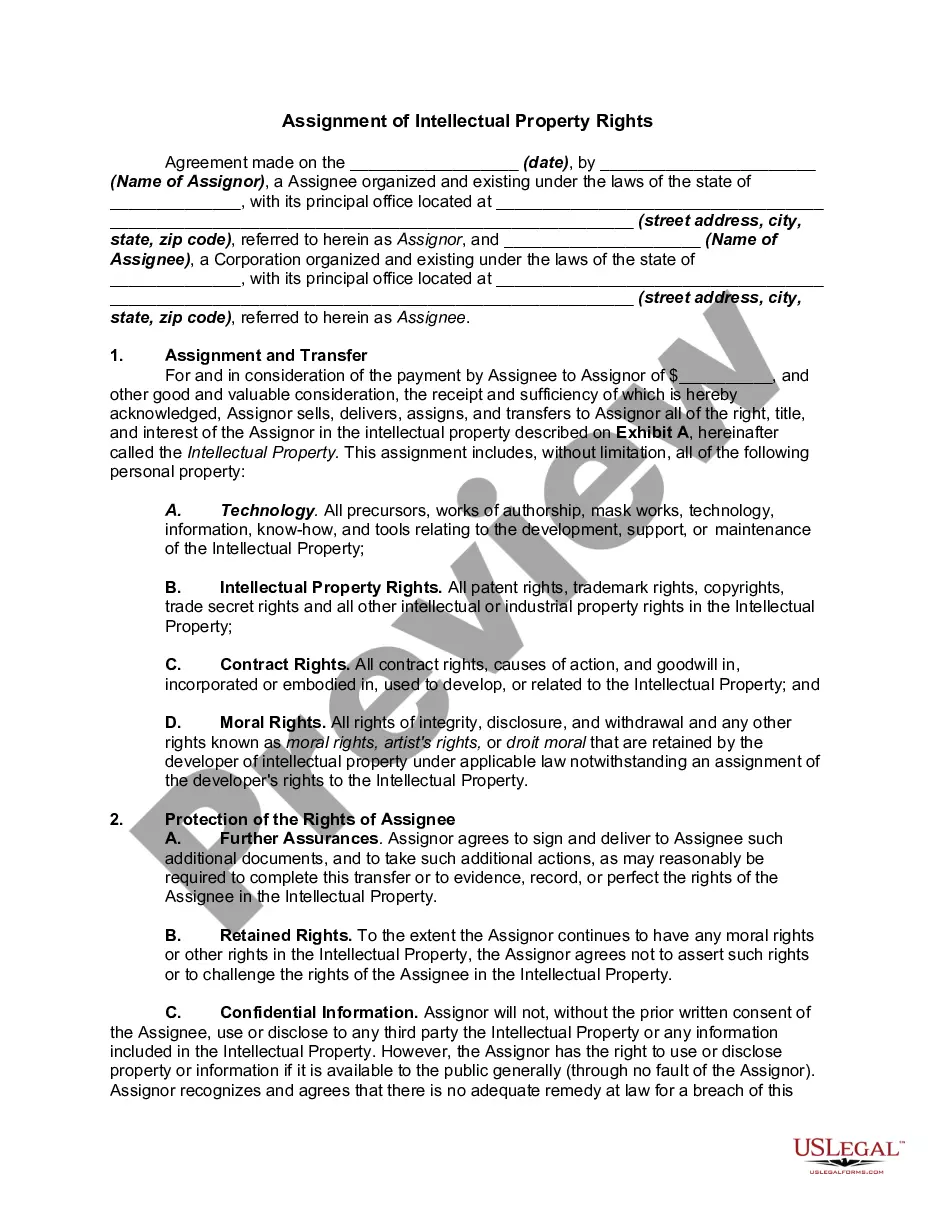
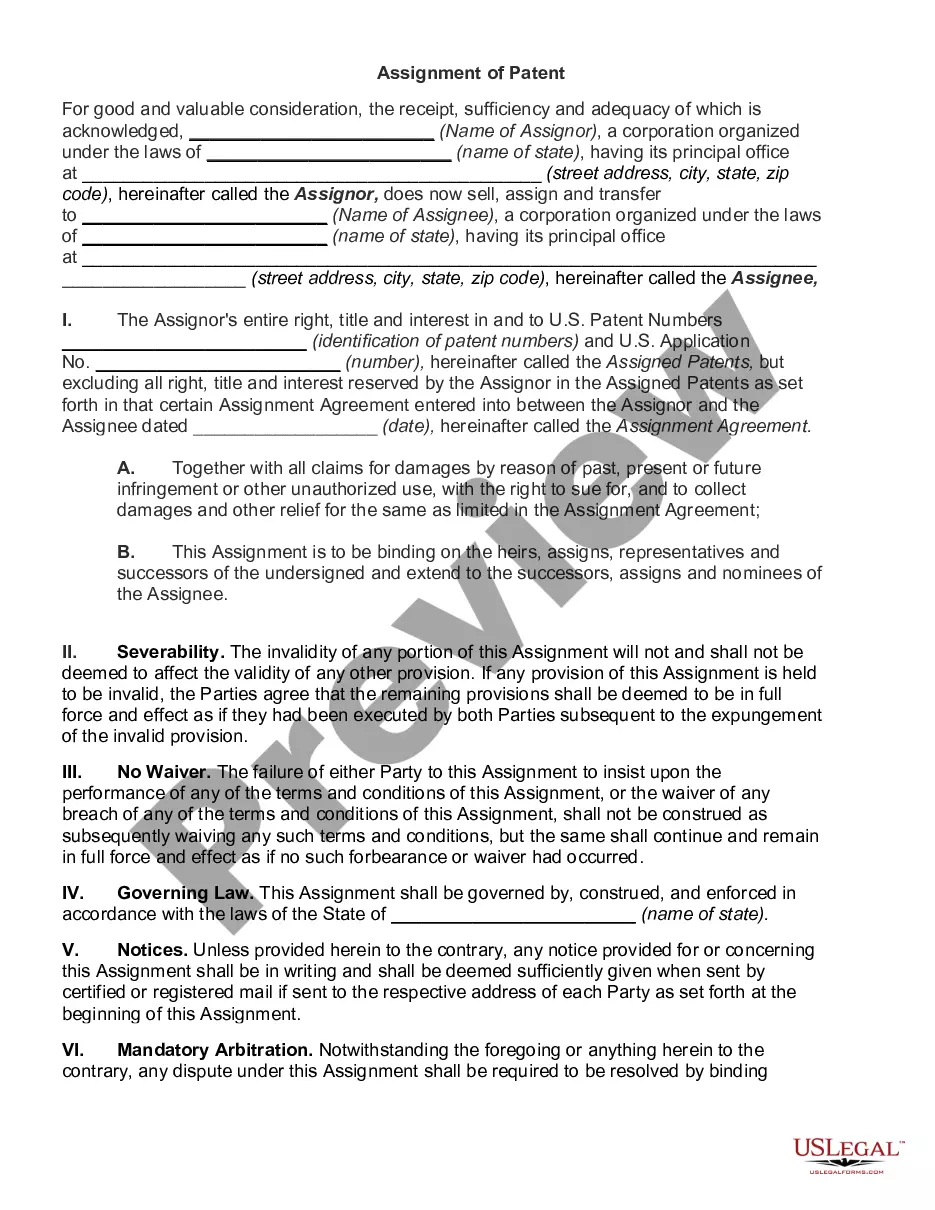
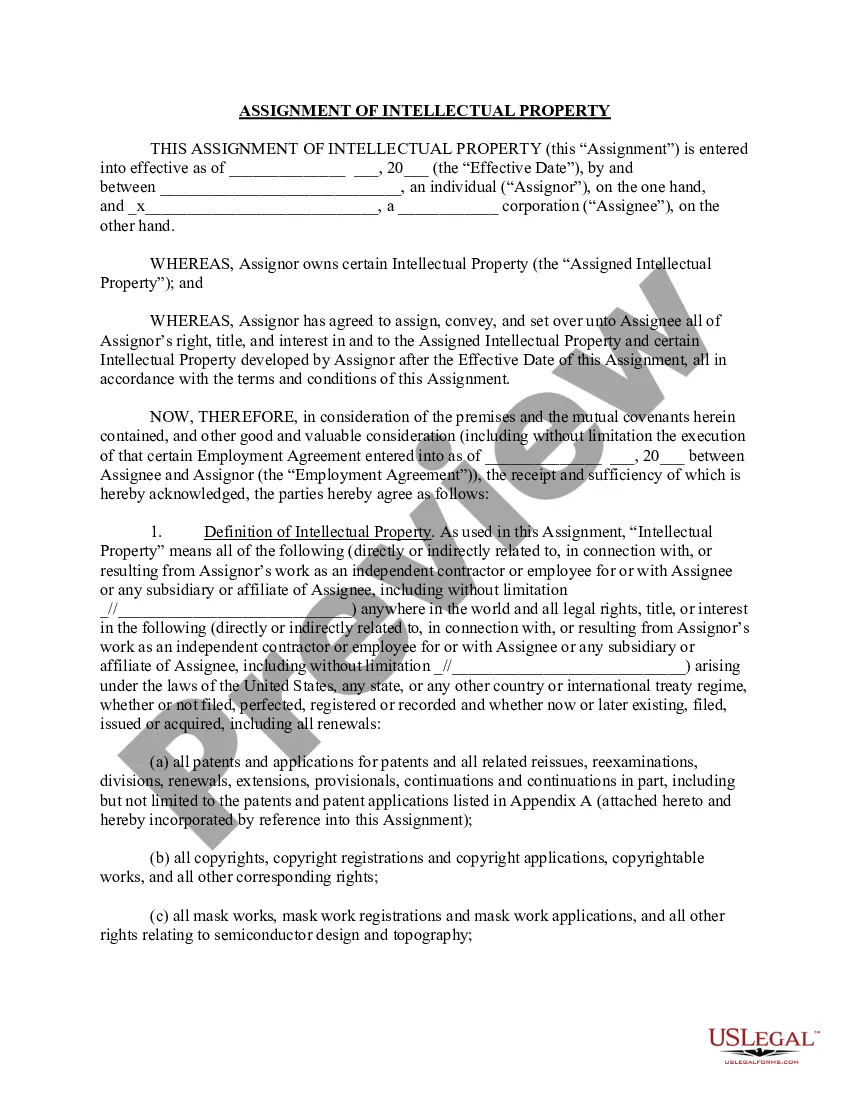
The Assignment of Literary Property is a legal document used to transfer ownership rights of a literary work from one party (the Assignor) to another (the Assignee). This form is vital for authors, writers, or creators who wish to assign their rights to another entity, ensuring clarity and protection of their intellectual property. Unlike general copyright agreements, this form covers a broad spectrum of rights associated with the literary property, such as adaptations, translations, and motion picture rights.
Form components explained
- Names and addresses of the Assignor and Assignee.
- Consideration amount paid for the assignment.
- Title of the literary work being assigned.
- Rights granted to the Assignee, including adaptations and translations.
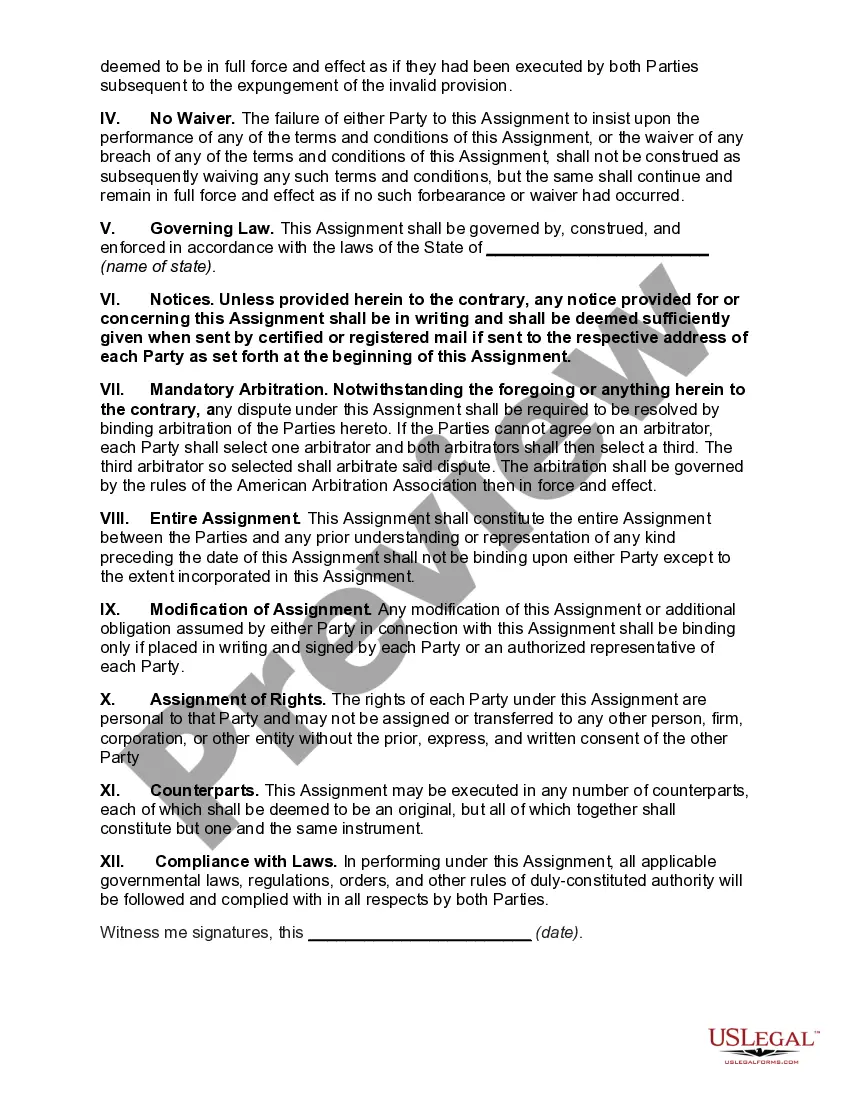
- Severability clause ensuring other provisions remain valid if one is invalidated.
- Governing law specifying the state under whose laws the assignment is interpreted.
- Details on mandatory arbitration for dispute resolution.

Common use cases
You should use the Assignment of Literary Property form when you want to officially transfer the rights of a written work, such as a novel, screenplay, or article, to another person or entity. This situation often arises when authors collaborate with publishers, production companies, or other writers who will utilize the work for further development or publication.
Intended users of this form
- Authors and writers looking to assign their literary works.
- Publishing companies acquiring rights from authors.
- Producers wanting to adapt literary works into films or plays.
- Agents acting on behalf of writers or creators.
- Any individual or organization engaging in literary property transactions.
Steps to complete this form
- Identify the parties by entering the names and addresses of both the Assignor and Assignee.
- Specify the compensation amount that the Assignor will receive for the assignment.
- Clearly enter the title of the literary work being assigned.
- Review the rights being transferred, ensuring all relevant adaptations and uses are included.
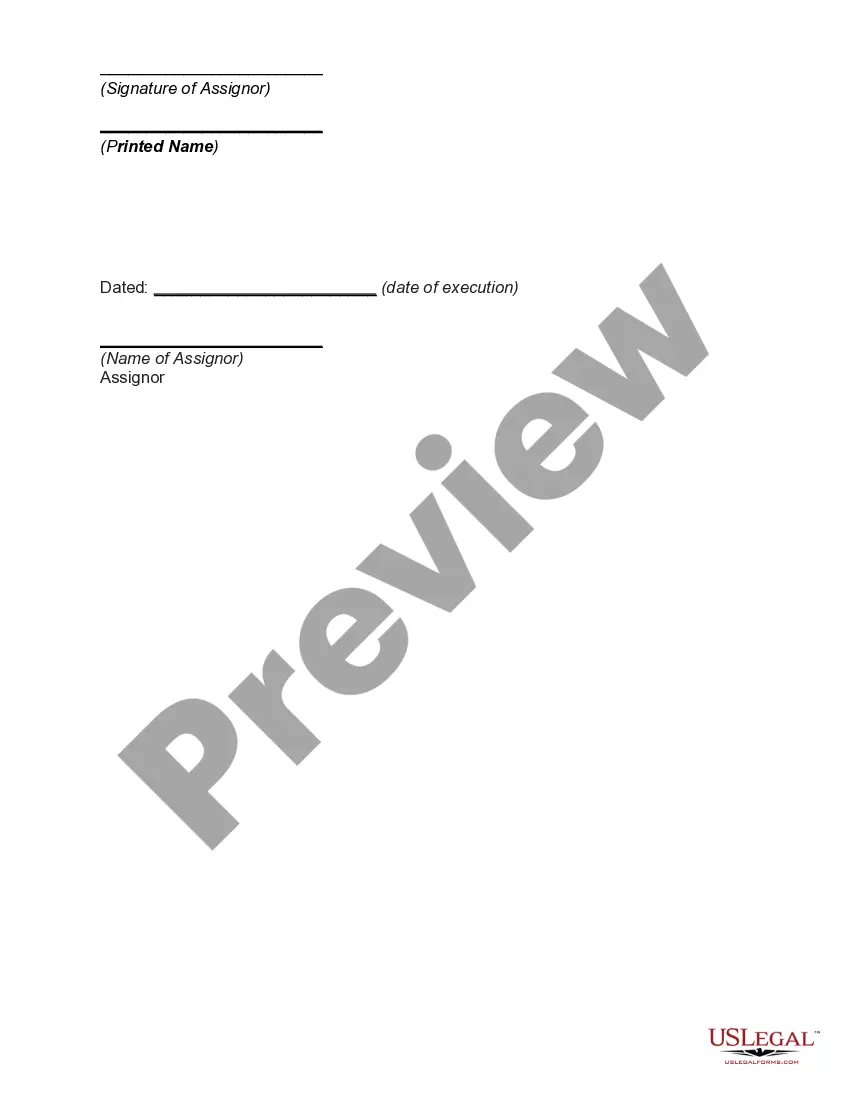
- Sign and date the document at the end to finalize the assignment.
Does this form need to be notarized?
This form does not typically require notarization unless specified by local law. It is advisable to check local regulations or consult with a legal professional if there are any doubts regarding the notarization of your literary property assignment.
Get your form ready online
Our built-in tools help you complete, sign, share, and store your documents in one place.
Make edits, fill in missing information, and update formatting in US Legal Forms—just like you would in MS Word.
Download a copy, print it, send it by email, or mail it via USPS—whatever works best for your next step.
Sign and collect signatures with our SignNow integration. Send to multiple recipients, set reminders, and more. Go Premium to unlock E-Sign.
If this form requires notarization, complete it online through a secure video call—no need to meet a notary in person or wait for an appointment.
We protect your documents and personal data by following strict security and privacy standards.

Make edits, fill in missing information, and update formatting in US Legal Forms—just like you would in MS Word.

Download a copy, print it, send it by email, or mail it via USPS—whatever works best for your next step.

Sign and collect signatures with our SignNow integration. Send to multiple recipients, set reminders, and more. Go Premium to unlock E-Sign.

If this form requires notarization, complete it online through a secure video call—no need to meet a notary in person or wait for an appointment.

We protect your documents and personal data by following strict security and privacy standards.
Common mistakes to avoid
- Not clearly identifying the literary work being assigned.
- Failing to specify all rights being transferred to the Assignee.
- Not signing the document, which can invalidate the form.
- Overlooking the need for proper legal compliance within the applicable jurisdiction.
- Using ambiguous language that may lead to disputes about the rights assigned.
Quick recap
- The Assignment of Literary Property formally transfers ownership rights of a literary work.
- Clear identification and specification of rights are crucial to avoiding future disputes.
- This form can be relevant across multiple states, but itâs important to ensure compliance with localized laws.
- Signature and date are essential for the validity of the document.
Looking for another form?



Form popularity
FAQ
An assignment is the legal transfer of ownership of any property such as a trademark or copyright from one owner to another. The transferee or "assignee" is the person who acquires ownership, and the transferor or "assignor" is the person who transfers ownership rights.
Assignment is a legal term whereby an individual, the ?assignor,? transfers rights, property, or other benefits to another known as the ?assignee.? This concept is used in both contract and property law. The term can refer to either the act of transfer or the rights/property/benefits being transferred.
An assignment transfers ownership and title to the assignee, whereas a licence grants the licensee permission to use the IP ? usually for a limited time period - whilst ownership of the patent remains with the licensor.
The difference between assignment and transfer is that assign means it's legal to transfer property or a legal right from one person to another, while transfer means it's legal to arrange for something to be controlled by or officially belong to another person.
An IP assignment is a transfer of ownership of an intellectual property right, such as a patent, trade mark or copyright, from one party (the assignor) to another party (the assignee). This infographic adds together the benefits, risks and the key elements of assignment agreements.
The assignment of intellectual property (IP) refers to the process by which ownership of work product created for an entity by an employee or consultant is transferred to the entity.
A copyright assignment is the transfer of an owner's property rights in a given creative work or works. Such transfers may occur on their own or as parts of larger asset sales or purchases. Copyright assignment agreements both provide records of ownership and transfer and protect the rights of all parties.
I assign, and agree to assign, to the Company all copyrights, patents and other proprietary rights I may have in any Intellectual Property, together with the right to file for and/or own wholly without restriction United States and foreign patents, trademarks, and copyrights.