Advancement Declaration of Gift Intended or Not Intended as Advancement
Overview of this form
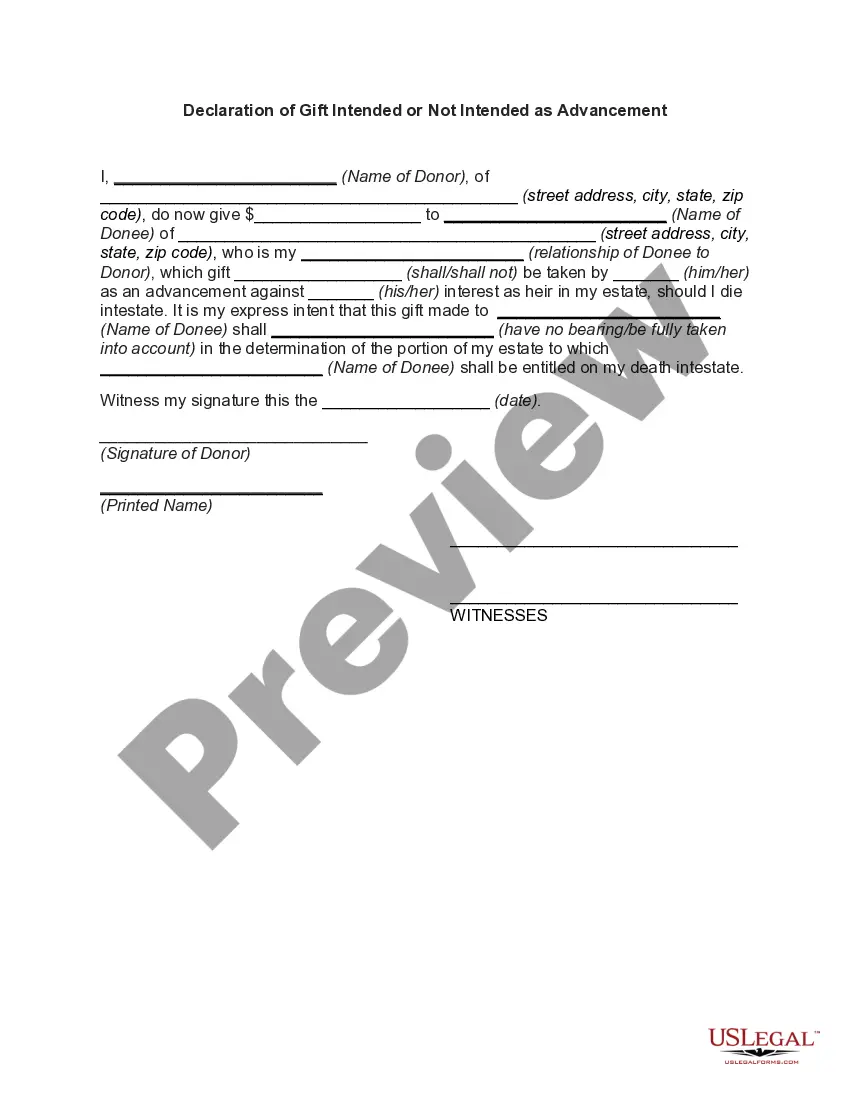
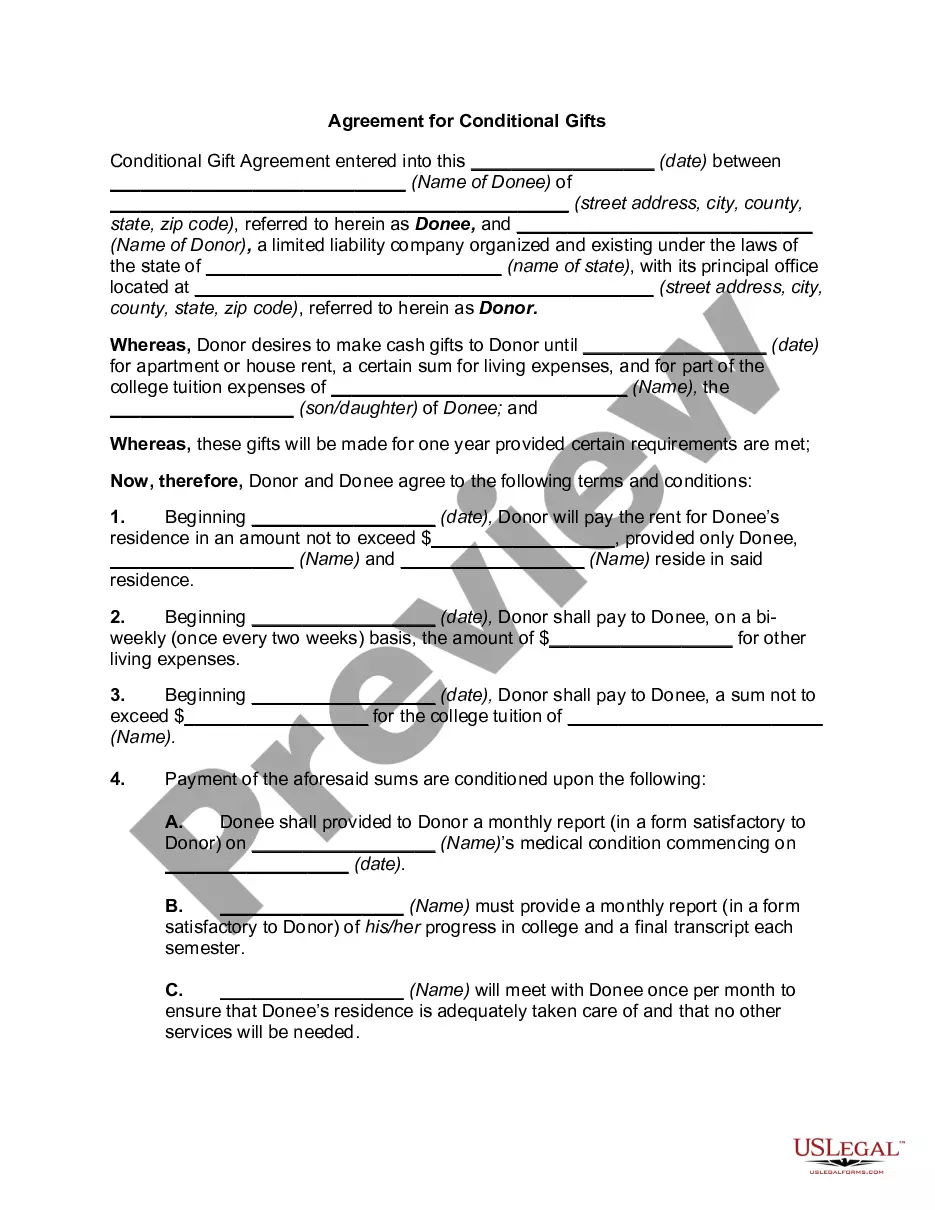
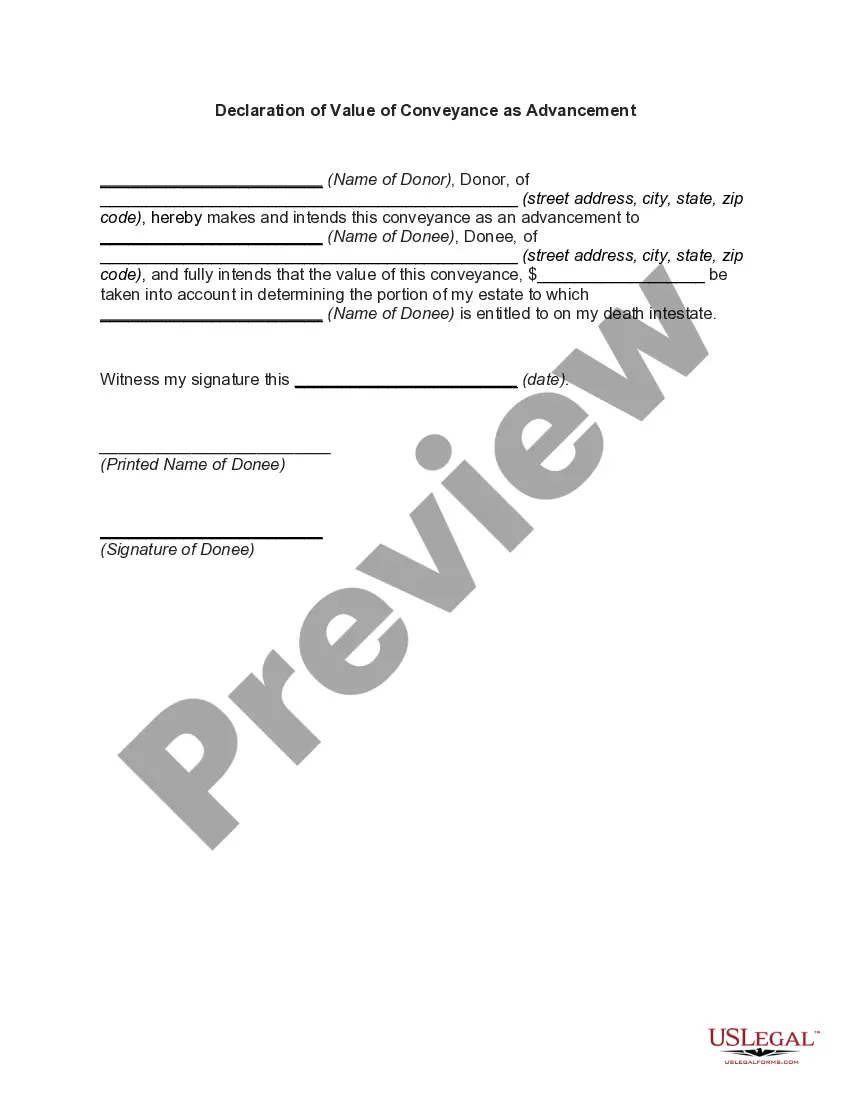
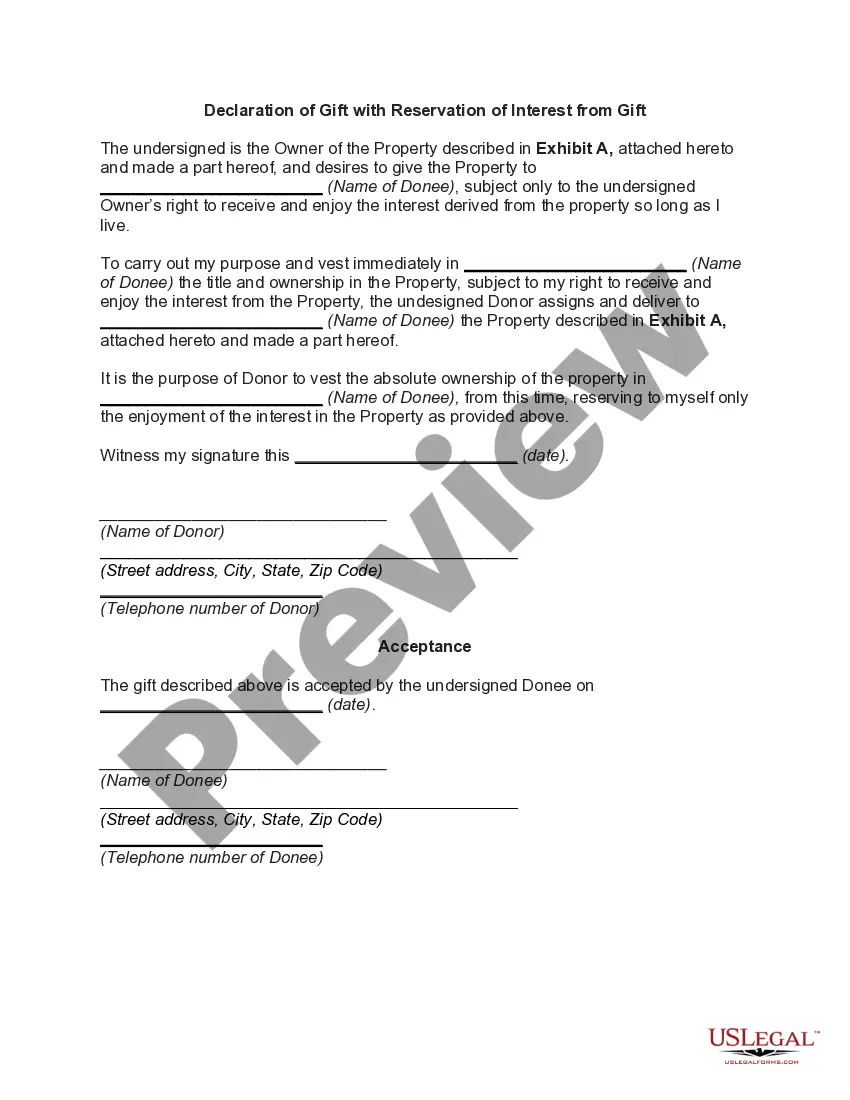
The Advancement Declaration of Gift Intended or Not Intended as Advancement is a legal document used to clarify whether a gift given by a parent to a child (or another specified heir) is intended to be considered an advancement against the heirâs share of the parent's estate after their death. Unlike a standard gift, which may not impact inheritance, this form explicitly states the donor's intent regarding how the gift is treated in relation to their estate, ensuring that the intentions are clear and legally recognized. This form helps prevent disputes over the estate by laying out the terms of the gift.
Main sections of this form
- Name and contact information of the donor.
- Amount of the gift being declared.
- Name and relationship of the donee (recipient of the gift).
- Your declaration of whether the gift shall be treated as an advancement.
- Explicit intent regarding the bearing of the gift on the estate portion entitled to the donee.
When to use this document
This form should be used when a parent or donor wishes to make a gift to their child or a specified heir and wants to clarify the treatment of that gift as it pertains to their estate. It is especially important to use this form when:- The donor has made significant gifts in their lifetime and wants to ensure those gifts are accounted for in estate distribution.- There is potential for misunderstanding or disputes among heirs regarding the gifts distributed prior to the donor's death.- The donor wants to formally declare their intent regarding how their estate should be divided upon their death, especially if they die intestate (without a will).
Intended users of this form
Individuals who should consider using this form include:
- Parents wanting to make substantial gifts to their children or heirs.
- Anyone planning their estate and wishing to clarify the effects of inter vivos gifts.
- Heirs or potential beneficiaries needing clarity on the treatment of prior gifts in relation to their share of an estate.
- Donors who are uncertain about the implications of their gifts and want to avoid future disputes.
How to prepare this document
- Identify the parties: Fill in the name and address of both the donor and the donee.
- Specify the amount: Clearly state the monetary value of the gift being declared.
- Determine the relationship: Indicate the relationship between the donor and the donee.
- State the intent: Declare whether the gift shall be treated as an advancement against the donee's inheritance.
- Finalize with signatures: The donor must sign and date the form in the presence of witnesses, who should also sign.
Does this form need to be notarized?
This form does not typically require notarization unless specified by local law. However, having the document notarized can provide additional legal validation and enhance its reliability in potential disputes.
Get your form ready online
Our built-in tools help you complete, sign, share, and store your documents in one place.
Make edits, fill in missing information, and update formatting in US Legal Forms—just like you would in MS Word.
Download a copy, print it, send it by email, or mail it via USPS—whatever works best for your next step.
Sign and collect signatures with our SignNow integration. Send to multiple recipients, set reminders, and more. Go Premium to unlock E-Sign.
If this form requires notarization, complete it online through a secure video call—no need to meet a notary in person or wait for an appointment.
We protect your documents and personal data by following strict security and privacy standards.

Make edits, fill in missing information, and update formatting in US Legal Forms—just like you would in MS Word.

Download a copy, print it, send it by email, or mail it via USPS—whatever works best for your next step.

Sign and collect signatures with our SignNow integration. Send to multiple recipients, set reminders, and more. Go Premium to unlock E-Sign.

If this form requires notarization, complete it online through a secure video call—no need to meet a notary in person or wait for an appointment.

We protect your documents and personal data by following strict security and privacy standards.
Mistakes to watch out for
- Failing to clearly indicate the intent regarding the advancement status of the gift.
- Not including signatures or dates from witnesses, which may invalidate the document.
- Leaving out important details like the full names and addresses of the donor or donee.
- Using vague language that could lead to disputes about the meaning of the gift declaration.
Why complete this form online
- Convenience: Access and complete the form from anywhere, anytime.
- Editability: Easily make corrections or adjustments before finalizing the document.
- Reliability: The forms are drafted by licensed attorneys, ensuring legal compliance.
Summary of main points
- The Advancement Declaration clarifies whether a gift is an advancement against an heir's share of an estate.
- Clear documentation can prevent disputes among heirs regarding the distribution of assets after the donor's death.
- Complete the form carefully, ensuring all required information and signatures are included for legal validity.
Looking for another form?
Form popularity
FAQ
The two doctrines that operate to implement this choice are advancement and ademption by satisfaction. Advancement governs distributions in intestacy and ademption by satisfaction governs transfers made under wills.
What is an inheritance advance? An inheritance advance is a gift made to the recipient during the testator's lifetime. This gift is given gratuitously, meaning that the recipient does not have to provide the testator with anything in return for this inheritance advance.
Advancements are usually lifetime gifts that are to be treated as part of a person's estate or trust for the purpose of calculating the beneficiaries shares. If you leave $525,000 to three beneficiaries equally, they each get $175,000.
Advancement or ademption refers to a gift of property or money that a person may give to his child or legal heir with the intention that the value of that gift will be deducted from that person's inheritance after the giver's death.
Advancement differs from giving a gift. While a gift is unconditional, advancement is under the condition that the amount will be deducted from the heir's inheritance. Advancement normally applies to descendants of a giver and not to a widow or parent.
: the action of advancing : the state of being advanced: : promotion or elevation to a higher rank or position. : progression to a higher stage of development.
An advancement is a gift made during a donor's life to a family member, usually when the donor anticipates their own death. The value of the advancement is included in the calculation of the net probate estate when the donor dies.