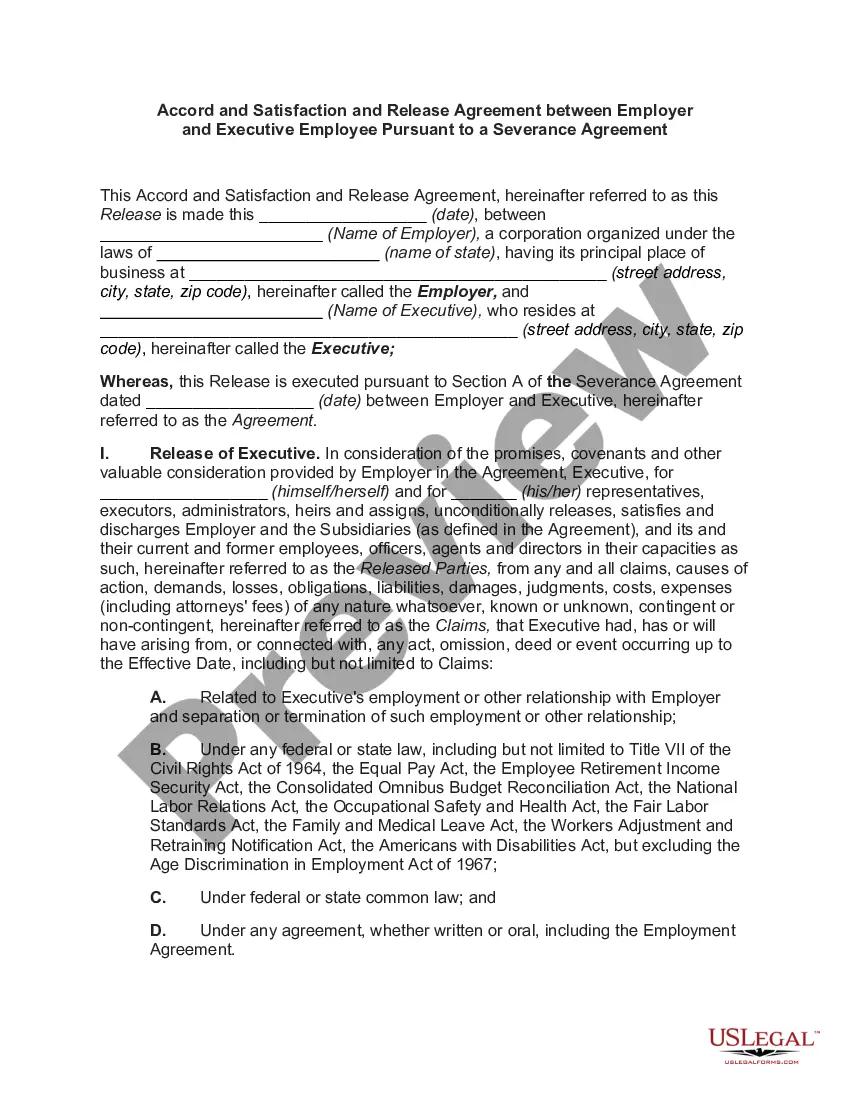
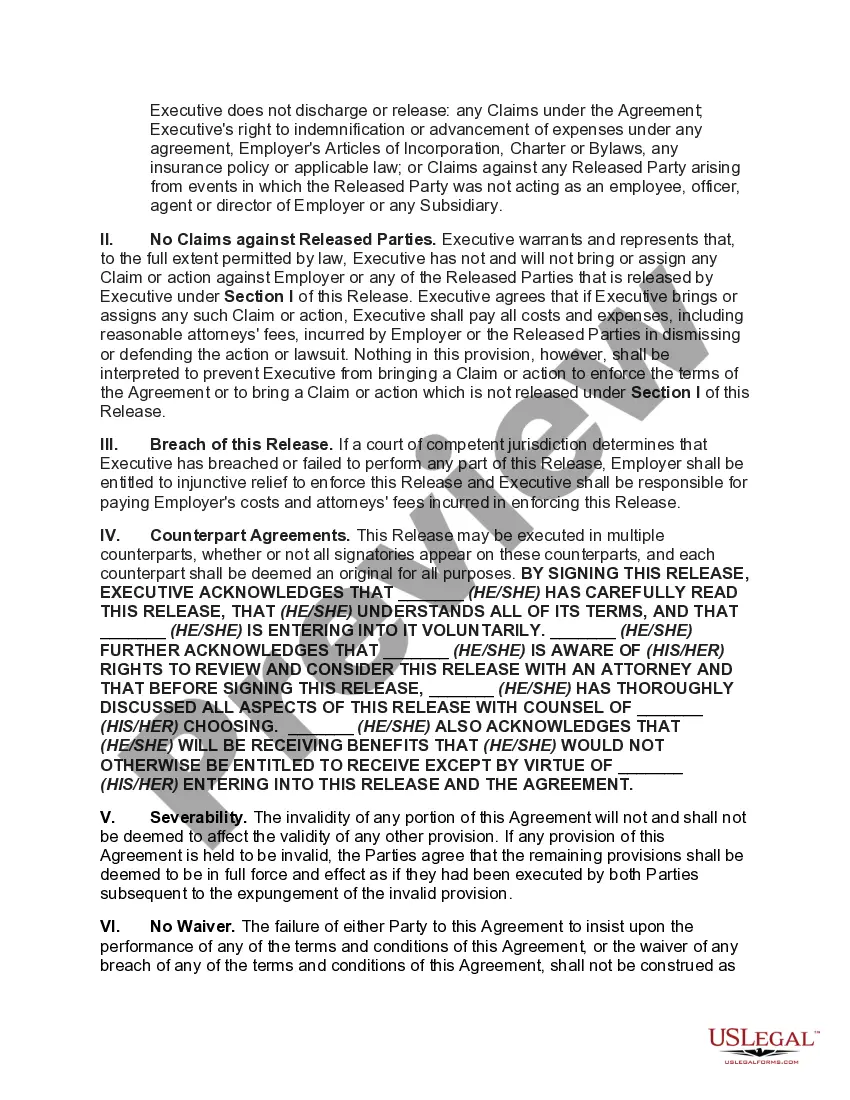
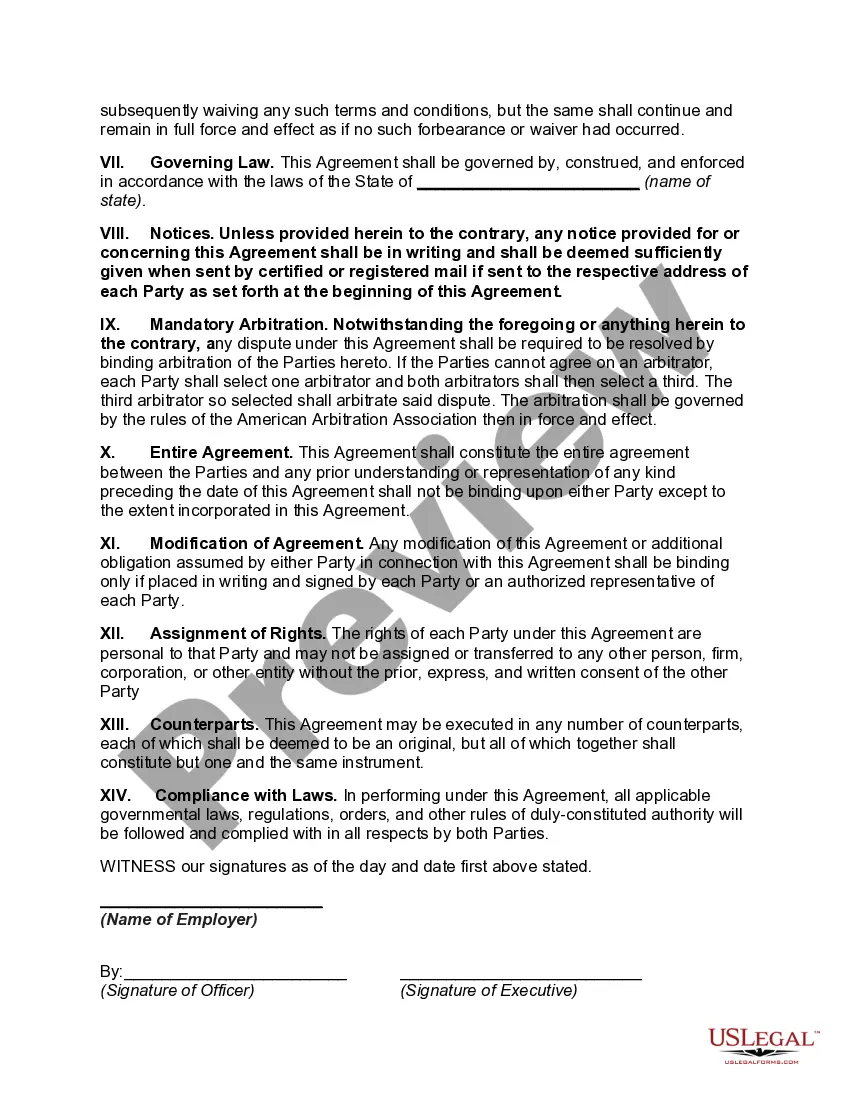
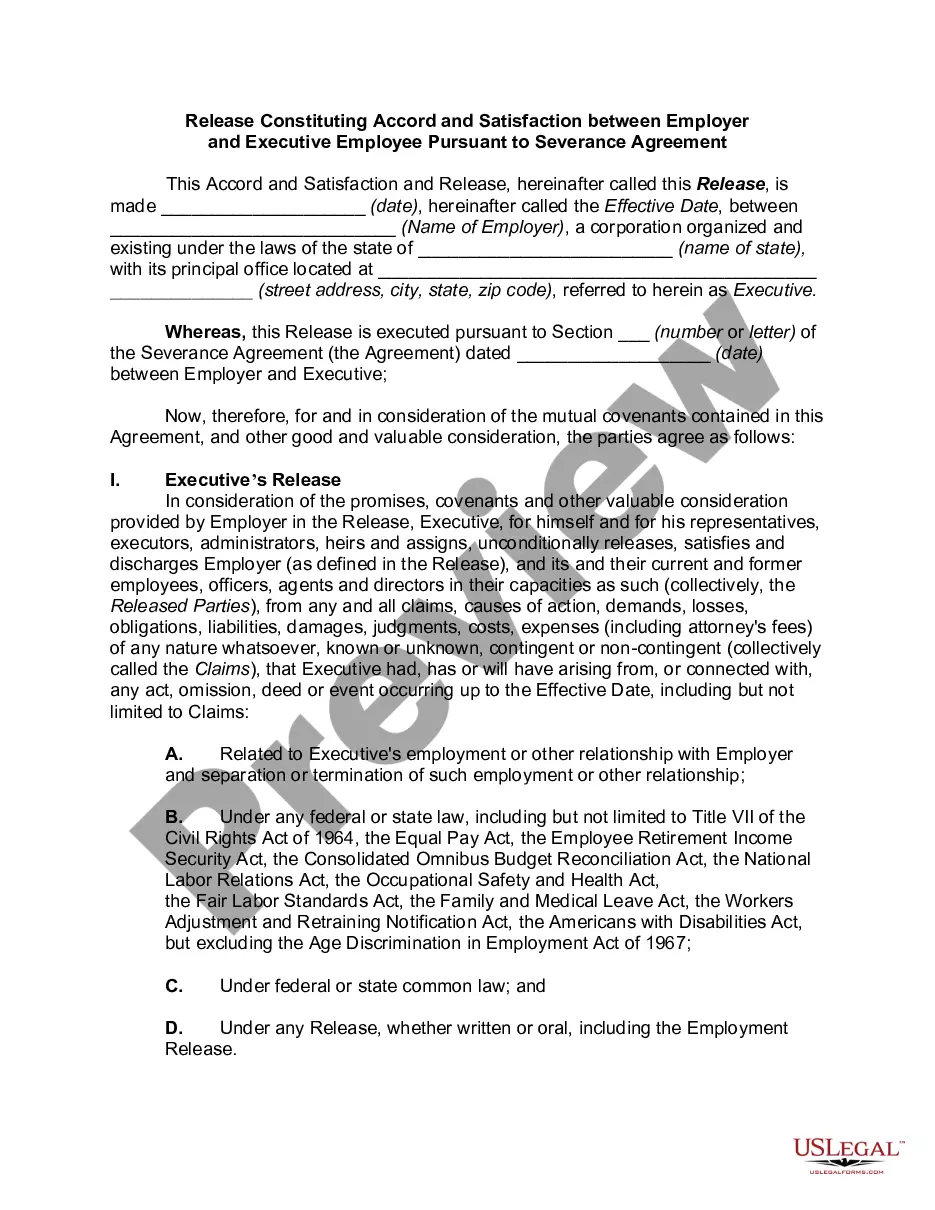
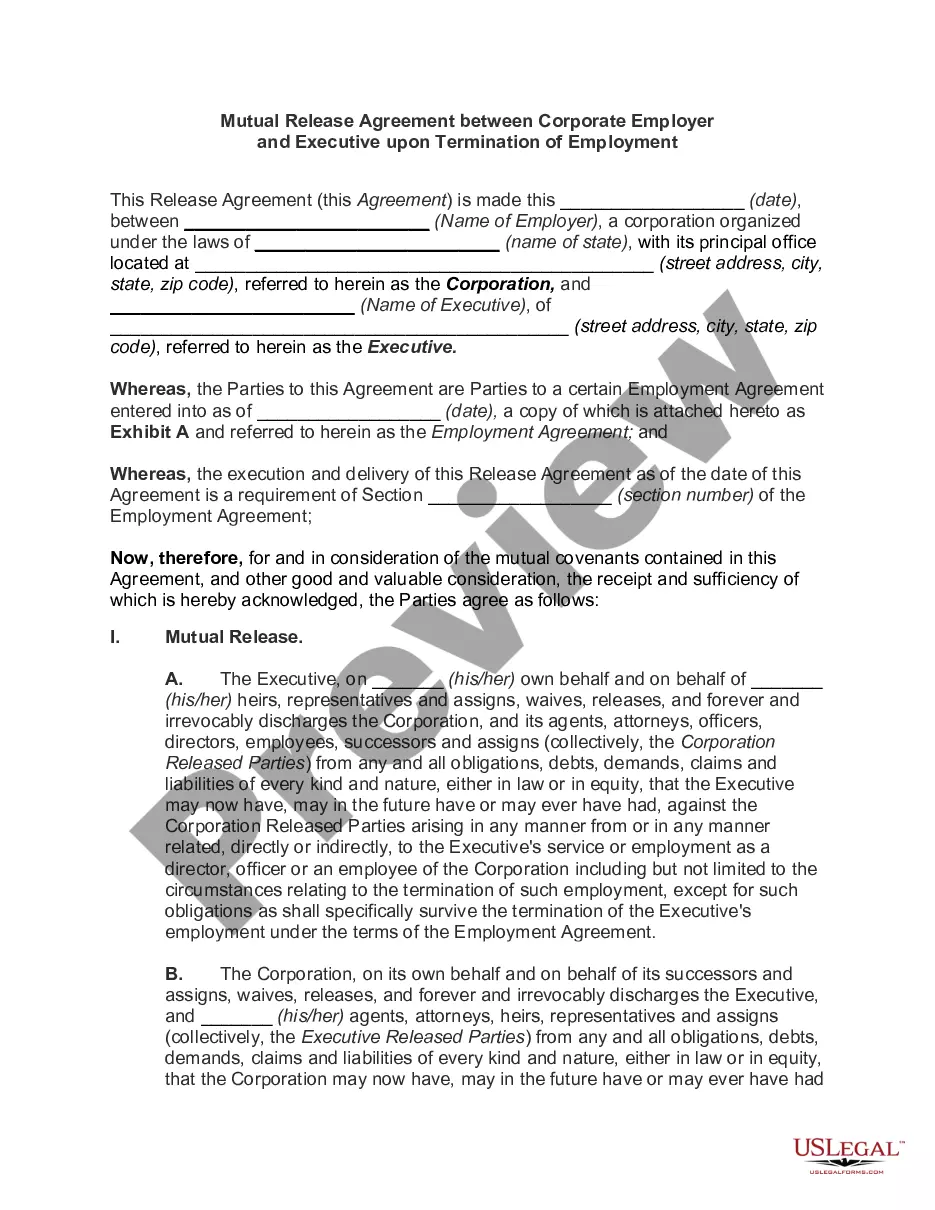
Accord and Satisfaction and Release Agreement between Employer and Executive Employee Pursuant to a Severance Agreement


Notarization guidance
This form usually doesn’t need to be notarized. However, local laws or specific transactions may require it. Our online notarization service, powered by Notarize, lets you complete it remotely through a secure video session, available 24/7.
Get your form ready online
Our built-in tools help you complete, sign, share, and store your documents in one place.
Make edits, fill in missing information, and update formatting in US Legal Forms—just like you would in MS Word.
Download a copy, print it, send it by email, or mail it via USPS—whatever works best for your next step.
Sign and collect signatures with our SignNow integration. Send to multiple recipients, set reminders, and more. Go Premium to unlock E-Sign.
If this form requires notarization, complete it online through a secure video call—no need to meet a notary in person or wait for an appointment.
We protect your documents and personal data by following strict security and privacy standards.

Make edits, fill in missing information, and update formatting in US Legal Forms—just like you would in MS Word.

Download a copy, print it, send it by email, or mail it via USPS—whatever works best for your next step.

Sign and collect signatures with our SignNow integration. Send to multiple recipients, set reminders, and more. Go Premium to unlock E-Sign.

If this form requires notarization, complete it online through a secure video call—no need to meet a notary in person or wait for an appointment.

We protect your documents and personal data by following strict security and privacy standards.
Looking for another form?

Form popularity
FAQ
Yes, your employer can change or even cancel your severance amount if you do not have a contract detailing how your severance package is calculated. If you do not have an agreement, you employer has full discretion to determine how much to offer, to change the offer, or to simply not offer a severance package.
A severance agreement is a contract that an employer may ask an employee to sign when they are terminated from a job. Severance pay is often offered in exchange for an employee's release of their claims against the employer.
A severance agreement is a legal document signed by an employer and an employee upon termination that details the rights and responsibilities of each party. The contract contains any benefits the employee will be entitled to, such as severance pay or insurance plans.
Fraud, misrepresentation, duress, or unconscionability are common defenses you can use if you want to void a severance agreement that you already signed.
Now, there is a blanket prohibition on including non-disclosure or confidentiality terms in employee severance agreements. All employers must now avoid any such terms in severance agreements or attempt to specifically protect rights of employees under the Act.
On its face, it's an easy distinction: a settlement ends a lawsuit, a severance ends an employment relationship. If an employee sues an employer, the parties can exchange money (from the employer) for voluntary dismissal of the lawsuit (from the employee) - a settlement.
Lawsuits Can Be Brought in Limited Situations For instance, if your employer coerced you into signing the severance agreement by levying threats against you, the contract may be deemed invalid, and your rights to bring an employment discrimination lawsuit may be restored.
?Consideration? Consideration is an offering from the employer to the employee to sign the document. This, in short, is the severance pay. However, for it to be a legal 'consideration,' severance pay cannot be something that the employee will receive even if they do not sign the agreement.