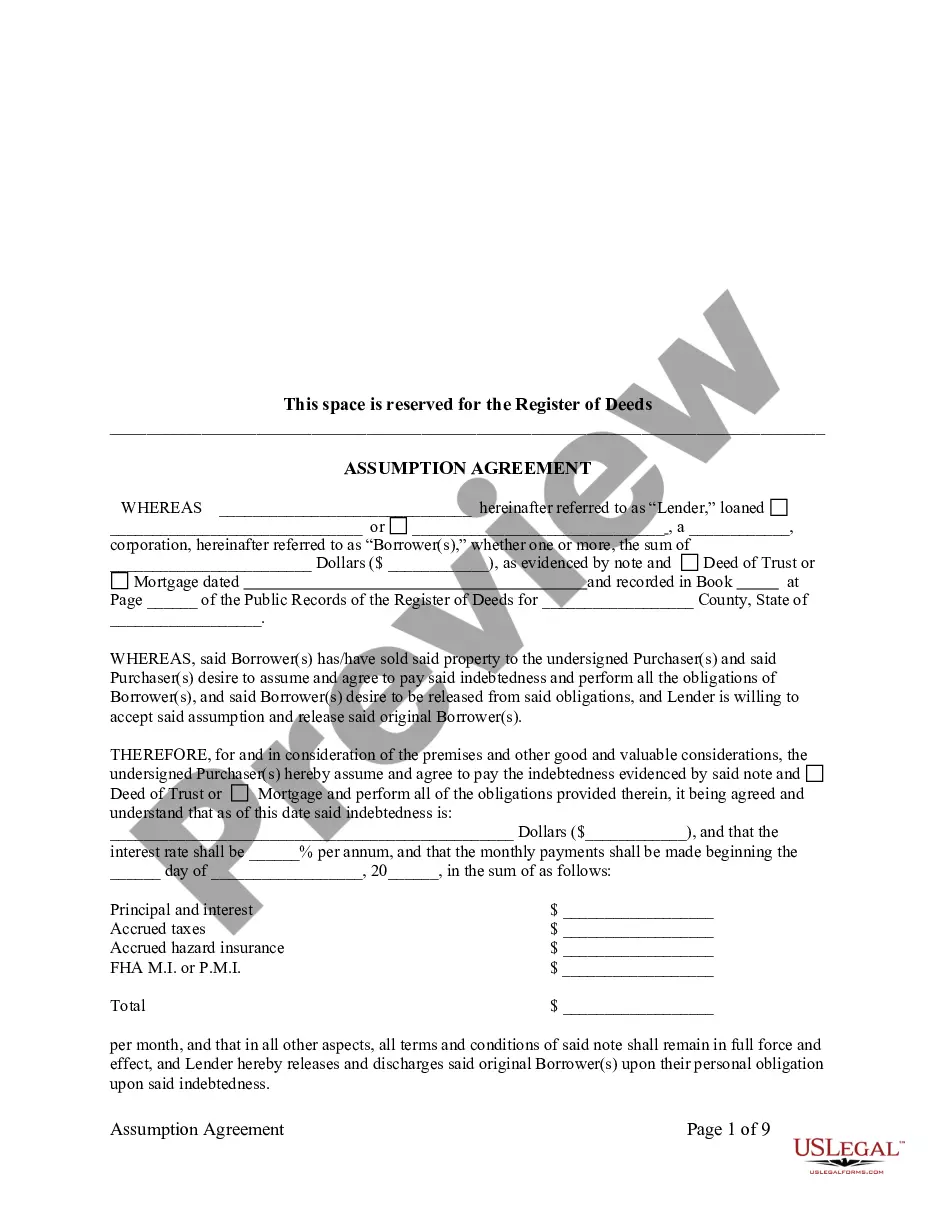
Agreement with Cooperative Association to Market Dairy Products
What this document covers
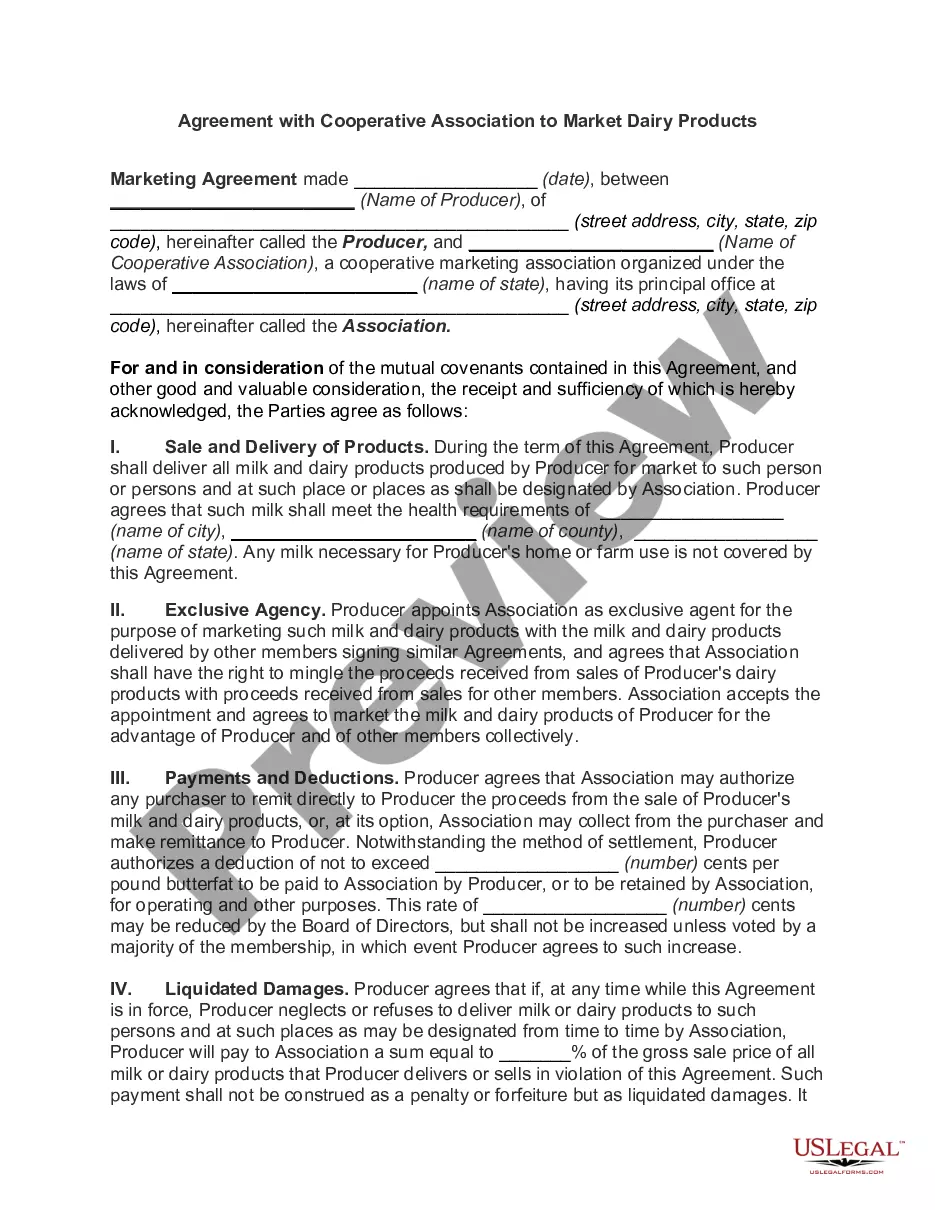
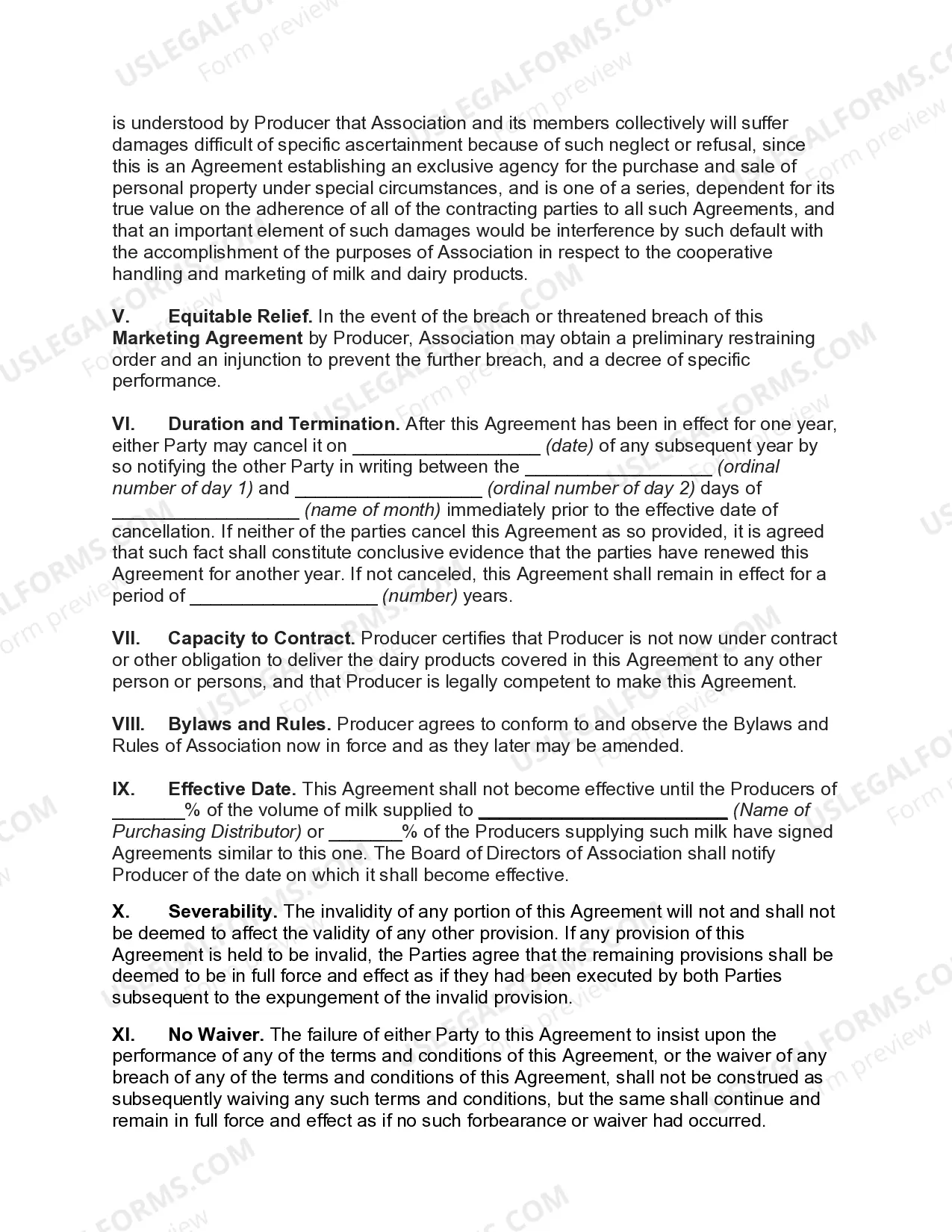
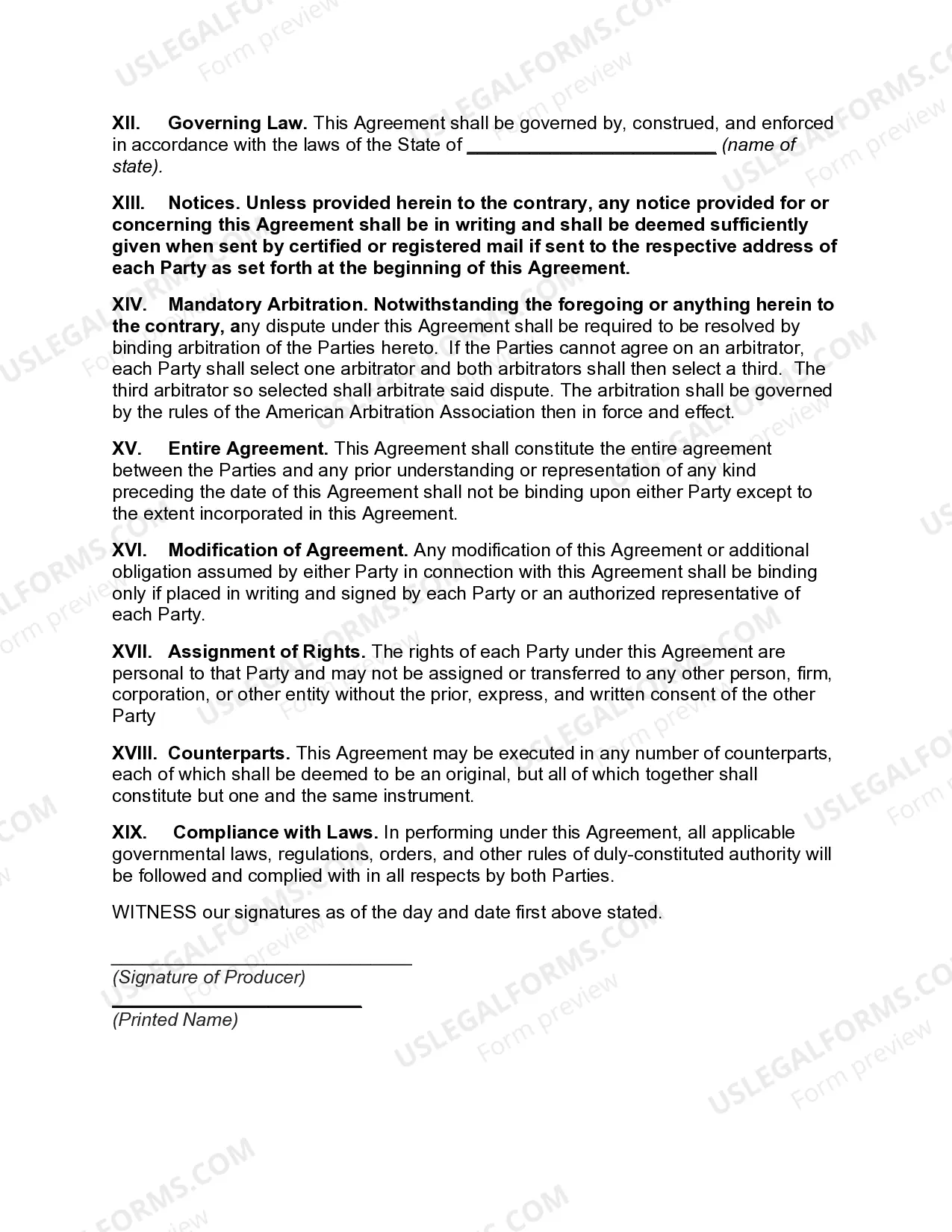
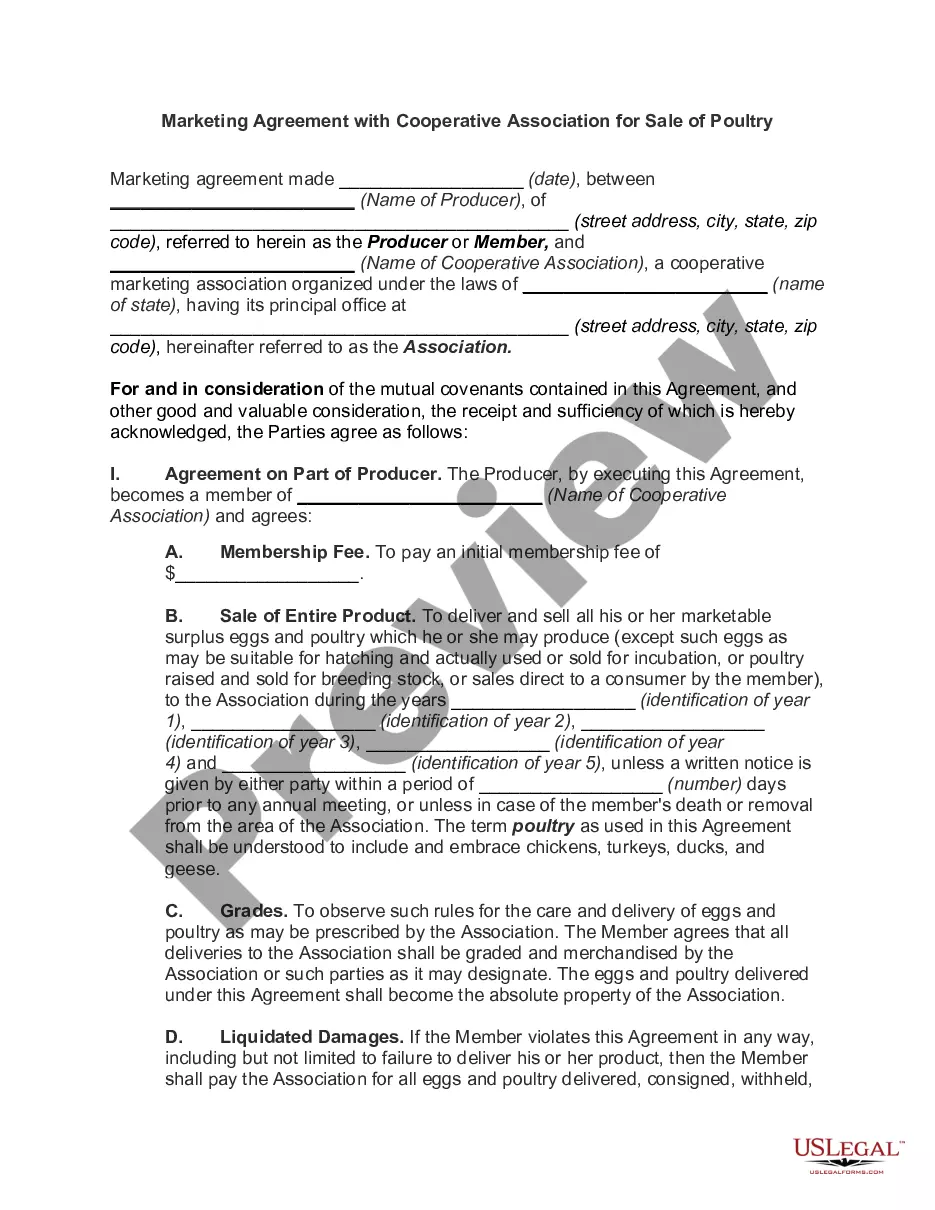
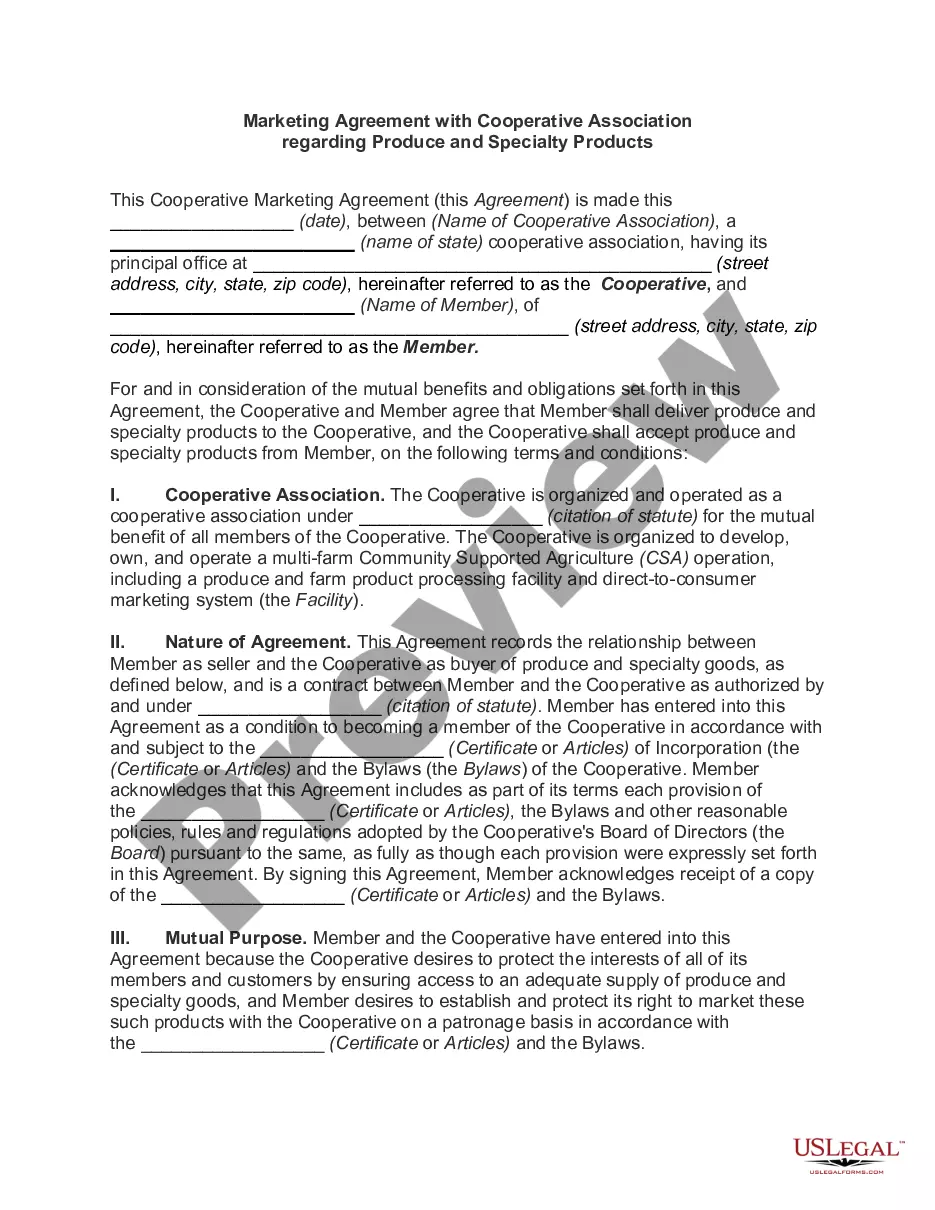
The Agreement with Cooperative Association to Market Dairy Products is a legal document that establishes a formal relationship between a dairy producer and a cooperative association. This marketing agreement allows the producer to sell their milk and dairy products through the cooperative, promoting collective marketing efforts. Unlike general sales agreements, this form specifically caters to the dairy industry and outlines the obligations and rights of both parties involved in the cooperative agreement.
Form components explained
- Sale and delivery of products: Specifies how and where the dairy products should be delivered.
- Exclusive agency: Grants the association exclusive rights to market the producer's dairy products.
- Payments and deductions: Outlines the payment process and any deductions for operational costs.
- Liquidated damages: Details penalties for failing to deliver products as agreed.
- Duration and termination: States the length of the agreement and conditions for cancellation.
- Mandatory arbitration: Specifies that disputes will be resolved through arbitration instead of litigation.
Common use cases
This agreement should be used when a dairy producer wishes to collaborate with a cooperative association to market their dairy products. It is essential in scenarios where the producer seeks the benefits of collective bargaining and marketing efforts, ensuring their products reach a wider market while complying with health regulations. Additionally, it can be useful if the producer wants to streamline their distribution process while sharing marketing costs with other members.
Intended users of this form
- Dairy producers looking to sell their milk and dairy products through a cooperative.
- Cooperative associations that facilitate the collective marketing of dairy products.
- Farmers interested in entering into a formal agreement with a cooperative marketing association.
How to complete this form
- Identify the parties: Fill in the names and contact information of both the producer and the cooperative association.
- Specify product details: Indicate the type of dairy products covered under the agreement.
- Set payment terms: Enter the deduction rate per pound of butterfat and specify payment arrangements.
- Clarify the duration: Specify the initial term and cancellation procedure for the agreement.
- Ensure compliance: Review the agreement for necessary signatures and compliance with local regulations.
Does this document require notarization?
This form does not typically require notarization unless specified by local law. Itâs essential to check local regulations to ensure compliance.
Get your form ready online
Our built-in tools help you complete, sign, share, and store your documents in one place.
Make edits, fill in missing information, and update formatting in US Legal Forms—just like you would in MS Word.
Download a copy, print it, send it by email, or mail it via USPS—whatever works best for your next step.
Sign and collect signatures with our SignNow integration. Send to multiple recipients, set reminders, and more. Go Premium to unlock E-Sign.
If this form requires notarization, complete it online through a secure video call—no need to meet a notary in person or wait for an appointment.
We protect your documents and personal data by following strict security and privacy standards.

Make edits, fill in missing information, and update formatting in US Legal Forms—just like you would in MS Word.

Download a copy, print it, send it by email, or mail it via USPS—whatever works best for your next step.

Sign and collect signatures with our SignNow integration. Send to multiple recipients, set reminders, and more. Go Premium to unlock E-Sign.

If this form requires notarization, complete it online through a secure video call—no need to meet a notary in person or wait for an appointment.

We protect your documents and personal data by following strict security and privacy standards.
Typical mistakes to avoid
- Failing to specify the correct addresses of the parties involved.
- Not detailing the types of dairy products covered in the agreement.
- Overlooking the payment terms or deductions leading to later disputes.
- Not signing the agreement or missing signatures from authorized representatives.
Benefits of completing this form online
- Convenient access to templates ready for immediate download and use.
- Editability allows customization to meet specific needs without starting from scratch.
- Reliability of using attorney-drafted forms ensures legal validity and compliance.
Key takeaways
- The agreement formalizes the relationship between a dairy producer and a cooperative.
- Understanding the obligations and rights is crucial for both parties to avoid disputes.
- The form can be customized to fit specific marketing needs and compliance requirements.
Looking for another form?

Form popularity
FAQ
To Sell or Not to Sell? Word of Mouth. Join Organizations. Promote Other Products. Talk to Your Customers. Talk to Other Raw-Milk Producers.
The milk producers of the village with the support of the milk union form a village dairy cooperative society. The milk producers become members by buying a minimum of one share of the society and paying an entrance fee as per the bye-laws.The number of such staff depends upon the size of the business of the society.
Besides, there are at least 9 companies with an average milk procurement of 10-15 LLPD each (Parag Milk Foods, Schreiber Dynamix Dairies, Heritage Foods, Tirumala Milk Products, Kwality Ltd, Sterling Agro Industries, VRS Foods, Bhole Baba Milk Food Industries and Nestle India) and many others that do 5-10 LLPD (Prabhat
A dairy cooperative business is owned, operated, and con- trolled by the dairy farmers who benefit from its services. Members finance the cooperative and share in profits it earns in proportion to the volume of milk they market through the cooperative.
Class III takes in milk used for making hard cheeses. Class IV milk is used to make butter and dry products such as non-fat dry milk (NFDM). USDA determines class pricing through formulas tied to values for four storable dairy commodity products: cheddar cheese, dry whey, NFDM and butter. Class IV uses NFDM and butter.
1 Modern Dairy Farms Pvt. Ltd. 2 Punjab State Cooperative Milk Producers' Federation Ltd. 1 ACE International 2 Bharat Shudh Ghee Supply Co 3 Daily Foods 4 Daily Foods (India) 5 Delhi Milk Scheme 6 Fun Foods Pvt.
The U.S. Department of Agriculture (USDA) oversees the Federal Milk Marketing Order (FMMO) program that establishes the minimum prices dairy farmers receive for their milk. The program, introduced during the 1930s, covers 11 areas of the country and applies to about 75% of total U.S. milk production.
Breadcrumb. Federal Milk Marketing Orders (FMMOs) establish certain provisions under which dairy processors purchase fresh milk from dairy farmers supplying a marketing area. In Federal order provisions, dairy processors are referred to as handlers and dairy farmers are known as producers.
For nearly 20 years there were only 10 milk marketing orders, but in September 2018 California was introduced into the FMMO system as a result of the 2014 farm bill (2014 Farm Bill: Key Factors to Consider with a California Federal Milk Marketing Order). Today, there are 11 FMMOs in the United States.