Company Confidentiality Agreement made in Order to Review System of Customer as a Potential System for Automation of its Functions
About this form
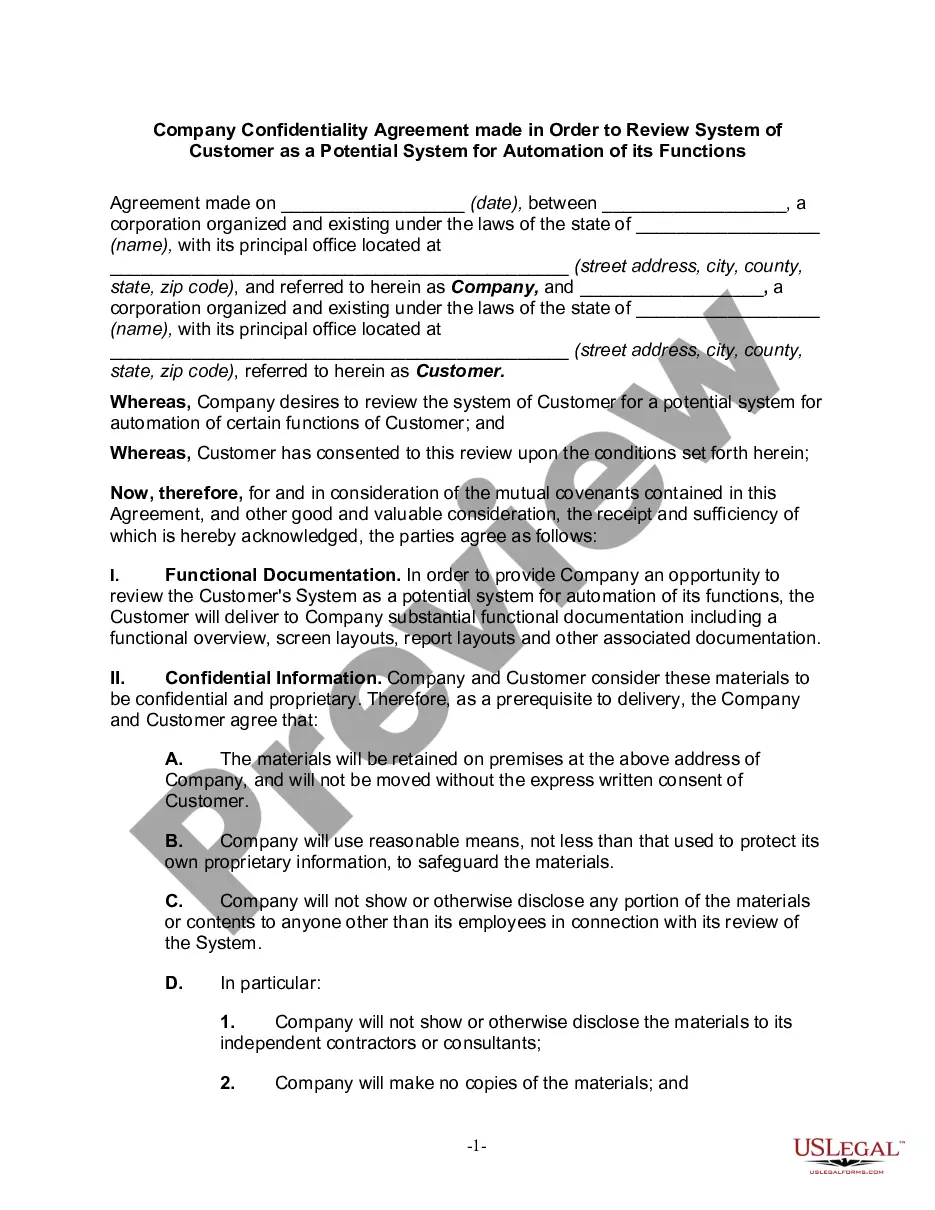
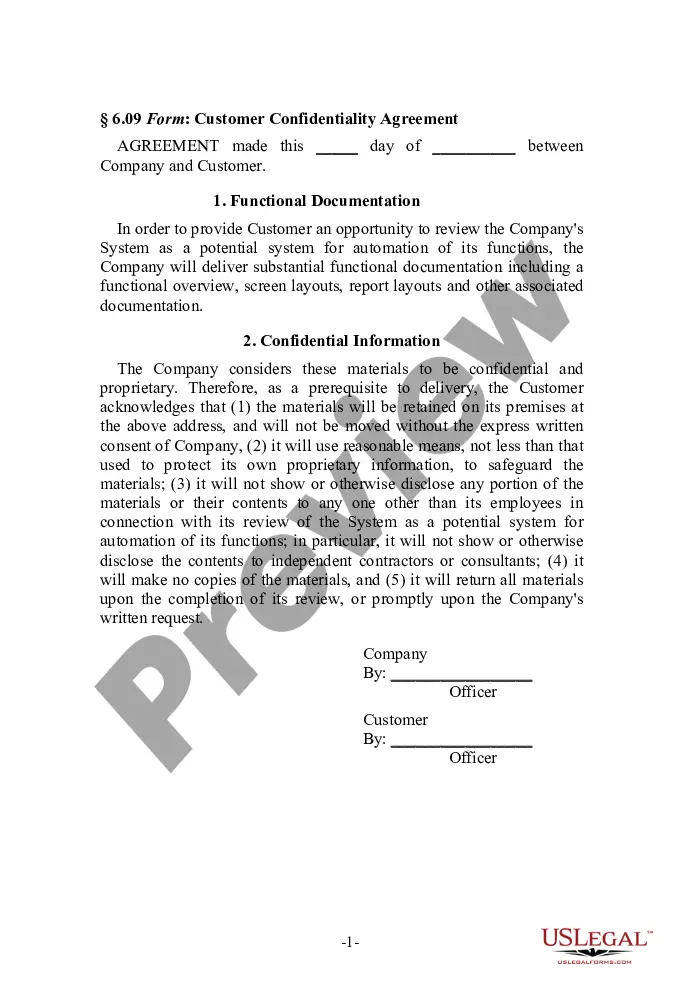
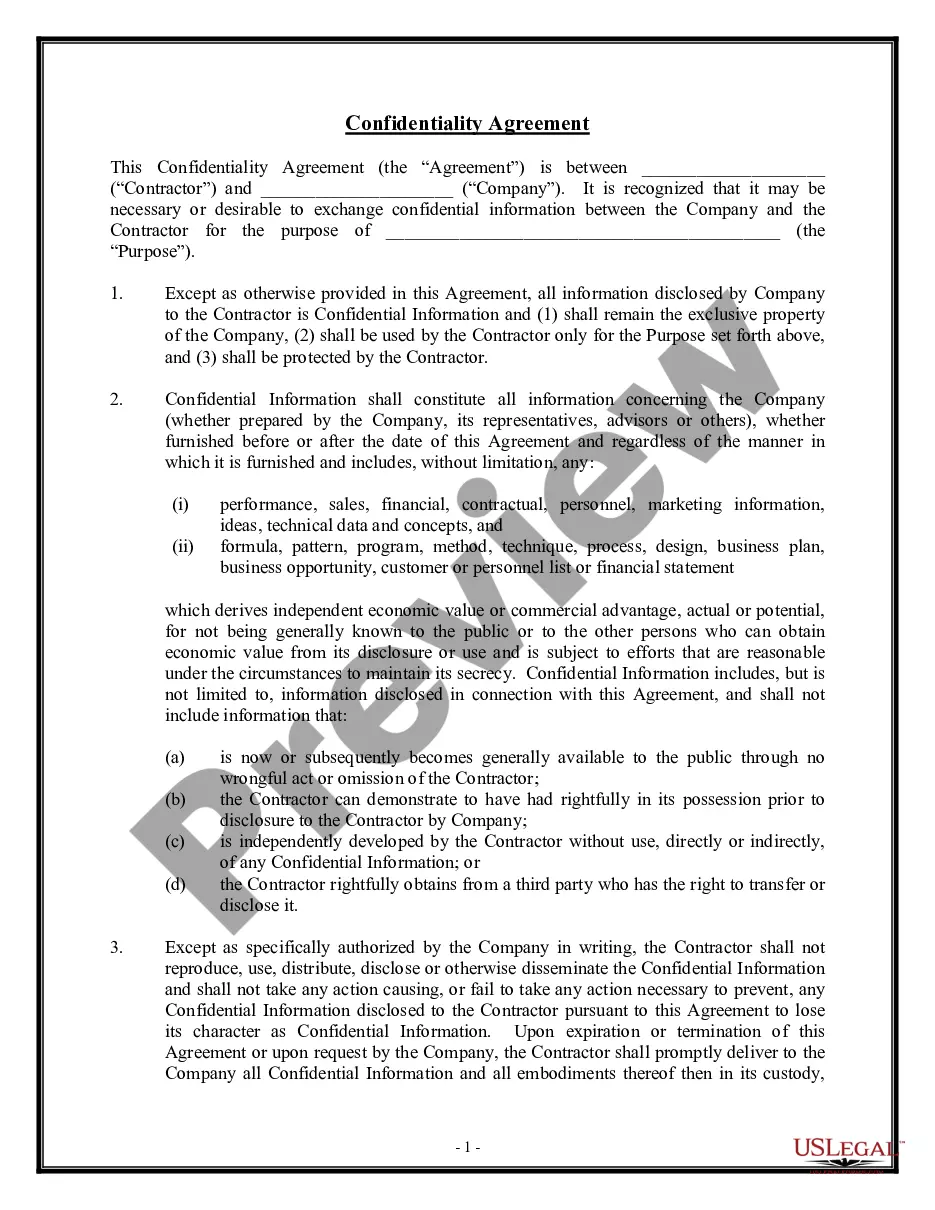
This Company Confidentiality Agreement is designed to protect sensitive information when a company reviews a customer's system for potential automation. It ensures that both parties maintain confidentiality regarding proprietary data. This form is particularly valuable in the technology and software industries, where safeguarding trade secrets is crucial when assessing system functionalities.
Key parts of this document
- Identification of the Company and Customer, including their business details.
- Functional documentation requirements outlining what the Customer must provide for the review.
- Confidentiality obligations, including restrictions on the dissemination and storage of sensitive materials.
- Indemnification clause to protect the Customer from liabilities related to the review.
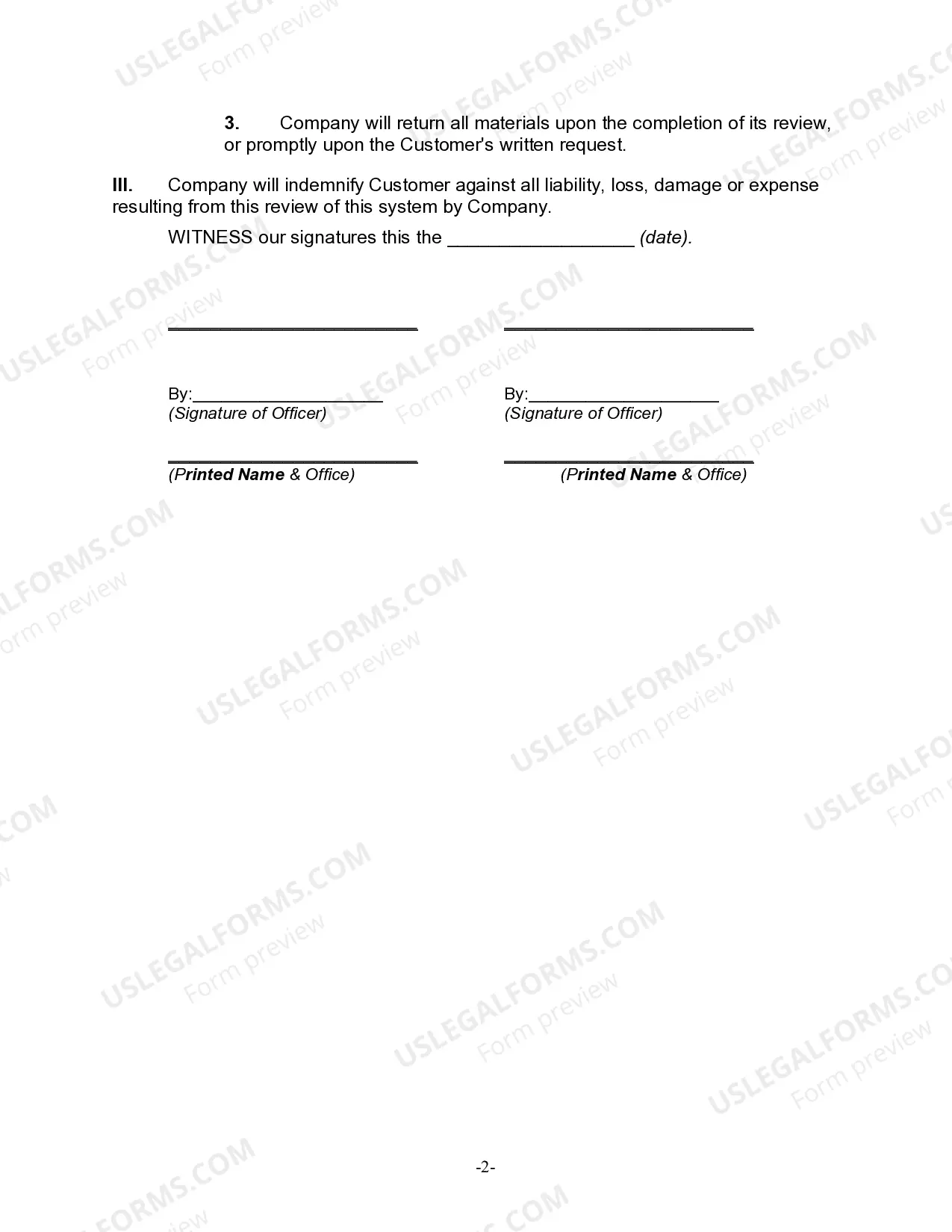
- Signatures of authorized officers from both parties to confirm agreement.
When to use this form
This form should be used when a company intends to review another business's system for potential automation. It is essential when sensitive information will be exchanged, ensuring that both parties are legally bound to confidentiality during and after the review process.
Who needs this form
- Businesses considering automation solutions that require access to proprietary information.
- Consultants or contractors evaluating a clientâs system for potential improvements.
- Companies in the technology sector that handle sensitive customer data.
- Entities reviewing partnerships that involve the sharing of confidential information.
Completing this form step by step
- Enter the date of the agreement at the top of the form.
- Provide the full legal names and addresses of both the Company and the Customer.
- Specify the functional documentation that will be exchanged for the review.
- Review and fill in the confidentiality obligations to ensure clarity of responsibilities.
- Obtain signatures from authorized representatives of both parties along with their printed names and titles.
Notarization requirements for this form
This form does not typically require notarization unless specified by local law. It is recommended to check relevant regulations or seek legal advice prior to finalizing the agreement.
Get your form ready online
Our built-in tools help you complete, sign, share, and store your documents in one place.
Make edits, fill in missing information, and update formatting in US Legal Forms—just like you would in MS Word.
Download a copy, print it, send it by email, or mail it via USPS—whatever works best for your next step.
Sign and collect signatures with our SignNow integration. Send to multiple recipients, set reminders, and more. Go Premium to unlock E-Sign.
If this form requires notarization, complete it online through a secure video call—no need to meet a notary in person or wait for an appointment.
We protect your documents and personal data by following strict security and privacy standards.

Make edits, fill in missing information, and update formatting in US Legal Forms—just like you would in MS Word.

Download a copy, print it, send it by email, or mail it via USPS—whatever works best for your next step.

Sign and collect signatures with our SignNow integration. Send to multiple recipients, set reminders, and more. Go Premium to unlock E-Sign.

If this form requires notarization, complete it online through a secure video call—no need to meet a notary in person or wait for an appointment.

We protect your documents and personal data by following strict security and privacy standards.
Common mistakes to avoid
- Failing to clearly define what constitutes confidential information.
- Not specifying the required documentation for review.
- Leaving out signature or date fields, which can invalidate the agreement.
- Assuming the agreements are interchangeable without considering state laws.
Why use this form online
- Convenience of downloading and customizing the form instantly.
- Editable to meet specific business needs without legal jargon.
- Access to legal templates drafted by licensed attorneys.
- Streamlined process for ensuring confidentiality while evaluating systems.
Looking for another form?
Form popularity
FAQ
Non-disclosure agreements are an important legal framework used to protect sensitive and confidential information from being made available by the recipient of that information. Companies and startups use these documents to ensure that their good ideas won't be stolen by people they are negotiating with.
A definition of confidential information. This should state what specific information or types of information are protected by the agreement.An explanation of why the recipient will know the confidential information, such as to perform work duties, should be included. Exclusions or limits on confidential information.
The purpose of a confidentiality agreement, which is also referred to as a nondisclosure agreement or NDA, is to protect information exchanged between two or more parties. Anyone who signs a confidentiality agreement is promising to keep the relevant information secret.
Discussing the sale or licensing of a product or technology.When employees have access to confidential and proprietary information.Presenting an offer to a potential partner or investor.Receiving services from a company that has access to sensitive information.Sharing business information with a prospective buyer.
To prevent employees from revealing sensitive information that could jeopardize your business, you might have them sign an employee confidentiality agreement. Businesses use employee confidentiality agreements to protect their innovative ideas, effective processes, unique products, or customer information.
It is a contract through which the parties agree not to disclose information covered by the agreement. An NDA creates a confidential relationship between the parties, typically to protect any type of confidential and proprietary information or trade secrets. As such, an NDA protects non-public business information.
If an NDA lists extreme punishments for breaking the confidentiality agreement, you shouldn't sign it. A common consequence for breach of contract under an NDA is termination of employment. Be aware of what is considered a breach of contract.
An employer will often require an employee to sign an NDA because it allows their company to operate at a higher level, with less risk.Understand, your employer is not asking you to sign an NDA out of mistrust, they are asking you to sign one because it is essential to conducting business smoothly and efficiently.
Employers must be prepared to terminate any employee who refuses to sign the agreement. If an employer allows even one employee to refuse and remain employed, the agreements signed by the other employees will not be legally binding.