Sample Letter to Bank concerning Accounts Held by Decedent
Overview of this form
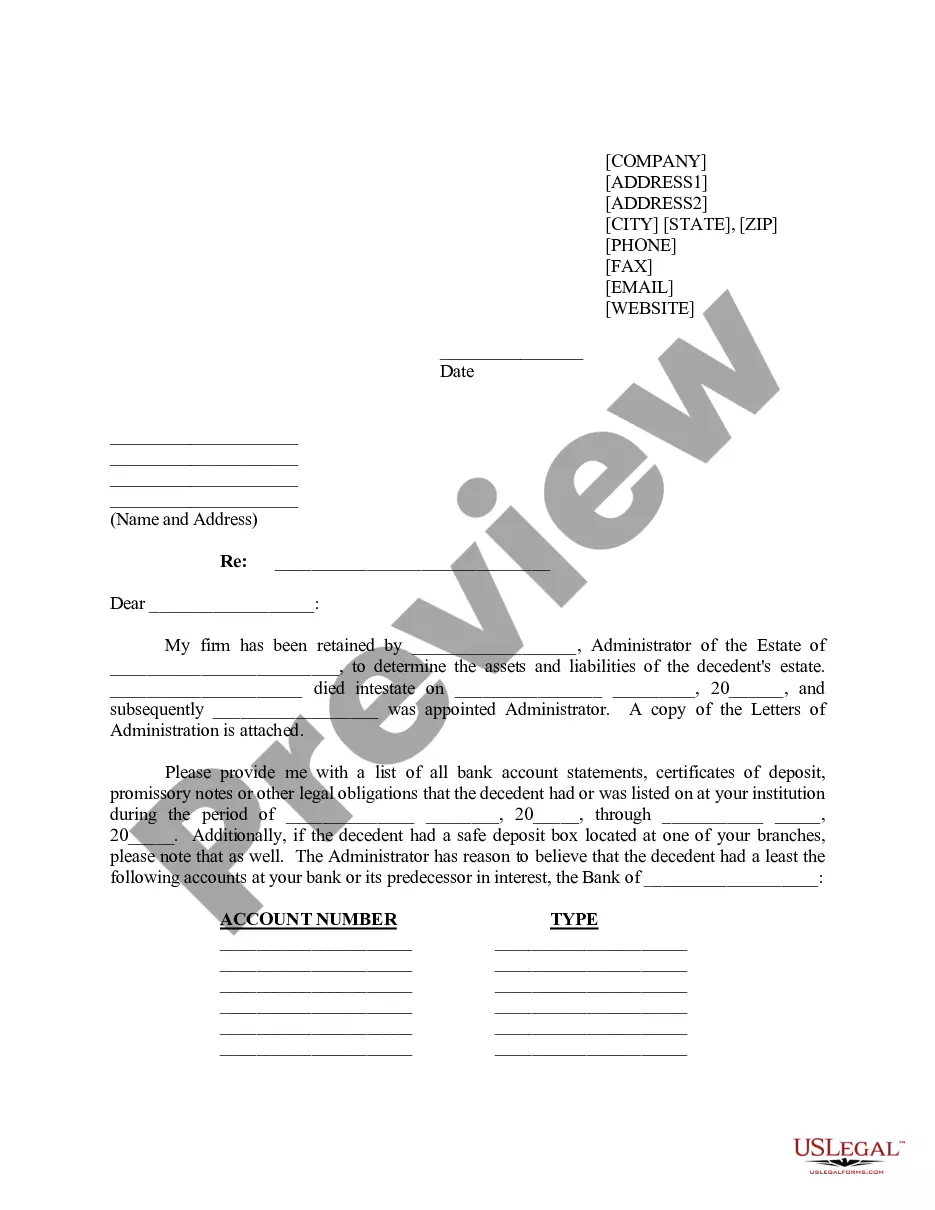
This Sample Letter to Bank concerning Accounts Held by Decedent is a formal communication designed for use by an administrator of an estate. Its primary purpose is to request information from a bank regarding the accounts and assets of a deceased individual. This letter is essential in the estate settlement process, enabling the administrator to efficiently compile a list of the decedent's financial holdings. This form differs from other estate forms by serving strictly as a written request for information rather than a legal document for distribution of assets.
What’s included in this form
- Sender's company name and contact information
- Date of the letter
- Recipient's name and address
- Reference to the decedent's name and date of death
- Statement of the administrator's authority with attached Letters of Administration
- A list of requested account statuses and types
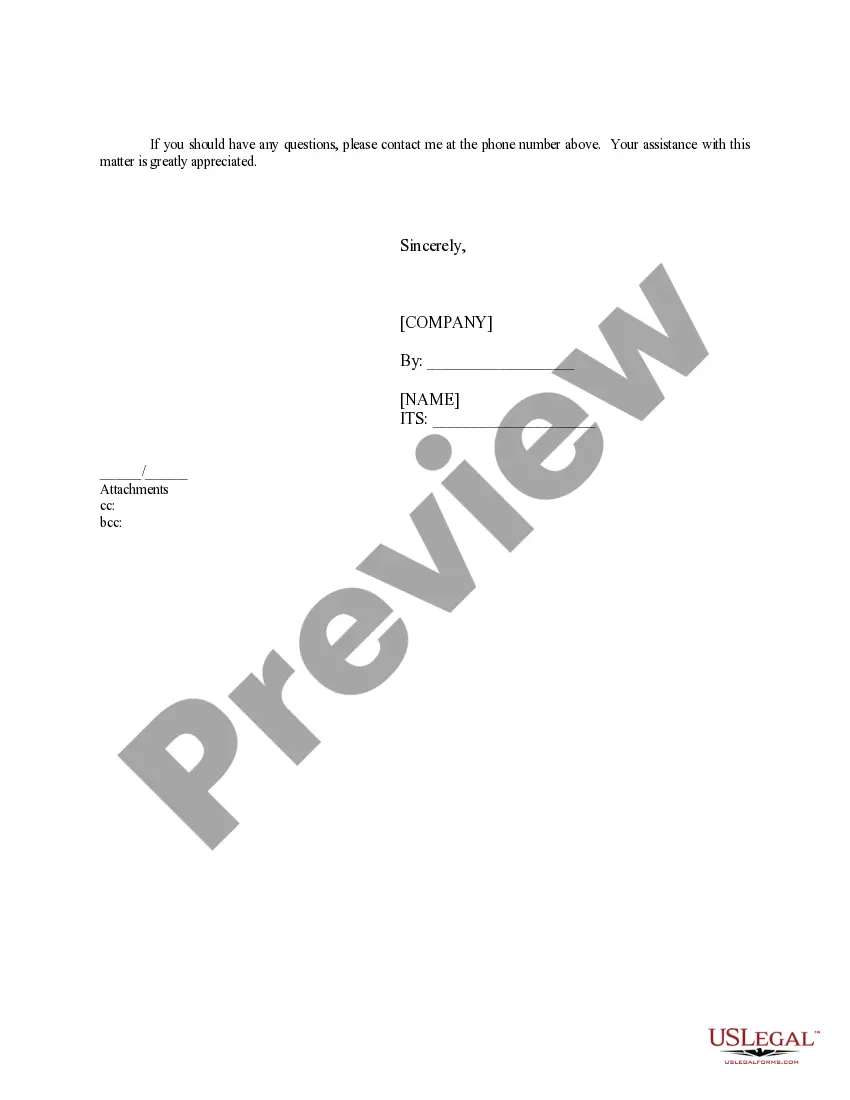
- Contact information for follow-up questions




When to use this form
Who this form is for
- Estate administrators or executors tasked with settling a deceased person's estate
- Legal representatives or attorneys managing estate affairs
- Individuals needing to obtain information about financial accounts held by a decedent
How to prepare this document
- Fill in the sender's company information at the top of the letter.
- Insert the current date below the sender's information.
- Provide the recipient's name and address in the space provided.
- Include the decedent's full name and date of death.
- List the financial accounts you believe the decedent had with the bank.
- Conclude with your contact information for any follow-up questions.
Is notarization required?
Notarization is generally not required for this form. However, certain states or situations might demand it. You can complete notarization online through US Legal Forms, powered by Notarize, using a verified video call available anytime.
Get your form ready online
Our built-in tools help you complete, sign, share, and store your documents in one place.
Make edits, fill in missing information, and update formatting in US Legal Forms—just like you would in MS Word.
Download a copy, print it, send it by email, or mail it via USPS—whatever works best for your next step.
Sign and collect signatures with our SignNow integration. Send to multiple recipients, set reminders, and more. Go Premium to unlock E-Sign.
If this form requires notarization, complete it online through a secure video call—no need to meet a notary in person or wait for an appointment.
We protect your documents and personal data by following strict security and privacy standards.

Make edits, fill in missing information, and update formatting in US Legal Forms—just like you would in MS Word.

Download a copy, print it, send it by email, or mail it via USPS—whatever works best for your next step.

Sign and collect signatures with our SignNow integration. Send to multiple recipients, set reminders, and more. Go Premium to unlock E-Sign.

If this form requires notarization, complete it online through a secure video call—no need to meet a notary in person or wait for an appointment.

We protect your documents and personal data by following strict security and privacy standards.
Common mistakes to avoid
- Failing to provide complete and accurate details about the decedent.
- Omitting the decedent's date of death can lead to delays.
- Not attaching the Letters of Administration as proof of authority.
- Inaccurate or incomplete listing of financial accounts may hinder obtaining information.
Why use this form online
- Convenience of downloading and completing the form at your own pace.
- Editability allows you to customize the letter for your specific situation.
- Reliable templates drawn up by licensed attorneys to ensure legal compliance.
Looking for another form?
Form popularity
FAQ
If you owned the account jointly with another person or named a beneficiary, the account will pass to that person. This is true even if you did not have a will. Bank accounts and certain other assets with joint owners or designated beneficiaries are transferred outside of the probate process.
(a) Upon the death of an accountholder, the FDIC will insure the deceased owner's accounts as if he or she were still alive for six months after his or her death.
How happens to my bank account after I die? Once a person has died, their bank accounts are typically cancelled by a next of kin, or executor of the will. Dependant on what the individual outlined in their will, any remaining money will be paid out ing to their wishes.
When an account holder dies, the next of kin must notify their banks of the death. This is usually done by delivering a certified copy of the death certificate to the bank, along with the deceased's name and Social Security number, plus bank account numbers, and other information.
When an account holder dies, inform the deceased's bank by bringing a copy of the death certificate, Social Security number and any other documents provided by the court, such as letters testamentary (court documents giving someone legal power to act on behalf of a deceased person's estate) provided to the executor.
I want to request you as a nominee of their joint account with number 34XX78, I would like to handle it from now on. I request you to kindly update all the information in the data and send me the details at the address given below. I have attached the death certificate and the details with this letter below.