Jury Instruction - Computer Fraud - Causing Damage To Computer Or Program
What is this form?
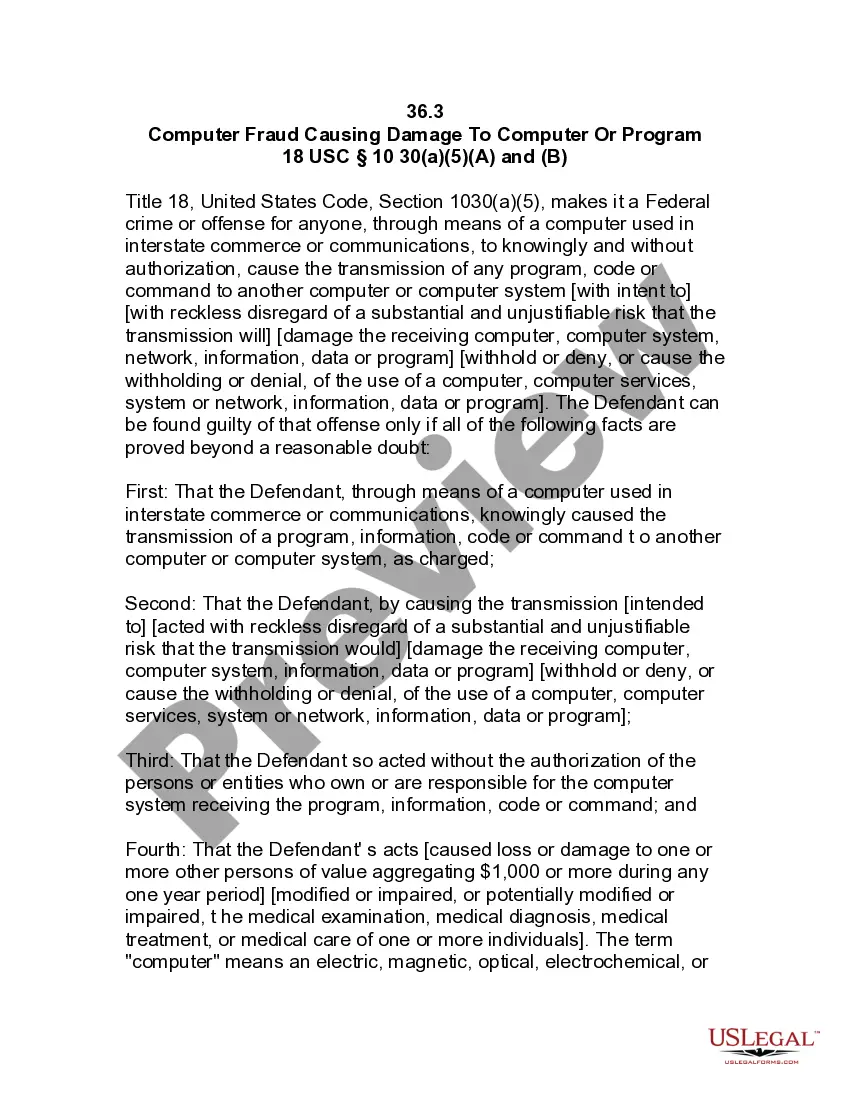
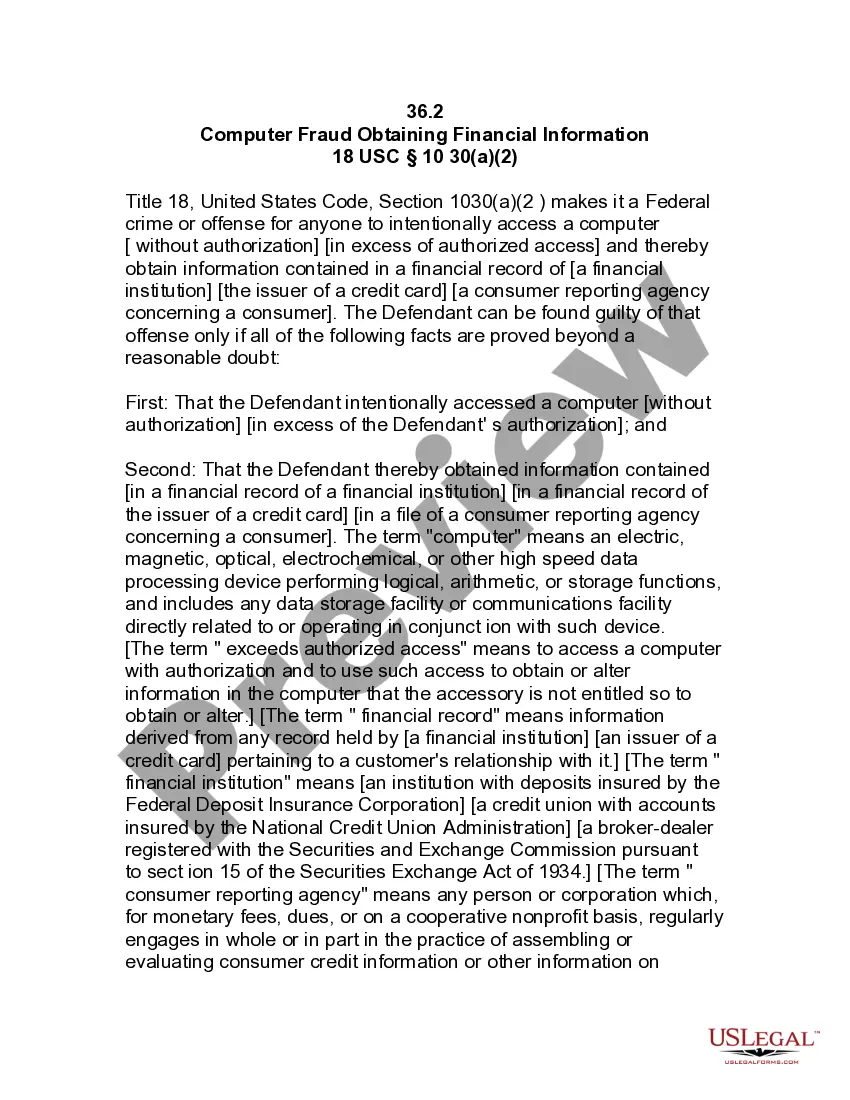
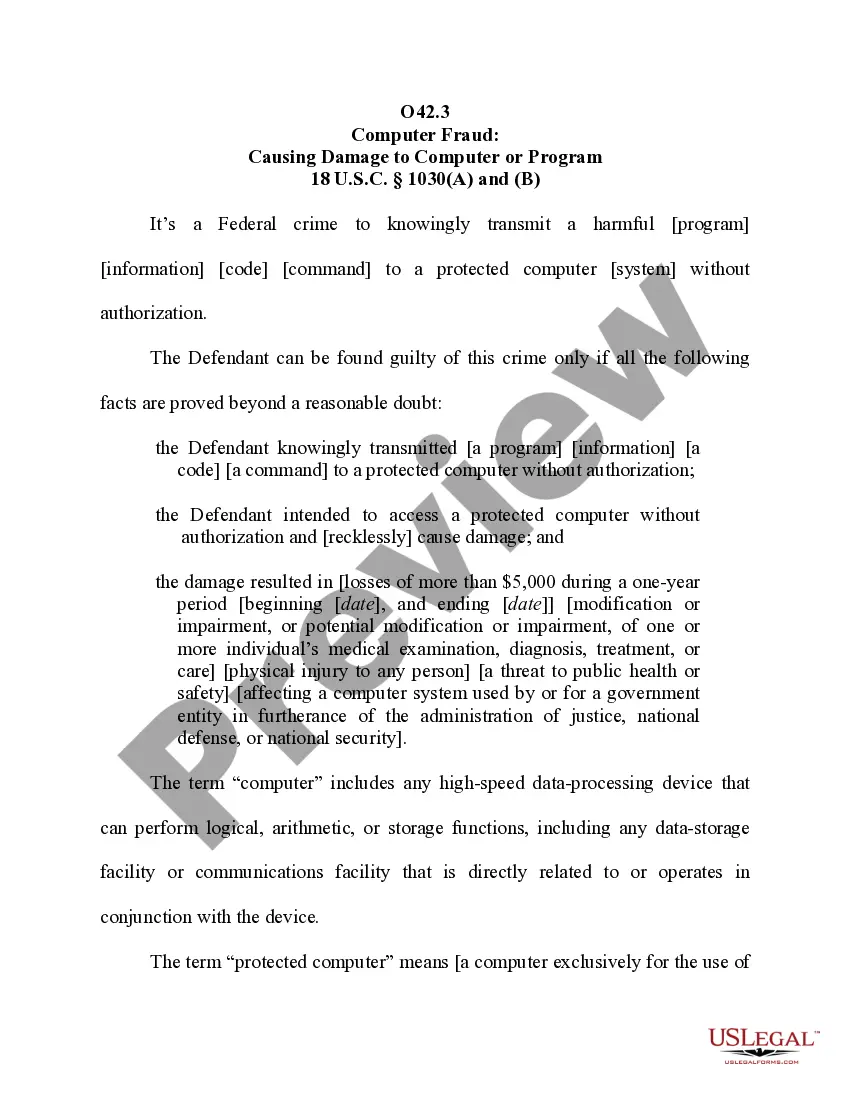
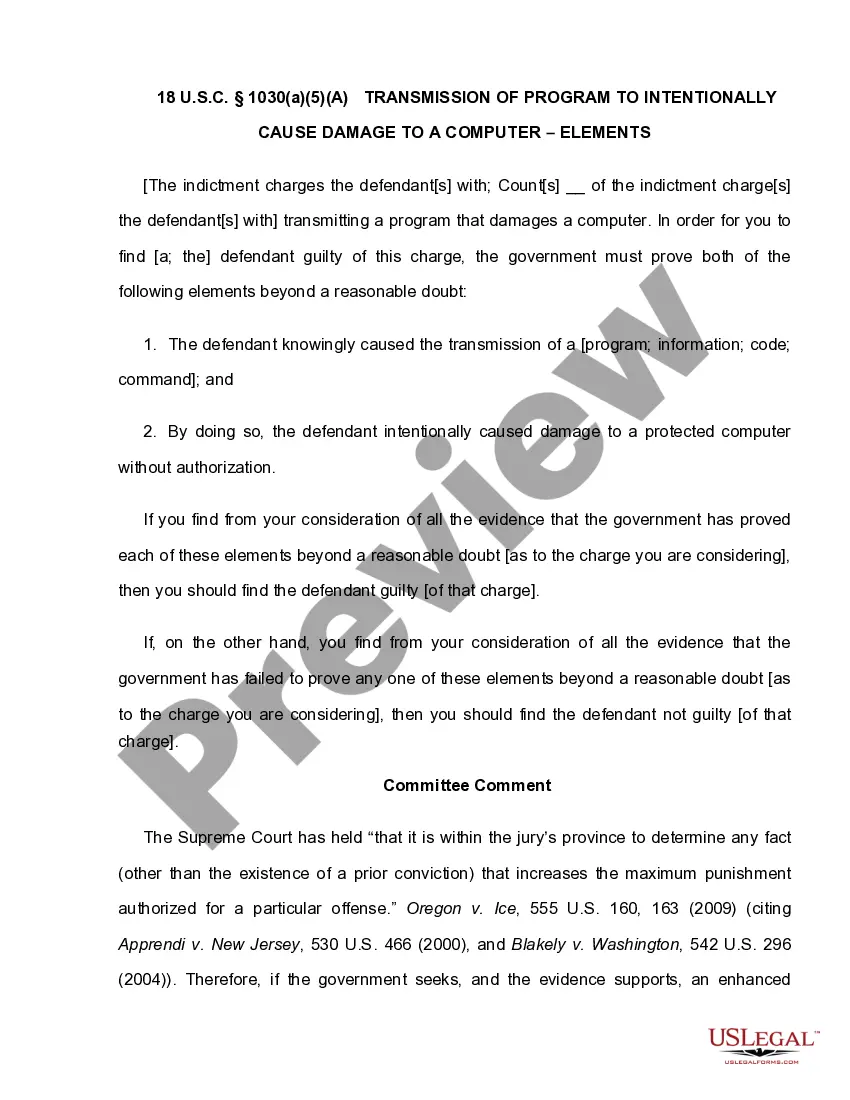
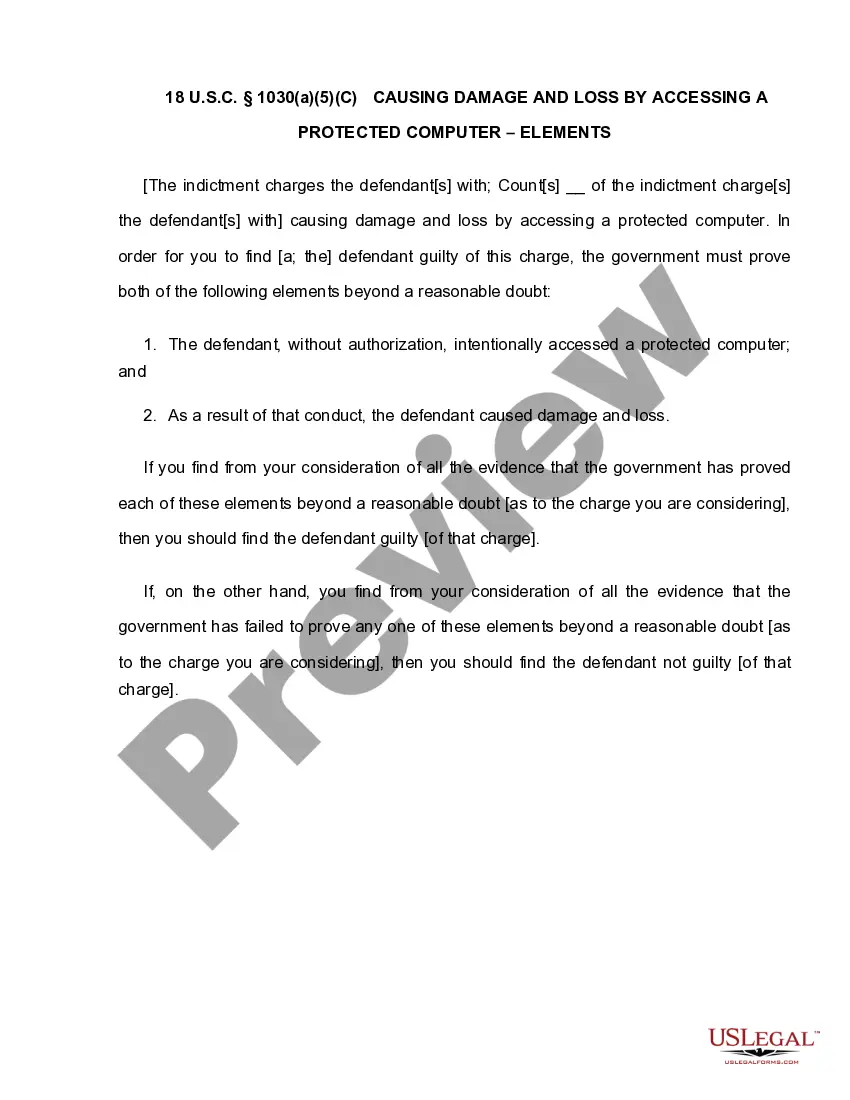
The Jury Instruction for Computer Fraud Causing Damage to Computer or Program provides sample instructions for jurors in cases involving unauthorized computer transmissions that result in damage. This legal form guides jurors through the specific elements that must be proven to establish guilt under federal law, distinguishing it from other jury instruction forms by its focus on computer-related offenses under Title 18, United States Code, Section 1030(a)(5).
Main sections of this form
- Definition of computer fraud and relevant legal standards.
- Criteria for determining intent and reckless disregard by the defendant.
- Clarification of the authorization requirement from the computer system owner.
- Conditions under which damage or loss must be proven.
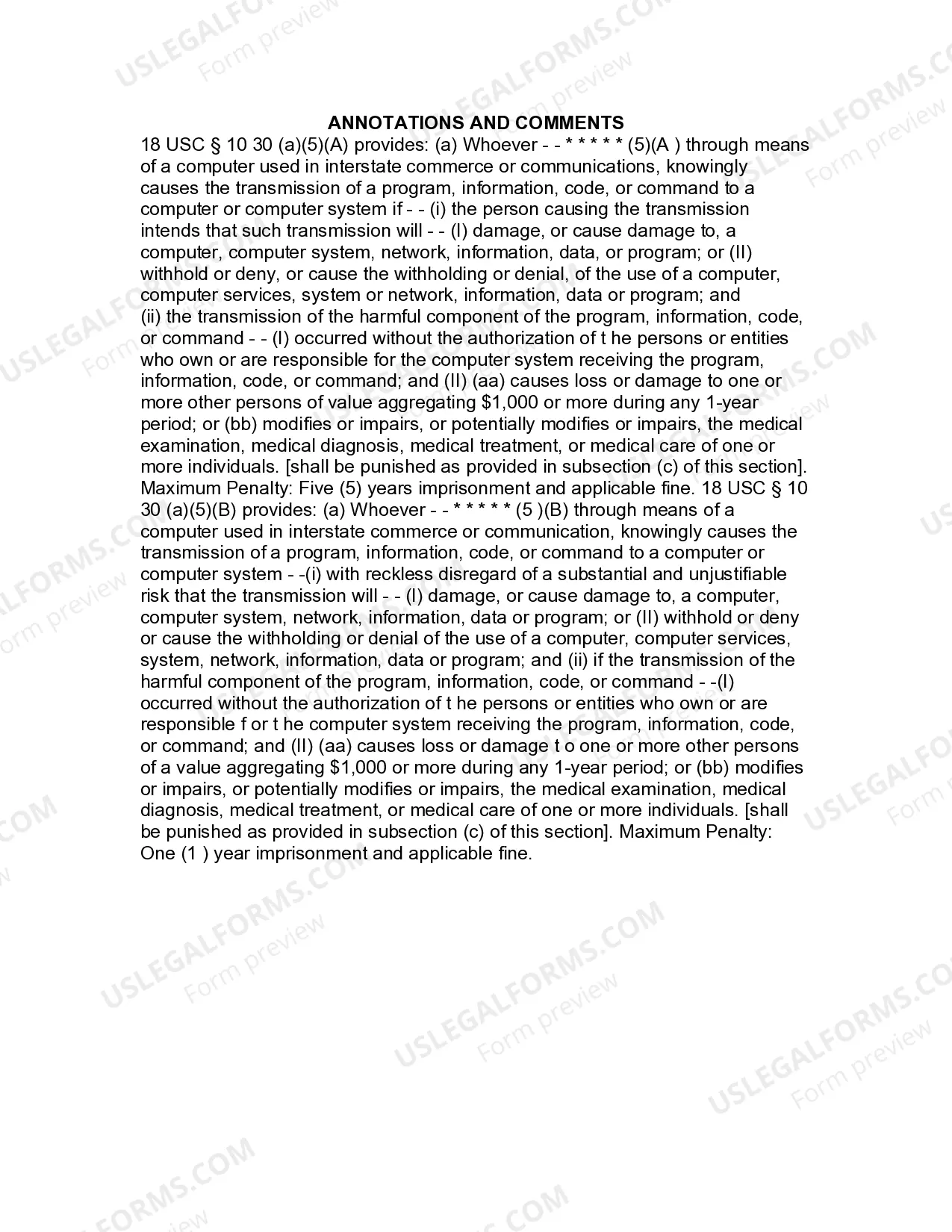
- Penalties associated with violations of the law.

When this form is needed
This form is typically used in a federal court setting when jury instructions are needed for cases involving allegations of computer fraud. It is relevant in situations where a defendant is accused of causing damage to a computer or program through unauthorized transmission of information, codes, or commands.
Who needs this form
- Judges presiding over federal cases involving computer fraud.
- Attorneys representing either defendants or plaintiffs in such cases.
- Legal professionals preparing jury instructions for trial.
Completing this form step by step
- Review the legal definitions and elements outlined in the jury instructions.
- Ensure clarity of each component, focusing on intent and damage criteria.
- Modify the sample instructions as needed to fit the specifics of the case.
- Distribute the finalized instructions to jurors prior to deliberation.
- Provide context for jurors about the significance of the evidence related to computer fraud.
Is notarization required?
This form does not typically require notarization to be legally valid. However, some jurisdictions or document types may still require it. US Legal Forms provides secure online notarization powered by Notarize, available 24/7 for added convenience.
Get your form ready online
Our built-in tools help you complete, sign, share, and store your documents in one place.
Make edits, fill in missing information, and update formatting in US Legal Forms—just like you would in MS Word.
Download a copy, print it, send it by email, or mail it via USPS—whatever works best for your next step.
Sign and collect signatures with our SignNow integration. Send to multiple recipients, set reminders, and more. Go Premium to unlock E-Sign.
If this form requires notarization, complete it online through a secure video call—no need to meet a notary in person or wait for an appointment.
We protect your documents and personal data by following strict security and privacy standards.

Make edits, fill in missing information, and update formatting in US Legal Forms—just like you would in MS Word.

Download a copy, print it, send it by email, or mail it via USPS—whatever works best for your next step.

Sign and collect signatures with our SignNow integration. Send to multiple recipients, set reminders, and more. Go Premium to unlock E-Sign.

If this form requires notarization, complete it online through a secure video call—no need to meet a notary in person or wait for an appointment.

We protect your documents and personal data by following strict security and privacy standards.
Avoid these common issues
- Failing to clearly define "unauthorized access" or "damage" to the jurors.
- Not adequately explaining the intent required for a guilty verdict.
- Overlooking to emphasize the importance of authorization from system owners.
- Neglecting to connect the specific case facts to the jury instructions clearly.
Advantages of online completion
- Convenient access to legal templates drafted by licensed attorneys.
- Quick customization options to fit the specific needs of your case.
- Editable formats allow for immediate adjustments as legal circumstances change.
- Reliability from a trusted source specializing in legal documentation.
Legal use & context
- This form serves as a guideline for determining legal outcomes in federal computer fraud cases.
- Jurors must be instructed on specific legal standards to ensure fair verdicts.
- Failure to provide accurate jury instructions can result in a mistrial.
Looking for another form?
Form popularity
FAQ
The punishments under these provisions are different based upon the gravity of the committed cybercrime. Section 419 carries a punishment up to 3 years of imprisonment or fine and Section 420 carries up to 7 years of imprisonment or fine.
An attempt to hack into a federal computer in violation of paragraph 1030(a)(3) is also punishable as a federal crime, 18 U.S.C. 1030(b).
(18 U.S.C. ? 1030(g) and 1030(c)(4)(A)(i).) Plaintiffs typically rely on the first factor, which requires proof that the computer fraud caused a combined loss of at least $5,000 to one or more persons during any one-year period (see $5,000 Loss Threshold).
Federal law defines fraud as any intentional deception or misrepresentation used to benefit yourself or someone else. The federal government, through its prosecutors in the United States Attorneys' Office, penalizes various kinds of fraud specifically identified under federal laws.
The National Information Infrastructure Protection Act of 1996 amended the Computer Fraud and Abuse Act of 1986. It modified several sections of the CFAA and increased the penalties for selected crimes.
Fines for a conviction of various computer and internet crimes range widely. A misdemeanor conviction can result in relatively minor fines of a few hundred dollars, and possibly up to a $1,000 or more, while felony convictions can have fines that exceed $100,000. Jail or prison.
Cybercrime, also called computer crime, the use of a computer as an instrument to further illegal ends, such as committing fraud, trafficking in child pornography and intellectual property, stealing identities, or violating privacy.
Cyber crimes typically rise to the level of a federal criminal offense because they involve the internet by their very nature.
Computer Fraud Computer fraud can be described as a subset of computer crime. Computer fraud uses electronic resources to present fraudulent or misrepresented information as a means of deception.