Exclusive Patent Sublicense Agreement
What is this form?
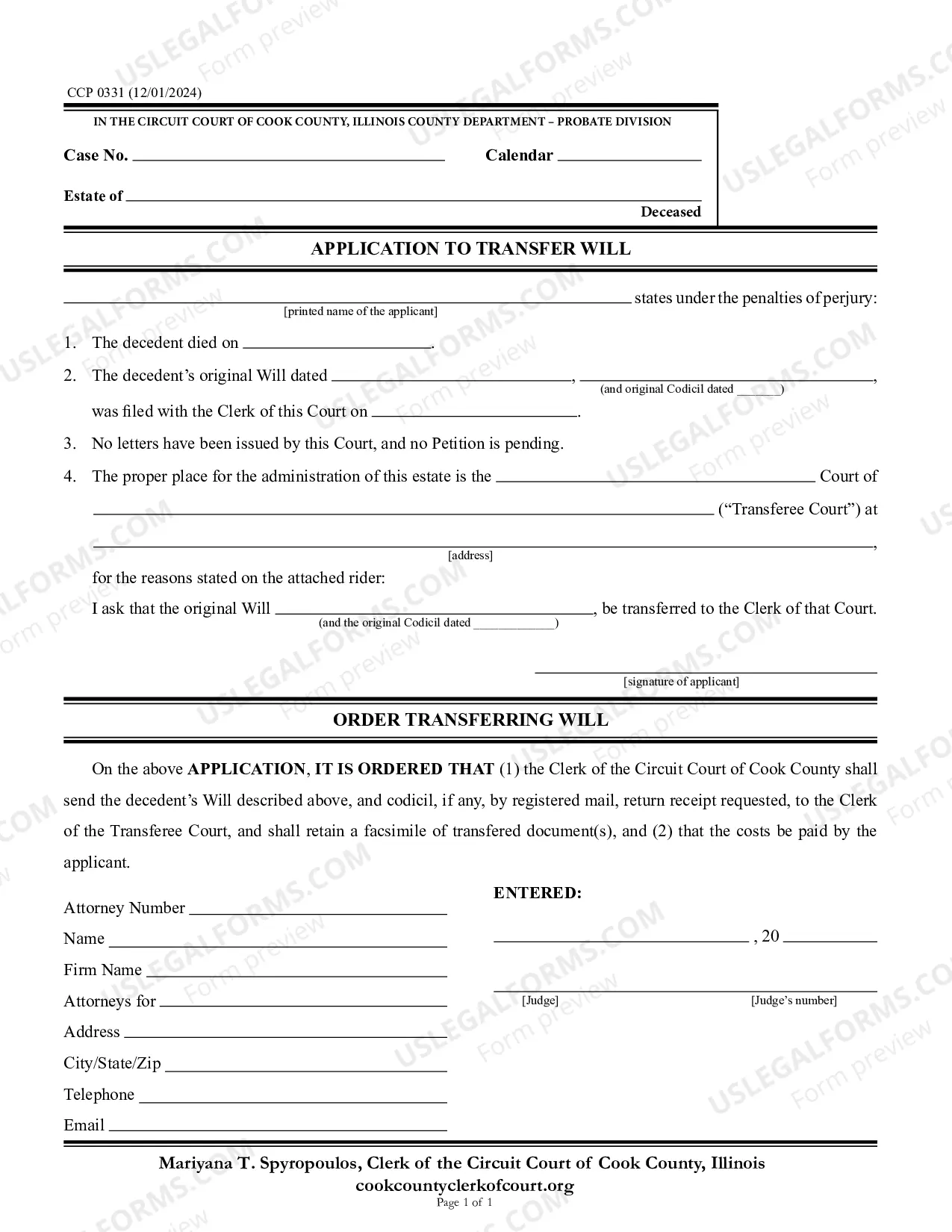
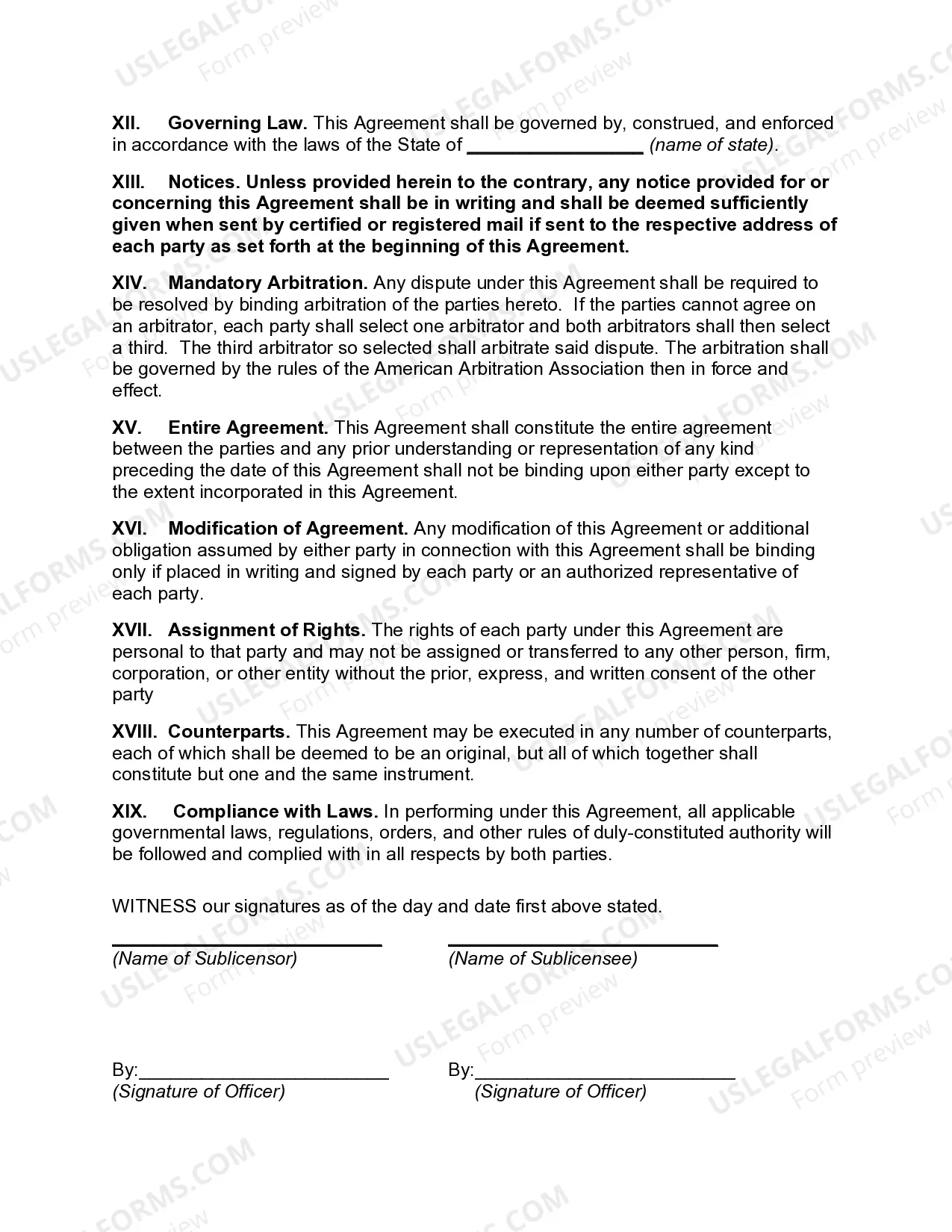
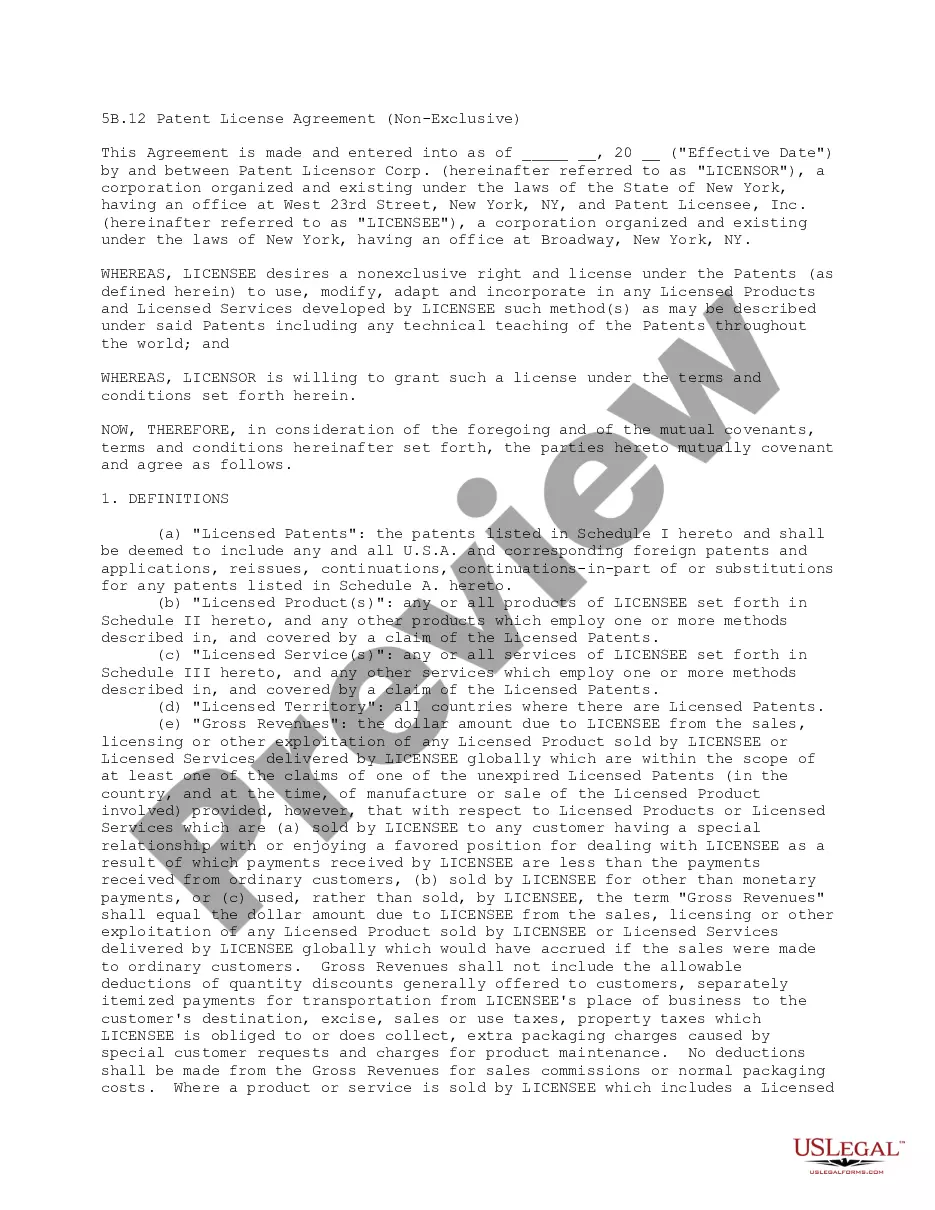
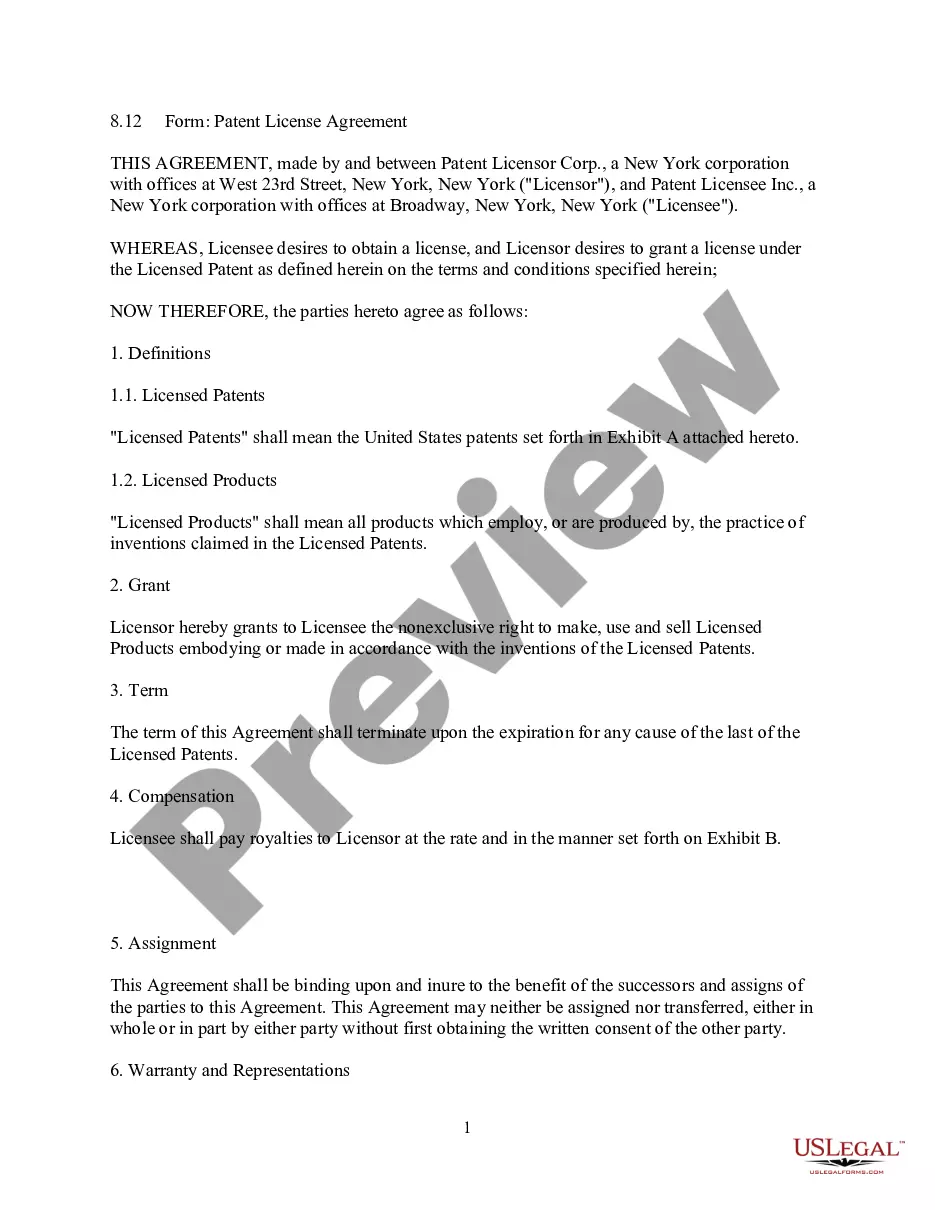
The Exclusive Patent Sublicense Agreement is a legal document that grants a sublicense from a patent holder to a sublicensee. It allows the sublicensee exclusive rights to utilize, manufacture, and sell a product or process covered by a specified patent in exchange for royalty payments to the sublicensor. This form is crucial for managing relationships in the intellectual property landscape, ensuring that both parties understand their rights and obligations within the commercialization of the patent. It is different from a standard licensing agreement as it focuses specifically on sublicensing rights, providing distinct protections and responsibilities for the sublicensor and sublicensee.
Key parts of this document
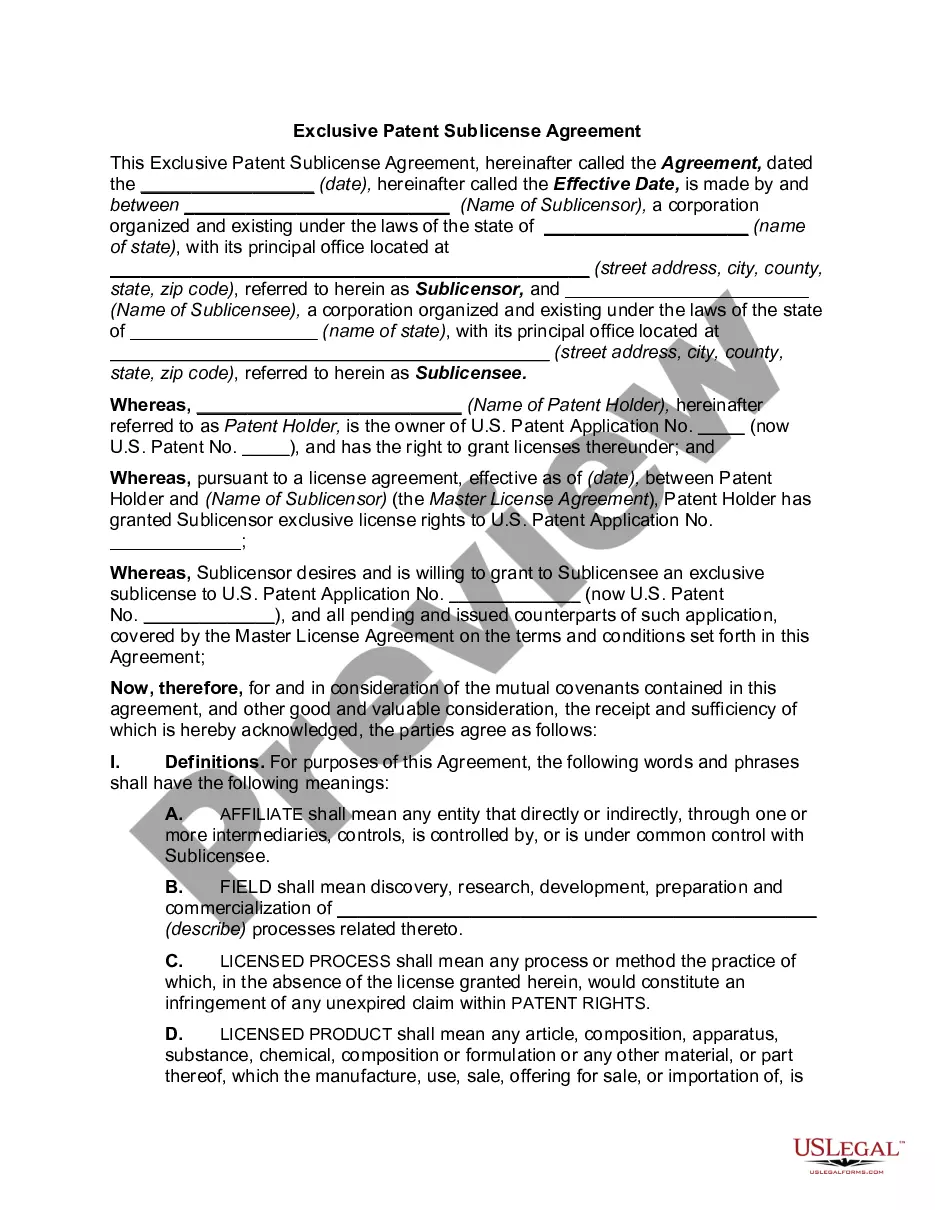
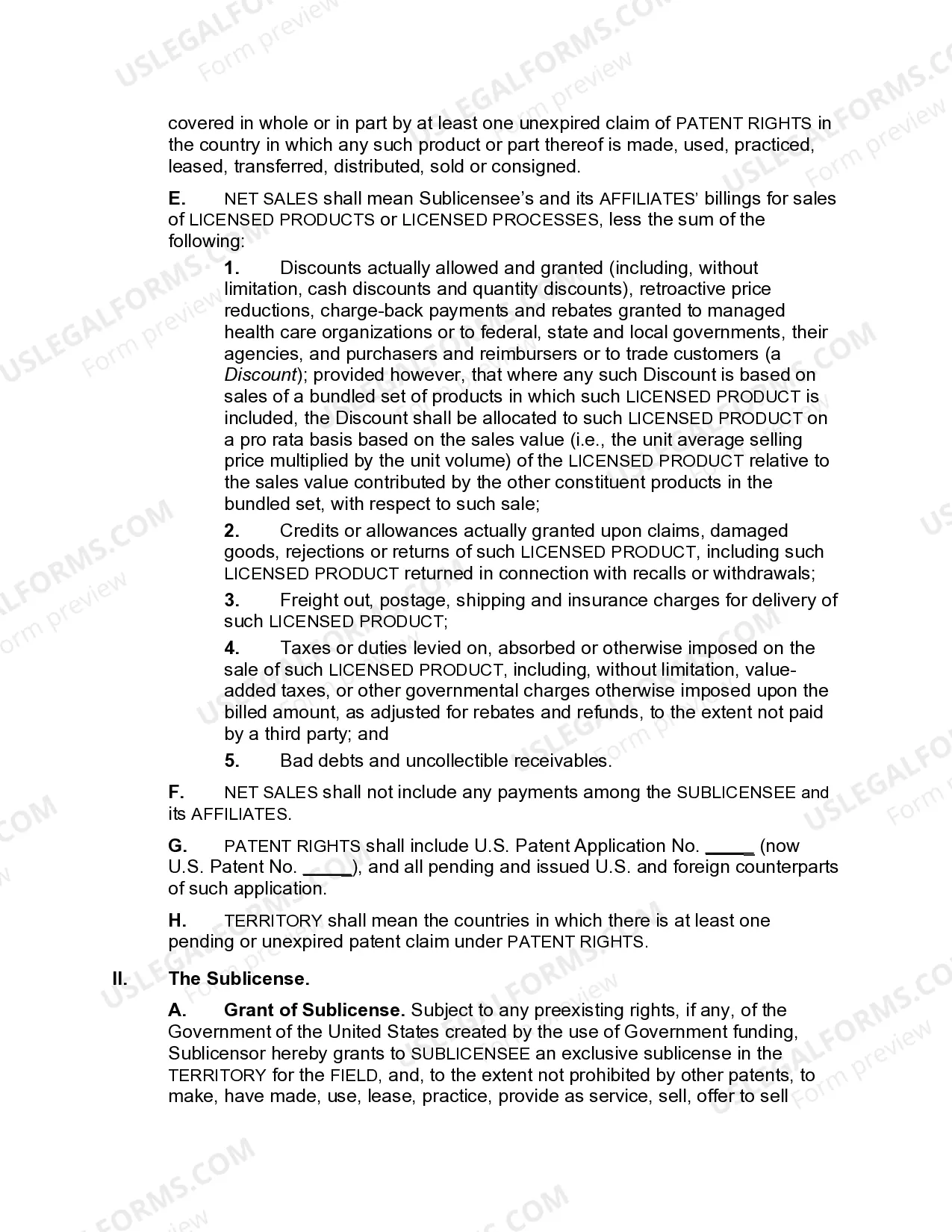
- Definitions: Clarifies key terms, including affiliate, field, licensed product, and patent rights.
- Grant of Sublicense: Details the exclusive rights granted to the sublicensee.
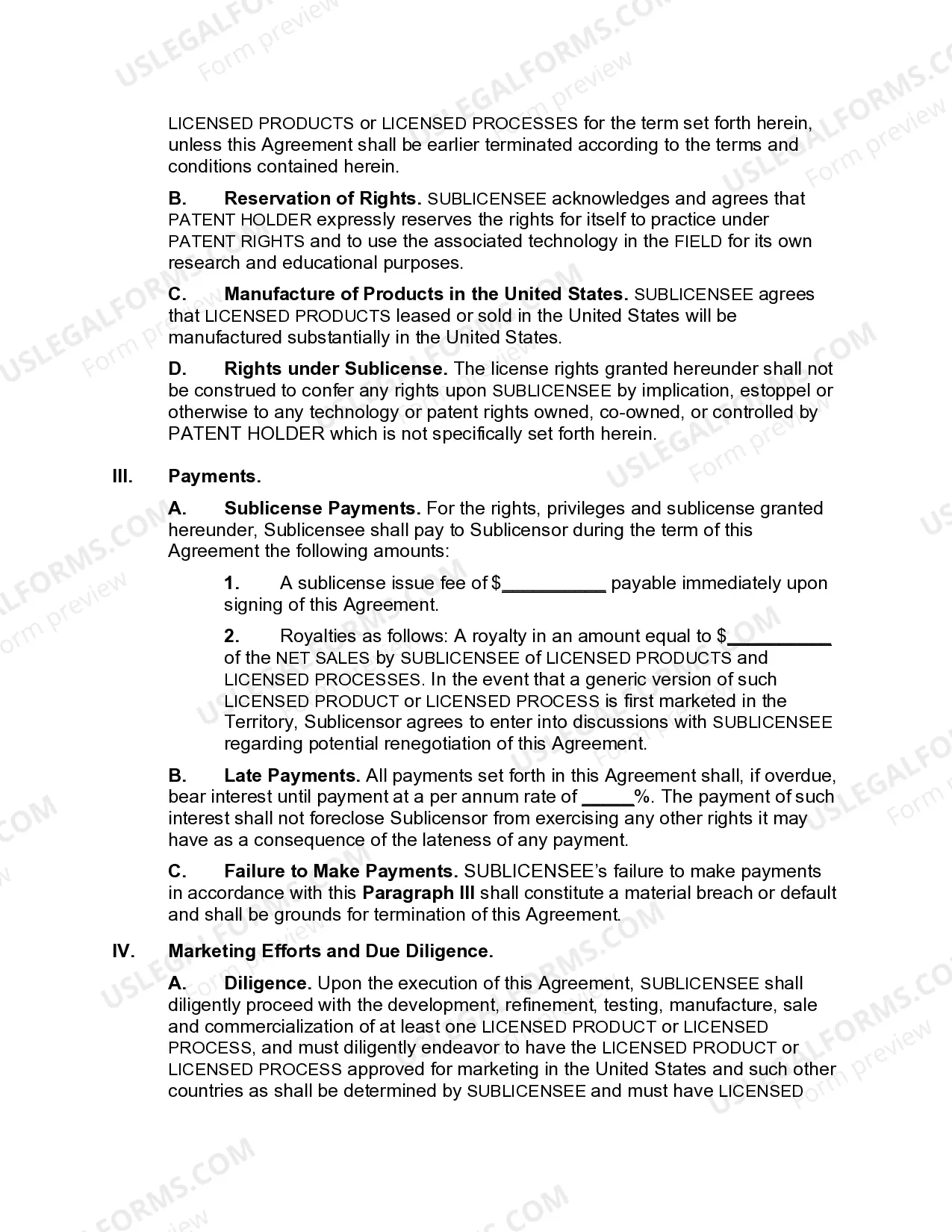
- Payments: Outlines the financial obligations, including issue fees and royalties based on net sales.
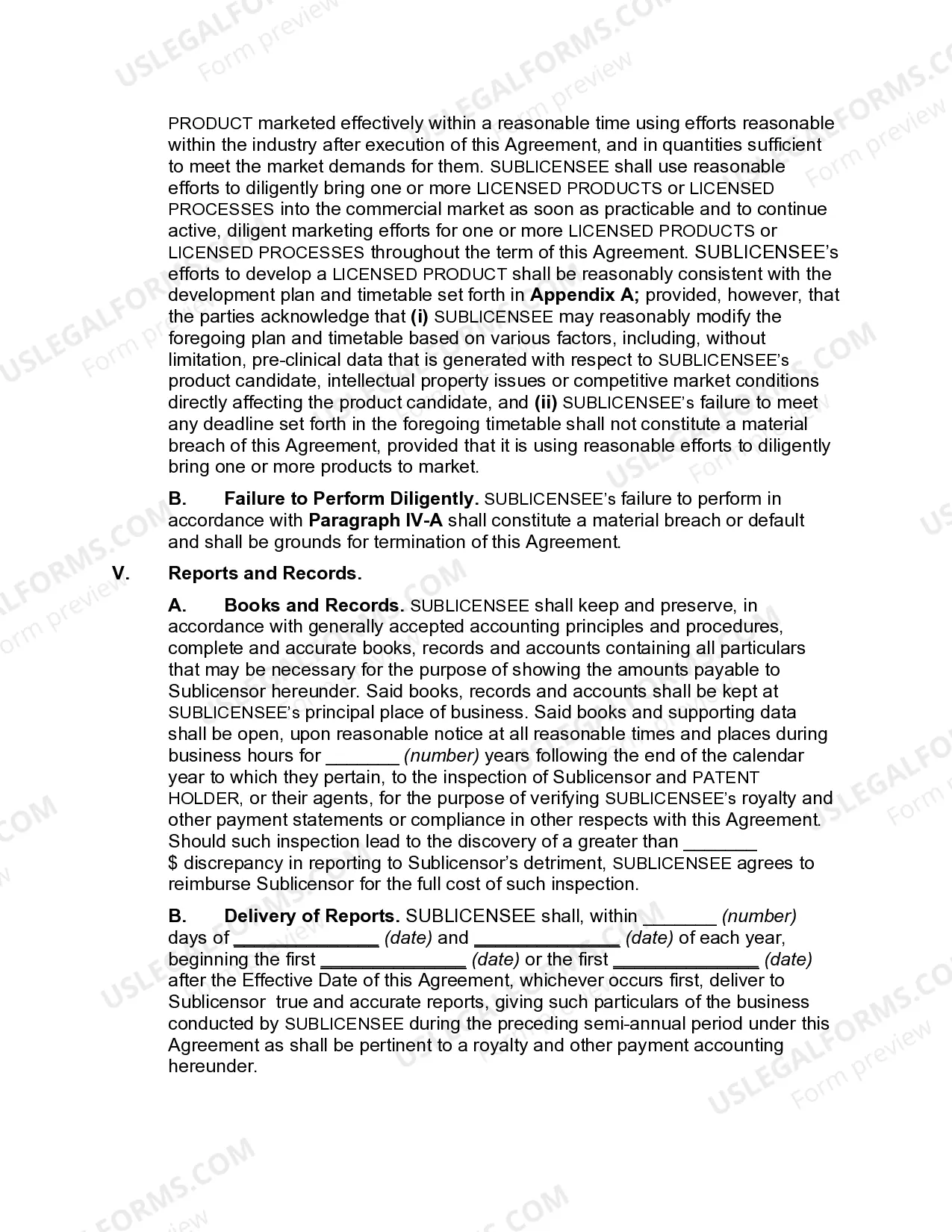
- Marketing Efforts: Stipulates the sublicensee's obligations for product development and marketing.
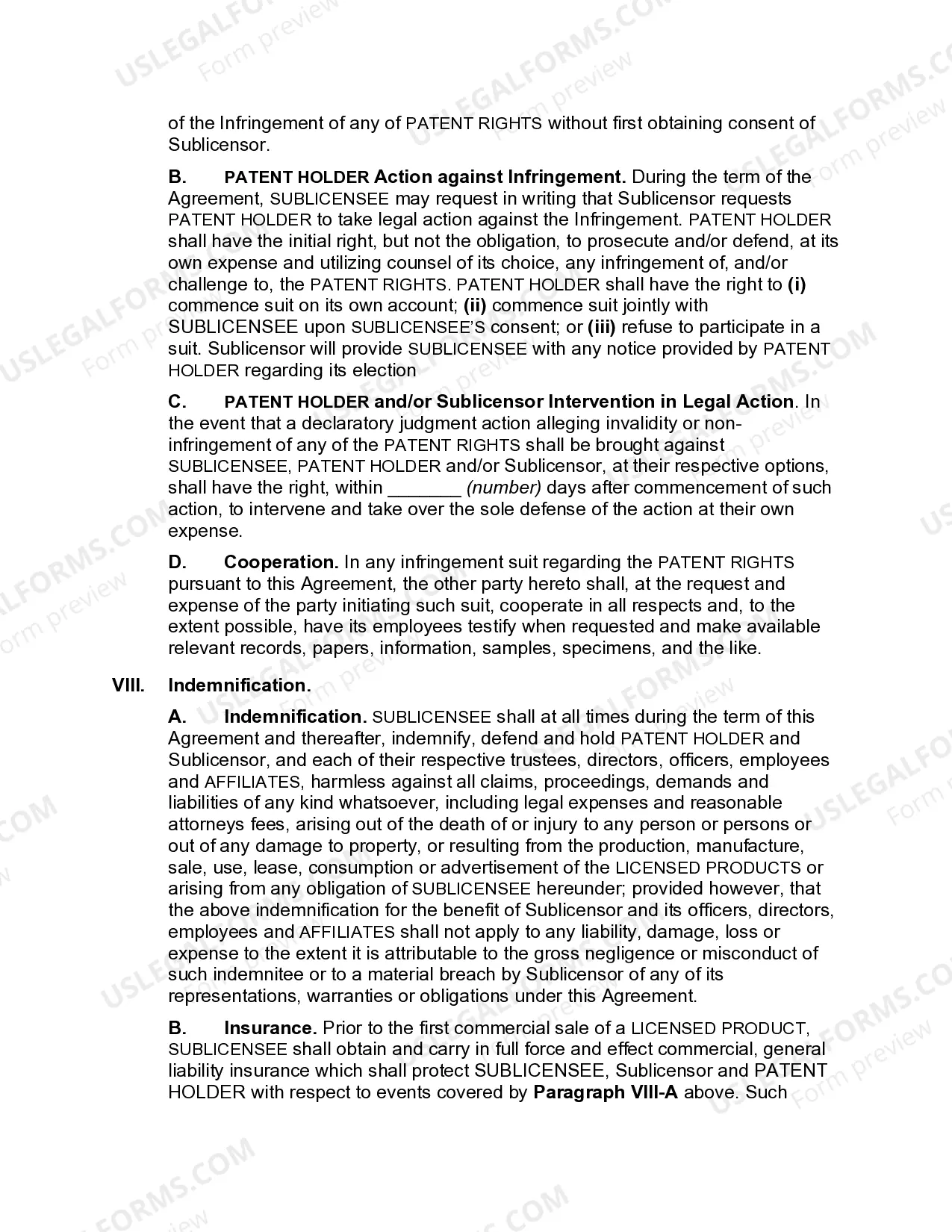
- Indemnification: Details the responsibilities for legal claims and liabilities related to the licensed products.

When to use this form
This form is necessary when a patent holder, through a sublicensor, wishes to grant exclusive rights to another party to produce, use, or sell an invention under an existing patent in exchange for a fee. Companies often use this agreement when entering into partnerships for product development, especially in industries such as pharmaceuticals, technology, and manufacturing where patented processes or products are involved.
Who needs this form
- Business entities that hold patents and want to monetize their inventions through sublicensing.
- Companies seeking exclusive rights to a patented technology or product from a patent holder.
- Inventors or developers collaborating with others to commercialize their patents.
- Legal professionals involved in intellectual property transactions who need a structured sublicensing agreement.
Completing this form step by step
- Identify the parties involved: Fill in the names and addresses of the sublicensor and sublicensee at the beginning of the agreement.
- Specify the patent: Enter the patent number and description to clearly identify the licensed property.
- Outline financial terms: Insert the sublicense issue fee and royalty rates as agreed by both parties.
- Define the field: Describe the scope of use for the licensed product or process.
- Complete necessary clauses: Ensure all key sections, like indemnification, marketing efforts, and jurisdiction, are addressed appropriately.
Does this form need to be notarized?
This form does not typically require notarization unless specified by local law. It is advisable to check with legal counsel or state regulations to determine if notarization is necessary for your specific agreement.
Get your form ready online
Our built-in tools help you complete, sign, share, and store your documents in one place.
Make edits, fill in missing information, and update formatting in US Legal Forms—just like you would in MS Word.
Download a copy, print it, send it by email, or mail it via USPS—whatever works best for your next step.
Sign and collect signatures with our SignNow integration. Send to multiple recipients, set reminders, and more. Go Premium to unlock E-Sign.
If this form requires notarization, complete it online through a secure video call—no need to meet a notary in person or wait for an appointment.
We protect your documents and personal data by following strict security and privacy standards.

Make edits, fill in missing information, and update formatting in US Legal Forms—just like you would in MS Word.

Download a copy, print it, send it by email, or mail it via USPS—whatever works best for your next step.

Sign and collect signatures with our SignNow integration. Send to multiple recipients, set reminders, and more. Go Premium to unlock E-Sign.

If this form requires notarization, complete it online through a secure video call—no need to meet a notary in person or wait for an appointment.

We protect your documents and personal data by following strict security and privacy standards.
Typical mistakes to avoid
- Failing to clearly define the scope of the sublicense, which can lead to misunderstandings.
- Neglecting to specify payment terms accurately, leading to disputes over royalties and fees.
- Not ensuring that both parties have the authority to enter into the agreement, risking enforceability.
- Overlooking the necessary clauses for marketing obligations and patent maintenance responsibilities.
- Not keeping copies of the agreement and relevant documentation for future reference and compliance checks.
Benefits of completing this form online
- Convenience: Download and fill out the form at your own pace without needing to visit a lawyerâs office.
- Editability: Easily modify the template to fit specific circumstances and requirements.
- Reliability: Access a legally vetted document created by licensed attorneys, ensuring it meets necessary legal standards.
Looking for another form?


Form popularity
FAQ
A sublicense is a grant by the original licensee to a third party (the sublicensee) under the patent or other technology rights granted to the original licensee by the licensor.However, exclusive licenses commonly include a right to sublicense, at least with the consent of the licensor.
A licence will often specify whether the licensee is allowed to grant a sub-licence to a third party.The scope of the authority given by the licensor to the licensee to sublicense.
The exclusivity gives the licensee the incentive to invest in developing the market potential of the technology.This is because the licensor could sell licenses to all of the company's competitors after the first licensee educates and cultivates the market for the product.
An exclusive license grants the licensee singular permission to exploit the intellectual property in question.Non-exclusive licenses allow more latitude in the number of licenses granted while allowing the licensor to retain the rights to further develop and exploit its own intellectual property.
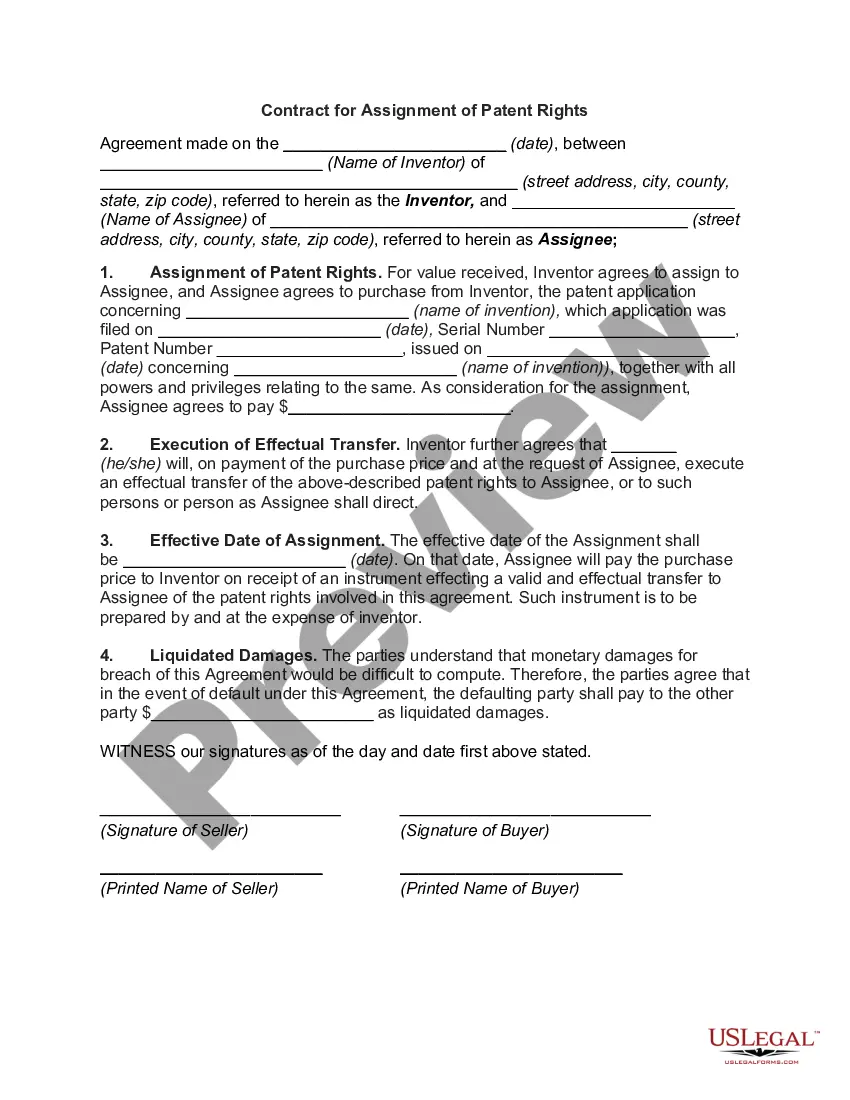
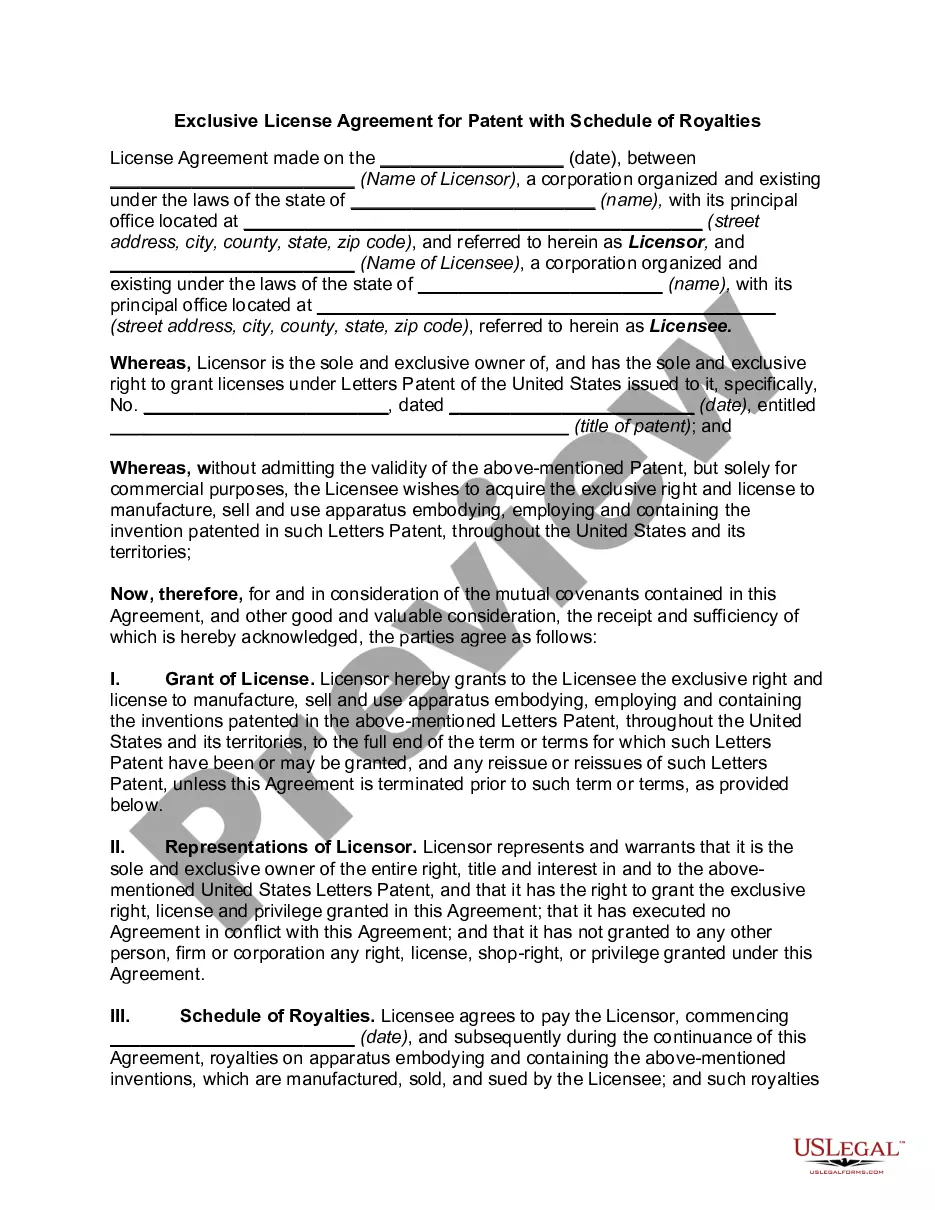
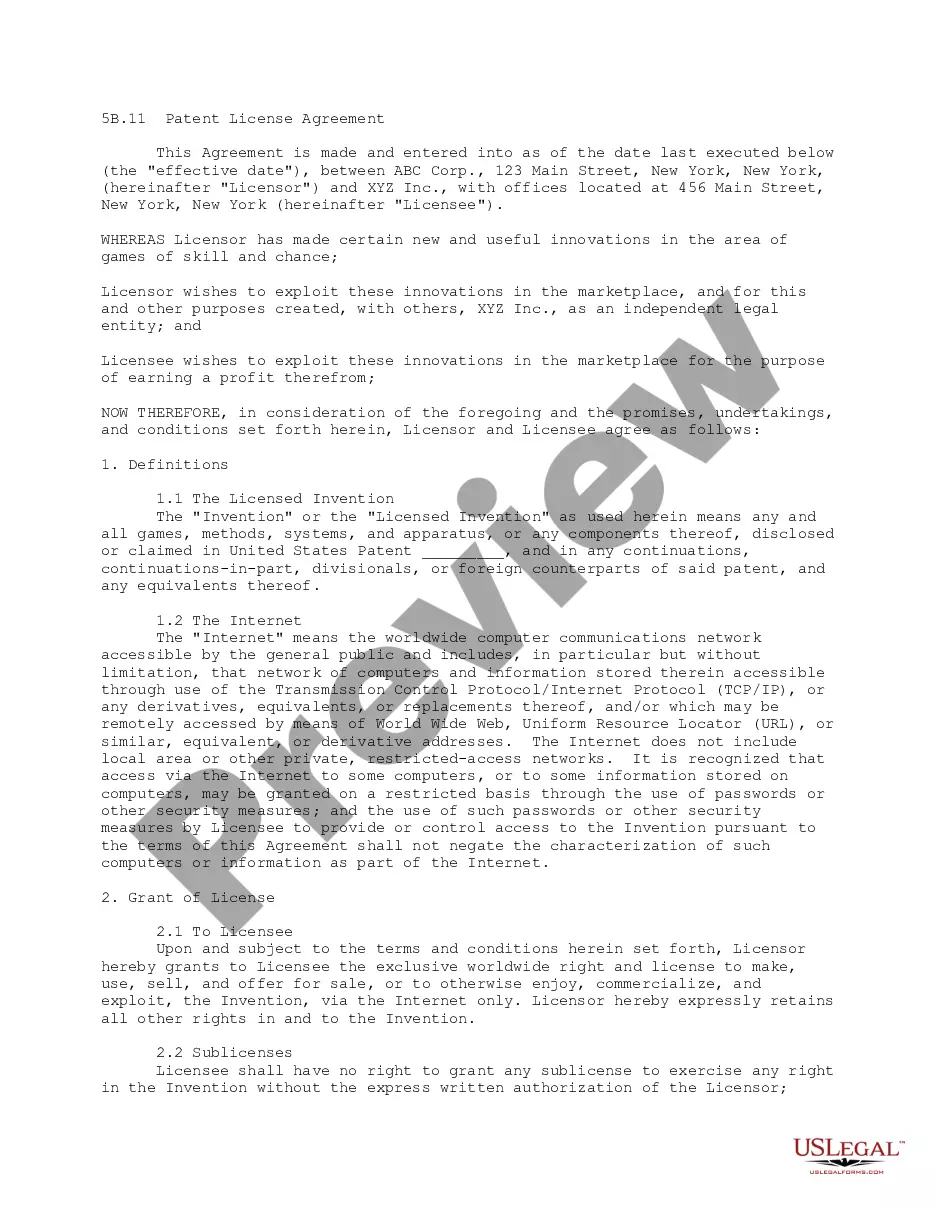
A patent license agreement typically grants a licensee exclusive rights to manufacture, sell, and use a patented invention, subjected to certain terms. A patent license agreement will also define the amount of royalties the licensee owes the licensor.
A licensing agreement allows one party (the licensee) to use and/or earn revenue from the property of the owner (the licensor). Licensing agreements generate revenues, called royalties, earned by a company for allowing its copyrighted or patented material to be used by another company.
A sublicense agreement is an agreement by which the licensee (as sublicensor) grants to someone else (as sublicensee) some of the licensee's rights. If permitted by the original license agreement, there may be multiple tiers of sublicensees.
An exclusive license agreement covers a license that is limited to a specific field or subject, such as a market, territory, length of time, or context.The licensor can issue an unlimited number of licenses that have different rights within the same field, or licenses with the same rights in a different field.
A license agreement is a business contract between two parties. The licensor (the seller of the license) owns the asset being licensed and the licensee (the buyer) pays for the right to use the license. The licensee pays royalties to the owner in exchange for the right to sell the product or use the technology.