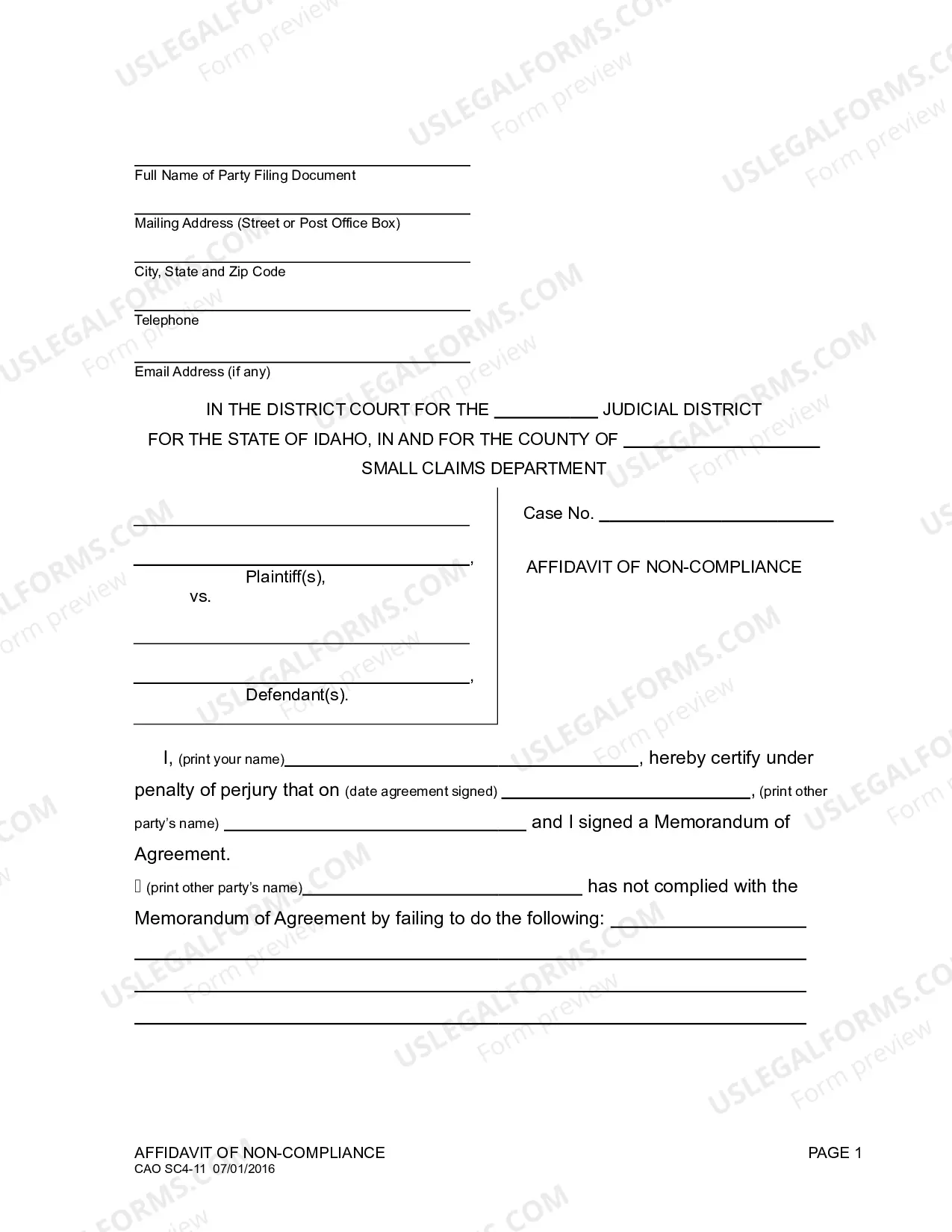
Employment Contract between Booking Agent and Professional Speaker
Understanding this form
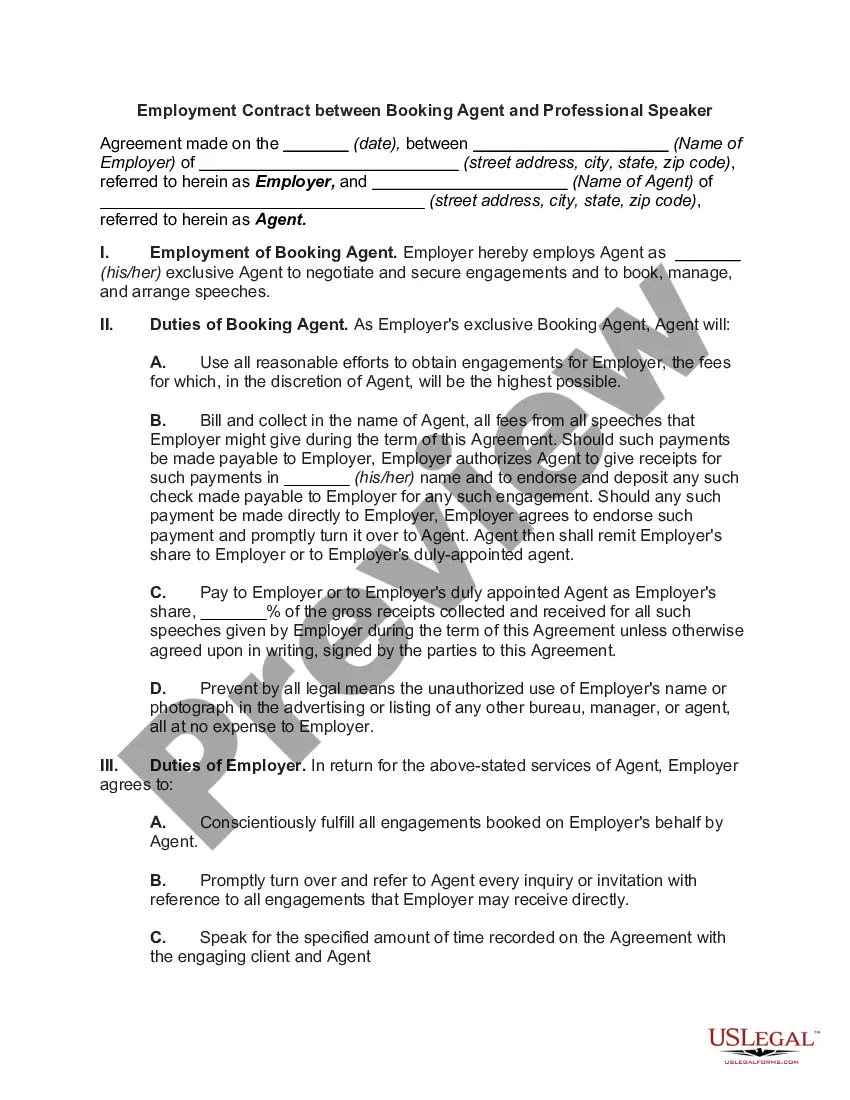
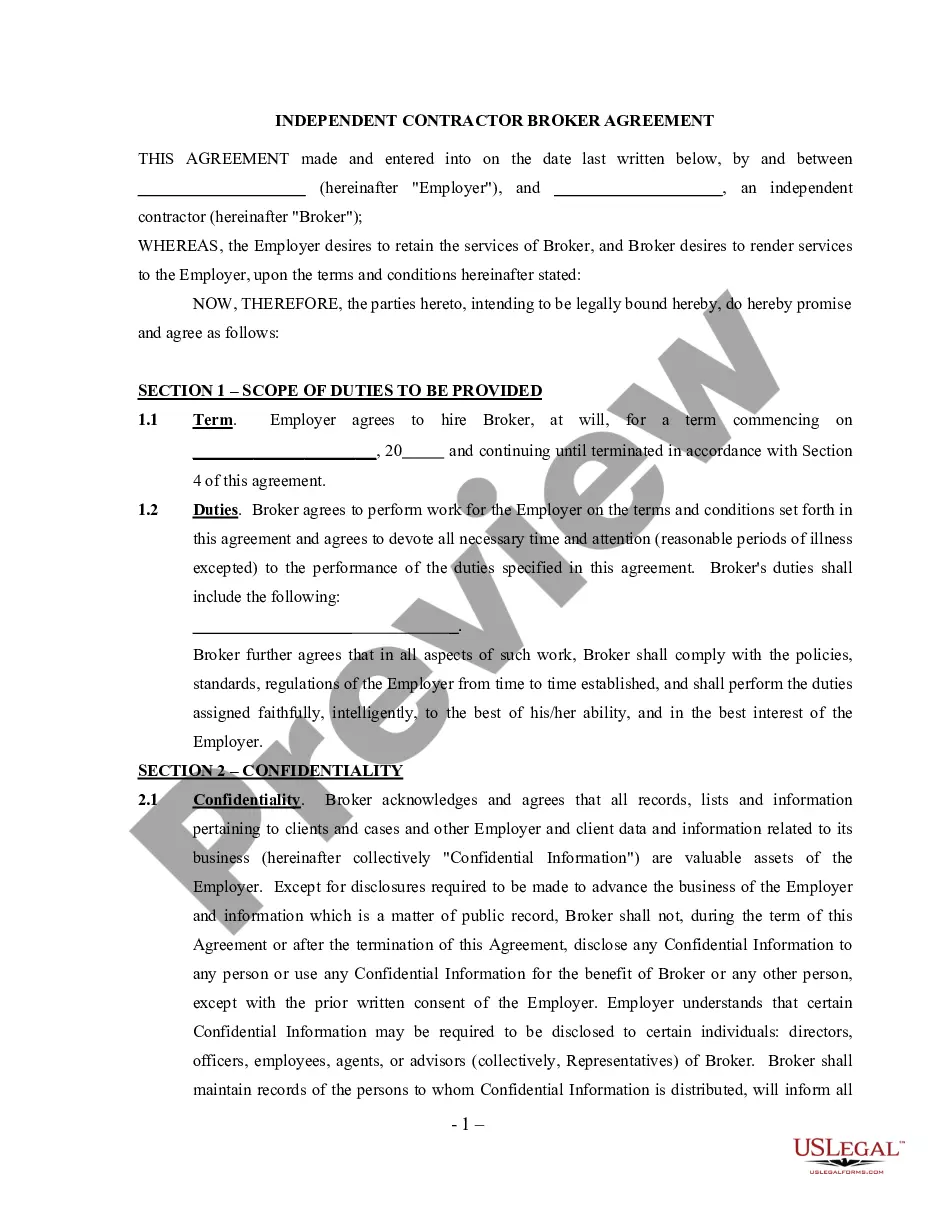
This Employment Contract between Booking Agent and Professional Speaker is a legal agreement that outlines the roles and responsibilities of a booking agent and a professional speaker. It ensures both parties understand their obligations regarding securing engagements, billing, and protecting the speaker's image. distinct from other contracts by focusing specifically on the arrangement between a speaker and the agent responsible for booking engagements.
Key components of this form
- Definitions of parties involved: Clearly identifies the Employer and Agent with relevant personal details.
- Employment terms: Establishes the nature of the booking agent's employment and their exclusive role.
- Agent's duties: Lists specific responsibilities of the agent, including securing engagements and collecting fees.
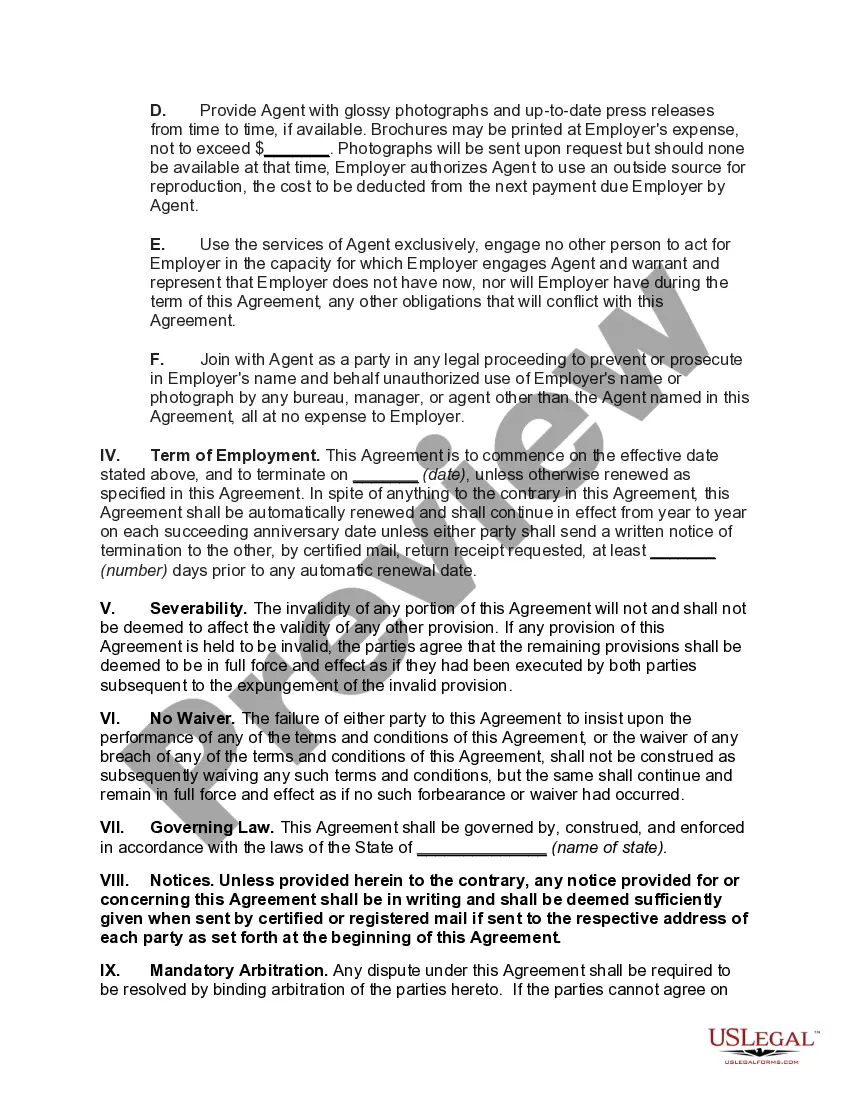
- Employer's obligations: Details what is required from the speaker to fulfill the agreement.
- Duration: States the term of employment and renewal conditions.
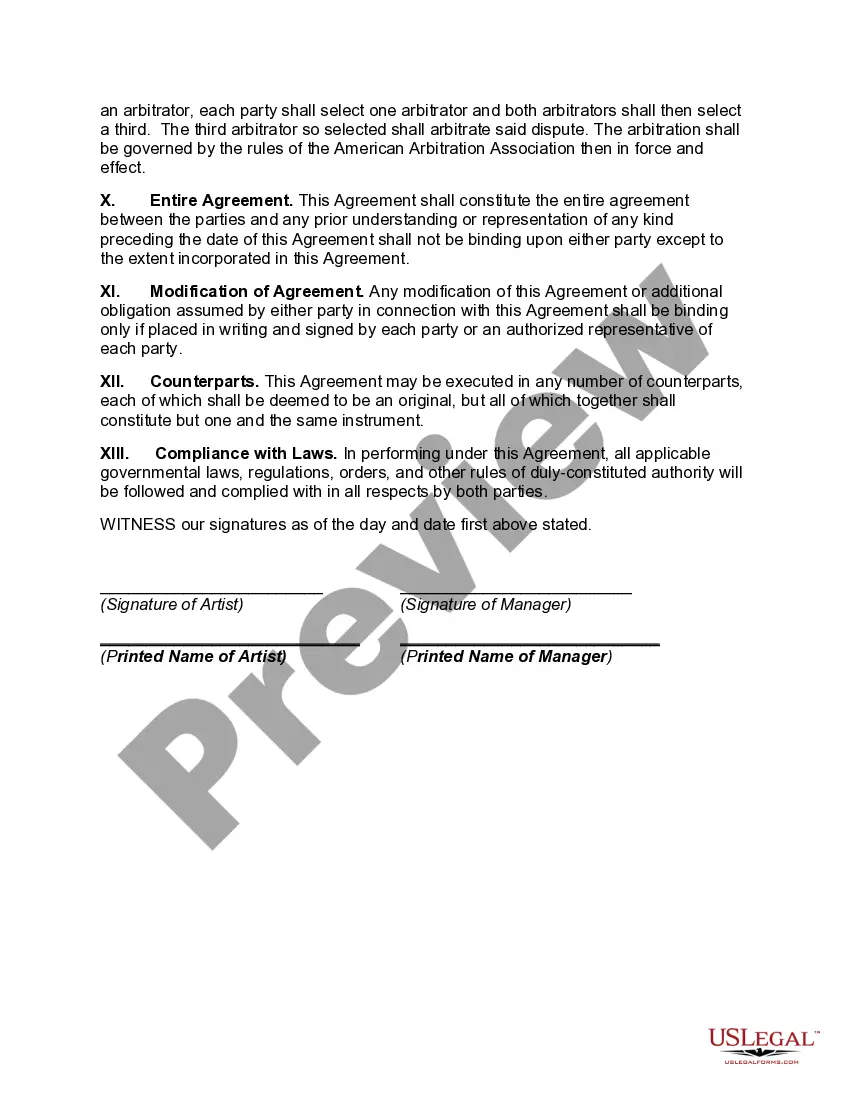
- Dispute resolution: Includes mandatory arbitration provisions for handling disputes.
Common use cases
This form is useful when a professional speaker wishes to engage a booking agent to manage their speaking engagements. It should be used when establishing the terms of that relationship, particularly if the speaker seeks to ensure that all engagements are handled professionally and legally. This contract can help avoid misunderstandings and provide clarity on the financial aspects of their agreements.
Intended users of this form
- Professional speakers who engage an agent for bookings.
- Booking agents representing speakers in negotiating engagements.
- Organizations or individuals planning to secure speaking engagements with a professional speaker.
Completing this form step by step
- Identify the parties: Fill in the names and addresses of both the Employer and the Agent.
- Specify the duties: Clearly outline the responsibilities of the Agent and Employer as required by the agreement.
- Enter the term: Provide the start and end date of the contract, along with renewal terms if applicable.
- Include payment details: Specify how the fees will be collected and shared between the parties.
- Sign the document: Ensure both parties sign the agreement to make it legally binding.
Is notarization required?
Notarization is not commonly needed for this form. However, certain documents or local rules may make it necessary. Our notarization service, powered by Notarize, allows you to finalize it securely online anytime, day or night.
Get your form ready online
Our built-in tools help you complete, sign, share, and store your documents in one place.
Make edits, fill in missing information, and update formatting in US Legal Forms—just like you would in MS Word.
Download a copy, print it, send it by email, or mail it via USPS—whatever works best for your next step.
Sign and collect signatures with our SignNow integration. Send to multiple recipients, set reminders, and more. Go Premium to unlock E-Sign.
If this form requires notarization, complete it online through a secure video call—no need to meet a notary in person or wait for an appointment.
We protect your documents and personal data by following strict security and privacy standards.

Make edits, fill in missing information, and update formatting in US Legal Forms—just like you would in MS Word.

Download a copy, print it, send it by email, or mail it via USPS—whatever works best for your next step.

Sign and collect signatures with our SignNow integration. Send to multiple recipients, set reminders, and more. Go Premium to unlock E-Sign.

If this form requires notarization, complete it online through a secure video call—no need to meet a notary in person or wait for an appointment.

We protect your documents and personal data by following strict security and privacy standards.
Mistakes to watch out for
- Not clearly defining the roles of the Agent and Employer, leading to misunderstandings.
- Failing to specify payment terms clearly, which can cause disputes later.
- Not reviewing the contract for state-specific legal requirements before signing.
Advantages of online completion
- Immediate access: Download and use the form instantly without waiting for delivery.
- Editability: Customize the contract as needed to fit specific requirements.
- Legally vetted: The form is drafted by licensed attorneys ensuring it meets legal standards.
Looking for another form?
Form popularity
FAQ
What are the essential terms of a speaking engagement contract? Introduction of contract, where details of both parties are included. The event description is given by the event host to the speaker. A complete description of the services the speaker should provide. Payment details for the services provided.
Speaker may cancel this Contract without liability to COA, and COA shall have no liability of any kind to Speaker, if such cancellation is for reasons that make it impossible for Speaker to fulfill Contract commitments.
How Do You Write a Client Contract? Include Contact Information of Both Parties.Specify Project Terms and Scope.Establish Payment Terms.Set the Schedule.Decide What Happens if a Contract Is Terminated.Determine Who Owns Final Copyrights on Intellectual Property.Add Some Legalese About the Working Relationship.
Here's what you need: The idea, simply stated. The problem that idea solves. The action you want people to take as a result. 1-3 key concepts you'll cover to support the problem, idea, and/or action. Why you've got the credibility to talk about all of this.
Typical language in a standard contract might be: 100% of the speaking fee if canceled less than 30 days from the event. 50% of the fee if canceled 31 to 60 days before the event. 25% of the fee if canceled 61 to 90 days before the event.
What are the essential terms of a speaking engagement contract? Introduction of contract, where details of both parties are included. The event description is given by the event host to the speaker. A complete description of the services the speaker should provide. Payment details for the services provided.
A speaker's agreement should address the following: 1. Compensation of the speaker 2. The organization's rights to the presentation 3. The speaker's representations concerning the content of the presentation 4.