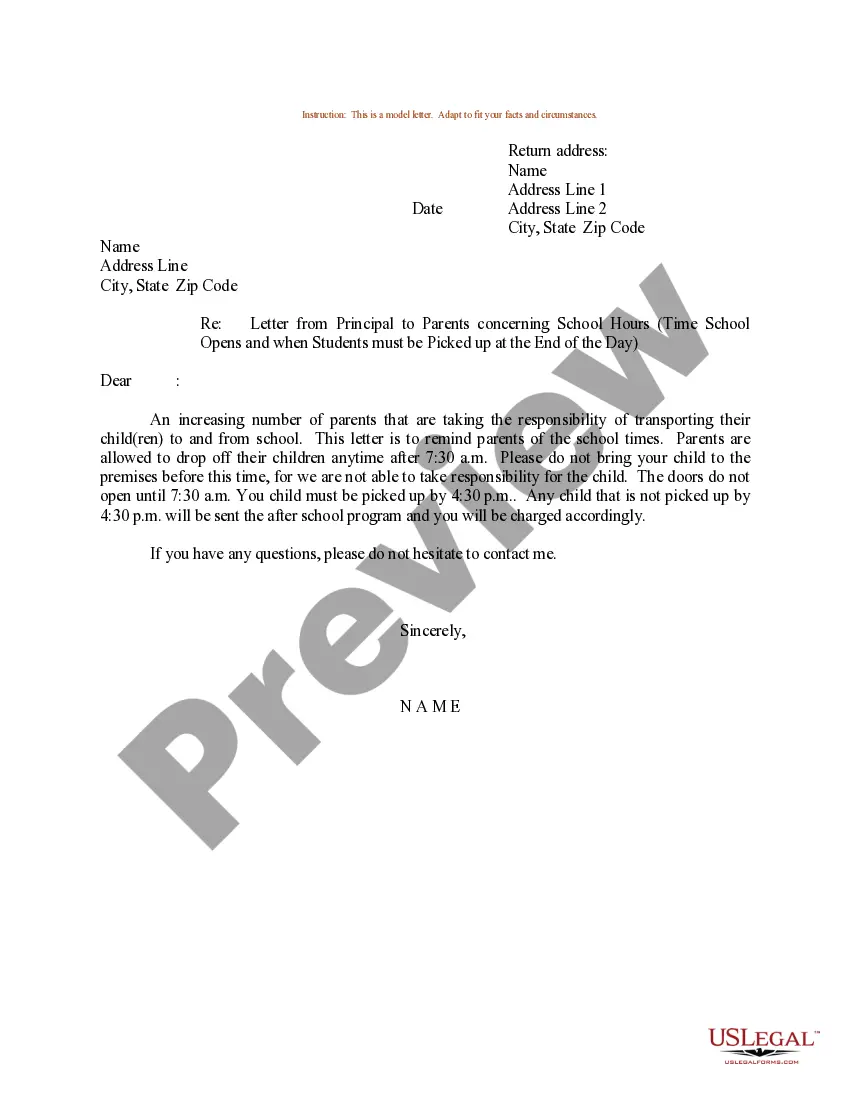
Sample Letter from Principal to Parents concerning School Hours
Overview of this form
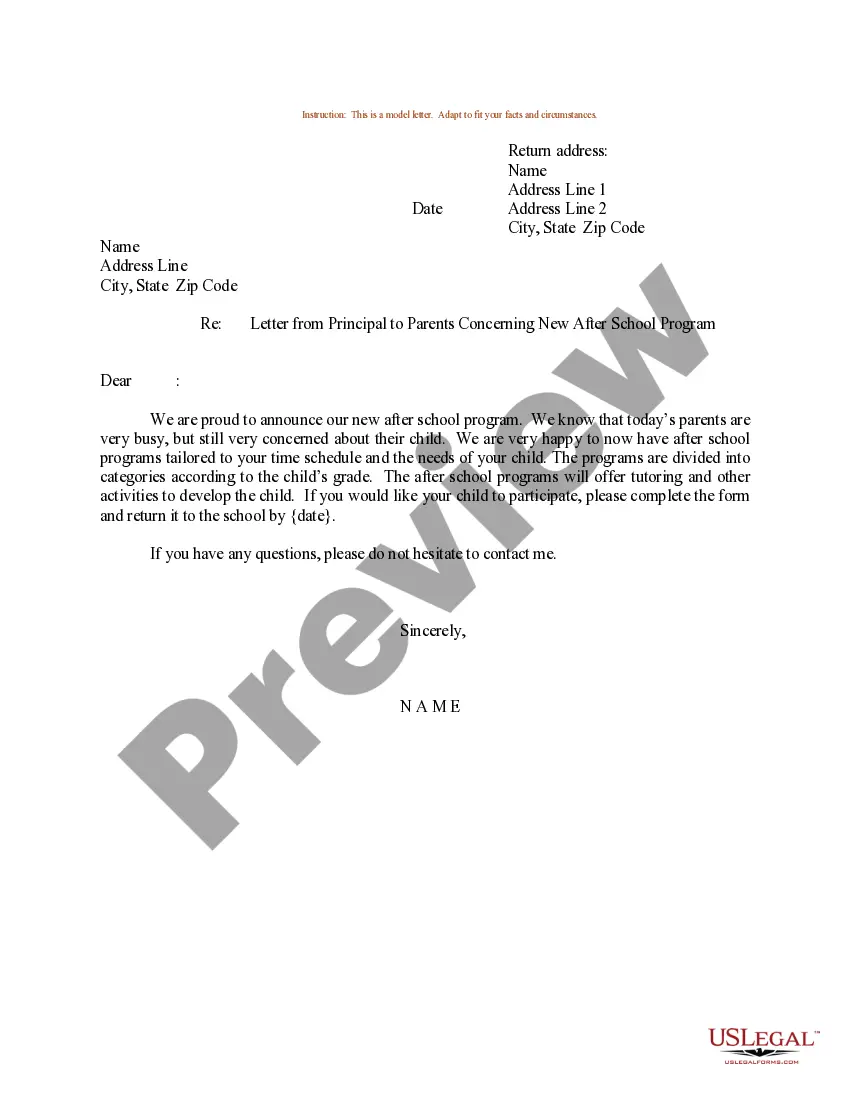
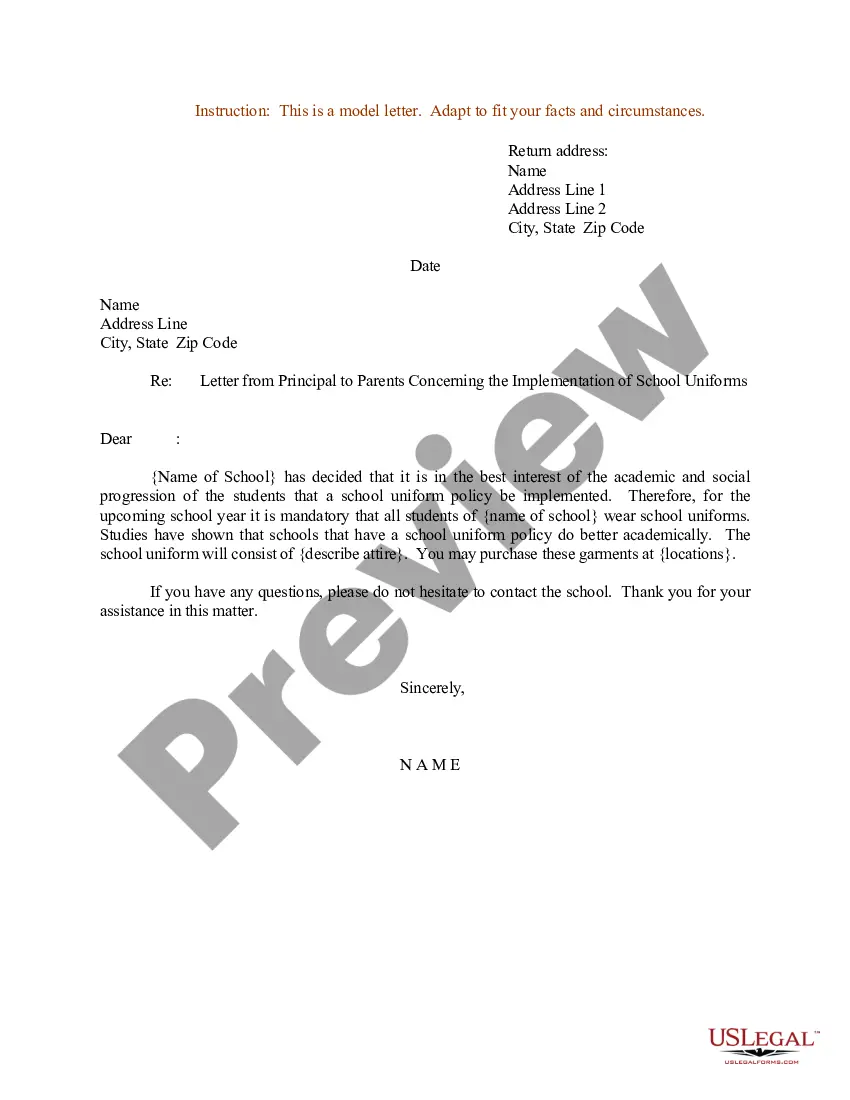
This Sample Letter from Principal to Parents concerning School Hours is a template designed to communicate important information about school hours to parents. It serves as a formal notification, ensuring that parents are aware of any changes or important details pertaining to the school schedule. This template stands out as a concise communication tool, unlike other generic forms that may lack specific context for educational settings.
Key components of this form
- Return address of the principal or school.
- Date of the letter.
- Name and address of the recipient (parents).
- Message body explaining school hours and any relevant changes.
- Contact information for any questions from parents.
- Closing signature from the principal.
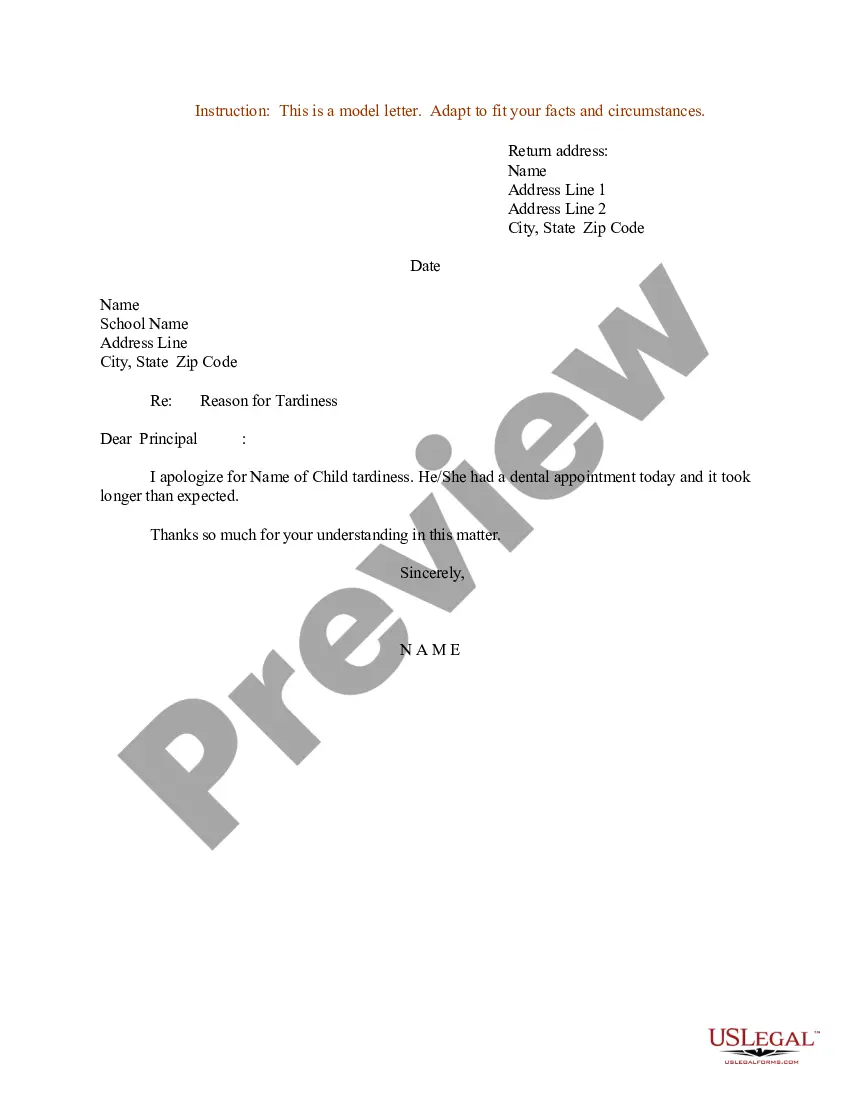
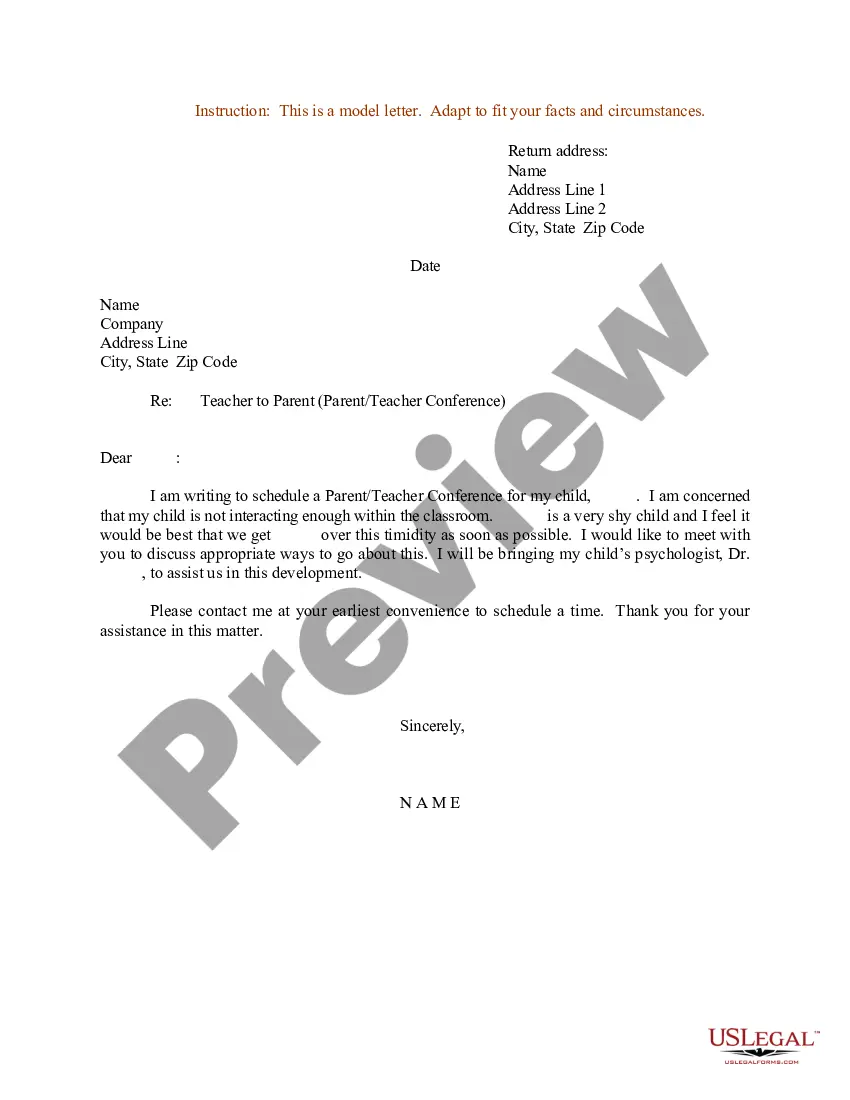
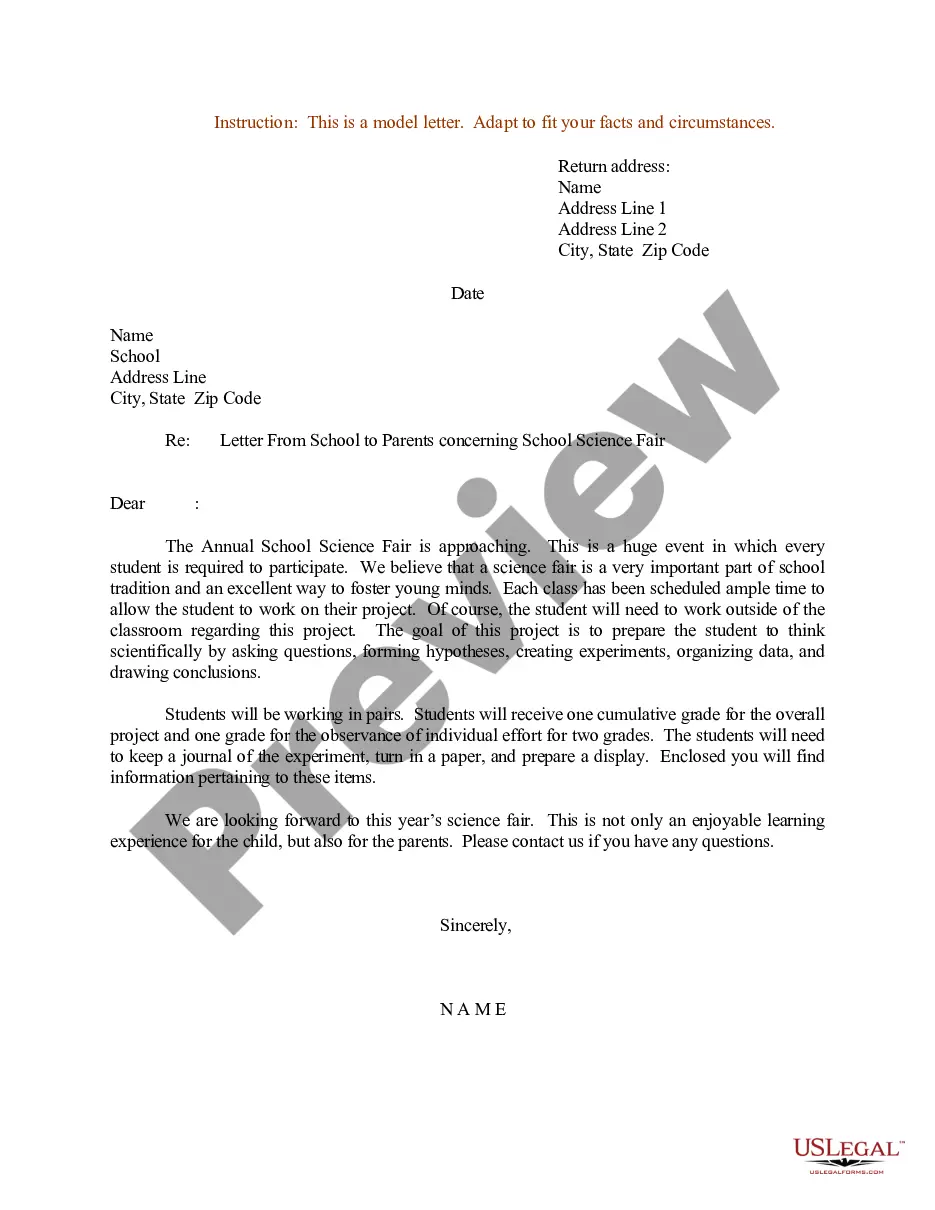
When this form is needed
This form is ideal for principals who need to inform parents about changes in school hours, such as early dismissals, late starts, or special schedule adjustments. It can also be used to clarify regular school hours at the beginning of a term or to communicate new attendance policies.
Intended users of this form
This form is intended for:
- School principals or administrators.
- Educational institutions communicating with parents.
- Organizations seeking to maintain clear communication about school schedules.
Steps to complete this form
- Enter the return address of the principal's office at the top of the letter.
- Include the current date to indicate when the letter is issued.
- Fill in the name and address of the parent or guardian receiving the letter.
- Draft the message body, clearly stating the school hours and any important changes.
- Provide contact details for parents to reach out with questions.
- Sign the letter with the principal's name to ensure authenticity.
Notarization requirements for this form
This form does not typically require notarization unless specified by local law or school policy. Always check local regulations to confirm requirements.
Get your form ready online
Our built-in tools help you complete, sign, share, and store your documents in one place.
Make edits, fill in missing information, and update formatting in US Legal Forms—just like you would in MS Word.
Download a copy, print it, send it by email, or mail it via USPS—whatever works best for your next step.
Sign and collect signatures with our SignNow integration. Send to multiple recipients, set reminders, and more. Go Premium to unlock E-Sign.
If this form requires notarization, complete it online through a secure video call—no need to meet a notary in person or wait for an appointment.
We protect your documents and personal data by following strict security and privacy standards.

Make edits, fill in missing information, and update formatting in US Legal Forms—just like you would in MS Word.

Download a copy, print it, send it by email, or mail it via USPS—whatever works best for your next step.

Sign and collect signatures with our SignNow integration. Send to multiple recipients, set reminders, and more. Go Premium to unlock E-Sign.

If this form requires notarization, complete it online through a secure video call—no need to meet a notary in person or wait for an appointment.

We protect your documents and personal data by following strict security and privacy standards.
Avoid these common issues
- Forgetting to include the recipient's name or address.
- Not specifying the exact changes in school hours.
- Neglecting to provide contact information for follow-up questions.
Benefits of using this form online
- Convenience of downloading and customizing the template quickly.
- Editability allows for easy adjustments tailored to specific circumstances.
- Reliable format ensures professional communication with parents.
Quick recap
- This letter serves as an official communication about school hours.
- Use it to keep parents informed about changes and new policies.
- Make sure to personalize the template before distribution.
Looking for another form?
Form popularity
FAQ
Talk to your child before you go. Prepare questions in advance to help use your time wisely. Dress appropriately. Be on time. Stay calm even if you're nervous about your child or angry about something that happened during class. Be forthcoming about what's happening at home that could affect your child at school.
Make a formal complaint You'll usually need to email or write a letter to the headteacher and to the governing body telling them you're making a formal complaint. You'll need to explain the problem and why you're unhappy with what the school has done about it. You should keep a copy of everything you send.
Outline Main Concerns Within the first paragraph of the letter, explain exactly why you're contacting your boss. Use the first two sentences to inform the reader you have concerns regarding the job and follow up with a straight-to-the-point explanation as to what is bothering you.
Make it clear throughout the letter that parental involvement is vital to enriching their child's education and personal growth. Include school contact number and email address. Include preferred times to call.
Ensure that the letter is strictly formal and professional in tone. Mention the exact reason for writing the letter. State the number of days required (leave/ or event) Mention contact information. State any arrangements (if required)
Put the date on your letter. Give your child's full name and the name of your child's main teacher or current class placement. Say what you want, rather than what you don't want. Give your address and a daytime phone number where you can be reached.
When addressing a letter To Whom It May Concern, the entire phrase is typically capitalized, then followed by a colon: To Whom It May Concern: Leave a space after it, then start the first paragraph of the letter.
Put the date on your letter. Give your child's full name and the name of your child's main teacher or current class placement. Say what you want, rather than what you don't want. Give your address and a daytime phone number where you can be reached.