Warning of Default on Commercial Lease
What is this form?
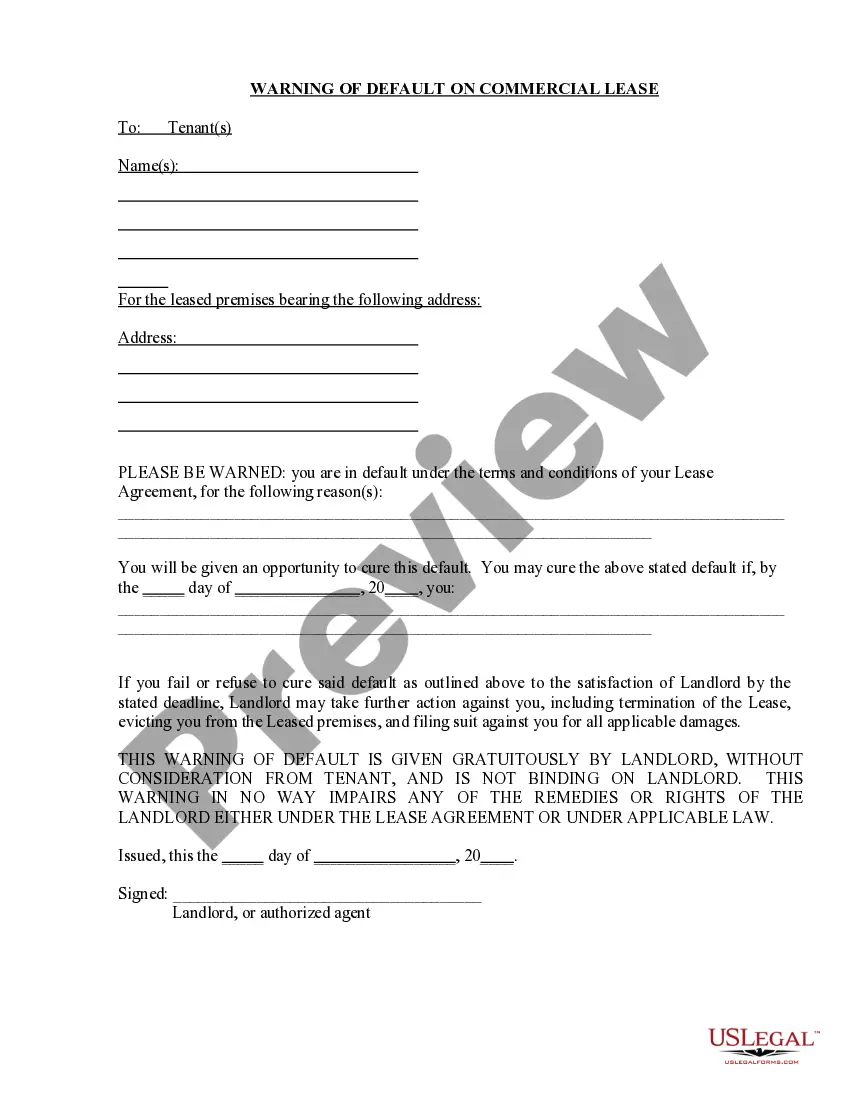
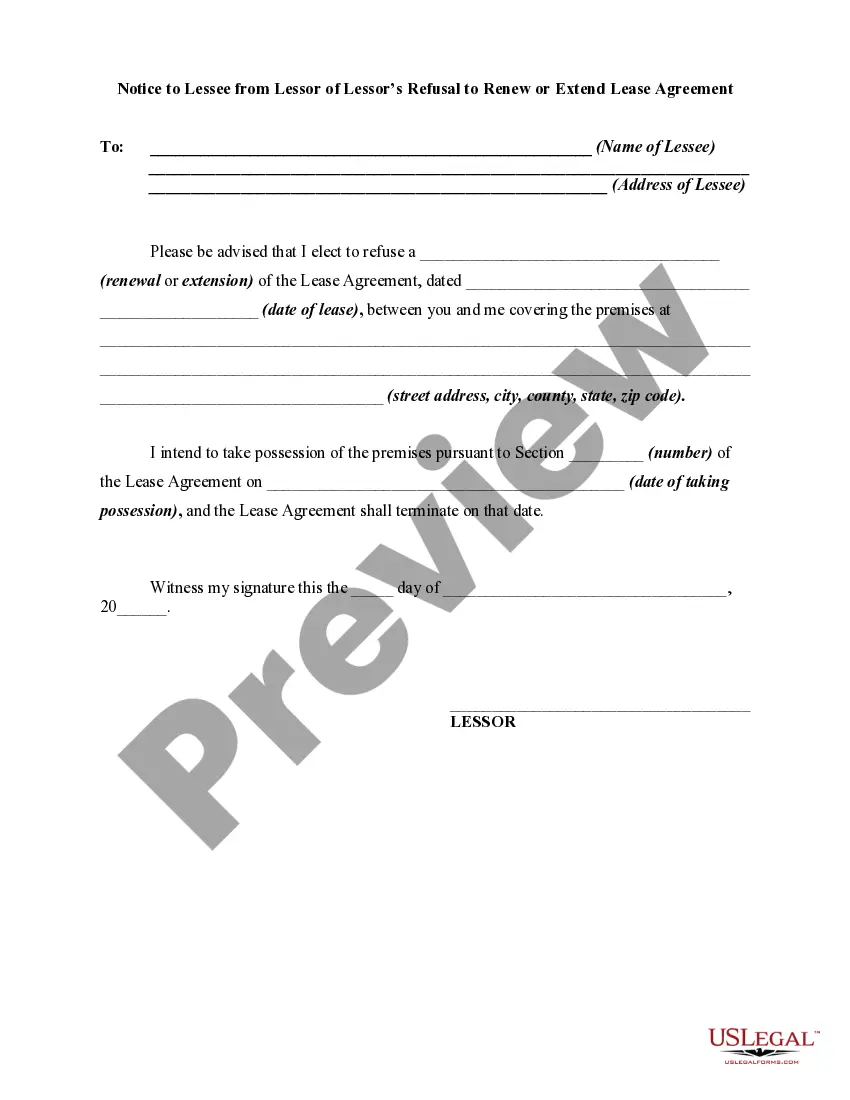
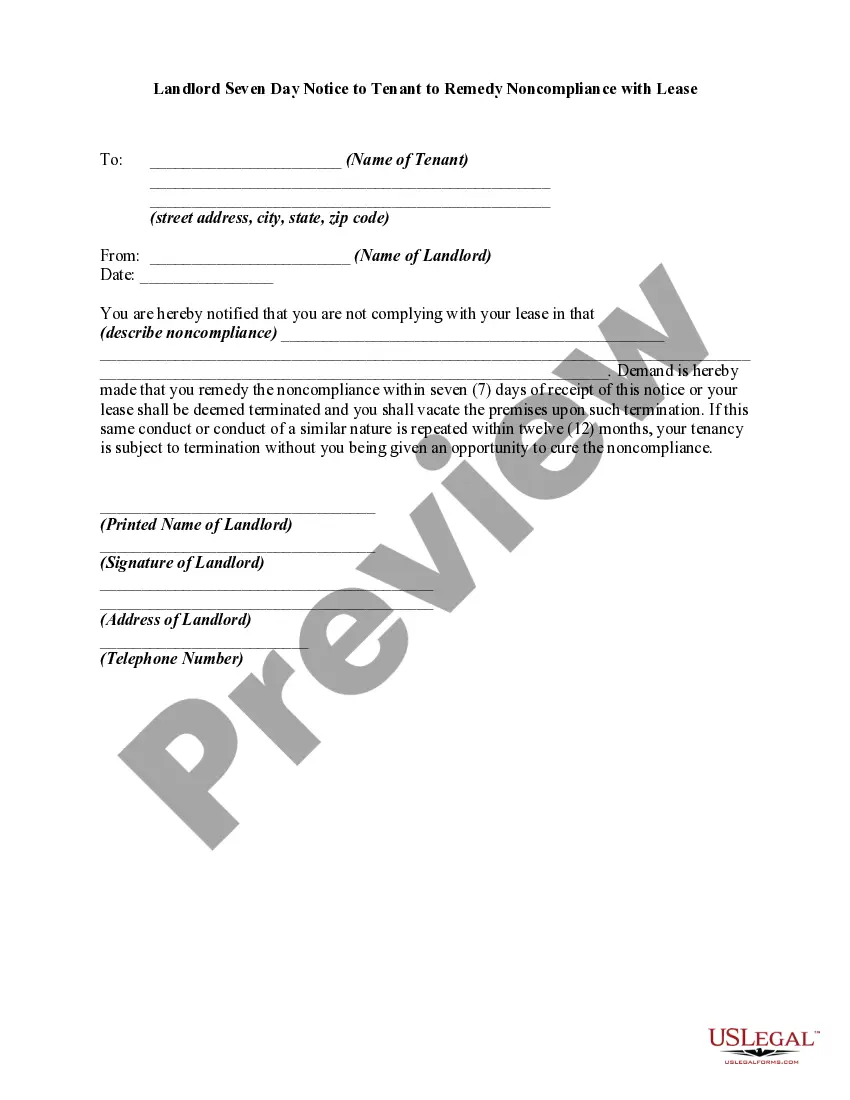
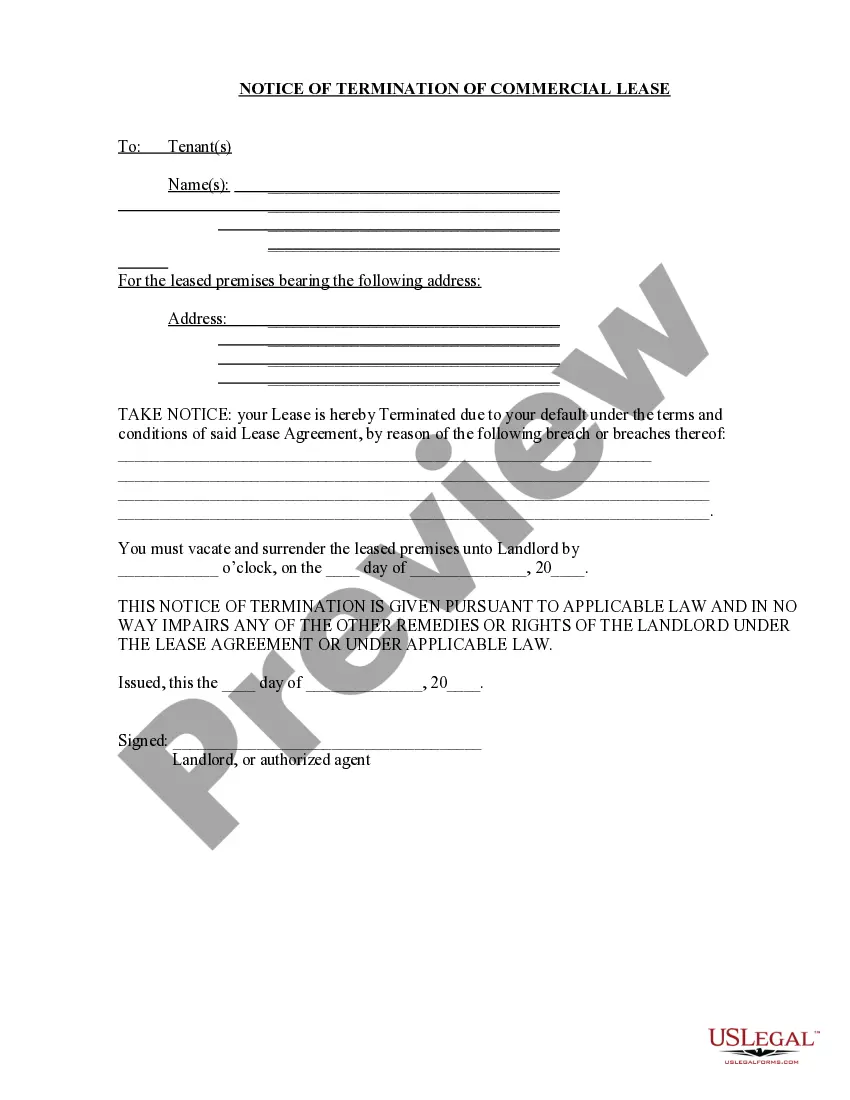
The Warning of Default on Commercial Lease is a legal document used by landlords to notify tenants of a breach of their lease agreement. This form serves as a formal warning that the tenant is in default, outlining the specific reasons for the default and providing them with an opportunity to cure the issue. Unlike general notices or reminders, this form details the consequences of failing to address the default, including potential eviction and legal action.
Main sections of this form
- Identification of tenant(s) and leased premises.
- Specific reasons for default, detailing the lease agreement violations.
- A cure period, stipulating the deadline for the tenant to remedy the default.
- Consequences of failing to cure the default, including eviction and damages.
- Signature line for the landlord or authorized agent.
Common use cases
Use the Warning of Default on Commercial Lease when you need to notify your tenant of a default under the terms of their lease. This form is applicable in situations such as late rental payments, failure to maintain the property, or violations of any specific terms outlined in the lease agreement. It is essential to issue this warning before taking further legal action, such as eviction proceedings.
Intended users of this form
- Landlords or property managers managing commercial properties.
- Tenants who have received notice of default and need to understand their rights.
- Attorneys representing landlords or tenants in lease disputes.
How to prepare this document
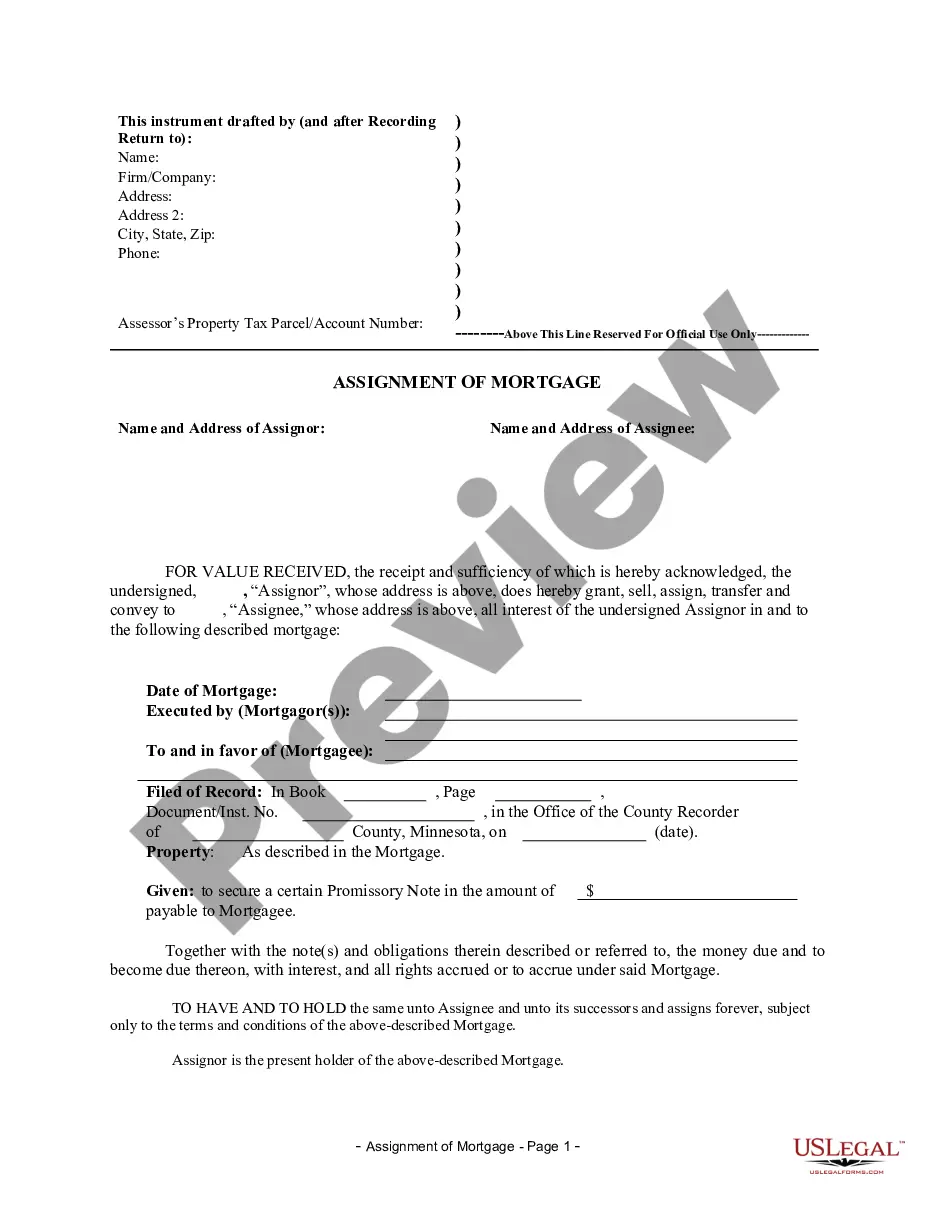
- Identify the tenant(s) by entering their full name(s).
- Specify the address of the leased premises.
- Clearly state the reasons for the tenant's default.
- Provide a deadline by which the tenant must cure the default.
- Sign the form as the landlord or authorized agent, including the date of issuance.
Notarization requirements for this form
In most cases, this form does not require notarization. However, some jurisdictions or signing circumstances might. US Legal Forms offers online notarization powered by Notarize, accessible 24/7 for a quick, remote process.
Get your form ready online
Our built-in tools help you complete, sign, share, and store your documents in one place.
Make edits, fill in missing information, and update formatting in US Legal Forms—just like you would in MS Word.
Download a copy, print it, send it by email, or mail it via USPS—whatever works best for your next step.
Sign and collect signatures with our SignNow integration. Send to multiple recipients, set reminders, and more. Go Premium to unlock E-Sign.
If this form requires notarization, complete it online through a secure video call—no need to meet a notary in person or wait for an appointment.
We protect your documents and personal data by following strict security and privacy standards.

Make edits, fill in missing information, and update formatting in US Legal Forms—just like you would in MS Word.

Download a copy, print it, send it by email, or mail it via USPS—whatever works best for your next step.

Sign and collect signatures with our SignNow integration. Send to multiple recipients, set reminders, and more. Go Premium to unlock E-Sign.

If this form requires notarization, complete it online through a secure video call—no need to meet a notary in person or wait for an appointment.

We protect your documents and personal data by following strict security and privacy standards.
Common mistakes
- Failing to clearly specify the reasons for default.
- Not providing a reasonable cure period for the tenant.
- Neglecting to sign and date the form.
- Using vague language that might lead to misunderstandings.
Advantages of online completion
- Immediate access to a professionally drafted document.
- Easily customizable to fit specific lease agreements and situations.
- Convenient download and print options for quick distribution.
- Ensures compliance with current legal standards and practices.
Legal use & context
- The Warning of Default on Commercial Lease serves as a preliminary step before eviction proceedings.
- It is essential for establishing a formal record of tenant violations.
- The form reinforces the landlord's rights under the lease and applicable laws.
Quick recap
- The form is crucial for notifying tenants of lease defaults.
- Clarity in the reasons for default and the cure process is vital for enforceability.
- Utilizing this form can prevent potential legal disputes down the line.
Looking for another form?
Form popularity
FAQ
A default clause is a provision in a legal contract that states what will happen if either party in a contract defaults or fails to hold up their end of the agreement. These clauses can be found in any type of contract including loan agreements, lease agreements, and property agreements.
Furthermore, certain legal clauses can threaten your future tenancy, including your ability to sell your business. Several potential red flags to look out for include: Use Clause Restrictions, Demolition Clauses, Relocation Clauses, and Non-disturbance Clauses.
Landlord shall in no event be in default in the performance of any of Landlord's obligations hereunder unless and until Landlord shall have failed to perform such obligations within thirty (30) days, or such additional time as is reasonably required to correct any such default, after notice by Tenant to Landlord
If Tenant abandons the premises or otherwise defaults in the performance of any obligations or covenants herein, Landlord may enforce the performance of this lease in any manner provided by law.
A ?default? is a failure to comply with a provision in the lease. ?Curing? or ?remedying? the default means correcting the failure or omission. A common example is a failure to pay the rent on time.
You will be in default if you break any promise you make under this Agreement. You will be in default if you die, file for bankruptcy or become insolvent, that is, unable to pay your obligations when they become due.