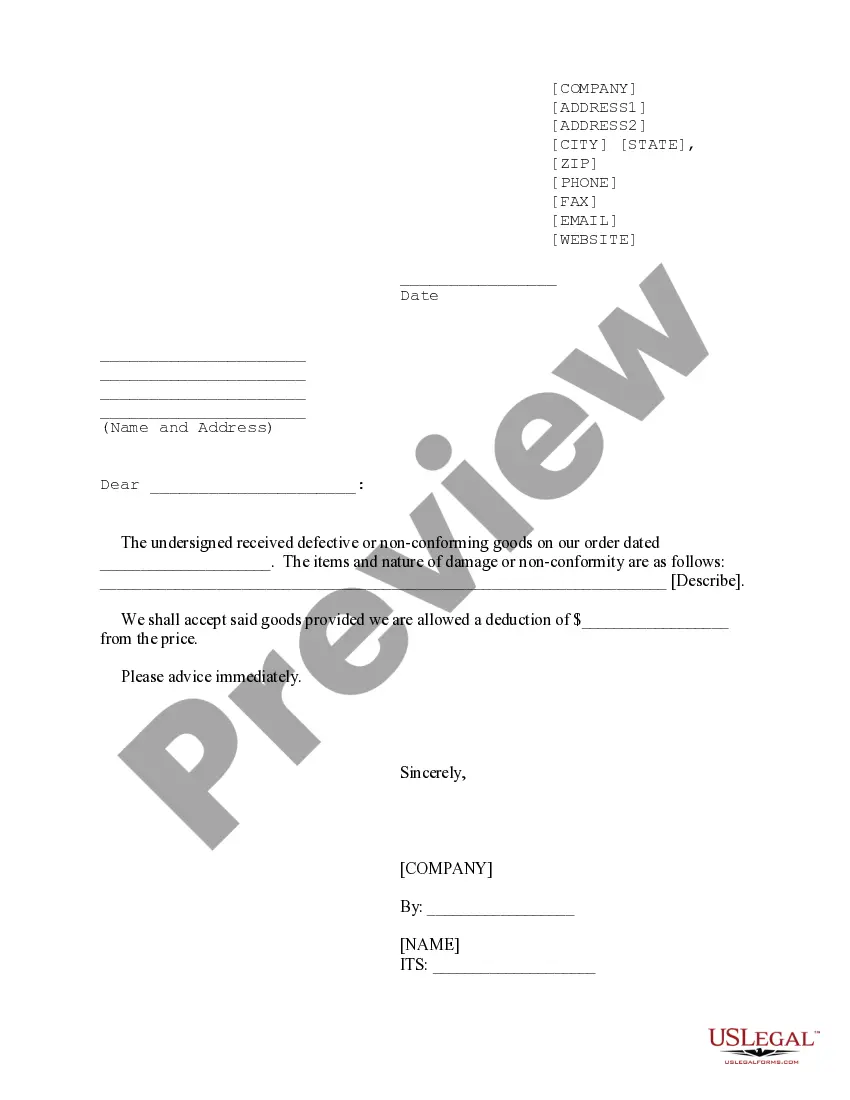
Notice to Elect to Accept Damaged Goods
About this form
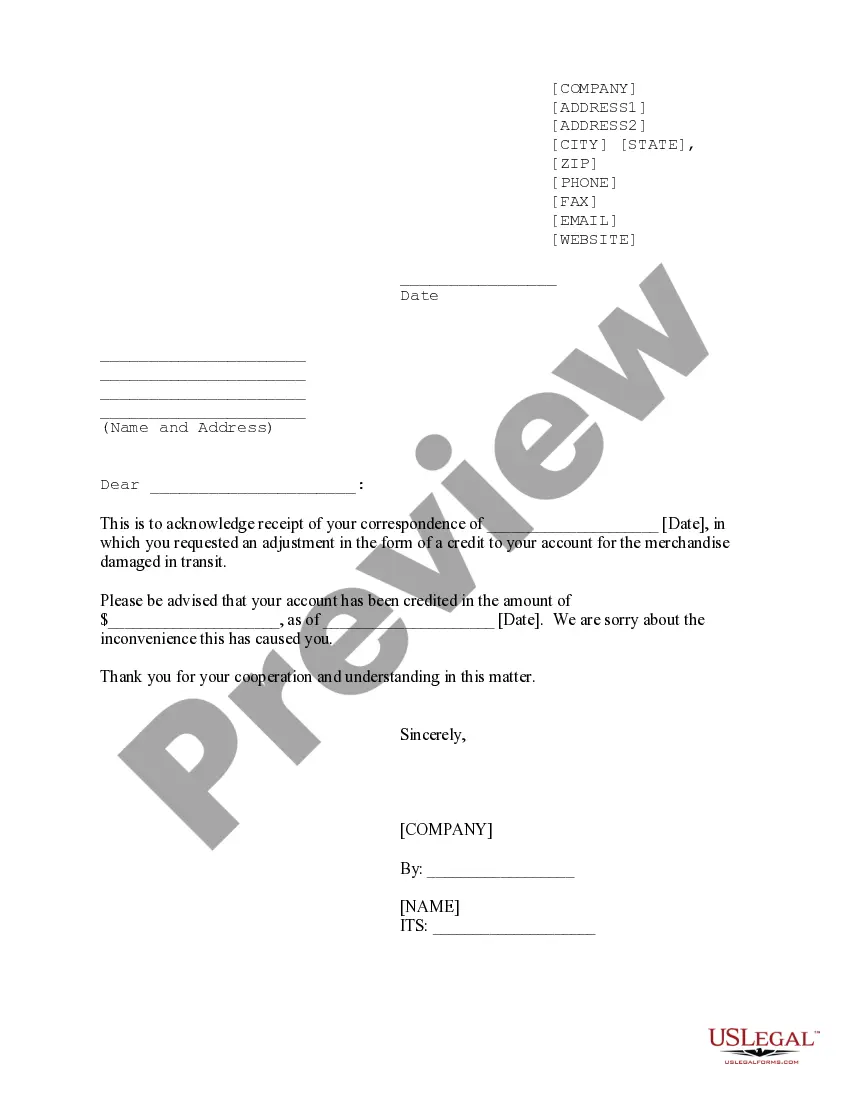
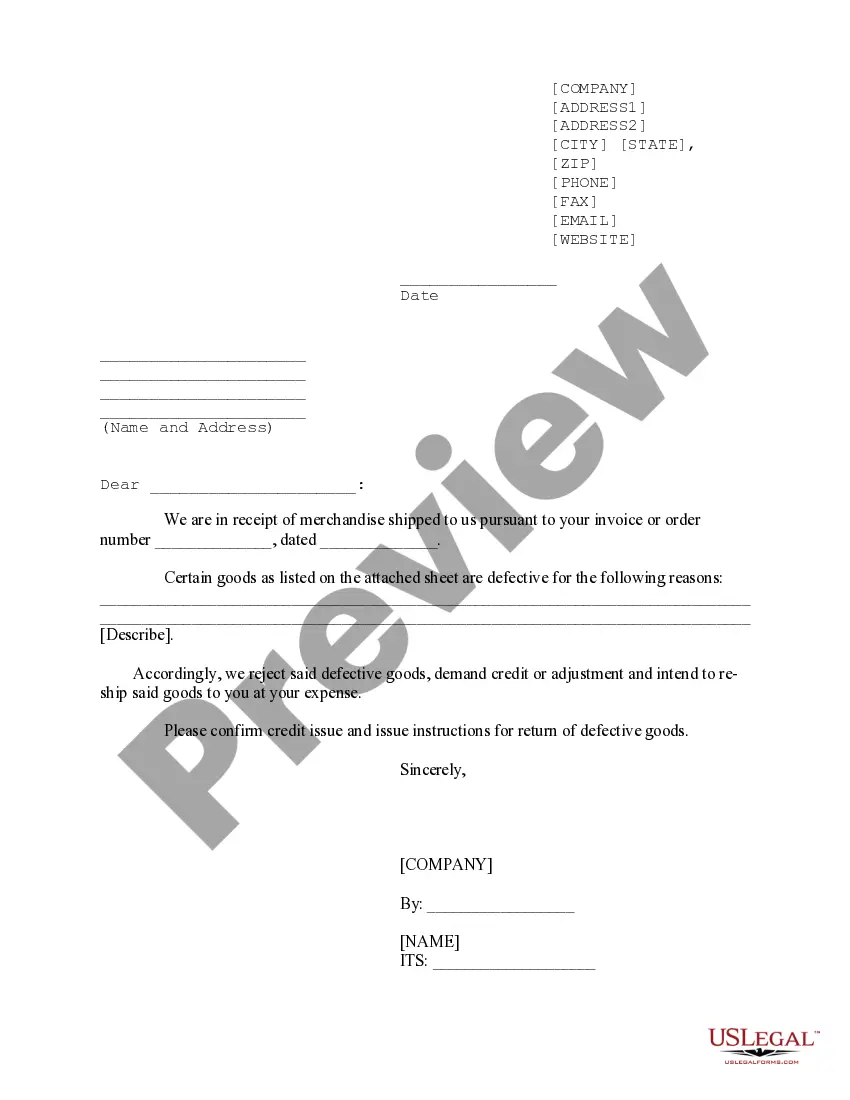
The Notice to Elect to Accept Damaged Goods is a formal communication used by businesses to notify a seller that received goods are defective or not in accordance with the order. This form allows the buyer to formally accept the damaged goods while also requesting a deduction from the purchase price for the damages. Unlike other notice forms, this specific document outlines the condition of the goods and requests a price adjustment instead of pursuing a return or replacement.
What’s included in this form
- Sender's address and contact information
- Date of the notice
- Details of the seller (name and address)
- Date of the original order
- Description of the damaged or non-conforming goods
- Requested deduction amount from the price
- Signature of the individual representing the company
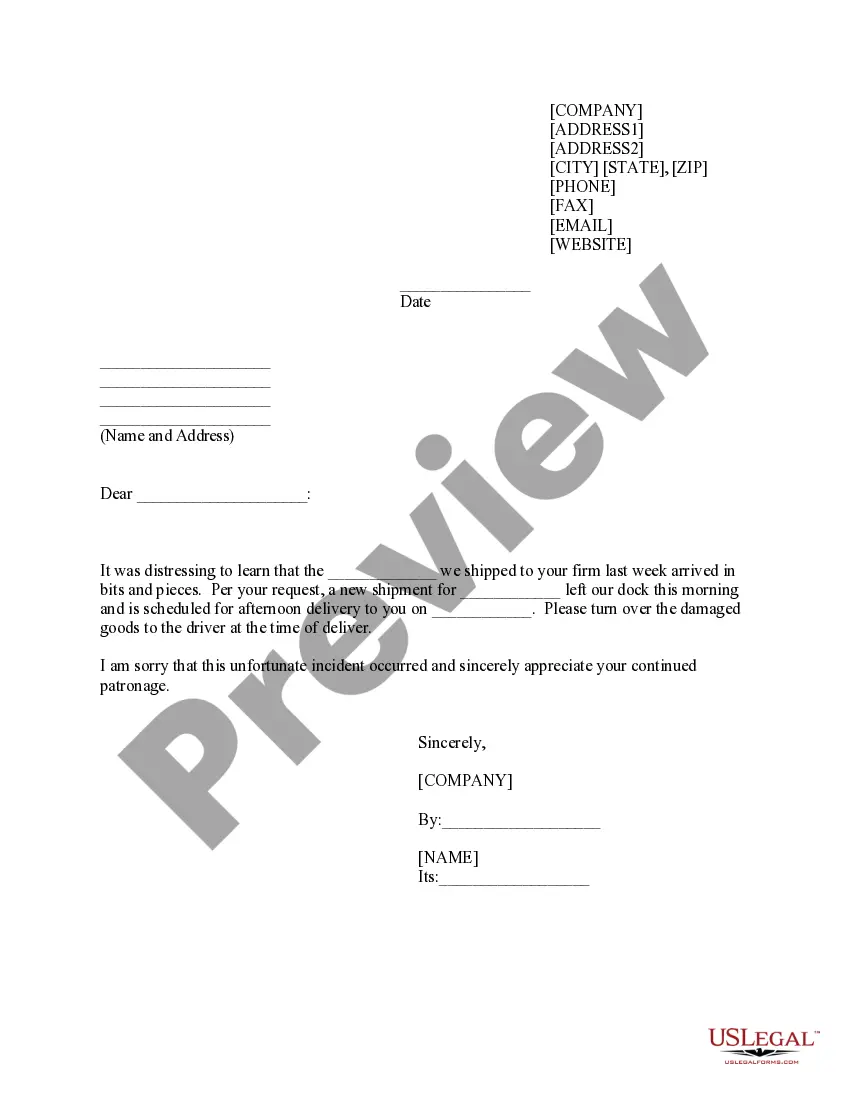
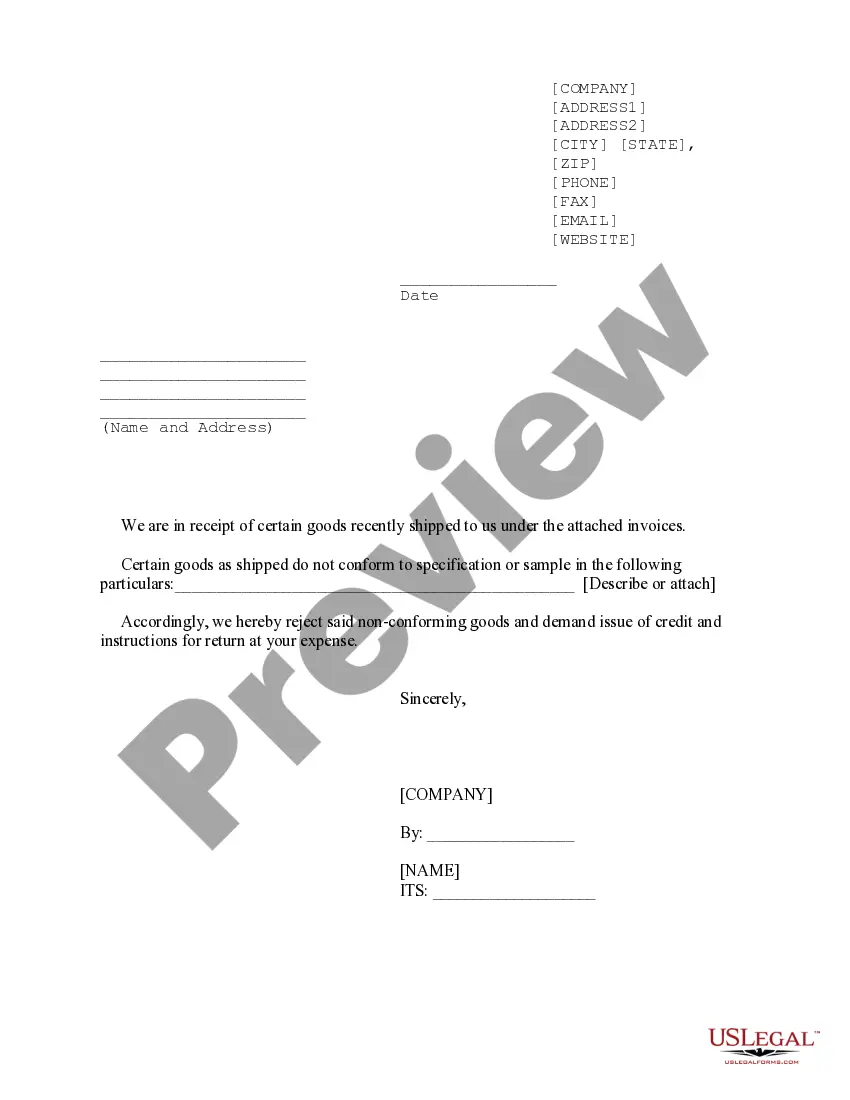
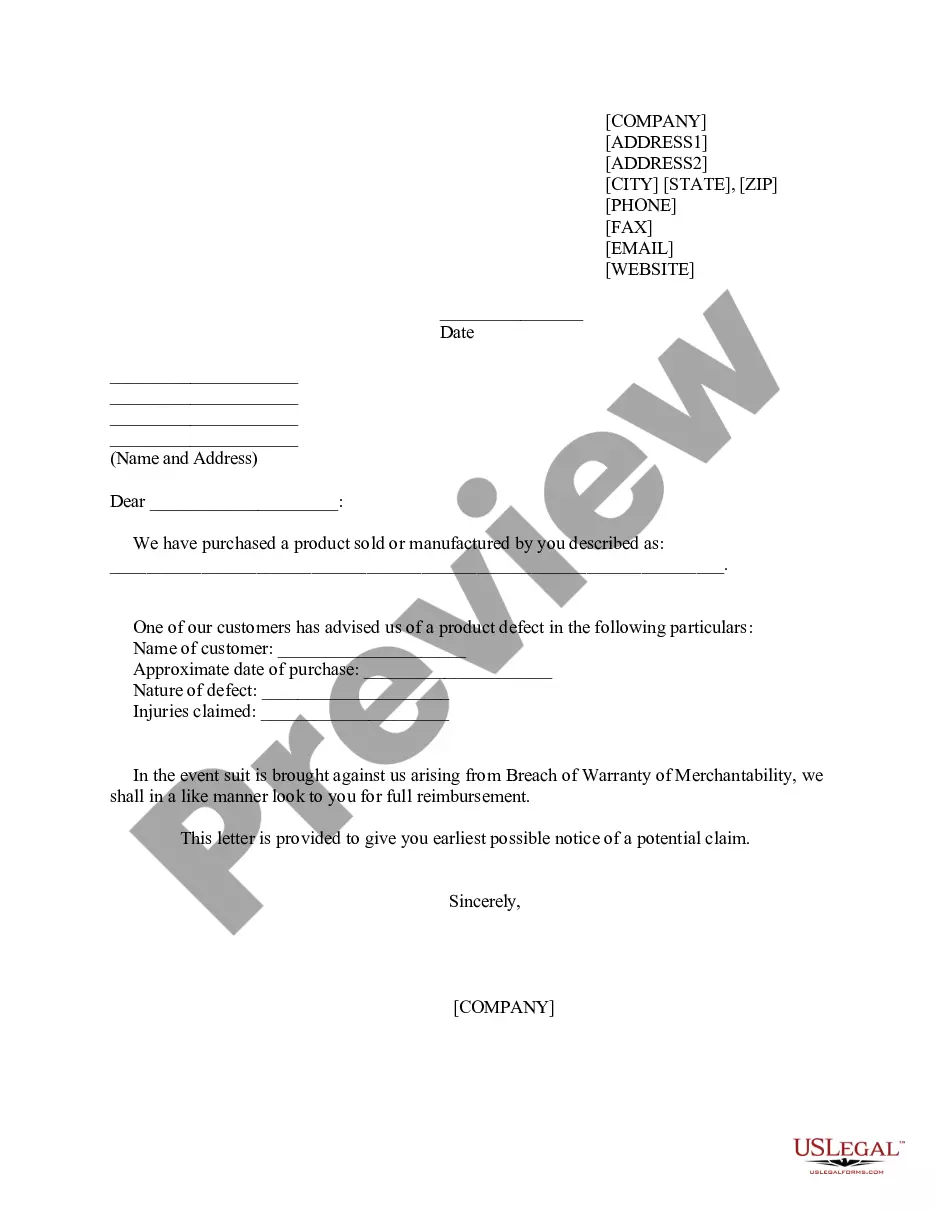
When to use this form
This form should be used when a buyer receives goods that are defective or do not match the order specifications. It is particularly useful for businesses looking to resolve issues with suppliers regarding quality complaints, as it establishes a record of the buyer's objection and acceptance of the damaged goods while also negotiating a price adjustment.
Who this form is for
Businesses and individuals who should use this form include:
- Retailers receiving defective inventory from suppliers
- Wholesalers managing bulk orders with quality issues
- Manufacturers dealing with component defects
- Any organization involved in procurement and supply chain management
Completing this form step by step
- Fill in your address and contact information at the top of the document.
- Enter the date on which you are sending the notice.
- Provide the name and address of the seller.
- State the date of the original order and describe the damaged goods.
- Specify the amount you wish to deduct from the original price due to the damages.
- Sign the document and print your name and title if representing a company.
Notarization requirements for this form
In most cases, this form does not require notarization. However, some jurisdictions or signing circumstances might. US Legal Forms offers online notarization powered by Notarize, accessible 24/7 for a quick, remote process.
Get your form ready online
Our built-in tools help you complete, sign, share, and store your documents in one place.
Make edits, fill in missing information, and update formatting in US Legal Forms—just like you would in MS Word.
Download a copy, print it, send it by email, or mail it via USPS—whatever works best for your next step.
Sign and collect signatures with our SignNow integration. Send to multiple recipients, set reminders, and more. Go Premium to unlock E-Sign.
If this form requires notarization, complete it online through a secure video call—no need to meet a notary in person or wait for an appointment.
We protect your documents and personal data by following strict security and privacy standards.

Make edits, fill in missing information, and update formatting in US Legal Forms—just like you would in MS Word.

Download a copy, print it, send it by email, or mail it via USPS—whatever works best for your next step.

Sign and collect signatures with our SignNow integration. Send to multiple recipients, set reminders, and more. Go Premium to unlock E-Sign.

If this form requires notarization, complete it online through a secure video call—no need to meet a notary in person or wait for an appointment.

We protect your documents and personal data by following strict security and privacy standards.
Common mistakes to avoid
- Failing to provide a clear description of the damaged goods.
- Not specifying the deduction amount, which can lead to confusion.
- Neglecting to sign the form, making it invalid.
- Sending the notice without confirming the recipient's details are accurate.
Benefits of using this form online
- Immediate download and access to the form can save time.
- Forms can be easily customized to fit specific needs.
- The reliability of attorney-drafted documents reduces legal risks.
- Digital storage options allow for easy record-keeping.
Summary of main points
- The Notice to Elect to Accept Damaged Goods is essential for notifying sellers of defects.
- Completing this form correctly can facilitate communication and negotiations with suppliers.
- Using this form helps maintain accurate records of transactions and issues.
- Review state regulations for any specific legal implications related to this notice.
Looking for another form?

Form popularity
FAQ
For a carrier to be liable for damages that occur during shipping, the shipper must be able to prove that the goods in the shipment were undamaged when given to the carrier, prove that the goods arrived damaged or not at all, and be able to provide the amount of the damage claimed.
1. : products that are broken, cracked, scratched, etc. 2. informal : a person who is considered to be no longer desirable or valuable because of something that has happened : a person whose reputation is damaged. ? This sense of damaged goods is used with a singular verb.
Thankfully, the question of who's at fault for damaged merchandise is an easy one to answer. Unless a prior arrangement between the buyer and seller has been agreed upon or some fine print excuses them of damages, the seller is responsible?at least initially?for the damaged item.
In most cases, the shipping carriers are responsible for the damaged contents. Still, the customer often considers you, the seller, responsible for the bad experience. The last thing you should do is test their patience with a complicated refund process.
It's up to the retailer to address the situation regardless of whether the product was damaged in transit or not. The retailer can then take-up the issue and investigate their courier partners to get to the bottom of the cause.