Family Partnership between Parents and Child for the Purpose of Farming
About this form
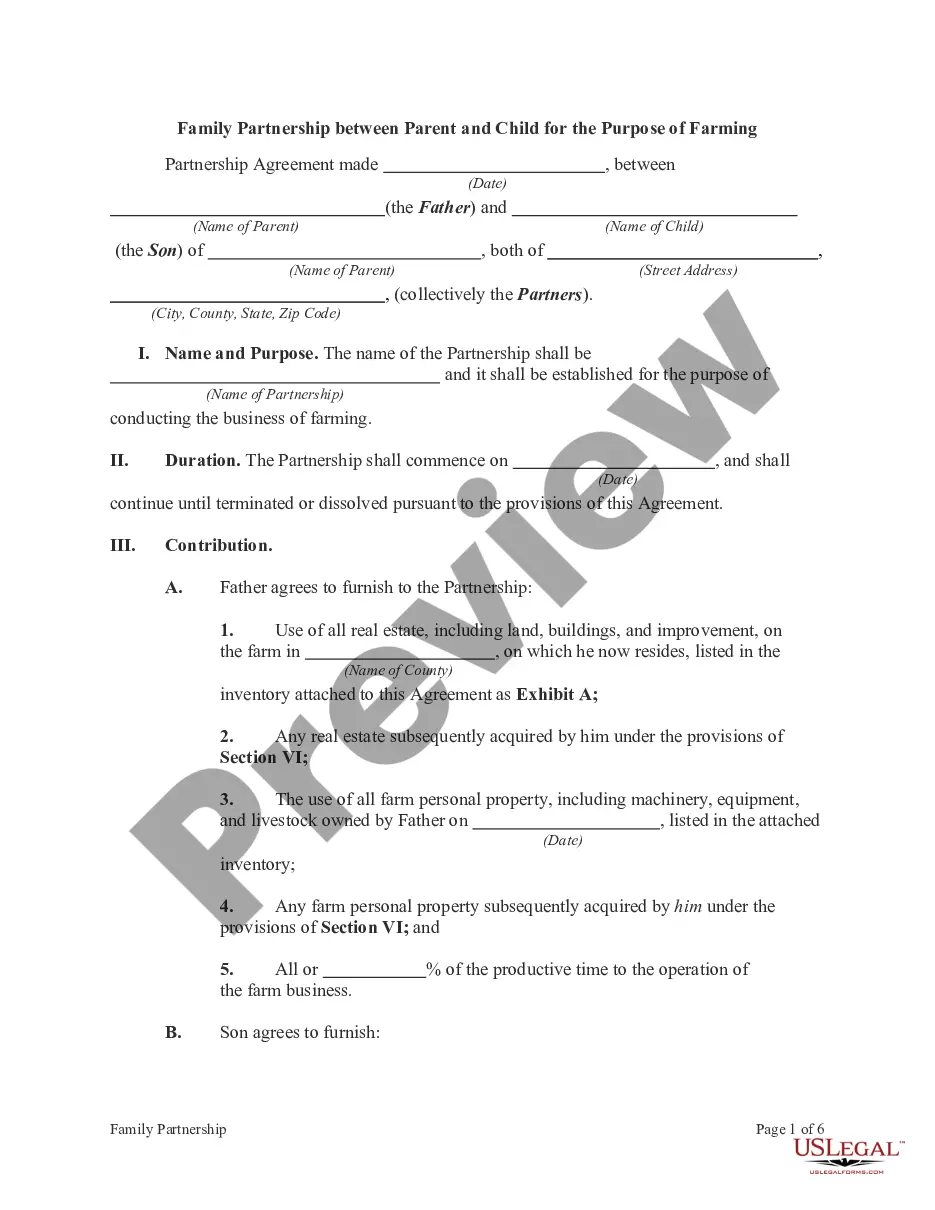
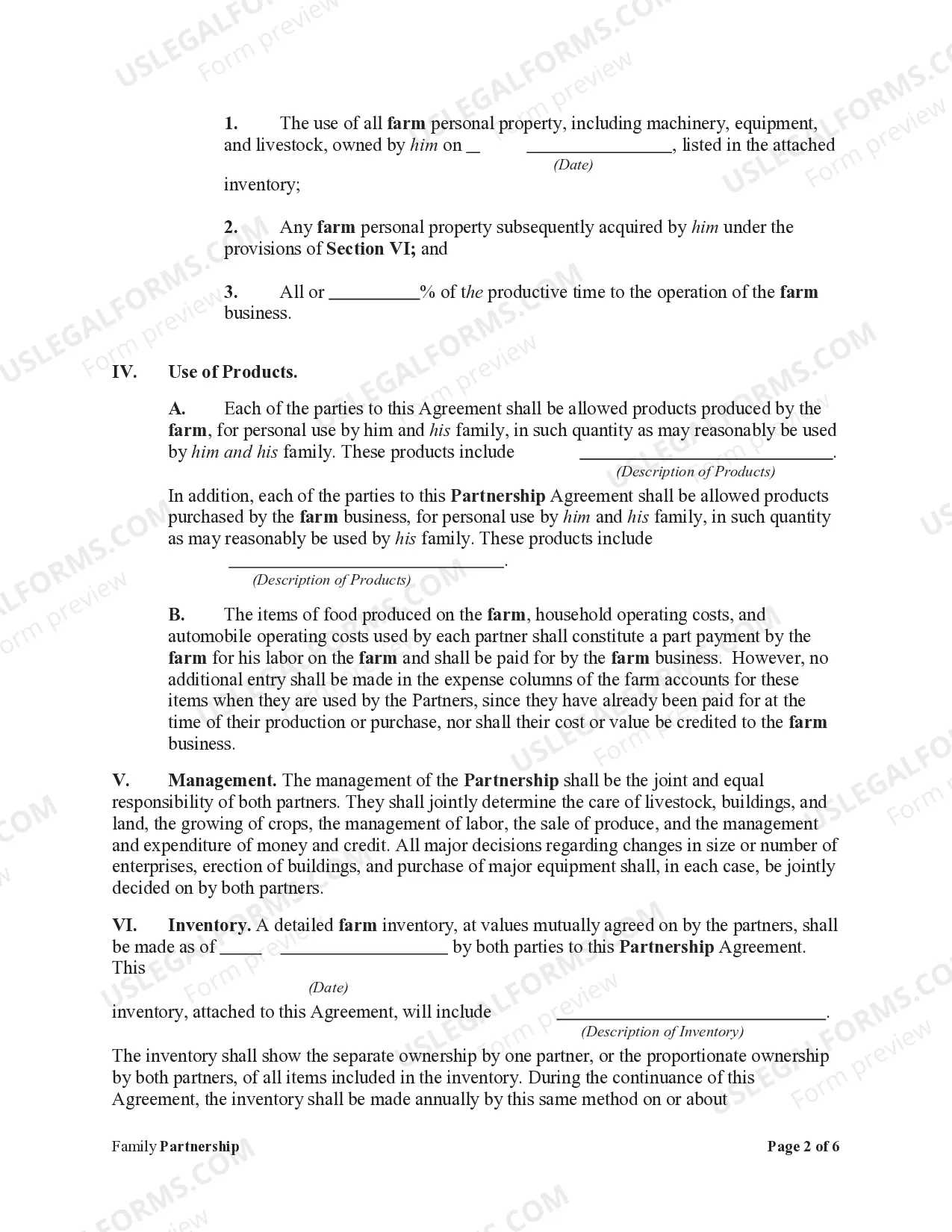
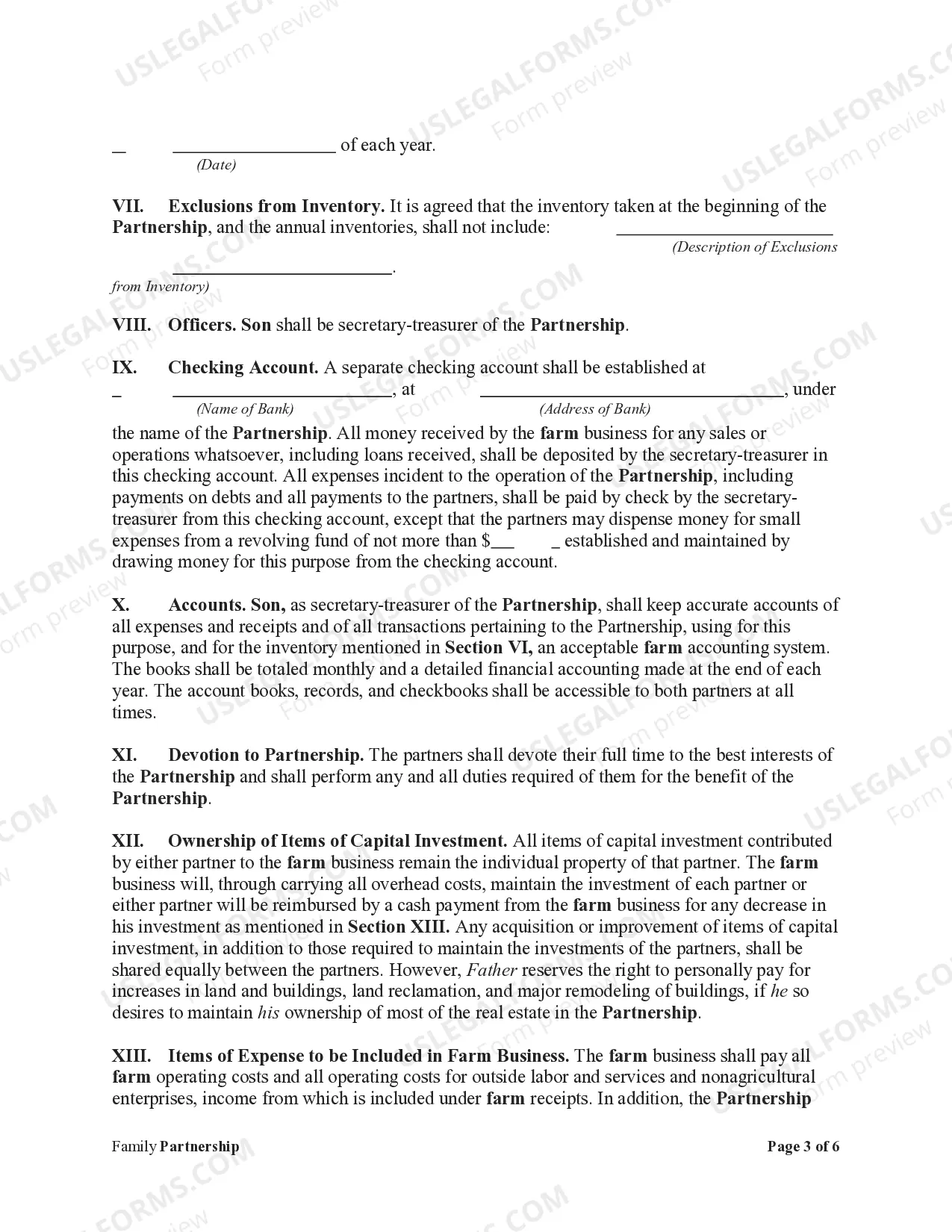
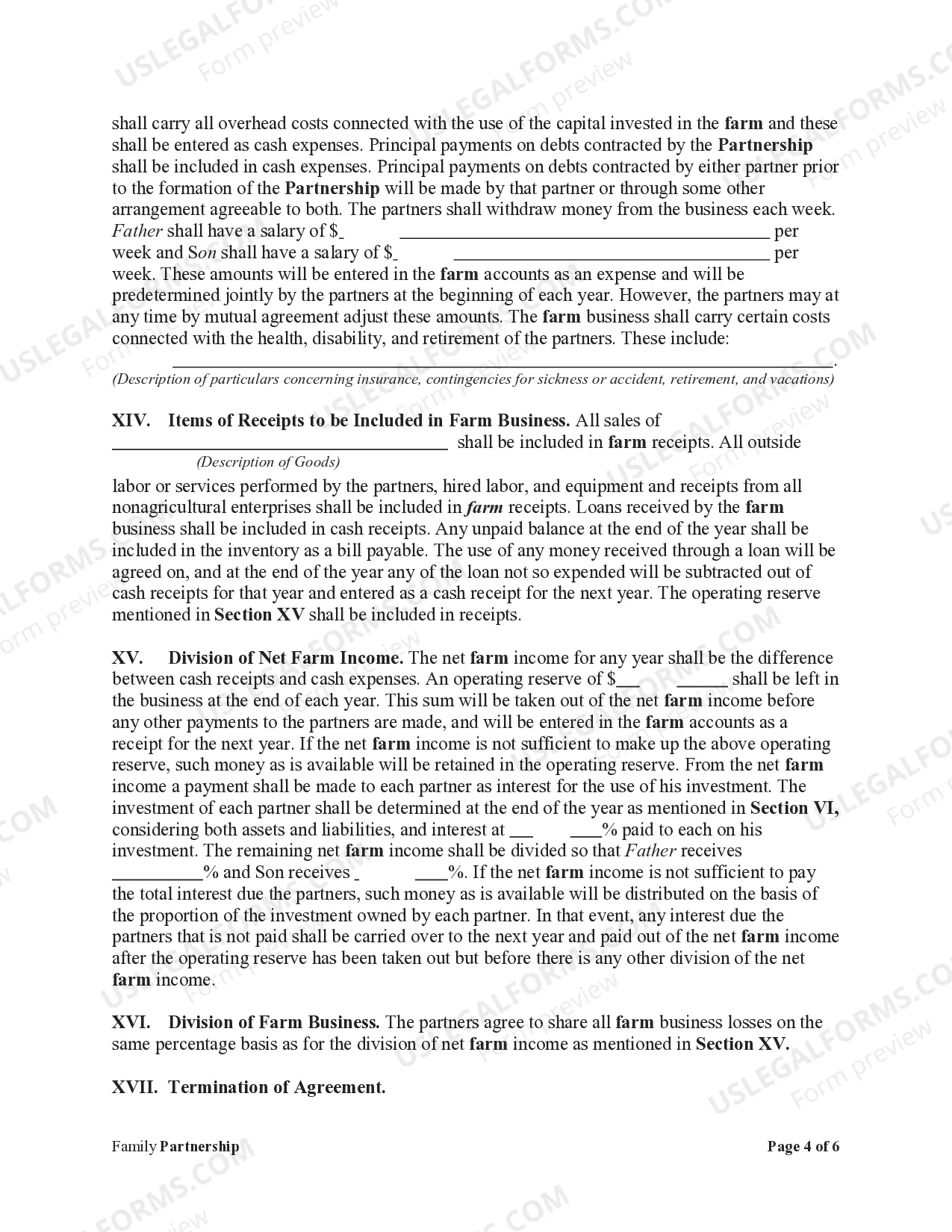
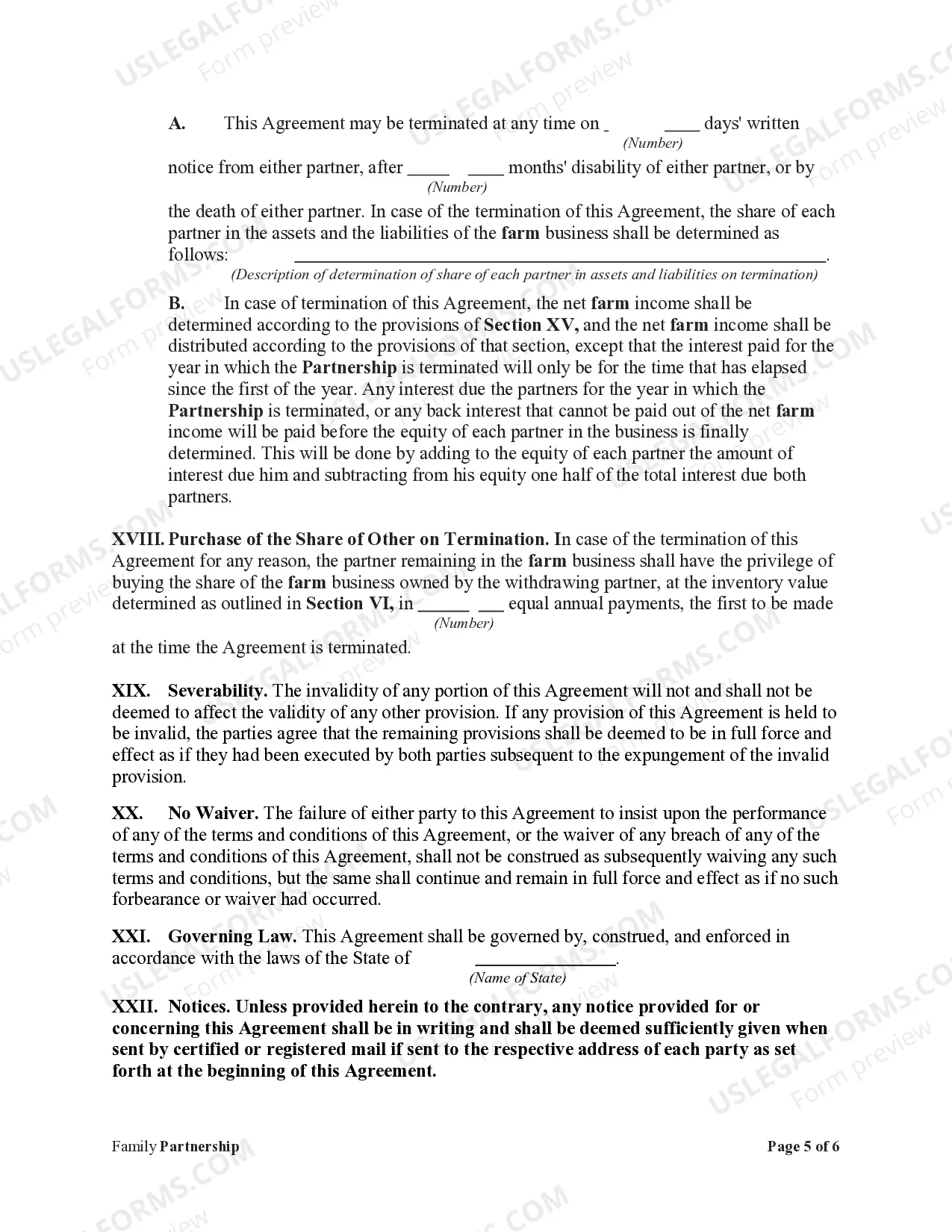
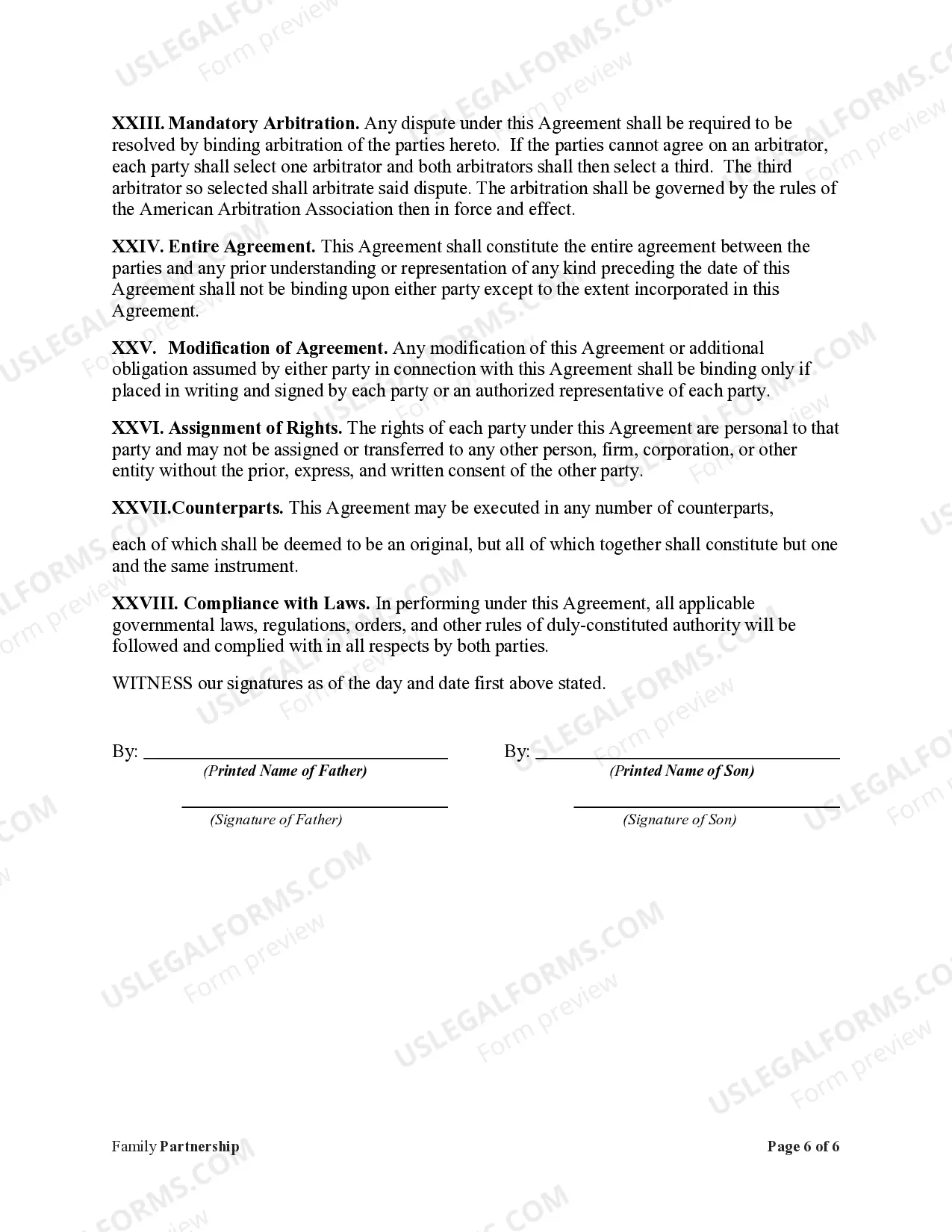
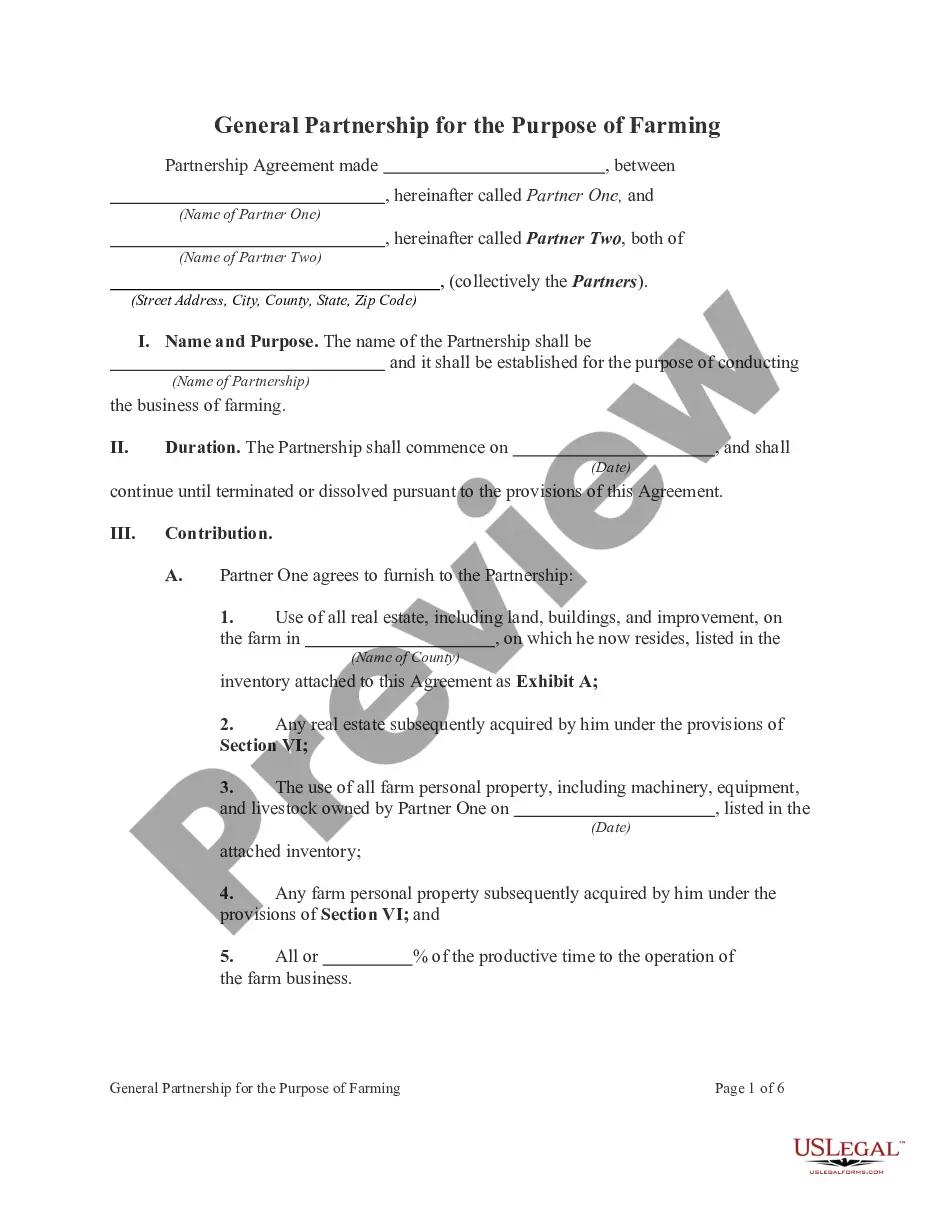
The Family Partnership between Parents and Child for the Purpose of Farming is a legal document that formalizes a partnership arrangement specifically for farming activities. This agreement outlines the responsibilities, contributions, and profit-sharing arrangements between parents and their child engaged in agricultural operations. Unlike general partnership agreements, this form addresses unique family dynamics and roles within the farming context.
Form components explained
- Inventory Listing: Details the inventory of assets and liabilities attached to the partnership.
- Management Responsibilities: Establishes joint management duties for both partners regarding farm operations.
- Capital Contributions: Specifies ownership of capital investments and how they are treated financially within the partnership.
- Decision-Making Processes: Outlines the process for making significant decisions about farm operations.
- Duty and Commitment: Emphasizes the obligation of each partner to devote time and effort to the partnership.
When this form is needed
This form is useful when parents and their child want to establish a structured partnership for farming. It can be used when entering into farming ventures that require clear delineations of roles, responsibilities, and profit-sharing. This agreement is appropriate in situations where the family intends to combine their resources for purposes such as crop production, livestock management, or expanding farming operations while ensuring that all parties are aligned on operational management.
Who should use this form
- Parents interested in entering into a formal farming partnership with their child.
- Families looking to clearly establish roles and responsibilities in agricultural operations.
- Individuals who want to ensure transparency in asset management and profit-sharing in farming ventures.
How to complete this form
- Identify the parties involved: Clearly state the names of the parents and child who are entering into the partnership.
- Detail the inventory of assets: Attach a detailed list of farm equipment, livestock, and land to the agreement.
- Define the management structure: Outline how both partners will share responsibilities for day-to-day farming activities.
- Specify capital contributions: Document what each partner will contribute financially or in resources to the farming operation.
- Sign and date the form: Ensure both parties sign the agreement and date it for legal validation.
Does this form need to be notarized?
This form does not typically require notarization to be legally valid. However, some jurisdictions or document types may still require it. US Legal Forms provides secure online notarization powered by Notarize, available 24/7 for added convenience.
Get your form ready online
Our built-in tools help you complete, sign, share, and store your documents in one place.
Make edits, fill in missing information, and update formatting in US Legal Forms—just like you would in MS Word.
Download a copy, print it, send it by email, or mail it via USPS—whatever works best for your next step.
Sign and collect signatures with our SignNow integration. Send to multiple recipients, set reminders, and more. Go Premium to unlock E-Sign.
If this form requires notarization, complete it online through a secure video call—no need to meet a notary in person or wait for an appointment.
We protect your documents and personal data by following strict security and privacy standards.

Make edits, fill in missing information, and update formatting in US Legal Forms—just like you would in MS Word.

Download a copy, print it, send it by email, or mail it via USPS—whatever works best for your next step.

Sign and collect signatures with our SignNow integration. Send to multiple recipients, set reminders, and more. Go Premium to unlock E-Sign.

If this form requires notarization, complete it online through a secure video call—no need to meet a notary in person or wait for an appointment.

We protect your documents and personal data by following strict security and privacy standards.
Mistakes to watch out for
- Failing to update the inventory attached to the agreement annually.
- Not clearly defining roles and responsibilities, leading to misunderstandings.
- Overlooking the need for both partners to sign and date the agreement.
Benefits of using this form online
- Convenience of completing the form from home or anywhere with an internet connection.
- Editable format allows for customization to meet specific family needs.
- Access to templates created by licensed attorneys ensures reliability and legal compliance.
Looking for another form?

Form popularity
FAQ
Family and small farms are vital to our economy and well-being as a nation. Not only do they support the competitiveness and sustainability of rural and farm economies, they serve to: Protect and enhance natural resources and the environment. Provide a nursery for the development of new enterprises and marketing
Advantages of family farming In harmony with nature: Family farming is in harmony with natural ecosystems. Crop rotations and multiple-cropping systems help keep pests below the 'economic injury level'. Family farms conserve biodiversity and rule out eradication of species and make plants resilient to pests.
You may want to operate the land yourself, or sell it and lease it back to maintain a stream of income. If you don't have farming experience, you may want to hold onto the land and lease it out to earn farmland rental income.
Farming partnerships are often husband and wife, or brothers, or sometimes father and son.The ownership of the farming land is often in the names of the partners as joint proprietors, or sometimes as tenants in common. But often, the farming land is owned in various lots by one or other of the partners.
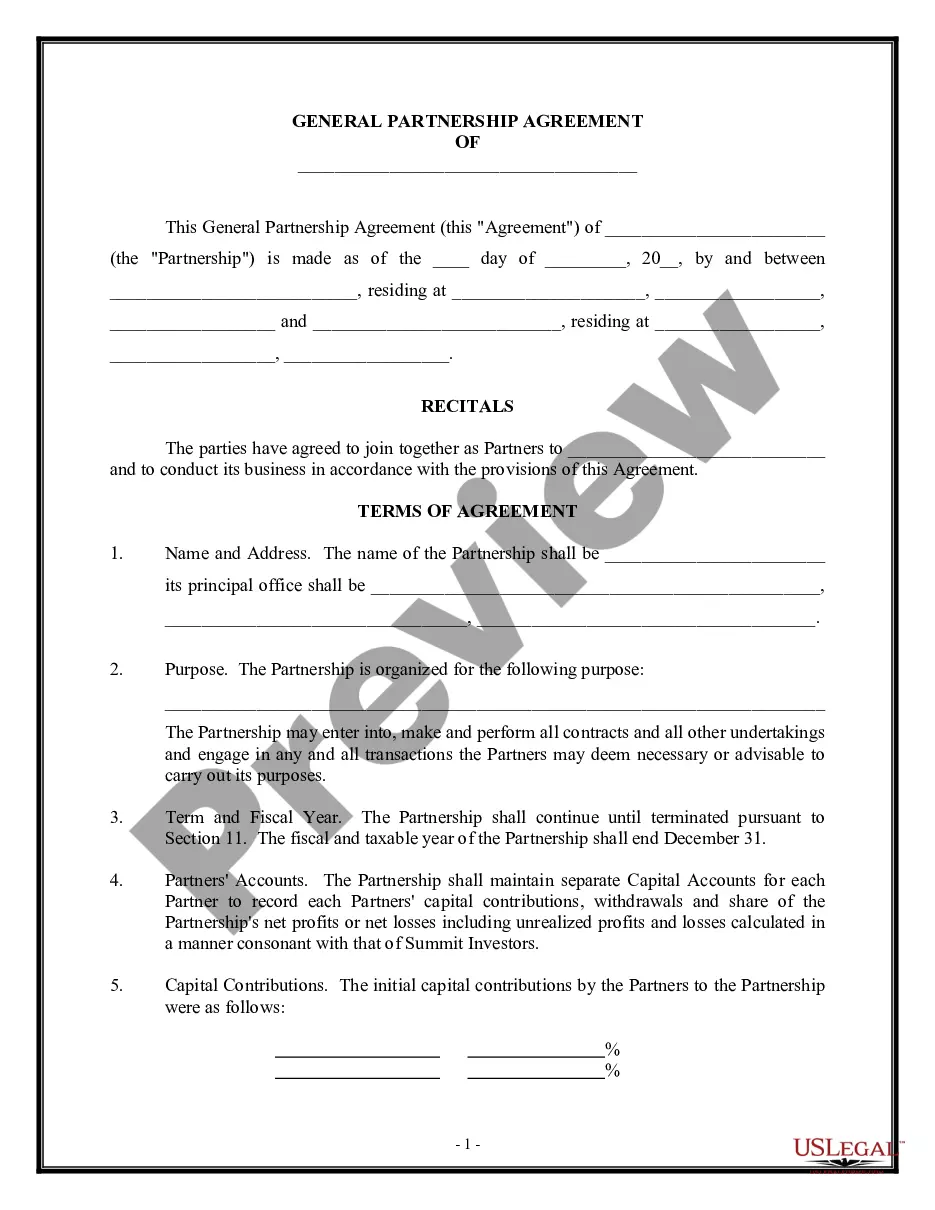
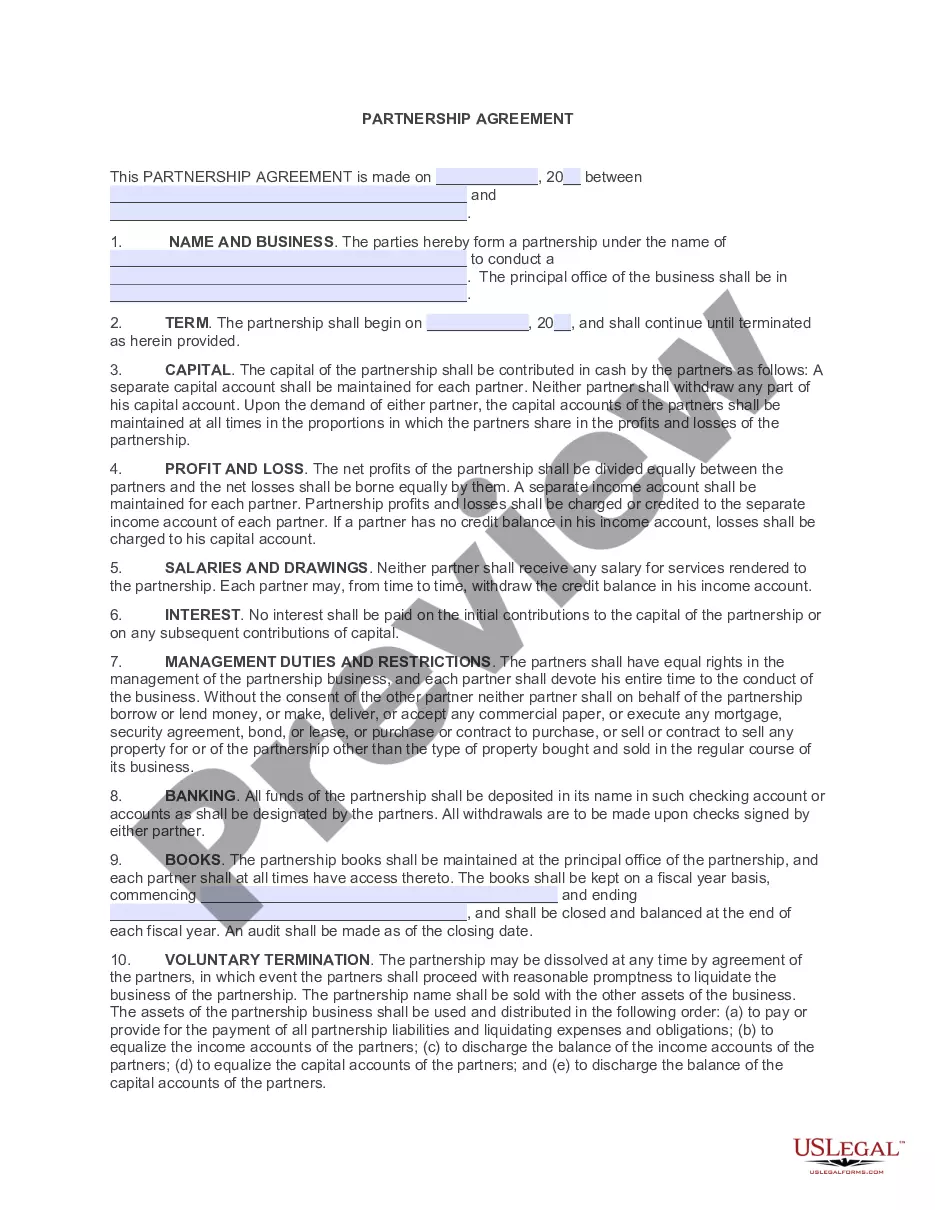
The purpose of a partnership agreement is to protect the owner's investment in the company, govern how the company will be managed, clearly define the rights and obligations of the partners, and determine the rules of engagement should a disagreement arise among the parties.
Types of Partnership General Partnership, Limited Partnership, Limited Liability Partnership and Public Private Partnership.
A farm partnership is a legal business arrangement where two or more individuals come together combining their respective resources to achieve mutual benefits. Assuming that one of the partners qualifies as a young trained farmer there are financial advantages to be enjoyed as well as the commercial benefits.
Common partnership business examples include law firms, physician groups, real estate investment firms and accounting groups. By comparison, a sole proprietorship puts all of those responsibilities on one person, while a corporation operates as its own legal entity, separate from the individuals who own it.
Grow gourmet or medicinal mushrooms. Turn a field into a campsite for tourists. Farm snails as an export crop. Use a field for a weekend swap meet. Start a bed and breakfast. Rent your barn for gatherings or meetings. Rent your field to metal detecting clubs. Raise tilapia or other fish.