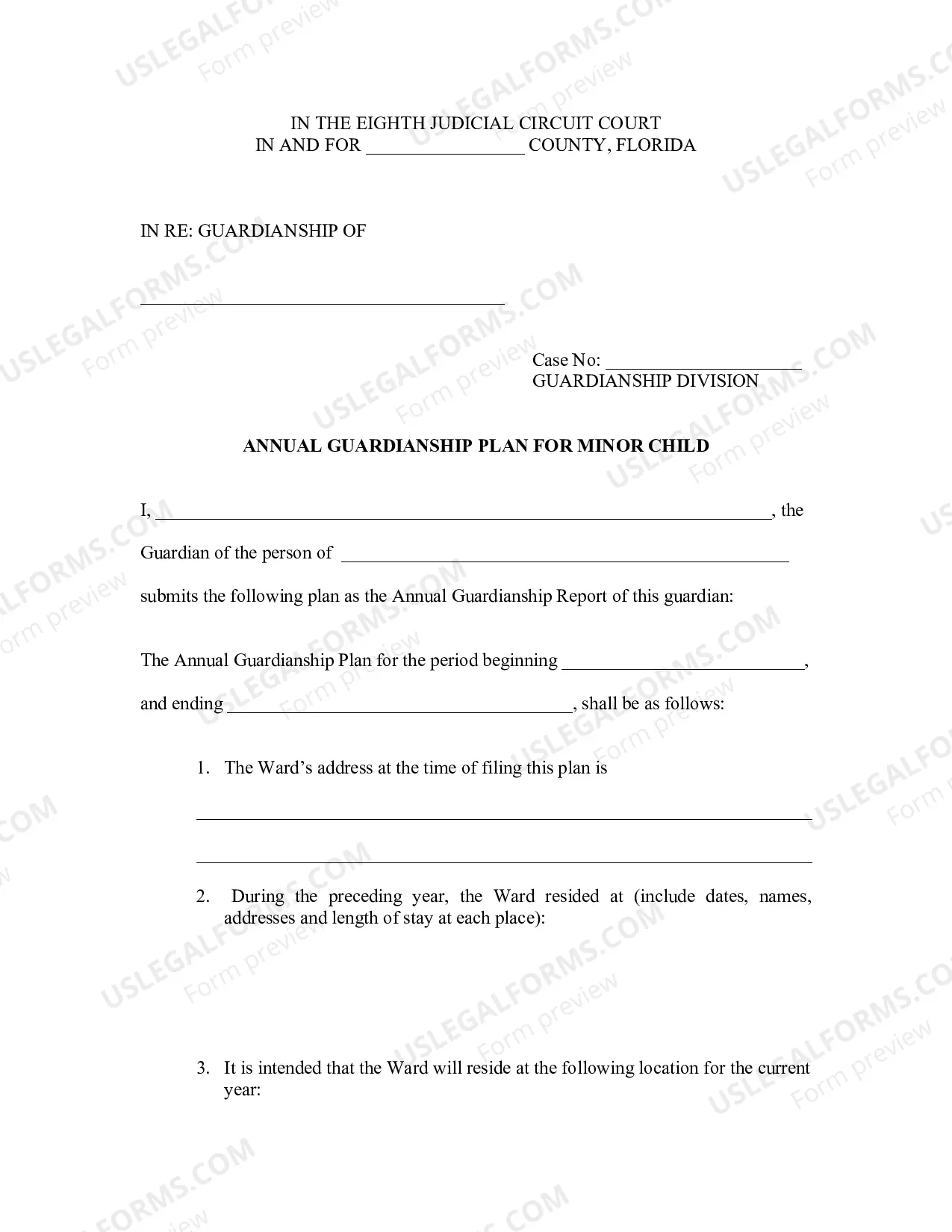
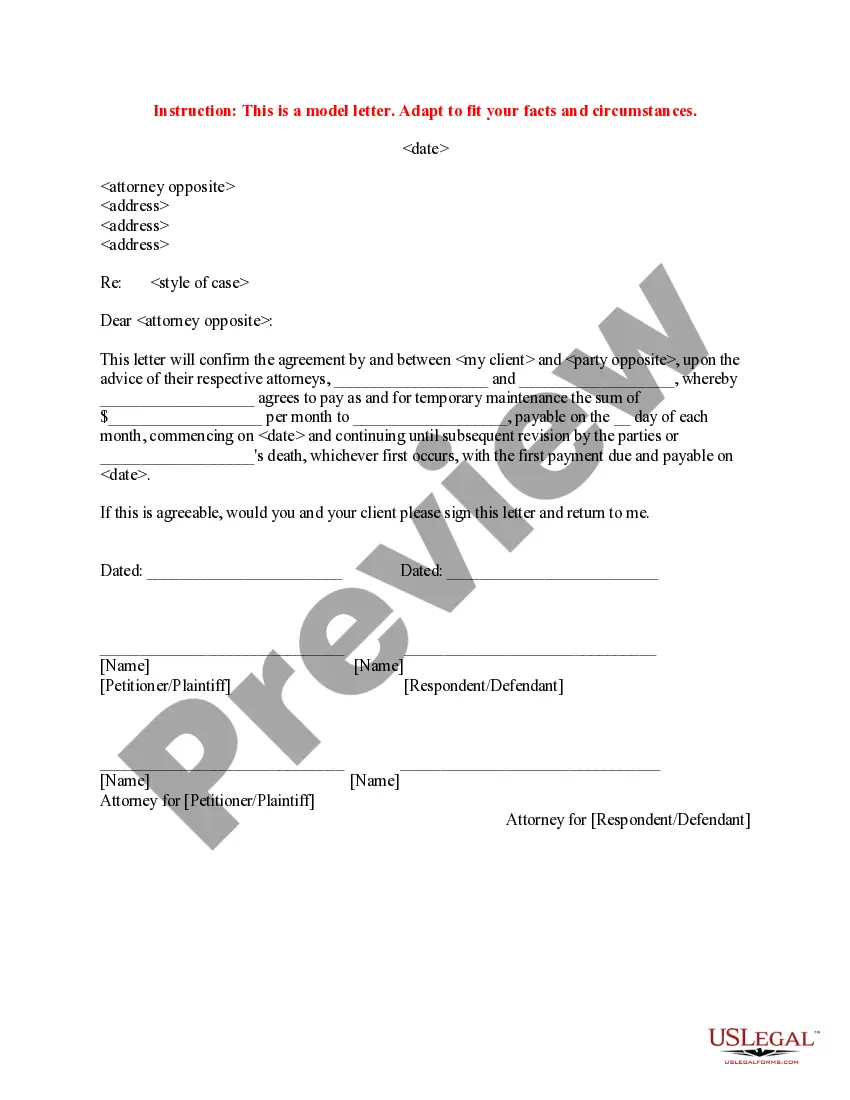
Sample Letter regarding Agreement for Monthly Temporary Maintenance Payments
Overview of this form
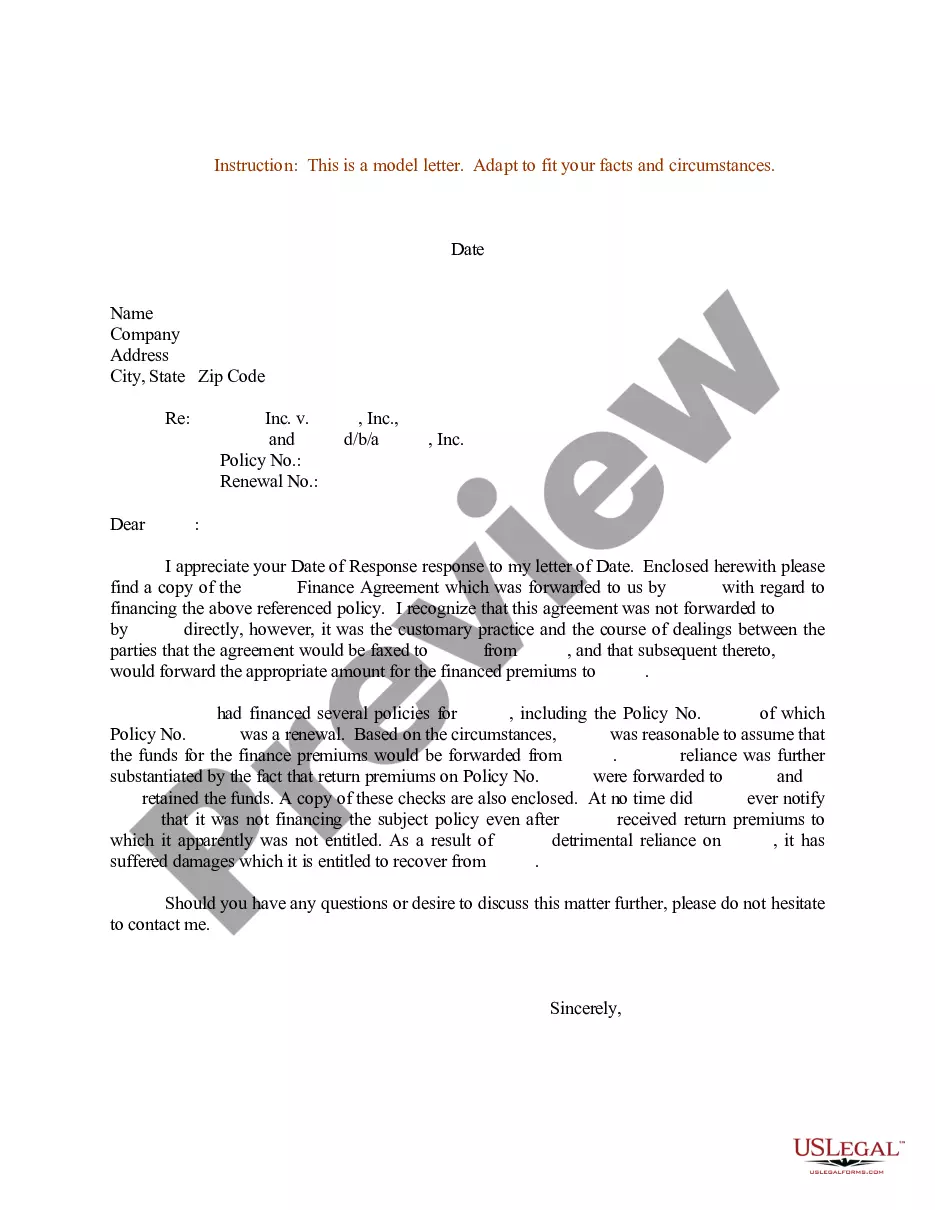
This form is a Sample Letter regarding Agreement for Monthly Temporary Maintenance Payments. It serves as a template that allows parties to confirm an agreement concerning temporary maintenance payments that one party will make to another. Unlike other legal forms, this template focuses specifically on the monthly payment arrangement rather than broader maintenance agreements or contracts.
Key parts of this document
- Date of the agreement
- Names and addresses of the parties involved
- Details of the monthly payment arrangement
- Start date for payments
- Signature lines for both parties and their attorneys

When this form is needed
This form should be used when parties have reached an agreement on temporary maintenance payments, often during divorce or separation proceedings. It serves as a formal acknowledgment of the agreed payment structure and timeline, providing clarity and accountability for both sides.
Who this form is for
- Individuals involved in a legal separation or divorce
- Attorneys representing clients in family law matters
- Parties negotiating temporary financial support
Instructions for completing this form
- Enter the current date at the top of the letter.
- Fill in the names and addresses of both parties.
- Detail the agreed amount for temporary maintenance payments.
- Specify the date when payments will start and the payment schedule.
- Ensure that both parties and their attorneys sign the letter.
Does this form need to be notarized?
This form does not typically require notarization unless specified by local law. However, notarization can add an extra layer of authenticity to the agreement if desired by the parties involved.
Get your form ready online
Our built-in tools help you complete, sign, share, and store your documents in one place.
Make edits, fill in missing information, and update formatting in US Legal Forms—just like you would in MS Word.
Download a copy, print it, send it by email, or mail it via USPS—whatever works best for your next step.
Sign and collect signatures with our SignNow integration. Send to multiple recipients, set reminders, and more. Go Premium to unlock E-Sign.
If this form requires notarization, complete it online through a secure video call—no need to meet a notary in person or wait for an appointment.
We protect your documents and personal data by following strict security and privacy standards.

Make edits, fill in missing information, and update formatting in US Legal Forms—just like you would in MS Word.

Download a copy, print it, send it by email, or mail it via USPS—whatever works best for your next step.

Sign and collect signatures with our SignNow integration. Send to multiple recipients, set reminders, and more. Go Premium to unlock E-Sign.

If this form requires notarization, complete it online through a secure video call—no need to meet a notary in person or wait for an appointment.

We protect your documents and personal data by following strict security and privacy standards.
Avoid these common issues
- Failing to include all required parties and their addresses.
- Omitting the start date for payments.
- Not having both parties and their attorneys sign the letter.
- Using vague language that does not clearly outline the payment terms.
Advantages of online completion
- Convenient access to a professionally crafted template.
- Quickly editable to meet specific needs and jurisdictions.
- Reliable format ensures compliance with legal standards.
- Saves time compared to drafting a letter from scratch.
Looking for another form?

Form popularity
FAQ
Alimony and maintenance are same and are used in different names in different places. So we cannot say that they are different legal terms. Alimony or maintenance is the financial support that is given to a spouse after divorce.In most cases the husband provides alimony or maintenance to the ex wife.
If your marriage or civil partnership ends, you can ask for financial support - known as 'spousal maintenance' - from your ex-partner as soon as you separate. This is in addition to any child maintenance they might have to pay.
Spousal maintenance is a payment that is made to a former spouse by their husband or wife after divorce. Spousal maintenance is usually paid for a period of time defined by a number of years or for the remainder of the benefactor's life.
Alimony and maintenance are the same legal terms and are used in different names at different places. In terms of divorce law, Alimony or maintenance is defined as the financial agreement between the people who are getting divorced.
Noun. the act of maintaining: the maintenance of proper oral hygiene.care or upkeep, as of machinery or property: With proper maintenance the car will last for many years. means of upkeep, support, or subsistence; livelihood: to provide a comfortable maintenance.
You're normally expected to pay child maintenance until your child is 16, or until they're 20 if they're in school or college full time doing: A-levels, Highers or. Equivalent.
Spousal maintenance is maintenance that is paid by a husband or a wife to their former spouse following a divorce.Spousal maintenance ends if the recipient remarries or if either party dies.
These payments are known as alimony, spousal support, or spousal maintenance. In general, alimony and spousal support or maintenance are terms that people use interchangeably to refer to a person's legal obligation to provide adequate monetary assistance to their former spouse upon divorce.