Agreement to Form Partnership in Future to Conduct Business
About this form
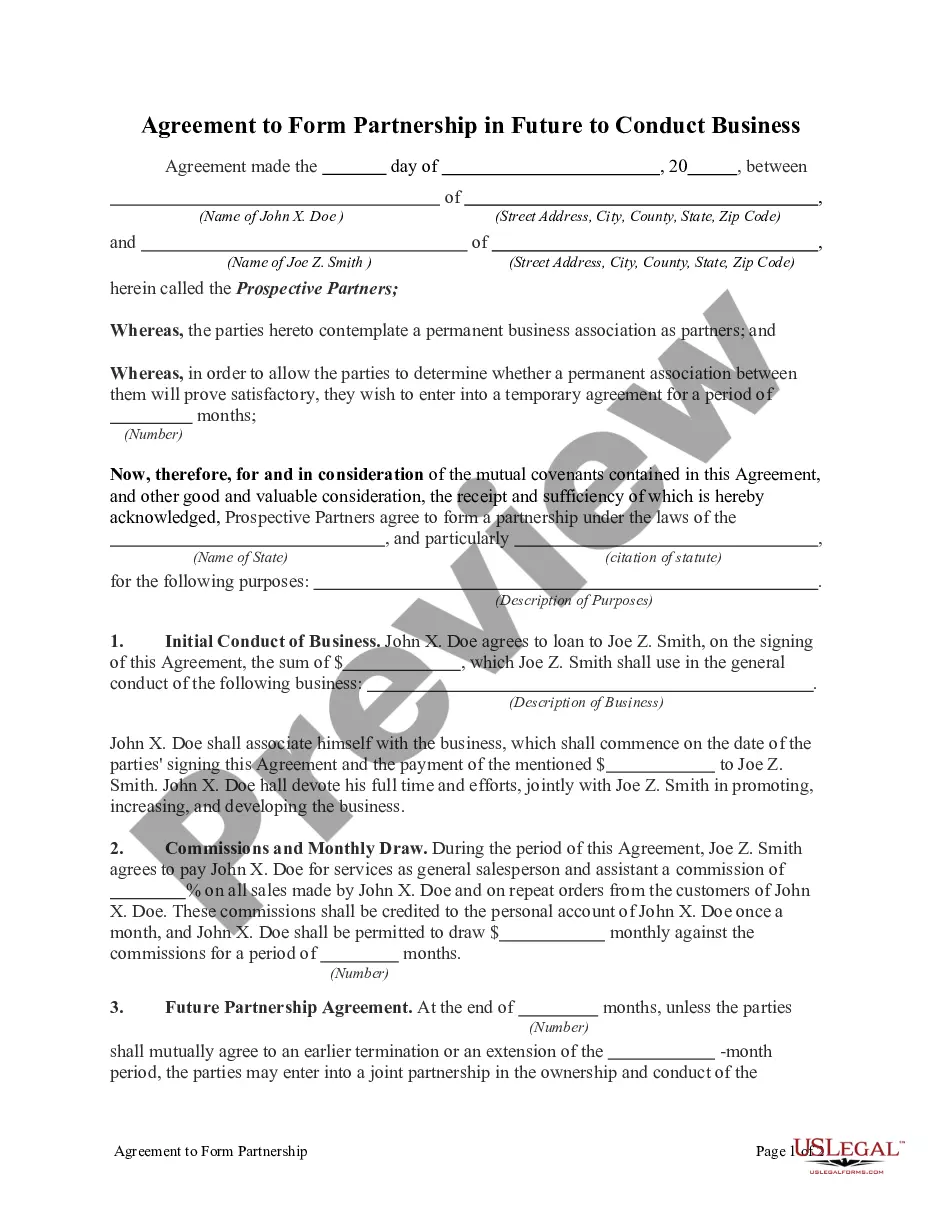
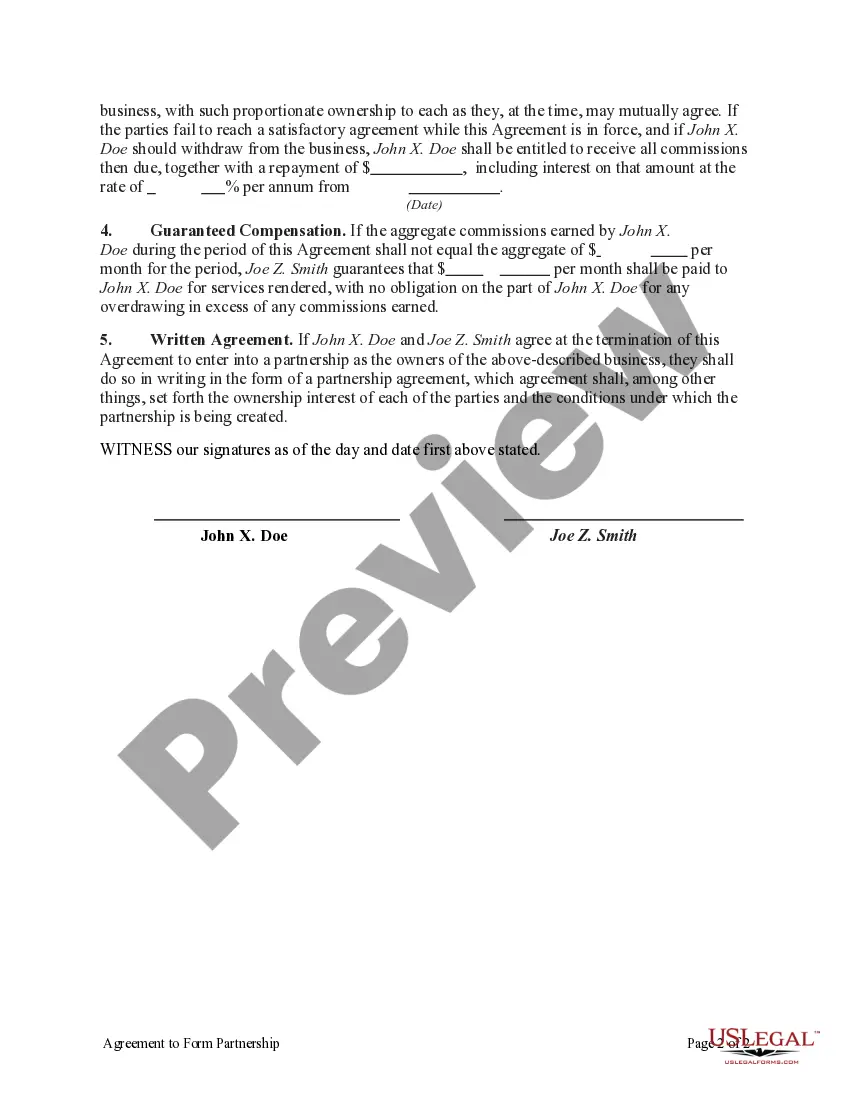
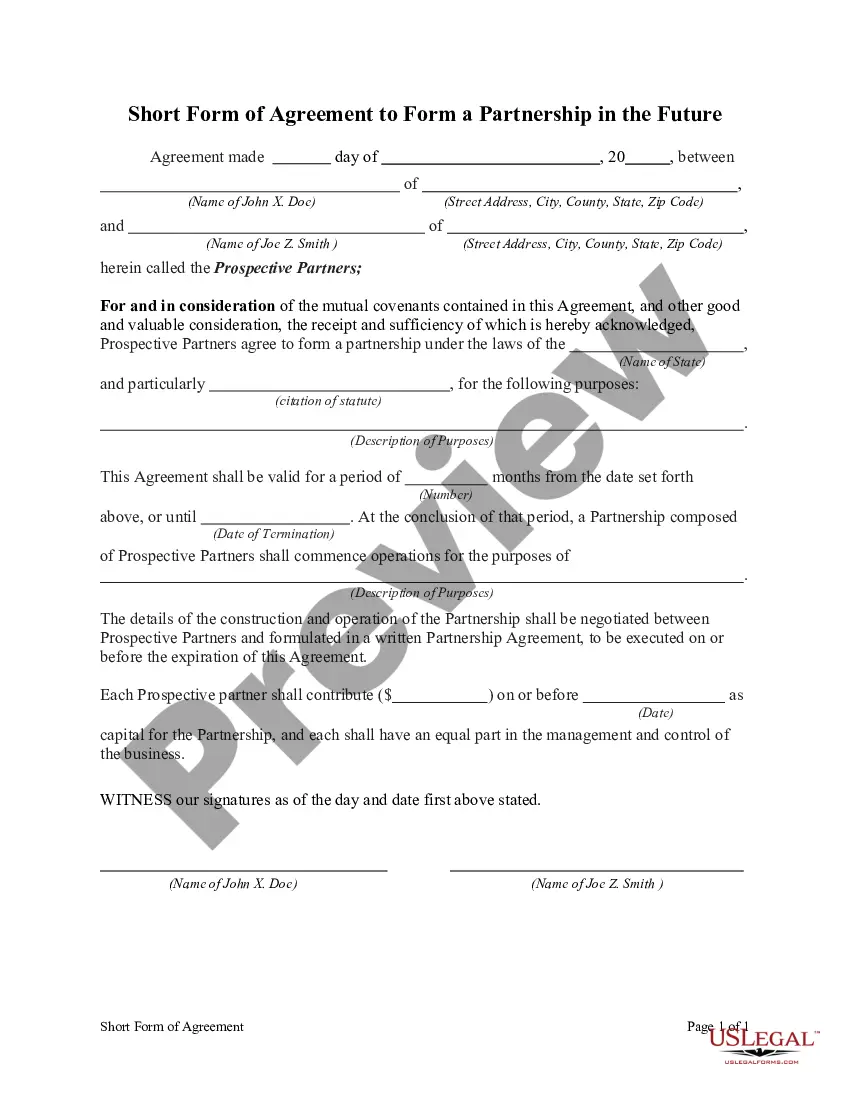
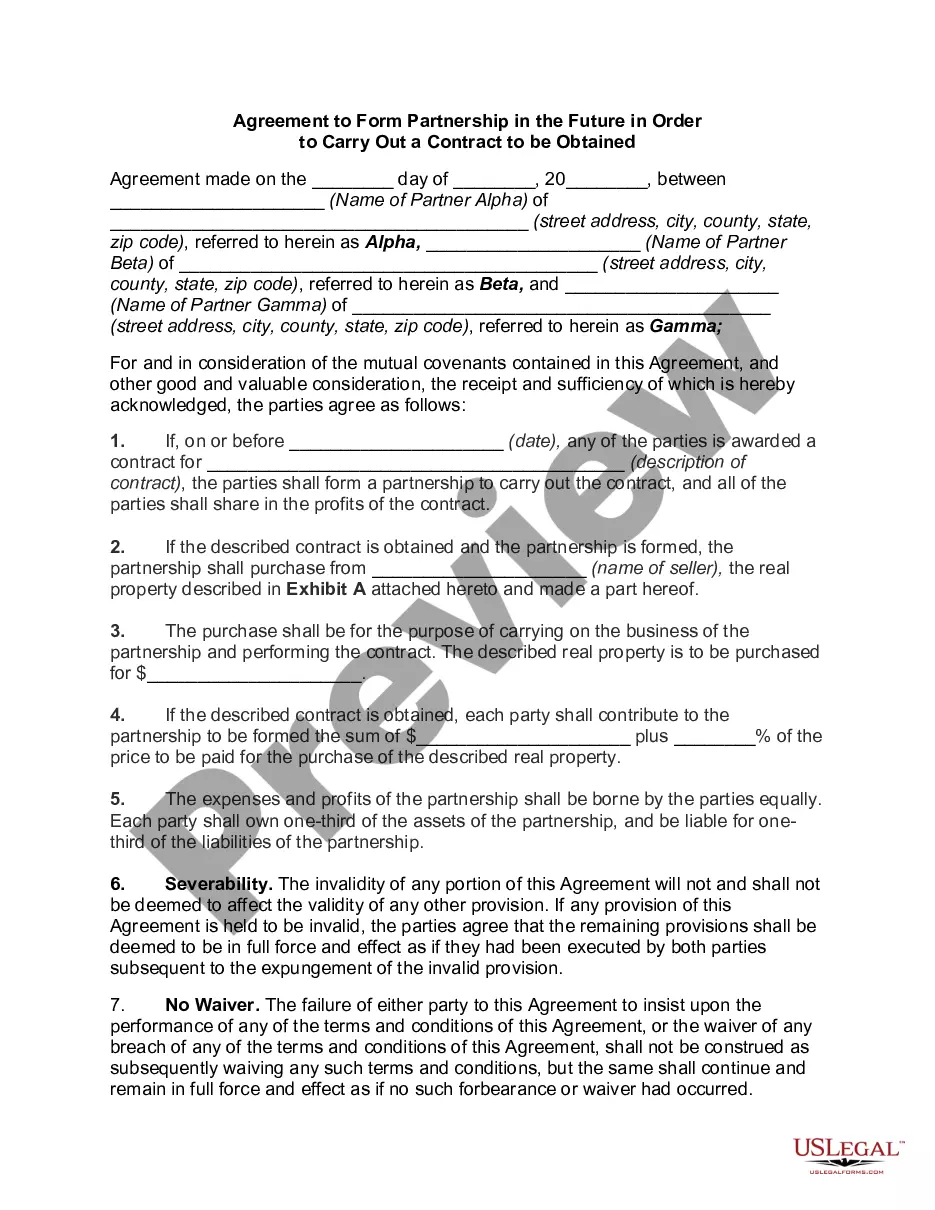
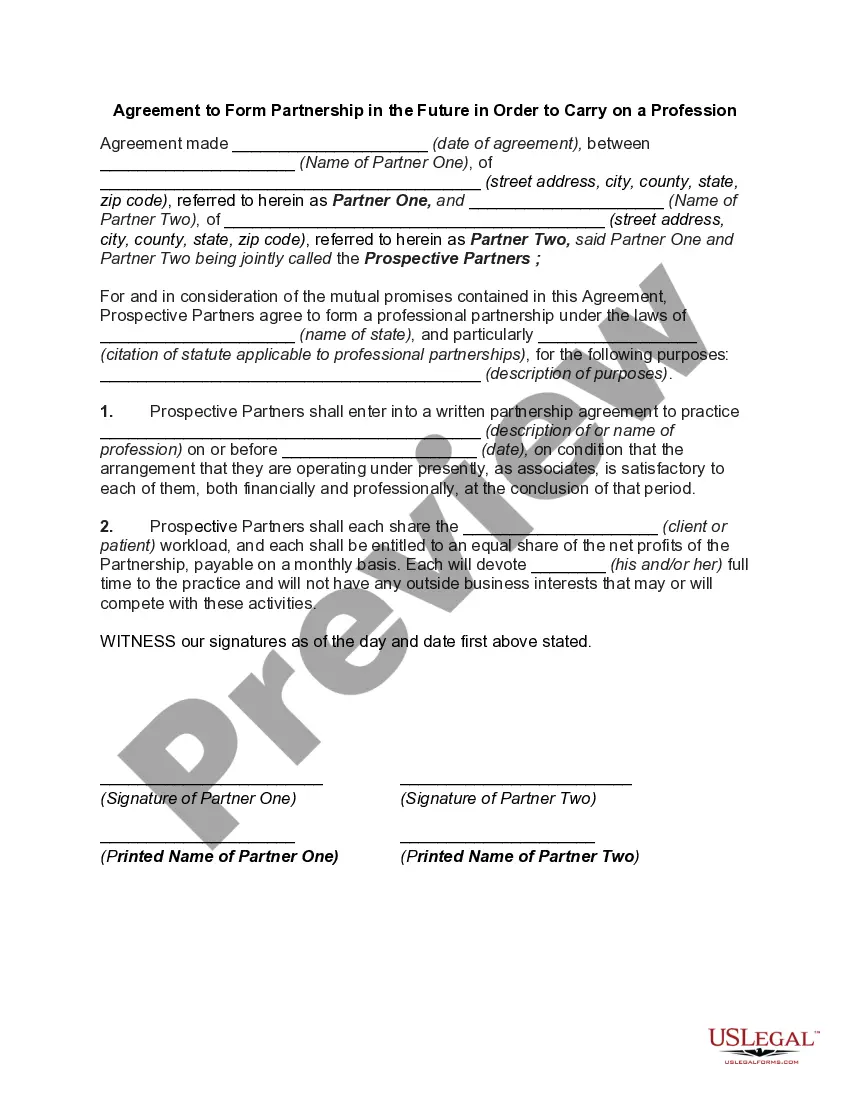
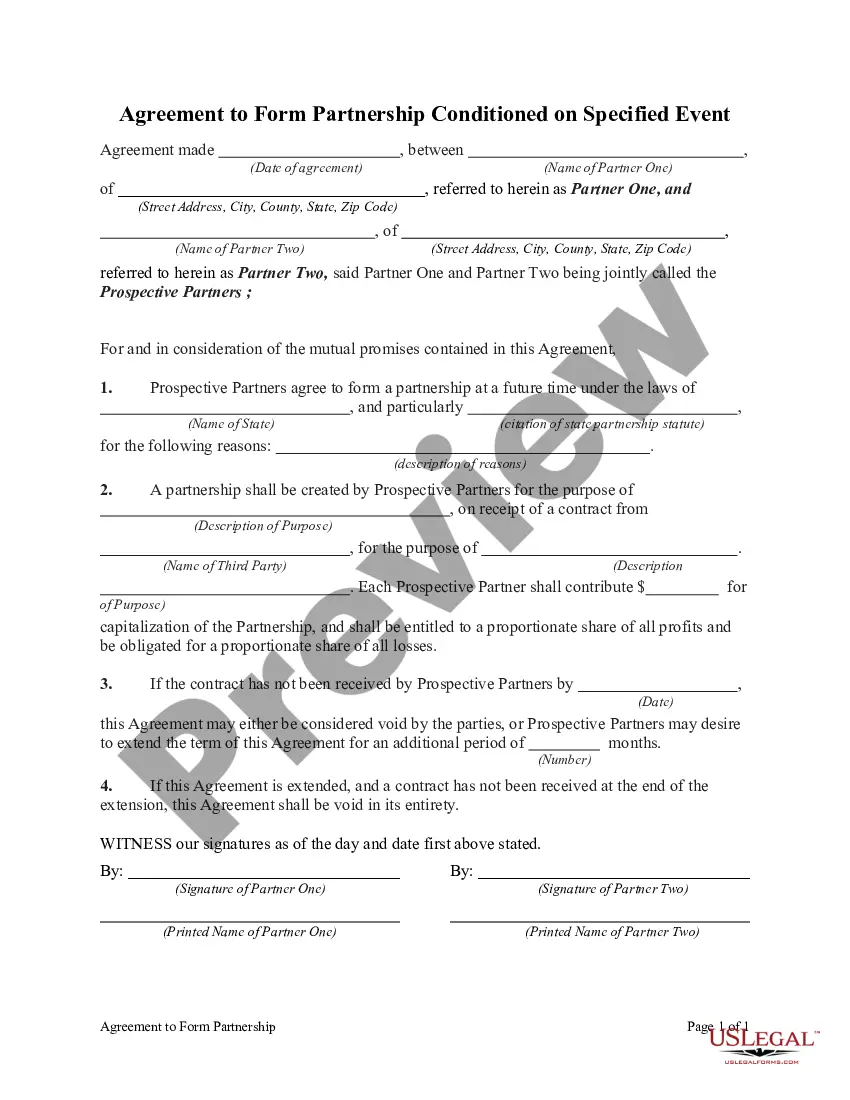
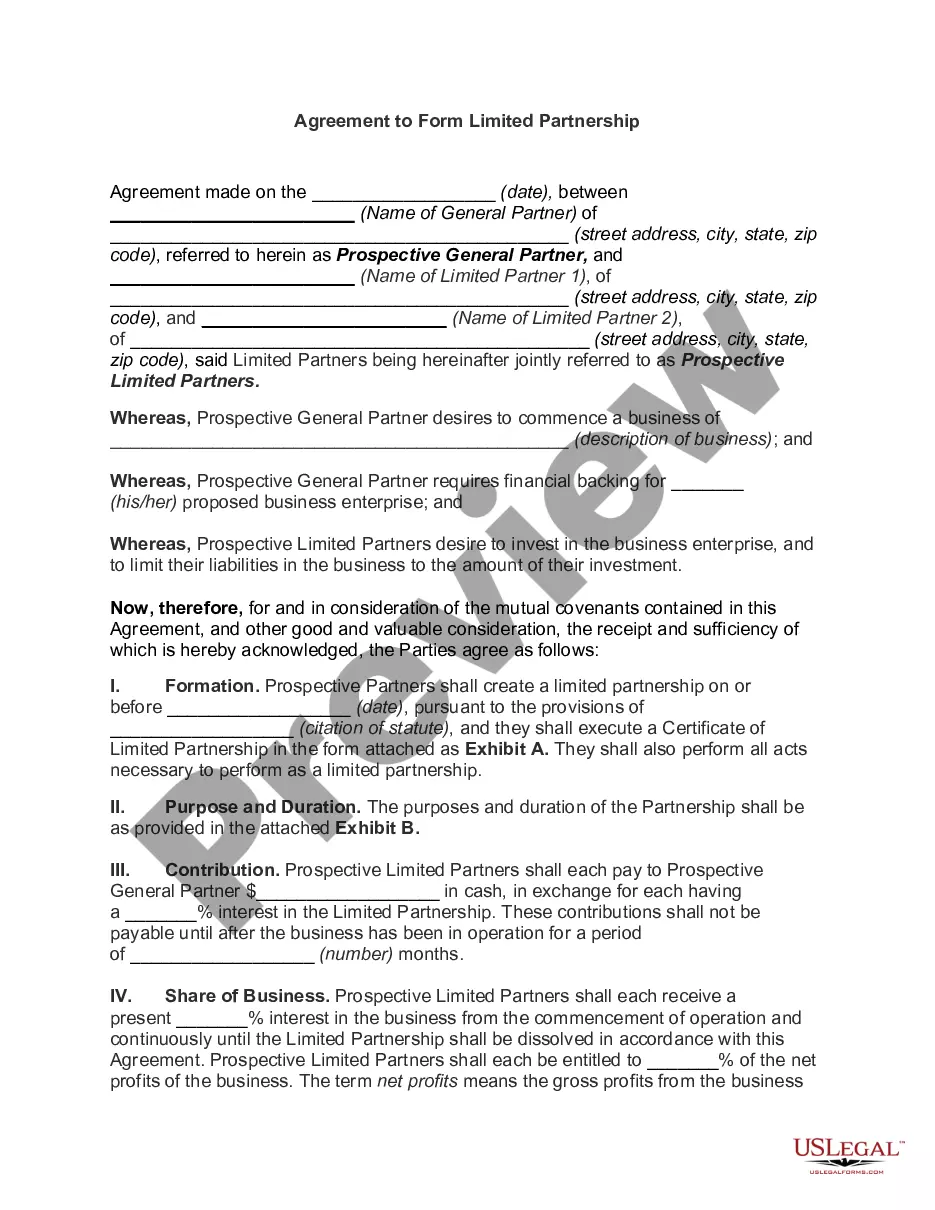
The Agreement to Form Partnership in Future to Conduct Business is a legal document that outlines the intention of two or more parties to create a partnership at a later date or upon the occurrence of certain conditions. Unlike a traditional partnership agreement, this form does not establish a partnership immediately, providing flexibility for the parties involved. It allows individuals to explore the potential for collaboration without the immediate legal obligations of a full partnership.
Form components explained
- Parties involved: Identifies all individuals or entities participating in the agreement.
- Term of agreement: Specifies the duration of the temporary agreement.
- Contingency clauses: Details the conditions under which the partnership will be formed.
- Provisions for future partnership: Outlines any relevant legal requirements that will apply when the partnership is formed.
- Signatures: Requires signatures of all parties to validate the agreement.
When to use this document
This form should be used when parties are in the early stages of exploring a partnership but wish to formally document their intent to collaborate at a future date. It is applicable in scenarios where certain conditions must be met before a partnership can officially begin, such as securing financing, completing specific projects, or gaining regulatory approvals.
Who can use this document
- Small business owners looking to partner with other businesses.
- Individuals seeking to establish a formal agreement for future collaboration.
- Entrepreneurs who need flexibility in solidifying partnerships.
- Legal advisors assisting clients in planning future business arrangements.
How to complete this form
- Identify all parties involved in the agreement.
- Specify the duration of the temporary agreement.
- Detail any contingencies that would lead to the formation of the partnership.
- Include any provisions that will apply once the partnership is formed.
- Ensure all parties sign the agreement to validate it.
Notarization requirements for this form
Notarization is generally not required for this form. However, certain states or situations might demand it. You can complete notarization online through US Legal Forms, powered by Notarize, using a verified video call available anytime.
Get your form ready online
Our built-in tools help you complete, sign, share, and store your documents in one place.
Make edits, fill in missing information, and update formatting in US Legal Forms—just like you would in MS Word.
Download a copy, print it, send it by email, or mail it via USPS—whatever works best for your next step.
Sign and collect signatures with our SignNow integration. Send to multiple recipients, set reminders, and more. Go Premium to unlock E-Sign.
If this form requires notarization, complete it online through a secure video call—no need to meet a notary in person or wait for an appointment.
We protect your documents and personal data by following strict security and privacy standards.

Make edits, fill in missing information, and update formatting in US Legal Forms—just like you would in MS Word.

Download a copy, print it, send it by email, or mail it via USPS—whatever works best for your next step.

Sign and collect signatures with our SignNow integration. Send to multiple recipients, set reminders, and more. Go Premium to unlock E-Sign.

If this form requires notarization, complete it online through a secure video call—no need to meet a notary in person or wait for an appointment.

We protect your documents and personal data by following strict security and privacy standards.
Common mistakes
- Failing to specify clear contingencies for forming the partnership.
- Not including all parties involved in the agreement.
- Neglecting to outline the duration of the temporary agreement.
- Omitting necessary signatures, which can invalidate the agreement.
Advantages of online completion
- Convenient access to legal forms from anywhere, at any time.
- Editable templates allow users to customize the document according to their specific needs.
- Reliability of forms prepared by licensed attorneys to ensure legal compliance.
Legal use & context
- This agreement allows parties to establish mutual intent before a formal partnership is formed.
- It provides legal clarity on expectations and responsibilities until the partnership commences.
- Once the conditions are met, the partnership agreement can be finalized without additional complications.
Quick recap
- The Agreement to Form Partnership in Future is essential for parties evaluating a future partnership.
- It helps define terms and timelines, protecting all parties involved.
- Proper completion and understanding of this form can mitigate potential disputes down the line.
Looking for another form?

Form popularity
FAQ
Get it in writing. Keep it simple. Deal with the right person. Identify each party correctly. Spell out all of the details. Specify payment obligations. Agree on circumstances that terminate the contract. Agree on a way to resolve disputes.
Begin your letter by clearly indicating the parties involved in the agreement. Remember to include the date the agreement takes effect and title of the venture. Clearly state the reason for your agreement in your first paragraph giving description of all details such as stake holder ratio, payment period etc.
Forming a PartnershipPartnerships exist between two or more people who want to go into business together. In most states, creating a legally binding partnership requires nothing more than a verbal agreement and a handshake.
Percentage of ownership. Allocation of profits and losses. Who can bind the partnership? Making decisions. The death of a partner. Resolving disputes.
All parties must agree about an offer made by one party and accepted by the other. Something of value must be exchanged for something else of value. This can include goods, cash, services, or a pledge to exchange these items.
Name of your partnership. Contributions to the partnership and percentage of ownership. Division of profits, losses and draws. Partners' authority. Withdrawal or death of a partner.
Written and verbal agreements Under common law, writing an agreement down is not necessary to make it legally binding. An informal agreement, such as one made verbally, will be binding, if it has the three components. Parliament has made statutory exceptions to this rule.
Name of the partnership. Contributions to the partnership. Allocation of profits, losses, and draws. Partners' authority. Partnership decision-making. Management duties. Admitting new partners. Withdrawal or death of a partner.
Although each partnership agreement differs based on business objectives, certain terms should be detailed in the document, including percentage of ownership, division of profit and loss, length of the partnership, decision making and resolving disputes, partner authority, and withdrawal or death of a partner.