Estate Planning Data Letter and Employment Agreement with Client
What this document covers
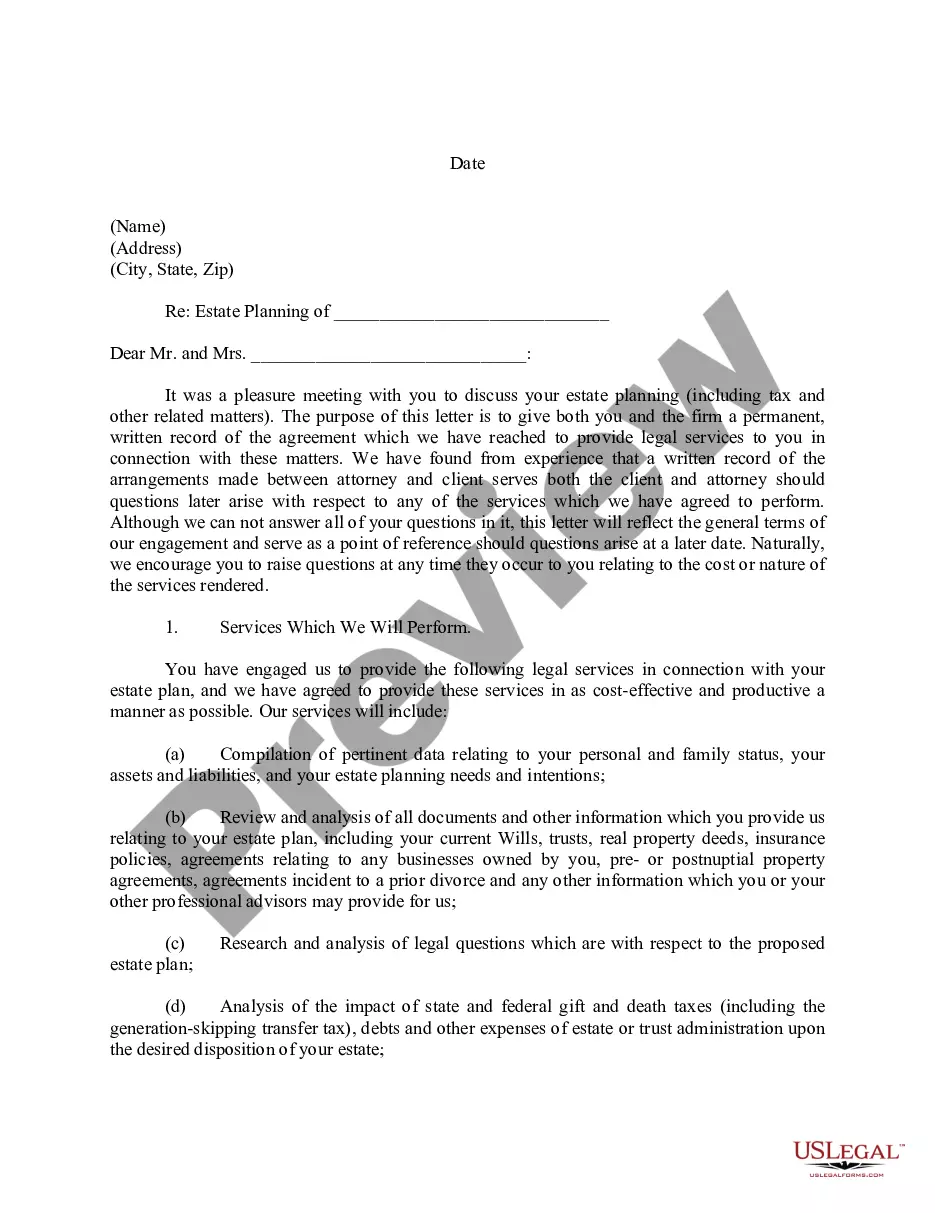
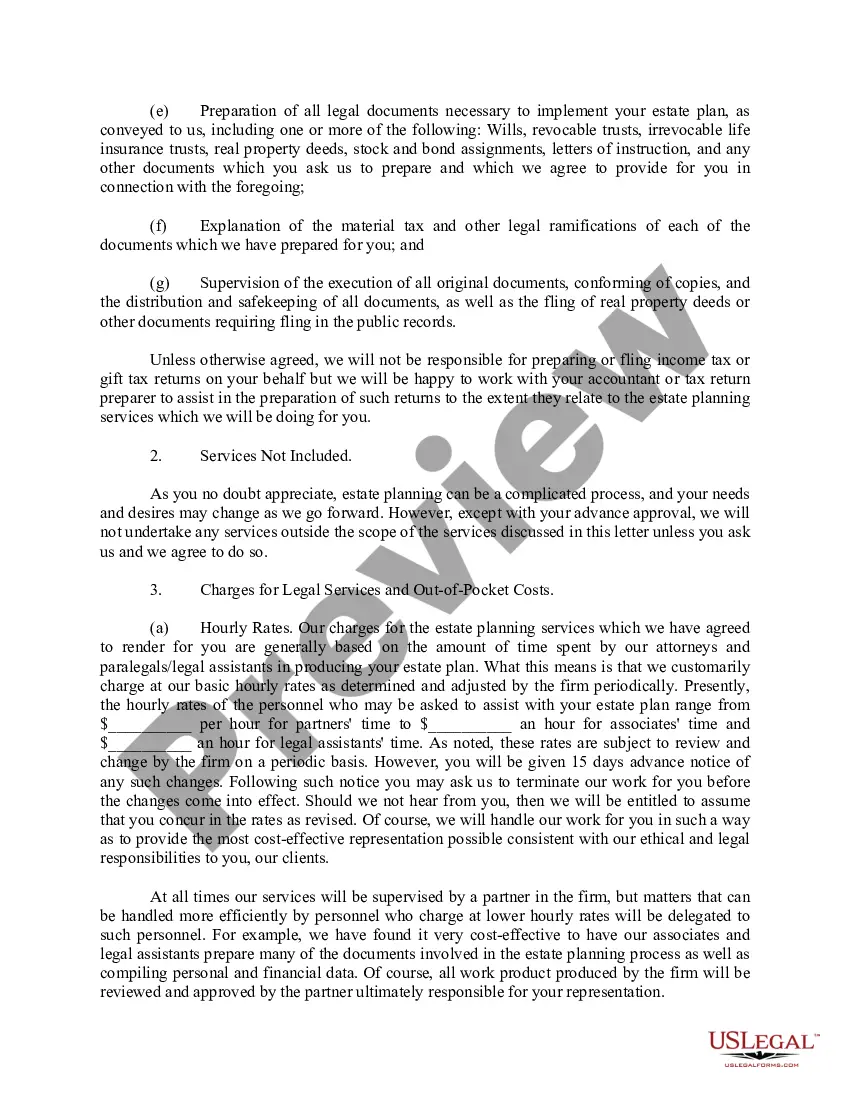
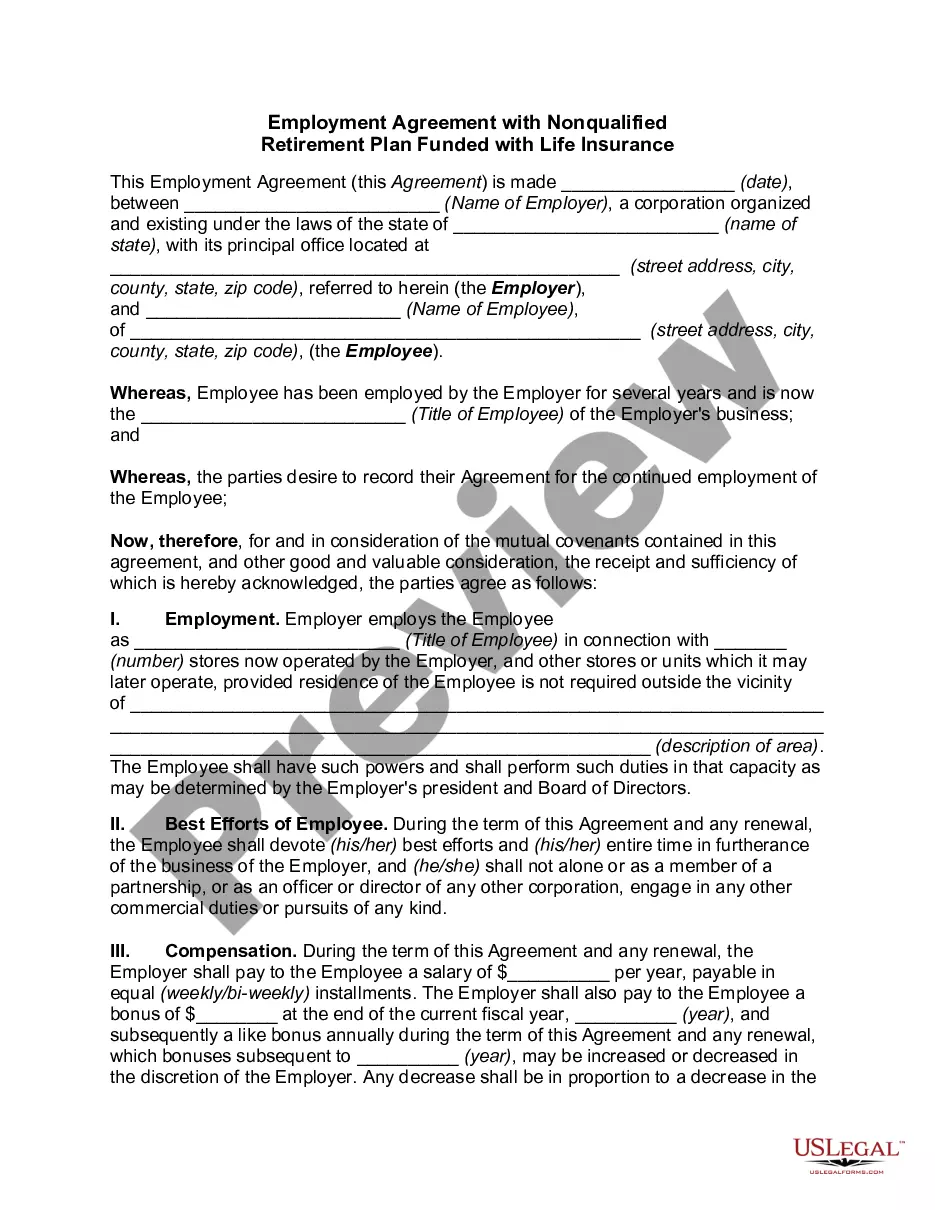
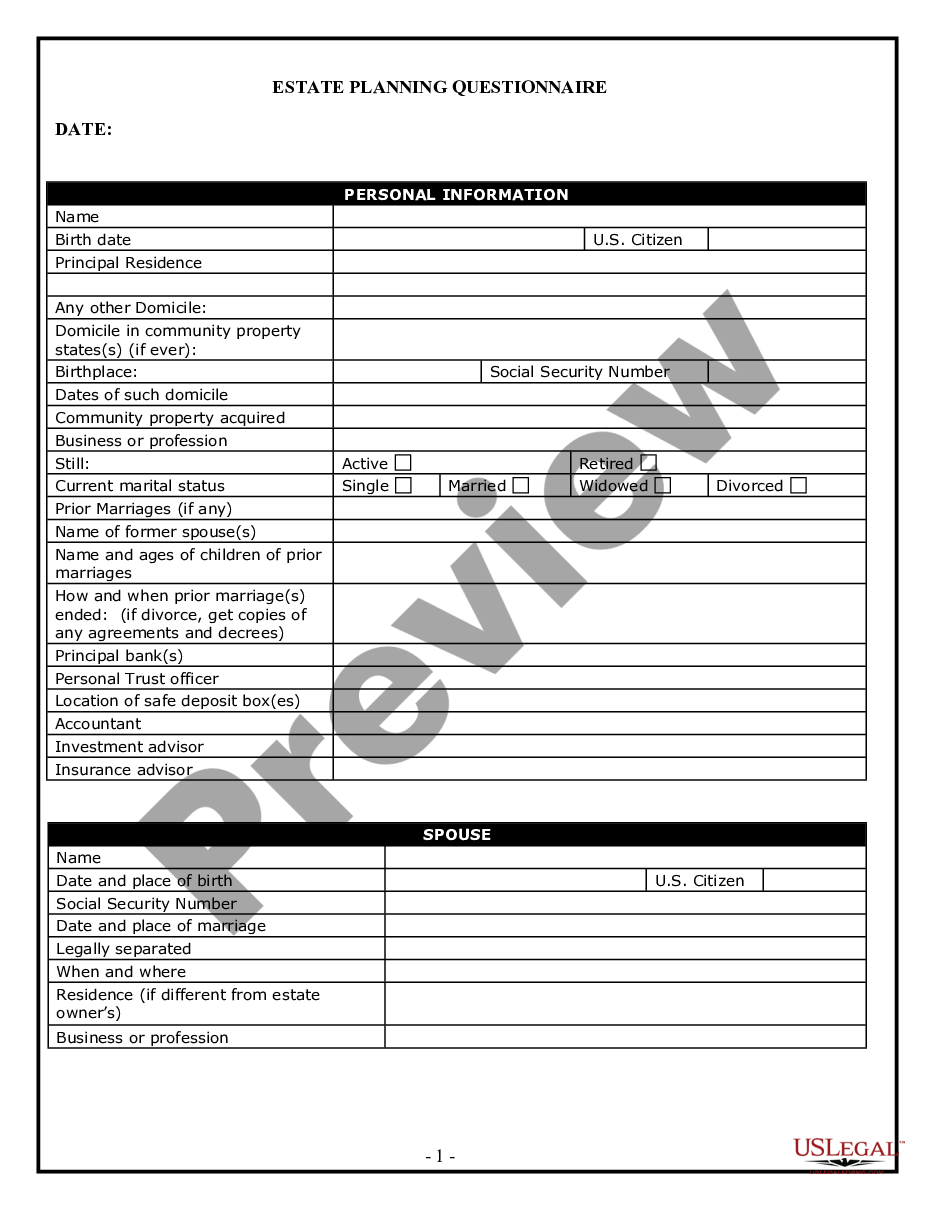
The Estate Planning Data Letter and Employment Agreement with Client is a legal document that formalizes the understanding between a client and attorney regarding estate planning services. This form sets out the scope of services, fees, and responsibilities involved in creating or revising an estate plan, which may include wills, trusts, and tax considerations. Unlike other estate planning forms, this document serves as a comprehensive record of the engagement, ensuring both parties are aligned on expectations and obligations.
Key parts of this document
- Date and identification of the client and attorney.
- Overview of services to be performed related to estate planning.
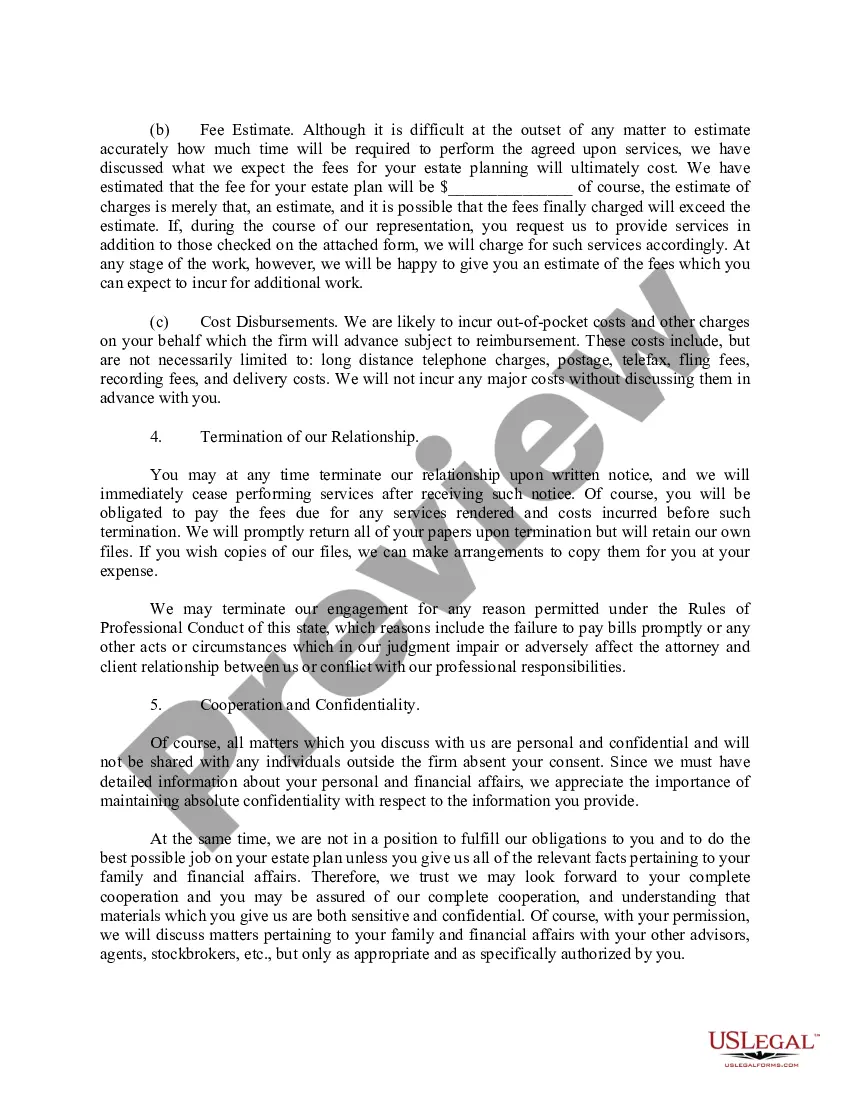
- Charges for legal services and estimation of fees.
- Conditions for termination of the attorney-client relationship.
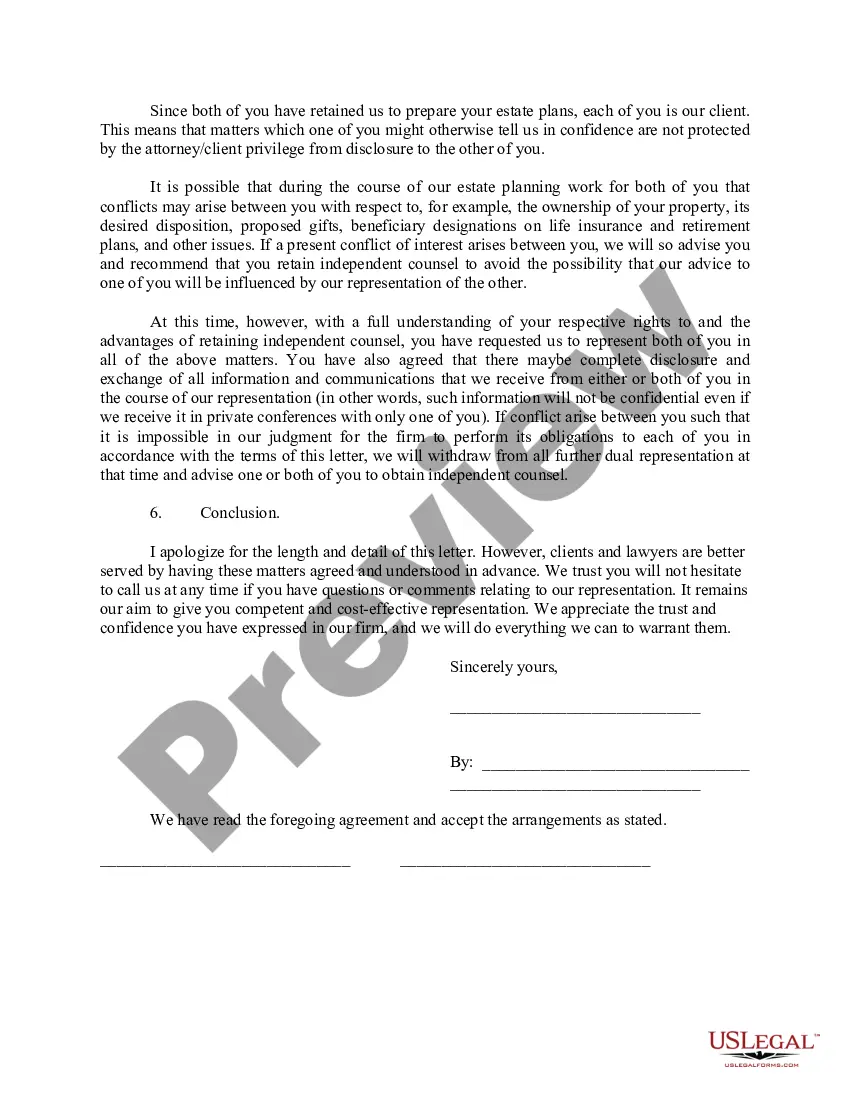
- Confidentiality and cooperation clauses.
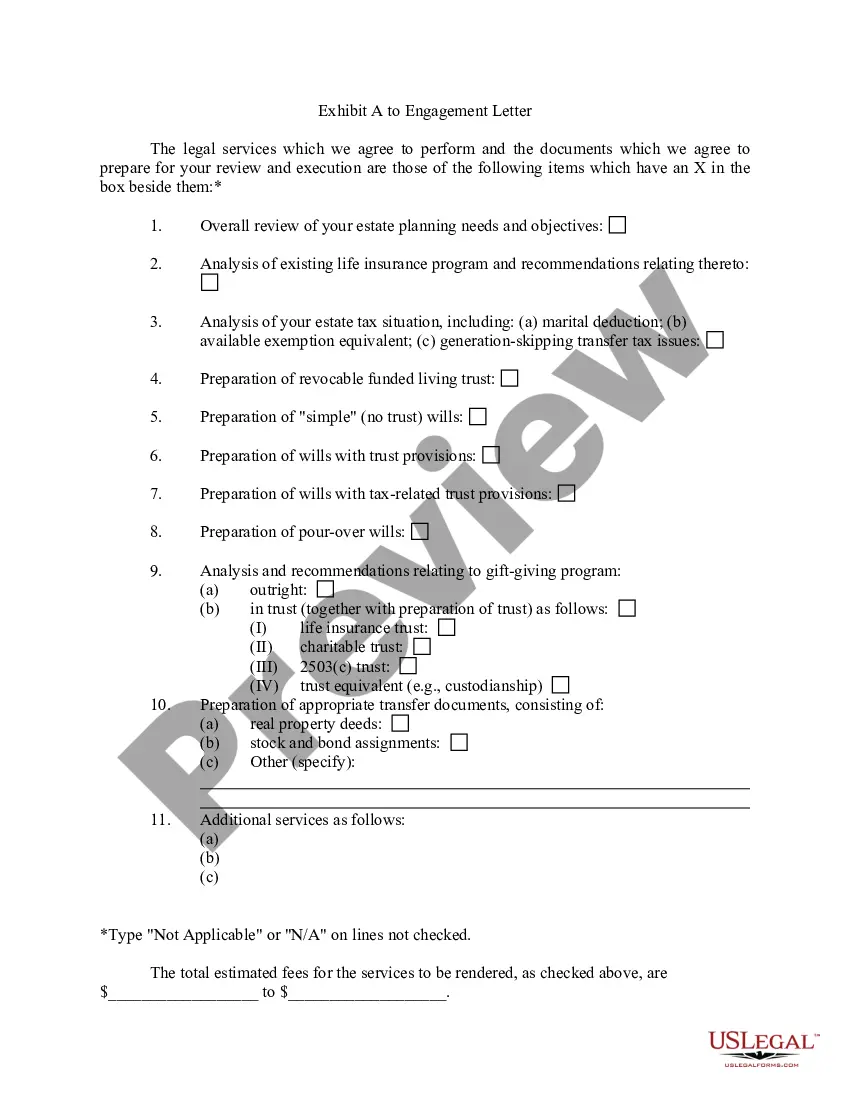
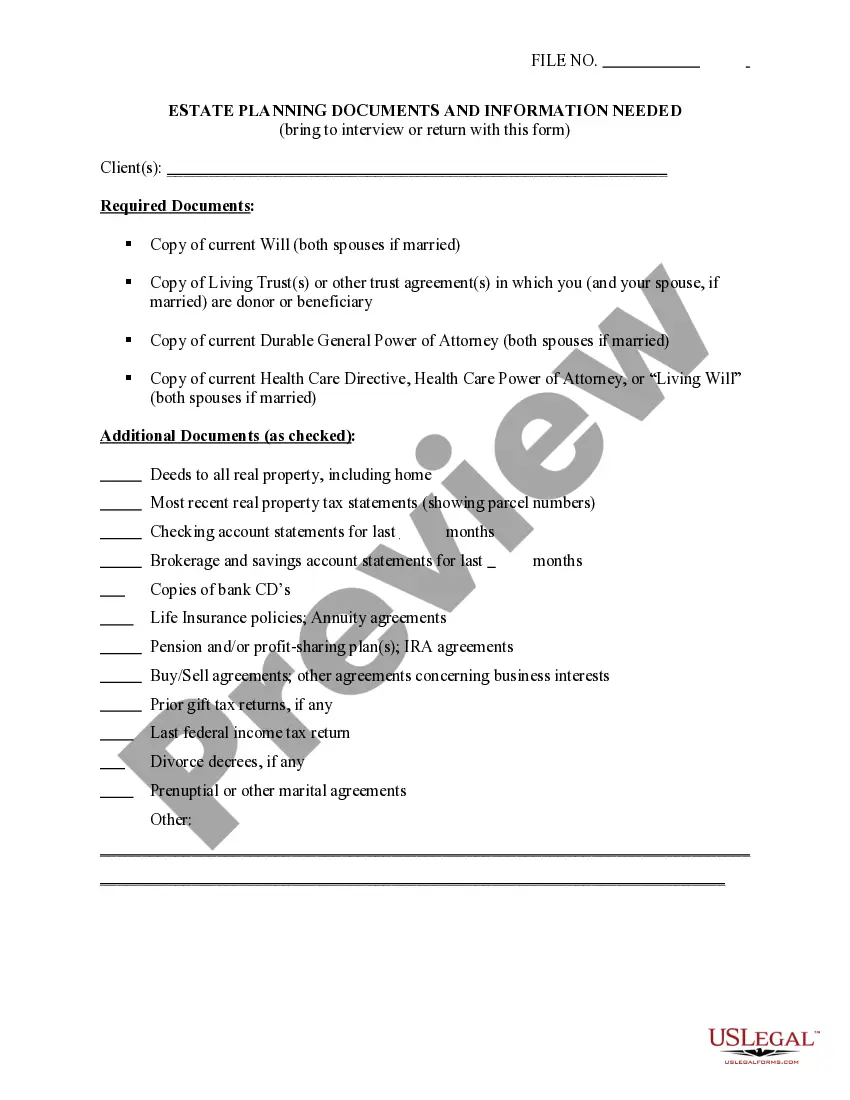
- List of specific documents and services included in the engagement.
When to use this document
This form is used when individuals or couples seek professional assistance in creating or updating their estate plans. It is particularly relevant when there are complex family dynamics, significant assets, or specific wishes regarding the distribution of property and responsibilities after death. The letter ensures clarity on the legal services to be provided, making it easier to manage expectations and handle potential disputes.
Intended users of this form
- Individuals or couples planning their estates.
- Clients looking for professional legal assistance with wills and trusts.
- Those involved in estate planning requiring clear documentation of services and fees.
- Anyone wanting to establish a formal agreement with their attorney regarding estate management.
How to complete this form
- Enter the date and the names of both parties (client and attorney).
- Provide the address information of the client.
- Specify the services to be performed based on discussions held with the attorney.
- Detail the estimated fees and billing arrangements.
- Review the confidentiality and cooperation clauses to ensure understanding.
- Sign the document to formalize the agreement.
Does this form need to be notarized?
Notarization is generally not required for this form. However, certain states or situations might demand it. You can complete notarization online through US Legal Forms, powered by Notarize, using a verified video call available anytime.
Get your form ready online
Our built-in tools help you complete, sign, share, and store your documents in one place.
Make edits, fill in missing information, and update formatting in US Legal Forms—just like you would in MS Word.
Download a copy, print it, send it by email, or mail it via USPS—whatever works best for your next step.
Sign and collect signatures with our SignNow integration. Send to multiple recipients, set reminders, and more. Go Premium to unlock E-Sign.
If this form requires notarization, complete it online through a secure video call—no need to meet a notary in person or wait for an appointment.
We protect your documents and personal data by following strict security and privacy standards.

Make edits, fill in missing information, and update formatting in US Legal Forms—just like you would in MS Word.

Download a copy, print it, send it by email, or mail it via USPS—whatever works best for your next step.

Sign and collect signatures with our SignNow integration. Send to multiple recipients, set reminders, and more. Go Premium to unlock E-Sign.

If this form requires notarization, complete it online through a secure video call—no need to meet a notary in person or wait for an appointment.

We protect your documents and personal data by following strict security and privacy standards.
Common mistakes to avoid
- Failing to specify all services to be included, leading to misunderstandings later.
- Not discussing potential additional costs that may arise during the estate planning process.
- Overlooking the need for both parties to read and understand the confidentiality agreement.
- Not keeping a copy of the signed agreement for personal records.
Why complete this form online
- Easy access to customizable templates tailored for your specific estate planning needs.
- Convenient download and immediate use without waiting for physical documents to arrive.
- Reliable legal language drafted by licensed professionals, ensuring compliance and clarity.
Main things to remember
- The Estate Planning Data Letter formalizes the agreement between the client and attorney about estate planning services.
- It details the scope of work, fees, and confidentiality obligations.
- Clients should review the form thoroughly to ensure all necessary services are included and understood.
- Availability of online forms provides convenience and accessibility for planning your estate.
Looking for another form?
Form popularity
FAQ
What Is an Engagement Letter? An engagement letter is a written agreement that describes the business relationship to be entered into by a client and a company.An engagement letter is a less formal than a contract, but still a legally-binding document that can be used in a court of law.
More Than a Last Will. Itemize Your Inventory. Follow with Non-Physical Assets. Assemble a List of Debts. Make a Memberships List. Make Copies of Your Lists. Review Your Retirement Account. Update Your Insurance.
Fill out your attorney's intake questionnaire. Gather your financial documents. Bring copies of your current estate plan documents. Divorce agreements, premarital agreements, and other relevant contracts. Choose your executors and health care agents.
Guardianship Documents. Health Care Power of Attorney. Financial Power of Attorney. Living Will. Last Will and Testament. U.S. Legal Services Can Help!
A Last Will and Testament. When it comes to estate planning, having a last will and testament is likely the first thing that will come to mind. A Document Granting Power of Attorney. An Advance Medical Directive. Revocable Living Trust.
A Last Will and Testament. When it comes to estate planning, having a last will and testament is likely the first thing that will come to mind. A Document Granting Power of Attorney. An Advance Medical Directive. Revocable Living Trust.
Creating an estate plan is a lot like getting into better shape. Step 1: Sign a will. Step 2: Name beneficiaries. Step 3: Dodge estate taxes. Step 4: Leave a letter. Step 5: Draw up a durable power of attorney. Step 6: Create an advance health care directive.
The privilege covers written and oral communications and protects both individual and institutional clients.The attorney-client privilege does not apply to every communication with an attorney. For the privilege to exist, the communication must be to, from, or with an attorney, and intended to be confidential.
Step 1: Create a checklist of important documents (and their locations) Step 2: List the names and contact information of key associates. Step 3: Catalog your digital asset inventory. Step 4: Ensure all documents are organized and accessible.