Job Acceptance Letter for Photographer
Understanding this form
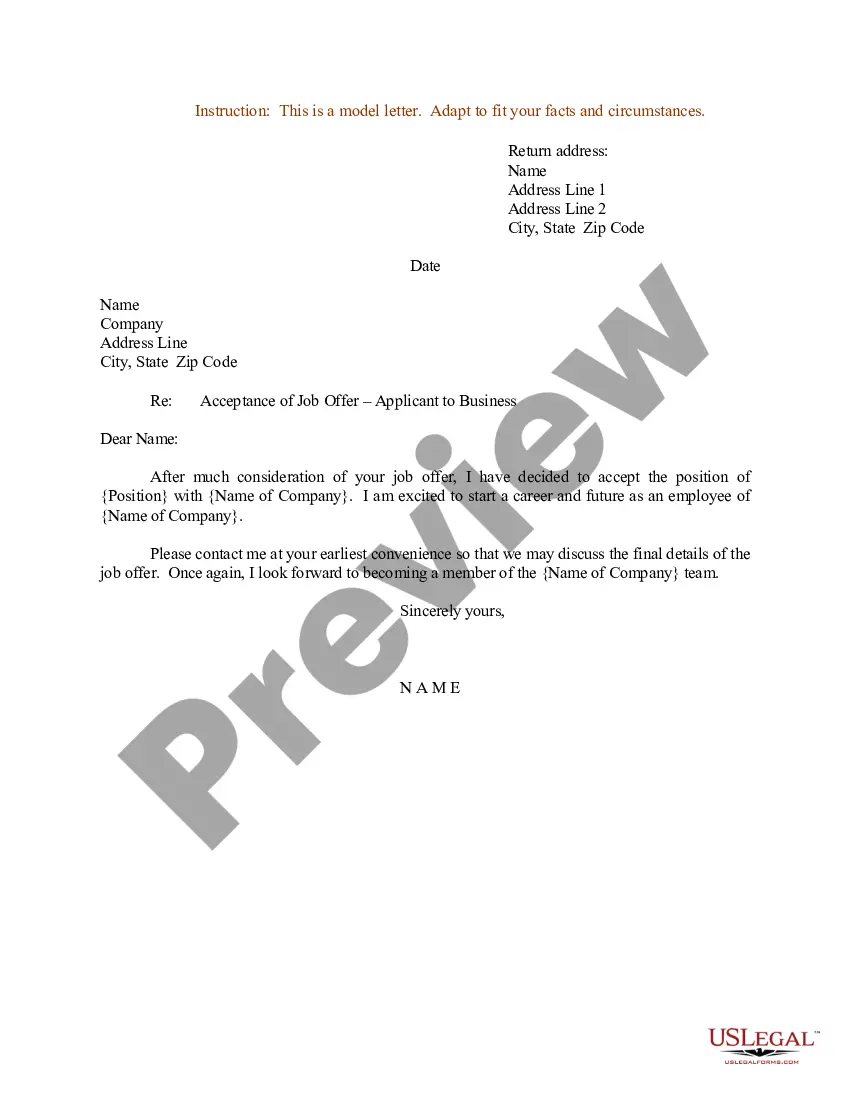
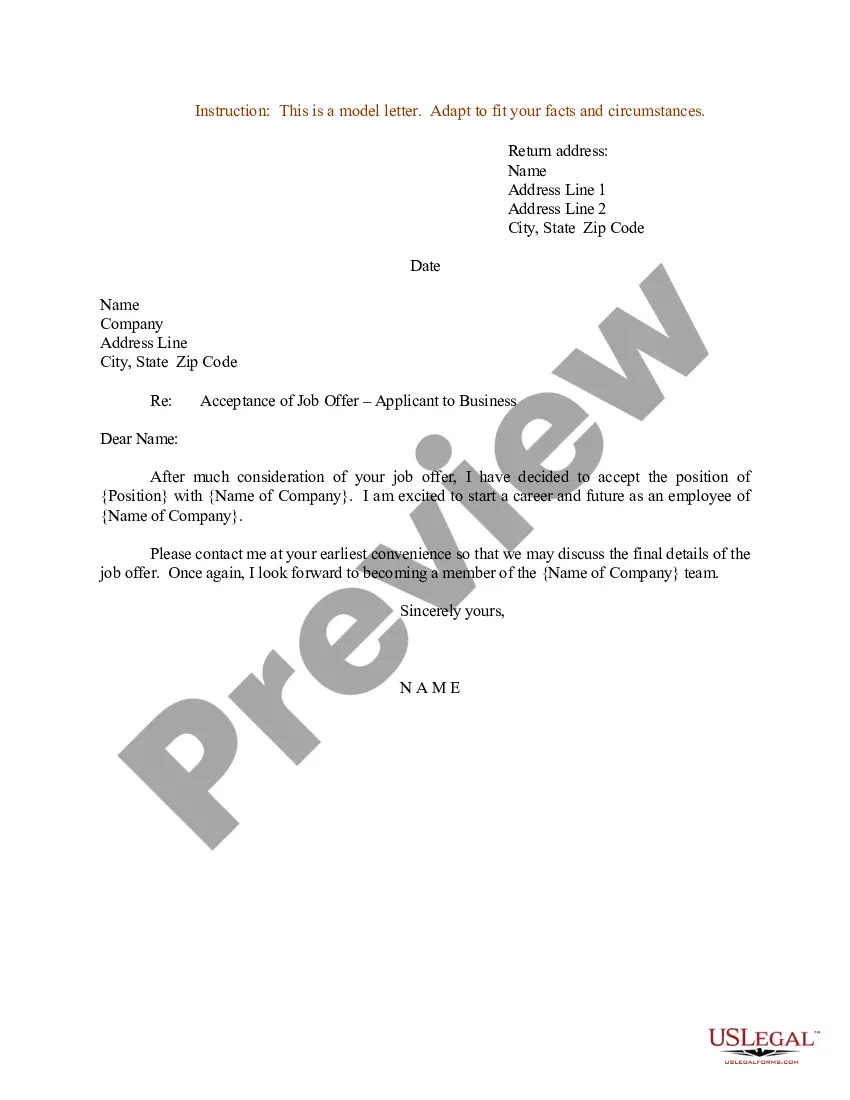
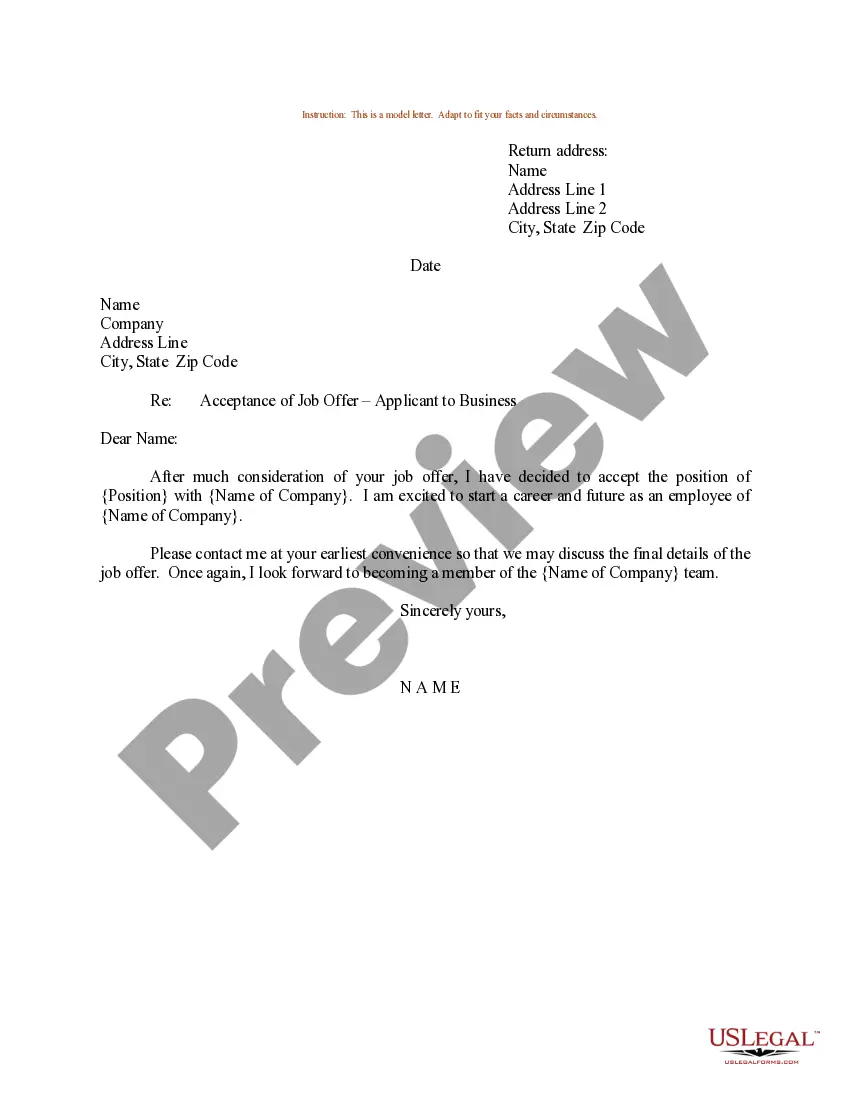
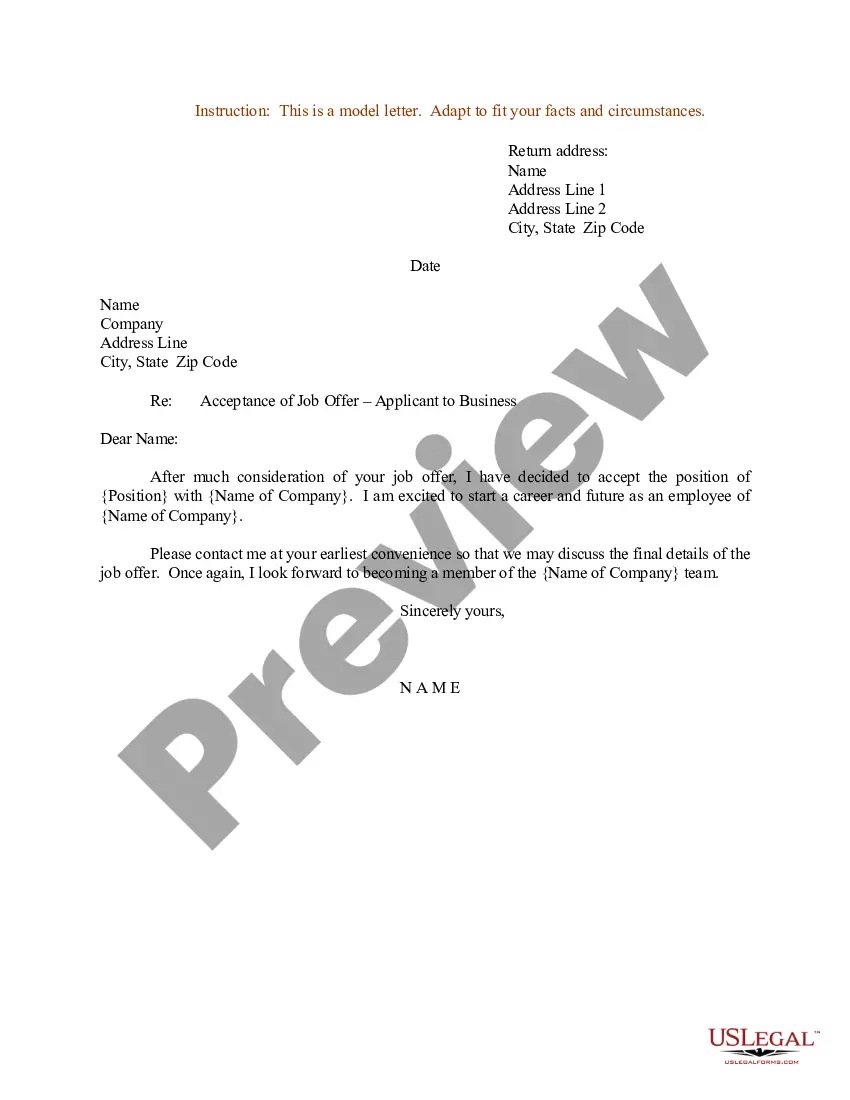
The Job Acceptance Letter for Photographer is a formal document that communicates your acceptance of a job offer in the photography field. This letter serves as a professional affirmation of your commitment to the position and can help set the tone for your new role. Unlike other employment documents, this letter emphasizes your enthusiasm for the opportunity and establishes communication with your new employer regarding the acceptance and any next steps.
What’s included in this form
- Return address: Your name and address.
- Date: The date you are sending the letter.
- Employer's name and address: Details of the person and company offering you the position.
- Subject line: A clear reference to your acceptance of the job offer.
- Opening greeting: A professional salutation to the employer.
- Body of the letter: Expression of acceptance, excitement, and a request for further communication.
- Closing: A professional sign-off with your name.

When this form is needed
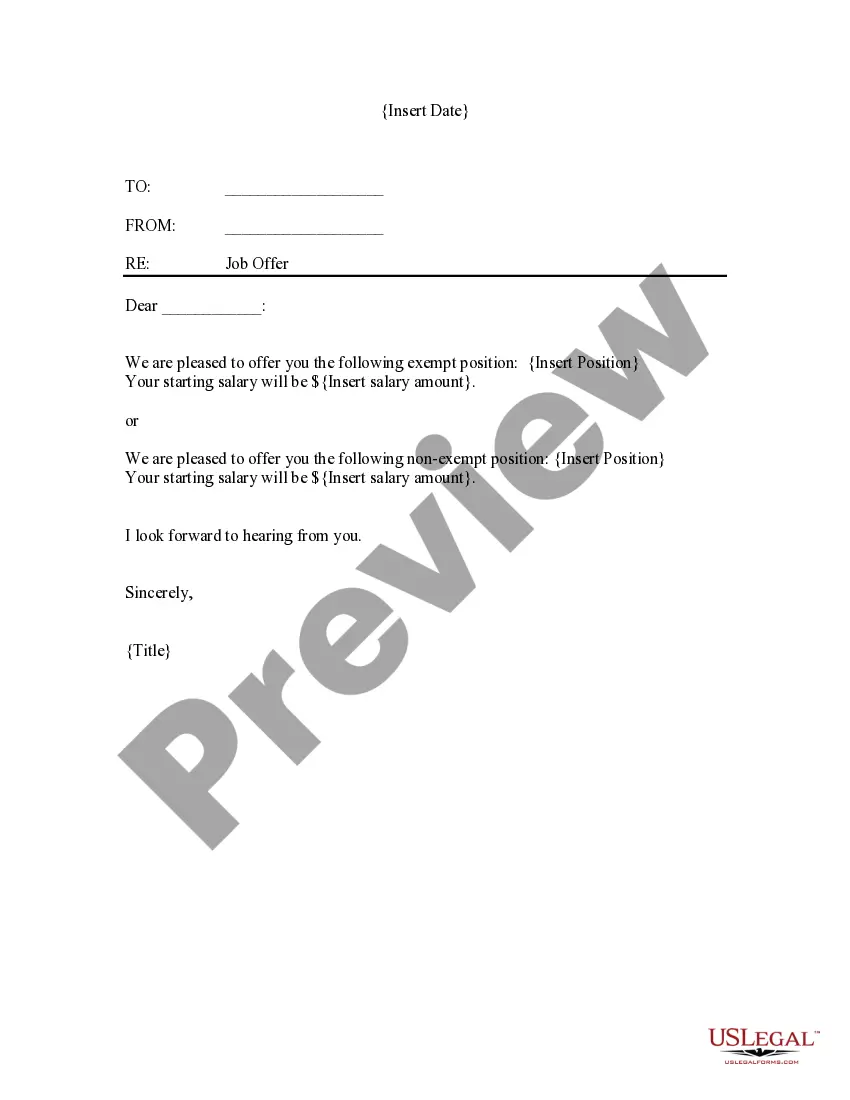
Use this Job Acceptance Letter when you have received a formal job offer and have decided to accept it. It is essential to provide written confirmation of acceptance to demonstrate professionalism and ensure clarity between you and your employer. This form is particularly useful after job interviews or discussions where a verbal acceptance has occurred but written confirmation is required.
Who needs this form
- Job seekers in the photography industry who have received a formal job offer.
- Individuals looking to maintain a professional tone in their communication with future employers.
- New employees needing to confirm their acceptance of a role to ensure alignment with the employerâs onboarding process.
How to complete this form
- Identify your return address, including your name, street address, city, state, and zip code.
- Add the date of writing the letter.
- Provide the employer's name and company name, along with their address details.
- Clearly state the position you are accepting and express your enthusiasm for the opportunity.
- Request a follow-up to discuss any final details regarding the job offer.
- End with a professional closing and your full name, ensuring correct formatting.
Notarization guidance
This form does not typically require notarization unless specified by local law. It is a straightforward communication of acceptance that does not involve legal obligations requiring notarization.
Get your form ready online
Our built-in tools help you complete, sign, share, and store your documents in one place.
Make edits, fill in missing information, and update formatting in US Legal Forms—just like you would in MS Word.
Download a copy, print it, send it by email, or mail it via USPS—whatever works best for your next step.
Sign and collect signatures with our SignNow integration. Send to multiple recipients, set reminders, and more. Go Premium to unlock E-Sign.
If this form requires notarization, complete it online through a secure video call—no need to meet a notary in person or wait for an appointment.
We protect your documents and personal data by following strict security and privacy standards.

Make edits, fill in missing information, and update formatting in US Legal Forms—just like you would in MS Word.

Download a copy, print it, send it by email, or mail it via USPS—whatever works best for your next step.

Sign and collect signatures with our SignNow integration. Send to multiple recipients, set reminders, and more. Go Premium to unlock E-Sign.

If this form requires notarization, complete it online through a secure video call—no need to meet a notary in person or wait for an appointment.

We protect your documents and personal data by following strict security and privacy standards.
Common mistakes
- Failing to proofread for errors or typos.
- Not including a clear subject line or greeting.
- Writing an overly casual or informal tone.
- Omitting important details such as the position title or company name.
- Sending the letter without confirming the acceptance verbally first.
Benefits of completing this form online
- Convenient access to a professionally drafted template.
- Easy editing to customize for your specific situation.
- Instant download for immediate use.
- Reliable format that meets professional standards.
Looking for another form?
Form popularity
FAQ
Review information about the company and position. Open the letter by describing your interest. Outline your experience and qualifications. Include aspects of your personality. Express appreciation. Close the letter.
Hard Skill: Technical On the technical side, there is camera, composition, and exposure control. This is all Photography 101 course content.And then there's posing, which is one part hard skill, one part soft skill, both of which is taught in the Natural Light Couples Photography Workshop.
Start with a photography resume summary that puts your best achievements in focus. Fit the job description. Add other sections that prove your photography skills. You need a cover letter like you need a camera body.
Your Portfolio. Your Technical Skillset. Your Digital Skills. Keywords From the Job Description. Don't Forget to Add a Bit About Who You Are.
Say your first and last nameespecially if it is hard to pronounceand where you are based. State how long you've been photographing. Tell people the genre of photography in which you specialize.
Remember how important introductions are. Start off your message by 1) acknowledging them and their work and 2) introducing yourself. Mention what you're looking for and why. Keep in mind: Comfort = key.
Place your contact information in the header. Address the hiring manager by name. Show relevant achievements to introduce yourself in the first paragraph. Target the employer's needs and prove you can help in the second paragraph.
Introduce Yourself. This should be an obvious start, however, the trick is how you introduce yourself. Choose Professional Experiences Wisely. Be YOU in Your Writing Tone. Simplicity is Key. Consider Including Awards. Include a Personal Touch. Do What You Do Best: Make it Look Good.
Artistic skills. Technical skills. Good communication skills. Ability to work well under pressure and meet deadlines. Patience, dedication and attention to detail. Ability to work independently and with a team. Full-time skills training. Part-time skills training.