Texas Last Will and Testament for Widow or Widower with Minor Children
Overview of this form
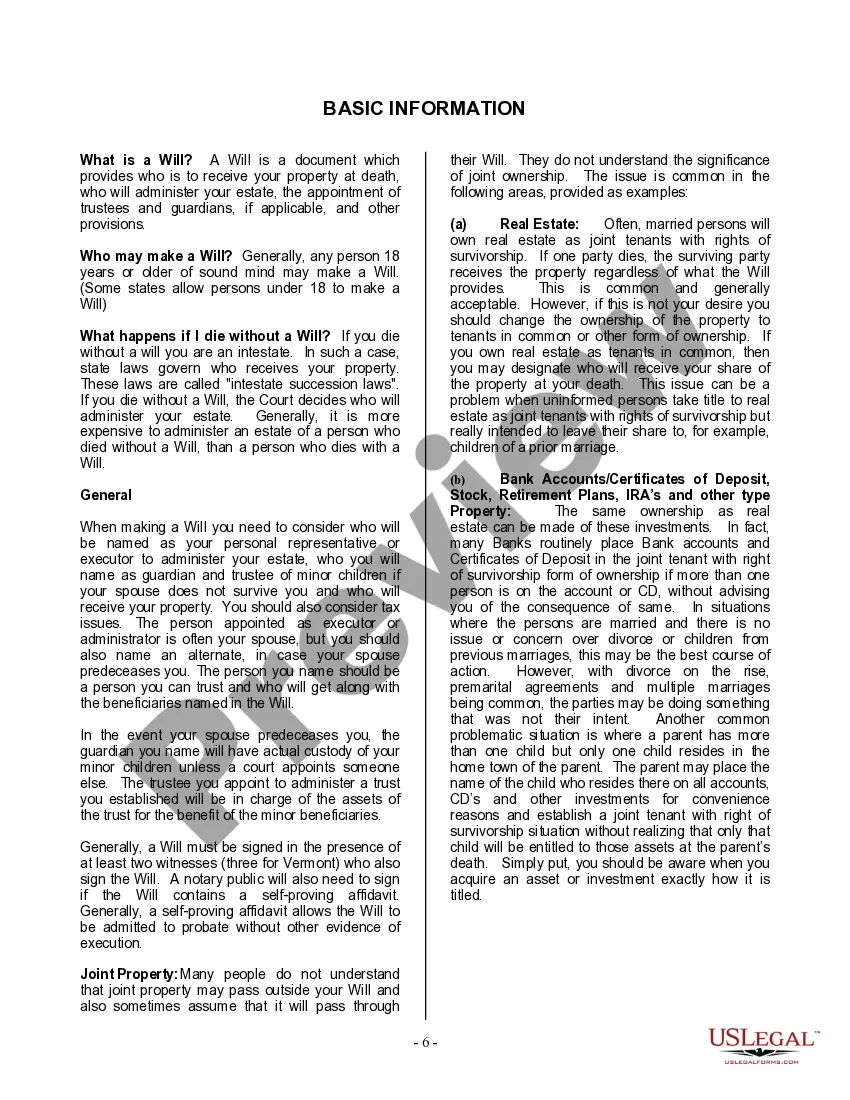
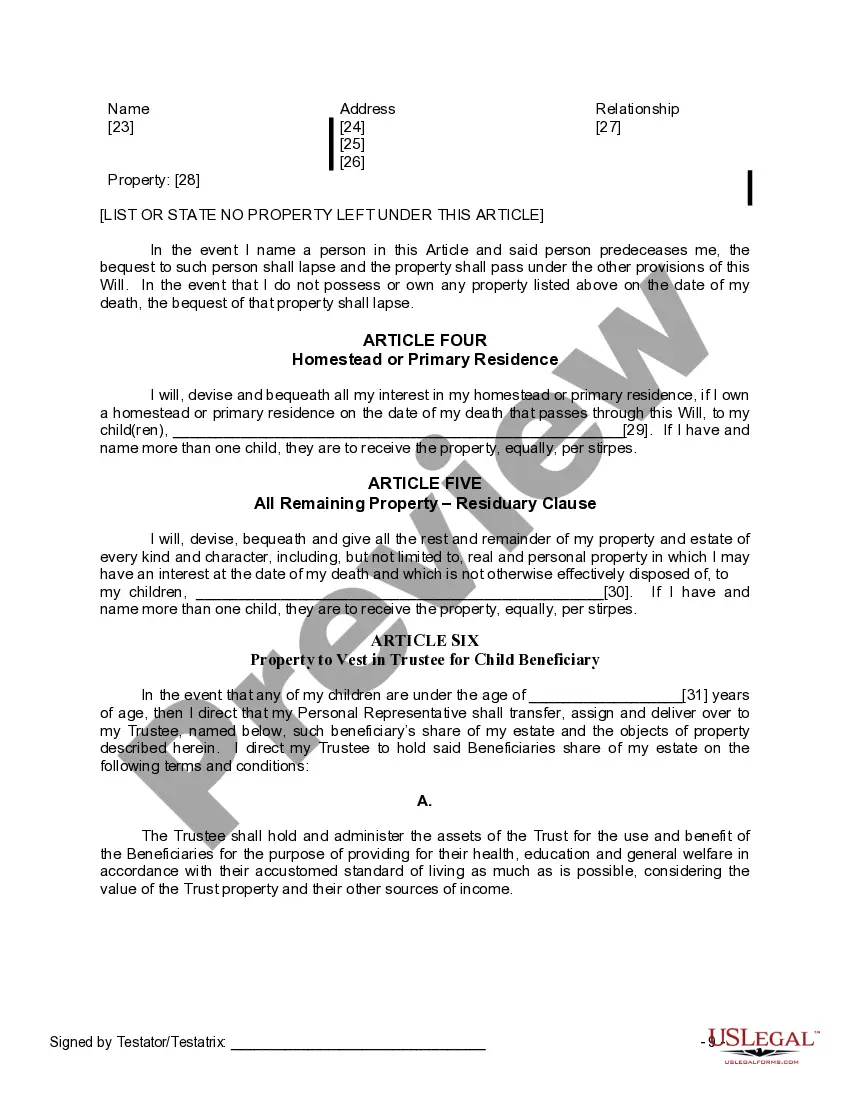
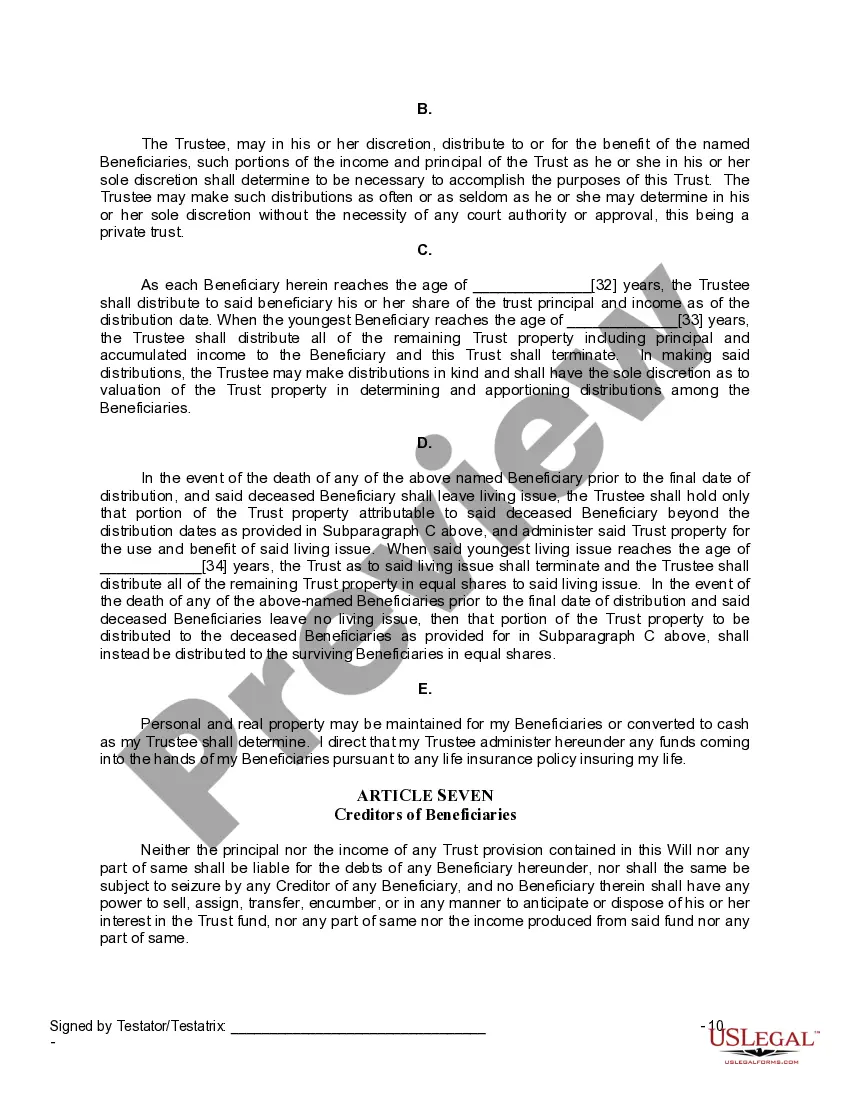
The Last Will and Testament for Widow or Widower with Minor Children is a legal document that allows a widow or widower to outline their wishes regarding the distribution of their estate after death. This will specifically addresses the needs of individuals who have minor children, enabling them to appoint guardians, designate beneficiaries, and create trusts for the children's inheritance. It differs from standard wills by including specific clauses for the care and management of minor children's assets.
Form components explained
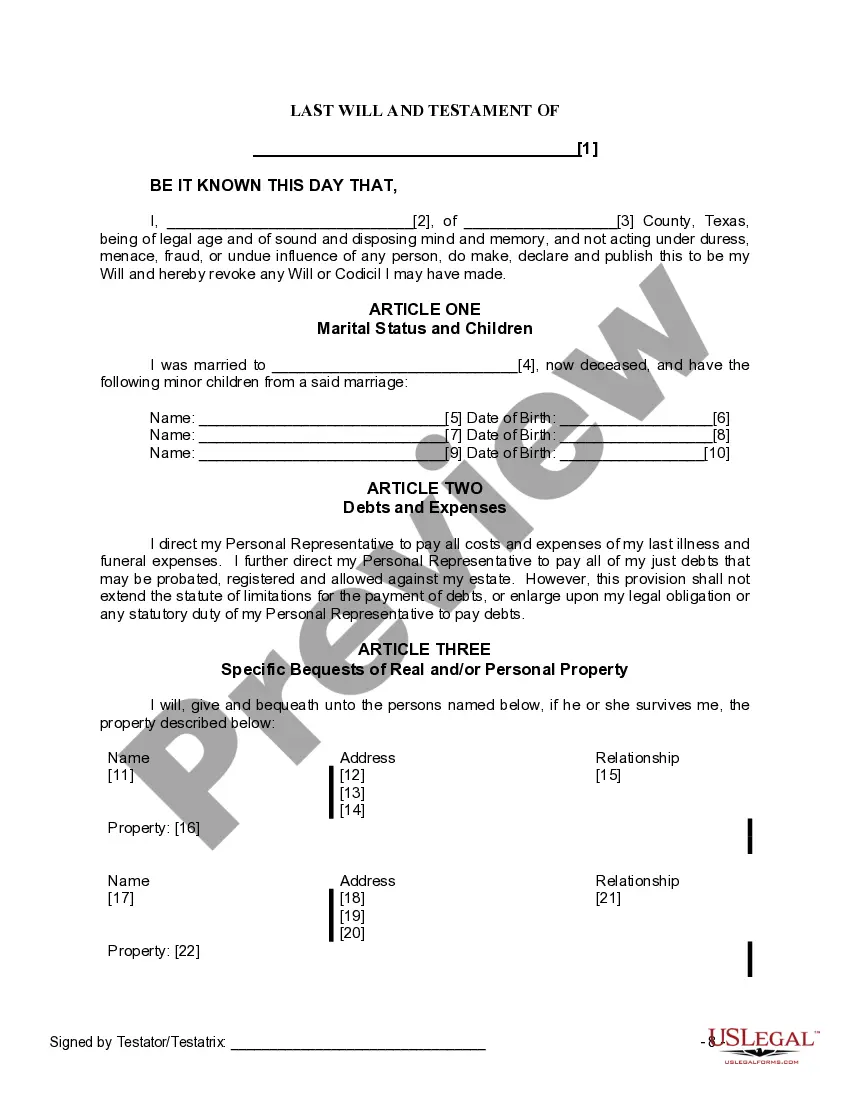
- Appointment of a personal representative or executor to manage the estate.
- Designation of beneficiaries who will inherit property and assets.
- Provisions for the appointment of a trustee for minor childrenâs assets.
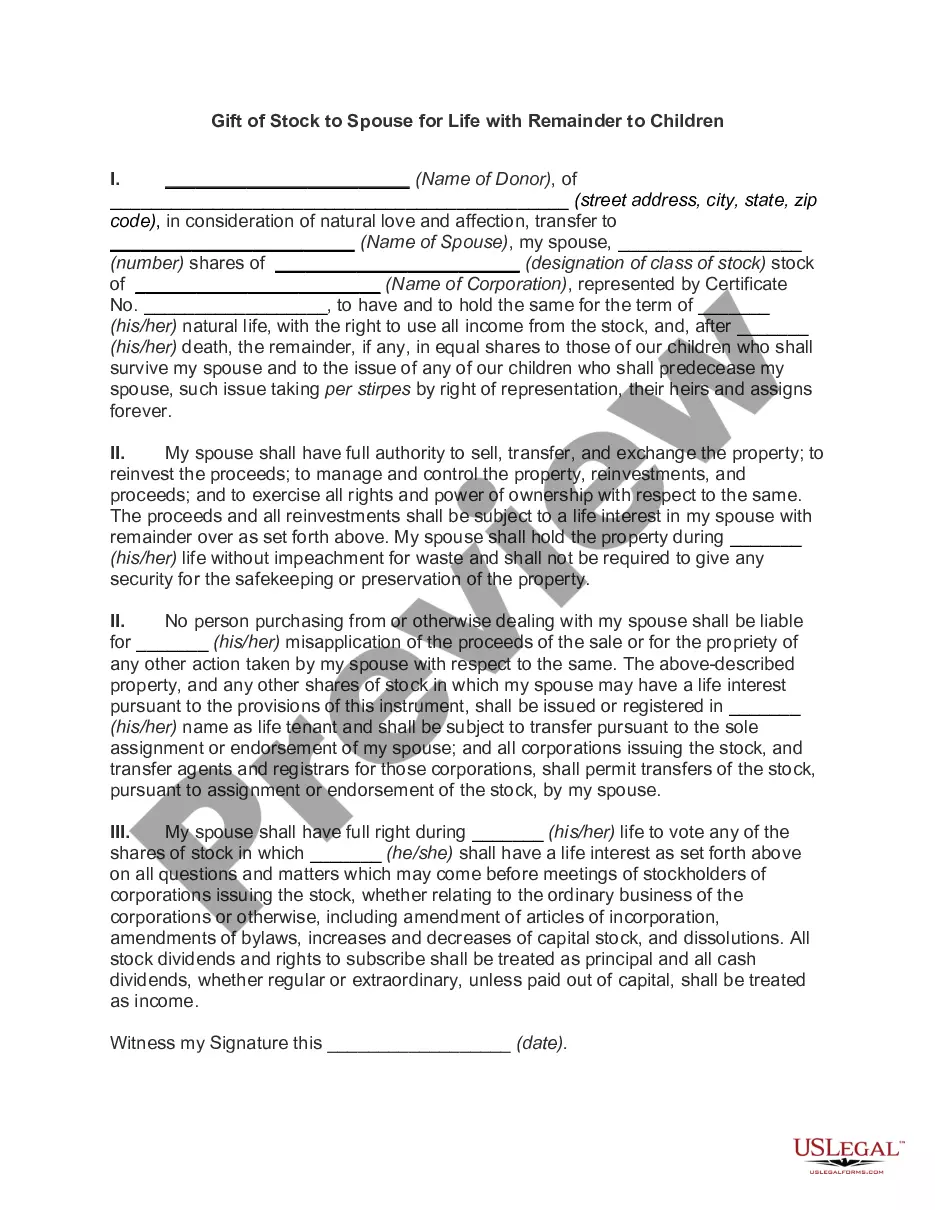
- Clauses detailing specific property bequests and the distribution of remaining assets.
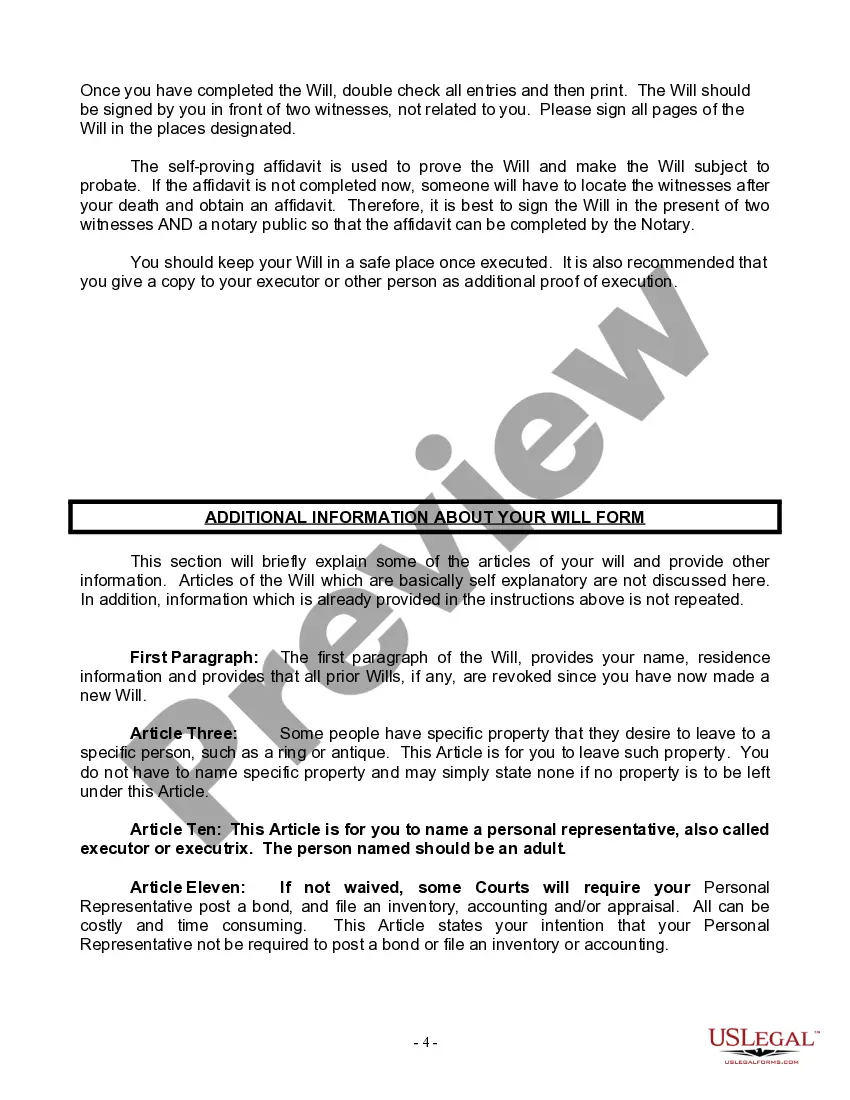
- Instructions for signing in the presence of witnesses and a notary if applicable.





Common use cases
This form should be used when a widow or widower wants to ensure their minor children are provided for upon their passing. It is particularly important if the individual wishes to appoint guardians, specify asset distribution, and make provisions for managing their children's inheritance. It should be completed whenever significant life changes occur, such as the death of a spouse or the birth of a child.
Who should use this form
- Widows or widowers with minor children seeking to establish a legally recognized last will.
- Individuals wanting to ensure the proper care of their minor children after their death.
- Those needing to designate guardians and trustees for managing their children's inheritance.
- Anyone wanting to specify how their property and assets should be distributed among beneficiaries.
Completing this form step by step
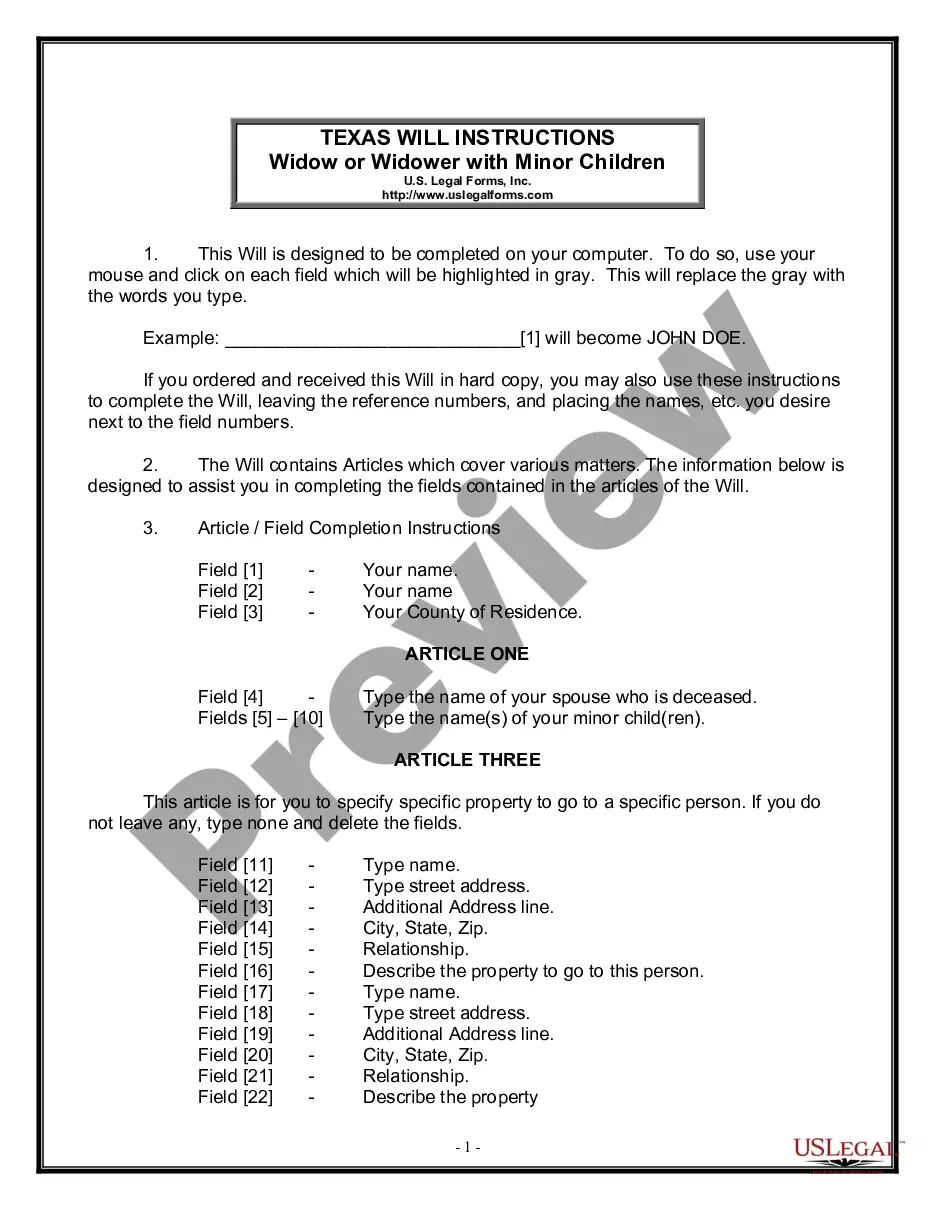
- Identify and enter your name and the county of residence.
- Provide the name of your deceased spouse and details of your minor children.
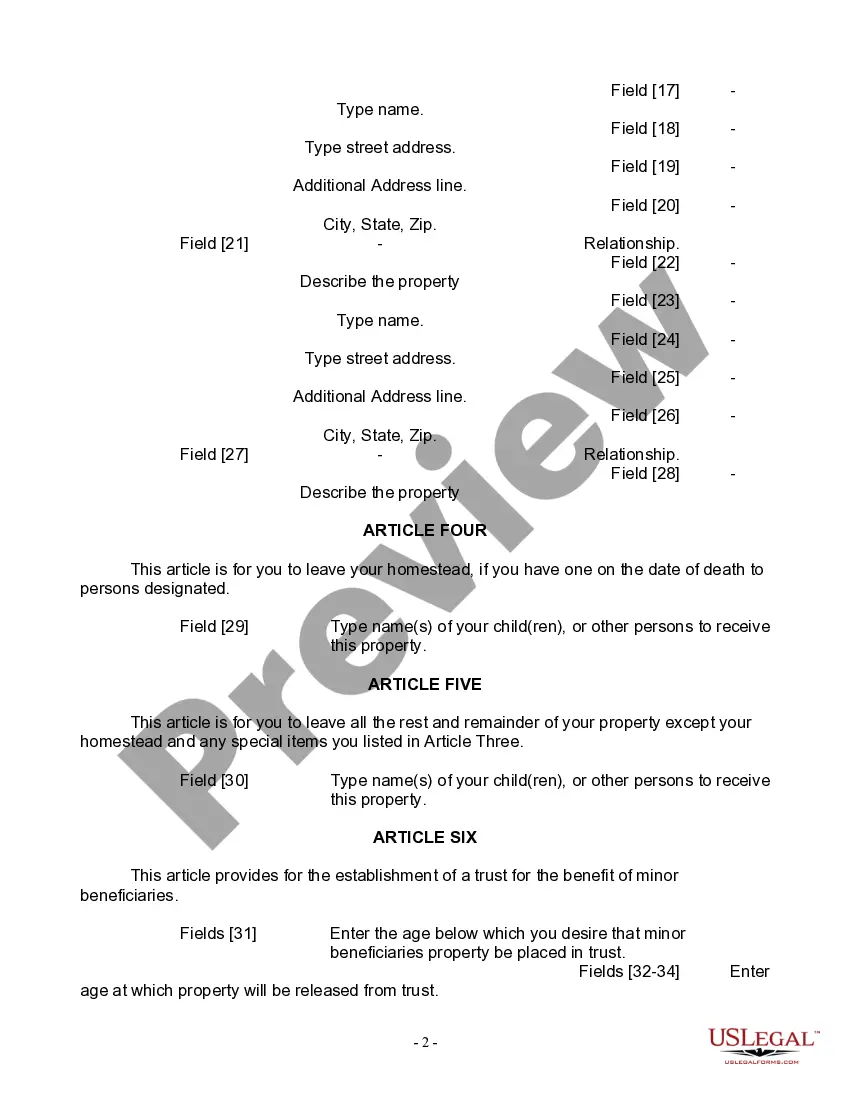
- Designate beneficiaries for specific property and outline their relationship to you.
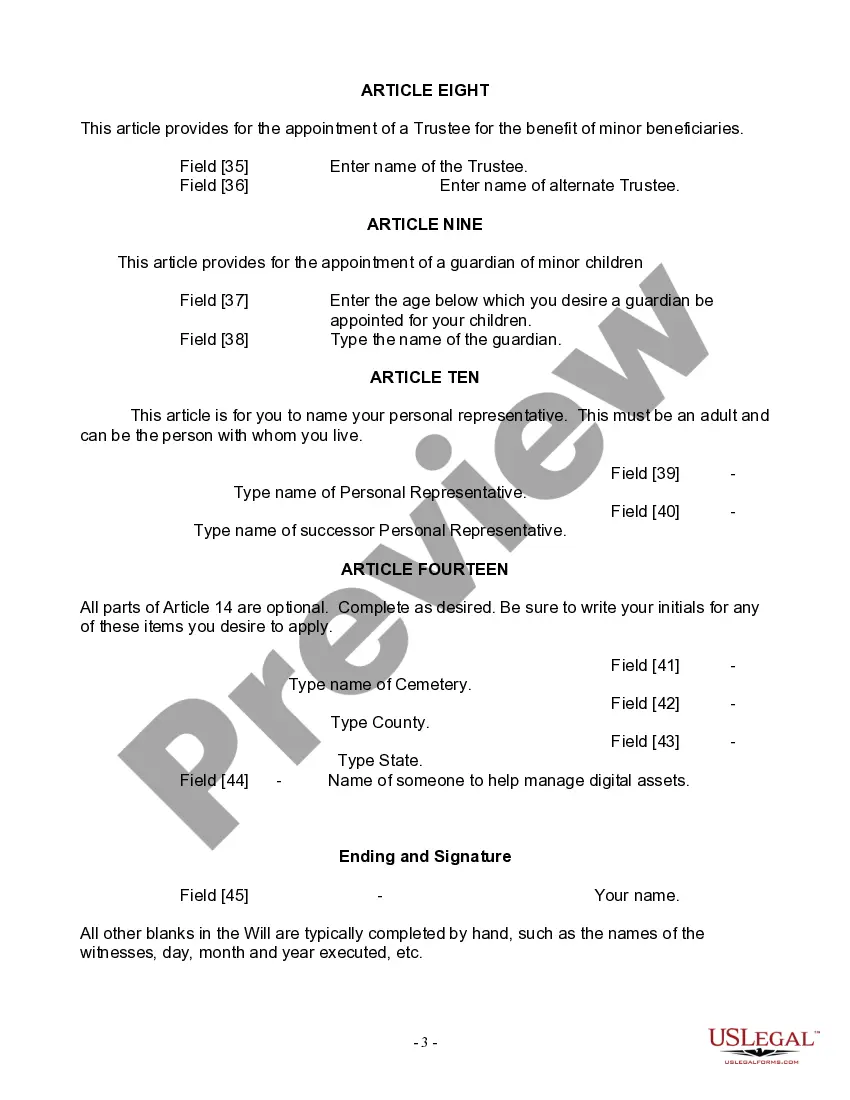
- Appoint a personal representative and any alternate representatives to manage your estate.
- Sign the will in the presence of two witnesses and a notary public, if required.
Does this document require notarization?
Yes, this form must be notarized to be legally valid if your state requires a self-proving affidavit. This ensures the will can be probated without additional evidence required. US Legal Forms offers integrated online notarization for your convenience, enabling secure completion 24/7.
Get your form ready online
Our built-in tools help you complete, sign, share, and store your documents in one place.
Make edits, fill in missing information, and update formatting in US Legal Forms—just like you would in MS Word.
Download a copy, print it, send it by email, or mail it via USPS—whatever works best for your next step.
Sign and collect signatures with our SignNow integration. Send to multiple recipients, set reminders, and more. Go Premium to unlock E-Sign.
If this form requires notarization, complete it online through a secure video call—no need to meet a notary in person or wait for an appointment.
We protect your documents and personal data by following strict security and privacy standards.

Make edits, fill in missing information, and update formatting in US Legal Forms—just like you would in MS Word.

Download a copy, print it, send it by email, or mail it via USPS—whatever works best for your next step.

Sign and collect signatures with our SignNow integration. Send to multiple recipients, set reminders, and more. Go Premium to unlock E-Sign.

If this form requires notarization, complete it online through a secure video call—no need to meet a notary in person or wait for an appointment.

We protect your documents and personal data by following strict security and privacy standards.
Common mistakes to avoid
- Failing to have the will signed by the required number of witnesses.
- Not appointing an alternate personal representative or guardian.
- Forgetting to update the will after life changes, such as remarriage or the birth of additional children.
- Leaving out specific property designations, leading to potential disputes among heirs.
Benefits of completing this form online
- Convenient access allows you to complete the form at your own pace.
- Editability ensures you can make adjustments as your situation changes.
- Reliable instruction and templates are drafted by licensed attorneys.
What to keep in mind
- The Last Will and Testament protects your wishes after death, especially for those with minor children.
- It is essential to appoint guardians and trustees to safeguard your children's futures.
- Proper execution of the will is critical for legal enforceability.
- Using an online template can save time and ensure professional quality.
Looking for another form?

Form popularity
FAQ
An attested will is not handwritten the document is typically prepared by an attorney in typewritten form. To be valid in Texas, it must be signed by the testator and by two credible witnesses above the age of 14 who are present at the time the testator signs.
It must be in writing. Generally, of course, wills are composed on a computer and printed out. The person who made it must have signed and dated it. A will must be signed and dated by the person who made it. Two adult witnesses must have signed it. Witnesses are crucial.
Two types of wills are recognized in Texas: formal and holographic. A formal will requires that at least two people over the age of 14 witness the signing of the document.Holographic wills are popular because you don't have to get them signed by a witness and you can draft one yourself without an attorney.
Texas will forms are documents that will help guide a user through the process of both, division of their estate as well as preparation of a living will. A last will and testament is a document that a Testator would use to establish division of their estate, by an executor (representative) between their
Are 18 years of age or older, have been lawfully married, or. are a member of the armed forces of the United States.
A holographic will is simply a will that is entirely in your own handwriting. If done correctly, it is valid and can be legally enforced. In order to make a valid handwritten will in Texas, the entire document must be in your own handwriting.
In order to make a valid handwritten will in Texas, the entire document must be in your own handwriting. No one can write any part of it except for you and no part of it can be typed. You can write in cursive or print, but the entire will must be in your handwriting only.
No, in Texas, you do not need to notarize your will to make it legal. However, Texas allows you to make your will "self-proving" and you'll need to go to a notary if you want to do that. A self-proving will speeds up probate because the court can accept the will without contacting the witnesses who signed it.