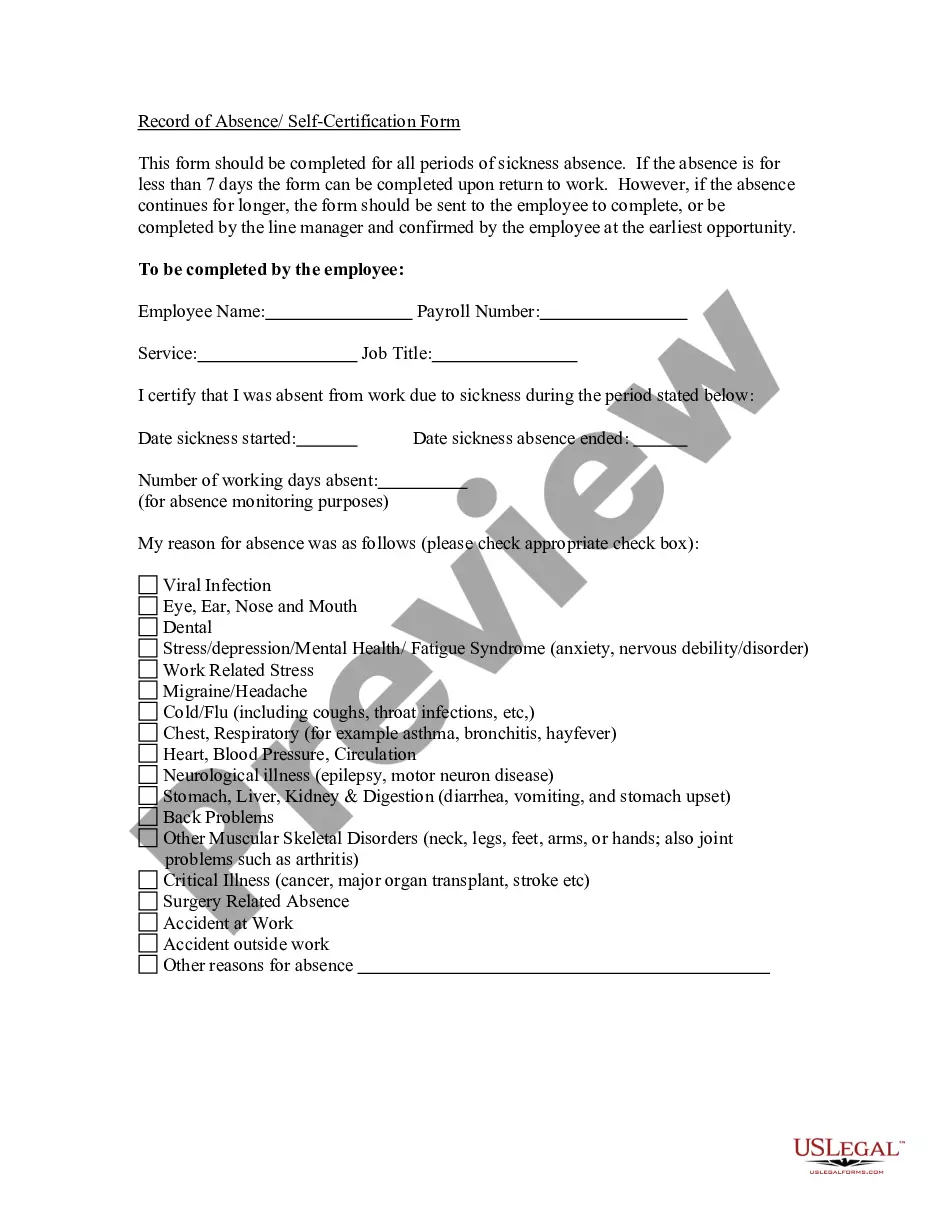
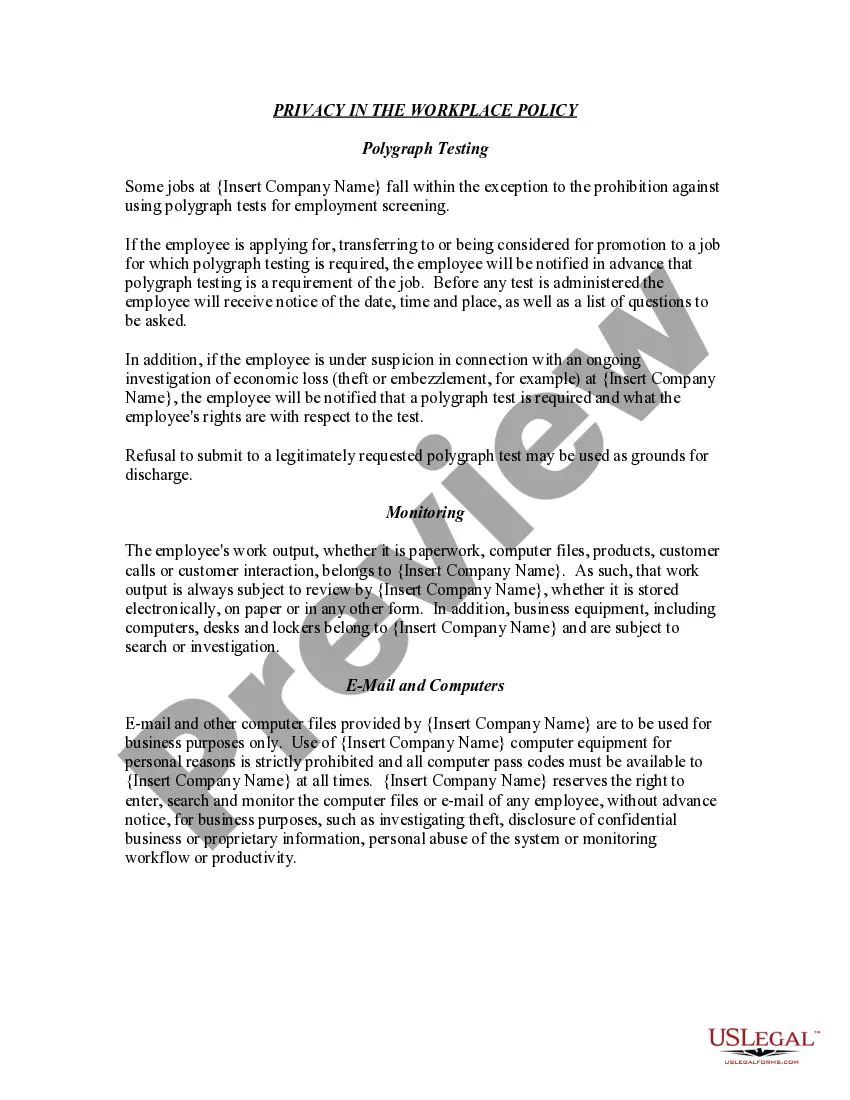
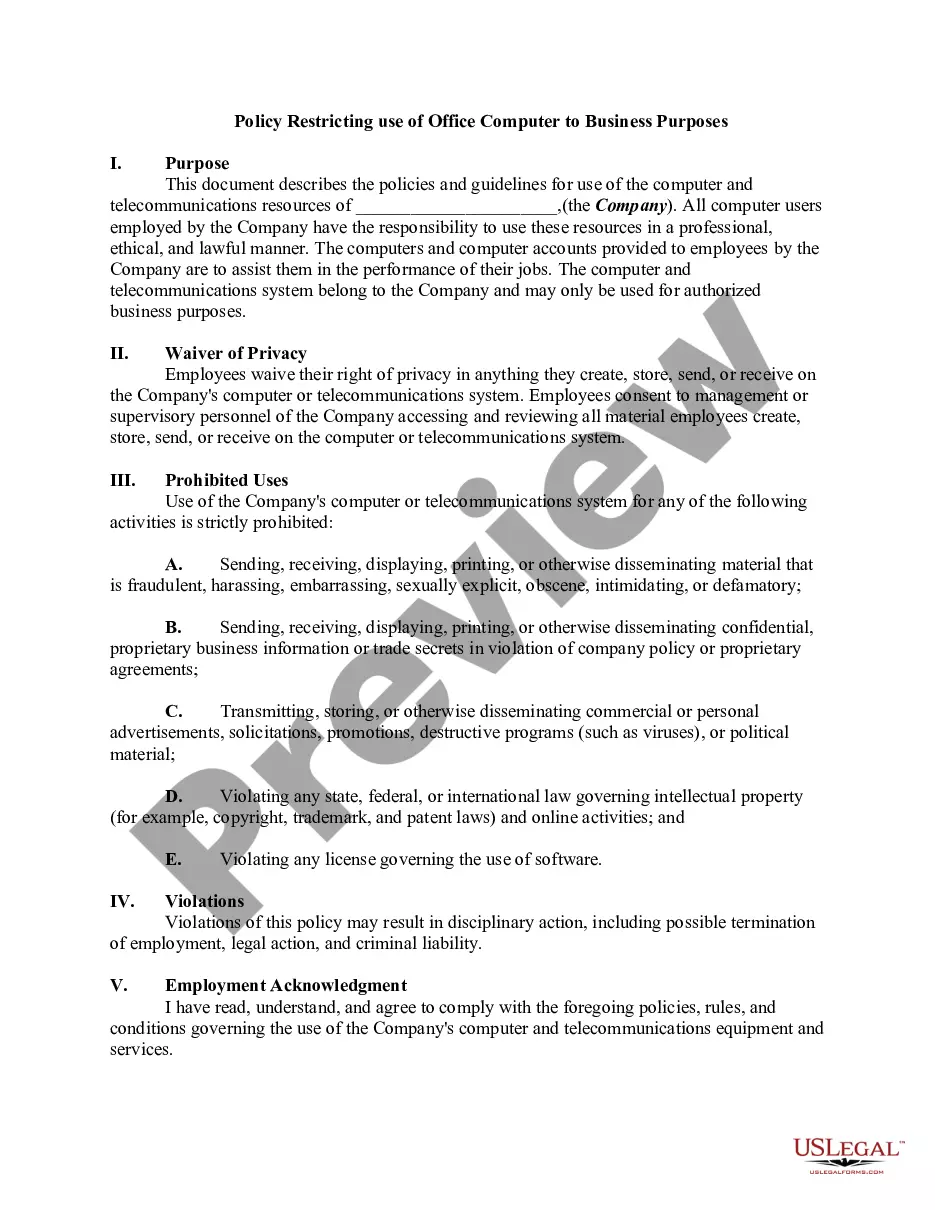
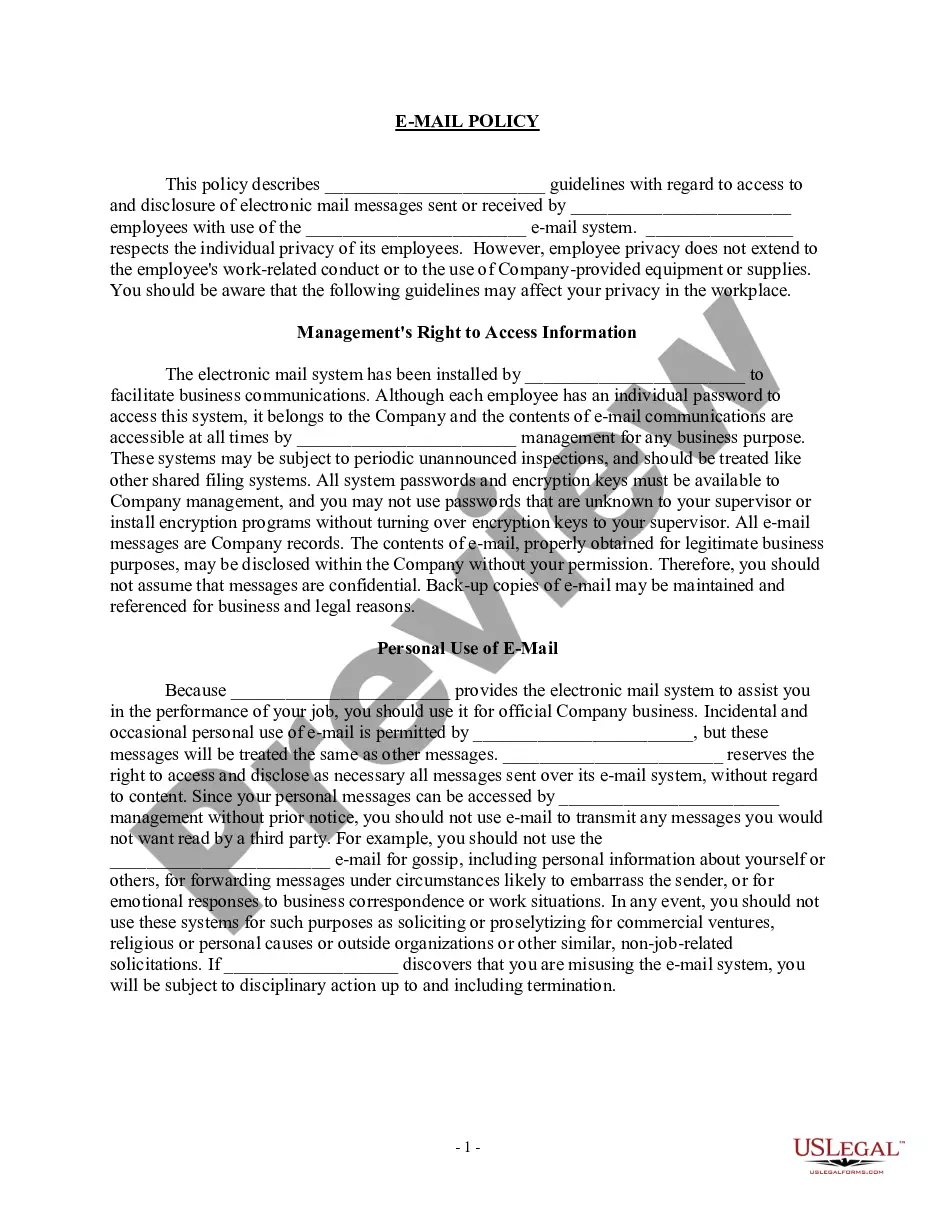
Texas Privacy in the Workplace Policy
Description

Get your form ready online
Our built-in tools help you complete, sign, share, and store your documents in one place.
Make edits, fill in missing information, and update formatting in US Legal Forms—just like you would in MS Word.
Download a copy, print it, send it by email, or mail it via USPS—whatever works best for your next step.
Sign and collect signatures with our SignNow integration. Send to multiple recipients, set reminders, and more. Go Premium to unlock E-Sign.
If this form requires notarization, complete it online through a secure video call—no need to meet a notary in person or wait for an appointment.
We protect your documents and personal data by following strict security and privacy standards.

Make edits, fill in missing information, and update formatting in US Legal Forms—just like you would in MS Word.

Download a copy, print it, send it by email, or mail it via USPS—whatever works best for your next step.

Sign and collect signatures with our SignNow integration. Send to multiple recipients, set reminders, and more. Go Premium to unlock E-Sign.

If this form requires notarization, complete it online through a secure video call—no need to meet a notary in person or wait for an appointment.

We protect your documents and personal data by following strict security and privacy standards.
Looking for another form?


How to fill out Privacy In The Workplace Policy?
Have you ever found yourself in a situation where you require documents for possibly business or individual purposes nearly every workday.
There are numerous reputable document templates accessible online, but locating versions you can rely on is not straightforward.
US Legal Forms offers a vast array of form templates, including the Texas Privacy in the Workplace Policy, which are crafted to comply with state and federal regulations.
Once you find the appropriate form, click Buy now.
Select the pricing plan you need, fill in the necessary information to set up your account, and complete the purchase using your PayPal or credit card. Choose a convenient file format and download your copy. You can access all the document templates you have purchased in the My documents section. You can obtain another copy of the Texas Privacy in the Workplace Policy anytime, if needed. Just click the necessary form to download or print the document template. Use US Legal Forms, the most extensive assortment of official forms, to save time and avoid mistakes. The service provides well-crafted legal document templates that can be used for various purposes. Create your account on US Legal Forms and start simplifying your life.
- If you are already familiar with the US Legal Forms website and possess your account, simply Log In.
- You can then download the Texas Privacy in the Workplace Policy template.
- If you do not have an account and wish to start using US Legal Forms, follow these steps.
- Find the form you need and ensure it is for the correct city/county.
- Utilize the Review option to evaluate the form.
- Read the description to confirm that you have selected the right form.
- If the form does not meet your requirements, use the Search area to locate the form that suits your needs.
Form popularity
FAQ
Texas observes three types of invasion of privacy claims: (1) misappropriationthe right to be free from the unwarranted appropriation or exploitation of one's personality; (2) unlawful publicitythe publicizing of one's private affairs with which the public has no legitimate concern; and (3) intrusion on seclusionthe
Texas does not have a privacy law that applies to private companies and specifically addresses online privacy.
The Privacy Act only applies to an employee record if the information is used for a purpose not directly related to the employment relationship. However, workplace laws require a range of information to be made and kept for each employee.
Employees have the right to keep private facts about themselves confidential and the right to some degree of personal space. An employer that discloses private facts or lies about an employee may be held accountable in a civil action for invasion of privacy or defamation.
So, what is employee data or HR data? Quite simply, it is an employee's application file, personal file, payroll information, leave/medical file, and all the information employers have about their employee whether it be to hire/fire, pay, provide benefits, enroll in 401k and similar programs, etc.
This can include salaries, employee perks, client lists, trade secrets, sales numbers, customer information, news about pending terminations, reasons for a firing, phone codes or computer passwords. You may not divulge this information while you are working for an employer or after you leave.
While there is no single universal legal definition of private employee data, it generally includes employee addresses, photos, social security numbers, dates of birth, protected class information and medical records.
The TMRPA, or Texas Privacy Act, focuses on maintaining the privacy of Protected Health Information (PHI) for patients and customers. According to U.S. law, PHI consists of any information about health status, provision of health care, or payment for health care that is created or collected by a Covered Entity.
The Privacy Act allows you to: know why your personal information is being collected, how it will be used and who it will be disclosed to. have the option of not identifying yourself, or of using a pseudonym in certain circumstances. ask for access to your personal information (including your health information)
In particular, Privacy Laws includes the Health Insurance Portability and Accountability Act of 1996 (HIPAA), the Family Educational Rights and Privacy Act (FERPA), the Identify Theft Enforcement and Protection Act (ITEPA), the GDPR and other applicable laws that specify privacy, security or security breach