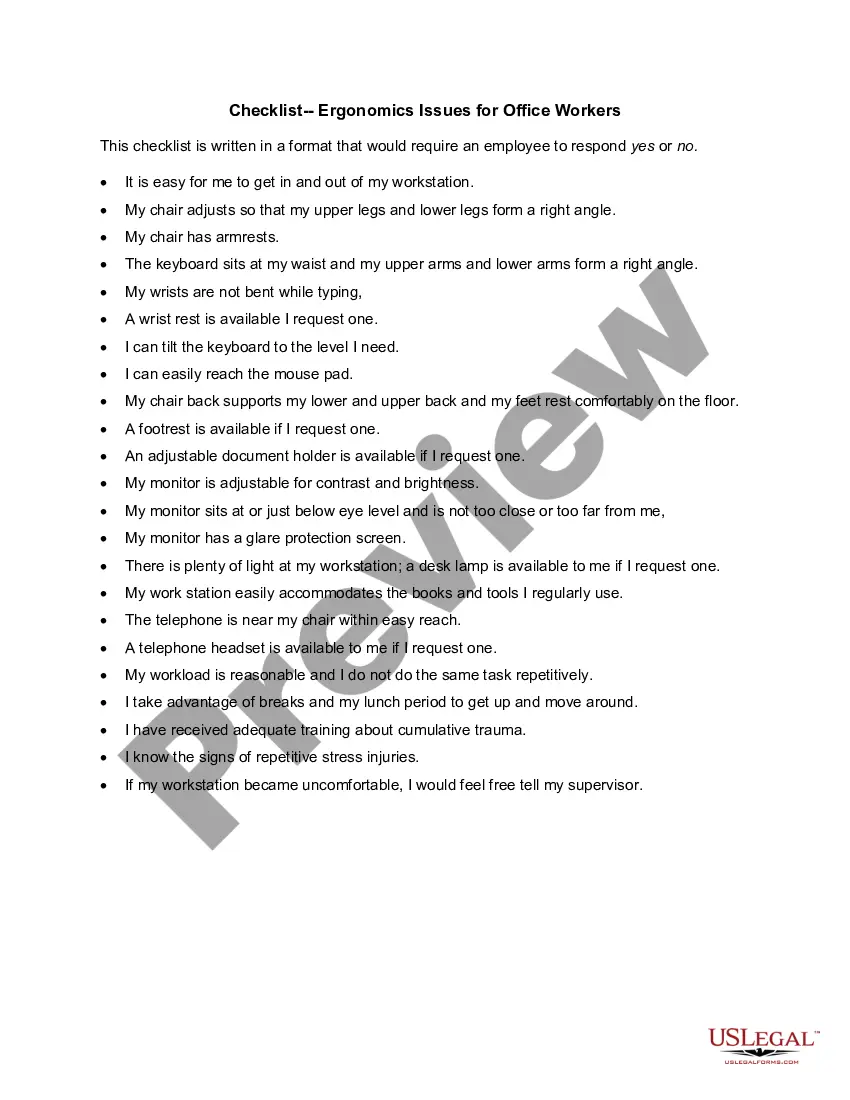
Texas Checklist - Ergonomics Issues for Office Workers
Description
Get your form ready online
Our built-in tools help you complete, sign, share, and store your documents in one place.
Make edits, fill in missing information, and update formatting in US Legal Forms—just like you would in MS Word.
Download a copy, print it, send it by email, or mail it via USPS—whatever works best for your next step.
Sign and collect signatures with our SignNow integration. Send to multiple recipients, set reminders, and more. Go Premium to unlock E-Sign.
If this form requires notarization, complete it online through a secure video call—no need to meet a notary in person or wait for an appointment.
We protect your documents and personal data by following strict security and privacy standards.

Make edits, fill in missing information, and update formatting in US Legal Forms—just like you would in MS Word.

Download a copy, print it, send it by email, or mail it via USPS—whatever works best for your next step.

Sign and collect signatures with our SignNow integration. Send to multiple recipients, set reminders, and more. Go Premium to unlock E-Sign.

If this form requires notarization, complete it online through a secure video call—no need to meet a notary in person or wait for an appointment.

We protect your documents and personal data by following strict security and privacy standards.
Looking for another form?





How to fill out Checklist - Ergonomics Issues For Office Workers?
Locating the appropriate legal document template may pose a challenge. Clearly, there are numerous templates available online, but how can you find the legal form you require? Visit the US Legal Forms website. This service offers a vast array of templates, including the Texas Checklist - Ergonomics Issues for Office Workers, suitable for both business and personal requirements. All forms are verified by professionals and comply with state and federal regulations.
If you are already registered, Log In to your account and click the Obtain button to locate the Texas Checklist - Ergonomics Issues for Office Workers. Use your account to search for the legal forms you have previously acquired. Navigate to the My documents tab in your account to download an additional copy of the document you require.
If you are a new user of US Legal Forms, here are some simple instructions for you to follow: First, ensure you have selected the correct form for your city/state. You can preview the form using the Review button and read the form description to confirm this is the right one for you.
US Legal Forms is the largest repository of legal forms where you can find countless document templates. Use this service to download professionally created documents that comply with state requirements.
- If the form does not meet your needs, utilize the Search section to find the appropriate form.
- Once you are certain that the form is accurate, click the Buy now button to obtain the form.
- Select the pricing plan you wish to use and enter the necessary information. Create your account and pay for the order using your PayPal account or credit card.
- Choose the file format and download the legal document template to your device.
- Complete, edit, print, and sign the downloaded Texas Checklist - Ergonomics Issues for Office Workers.
Form popularity
FAQ
To request an ergonomic assessment, start by discussing your needs with your manager or HR department. Specify your concerns regarding workplace comfort and safety. Mention the importance of using the Texas Checklist - Ergonomics Issues for Office Workers to reinforce the need for this assessment. Collaborating with professionals can lead to effective changes that benefit everyone.
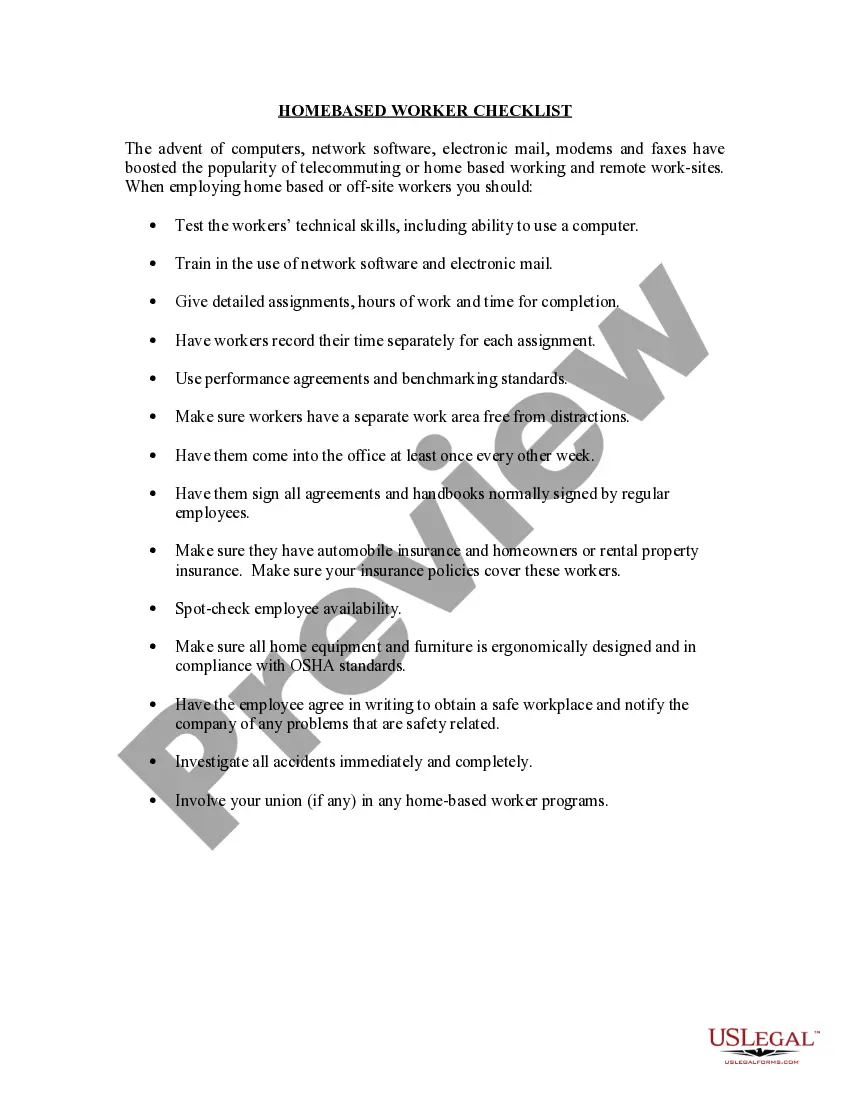
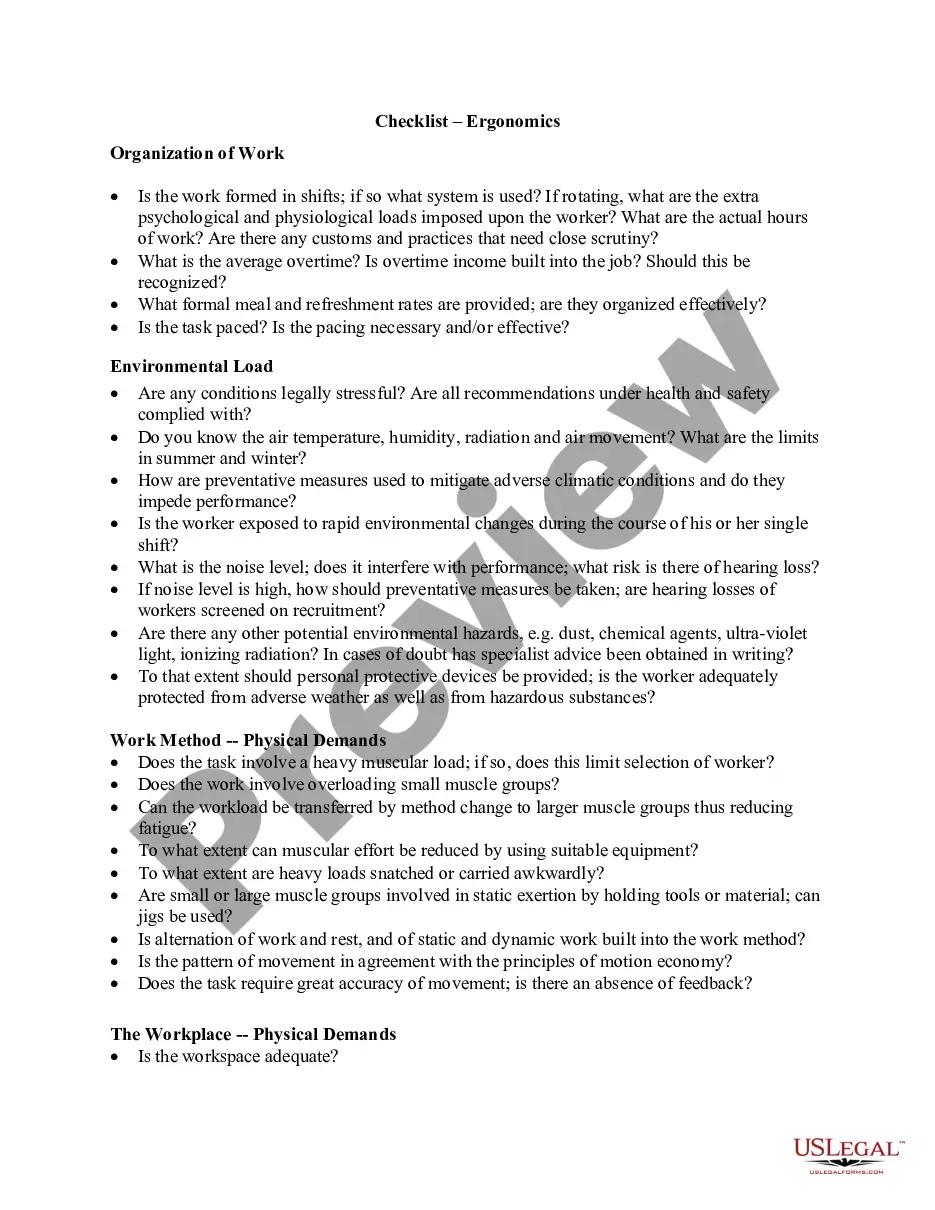
A basic ergonomic assessment involves evaluating work environments to identify potential hazards. This includes observing how employees use their workspaces and tools, inspecting seating arrangements, and analyzing posture. Utilizing the Texas Checklist - Ergonomics Issues for Office Workers simplifies the process, ensuring critical elements are not overlooked and enhancing employee well-being.
The ergonomic approach to assessment focuses on fitting the job to the worker rather than forcing the worker to adapt to the job. This method seeks to identify risk factors that contribute to discomfort or injury and provides practical solutions. By applying the Texas Checklist - Ergonomics Issues for Office Workers, you can create a safer and more productive work environment tailored to the needs of each employee.
Finding ergonomic issues in the workplace involves watching employees as they perform their tasks. Look for signs of discomfort, poor posture, or repetitive motions that could lead to injury. Additionally, using the Texas Checklist - Ergonomics Issues for Office Workers can guide your observations and highlight common ergonomic pitfalls that need attention.
When conducting an ergonomic assessment in an office, start by examining each workstation. Observe how workers interact with their tools and furniture. Measure key dimensions like desk height and chair adjustability. Use the Texas Checklist - Ergonomics Issues for Office Workers to help identify potential problems and suggest ways to create a more comfortable and supportive environment.
To effectively conduct an ergonomic assessment, first identify the workspace and gather information. Next, evaluate the tasks and observe employees while they work. Then, assess risk factors that may contribute to discomfort or injury. Following this, create a report that outlines findings and recommendations. Finally, implement changes based on the Texas Checklist - Ergonomics Issues for Office Workers to improve workplace ergonomics.
To conduct an ergonomic assessment in an office, observe workstations, analyze employees' postures, and evaluate the tools being used. Gather feedback from employees regarding their comfort and any issues they experience. By following the Texas Checklist - Ergonomics Issues for Office Workers, you can ensure a comprehensive assessment that enhances workplace safety and efficiency.
OSHA does not have specific ergonomic regulations, but it encourages employers to minimize workplace ergonomic hazards. Companies should follow guidelines provided by OSHA to prevent musculoskeletal injuries, which often occur in office settings. The Texas Checklist - Ergonomics Issues for Office Workers is a useful resource to align your practices with safety recommendations.
An ergonomic risk assessment for office workers involves examining specific tasks and identifying potential hazards that may cause discomfort or injury. This assessment considers factors like workstation design and employee habits. Using the Texas Checklist - Ergonomics Issues for Office Workers can streamline this process, ensuring all areas are thoroughly reviewed.
Ergonomic risk factors for office workers include poor workstation layout, improper posture, and repetitive motions. These factors can lead to discomfort and injuries over time, which ultimately affect worker performance. Understanding these risks through the Texas Checklist - Ergonomics Issues for Office Workers enables organizations to implement effective preventive measures.