Texas Independent Contractor Agreement Between Licensed Counselor and Therapist and Licensed Counselor and Therapist Practicing as a Solo Practitioner

State:
Multi-State
Control #:
US-02565BG
Format:
Word; 
Rich Text
Instant download

Description

An independent contractor is a person or business who performs services for another person pursuant to an agreement and who is not subject to the other's control, or right to control, the manner and means of performing the services. The exact nature of the independent contractor's relationship with the hiring party is important since an independent contractor pays his/her own Social Security, income taxes without payroll deduction, has no retirement or health plan rights, and often is not entitled to worker's compensation coverage. The traditional tests to determine whether a worker is an employee or independent contractor involve the concept of control. The Internal Revenue Service (IRS) developed 20 factors used to determine whether a worker is an independent contractor under the common law. A "yes" answer to any of these questions would be evidence of an employer-employee relationship.

" Does the principal provide instructions to the worker about when, where, and how he or she is to perform the work?


" Does the principal provide training to the worker?

" Are the services provided by the worker integrated into the principal's business operations?

" Must the services be rendered personally by the worker?

" Does the principal hire, supervise and pay assistants to the worker?

" Is there a continuing relationship between the principal and the worker?

" Does the principal set the work hours and schedule?

" Does the worker devote substantially full time to the business of the principal?

" Is the work performed on the principal's premises?

" Is the worker required to perform the services in an order or sequence set by the principal?

" Is the worker required to submit oral or written reports to the principal?

" Is the worker paid by the hour, week, or month?

" Does the principal have the right to discharge the worker at will?

" Can the worker terminate his or her relationship with the principal any time he or she wishes without incurring liability to the principal?

" Does the principal pay the business or traveling expenses of the worker?

A "yes" answer to any of these questions would be evidence of an independent contractor relationship.


" Does the worker furnish significant tools, materials and equipment?

" Does the worker have a significant investment in facilities?

" Can the worker realize a profit or loss as a result of his or her services?

" Does the worker provide services for more than one firm at a time?

" Does the worker make his or her services available to the general public?
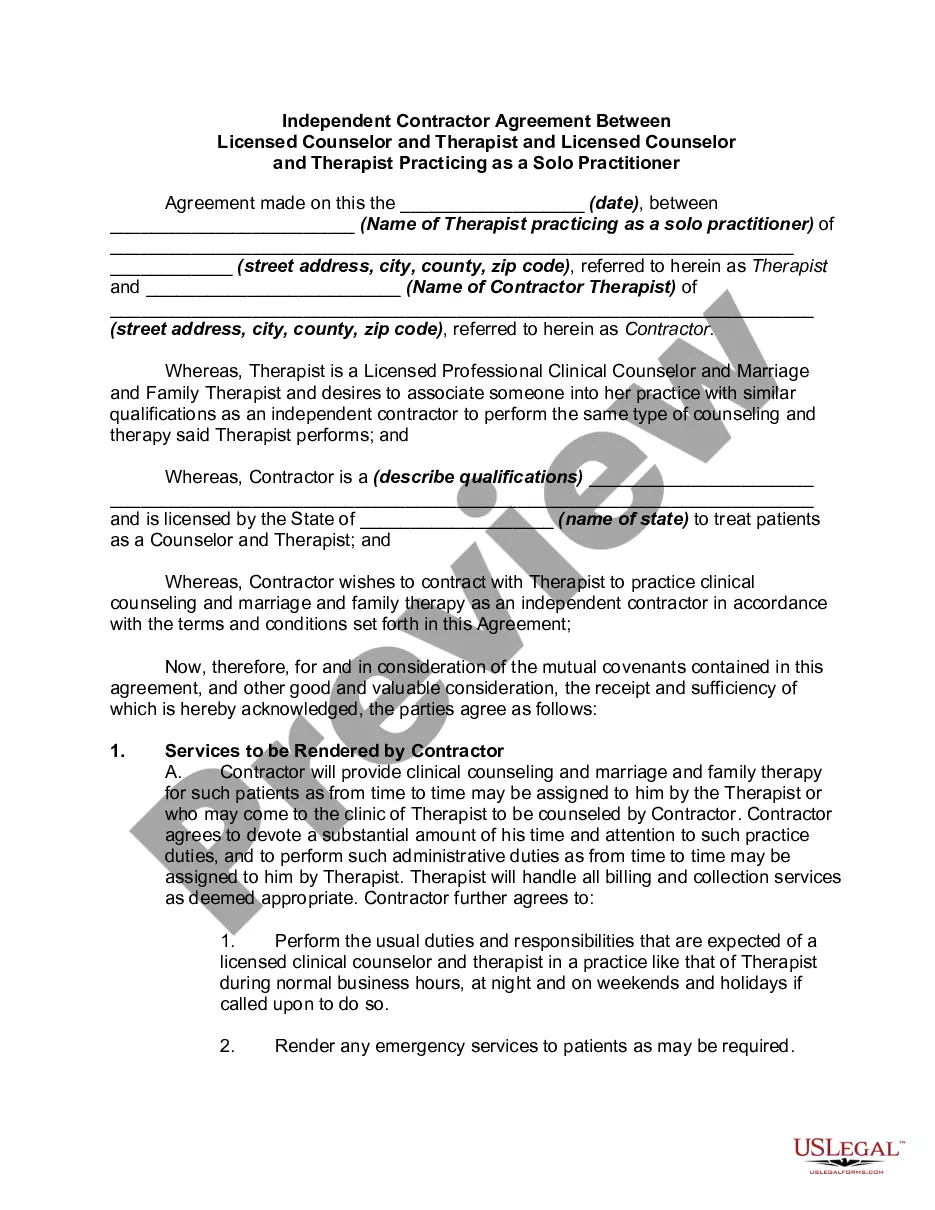
Free preview
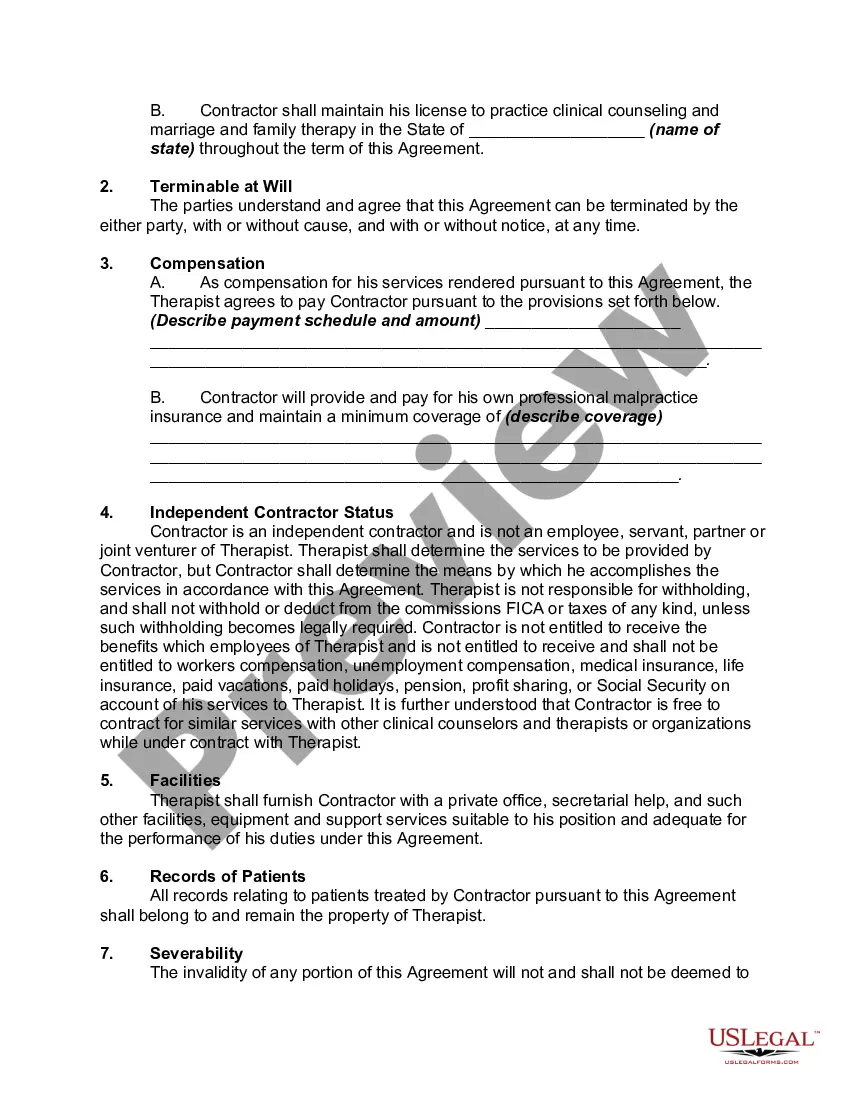
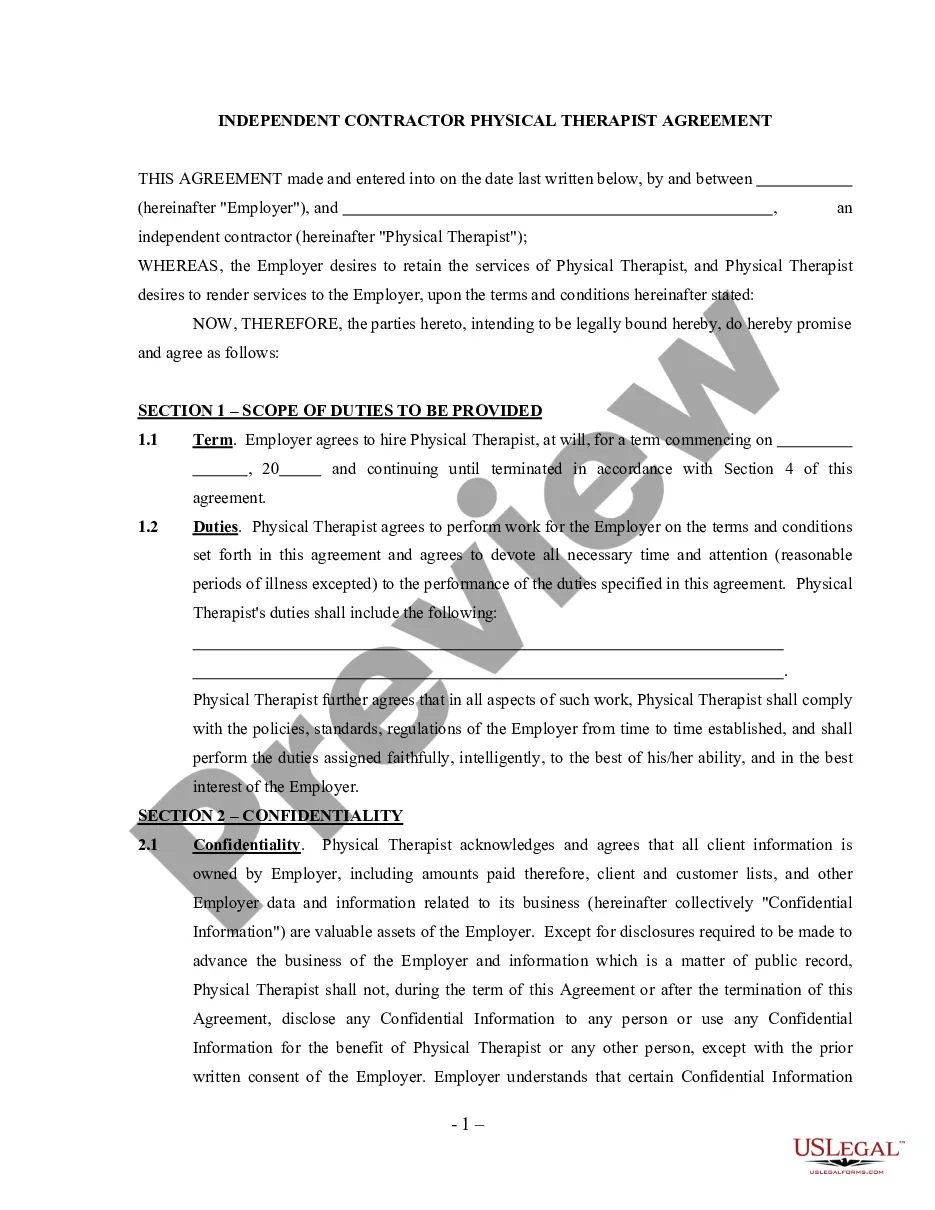
  • Preview Independent Contractor Agreement Between Licensed Counselor and Therapist and Licensed Counselor and Therapist Practicing as a Solo Practitioner
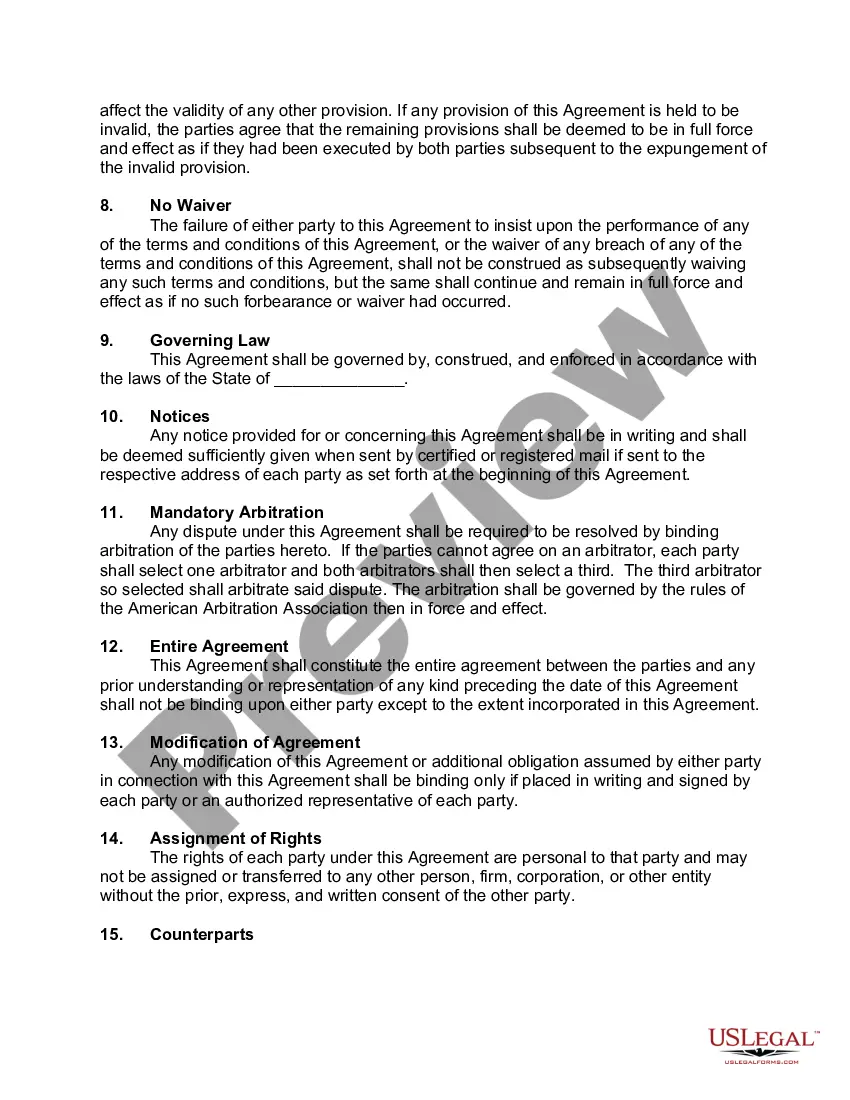
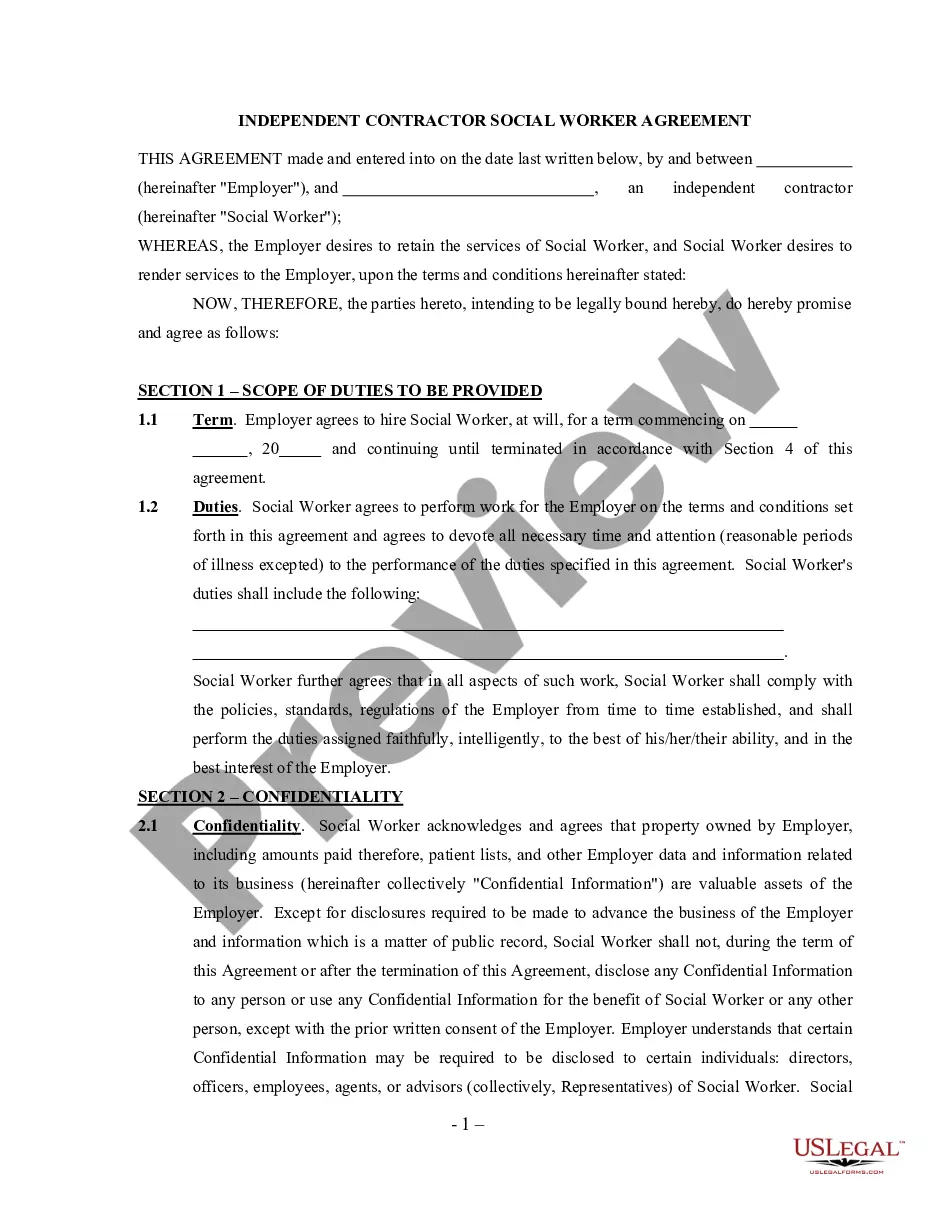
  • Preview Independent Contractor Agreement Between Licensed Counselor and Therapist and Licensed Counselor and Therapist Practicing as a Solo Practitioner
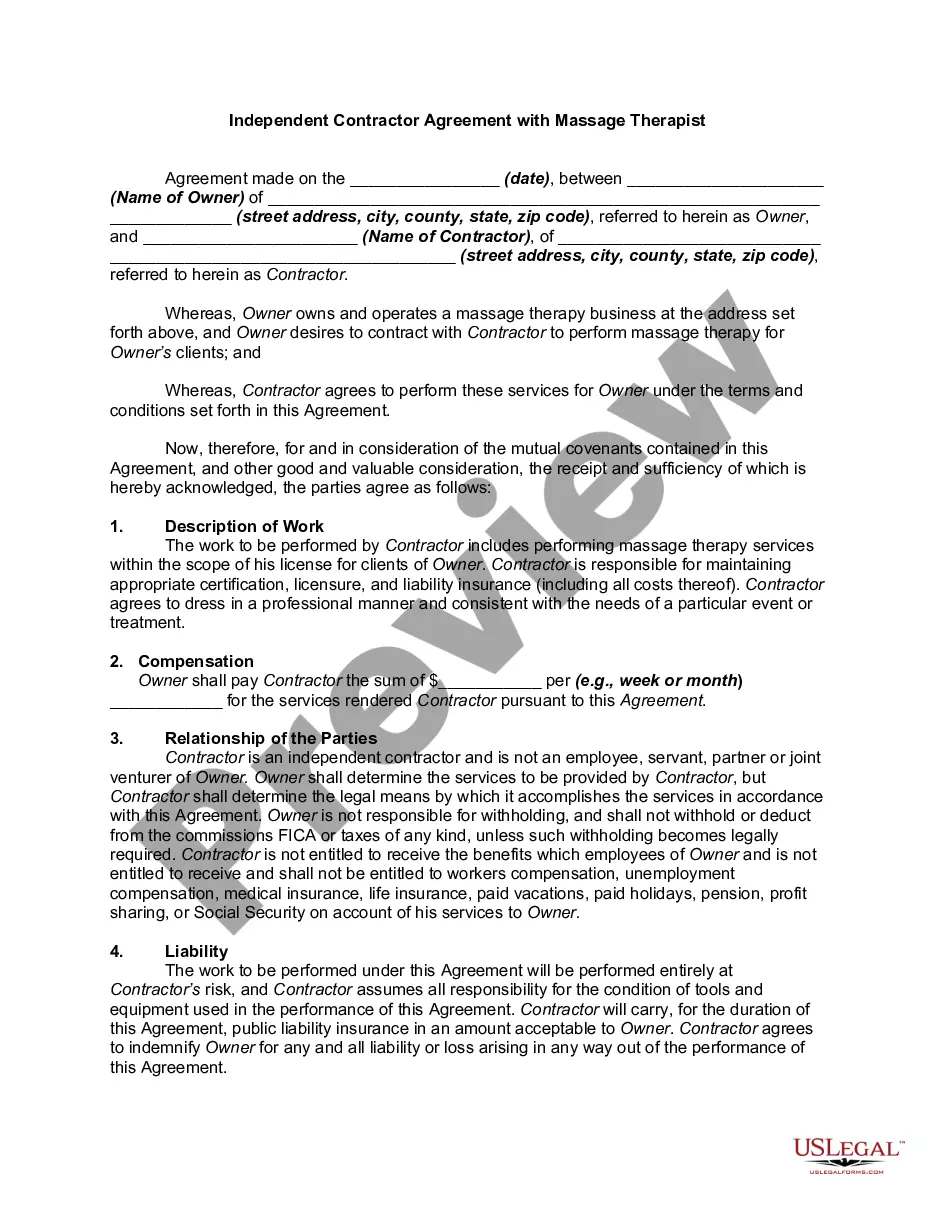
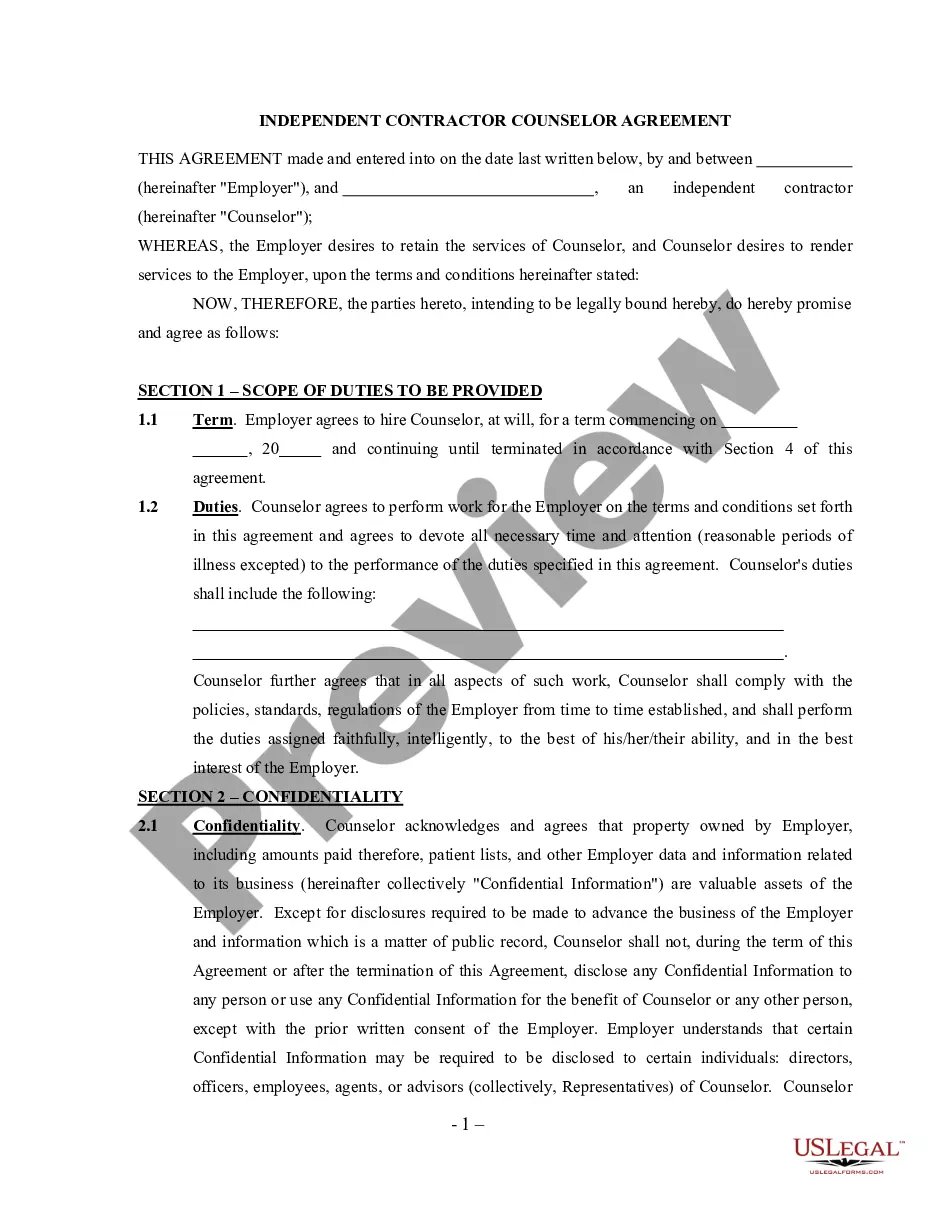
  • Preview Independent Contractor Agreement Between Licensed Counselor and Therapist and Licensed Counselor and Therapist Practicing as a Solo Practitioner
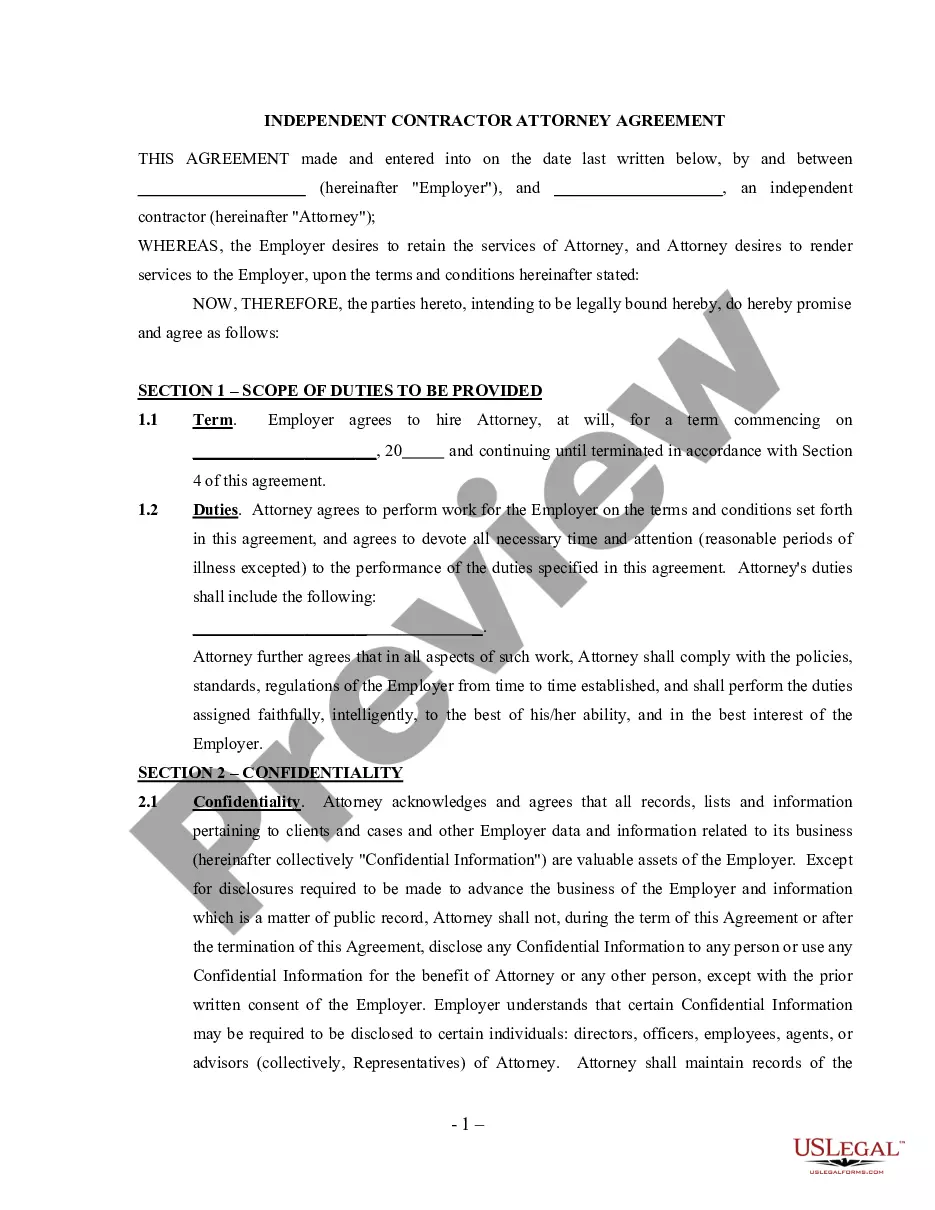
  • Preview Independent Contractor Agreement Between Licensed Counselor and Therapist and Licensed Counselor and Therapist Practicing as a Solo Practitioner

How to fill out Independent Contractor Agreement Between Licensed Counselor And Therapist And Licensed Counselor And Therapist Practicing As A Solo Practitioner?

You can invest several hours online attempting to locate the legal document template that meets the federal and state standards you require.

US Legal Forms offers countless legal forms that have been reviewed by experts.

You can easily acquire or print the Texas Independent Contractor Agreement Between Licensed Counselor and Therapist and Licensed Counselor and Therapist Operating as a Solo Practitioner through the service.

If available, use the Review button to examine the document template as well.

  1. If you have a US Legal Forms account, you may Log In and click the Obtain button.
  2. Next, you can complete, modify, print, or sign the Texas Independent Contractor Agreement Between Licensed Counselor and Therapist and Licensed Counselor and Therapist Operating as a Solo Practitioner.
  3. Every legal document template you obtain is yours forever.
  4. To acquire another copy of the downloaded form, navigate to the My documents section and click the appropriate button.
  5. If you are visiting the US Legal Forms website for the first time, follow the simple instructions outlined below.
  6. Firstly, ensure you have selected the correct document template for the area/city you choose.
  7. Review the form description to confirm you have selected the correct form.

Form popularity

FAQ

While both licensed therapists and licensed counselors provide mental health services, therapists generally have advanced degrees and offer a broad range of treatments. Counselors typically offer guidance for specific issues or transitions. When creating a Texas Independent Contractor Agreement Between Licensed Counselor and Therapist and Licensed Counselor and Therapist Practicing as a Solo Practitioner, it is essential to define the expertise of both parties clearly.

Choosing between a counselor and a therapist depends on your specific needs. If you are facing a particular life issue or need guidance, a counselor may be appropriate. However, for more complex emotional challenges, a therapist might be the better choice. Always consider the differences when drafting a Texas Independent Contractor Agreement Between Licensed Counselor and Therapist and Licensed Counselor and Therapist Practicing as a Solo Practitioner.

PLLC stands for Professional Limited Liability Company, a business structure applicable to certain professionals, including therapists. Forming a PLLC can protect personal assets from business liabilities, making it a favorable option for licensed counselors and therapists. Understanding how a PLLC impacts your Texas Independent Contractor Agreement Between Licensed Counselor and Therapist and Licensed Counselor and Therapist Practicing as a Solo Practitioner is vital for ensuring legal protections.

To structure an independent contractor agreement, start with the basics: identify the parties involved, outline the services to be provided, and specify payment terms. Additionally, include confidentiality clauses, termination conditions, and dispute resolution processes. Utilizing platforms like uslegalforms can simplify the creation of a Texas Independent Contractor Agreement Between Licensed Counselor and Therapist and Licensed Counselor and Therapist Practicing as a Solo Practitioner.

The distinction between a counselor and a therapist often lies in their training and the depth of services they provide. Counselors typically focus on specific issues or life changes, while therapists may handle deeper emotional or psychological concerns. When forming a Texas Independent Contractor Agreement Between Licensed Counselor and Therapist and Licensed Counselor and Therapist Practicing as a Solo Practitioner, it is crucial to clarify these roles.

A licensed counselor and a licensed therapist may perform similar roles, but they often have different educational backgrounds and licenses. Both professionals provide mental health services, but the types of therapy and treatment approaches may vary. It is important to understand their qualifications when drafting a Texas Independent Contractor Agreement Between Licensed Counselor and Therapist and Licensed Counselor and Therapist Practicing as a Solo Practitioner.

Yes, many therapists can be self-employed, and this status allows them to operate their practices under a Texas Independent Contractor Agreement Between Licensed Counselor and Therapist and Licensed Counselor and Therapist Practicing as a Solo Practitioner. Self-employed therapists manage their schedules, client relationships, and billing processes. This arrangement often leads to greater flexibility and control over their professional paths.

In Texas, LPC associates cannot practice independently without supervision. They must work under the guidance of a licensed professional who holds the appropriate credentials. Hence, an effective Texas Independent Contractor Agreement Between Licensed Counselor and Therapist and Licensed Counselor and Therapist Practicing as a Solo Practitioner is crucial when establishing parameters for supervised practice. It's important for LPC associates to stay compliant with state regulations.

While forming an LLC is not mandatory for 1099 therapists, it can offer several advantages, such as liability protection and tax benefits. Engaging in a Texas Independent Contractor Agreement Between Licensed Counselor and Therapist and Licensed Counselor and Therapist Practicing as a Solo Practitioner might prompt you to consider business formation to formalize your practice. The decision depends on your circumstances and preference for risk management.

A 1099 employee, or independent contractor, is someone who provides services to a client but does not work under the client’s direct supervision. Many licensed counselors and therapists operate this way through a Texas Independent Contractor Agreement Between Licensed Counselor and Therapist and Licensed Counselor and Therapist Practicing as a Solo Practitioner. This arrangement allows professionals the freedom to manage their schedules and dictate their work methods.

Trusted and secure by over 3 million people of the world’s leading companies

Texas Independent Contractor Agreement Between Licensed Counselor and Therapist and Licensed Counselor and Therapist Practicing as a Solo Practitioner